
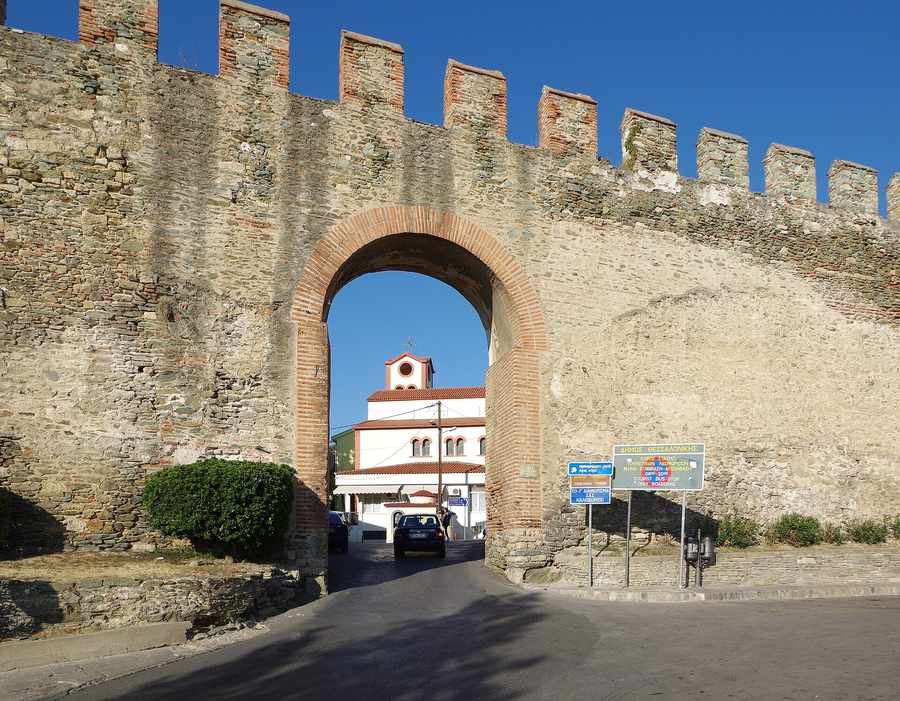
The Trigoniou Tower, located in the upper town of Thessaloniki, is a remarkable example of Ottoman military architecture. Originally a Byzantine bastion, the Ottomans rebuilt it in the late fifteenth century to accommodate heavy artillery. Known also as the Chain Tower, it stands as one of the strongest points of Thessaloniki’s fortifications. The tower offers sweeping views over Ano Poli, the lower town, and the Thermaic Gulf. It’s a focal point for exploring the historic ramparts that once protected the city. Discover the history and significance of this iconic structure with My Greece Tours.
The Trigoniou Tower is an essential part of Thessaloniki’s rich historical landscape. Known for its strategic importance and panoramic views, it provides insight into the city’s past. The sections below cover its historical context, architectural features, and visitor experiences. Whether you’re interested in military history or simply enjoying panoramic vistas, the Trigoniou Tower offers a unique perspective. For those planning a visit, our comprehensive guide to Thessaloniki tours will enhance your experience.
What is the historical significance of the Trigoniou Tower?
The Trigoniou Tower represents the evolution of military architecture from Byzantine to Ottoman control, showcasing its strategic importance in Thessaloniki’s defences.
The Trigoniou Tower marks a pivotal point in Thessaloniki’s history. This structure, originally a Byzantine triangular bastion, was transformed by the Ottomans into a circular artillery tower. The transformation was crucial in adapting to the evolving needs of military defence. Located at the north-eastern corner of the acropolis walls, the tower controlled key approaches to the city, reflecting advancements in military technology during the late fifteenth century. The tower remains an integral part of the city’s narrative, anchoring its past to the present and allowing visitors to explore the interaction between different historical eras.
Thessaloniki’s history is deeply intertwined with the presence of the Trigoniou Tower, which stands as a testament to the city’s layered history. The Ottomans maintained it as a stronghold in their extensive fortifications of Thessaloniki. The tower’s robust construction and strategic position made it a formidable barrier against invaders. Its role in the city’s defence highlights the military tactics employed during the Ottoman era, providing a tangible connection to the past. Visitors often delve into this historical journey through the lens of the tower’s architecture, which offers a window into the military strategies of a bygone era.
The fortifications of Thessaloniki, including the Trigoniou Tower, played a critical role in protecting the city from external threats. The tower’s presence underscores the importance of the acropolis as a defensive bastion. It stands today as a historical monument, offering insights into the architectural and military strategies of its time. Visitors can explore the surrounding walls of Thessaloniki, gaining a deeper appreciation for the city’s rich defensive heritage. A walk along the ramparts reveals the intricate design and formidable presence of these ancient structures, inviting reflection on the engineering marvels of the past.
What architectural features define the Trigoniou Tower?
The Trigoniou Tower is notable for its circular design, thick stone walls, and strategic placement at the acropolis walls’ convergence.
The architectural design of the Trigoniou Tower is a prime example of Ottoman military ingenuity. Its circular shape was a departure from the earlier Byzantine triangular design. This form was specifically chosen to accommodate the new military technology of the time, particularly heavy cannon. The circular design allowed for a wider range of fire, essential for defending the city against attackers. The tower’s robust stone construction further enhanced its defensive capabilities, making it a sturdy and imposing structure, capable of withstanding the tests of time and embodying the evolution of military architecture in the region.
The position of the Trigoniou Tower where the land walls meet the acropolis serves as a critical junction in Thessaloniki’s defence system. Its location was strategically selected to oversee and control the approaches to the city. The thick stone walls provided substantial protection against sieges and artillery fire. This strategic placement underscores the importance of the tower in the overall defensive strategy of the city’s fortifications. The tower’s role in the city’s history is integral to understanding the evolution of military architecture, reflecting the strategic foresight of its builders.
The internal structure of the tower was designed to accommodate the needs of a garrison. The spacious interior could house troops and store ammunition, ensuring that the fortifications remained well-defended. The architecture of the Trigoniou Tower reflects a blend of functionality and strength, characteristic of Ottoman military design. Visitors exploring the tower can appreciate the engineering skills and strategic foresight that went into its construction. As part of a broader Thessaloniki walking tour, the tower offers a glimpse into the military history and architectural advances of its era, allowing visitors to trace the footsteps of history and understand the strategic importance of its location.
What views can visitors enjoy from the Trigoniou Tower?
Visitors can enjoy sweeping views over Ano Poli, the lower town, the Thermaic Gulf, and even Mount Olympus from the Trigoniou Tower.
The Trigoniou Tower offers one of the most breathtaking panoramas in Thessaloniki. Visitors can gaze over the red-tiled roofs of Ano Poli, the historic upper town, from its terrace. This area is known for its traditional architecture and winding streets, providing a picturesque view of the city’s past. The vantage point also offers a clear line of sight to the lower town, showcasing the urban sprawl that characterises modern Thessaloniki. The juxtaposition of old and new is evident in the cityscape, highlighting the dynamic history and growth of the city.
The shimmering waters of the Thermaic Gulf can be seen on clear days, providing a view that extends beyond the city. The arc of the gulf forms a natural boundary, contrasting the city’s urban landscape with the serene blue of the sea. This juxtaposition highlights Thessaloniki’s geographical diversity and its connection to the water. The expansive view from the tower allows visitors to appreciate the city’s unique setting, nestled between the mountains and the sea. This vantage point is a favourite among photographers and history enthusiasts alike, providing a perfect spot for capturing the essence of Thessaloniki.
The silhouette of Mount Olympus can be seen across the gulf, adding a mythical dimension to the landscape. This iconic mountain draws a connection between Thessaloniki’s historical and natural heritage. The view from the Trigoniou Tower encapsulates the essence of Thessaloniki, blending history, architecture, and nature into a single, unforgettable experience. For those interested in a more extensive exploration, visiting the nearby Eptapyrgio can further enrich the understanding of the city’s fortifications and their strategic importance, offering a comprehensive insight into the historical landscape of Thessaloniki.
How does the Trigoniou Tower connect to the walls of Thessaloniki?
The Trigoniou Tower anchors the north-eastern corner of the acropolis walls, playing a key role in Thessaloniki’s defensive network.
The Trigoniou Tower is a crucial component of the walls of Thessaloniki, strategically positioned to enhance the city’s defences. It serves as an anchor point where the land walls converge with the acropolis, forming a strong defensive line. The tower’s placement allowed it to control approaches to the city, making it an essential part of the fortification network. Its robust construction and strategic location underscore its importance in protecting Thessaloniki from external threats, highlighting its role in the city’s layered defensive strategies and its architectural significance.
The broader system of fortifications includes the Trigoniou Tower, providing both a physical barrier and a vantage point for surveillance. Designed to withstand sieges and repel invaders, the walls of Thessaloniki, including this tower, reflect strategic planning. The integration of the tower into the defensive walls demonstrates the strategic planning behind the city’s fortifications. Its presence highlights the importance of the acropolis in the overall defence strategy, serving as a testament to the military architecture of its time. The tower’s enduring presence is a reminder of the city’s resilience and strategic foresight in its historical context.
Exploration of the walls of Thessaloniki offers visitors a chance to follow the path along the ramparts, gaining insight into the city’s historical defence mechanisms. The walking route offers a unique perspective, allowing for an appreciation of the scale and complexity of these ancient fortifications. The Trigoniou Tower stands as a focal point in this journey, embodying the strength and resilience of Thessaloniki’s past. For those interested in more historical sites, the nearby White Tower provides further context to the city’s defensive history, offering a comprehensive view of Thessaloniki’s fortified landscape and its strategic importance in the region.
What role did the Trigoniou Tower play in Thessaloniki’s defence?
The Trigoniou Tower played a strategic role in defending Thessaloniki by controlling key approaches and facilitating artillery use.
The strategic location of the Trigoniou Tower made it a vital part of Thessaloniki’s defence system. Positioned at the convergence of the land walls and the acropolis, it served to control the primary approaches to the city. The tower’s design allowed for the effective use of artillery, providing coverage over a wide area. This capability was crucial for deterring and repelling attackers, making it a formidable element in the city’s fortifications. The tower’s position allowed defenders to monitor and respond swiftly to any threats approaching the city, ensuring the safety and security of Thessaloniki.
The robust construction of the Trigoniou Tower and its strategic placement were designed to withstand prolonged sieges. Thick stone walls provided protection against artillery and other siege weapons. The ability to house troops and ammunition within its structure ensured that the tower could maintain its defensive role for extended periods. This resilience highlights the importance of the tower in the overall defensive strategy of the city during the Ottoman era. The tower’s role as a military stronghold underscores the complexity and forethought of Thessaloniki’s defensive strategies, reflecting the military architecture of its time.
The history of the Trigoniou Tower provides insight into the military tactics and architectural advancements of its time. Visitors can appreciate the engineering skills that went into creating such a formidable defensive structure. A visit to the tower, along with a Thessaloniki walking tour, offers a comprehensive understanding of the city’s historical defences. The experience provides a connection to the past, highlighting the strategic importance of the tower in safeguarding Thessaloniki and its inhabitants across centuries and allowing visitors to engage with the city’s rich historical narrative.
Why is the Trigoniou Tower a popular tourist destination?
The Trigoniou Tower attracts tourists with its historical significance, panoramic views, and as a key part of Thessaloniki’s fortifications.
The Trigoniou Tower is a popular destination for tourists interested in history and architecture. Its significance as part of Thessaloniki’s fortifications draws visitors who wish to explore the city’s past. The tower offers a tangible connection to the Ottoman era, showcasing the military strategies and architectural styles of the time. Its well-preserved structure provides an authentic glimpse into the historical defences that once protected the city. Visitors often find themselves drawn to the historical narratives that the tower encapsulates, making it a key attraction for those interested in the rich tapestry of Thessaloniki’s history.
Tourists are drawn to the panoramic views from the Trigoniou Tower, which are renowned among visitors. Stunning vistas of Thessaloniki and its surroundings can be enjoyed from the tower’s terrace. The view encompasses the traditional neighbourhood of Ano Poli, the sprawling lower town, and the serene waters of the Thermaic Gulf. On clear days, the distant peaks of Mount Olympus add a mythical element to the landscape, making the experience truly memorable. The tower’s vantage point allows for an exceptional appreciation of Thessaloniki’s geographical and cultural landscape, offering a unique perspective on the city’s diverse environment.
The tower’s location within the city’s walls makes it an ideal starting point for exploring Thessaloniki’s rich history. A visit to the Trigoniou Tower can be complemented by exploring other nearby historical sites, such as the Eptapyrgio. This combination offers a comprehensive understanding of Thessaloniki’s fortifications and their role in the city’s development. For those interested in further exploration, the Ano Poli district offers additional insights into the cultural and historical heritage of Thessaloniki, providing a well-rounded experience for any visitor and enhancing their understanding of the city’s past.
How can visitors explore the Trigoniou Tower and its surroundings?
Visitors can explore the Trigoniou Tower by walking along the ramparts and visiting nearby historical sites like the Eptapyrgio.
Visitors to the Trigoniou Tower can start their exploration by walking along the ramparts that connect various parts of Thessaloniki’s ancient fortifications. This route provides a unique perspective on the city’s defences and offers an opportunity to appreciate the engineering marvels of the past. The path along the walls is well-marked, making it easy for visitors to navigate and enjoy the historical ambiance of the area. The walk also offers exceptional views of the city and its surroundings, enhancing the overall experience of Thessaloniki’s rich historical tapestry and its strategic importance in the region.
Exploration of the Trigoniou Tower can be extended to nearby historical sites. The Eptapyrgio, another significant fortification, is located within walking distance and provides further insight into Thessaloniki’s defensive history. This site complements the experience at the Trigoniou Tower, offering a broader understanding of the city’s military architecture. The proximity of these sites makes it convenient for tourists to explore multiple attractions in a single visit, enriching their historical journey and providing a comprehensive overview of Thessaloniki’s fortifications.
Guided experiences, such as joining a Thessaloniki walking tour, can offer an excellent option for those interested in a more structured exploration. These tours often include visits to key historical sites, providing expert insights into the city’s rich heritage. Guides can offer detailed explanations of the significance of the Trigoniou Tower and its role in Thessaloniki’s history. Whether exploring independently or with a guide, visitors can immerse themselves in the historical and cultural significance of this remarkable structure, ensuring a fulfilling and educational experience that deepens their appreciation of Thessaloniki’s past.
Frequently Asked Questions
What is the Trigoniou Tower?
The Trigoniou Tower is a historic artillery tower in Thessaloniki, Greece. Rebuilt by the Ottomans in the late fifteenth century, it is part of the city’s defensive walls. Known for its strategic location, the tower offers panoramic views of the surrounding area and stands as a key historical landmark.
Why is the Trigoniou Tower important?
The Trigoniou Tower is important for its historical and architectural significance. It showcases Ottoman military architecture and played a key role in Thessaloniki’s defences. Today, it stands as a monument to the city’s rich history and offers spectacular views, attracting tourists and history enthusiasts alike.
How do I reach the Trigoniou Tower?
Reaching the Trigoniou Tower is easy. It is located in the upper town of Thessaloniki, accessible by foot or public transport. Visitors can follow marked paths along the city’s ancient walls, making it a convenient and scenic journey that offers insights into the city’s historical landscape.
What can I see from the Trigoniou Tower?
From the Trigoniou Tower, visitors can see the upper town of Ano Poli, the lower city, and the Thermaic Gulf. On clear days, the distant peaks of Mount Olympus are also visible, offering a breathtaking view of the region and highlighting Thessaloniki’s diverse geographical setting.
Can I visit other historical sites near the Trigoniou Tower?
Yes, visitors can explore several nearby historical sites, such as the Eptapyrgio and the White Tower. These sites offer further insights into Thessaloniki’s history and are easily accessible from the Trigoniou Tower, making for a comprehensive tour of the city’s fortified landscape and its historical significance.
What should I know before visiting the Trigoniou Tower?
The Trigoniou Tower rewards visitors who know its historical context as part of Thessaloniki’s fortifications. The site offers insight into Ottoman military architecture and stunning views. Comfortable walking shoes are recommended for exploring the area, ensuring a comfortable and enriching visit.