
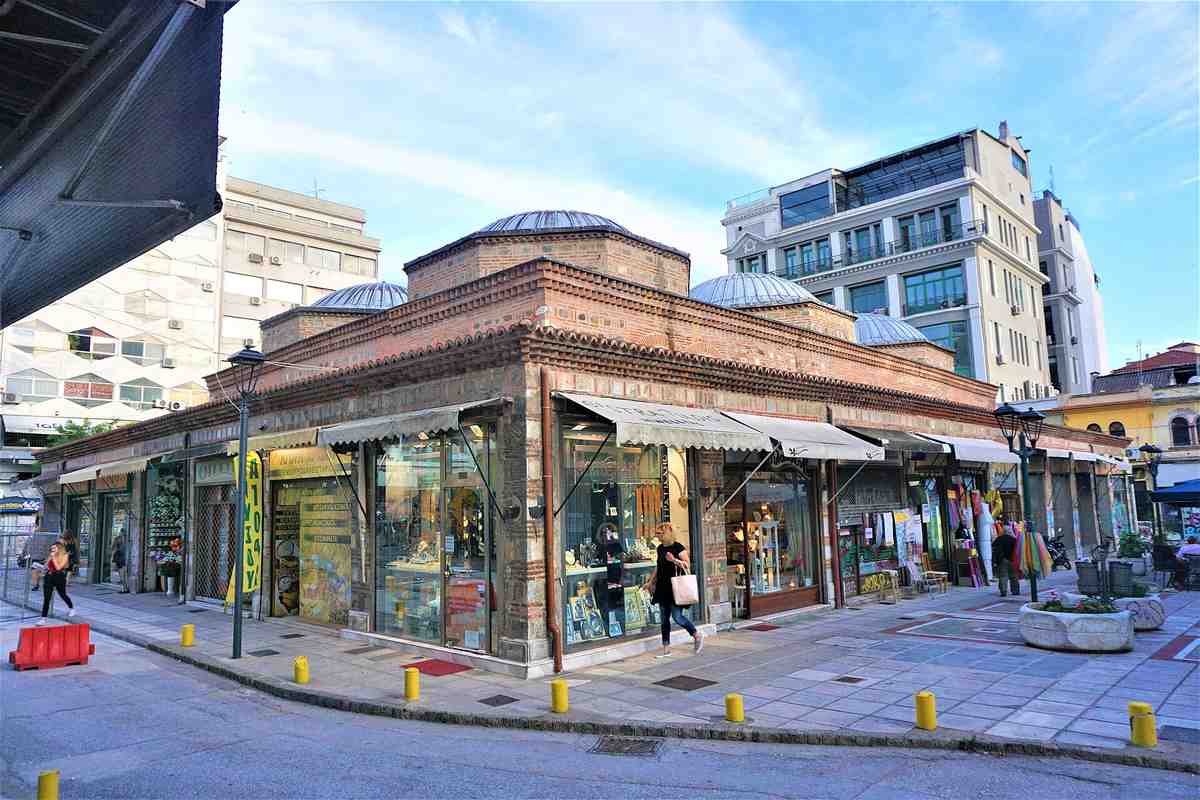
Nestled in the heart of Thessaloniki, the Bezesteni is a testament to the city’s rich Ottoman heritage. This fifteenth-century covered market, known for its robust stone structure and six lead-covered domes, was once a hub for precious textiles and jewellery. Today, the Bezesteni continues to operate, offering fabrics, buttons, and trinkets. Its location on the bustling Egnatia avenue places it near the Hamza Bey Mosque and other historic sites, making it a key attraction for visitors. The Bezesteni’s enduring presence highlights the vibrant commercial life that defines Thessaloniki, blending history with modern commerce. As you explore this architectural gem, you’ll experience the unique intersection of past and present that characterises the city, with My Greece Tours.
The Bezesteni remains a vibrant part of Thessaloniki’s commercial landscape, drawing both locals and tourists to its historic halls. As a surviving example of Ottoman architecture, it offers insights into the city’s past while serving contemporary needs. Visitors can explore the markets and nearby attractions, immersing themselves in the rich tapestry of Thessaloniki’s history. The sections below cover the architectural details, historical significance, and current role of the Bezesteni. To plan your visit and discover more about Thessaloniki’s attractions, explore our Thessaloniki tours. Each section offers a glimpse into the market’s enduring legacy and its place in Thessaloniki’s vibrant cultural landscape.
What is the architectural significance of the Bezesteni?
The Bezesteni’s architectural significance lies in its Ottoman design featuring a robust masonry structure with six lead-covered domes.
The Bezesteni stands as a prominent example of Ottoman architecture in Thessaloniki. Its rectangular form and robust masonry construction are characteristic of such markets, designed to protect valuable goods. The six domes, lead-covered for durability, rest atop sturdy internal piers, creating a striking silhouette. This architectural design not only ensured the safety of the precious items traded within but also showcased the engineering prowess of its builders. The market’s compact layout, unlike the sprawling bazaars of larger cities, reflects its unique urban setting and purpose, making it a distinctive feature of Thessaloniki’s architectural landscape. Its placement on Egnatia avenue underscores its importance in the city’s commercial network.
Each entrance of the Bezesteni leads into a world of historical commerce. The four-sided access points allow for easy navigation and highlight the market’s role as a bustling centre of trade. Stone walls and iron doors provided security, necessary for dealing in luxury items such as fine textiles and jewellery. This design choice underscores the market’s function as a safe haven for commerce in precious goods, a factor that contributed to its survival through turbulent times and its enduring historical significance. The market’s strategic location near the Venizelou junction further enhanced its accessibility.
The Bezesteni is not just a marketplace; it is a piece of living history. Its architectural features have withstood the test of time, surviving natural disasters like the great fire that swept through Thessaloniki. Preservation of its structure offers a window into the past, allowing visitors to experience a slice of Ottoman-era commerce. The market continues to serve its original purpose, blending traditional and contemporary elements in its ongoing evolution as a commercial hub, thus maintaining its relevance in modern Thessaloniki. Its proximity to other historical sites like the Hamza Bey Mosque adds to its cultural significance.
How did the Bezesteni survive the great fire?
The Bezesteni survived the great fire due to its robust construction and strategic location, which protected it from extensive damage.
Thessaloniki’s great fire was a devastating event that reshaped the city’s landscape. The Bezesteni, however, emerged largely unscathed, a testament to its durable construction. The thick stone walls and lead-covered domes played a crucial role in withstanding the blaze. Located in the heart of the city, its strategic position may have shielded it from the worst of the flames, unlike other structures that succumbed to the inferno. This resilience highlights the market’s architectural strength and the foresight of its Ottoman builders, ensuring its continued presence in the city’s heart. The market’s compact structure also contributed to its survival, by limiting the spread of fire.
The survival of the Bezesteni is significant in understanding Thessaloniki’s history. Much of the lower town was consumed by the fire, but the market’s continued existence offers a tangible link to the city’s past. It serves as a reminder of the Ottoman era’s influence and the importance of durable, functional architecture in urban planning. Visitors today can appreciate its enduring presence as they explore the bustling commercial quarter, which continues to thrive around this historical landmark. Its role in preserving the cultural heritage of Thessaloniki remains invaluable.
The market’s ability to withstand such a calamity has contributed to its ongoing role in Thessaloniki’s economy. Its preservation allowed it to continue functioning as a centre of trade, maintaining its historical significance while adapting to contemporary needs. The Bezesteni’s resilience is a symbol of Thessaloniki’s capacity to endure and thrive despite adversity, continuing to attract locals and tourists alike to its storied halls, and reinforcing its place in the city’s cultural and economic narrative. Its enduring presence highlights the resilience and adaptability of Thessaloniki itself.
What can visitors expect to find in the Bezesteni today?
Visitors to the Bezesteni now find small shops selling fabrics, haberdashery, buttons, thread, and trinkets.
The Bezesteni remains a lively centre for commerce, retaining its historical charm while catering to modern shoppers. Small shops line its interior, offering a variety of goods that reflect its rich trading past. Fabrics of all kinds are available, from traditional patterns to contemporary designs, providing a glimpse into the textile trade that once dominated the market. Haberdashery items such as buttons, thread, and trinkets add to the Bezesteni’s eclectic offerings, appealing to both locals and tourists seeking unique finds that are deeply rooted in Thessaloniki’s commercial traditions. Its role in the city’s shopping scene remains significant.
Shopping in the Bezesteni offers a unique experience, combining historical atmosphere with the vibrancy of a working market. Each shop is a small world unto itself, filled with colourful displays and the bustling energy of trade. Visitors can wander through the aisles, discovering hidden treasures and engaging with friendly shopkeepers eager to share stories of the market’s past. This lively environment is a testament to the Bezesteni’s enduring appeal and its role as a central hub in Thessaloniki’s commercial life, reflecting the city’s ongoing commitment to preserving its cultural heritage. The market’s atmosphere remains unmatched by modern retail experiences.
The market’s location in Thessaloniki’s old commercial quarter enhances its appeal. Situated near the open-air food markets and the Hamza Bey Mosque, the Bezesteni is a key stop for those exploring the city’s historical and cultural attractions. Its proximity to these sites allows visitors to enjoy a comprehensive experience of Thessaloniki’s rich heritage, making it a must-visit destination for anyone interested in the city’s vibrant market scene and its historical evolution as a commerce centre. Its integration into the city’s cultural landscape is seamless.
Why is the Bezesteni an important part of Ottoman Thessaloniki?
The Bezesteni is important for its role as a centre of trade in Ottoman Thessaloniki, showcasing the city’s historical commercial vitality.
The Bezesteni’s establishment in the heart of Thessaloniki during the Ottoman era marked it as a vital centre of commerce. It played a significant role in the city’s economic life, dealing in luxury items such as textiles and jewellery. These goods were highly prized, necessitating a secure and centralised trading location. The market’s design, with its fortified structure, reflects the importance placed on protecting valuable merchandise, underscoring its significance in the city’s trade network and its enduring legacy as a historical landmark. Its strategic location on Egnatia avenue further emphasised its importance.
The Bezesteni ranked among the central institutions of Ottoman Thessaloniki and contributed to the city’s diverse cultural and economic landscape. The market attracted merchants and buyers from various regions, fostering a vibrant exchange of goods and ideas. Its central location on the Egnatia avenue made it accessible and prominent, reinforcing its status as a key commercial hub. This dynamic interaction of cultures and commerce is a defining characteristic of Thessaloniki’s historical identity and continues to influence its cultural narrative. Its influence extended beyond just economic transactions.
The Bezesteni remains a symbol of Thessaloniki’s Ottoman heritage. Its continued operation as a market connects past and present, allowing visitors to experience a piece of living history. The market’s preservation and ongoing use highlight the enduring legacy of the Ottoman era in shaping Thessaloniki’s cultural and economic fabric. By visiting the Bezesteni, one can appreciate the historical depth and continuity that characterise the city’s development over the centuries, making it a crucial part of Thessaloniki’s historical narrative. Its role in cultural preservation is invaluable.
How does the Bezesteni compare to modern shopping experiences?
The Bezesteni offers a unique shopping experience that contrasts with modern malls through its historical setting and traditional commerce.
Modern shopping centres often prioritise convenience and variety, featuring a wide array of stores and services under one roof. The Bezesteni, in contrast, offers a more intimate and historical shopping experience. Its small shops focus on specific goods like fabrics and haberdashery, providing a specialised selection that reflects its traditional roots. This focus on niche products creates a distinctive atmosphere, appealing to those seeking unique items and a connection to the past, offering a stark contrast to the uniformity of contemporary retail spaces. The historical setting enhances its uniqueness.
Visitors to the Bezesteni will find that it lacks the sleek, uniform design of contemporary malls. Instead, it presents a charming blend of history and commerce, with its ancient architecture and bustling energy. The market’s compact layout encourages exploration, inviting shoppers to discover its offerings at a leisurely pace. This slower, more personal shopping experience contrasts sharply with the fast-paced environment of modern retail, offering a refreshing alternative for those looking to escape the hustle and bustle and enjoy a more leisurely exploration. Its charm lies in its historical authenticity.
The Bezesteni’s enduring appeal lies in its ability to blend history and modernity. While it retains its traditional character, the market adapts to contemporary tastes, offering products that cater to both local needs and tourist interests. This balance of old and new makes the Bezesteni a unique destination within shopping in Thessaloniki. It provides a glimpse into the city’s commercial heritage while remaining relevant in today’s retail landscape, making it a must-visit location for those exploring Thessaloniki. Its cultural significance is interwoven with its retail function.
What role does the Bezesteni play in Thessaloniki’s tourism?
The Bezesteni plays a significant role in Thessaloniki’s tourism by offering a historical attraction and a vibrant shopping experience.
Thessaloniki’s tourism thrives on its rich historical and cultural offerings, with the Bezesteni being a key attraction. This fifteenth-century market draws visitors interested in exploring the city’s Ottoman past. Its unique architecture and enduring function as a market provide a tangible connection to history, making it a popular stop on many Thessaloniki tours. Visitors can immerse themselves in the bustling atmosphere of the market, gaining insights into the city’s commercial evolution and its enduring cultural significance. Its role in tourism is both educational and experiential.
The Bezesteni enhances Thessaloniki’s appeal as a destination by offering a distinctive shopping experience. Tourists can explore its small shops, discovering unique items that reflect the market’s historical roots. This blend of history and commerce attracts those looking for authentic cultural encounters, setting the Bezesteni apart from modern retail experiences. Its location in the old commercial quarter, near other attractions, makes it a convenient and enriching addition to any itinerary, offering a comprehensive view of Thessaloniki’s vibrant cultural landscape. Its integration into tourism is seamless.
The market’s role in tourism extends beyond its historical significance. It supports the local economy by attracting visitors who contribute to the city’s commercial life. The Bezesteni’s continued operation as a living market ensures that it remains relevant and engaging for tourists, fostering a deeper appreciation of Thessaloniki’s heritage. As part of the city’s vibrant cultural landscape, the Bezesteni offers a unique perspective on the interplay of history and modernity, making it an essential component of any visit to Thessaloniki, enriching the city’s diverse tourism offerings. Its economic impact is significant.
Why should you visit the Bezesteni in Thessaloniki?
Visiting the Bezesteni provides a unique opportunity to explore a living piece of Ottoman history within a vibrant market setting.
A visit to the Bezesteni offers a journey through time, allowing one to explore a market that has retained its historical charm while adapting to modern needs. This fifteenth-century structure provides a unique glimpse into Thessaloniki’s Ottoman past, showcasing the architectural and commercial practices of the era. Its continued function as a market creates a dynamic environment where history and contemporary commerce intersect, offering visitors an authentic and enriching experience that highlights the market’s enduring significance in Thessaloniki. Its historical relevance is profound.
The Bezesteni’s location in Thessaloniki’s old commercial quarter makes it an ideal starting point for exploring the city’s heritage. After visiting the market, one can easily access nearby attractions such as the open-air food markets and things to do in Thessaloniki. This proximity allows for a comprehensive exploration of the city’s cultural landscape, providing a deeper understanding of its historical and economic development, and connecting visitors with both the past and present of Thessaloniki. Its strategic placement enhances its role as a cultural hub.
Visiting the Bezesteni is not just about shopping; it’s about connecting with Thessaloniki’s rich history. The market’s unique atmosphere, filled with the sounds and sights of trade, offers a sensory experience that modern malls cannot replicate. Whether you’re a history enthusiast, a culture seeker, or simply looking for unique souvenirs, the Bezesteni provides a memorable experience that highlights the enduring legacy of Thessaloniki’s Ottoman past, making it a must-visit for anyone interested in the city’s historical and cultural richness. Its allure lies in its authenticity and historical depth.
Frequently Asked Questions
What is the Bezesteni in Thessaloniki?
The Bezesteni is a fifteenth-century Ottoman covered market located in the heart of Thessaloniki. It was originally built for trading valuable goods like textiles and jewellery. Today, it continues to operate, offering a variety of fabrics, haberdashery, and trinkets.
Where is the Bezesteni located?
The Bezesteni is situated on Egnatia avenue near the Venizelou junction in Thessaloniki. It stands within the old commercial quarter, close to other historical sites such as the Hamza Bey Mosque and the city’s open-air food markets, making it easily accessible.
What can you buy at the Bezesteni today?
Visitors to the Bezesteni can purchase a variety of goods, including fabrics, buttons, thread, and trinkets. The market’s shops specialise in haberdashery and textiles, reflecting its historical roots as a centre for trading precious and luxury items.
Why is the Bezesteni historically important?
The Bezesteni is historically important as a representation of Ottoman architecture and commerce in Thessaloniki. Its durable construction and role as a market for valuable goods highlight its significance in the city’s economic and cultural history.
Is the Bezesteni a tourist attraction?
Yes, the Bezesteni is a notable tourist attraction in Thessaloniki. It offers visitors the chance to explore a piece of living history, providing insights into Ottoman-era architecture and commerce while allowing for a unique shopping experience.
How has the Bezesteni survived over the centuries?
The Bezesteni has survived over the centuries due to its strong masonry construction and strategic location. Its robust design protected it from events like the great fire in Thessaloniki, allowing it to continue functioning as a market to this day.