
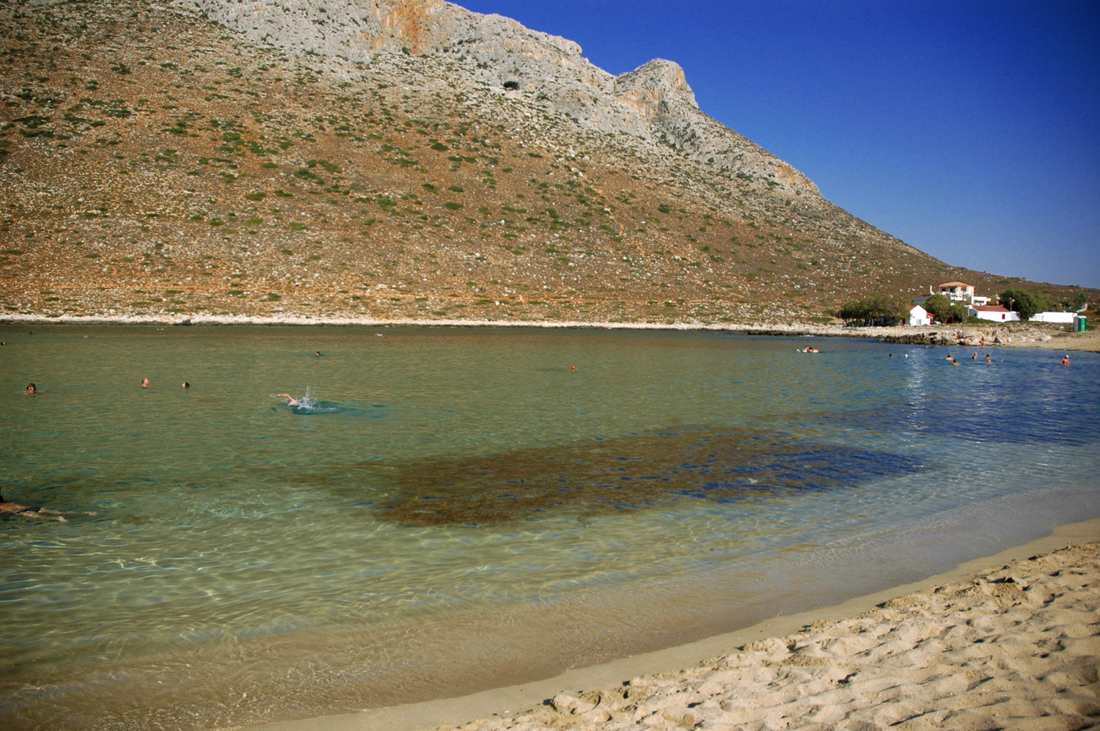
Stavros beach rests at the northern tip of the Akrotiri peninsula, a short drive from the city of Chania in western Crete. Its most striking feature is a near-circular, lagoon-like bay of calm, shallow, clear water, held beneath the bare grey mass of Stavros mountain. The enclosed water stays sheltered from wind and waves, giving safe, warm swimming that suits families and young children. A second, more open sandy beach faces the sea alongside it, with sunbeds, tavernas and rooms to rent. The dramatic mountain backdrop earned lasting fame as a film location. Plan a calm half-day escape from the busy harbour town with My Greece Tours.
Stavros pairs two very different shores in one small cove. The famous inner bay reads almost like a natural swimming pool, ringed by rock and sand, while a second open beach lines the sea just beside it. The place fills in high summer and falls quiet out of season, holding its scenery either way. The sections below cover the setting under Stavros mountain, the two beaches, the Zorba the Greek connection, the wider Akrotiri peninsula and how a visit fits a Chania stay. For the regional picture, our Crete travel guide places Stavros among the island’s calmest family shores.
Where is Stavros beach on Crete’s Akrotiri peninsula?
Stavros beach lies at the northern tip of the Akrotiri peninsula in western Crete, a short drive from the city of Chania. A near-circular lagoon-like bay of calm shallow water sits beneath the bare grey Stavros mountain.
Stavros marks the far northern point of the Akrotiri peninsula, the broad headland that reaches out east of Chania’s old harbour. The road to it runs across the peninsula through low hills and scattered settlements before dropping to the coast at the foot of a tall, bare grey mountain. That mountain gives the beach both its name and its unmistakable backdrop, rising almost straight from the water in a wall of pale rock. The drive from the city takes only a short while, which makes Stavros one of the easiest sea escapes for anyone staying in or near Chania.
Travellers mapping out their things to do in Crete often slot Stavros in as a relaxed half-day, pairing an hour on the sand with the short scenic run out along the headland.
The setting is what fixes Stavros in the memory long after a visit. The near-circular bay curls in beneath the mountain to form a lagoon-like pool of calm, shallow, clear water, sheltered on almost every side by rock and land. Wind and waves rarely reach into the enclosed water, so the surface stays settled even when the open sea beyond is ruffled. A small strip of sand rings the inner shore, backed by the grey stone that climbs steeply overhead. The scale feels intimate rather than vast, a single sheltered cove rather than a long open strand.
This gentle, framed quality is exactly why families with young swimmers seek Stavros out, and why photographs of the grey mountain and its mirror-calm bay travel so widely.
What are the two beaches at Stavros like?
Stavros holds two beaches side by side: the famous inner lagoon bay of calm shallow water beneath the mountain, and a second, more open sandy beach facing the sea. Both offer sunbeds, with tavernas and rooms nearby.
The inner bay is the beach most people picture when they hear the name Stavros. It sits as a near-circular pool of calm, shallow, clear water directly beneath the grey mountain, ringed by sand and rock and sheltered from the wind. The shallows warm quickly in the sun and stay gentle underfoot, which makes this the natural choice for parents with small children and for swimmers who prefer settled, waist-deep water. Sunbeds line the sand, and a taverna or two sit within an easy step for a cold drink or a slow lunch by the shore. The enclosed shape keeps the water almost mirror-still on the calmer days of summer.
This sheltered, pool-like bathing is the single quality that has carried the beach’s reputation across the island and beyond.
The second beach at Stavros faces the open sea just alongside the famous bay, and it changes the mood entirely. Here the shore is a broader stretch of sand meeting an unenclosed sea, brighter and airier than the tucked-in lagoon, with more room to spread out on busy days. Sunbeds, a scatter of tavernas and rooms to rent sit close behind the sand. That is enough to make an easy day of it without any need to drive back into town for lunch. Swimmers who want a livelier feel or a longer stretch of open water tend to drift over here, while the calm inner bay holds the families and the paddlers.
Readers weighing up the island’s shores in our roundup of Crete beaches will find Stavros grouped firmly with the sheltered, family-friendly end of the spectrum here.
Why is Stavros beach famous from Zorba the Greek?
The bare grey mountain rising above Stavros beach served as the setting for the closing sirtaki dance scene of the film Zorba the Greek. The dramatic backdrop made the cove one of Crete’s most recognisable film locations.
The fame of Stavros reaches well beyond its calm water, and it rests on a single unforgettable scene. The tall, bare mountain that walls the bay was chosen as the setting for the closing sirtaki dance of the film Zorba the Greek, and that image of two figures dancing on the shore beneath the grey rock became one of the most enduring pictures of the whole island. Travellers who know the film often arrive already carrying that scene in mind, half expecting to hear the music as they look up at the slope.
The mountain looks much as it did on screen, unchanged and stark, which lets visitors stand more or less where the famous dance was staged and take in the same broad sweep of pale rock and open sea.
That cinematic layer gives an ordinary swim at Stavros a quiet extra charge for those who seek the story out. The beach carries its film history lightly, with no theme-park trappings, so the connection rewards the curious without crowding the casual visitor. Standing on the sand and reading the mountain against the memory of the scene is part of what draws people out from Chania in the first place. Visitors hunting the island’s hidden gems in Crete tend to prize this blend of famous backdrop and genuine calm, a place with a real cultural anchor that has still kept its unhurried, everyday character rather than trading it for the crowds a headline sight can pull.
The result is a beach that speaks to film lovers and calm-water swimmers alike in the same small cove.
What else can you see on the Akrotiri peninsula near Stavros?
The Akrotiri peninsula around Stavros holds the Gouverneto and Agia Triada monasteries and the dramatic cove of Seitan Limania. The headland pairs quiet historic sites with wild coastline within a short drive of the beach and of Chania.
The Akrotiri peninsula packs more than one kind of day into a compact headland, and Stavros sits well placed to reach it. The monasteries of Gouverneto and Agia Triada stand elsewhere on the same peninsula, quiet stone complexes set among the hills that reward travellers drawn to the island’s religious and architectural heritage. Their calm courtyards and old walls offer a complete change of pace from the beach, a shift from sea and sand to shade and silence within a short drive. The peninsula’s back roads thread between these sites through a dry, scrubby landscape, easy enough to explore slowly by hire car.
This mix lets a single base near the coast carry a genuinely varied day, an old monastery in the morning and the sheltered bay by afternoon.
The wilder side of Akrotiri shows itself at Seitan Limania, a dramatic cove cut deep into the peninsula’s coast elsewhere along the headland. Where Stavros offers calm and shelter, that inlet offers raw drama, a narrow channel of vivid water hemmed by steep rock and reached by a steep path down. The two shores make a natural contrast for a day spent touring the headland, gentle bathing at one and wild scenery at the other. Together with the monasteries, they turn Akrotiri into far more than a single beach run. A traveller with a car and an unhurried plan can string the whole peninsula into one rewarding loop.
The landscape shifts sharply from calm to stark across a short run of coastal road, and Chania waits at the end of each evening’s drive back.
How does Stavros beach fit a Crete holiday from Chania?
Stavros suits travellers based in Chania who want an easy, scenic half-day by calm water. Safe family swimming, a famous film backdrop and the wider Akrotiri sights make it a rewarding short trip, busiest in high summer.
Stavros works best as a relaxed addition to a Chania stay rather than a destination in its own right. The short drive out across the Akrotiri peninsula means a traveller can spend a morning in the old Venetian harbour town and still reach the calm bay in time for an afternoon swim and a taverna lunch. The safe, shallow, sheltered water makes it a natural pick for families breaking up a run of sightseeing with something gentle, and the famous mountain backdrop adds a memorable edge to what would otherwise be an ordinary beach hour. The scale is small and the mood unhurried, so a visit rarely eats a whole day.
This flexibility is a large part of why Stavros features so often on short western Crete itineraries.
The rhythm of the place shifts hard with the seasons, and knowing that helps in planning a visit. High summer brings the warmest water, the fullest run of open tavernas and the largest crowds, when the small cove can feel busy and the sunbeds fill early in the day. Out of season the beach falls quiet and keeps all of its scenery, the mountain and the calm bay just as striking with far fewer people on the sand.
Travellers touring the west can weave Stavros in beside Chania and the other sights of the Akrotiri headland, building a full and varied stretch of days around the old harbour town while keeping the sheltered bay as the calm, scenic heart of the whole trip out west.
Frequently Asked Questions
How do you get to Stavros beach from Chania?
Stavros beach sits at the northern tip of the Akrotiri peninsula, reached by road from the city of Chania in a short drive across the headland. A hire car gives the most freedom, letting travellers pair the beach with the monasteries and the wild cove of Seitan Limania on the same peninsula at their own pace. The road runs out of the city and across Akrotiri through low hills and scattered villages before dropping to the coast at the foot of the tall grey mountain. The final approach opens views of the bay and its calm, sheltered water beneath the rock.
The trip is short enough to fit an afternoon after a morning in town, which is a large part of the beach’s appeal for anyone staying near Chania. Parking sits close to both shores. Stavros rewards travellers who treat it as an easy half-day by calm water rather than a full expedition, an unhurried swim beneath a famous mountain within easy reach of the harbour town.
Is Stavros beach suitable for families with young children?
Stavros suits families very well, and the sheltered inner bay is the reason. The near-circular, lagoon-like cove holds calm, shallow, clear water beneath the grey mountain, sheltered from wind and waves on almost every side, so the surface stays settled even when the open sea beyond is choppy. The shallows warm quickly in the sun and shelve gently, which reassures parents of small swimmers and paddlers. Sunbeds line the sand within easy reach of the water, and a taverna or two sit close enough for an unhurried family lunch without a long walk. The scale of the cove is intimate rather than sprawling, so parents can keep an easy eye on children in the water.
A second, more open sandy beach lies alongside for anyone wanting a livelier stretch of sea. Stavros trades organised entertainment for simple pleasures, safe swimming, warm shallows and a striking backdrop, which is exactly what families exploring western Crete tend to want from a beach day.
When is the best time to visit Stavros beach?
The warm half of the year brings Stavros to life, and the shoulder weeks either side of high summer often serve travellers best. Late spring and early autumn hold warm sun and a sea kept gentle inside the sheltered bay, while the beach and its tavernas stay far quieter than in the peak. The height of summer delivers the warmest water and the fullest run of open tavernas, though it also gathers the largest crowds, so the small cove can feel busy and the sunbeds fill early in the day.
Out of season the beach falls quiet and keeps all of its scenery, the grey mountain and the calm lagoon-like bay just as striking with only a scatter of visitors on the sand. The short drive from Chania makes Stavros an easy addition in any warm month. Travellers chasing the beach’s quieter, more photogenic face tend to arrive in the softer weeks, when the cove feels close to their own and the backdrop shows at its calmest and most memorable.