
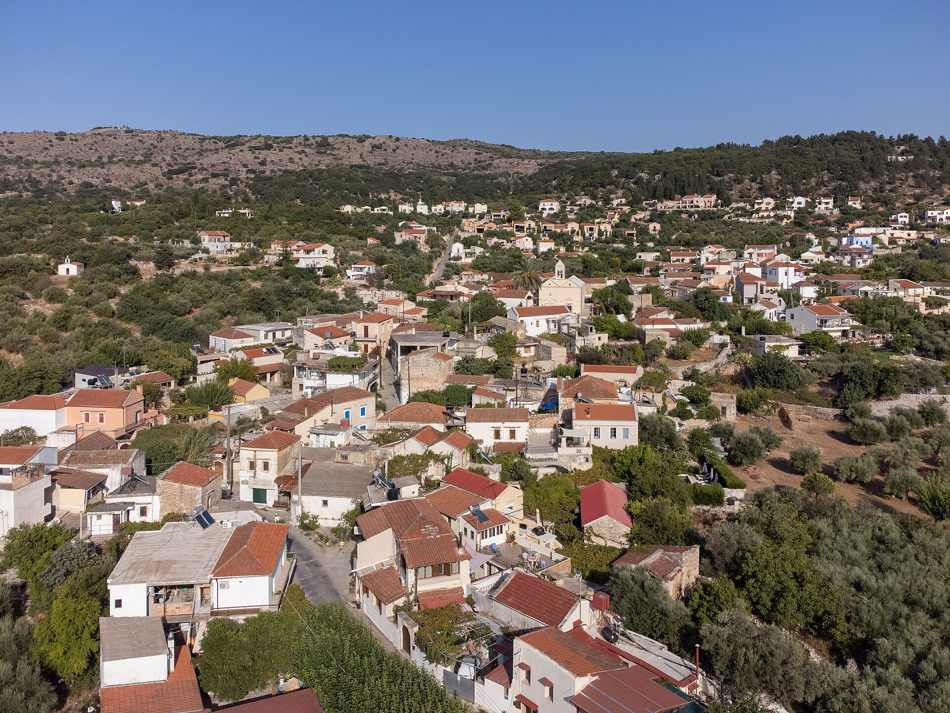
Gavalochori is a well-preserved traditional stone village in the Apokoronas region of the Chania district in western Crete, set inland from the resorts of Almyrida and Kalyves and close to the larger village of Vamos. Cobbled lanes wind past stone houses, old wells and Venetian-era arched cisterns, while olive groves and vineyards surround the settlement on every side. The village is best known for its Historical and Folklore Museum, housed in an old stone mansion. Travellers come here for traditional architecture, craft heritage and a quiet, lived-in corner of the island a short drive from the sea. Plan a slower western Crete with My Greece Tours.
Gavalochori keeps the feel of an ordinary working village rather than a polished showpiece, which is much of its charm. Its museum tells the story of village life through weaving, the local kopaneli silk-lace craft, farm tools and everyday scenes, and a Byzantine sunken well stands at the edge of the settlement. The sections below cover the village and its setting, the folklore museum, the wells and craft heritage, the food and the nearby coast, and how Gavalochori fits a wider trip. For the full regional picture, our Crete travel guide places Gavalochori among the other villages of Apokoronas.
Where is Gavalochori in Crete’s Apokoronas region?
Gavalochori sits in the Apokoronas region of the Chania district in western Crete, inland from the resorts of Almyrida and Kalyves and near the larger village of Vamos. Olive groves and vineyards surround the stone settlement.
Gavalochori occupies a gentle inland pocket of Apokoronas, the green and hilly corner of the Chania district in western Crete. The village reads as a cluster of old stone houses gathered around cobbled lanes and shaded squares, ringed by olive groves and vineyards that climb the slopes on every side. The larger village of Vamos lies close by and serves as the regional hub, while the north-coast beaches sit only a short drive down towards the sea. This position keeps Gavalochori firmly rural and traditional, yet within easy reach of the coast, so travellers get the quiet of an inland village without giving up the option of an afternoon swim.
The setting feels lived-in rather than staged, a place where daily village life carries on around the visitor.
The land around the village frames its character before you reach the first stone house. Winding roads thread up from the coast through olive groves and past small chapels, opening now and then onto views of the sea and the hills behind. The wider region of Apokoronas holds a scatter of similar villages, each with its own square, church and rhythm, and Gavalochori sits comfortably among them as one of the best preserved. The pace stays slow and unforced. Cafes and tavernas fill the shaded squares, older residents pass the afternoon over coffee, and the everyday sounds of a working Cretan village replace the noise of the busier resorts on the coast below.
Travellers planning wider things to do in Crete often fold the village into a slow inland loop of Apokoronas.
What can you see at the Gavalochori Folklore Museum?
The Historical and Folklore Museum sits in an old stone mansion and displays weaving, the local kopaneli silk-lace craft, farm tools and scenes of village life. It gathers the traditions of Apokoronas under one roof for visitors.
The Historical and Folklore Museum stands at the heart of Gavalochori, housed in an old stone mansion that suits its contents perfectly. Inside, the rooms trace the everyday life of the village and the wider Apokoronas region through the things people made and used. Looms and woven cloth show the weaving tradition, while a dedicated display explains kopaneli, the delicate local silk-lace craft that gives the village part of its fame. Farm tools, household objects and reconstructed scenes of village life fill the other rooms, building a patient picture of how the community lived off the land and its own hands.
The museum turns a short visit into a real lesson in the traditions that shaped this quiet corner of western Crete. It rewards an unhurried, curious look rather than a rushed glance on the way through.
A visit to the museum pairs naturally with a slow wander through the lanes outside, where the same heritage stands in stone rather than glass cases. The mansion setting matters as much as the exhibits: thick walls, small windows and cool stone rooms show the domestic architecture of the region at first hand. Travellers drawn to craft and folk history find enough here to reward an unhurried hour, and the kopaneli lace in particular marks Gavalochori out from the pretty but plainer villages nearby. The museum makes an easy centrepiece for a half-day in the village, combined with coffee in a shaded square and a look at the old wells that gave the community its water for centuries.
Its calm, well-kept rooms leave visitors with a clearer sense of how craft, farming and daily life once knitted together.
What are the wells and craft heritage of Gavalochori?
Cobbled lanes pass old wells and Venetian-era arched cisterns known as kamares, and a Byzantine sunken well stands at the edge of the village. The kopaneli silk-lace craft and traditional weaving carry the village’s living heritage.
Water and craft define Gavalochori as much as its stone houses do. Along the cobbled lanes stand old wells and the Venetian-era arched cisterns known as kamares, graceful stone structures built to gather and hold water in a dry landscape. At the edge of the village a Byzantine sunken well survives, older still, a reminder of how long people have drawn life from this ground. These features are not tucked away in a museum but stand out in the open, part of the fabric of the village that visitors walk past on an ordinary stroll.
Together they tell a quiet story of centuries of settlement, of hands shaping stone to solve the daily problem of finding and keeping water in the hills of Apokoronas. Pausing at each one turns a short walk into a slow reading of the village’s past.
The craft heritage runs alongside the stonework and gives the village its distinctive name among travellers. Kopaneli, the local silk-lace craft, once occupied the hands of village women and now survives as a tradition kept alive and explained in the folklore museum. Weaving belongs to the same world, turning wool and thread into cloth for the home and the field. This lived heritage sits close to the everyday pleasures of a Cretan village. Travellers who linger over Cretan food in a shaded square find the craft and the cooking spring from the same self-reliant way of life. Gavalochori wears its history lightly, in stone, thread and water, rather than packaging it for show.
The result is a heritage that feels honest and unforced, woven through the working village rather than staged for the passing visitor.
What food and nearby coast surround Gavalochori?
Tavernas and cafes fill the shaded squares, serving traditional Cretan cooking drawn from the surrounding olive groves and vineyards. The village sits a short drive from the north-coast beaches of Almyrida and Kalyves and the wider Apokoronas region.
Eating in Gavalochori means settling at a taverna table in a shaded square, where the pace is slow and the cooking leans on what the land gives up nearby. Olive groves and vineyards ring the village, so olive oil, wine, vegetables and herbs come from close at hand, joined by cheese from the hills and meat raised in the region. Cafes and kafeneia hold their own steady trade, filling with older residents and passing travellers through the long afternoon. Meals stretch out in the generous Cretan way rather than being rushed, and the setting of old stone and green shade adds to the pleasure.
This everyday, unforced quality is exactly what draws visitors inland from the busier coast to the calm of an Apokoronas village.
The nearby coast keeps Gavalochori within easy reach of the sea despite its inland setting. A short drive down through the olive groves reaches Almyrida, a small resort with shallow, sheltered water and a line of tavernas along the shore, while neighbouring Kalyves offers a longer beach and a river mouth. This closeness lets travellers combine a morning of village lanes and museum rooms with an afternoon swim, all without a long transfer. The larger village of Vamos and the green hills of inland Apokoronas fill out the surroundings, giving a Gavalochori base real variety within a small radius.
The mix of quiet stone village and easy coast is a large part of why the area suits a slower, self-driven trip, and it keeps a week of days from ever feeling the same twice.
Why visit Gavalochori on a Crete trip?
Gavalochori rewards travellers after traditional architecture, craft heritage and a quiet, lived-in village close to the sea. Its folklore museum, old wells and shaded tavernas make an easy, authentic stop within the green Apokoronas region.
The case for Gavalochori rests on its authenticity and its balance. This is a real working village, well preserved but not turned into a museum piece, where stone houses, cobbled lanes and old wells sit alongside everyday cafes and homes. The folklore museum gives a clear window onto the region’s traditions of weaving and kopaneli lace, and the Venetian kamares and Byzantine sunken well add layers of history you can walk up to and touch. Around it all spread the olive groves and vineyards that feed the tavernas in the shaded squares. Travellers who value heritage and quiet over resort polish find Gavalochori answers exactly that wish.
It is an honest corner of western Crete that has kept its own character through the years rather than reshaping itself for the visiting season.
Position seals the argument as much as atmosphere. Set inland yet a short drive from the beaches of Almyrida and Kalyves and the hub village of Vamos, Gavalochori works as a calm base or an easy half-day stop within a wider Apokoronas trip. Craft-minded travellers linger over the museum and the lace, walkers explore the lanes and surrounding groves, and everyone benefits from a shaded taverna table at the day’s end. The village pairs a genuine sense of the traditional Cretan past with the practical comfort of the coast nearby.
Visitors leave with both a quiet stay and a real sense of the region, the kind of place among the island’s hidden gems in Crete that people return to rather than tick off and forget.
Frequently Asked Questions
How do you get to Gavalochori and where is it?
Gavalochori lies in the Apokoronas region of the Chania district in western Crete, set inland from the north coast among green hills, olive groves and vineyards. A hire car gives the most freedom for reaching it and for exploring the villages and coast around. The approach climbs a short way up from the sea through olive groves, passing small chapels and opening onto views of the hills and the water below. The larger village of Vamos sits close by and acts as the regional hub, while the resorts of Almyrida and Kalyves lie only a short drive down towards the coast.
Roads through Apokoronas stay quiet and gentle, so the drive itself becomes part of the pleasure rather than a chore. Gavalochori works best as a base you settle into or an easy stop on a wider tour. Wander the lanes and the folklore museum, then drive down for an afternoon swim on the north coast.
What is the kopaneli silk-lace craft of Gavalochori?
Kopaneli is the traditional silk-lace craft for which Gavalochori is best known, a delicate handmade lace once worked by the women of the village. It belongs to the wider world of village crafts kept alive in the region, alongside the weaving of wool and thread into cloth for the home and the field. The Historical and Folklore Museum, housed in an old stone mansion in the village, gives the craft pride of place and explains it to visitors within its rooms of looms, farm tools and scenes of everyday village life. Seeing kopaneli in the museum turns an abstract name into something concrete and understood, a real thread in the fabric of Apokoronas heritage.
The craft marks Gavalochori out from the pretty but plainer villages nearby, giving travellers a specific reason to stop. It sits within the same self-reliant tradition that shaped the village’s food, its stone houses and its old wells.
Is Gavalochori worth visiting for families and general travellers?
Gavalochori suits families and general travellers who enjoy a calm, authentic village rather than resort entertainment. The folklore museum gives children and adults a clear, hands-on window onto old crafts and village life, while the cobbled lanes, old wells and shaded squares make for an easy, unhurried wander. Tavernas and cafes fill the squares with traditional Cretan food and a gentle pace, so a visit can stretch comfortably over coffee and a long lunch. The village sits only a short drive from the sheltered, shallow beaches of Almyrida and Kalyves, so a morning among the stone lanes pairs naturally with an afternoon swim, which helps with younger visitors.
Gavalochori trades organised excitement for genuine character, heritage and quiet, and that mix rewards travellers touring the Apokoronas region of western Crete at their own pace. It works both as a short, memorable stop and as a peaceful inland base within reach of the coast.