
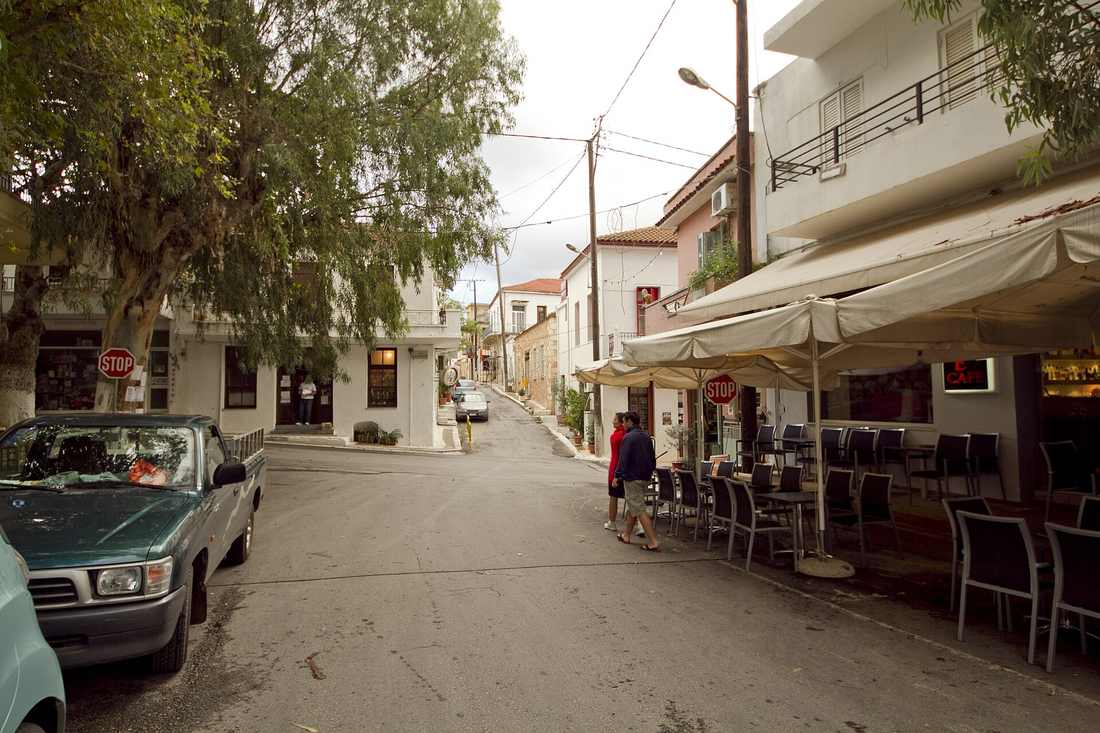
Vamos is a traditional inland village and the historic capital of the Apokoronas district in north-west Crete, in the Chania region. It sits among olive groves and low hills between Chania and the Souda Bay coast. Stone houses and old mansions line its quiet lanes. The village became a pioneer of Cretan agrotourism after a local cooperative restored old buildings as guest cottages. That same cooperative runs cookery lessons, guided walks and craft workshops. Village tavernas serve local food, and olive-oil and raki tastings draw travellers who want working village life rather than a resort strip. This guide sets out what to see and do in Vamos with My Greece Tours.
Vamos rewards travellers after culture, slow days and local produce rather than beach clubs. It keeps a strong sense of its past, having played a part in the island’s revolts against Ottoman rule. The village stands within a short drive of the coast and the Apokoronas beaches. The sections below cover the village and its history, the agrotourism cooperative that revived it, the food and tastings, the produce-focused activities, and the practicalities of using Vamos as a base. For wider context on the region and the island, this page works alongside our Crete travel guide and the surrounding cluster of area pages.
Where is Vamos in Crete and what is the village like?
Vamos is an inland village in north-west Crete, in the Chania region, set among olive groves between Chania and the Souda Bay coast. It is the historic capital of the Apokoronas district, built of stone houses and old mansions along quiet lanes.
The village stands on low hills a short drive inland from the north coast, at the heart of the Apokoronas district that spreads across the green country east of Chania. Its lanes wind between stone houses and old mansions, part restored, part weathered, giving Vamos the look of a working Cretan settlement rather than a rebuilt showpiece. Olive groves press right up to the edge of the built-up area. The surrounding Apokoronas country holds a network of similar villages linked by narrow roads. Vamos served as the administrative centre of the district under earlier rule, which explains the scale of its mansions and public buildings.
The result is a village with more architectural weight than its modest size first suggests to arriving visitors walking in from the road.
Daily life still runs through the central square and the tavernas, bakeries and shops around it, where residents outnumber visitors for much of the year. The village keeps a slow rhythm shaped by the olive harvest, local festivals and the church calendar rather than by package-tour schedules. Travellers who base themselves here find a place that stays open and lived-in outside the summer peak, unlike the coastal resorts that empty in winter. The mix of restored heritage housing and everyday village function defines Vamos, which presents Cretan village life as it is worked rather than as a staged theme.
That grounded authenticity is what draws people away from the beach towns and up into the quiet hills of the Apokoronas district for a longer, unhurried stay. Nearby, the stone-built craft village of Gavalochori keeps its folklore museum and Venetian wells.
What is the history of Vamos in Crete?
Vamos served as the historic capital of the Apokoronas district and played a part in the island’s revolts against Ottoman rule. Its scale of mansions and public buildings reflects that administrative and rebel past, which the village still marks and remembers today.
The village carried real administrative weight as the seat of the Apokoronas district, and that role left it with a stock of larger stone mansions and civic buildings rarely found in a settlement of its size. Its position in the hills, defensible and inland from the exposed coast, suited a centre of local government and resistance. Vamos took part in the wider revolts that ran across the island against Ottoman rule, a history shared with neighbouring Sfakia and the mountain districts. The old buildings that the modern cooperative later restored form part of this record, since a good number date from the era when the village held its administrative rank.
Walking the lanes, a traveller reads that layered past directly in the surviving stonework itself.
The historical thread runs into the wider story of western Crete, where the country between Chania and the White Mountains repeatedly rose against foreign rule. Vamos sits close to that mountain hinterland and to the coast at Souda Bay, giving it a foot in both the farming lowlands and the rebel uplands. Nearby coastal villages such as Kalyves carry their own layers of Venetian and later fortification, and together they map the long contested history of the district. This background changes how the village reads today. The restored mansions are not decorative heritage but the surviving fabric of a place that governed and resisted across centuries of rule on the island of Crete.
Older residents still recount the district’s part in those uprisings, and the local memory keeps the connection between the stone buildings and the events alive for visitors.
What is the Vamos agrotourism cooperative and how does it work?
A village cooperative restored old buildings as guest cottages and runs the agrotourism programme, offering accommodation in traditional stone houses plus lessons and walks. It made Vamos a pioneer of Cretan agrotourism, keeping income and heritage inside the village itself.
The cooperative grew from a village initiative to repair and reuse abandoned stone houses rather than let them collapse, turning them into self-catering guest cottages spread through the lanes. Guests stay in restored village homes with traditional fabric kept intact, so the accommodation itself forms part of the experience rather than sitting in a separate resort compound. The same organisation runs a programme of guided walks through the olive groves, cookery lessons, olive-oil and raki tastings and craft workshops, drawing on residents who hold the skills. This model channels tourist income back into repairing heritage buildings and supporting village trades.
It set an early example that other hidden gems in Crete have since followed across the island’s quiet interior, where restored villages now offer stays built around local produce and traditional skills.
The practical effect is that a stay in Vamos plugs a traveller straight into working village life. A morning brings a guided walk explaining the olive terraces, an afternoon a cookery lesson using local produce, an evening a taverna meal and a tasting of the village raki. The cooperative sets the pace across the day. The cooperative acts as the hub that arranges these, so visitors do not have to assemble the pieces themselves. The guest cottages sit among ordinary homes rather than behind a resort gate, and guests share the square, the bakery and the church festivals with residents.
This blend of restored heritage lodging and hands-on activity earned Vamos its reputation as a leader of agrotourism across the Chania region and the wider island of Crete.
What food, tastings and workshops does Vamos offer?
Vamos tavernas serve village food, and the cooperative runs cookery lessons, olive-oil and raki tastings and craft workshops. These use local produce from the surrounding olive groves and gardens, giving travellers direct contact with the ingredients and methods of the district.
Village tavernas around the square cook the everyday food of the Apokoronas, built on olive oil pressed from the surrounding groves, garden vegetables, local cheese, wild greens and slow-cooked meat. The cooperative extends this into structured cookery lessons, where visitors learn to prepare regional dishes with a resident cook and then eat the results. Olive-oil tastings explain the harvest and pressing that shape the local product, while raki tastings introduce the strong village spirit distilled after the grape harvest. This close focus on regional produce ties the visitor experience to the land that surrounds the village.
It connects naturally to the wider tradition of Cretan food that runs across the whole island and defines its table, from mountain villages to coastal towns, all built on the same core produce of oil, greens and cheese.
The craft workshops round out the programme, covering skills such as weaving, pottery and other village trades taught by residents who still practise them. These sessions give travellers a working understanding of how the village made its household goods before mass production, and they support the artisans who keep the crafts alive. Guided walks link the food and craft strands together, tracing the olive terraces and explaining how the raw materials reach the table and the loom. Together the tastings, lessons and workshops turn a stay into an education in the produce and methods of the district.
That hands-on programme is precisely the draw for travellers who choose Vamos over a busy coastal resort on the north shore, since it teaches the produce and craft of the district at first hand rather than presenting them behind glass.
Why use Vamos as a base for touring western Crete?
Vamos sits a short drive from Chania, the Souda Bay coast and the Apokoronas beaches, giving a green, central base for touring western Crete. It combines authentic village lodging with easy road access to town, coast and mountain excursions.
The village works well as a touring base because it balances quiet inland lodging with quick reach to the main sights of the region. The city of Chania, with its Venetian harbour, market and airport, lies a short drive to the west, while the sheltered Apokoronas beaches at the coast are equally close to the north. From Vamos a traveller can spend one day in the old town, another on the sand, and a third heading into the White Mountains, all returning to the same restored stone cottage at night.
This central position within the district is a large part of why the cooperative model took hold here rather than in a more isolated mountain village far from the coast, since it keeps guests close to transport, town amenities and the beaches at once.
The green, cultured character of Vamos suits travellers who want a settled base rather than a run of separate hotels. Mornings and evenings in the village stay calm and local, which contrasts with the busy resort strips and gives a genuine sense of place between excursions. The wider list of things to do in Crete includes day trips across the west that sit within reach of Vamos, from gorge walks to coastal drives and town visits, each an easy return run from the village.
The combination of authentic accommodation, food-focused activities and a practical road position makes the village a strong choice for a slower, culture-led trip through the Chania region and the island’s north-west, where a single base serves town, coast and mountain in turn across the week.
Frequently Asked Questions
Is Vamos in Crete worth visiting for travellers staying on the coast?
Vamos rewards a visit even for travellers based at the coast, because it offers a side of the island that the beach resorts do not. The historic capital of the Apokoronas district presents stone mansions, quiet lanes and a working square where residents outnumber tourists for much of the year. A half-day trip lets visitors walk the village, eat regional food at a taverna and join an olive-oil or raki tasting through the cooperative. Travellers who prefer a longer stay can book a restored guest cottage and use the village as a base. The draw is authenticity.
Vamos shows Cretan village life as it is lived and worked, from the olive harvest to the church festivals, making it a rewarding contrast to a purely beach-based holiday in the Chania region. The village also sits close enough to the coast to fold easily into a wider western Crete itinerary across a week.
How do visitors reach Vamos in Crete and how long is a good stay?
Visitors reach Vamos by road, driving inland a short distance from the north coast of the Chania region. The city and airport of Chania lie a short drive to the west, and the Souda Bay coast sits close by to the north. A hire car gives the most freedom, since the surrounding villages and beaches all sit within easy reach of the village. Day-trippers can see the core of Vamos and eat a meal in half a day.
Travellers who want the agrotourism experience in full do well to plan two nights or more in a restored guest cottage, which allows time for a cookery lesson, a guided walk through the olive groves, a tasting session and unhurried evenings in the square. That longer stay suits the slow rhythm of the village. It lets guests combine Vamos with the coast and the mountains on separate days across a relaxed itinerary.
What can travellers do around Vamos in the wider Apokoronas district?
Around Vamos the wider Apokoronas district offers a green landscape of olive groves, traditional villages and a sheltered coast, all within a short drive of the village itself. Travellers can follow guided walks through the terraces near the village, visit neighbouring settlements with their own churches and squares, and reach the calm Apokoronas beaches on the north coast for a swim in the shallow water. Nearby coastal villages add a harbour, a beach and a ruined Venetian fort to the route, giving the drive a mix of history and shoreline.
The city of Chania and its Venetian harbour lie a short drive to the west, while the White Mountains rise to the south for gorge and mountain excursions into the high country. The cooperative in Vamos itself arranges much of the local activity, from cookery lessons to craft workshops, so the village makes a natural cultural anchor between the coast and the mountains of the north-west of the island.