
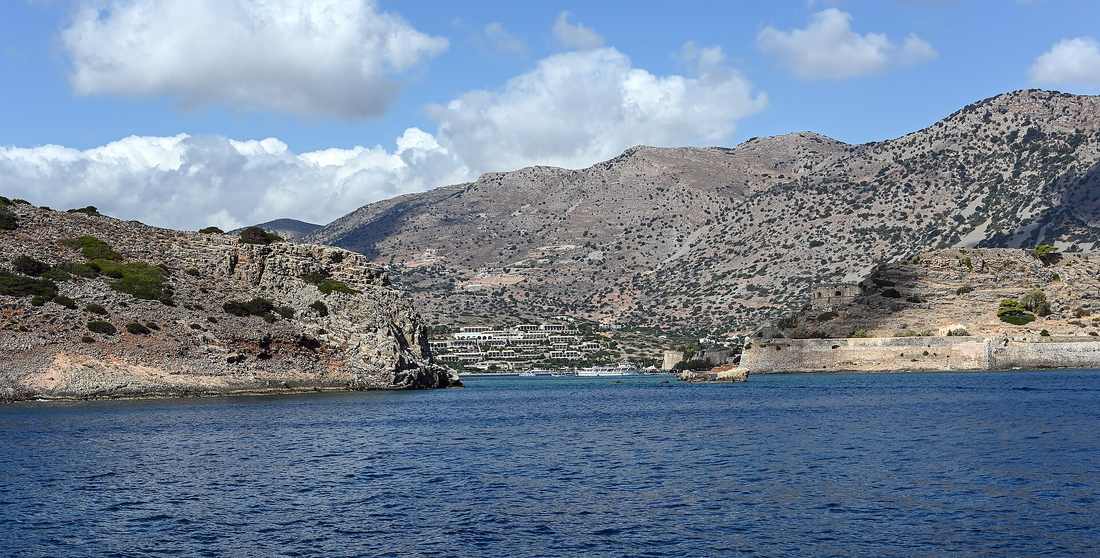
Plaka is a small seaside village on the east coast of Crete. It sits in the Lasithi region, just north of Elounda. The village faces the fortress islet of Spinalonga across a narrow channel. Small boats still cross from its jetty to the island. Plaka once served as the supply point and staff base for the leprosy colony on Spinalonga. That history shapes the village identity today. Now it is a quiet, upmarket spot of pebbly coves, clear water, fish tavernas and small hotels on the slopes above. Plan your east-coast trip and cross to Spinalonga from the jetty here with My Greece Tours.
This guide covers where Plaka sits on the Mirabello coast. It explains how the boats reach Spinalonga and what the pebbly coves and tavernas offer. It also weighs the village as a calm base near Elounda and Agios Nikolaos. The sections below cover the practical questions travellers ask before choosing this corner of the island over the busier resort strips. For the wider island context, the Crete travel guide frames how Plaka fits the eastern region, the Lasithi coast and the day-trip routes.
Where is Plaka in Crete and how do you reach it?
Plaka sits on the east coast of Crete in the Lasithi region, just north of Elounda and facing Spinalonga across a narrow channel. Drivers reach it on the coast road from Agios Nikolaos through Elounda in roughly forty minutes.
The village lies on the Mirabello coast. This wide gulf curves along the eastern side of the island. Agios Nikolaos, the regional capital and main service town, stands at the head of the gulf. The road north from it runs through Elounda. It then climbs on to Plaka at the end of the paved coastal route. The drive covers a short distance. It threads past coves, salt-pan flats and the low hills that separate the two resorts. Most travellers arrive by hired car. The village sits away from the main east-west highway that crosses the island. The nearest large airport is Heraklion, about ninety minutes to the west by road.
That distance makes Plaka one of the more remote east-coast bases to organise a driving trip around.
The setting explains the calm that defines the village. Plaka faces Spinalonga directly. The fortress islet fills the view across a channel narrow enough to swim in parts. The slopes behind the shore rise steeply. Building has stayed low and scattered rather than dense along the front. Local buses run to Elounda and Agios Nikolaos. From there the connections reach the rest of the region and the wider road network. The map on things to do in Crete gives a broader picture of the eastern region. It places Plaka within the Lasithi corner. It also shows the drives that connect the village to the gorges, plateaus and remote beaches inland and along the south coast.
A car turns Plaka into a workable base for that whole end of the island.
How do the boats from Plaka reach Spinalonga?
Small boats cross from the Plaka jetty to Spinalonga in about ten minutes, the shortest route to the fortress islet. The channel is narrow, so the crossing runs often through the day in the main season.
The jetty at Plaka gives the closest launch point to Spinalonga of any village on the coast. Boats leave from Elounda and Agios Nikolaos as well. Those routes cover a longer stretch of open water and cost more. The Plaka crossing takes the direct channel line straight across. Operators run wooden day-boats and small covered craft. These fill and depart as passengers gather rather than to a fixed rail timetable. The last return is set for the late afternoon each day. The short distance keeps the water calm on most days of the season. The fortress walls loom larger with every metre.
Buying the island entry ticket separately at the Spinalonga landing stage lets walkers set their own pace around the ruins. Group tours and independent visitors share the same short line across the channel.
The island rewards the crossing with a preserved Venetian sea-fort. It also holds the remains of the twentieth-century colony that gave Plaka its old supply role. A marked circuit leads through the gatehouse, the main street of ruined houses, the church and the perimeter bastions. The return boat waits at the same stone quay below. Reading about the fortress before the crossing adds depth to the walk. The page on Spinalonga sets out the layers of history the ruins hold. The larger operators at Elounda add a swim stop and a longer cruise. So the choice between the two ports turns on one point.
It depends on whether the short direct hop or the fuller half-day trip suits the plan. Both ports land at the same quay on the islet. The walk around the fortress runs the same either way.
What do the beaches and coves at Plaka offer?
Plaka has small pebbly coves rather than long sandy strands, with clear, deep water that drops quickly from the shore. The main cove sits beside the village front, and quieter pockets of shingle lie a short walk along the coast.
The shoreline here is shingle and pebble. The slopes rise behind the village, so the coves stay compact. The water clears fast to a deep blue. The central cove runs along the seafront by the tavernas and the boat jetty. That spot is handy for a swim between a meal and a crossing to the island. Sunbeds and umbrellas cover part of it through the main season. The ends stay open for those who bring their own mats and towels. The steep entry and clear water suit swimmers and snorkellers more than families after shallow sand. The sea stays sheltered on most days of the season.
The bulk of Spinalonga sits directly offshore and blocks the wind that reaches the cove. The swim and the meal sit within a step of each other.
Walking north and south from the centre opens quieter pockets of shingle. The crowds thin along this stretch. The view across to the fortress stays constant. The clarity of the water and the backdrop of the islet give these coves a distinct character. Travellers compare the shingle here with the sandy resort beaches further along the gulf. The contrast is set out on Crete beaches. That page ranges the coves of the Mirabello coast against the broad sands of the north and the remote strands of the south. Plaka trades length and sand for clarity, quiet and the view. That is the exact trade the visitors who come to the village want to make.
The swimming suits a slow pace rather than a busy resort day.
Why did Plaka serve the Spinalonga colony?
Plaka stood as the closest mainland point to Spinalonga, so it became the supply village and staff base for the leprosy colony on the islet. Goods, water and workers crossed the short channel from its jetty during the colony years.
The channel between the village and the islet is the narrowest crossing on this coast. That fact fixed Plaka’s role once the colony opened on Spinalonga in the early twentieth century. Supplies, fresh water and provisions were ferried across from the village. The staff who ran the settlement lodged on the mainland side rather than among the patients. The two places were bound together for the decades the colony ran. The same short boat line that carried supplies then carries the visitors now. The village kept its everyday working character through those years. The tie to the islet across the water still runs through the village story.
It draws travellers to cross the channel today, drawn by both the setting and the past. The same water route now carries curiosity rather than cargo.
The colony closed in the second half of the twentieth century, and the islet emptied. The link left its mark on the village that had supplied it for so long. Grasping that shared past adds weight to the short crossing and the ruins on the far shore. The town of Agios Nikolaos sits at the head of the gulf as the regional capital. It holds the archaeological and folk museums that set the wider Lasithi story in context. The town pairs well with a Plaka and Spinalonga day out. The history of the islet and the village that served it draws steady numbers through the season.
That pull holds up despite the distance from the main resorts on the north coast. The story ties the mainland village to the islet in one thread.
Is Plaka a good base for exploring eastern Crete?
Plaka works as a calm, upmarket base within a short drive of Elounda, Agios Nikolaos and the Mirabello coast. It suits travellers who want quiet evenings and the Spinalonga view rather than nightlife, with day trips reaching the wider east.
The village keeps a small stock of hotels, villas and rooms on the slopes above the water. These aim at travellers after a quiet, upmarket stay rather than a resort strip. Evenings centre on the fish tavernas and cafes along the front. The fortress stands lit across the channel. The pace stays slow once the day-boats stop for the night. The steep site and the limited building keep the numbers low. So the village feels calmer than Elounda a short drive south. It also feels calmer than Agios Nikolaos at the head of the gulf. Easy road access to both towns rounds out the case.
Plaka suits travellers who tour the region by day and want a peaceful return each evening. Its stock of villas fits couples and small groups rather than large tour blocks.
Day drives from the village reach a wide spread of the east. The Lasithi Plateau, the palm beach at Vai, the ruins and museums, and the coves along the gulf all fall within a round trip. The choice of Plaka over the larger centres turns on the evenings and the view. The trade between a quiet village and a fuller resort is set out on where to stay in Crete. That page ranges the east-coast bases against the north and the west. Plaka answers the case for a calm, scenic base. It offers the finest cross-channel view on the coast. The cost is the nightlife and the range of the bigger towns nearby.
Travellers weigh that trade against the quiet they gain. The east coast rewards a car and an early start.
Frequently Asked Questions
How long does the boat from Plaka to Spinalonga take?
The crossing from the Plaka jetty to Spinalonga takes about ten minutes. It is the shortest route to the islet from anywhere on the coast. The channel between the village and the fortress is narrow. So the boats run a direct line rather than the longer open-water routes. Those longer routes leave from Elounda and Agios Nikolaos further down the gulf. Small wooden day-boats and covered craft leave through the day in the main season. They fill as passengers gather rather than to a strict published timetable. The last return sails in the late afternoon. Buying the island entry ticket at the Spinalonga landing stage lets walkers set their own pace.
The circuit runs past the ruined street, the church and the perimeter bastions. The direct Plaka hop suits travellers who want the fortress alone rather than a full half-day at sea. It keeps the time on the water down to the shortest crossing on this stretch.
Does Plaka have sandy beaches?
Plaka has pebbly and shingle coves rather than long sandy beaches. The water is clear and deepens quickly from the shore. The central cove runs along the seafront by the tavernas and the boat jetty. Sunbeds cover part of it in the main season. Quieter shingle pockets lie a short walk north and south of the centre. The steep entry and the clarity of the water suit swimmers and snorkellers. They suit that group more than families after shallow sand along a flat beach. The bulk of Spinalonga offshore shelters the water on most days. That keeps it calm for a swim between a meal and a crossing to the islet.
Travellers who want broad sand find it at the resort beaches further along the Mirabello gulf. Plaka trades length and sand for clear water, quiet coves and the constant view across the channel. That view is the reason the visitors who choose it come here.
What is there to do near Plaka?
The main draw at Plaka is the short boat crossing to Spinalonga. The islet holds the Venetian sea-fort and the former colony across the channel. Beyond that, the village makes a base for touring the eastern region. Elounda and its coastal setting lie a short drive south. The regional capital of Agios Nikolaos sits at the head of the Mirabello gulf. That town holds a lake, museums and shops. Day drives from the village reach the Lasithi Plateau, the palm beach at Vai and the coves along the gulf. All fall within range of a hired car. Evenings centre on the fish tavernas along the front. The fortress stands lit across the water.
The pace runs slow after the day-boats stop. Plaka rewards travellers who tour the eastern corner by day. It gives them a quiet, scenic village to return to each night rather than the nightlife of the bigger resort towns.