
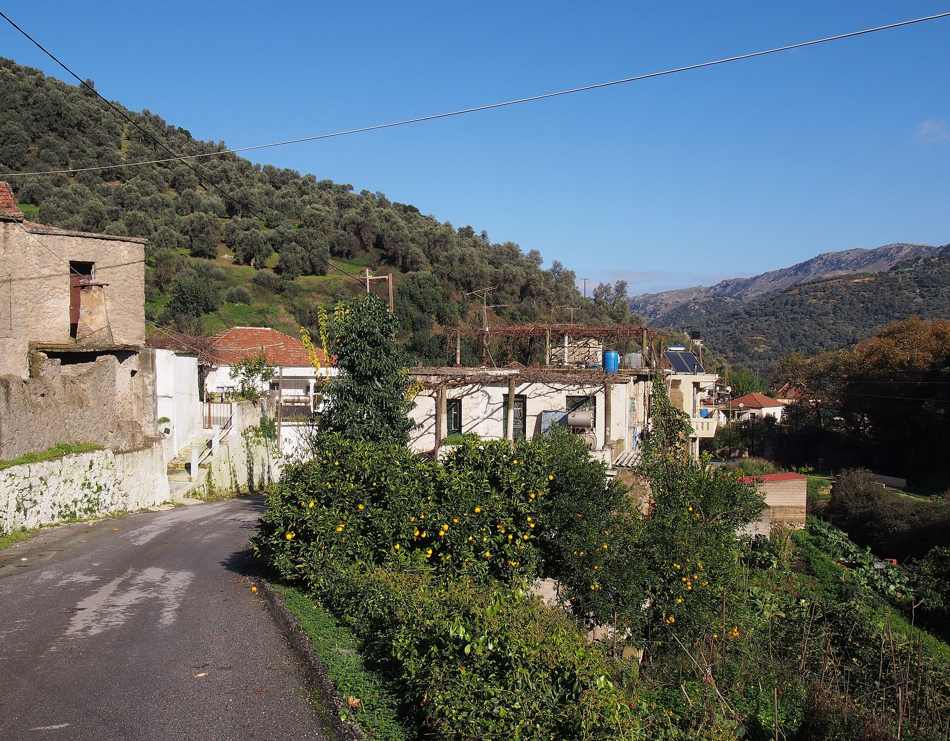
Meskla is a green mountain village at the foot of the White Mountains in the Chania district of western Crete, set in the fertile Keritis valley among plane trees, running water and orange groves. Streams and springs cross the village, feeding gardens and keeping it lush even at the height of summer. Notable small Byzantine churches stand here, including the church of the Metamorphosis of the Saviour and the church of the Panagia, both carrying old wall paintings, and traces of an ancient acropolis lie on the hill above. Tavernas serve trout and local food beside the water. Plan a cool, green mountain escape a short drive from the coast with My Greece Tours.
Meskla sits deep in the Keritis valley, reached along a quiet road that climbs through orchards and neighbouring villages from the city of Chania. The village keeps a lived-in, everyday rhythm rather than a resort polish, and its running water sets it apart from the drier reaches of the island. The sections below cover the setting and the water, the Byzantine churches and their wall paintings, the ancient acropolis on the hill, the food and the walks into the mountains, and how Meskla fits a wider western trip. Our Crete travel guide places the village against the island’s other mountain retreats and green interior roads.
Where is Meskla in Crete’s Keritis valley?
Meskla lies in the Chania district of western Crete, tucked into the fertile Keritis valley at the foot of the White Mountains. It sits a short drive south of the city of Chania, reached through green valley villages.
Meskla occupies a sheltered pocket of the Keritis valley, where the ground rises gently toward the northern flank of the White Mountains. The valley itself is one of the greenest corners of western Crete, kept fertile by streams that carry snowmelt down from the high peaks through much of the year. Plane trees, orange groves and gardens crowd the slopes around the village, and the road in threads past orchards and older settlements rather than open coast. The city of Chania lies a short drive to the north, close enough for a day visit yet far enough that Meskla keeps its quiet, unhurried character.
This position leaves the village apart from the busy shoreline, a green retreat set back in the hills rather than a stop on the coastal route.
The approach frames the whole feel of the place before you reach the first houses. The road climbs steadily out of the lowlands, following the line of the valley as the White Mountains build on the horizon ahead. Water appears often along the way, in ditches, springs and the steady flow that keeps the valley green, a sight that surprises travellers used to Crete’s drier southern face. The village opens out among plane trees, with old stone houses, small churches and the sound of running water threading between them.
People weighing wider itineraries and things to do in Crete often fold Meskla into a green mountain day out from the coast, pairing the drive with a slow lunch beside the water and a walk among the churches.
What makes Meskla so green, with its springs and plane trees?
Streams and springs cross Meskla, feeding gardens and orchards and keeping the village lush even in high summer. Plane trees shade the running water, and orange groves climb the slopes, giving the Keritis valley its rare, cool green character.
Water is the defining feature of Meskla, and it shapes almost everything a visitor notices. Springs rise around the village and streams run through it, threading between houses, gardens and the roots of old plane trees. This steady flow keeps the ground fertile and the air cool, so the village stays green and shaded even when the rest of the island bakes under the summer sun. Orange groves and vegetable gardens climb the surrounding slopes, fed by the same abundant water, and the sound of it never quite leaves the ear. The plane trees give the village much of its shade, spreading over the water and the tavernas set beside it.
This green, watered setting is the first thing that marks Meskla out from the drier, sun-bleached villages elsewhere on Crete.
The lush character has a practical draw for travellers as well as a scenic one. The shade and running water make Meskla a welcome refuge on a hot day. It is a place to slow down and cool off after the glare of the coast or a long mountain drive. The valley setting keeps temperatures gentler than the shoreline, and the greenery softens the light in a way that suits an unhurried afternoon. This is one of the reasons the village draws people looking for hidden gems in Crete rather than the packaged beach resorts of the north.
The reward is a corner of the island that feels alive and watered, where plane trees, springs and orchards combine into a landscape closer to a mountain garden than a typical Cretan village.
Which Byzantine churches and wall paintings can you see in Meskla?
Meskla holds notable small Byzantine churches, including the church of the Metamorphosis of the Saviour and the church of the Panagia. Both carry old wall paintings, giving the quiet village a layer of religious art among its plane trees.
The Byzantine churches are among the strongest reasons to seek out Meskla beyond its green setting. The church of the Metamorphosis of the Saviour and the church of the Panagia both stand in the village, small in scale yet rich in old wall paintings that have survived on their interior walls. These frescoes belong to the Byzantine tradition that shaped religious art across Crete, and their presence in such a modest mountain village speaks to the depth of that heritage in the Keritis valley. The churches sit quietly among the houses, plane trees and streams, so a visit blends art and setting into one unhurried walk.
Travellers drawn to layered history rather than a single famous monument find in Meskla a place where faith, painting and landscape have grown together across long centuries.
Seeing the wall paintings rewards a slow, respectful visit rather than a quick glance. The interiors are small and dim, and the surviving frescoes reveal their detail gradually as the eye adjusts to the light within. The setting adds to the experience: stepping from the bright green of the valley into the cool, painted interior of a Byzantine church makes the contrast part of the visit. The village of Therisso, reached along the mountain roads nearby, gives travellers a second historic Keritis-valley stop to pair with Meskla’s churches.
Together the two villages build a green, history-minded route through the foothills of the White Mountains, one that trades the crowds of the coast for wall paintings, running water and the deep quiet of the interior.
What is the ancient acropolis on the hill above Meskla?
Traces of an ancient acropolis lie on the hill above Meskla, marking the site of a much older settlement. The remains sit quietly over the village, adding antiquity to a place already rich in Byzantine churches.
Above the green heart of the village, the hill carries traces of an ancient acropolis, the fortified high point of a settlement that stood here long before the present houses. Such acropolis sites crowned defensible hills across Crete in antiquity, and the remains above Meskla mark the village as a place with deep roots in the island’s long past. The ground rises from the watered valley floor to this older height, so a climb toward it rewards the walker with views back over the plane trees, orchards and streams below.
The antiquity here is quiet and unpolished rather than a grand ruin, a scatter of traces that ask travellers to imagine the earlier life of the site rather than read it from signs and barriers.
Combining the acropolis with the churches gives Meskla an unusually layered story for a small mountain village. The ancient high point speaks of the island’s earliest inhabitants, while the Byzantine churches below carry the later religious art of Crete. The living village of today threads its running water and tavernas between the two. This depth suits travellers who want their walking to hold meaning as well as scenery. The rise to the hill also serves as a gentle introduction to the harder hiking in Crete that the surrounding peaks offer, a first taste of height before the longer routes into the mountains.
Meskla thus rewards a visitor twice over, with a green valley to rest in and an ancient hilltop to climb toward above the plane trees.
Why use Meskla as a base for walks and food in Crete?
Meskla makes a fine base for mountain walking and local food. Tavernas beside the water serve trout and Cretan dishes, and the village opens onto walking routes climbing into the White Mountains from the Keritis valley below.
Meskla earns its place as a walking base through both its setting and its position beneath the peaks. The village sits at the point where the green valley meets the rising ground of the White Mountains, so paths and tracks lead directly from its edge into the higher country. Walkers can set out from beside the running water and climb steadily into the mountains, returning to shade and a taverna table at the end of the day. The White Mountains dominate the horizon above the village and give the walking its scale and reward, from gentle valley strolls to longer, steeper routes for the well prepared.
This blend of easy access and serious height makes Meskla a natural starting point for exploring the range on foot.
The food matches the setting and rounds out the appeal of a stay. Tavernas set beside the streams and springs serve trout raised in the cold running water, alongside the vegetables, cheese and olive oil of the surrounding valley. Meals stretch out in the unhurried Cretan way, taken in the shade of plane trees with the sound of water close by, and the setting itself becomes part of the pleasure. The city of Chania lies a short drive north, so travellers can pair Meskla’s green quiet with a day among the harbour, markets and old town of the coast. The village works best as a calm, watered anchor.
Here you can walk, eat trout beside the stream and sleep in the cool of the mountains before heading back out to the wider western trip.
Frequently Asked Questions
How do you get to Meskla and how long is the drive from Chania?
Meskla lies south of the city of Chania in the Keritis valley, reached by road that climbs steadily through orchards and neighbouring valley villages toward the White Mountains. A hire car gives the most freedom here, since the village sits away from the main coastal routes and rewards travellers who want to move at their own pace. The drive out of Chania is short, but the road narrows and winds as it gains height, following the line of the green valley with the mountains building ahead. Water appears often along the way, a sign of the springs and streams that keep the whole valley fertile.
The final approach opens among plane trees, with the village spread beside its running water. Roads stay quiet in the interior, so the drive itself becomes part of the pleasure rather than a chore. Meskla works best as a base you settle into, driving out to Chania or into the mountains and returning each evening to the cool green shade of the valley.
What is there to do in Meskla for a half day or day trip?
A visit to Meskla fills a rewarding half day or full day of quiet mountain travel. Start by walking the village lanes among the plane trees and running water, following the streams and springs that keep the place green through the summer. Seek out the Byzantine churches of the Metamorphosis of the Saviour and the Panagia to see their old wall paintings, cool interiors set against the bright valley outside. From there the hill above the village offers a climb toward the traces of the ancient acropolis, with wide views back over the orchards and the Keritis valley. Walkers can push on into the surrounding foothills of the White Mountains, taking a longer route into the higher country.
A meal beside the water, with trout raised in the cold streams and vegetables from the valley, rounds out the day. Meskla suits travellers who want green scenery, Byzantine art, running water and quiet walking gathered into one unhurried stop close to Chania.
Is Meskla worth visiting compared with Crete’s beaches?
Meskla offers a different kind of Cretan day from the coast, and that contrast is its main appeal. The island’s beaches draw travellers with sand and warm sea, while Meskla answers a wish for cool green scenery, running water and quiet mountain walking well away from the crowds. The village stays lush and shaded even at the height of summer, kept green by springs and streams, so it makes a welcome refuge on a hot day. Its Byzantine churches and their wall paintings, together with the ancient acropolis on the hill, give the visit a depth that a beach day does not carry.
Tavernas beside the water serve trout and honest Cretan food in the shade of plane trees, and walking routes climb straight from the village into the White Mountains. Meskla rewards travellers after Byzantine churches, spring water and quiet walking close to Chania, and it pairs naturally with beach days elsewhere on the island to build a fuller western trip.