
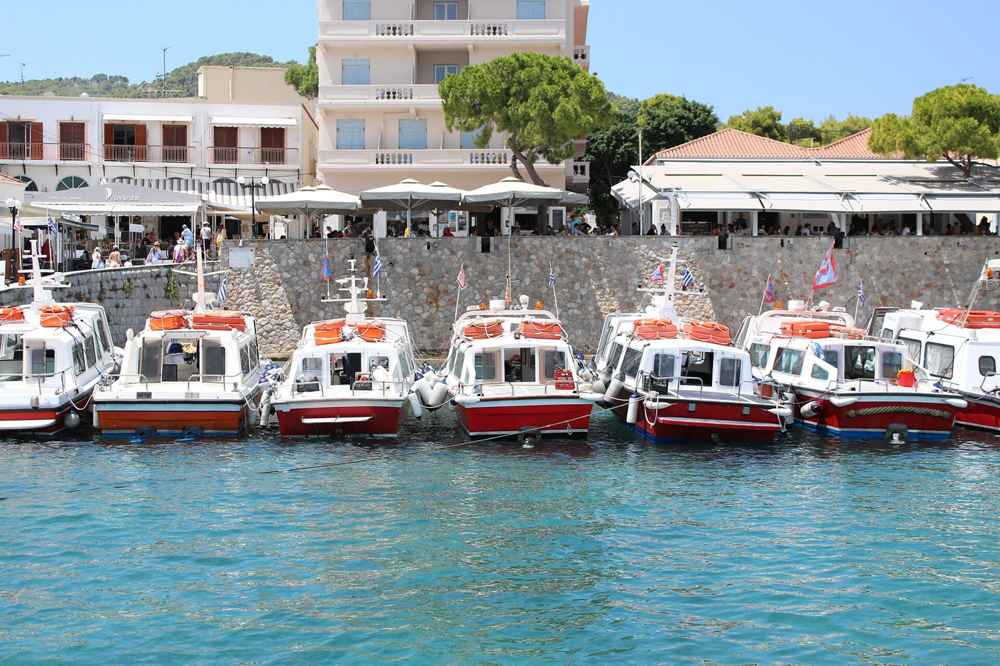
Spetses and Aegina both belong to the Argo-Saronic Gulf within easy reach of Athens, yet they offer contrasting island holidays. This My Greece Tours comparison weighs getting there, atmosphere, sights, beaches, food, cost and who each island suits, so you can decide with confidence. Begin with the Spetses hub for the wider picture before comparing it with pistachio-famed Aegina.
The two islands differ most in distance and pace. Aegina is the closest Saronic island to Athens, reached in about forty minutes by fast ferry, and it stays busy, everyday and full of cars and local life. Spetses lies far to the south-west, roughly two hours by hydrofoil, and keeps itself largely car-free, pine-covered and elegant. That single gap between a lively near neighbour and a distant, refined retreat shapes almost every other difference between them.
How do you choose between Spetses and Aegina?
Spetses suits travellers seeking an elegant, car-free island with fine beaches and pine scenery, while Aegina rewards those wanting a close, lively, everyday island rich in ancient sights, pistachios and quick access from Athens.
The choice turns on distance, pace and the kind of day you want. Aegina lies just off Piraeus, so it feels like an extension of Athens: busy, practical and quick to reach for a morning boat and an afternoon swim. Spetses sits far to the south-west, a two-hour sail that filters out casual crowds and delivers a quieter, more polished island. Aegina keeps its cars, its working town and its everyday Greek rhythm, while Spetses restricts vehicles and wraps itself in pine forest. Travellers who value ancient monuments, low fares and quick access lean towards Aegina, whereas those chasing elegance, cycling and beaches favour Spetses.
Reviewing things to do in Spetses shows how differently the two islands fill a day, and neither choice is a compromise once made for the right reasons.
Landscape marks an early divide between the two. Spetses is genuinely green, cloaked in Aleppo pines that run down to the shore and shade many of its beaches, giving it a soft, wooded character rare in the Aegean. Aegina is drier and more agricultural, its interior dotted with pistachio orchards, olive groves and low hills rather than dense forest. Its coast broken by working harbours and small resorts. This contrast shapes the mood of each island: Spetses feels like a manicured, pine-scented retreat, while Aegina feels like a productive, lived-in island where farming and fishing continue alongside tourism. If you picture your ideal day as a shaded swim in a pine-backed cove, Spetses fits.
Aegina answers that impulse far better.
Size and role separate the islands further. Aegina is larger and more populous, with a working capital. Several villages and a genuine year-round community that briefly served as the first capital of the modern Greek state under Ioannis Kapodistrias. Its life does not depend wholly on visitors, which gives it an authentic, unpolished edge. Spetses is smaller, more compact and more clearly geared towards an elegant kind of tourism, long favoured as a weekend retreat by well-to-do Athenians. This means Aegina offers a fuller sense of everyday Greek island life, complete with markets, farms and fishing boats, while Spetses offers a more refined, resort-like experience centred on its harbour, mansions and beaches.
Your appetite for authenticity versus polish points clearly towards one island or the other from the outset.
History gives both islands real weight, though each wears it differently. Aegina’s past reaches deep into antiquity, when it was a powerful maritime and trading state that minted some of Europe’s earliest coins and built the great Temple of Aphaia. Spetses shines instead in the modern age, celebrated for its role in the 1821 Greek War of Independence, the heroine Laskarina Bouboulina and the Armata re-enactment held each September. Aegina therefore rewards travellers drawn to ancient Greece and classical ruins, while Spetses appeals to those interested in the nineteenth-century struggle for independence and its captains’ mansions. Both islands take genuine pride in their heritage. They draw it from very different chapters of the Greek story.
Which is part of what makes comparing them so rewarding for a curious visitor.
How do you get to Spetses and Aegina from Athens?
Aegina is the closest Saronic island, about forty minutes from Piraeus by fast ferry or a little over an hour by conventional ferry. Spetses is the most distant, roughly two hours ten to two hours thirty by hydrofoil.
Both journeys start at Piraeus, the main port of Athens, but they feel worlds apart in length. Aegina sits closest to the capital of any Saronic island, reached in about forty minutes by high-speed catamaran or flying dolphin. Or a little over an hour by the slower conventional car ferry. Departures run frequently through the day, which makes Aegina exceptionally easy to reach on a whim. Spetses lies far to the south-west, the most distant of the Saronic islands. The fast boat takes roughly two hours ten to two hours thirty. Often calling at Poros and Hydra along the way, which is why the timings vary.
Consulting how to get to Spetses helps you plan the longer connection and choose the quickest available sailing.
A key practical difference is what the boats carry. Aegina is served by conventional car ferries as well as fast passenger craft. You can bring a vehicle over and drive around the island. Which suits its larger size and its scattered orchards, villages and temples. Spetses, being car-restricted, is reached only by passenger fast ferries and hydrofoils; there is little point bringing a car, since you cannot freely drive it there. This shapes how you plan each trip: on Aegina a hire car or your own vehicle genuinely helps, while for Spetses you travel as a foot passenger and rely on bicycles, scooters, carriages and water taxis once ashore.
Packing light pays off more on Spetses, where you move your own luggage from the quay to your lodging.
Spetses holds one distinctive advantage of its own: its closeness to the Peloponnese mainland. The small ports of Kosta and Porto Heli face the island across a narrow channel. From Kosta a short crossing by small ferry or water taxi reaches Spetses Town in only about ten to fifteen minutes. This makes Spetses easy to fold into a road trip through the Argolid, past Nafplio, Epidaurus and Mycenae, with a quick hop across at the end. Aegina has no comparable mainland shortcut and is approached almost entirely from Piraeus.
For travellers already exploring the Peloponnese by car, the Kosta crossing turns distant-seeming Spetses into a surprisingly convenient finale, whereas Aegina makes most sense as a direct, short outing straight from Athens rather than part of a wider mainland loop.
Day trips suit the two islands very differently because of that distance. Aegina is a classic day trip from Athens, close enough that you can catch a morning ferry, tour the Temple of Aphaia. Lunch on pistachios and fresh fish, swim at Agia Marina and be back in the city by evening. Spetses, two hours or more each way, leaves far less time ashore on a single day, so it rewards an overnight stay to make the long journey worthwhile. Checking the best time to visit Spetses helps you pick calmer sailing weather and avoid the busiest weeks.
In short, Aegina is built for the quick escape, while Spetses repays the traveller willing to commit a few unhurried days to it.
How does the atmosphere of Spetses differ from Aegina?
Spetses feels elegant, polished and relaxed, a fashionable pine-clad retreat, while Aegina feels busy, everyday and authentically Greek, a working island of markets, orchards and fishing boats with an unpolished, local character.
Spetses carries an air of understated elegance that has drawn well-to-do Athenians for generations. Its handsome captains’ mansions, the grand Poseidonion Grand Hotel that opened in . The polished waterfront give it a refined. Cosmopolitan mood, softened by pine woods and the absence of cars. Life here spreads between the main quay at the Dapia, the picturesque Old Harbour of Baltiza and beaches ringed with pine. The island feels calm and spacious rather than hectic. Even in high summer the pace stays gentle, geared to swimming, cycling and long dinners by the water. Exploring Spetses Town and the Dapia reveals this graceful, unhurried character, where elegance comes wrapped in sea air and Aleppo pine rather than showy display.
Aegina offers something rawer and more real. It is a genuine working island, close enough to Athens to feel connected to city life yet firmly rooted in its own farming, fishing and trading traditions. The bustling harbour of Aegina Town is lined with cafes, fish tavernas and the horse-drawn carriages that ferry visitors along the front, while behind it stretch pistachio orchards and everyday shops serving a year-round population. This gives Aegina an authentic, lived-in energy that Spetses, geared more towards elegant leisure, does not match. You feel you are visiting a place that exists for itself as much as for tourists.
Where farmers sell pistachios from stalls and fishing boats unload the morning catch beside the ferries, all under a cheerful, workaday Greek buzz.
The two islands also differ sharply in how cars shape their streets. Aegina permits vehicles, so its town and coastal roads carry the ordinary traffic of a busy Greek island. Complete with cars, scooters and the noise and convenience that come with them. Spetses restricts private cars almost entirely, so its lanes stay quiet and are shared instead by bicycles, scooters, horse carriages and pedestrians. This single contrast alters the feel of each place profoundly: Aegina feels connected. Practical and slightly urban around its port, while Spetses feels hushed, refined and set apart from mainland bustle.
Travellers who find the calm of a car-free island restful will prefer Spetses, whereas those who value the convenience and everyday vitality of a normal, functioning town will feel more at home on Aegina.
Crowds and visitors differ in kind as much as number. Aegina, so close to the capital, fills with Athenian day-trippers and weekenders who come for the temples. The pistachios and the beaches, giving its harbour a lively, sometimes crowded feel around the ferry arrivals. Its appeal is broad and democratic, welcoming families, budget travellers and culture-seekers alike. Spetses draws a smaller, more affluent crowd willing to travel further for its elegance and beaches, so it feels more exclusive and less rushed, especially midweek. Neither island is overrun in the way a big Cycladic resort can be.
The character of the visitor differs: Aegina hosts the everyday flow of Athens escaping to the nearest island, while Spetses attracts those seeking a quieter, more polished retreat with a touch of prestige to it.
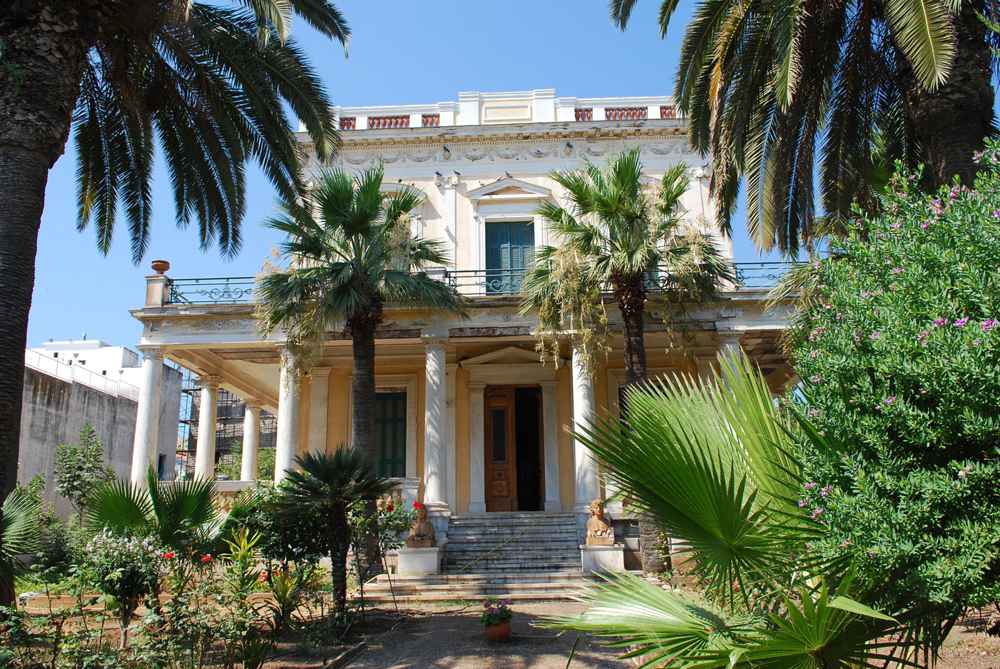
What are the main sights on Spetses and Aegina?
Aegina centres on ancient monuments: the Temple of Aphaia, the Kolona column and the Byzantine ghost-town of Paleochora. Spetses centres on maritime heritage: the Old Harbour, the Bouboulina Museum, the Poseidonion Grand Hotel and grand mansions.
Aegina is unusually rich in monuments for so small an island. Its crowning sight is the Temple of Aphaia, a remarkably well-preserved Doric temple built around the early fifth century BC. Standing on a pine-clad hill in the north-east near Agia Marina, with sweeping views across the gulf. It forms part of a famous triangle of ancient temples with the Parthenon in Athens and the Temple of Poseidon at Sounion. Near Aegina Town rises the Kolona, a lone standing column that is all that remains of an ancient Temple of Apollo, beside a low archaeological hill and museum. Together these ruins let you touch classical and archaic Greece within a short drive.
A depth of antiquity that Spetses, for all its charm, simply cannot rival on its own soil.
Aegina layers Byzantine and religious heritage on top of its ancient ruins. Inland lies Paleochora, a haunting medieval ghost-town on a hillside once serving as the island’s capital. Where dozens of small churches and chapels survive scattered across the slopes long after the houses fell to ruin, having been built there for protection from pirate raids. Nearby stands the large modern church and monastery of Agios Nektarios, among the most visited pilgrimage sites in Greece. These sights give Aegina a spiritual and historical richness spanning centuries, from antiquity through the Byzantine and Ottoman eras to the present. A visitor curious about the long sweep of Greek history finds it unusually concentrated here.
All reachable by a short drive or bus ride from the busy harbour town on the west coast.
Spetses tells a different, more modern story through its sights. The island’s heart is its maritime past and its role in the 1821 revolution, best felt at the atmospheric the Old Harbour of Spetses, where traditional boatyards still build wooden vessels beside moored yachts. The Bouboulina Museum, set in the mansion of the naval heroine Laskarina Bouboulina. The Spetses Museum. Housed in a grand shipowner’s residence, tell the island’s story of ships, sea captains and independence. The elegant Poseidonion Grand Hotel and the imposing Anargyrios and Korgialenios School add further landmarks.
These sights celebrate seafaring wealth and nineteenth-century history rather than antiquity, giving Spetses a romantic, more recent character quite distinct from Aegina’s classical ruins and Byzantine chapels.
The way you experience each island’s sights differs with its transport. On Aegina, where cars are allowed, you can drive or take a local bus between the Temple of Aphaia. Paleochora, Agios Nektarios and Perdika, covering a lot of ground and ancient history in a single day. On Spetses, with private cars restricted, you reach the Old Harbour, the museums and the mansions on foot. By bicycle, by horse carriage or by water taxi, at a gentler, more concentrated pace within and around the town. This makes Aegina better for an ambitious day of monument-hopping across the island, while Spetses invites a slower.
More atmospheric wander through a compact historic core, savouring the boatyards, mansions and waterfront rather than racing between far-flung classical ruins.
Do Spetses or Aegina have the better beaches?
Spetses has the stronger, more beaches, with pine-backed sandy and pebbled coves ringing the island. Aegina has decent sandy beaches such as Agia Marina and Marathonas, but they are fewer and generally more modest.
For beaches, Spetses is the stronger island, and for travellers this is decisive. Its pine-fringed coast holds a ring of proper beaches, from the broad organised sands of Agioi Anargyroi beach to sheltered coves such as Zogeria, Vrellos and Xylokeriza, with town beaches and pebbled inlets filling the gaps. Many mix sand with fine shingle, slope gently into clear, calm water and offer sunbeds, tavernas and natural shade from the pines. Because the beaches spread evenly around the roughly twenty-six-kilometre coastal loop, you can sample three or four in a day by bicycle or water taxi.
A guide to Spetses beaches shows just how much choice the island packs into its compact, wooded shore, from busy family sands to quiet, sheltered pebble coves.
Aegina holds its own with several respectable beaches, even if they lack the pine-backed drama of Spetses. Its best-known resort beach is Agia Marina on the east coast, a stretch of shallow, sandy shore that suits families and sits conveniently below the Temple of Aphaia. Closer to the main town, Marathonas offers easy, sandy swimming, while smaller spots such as Aeginitissa and the beaches around Souvala give further options. The water is clean and the sands gentle, but the beaches are fewer, generally smaller and often busier with day-trippers than the coves of Spetses. Aegina is really a beach island as a bonus to its temples, orchards and town life.
Rather than a dedicated sun-and-sand destination in the way that Spetses, with its ring of pine-shaded bays, clearly is.
The setting of the beaches differs as much as their number. On Spetses the pines grow close to the shore, casting natural shade over the sand and giving beaches such as Agia Paraskevi beach a green, sheltered backdrop found on few Greek islands. The sheltered Argo-Saronic position keeps many west-facing coves calm even in a breeze. On Aegina the beaches tend to be more open, backed by resort development, orchards or low scrub rather than forest, with less shade close to the water. Both islands have clean, clear seas, so the real difference lies in scenery, shade and variety rather than water quality.
For a holiday centred on relaxed, shaded beach days with a choice of coves, Spetses offers a markedly richer and more scenic coastline to enjoy.
Beach access follows each island’s transport character. On Spetses you cycle the flat coastal ring road from one beach to the next, hop between coves by water taxi. Or take a seasonal minibus to the popular western bays. Beach-hopping is easy, varied and part of the fun. On Aegina, with cars allowed, you drive or take a local bus to Agia Marina, Marathonas or Perdika, which is straightforward but ties you to roads and parking. This means Spetses offers a more relaxed, car-free style of beach day, gliding between coves under pine shade, while Aegina offers convenient but more conventional beach outings by road.
Travellers who love casual, self-directed beach-hopping will find that Spetses answers repeatedly, whereas Aegina treats the beach as one attraction among its temples and orchards.
How does food compare on Spetses and Aegina?
Aegina is famous for its prized pistachios and fresh fish at Perdika, offering hearty, affordable local cooking. Spetses is known for fish a la Spetsiota and refined seafood dining around the Old Harbour and Dapia.
Aegina’s culinary signature is its pistachio, among the finest in the world. Grown in the island’s dry, volcanic soil, the Aegina pistachio, known as Fistiki Aeginas. Carries a protected designation of origin and appears everywhere: sold roasted and salted from harbour stalls, ground into pastes and butters. Worked into sweets, ice creams and liqueurs. The island even celebrates a pistachio festival in autumn. Beyond the nut, Aegina eats extremely well on fresh fish and seafood, above all at the little fishing village of Perdika on the south-west coast. Whose waterfront tavernas serve the day’s catch with the islet of Moni across the water.
Aegina’s food is hearty, authentic and generally affordable, matching its everyday, working-island character rather than any high-end pretension.
Spetses answers with its own celebrated dish and a more polished dining scene. Fish a la Spetsiota, or psari spetsiota, is baked fish in a rich sauce of tomato, garlic, parsley and white wine that originated on the island and now appears on menus across it, a genuine culinary landmark worth seeking out. Around the elegant Old Harbour of Baltiza and the main quay at the Dapia you will find atmospheric tavernas. Cocktail bars and more refined restaurants, while beach tavernas serve fish and mezedes with your feet almost in the sand.
A guide to Spetses restaurants maps this spread from town to shore, revealing a dining culture that leans a little more upmarket and romantic than Aegina’s homely, everyday tavernas.
Both islands, of course, share the wider Greek and Argo-Saronic table of fresh fish, grilled octopus, seasonal vegetables and mezedes. No visitor to either goes hungry for good, simple cooking. The difference is one of emphasis and price. Aegina leans towards honest, generous, everyday meals at fair prices, built around its pistachios and its fishing catch, in keeping with its authentic local life. Spetses leans towards a slightly smarter, more romantic dining experience, matching its elegant reputation, with atmospheric settings by the Old Harbour commanding higher prices at the top end.
Neither disappoints the food-minded traveller, but Aegina rewards those wanting rustic authenticity and value, while Spetses suits those happy to pay a little more for a polished meal in a beautiful waterside setting.
Local sweets and specialities round out each island’s flavour. Aegina turns its pistachios into an array of treats, from pistachio ice cream and nougat to pastes and pastries. Alongside the usual Greek sweets, making it a paradise for anyone who loves the nut. Spetses offers amygdalota, traditional almond sweets, along with its famous baked fish and the fresh seafood of the Old Harbour tavernas. Buying a bag of Aegina pistachios straight from a harbour stall is an essential experience of that island. Just as a plate of fish a la Spetsiota beside the boats at Baltiza is quintessentially Spetses.
In each case the local speciality reflects the island’s identity: Aegina’s productive orchards and fishing tradition, and the refined seafaring elegance that has long defined the tables of Spetses.
How do you get around Spetses and Aegina?
Aegina allows cars, buses, taxis and scooters, so you drive or ride between its towns and temples. Spetses restricts private cars, so you move by bicycle, scooter, horse carriage and water taxi around its quiet coast.
Aegina moves like a normal Greek island because cars are permitted throughout. You can bring a vehicle over on the conventional ferry or hire a car. Scooter or quad on arrival. A network of local buses connects Aegina Town with Agia Marina, Perdika, the Temple of Aphaia and other villages. Taxis and the horse-drawn carriages along the harbour add further options. This freedom of movement suits the island’s larger size and scattered attractions, letting you cover ancient temples, monasteries, orchards and beaches spread across the island in a single day. For travellers who value the independence of a car and the ability to roam widely at will.
Aegina is the more flexible and conventional of the two islands to get around.
Spetses takes the opposite approach, restricting private cars almost entirely and keeping much of the peace of a car-free island. Instead it permits bicycles, small motorbikes and ATV quads, along with the traditional horse-drawn carriages that clip-clop through the lanes and water taxis around the coast. This gives you real freedom to explore under your own power while the island stays calm and largely traffic-free, and getting around Spetses becomes half the pleasure of a stay. Bicycles are the classic way to ride the flat coastal loop between beaches, while a scooter or quad handles the hillier inland stretches.
The result is an island that feels hushed and unhurried, yet still lets you range widely without ever needing a car of your own.
Cycling is where the two islands diverge most clearly. Spetses is one of the finest cycling islands in Greece: its roughly twenty-six-kilometre ring road hugs the shore. Stays fairly flat for long stretches and carries little traffic thanks to the car restriction. You can chain beaches into one gentle outing. Bikes rented near the Dapia let you pause wherever the water looks inviting, and the pine-scented air makes the ride a joy in the cooler hours. Aegina, larger and busier with ordinary road traffic, is less suited to relaxed, traffic-free cycling, though its flatter areas can be explored by bike.
For travellers who dream of pedalling a quiet coastal loop between swims, Spetses is far better matched to that particular pleasure than road-served Aegina.
Water taxis serve both islands, but play a bigger role on Spetses. There, small motorboats wait at the harbour and set off on demand once a destination and fare are agreed. Whisking you out to distant coves such as Zogeria or sparing you a hot ride home in the afternoon. They complement the bicycles and scooters neatly. On Aegina, where roads and buses reach most places, water taxis and small boats are used more for excursions. Such as trips to the islet of Moni or around the coast, than for everyday transport.
In short, Spetses relies on a charming mix of bicycles, carriages and boats in place of cars, while Aegina offers the full, conventional range of island transport, with driving and buses at its practical heart.
How do costs compare between Spetses and Aegina?
Aegina is the more affordable island, an everyday destination with modest prices and cheap, quick ferries. Spetses sits at the pricier, upmarket end of the Saronic, though its larger spread of options still gives some range.
Aegina is the budget-friendlier of the two islands by a clear margin. As a close, everyday destination for Athenians, it keeps prices modest across accommodation, tavernas and shopping, and its short, frequent ferry from Piraeus costs relatively little. You can eat heartily at a Perdika fish taverna, buy pistachios from a harbour stall and find a simple room without spending heavily. Which makes Aegina popular with families, day-trippers and travellers watching their budget. Its authentic, working-island economy is not built around luxury, so everyday Greek prices prevail away from any tourist premium. For a low-cost island escape close to Athens, offering ancient sights and beaches without a big outlay.
Aegina is one of the easiest and most affordable choices in the whole Saronic Gulf.
Spetses sits firmly at the smarter, pricier end of the Saronic, in keeping with its elegant reputation. Long favoured by affluent Athenians and yacht owners, it carries higher prices for accommodation, harbour dining and drinks. Especially in July and August and at its most fashionable spots such as the Poseidonion Grand Hotel and the Old Harbour bars. The longer, costlier ferry journey adds to the outlay before you even arrive. That said, thinking about where to stay in Spetses in relation to your budget helps, since studios and rooms a short walk or ride back from the Dapia often cost noticeably less than a room right on the fashionable quay.
Spetses is not only for big spenders, but it is undeniably the more expensive island overall.
The way you travel around each island also affects the bill. On Aegina you might hire a car or scooter, or simply use the cheap local buses, to reach the temples and beaches, keeping transport costs low and predictable. On Spetses you may spend on bicycle, scooter or quad hire and the occasional water taxi, which for a family reaching coves can add up, though bicycles remain inexpensive. Neither island requires an expensive hire car in the way a large island might, and Spetses saves further by making one unnecessary. For self-drivers, the Kosta crossing offers Spetses a cheaper mainland approach, letting you park on the Peloponnese and cross by a short.
Inexpensive boat rather than paying for the full fast ferry all the way from Piraeus.
For overall value the two islands answer different budgets. Travellers seeking an affordable, authentic Greek island a short hop from Athens, with ancient monuments, pistachios and decent beaches at everyday prices, will find Aegina hard to beat on cost. Those willing to pay more for elegance, superb beaches, pine scenery and a refined, car-free calm will feel that Spetses justifies its higher prices. Shoulder-season travel in late spring or early autumn, booking early and staying a little back from the waterfront bring better value on either island. In short, Aegina is the value option and the natural budget choice, while Spetses is the premium. Upscale island.
Each represents fair value for the quite different kind of holiday it delivers to its visitors.
Who should choose Spetses and who should choose Aegina?
Choose Spetses for elegance, beaches, cycling and a refined car-free escape, and choose Aegina for a close, affordable, everyday island rich in ancient temples, pistachios and authentic Greek life within easy reach of Athens.
Spetses is the better fit for travellers who want an elegant, relaxed beach holiday on a car-free island. Its ring of pine-backed beaches, from organised Agioi Anargyroi to sheltered Zogeria and Vrellos. Gives adults and children plenty of safe, scenic swimming, while the flat coastal loop makes it one of Greece’s finest cycling islands. The refined atmosphere, the grand Poseidonion Grand Hotel, the atmospheric Old Harbour of Baltiza and the quiet. Traffic-free lanes suit couples, families and active travellers seeking a polished, seaside escape with a touch of prestige. Anyone happy to travel further from Athens for greenery, elegance and superb beaches will find Spetses richly rewarding.
Especially over an unhurried stay of days that lets its calm, pine-scented rhythm work its full effect.
Aegina is the stronger choice for travellers who prize proximity, authenticity, ancient history and value. Its position as the closest Saronic island makes it ideal for a quick escape or day trip from Athens, while its Temple of Aphaia. Kolona, Paleochora and monastery of Agios Nektarios offer a depth of monuments unmatched among these islands. Add the famous pistachios, the fresh fish of Perdika, the busy working harbour and the modest prices. Aegina suits culture-lovers. Foodies, families and budget travellers wanting a genuine, lived-in Greek island rather than a polished resort. Those who enjoy the convenience of cars and buses. The everyday vitality of a real island town.
Will feel thoroughly at home on Aegina and can pack a great deal into even a short visit.
Practical needs push travellers clearly towards one island. Visitors with limited time, a tight budget or a strong interest in ancient Greece are usually better served by Aegina. Where a short, cheap ferry and a car or bus deliver temples, beaches and pistachios in a single day. Travellers who want to unwind on beaches, cycle a quiet coast and enjoy a refined. Car-free calm. Who have days to spare, will prefer Spetses despite its distance and higher cost. Families might weigh Aegina’s easy access and value against the superb, pine-shaded beaches and traffic-free safety of Spetses.
Honest thought about your time, budget and priorities points reliably to one island or the other, and each answers a genuinely different holiday brief without asking you to compromise.
The happiest answer, for those with time and curiosity, is that the two islands need not be rivals at all. Because they lie at opposite ends of the Saronic, you can pair a quick early visit to Aegina for its temples and pistachios with a longer, more relaxed stay on Spetses for its beaches and elegance, sampling both the everyday and the refined faces of the Argo-Saronic in one trip. If you must choose only one, let your priorities decide: closeness, ancient history, authenticity and value point to Aegina, while beaches, cycling, elegance and car-free calm point to Spetses.
Either way, both islands reward the journey and reveal how varied the Saronic Gulf can be within a short distance of the Greek capital and its busy port.
Frequently Asked Questions
Is Spetses or Aegina closer to Athens?
Aegina is far closer to Athens than Spetses; in fact it is the closest of all the Saronic islands to the capital. Fast catamarans and flying dolphins from the port of Piraeus reach Aegina in about forty minutes, while the slower conventional car ferry takes a little over an hour. Departures run frequently through the day. Spetses, by contrast, is the most distant of the Saronic islands. The high-speed ferry from Piraeus takes roughly two hours ten to two hours thirty. Often calling at Poros and Hydra on the way.
This large gap in distance shapes how you use each island: Aegina works beautifully as a quick day trip or short escape, whereas Spetses rewards an overnight or longer stay to justify the longer journey. Spetses does, however, lie close to the Peloponnese mainland at Kosta, from where a crossing of only about ten to fifteen minutes reaches the island.
Can you bring a car to Spetses and Aegina?
The two islands treat cars very differently. Aegina permits vehicles and is served by conventional car ferries from Piraeus. You can bring your own car or hire one on the island and drive freely between Aegina Town. Agia Marina, Perdika and the Temple of Aphaia. A car genuinely helps on Aegina, given its larger size and scattered sights, though local buses cover the same routes affordably. Spetses, by contrast, heavily restricts private cars, so there is little point bringing one; the fast ferries and hydrofoils that serve it carry foot passengers rather than vehicles.
On Spetses you travel instead by bicycle, scooter, ATV quad, horse-drawn carriage and water taxi, and the island stays calm and largely traffic-free as a result. This is a key practical difference: Aegina suits travellers who want the freedom of driving, while Spetses offers the quiet charm of a car-restricted island explored under your own power.
Which island has better beaches, Spetses or Aegina?
Spetses has the better beaches of the two islands overall. Its pine-fringed coast is ringed with numerous proper beaches, from the broad organised sands of Agioi Anargyroi and Agia Paraskevi to sheltered. Scenic coves such as Zogeria, Vrellos and Xylokeriza, many mixing sand with fine shingle, sloping gently into clear water and shaded by pines. Because they spread evenly around the coastal loop, you can visit three or four beaches in a day by bicycle or water taxi. Aegina has decent beaches too, notably the shallow, sandy resort beach of Agia Marina on the east coast and Marathonas near the main town. Along with smaller spots such as Aeginitissa and Souvala.
They are fewer and generally more modest than the coves of Spetses. The sea is clean at both islands, so the difference lies in variety, scenery and pine-shaded settings, where Spetses clearly comes out ahead for a dedicated beach holiday.
What is Aegina famous for compared with Spetses?
Aegina is famous above all for its pistachios and its ancient monuments. The Aegina pistachio, known as Fistiki Aeginas, carries a protected designation of origin and is regarded as one of the world’s finest. Sold everywhere on the island and celebrated with its own festival. Aegina is equally renowned for the beautifully preserved Doric Temple of Aphaia, the Kolona column of an ancient Temple of Apollo. The Byzantine ghost-town of Paleochora and the monastery of Agios Nektarios, plus the fishing village of Perdika for fresh seafood. Spetses, by contrast, is famous for its elegance, its pine-covered, car-free landscape and its role in the 1821 Greek War of Independence.
Celebrated through the heroine Laskarina Bouboulina and the Armata festival each September. Its signature dish is fish a la Spetsiota. In short, Aegina is known for pistachios and antiquity, while Spetses is known for refined seafaring heritage, beaches and gracious, traffic-free charm.
Which island is better for a day trip from Athens?
Aegina is the better island for a day trip from Athens, chiefly because it is so close. The fast ferry from Piraeus reaches it in about forty minutes. You can catch a morning boat, tour the Temple of Aphaia. Sample pistachios and fresh fish, swim at Agia Marina and be back in the city by evening with time to spare. Frequent departures make the trip easy to arrange even on short notice, which is why Aegina is one of the most popular day trips from the Greek capital. Spetses, the most distant Saronic island at roughly two hours or more each way. Leaves far less time ashore on a single day.
A day trip there feels rushed and wastes much of the journey. Spetses instead rewards staying at least one night, ideally several. If your schedule allows only a day, choose Aegina; if you have longer to relax, Spetses comes into its own.
Which is cheaper, Spetses or Aegina?
Aegina is clearly the cheaper of the two islands. As the closest Saronic island and an everyday destination for Athenians, it keeps prices modest across accommodation, tavernas and shopping, and its short, frequent ferry from Piraeus costs relatively little. You can eat well at a Perdika fish taverna, buy pistachios from a harbour stall and find a simple room without spending heavily. Which makes Aegina a natural choice for families, day-trippers and budget travellers. Spetses, by contrast, sits at the smarter, pricier end of the Saronic, long favoured by affluent Athenians and yacht owners. Accommodation. Harbour dining and drinks cost more, especially in high summer, and the longer ferry journey adds to the outlay.
Spetses does offer some range if you stay a short walk back from the fashionable waterfront, but overall it remains the more expensive island. For a low-cost escape close to Athens, Aegina wins comfortably on value.
Can you visit both Spetses and Aegina in one trip?
Yes, you can visit both Spetses and Aegina in one trip, since both lie in the Saronic Gulf and are served from the port of Piraeus, though they sit at opposite ends of it. A common approach is to treat Aegina, the nearest island, as a short visit or day trip for its temples, pistachios and fishing villages. Spetses. The most distant island, as a longer, more relaxed stay for its beaches, cycling and elegant, car-free calm. Because Spetses is often reached on ferries that also call at Poros and Hydra, travellers string several Saronic islands together on one route rather than backtracking to Athens between each.
Pairing the two lets you experience both the authentic, everyday character of Aegina and the refined, pine-scented retreat of Spetses in a single holiday. It is an excellent way to see how varied neighbouring islands in the same gulf can be.