

Spetses restaurants reward travellers who understand the island’s dining geography before they sit down to eat. This car-free Saronic island concentrates its kitchens in a few walkable zones, from harbourside fish tavernas to shaded cafe terraces. This guide from Spetses specialists My Greece Tours maps where to eat, what to order, and when to book across a full island stay.
Eating well on Spetses means matching the setting to the meal, since the island divides neatly into dining districts with distinct characters. The Old Harbour, or Baltiza, gathers the seafood tavernas; the town lanes hide the mezedopoleia and ouzeri; and the Dapia lines up the cafes. Add the bakeries, the sweet shops, and the island’s own signature dish, and Spetses offers far more variety than its compact size first suggests to arriving visitors.
Where are the best places to eat in Spetses?
Spetses concentrates its restaurants in three main zones: the Old Harbour, or Baltiza, for seafood tavernas, Spetses Town for mezedopoleia and ouzeri, and the Dapia for cafes, with bakeries and sweet shops scattered throughout the lanes between them.
Spetses arranges its dining around a handful of clearly defined districts, which makes planning meals refreshingly simple. The Dapia, the island’s main quay, sets the pattern: cafes and casual eateries ring the paved waterfront where boats arrive and the evening crowd gathers. Walk east along the shore and the character shifts toward the Old Harbour, where fish tavernas cluster beside the moored yachts and the traditional boatyards. Between these two poles, the town’s stone lanes hide smaller mezedopoleia and ouzeri that locals favour. Because the island is small and largely walkable, you can move between these zones on foot within minutes, sampling a different mood at each meal.
Reviewing Spetses Town and the Dapia helps you picture how the districts connect before you arrive.
The Old Harbour, known as Baltiza, is the island’s most atmospheric place to dine, especially in the evening. Here tavernas set their tables at the water’s edge, and the setting of masts, caiques, and the working karnagia boatyards gives dinner a cinematic backdrop as the light fades. This district specialises in fresh fish and seafood, the natural strength of a historic sailing island. Reaching it from the Dapia takes roughly fifteen to twenty minutes on foot along the shore, an easy stroll that visitors build into their evening. The area pairs naturally with a drink afterwards, since the bars sit alongside the restaurants.
For travellers who treat dinner as the highlight of a Spetses day, Baltiza is the obvious first choice for a memorable, unhurried meal beside the sea.
Spetses Town proper, the web of lanes rising behind the Dapia and stretching toward Kounoupitsa, holds the island’s everyday eateries and its more traditional Greek tables. This is where you find the mezedopoleia and ouzeri that serve small plates alongside ouzo or tsipouro, and the family-run tavernas cooking the classics of the mainland kitchen. Prices here tend to be gentler than at the most scenic waterfront spots, and the atmosphere is more local and less polished. Bakeries and grocers along these lanes cover breakfast, picnic supplies for the beach, and late-night cravings. Because these streets sit close to most accommodation, they suit relaxed dinners when you would rather not walk far.
Guests deciding where to stay in Spetses will find eating options within easy reach of every central base.
The western and beach areas of Spetses offer a quieter, sparser dining scene, in keeping with their secluded character. Coves such as Agioi Anargyroi and Zogeria typically have a taverna or beach canteen serving lunch to swimmers, but the choice thins considerably compared with town. Guests basing themselves out west often self-cater in the evening and travel into the harbour for a proper dinner, so it pays to know your transport options in advance. The contrast is part of the island’s appeal: beach-side simplicity by day, harbourside variety by night. Understanding this geography prevents disappointment, since you will not stumble upon a row of restaurants beside a remote beach at sunset.
Plan the seclusion deliberately, and the island’s compact scale keeps a full dinner never more than a short ride away.
What is psari spetsiota, the island’s signature dish?
Psari spetsiota, or fish a la Spetsiota, is the island’s signature dish: whole fresh fish baked in an aromatic sauce of ripe tomato, garlic, olive oil, white wine, and herbs, often finished with breadcrumbs for a golden crust.
Psari spetsiota is the dish that carries the island’s name onto Greek menus far beyond Spetses itself. In its classic form, a whole fresh fish is baked in the oven under a rich sauce built from ripe tomato, plenty of garlic, good olive oil, a splash of white wine. Herbs such as parsley. Many cooks scatter breadcrumbs over the top so the surface crisps to a golden crust while the flesh stays moist beneath. The result is a homely, deeply savoury plate that celebrates the island’s fishing heritage without any fuss or flourish. Ordering it is the most authentic way to eat on Spetses, and most traditional tavernas prepare a version.
The exact recipe varies from kitchen to kitchen, but the tomato-and-garlic character always defines it.
The dish reflects the island’s history as a prosperous maritime community that ate simply but well from the sea around it. Baking fish in a tomato sauce made practical sense: it stretched a catch, kept the flesh tender, and used the sun-ripened produce of the Greek summer. The technique also forgave the firmer, less delicate fish that a working port landed alongside the prized species. Over time this everyday method became a point of local pride and eventually a signature associated with Spetses across the whole country. Eating psari spetsiota therefore connects you directly to the island’s identity, a rare case where a place and a plate share a name.
Traditional tavernas, particularly around the Old Harbour, are the natural setting in which to try it.
Ordering psari spetsiota well repays a little knowledge. Fish in Greece is frequently sold by weight. It is normal and sensible to ask which fish are fresh that day, to see the catch, and to confirm the approximate price before the kitchen begins. The dish suits a whole fish for one or a larger fish shared between two, depending on the size available. Pair it with simple sides that let the sauce shine: boiled or steamed greens known as horta, a plate of fried or roasted potatoes. Good bread to mop the tomato and garlic. A crisp white or a chilled rose from the Greek mainland complements the dish naturally.
Approached this way, a single plate becomes a satisfying, memorable centrepiece to an evening in a harbourside taverna.
Beyond the classic baked version, the island’s tomato-and-garlic tradition flavours much of its fish cookery, so you will taste echoes of it across menus. Some kitchens apply a similar sauce to fillets, to shellfish, or to a mixed seafood bake, adapting the idea to whatever the day’s catch provides. This flexibility means even travellers who cannot secure a whole fish can sample the essential Spetsiot flavour. When choosing where to try it, favour tavernas that emphasise fresh, local seafood and cook to order rather than reheating; the difference in a tomato-based fish dish is immediately obvious. Because preparation takes time, ordering early in a busy service is wise.
Treat psari spetsiota as the one plate not to miss, and let it anchor at least one dinner during your stay on the island.
What can you eat at the Old Harbour, or Baltiza, tavernas?
The Old Harbour, or Baltiza, tavernas specialise in fresh fish and seafood, serving grilled and baked catch, shellfish, seafood mezedes, and the classic psari spetsiota, all set at candlelit tables beside the moored yachts and traditional boatyards.
Baltiza, the Old Harbour, is where Spetses dining reaches its most memorable pitch, and seafood dominates its tables. Grilled whole fish, chosen from the day’s catch and priced by weight, sits at the heart of most menus, alongside baked preparations such as the island’s own psari spetsiota. Shellfish and cephalopods feature strongly: expect grilled octopus, fried or stuffed squid, prawns, and mussels among the mezedes that begin a meal. Many kitchens also offer marinated small fish, taramosalata, and seafood salads to share while you settle in. The emphasis throughout is on freshness and simple technique, letting the quality of the sea speak.
The connection between the boats before you and the plate on your table feels genuine and close, part of the district’s enduring charm.
The setting is inseparable from the food at Baltiza, and it shapes how you should plan a meal here. Tavernas line the quay and spill onto terraces at the water’s edge. Tables with the best views of the moored yachts and the karnagia boatyards are the most coveted, particularly at sunset. This is the district where booking ahead genuinely matters in high summer, since the romance of the location draws couples, groups, and the yacht crowd alike. Arriving early in the evening improves your chances of a waterside table and a relaxed, unhurried service. The pace here is deliberately slow; a Baltiza dinner is an event to linger over rather than a quick refuel.
Allow a whole evening, and the harbour rewards you with one of the Saronic gulf’s finest dining backdrops.
Beyond fish, the Old Harbour tavernas keep a full Greek repertoire for guests who do not eat seafood or who want variety within a group. Salads built on ripe tomato, cucumber. Feta, plates of grilled or roasted vegetables, cheese pies, and meat dishes such as lamb or chicken usually share the menu with the catch. This breadth means mixed parties dine happily together, no one forced to choose against their taste. Starters of dips, warm bread, and small fried plates encourage the Greek habit of ordering dishes to share across the table. The house wine, often a local or mainland pour served by the carafe, keeps the meal convivial and good value.
This combination of seafood focus and reassuring range makes Baltiza suit almost every traveller who wants a special evening.
Timing and atmosphere define the Baltiza experience as much as the menu, so consider the rhythm of the district when you plan. The harbour is quieter by day, coming alive as the light softens and the tables fill toward evening. After dinner, the bars alongside the tavernas make it natural to stay on for a drink, so the district doubles as a hub for the island’s evening scene. Those planning a longer night can read Spetses nightlife to see how dinner flows into drinks here. Couples celebrating a trip, food-focused travellers, and anyone who prizes a beautiful setting consistently rate a Baltiza dinner as a highlight of their stay.
Reserve a waterside table, order the fresh fish, and let the working harbour supply the rest of the evening’s magic.
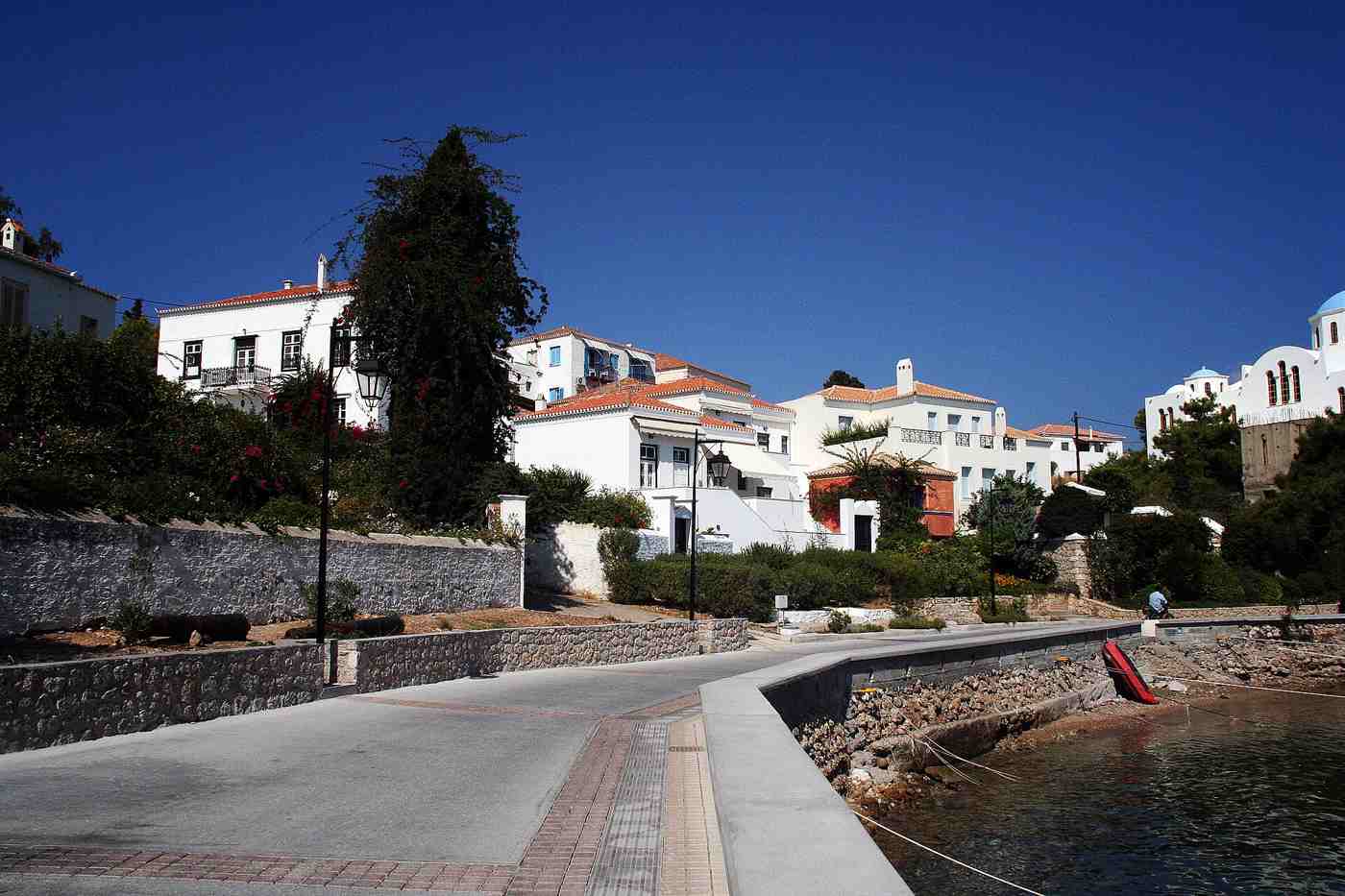
What are mezedopoleia and ouzeri, and where do you find them in Spetses?
Mezedopoleia and ouzeri are traditional Greek eateries serving small plates, or mezedes, alongside ouzo, tsipouro, or wine. In Spetses you find them in the town lanes behind the Dapia and toward Kounoupitsa, away from the priciest waterfront.
Mezedopoleia and ouzeri form the backbone of authentic, local eating on Spetses, and understanding them unlocks the island’s best-value meals. A mezedopoleio serves mezedes, a succession of small shared plates, while an ouzeri traditionally pairs those plates with ouzo, the anise-flavoured spirit that turns milky when water is added. In practice the two overlap, and both encourage a slow, sociable way of eating built on grazing rather than a single main course. Typical plates include dips such as tzatziki and fava, grilled octopus, small fried fish, cheese, cured meats, and seasonal vegetables. You order several between the table and keep going as appetite dictates.
This style suits the Greek evening perfectly, and on Spetses it delivers genuine flavour at prices well below the scenic harbour tables, rewarding travellers willing to explore the lanes.
Finding these eateries means stepping back from the most obvious waterfront and into the town’s residential streets. The lanes behind the Dapia and the stretches toward Kounoupitsa hide family-run spots that locals frequent, often with just tables inside and a handful on the pavement. These places rarely advertise loudly; a short walk and a willingness to peer down side streets uncovers them. Because they cater to islanders as much as visitors, the cooking tends to be honest and unpretentious, changing with what the market offers. Arriving without a fixed plan and choosing a spot that looks busy with locals is a reliable strategy.
This is the Spetses that rewards curiosity, where the best meal of a trip is sometimes the least expensive one, found by wandering rather than booking.
The drinks are integral to the experience at an ouzeri, and knowing how to order enhances it. Ouzo is traditionally served in a small carafe with a separate glass of water and ice, letting you dilute it to taste as it clouds attractively. Tsipouro, a stronger grape-based spirit, is the alternative locals prefer, sometimes flavoured with anise and sometimes not. Both are meant to be sipped slowly across a long spread of mezedes, never rushed. Chilled white or rose wine by the carafe suits those who prefer something gentler with their small plates. The point of the ouzeri is unhurried enjoyment: plates, a shared drink, and conversation stretching over an hour or two.
Embracing that pace, rather than treating it as a quick stop, is the key to enjoying these places properly.
For travellers, the mezedopoleia and ouzeri offer more than value; they offer a genuine window into island life. Because they follow the seasons and serve a local crowd, they reveal what Spetses actually eats when the summer spotlight fades. They also suit flexible appetites: light eaters can order two or three plates, while a hungry group can build a feast, all without committing to fixed main courses. This makes them ideal for a relaxed evening early in a trip, when you want to settle into the island’s rhythm before the grander harbour dinners. They pair well with a central base, since most sit within a short walk of town accommodation.
Seek them out at least once, and you will taste a side of Spetses that the waterfront alone never shows to passing visitors.
What is the cafe and casual dining scene like at the Dapia?
The Dapia, the island’s main quay, lines its paved waterfront with cafes and casual eateries serving coffee, breakfast, snacks, and light meals throughout the day, making it the natural spot for people-watching, morning starts, and relaxed daytime dining.
The Dapia functions as the island’s social living room, and its cafes anchor daytime dining on Spetses. This broad paved quay, where the boats dock and the horse-drawn carriages wait, is ringed with cafe terraces that fill from morning coffee through to evening drinks. Here you take a leisurely Greek breakfast, watch the ferries come and go, and settle into the unhurried island pace before the day’s plans. The menus lean toward coffee in all its Greek forms, fresh juices, pastries, sandwiches, and light bites rather than full dinners. Because everything faces the water and the constant gentle activity of the port, the Dapia is as much about the setting and the people-watching as the food.
It is the place to begin a day and to pause between beach, town, and harbour.
Greek coffee culture shapes the Dapia experience, and it rewards a slow approach. A frappe or freddo espresso, both iced and hugely popular in summer, is designed to last an hour while you sit, talk, and watch the quay. Alongside coffee, the cafes serve simple sweet and savoury bites suited to any hour: a cheese or spinach pie, a toasted sandwich, yoghurt with honey and fruit, or a slice of cake. Many visitors treat a Dapia cafe as a daily ritual, returning to the same terrace to feel part of the island’s rhythm. The waterfront location commands a modest premium over the back-street spots, but the view and the atmosphere justify it for most.
For a relaxed start or a mid-afternoon pause, the quay is unmatched on the island.
The Dapia cafes transition smoothly into evening venues, blurring the line between coffee and cocktails. The same terraces that served morning frappe pour aperitifs and wine as the volta, the traditional evening stroll, brings families and visitors onto the promenade. This continuity means you can anchor a whole day around the quay without ever feeling you have exhausted it. The Dapia also sits beside the island’s grandest address, and even non-guests often walk over to the terraces of the Poseidonion Grand Hotel for a drink in Belle Epoque surroundings.
This mix of casual cafes and a landmark hotel gives the quay a range of moods, from simple and sociable to polished and elegant, all within steps of the arriving boats.
For practical planning, the Dapia is the most convenient dining zone on the island, which shapes how travellers use it. Its central position means you pass through it constantly, so it naturally absorbs breakfasts, coffee stops, and casual lunches between other activities. Families appreciate the easy, come-as-you-are atmosphere and the room for children to move on the open quay. Solo travellers find it comfortable, since a coffee and a book fit the setting perfectly. The trade-off is that this is not where you come for a serious, seafood-focused dinner; for that the Old Harbour beckons. Think of the Dapia as the island’s daytime hub and social crossroads, the place that bookends your days with coffee and light food.
Reserve the harbour and the lanes for your main evening meals across the trip.
Where do you find bakeries, sweets, and desserts in Spetses?
Spetses bakeries and sweet shops sit mainly in the town lanes and around the Dapia, selling fresh bread, savoury pies, and Greek desserts such as galaktoboureko, baklava, and loukoumia, plus almond-based sweets and traditional spoon sweets.
Bakeries, or fournoi, are woven through everyday life on Spetses, and finding them adds a simple pleasure to any stay. Concentrated in the town lanes and near the Dapia, they open early and fill the morning air with the smell of fresh bread and pastry. Beyond loaves, a Greek bakery is a one-stop source for savoury pies: tiropita filled with cheese, spanakopita with spinach. Often versions with minced meat or vegetables, all ideal for a cheap, portable breakfast or a beach picnic. Sweet pastries share the counter, from custard-filled bougatsa to honey-soaked treats. Because the island is walkable, a morning stroll to the bakery becomes an easy habit that connects you to local routine.
Buying picnic supplies here before a beach day is both practical and a small taste of authentic island living.
The zaharoplasteio, or patisserie, handles the island’s sweeter side, and Greek desserts reward exploration. Look for galaktoboureko, a custard baked in crisp filo and drenched in syrup, and baklava, layers of filo, nuts, and honey. Kataifi, made with shredded pastry wrapped around nuts, and various syrup-soaked cakes round out the classic range. These desserts are typically enjoyed with a coffee rather than immediately after dinner in the Greek style, so a mid-morning or afternoon visit suits them well. Many patisseries also sell chocolates, ice cream in summer, and traditional puddings. Sampling a different sweet each day is an easy and inexpensive way to explore Greek dessert culture during a Spetses stay.
The quality at a good island zaharoplasteio often rivals anything in the city, made fresh in small batches.
Spetses and the wider region carry a strong tradition of almond-based sweets, which make ideal edible souvenirs. Amygdalota, soft almond macaroon-style cookies dusted with sugar, are widely associated with the Greek islands and appear in local shops. Alongside them you may find loukoumia, the soft, powdered jelly sweets known internationally as Turkish delight, in flavours such as rose, mastic, and bergamot. These keep well and travel easily, so a box makes a natural gift to bring home. Traditional spoon sweets, or glyka tou koutaliou, are another regional treat: whole fruits or petals preserved in syrup and served by the spoonful with coffee or water.
Seeking out these sweets connects you to a long Greek tradition of hospitality, where a small dish of something sweet is the customary welcome offered to a guest.
Fitting bakeries and sweets into your day is easy and enhances the whole rhythm of a Spetses trip. Start with a bakery run for pies and bread before a beach outing, pause at a patisserie for a syrupy dessert with afternoon coffee. Pick up a box of amygdalota or loukoumia toward the end of the stay to carry home. Because these shops cluster in town, they slot naturally into the walking you already do between the Dapia, your accommodation, and the harbour. Prices are modest compared with sit-down meals, so they offer inexpensive variety across a longer stay. For families, a daily sweet becomes a small ritual children look forward to.
Treat the bakeries and sweet shops as an essential, low-cost thread of the island’s food culture rather than an afterthought.
What Greek classics and fresh seafood should you order in Spetses?
In Spetses you should order fresh grilled or baked fish, seafood mezedes such as octopus and squid, and Greek classics including moussaka, Greek salad, grilled meats, and seasonal vegetable dishes, all built on ripe summer produce and good olive oil.
Fresh seafood is the natural first choice on a fishing island, and Spetses menus reflect that strength. Beyond the signature psari spetsiota, look for whole fish simply grilled and dressed with olive oil and lemon, the purest way to taste the day’s catch. Grilled octopus, charred until tender, is a near-universal starter, as are fried or stuffed squid and calamari. Prawns, mussels, and small fish such as marida, eaten fried and whole, round out the seafood mezedes that begin a meal. Shellfish and sea urchins appear when in season. When ordering fish, it is normal to ask what is fresh, to view the catch, and to confirm the price by weight before cooking.
This transparency is standard practice and helps you eat both well and within your intended budget.
The Greek classics of the wider mainland kitchen sit comfortably alongside the seafood, ensuring variety for every taste. Moussaka, the baked layers of aubergine, potato, spiced minced meat, and creamy bechamel, is a reliable centrepiece, as is pastitsio, its pasta-based cousin. Grilled meats feature strongly: souvlaki and skewered pork or chicken, lamb chops, and slow-cooked dishes such as lamb kleftiko. Gemista, vegetables stuffed with rice and herbs, and briam, a roasted medley of summer vegetables, please vegetarians and meat-eaters alike. Dolmades, vine leaves wrapped around rice, are a common starter. These dishes travel across every Greek taverna.
On Spetses they are cooked with the ripe tomatoes, herbs, and olive oil of the Greek summer, which lifts even the most familiar plate well above the ordinary.
Salads, dips, and small plates are where a Greek meal begins, and ordering them generously is the local way. The horiatiki, or Greek salad, of tomato, cucumber, onion, peppers, olives, and a slab of feta crowned with oregano, is essential in summer when the tomatoes are at their peak. Dips such as tzatziki, made with yoghurt, cucumber, and garlic, taramosalata from cured fish roe, and fava, a puree of yellow split peas, arrive with warm bread. Fried courgette or aubergine, saganaki of pan-seared cheese, and dolmades fill out the table. The Greek habit is to order several of these to share, grazing across the table rather than each diner keeping to a single plate.
Embracing that communal style is both more sociable and a better way to sample the range a kitchen offers.
Drinks and sweet endings complete the picture of a Spetses meal in the Greek manner. House wine, poured by the carafe and often a local or mainland pour, keeps a taverna dinner convivial and affordable, while chilled ouzo or tsipouro suits a spread of mezedes. Greek bottled wines, particularly crisp whites and roses, pair beautifully with the seafood. To finish, tavernas offer a complimentary dessert and a shot of spirits as a gesture of hospitality: fresh fruit, a slice of semolina cake, or yoghurt with honey. This warmth is characteristic of Greek dining and worth appreciating rather than rushing past.
Approached with an open, unhurried attitude and a willingness to share, a meal in Spetses becomes far more than food; it becomes an evening’s entertainment in the truest island tradition.
When should you book a restaurant in Spetses in high summer?
You should book restaurants in Spetses ahead in high summer, especially for waterside tables at the Old Harbour, reserving a day or more in advance for July and August evenings and around the early-September Armata festival, when demand peaks sharply.
High summer transforms demand for the best tables on Spetses, so booking ahead becomes genuinely worthwhile. Through July and August, and particularly at weekends, the island fills with Greek and international visitors alongside the yacht crowd, and the most scenic restaurants reach capacity early in the evening. The waterside tavernas of the Old Harbour feel this pressure most, since their romantic setting draws couples and groups competing for the same limited terrace tables. Reserving a day or more in advance for these prime spots, and specifically requesting a table by the water, greatly improves your evening. Casual cafes at the Dapia and the town’s mezedopoleia absorb walk-ins more easily, but even they grow busy at peak times.
A little forward planning removes the frustration of wandering between full restaurants at nine on a summer night.
The island’s calendar of events sharpens demand at specific moments, and the Armata festival is the clearest example. Held in early September, the Armata commemorates a decisive naval victory during the Greek War of Independence with a spectacular re-enactment and the burning of a mock enemy flagship in the harbour, followed by fireworks and celebration. Around this period the island swells with visitors, and restaurants book out well ahead. Anyone planning a trip to coincide with the festivities should reserve both accommodation and dinner tables far in advance, as described in the Armata festival guide. Beyond the Armata, ordinary summer weekends and Greek public holidays also lift demand noticeably.
Knowing when these peaks fall lets you either plan around them or embrace the atmosphere with your bookings secured well beforehand.
Timing your reservation within the evening matters as much as the day you choose. Greeks dine late, so the busiest sitting runs from around nine o’clock onward, when tables turn over slowly and service is at its most stretched. Booking or arriving earlier, from around seven or eight, often secures a better table and a more relaxed pace, particularly at the popular harbour tavernas. Lunch is generally easier and rarely needs a reservation, making midday a good time for a leisurely seafood meal without the evening crush.
Aligning your visit with the best time to visit Spetses also shapes how much booking you need: the shoulder months of late spring and early autumn are far more relaxed, with tables usually available on the night and a gentler, more local atmosphere throughout.
Practical habits smooth the whole process of eating well in a busy season. Ask your hotel or host to make bookings on your behalf, since local staff often have direct relationships with the restaurants and can secure the better tables. Confirm the reservation on the day, especially for a large group or a special occasion, and clarify whether the table is by the water if that matters to you. Keep a flexible second choice in mind in case your first pick is full, and remember that the town’s mezedopoleia offer excellent, less-pressured alternatives when the harbour is booked out.
For a single special dinner, invest the effort in advance; for everyday meals, stay relaxed and let the island’s rhythm guide you. This balance of planning and spontaneity serves travellers best across a summer stay.
How do you get to restaurants on a car-free island like Spetses?
You reach restaurants in Spetses on foot, by horse-drawn carriage, water taxi, bicycle, or scooter, since private cars are heavily restricted. Central dining zones sit minutes apart on foot, while distant beach tavernas need a boat, bike, or booked ride.
Spetses is famously car-free for visitors, and this shapes every decision about where and how you eat. Private cars are heavily restricted, so the streets belong to pedestrians, bicycles, scooters, and the island’s beloved horse-drawn carriages. For dining, this is largely a gift: the main restaurant districts of the Dapia, the town lanes. The Old Harbour all sit within comfortable walking distance of one another and of most accommodation. An evening that begins with a drink at the quay and moves to dinner at Baltiza is entirely walkable, taking roughly fifteen to twenty minutes between the two. The absence of traffic makes strolling to and from dinner safe and pleasant, even late at night.
Understanding this car-free character before you arrive helps you plan meals with confidence rather than expecting to drive between them.
For central dining, your own feet are the simplest tool, and the distances are genuinely modest. Most visitors staying in or near Spetses Town can walk to every restaurant zone without needing any other transport. When you would rather not walk, or when carrying home after a long dinner, the horse-drawn carriages that wait at the Dapia offer a charming ride to your accommodation for a set fare. These carriages are a signature of the island and a pleasure in themselves, particularly on a warm evening. Bicycles, easily rented in town, extend your range along the flatter coastal stretches and suit guests who like to combine a swim and a taverna lunch further from the centre.
This gentle mix of walking, cycling, and carriage travel keeps the island’s slow charm intact around every meal.
Reaching the more distant beach tavernas and western coves requires a little more planning, since these lie kilometres from town. Water taxis operate from the Dapia and the Old Harbour, carrying diners directly along the coast to remote spots by sea, a scenic if pricier option that avoids the road entirely. Seasonal buses also loop toward the popular western beaches in summer, offering a budget-friendly link for a lunch out of town. Scooters, rented in town, give independent travellers the freedom to reach a beach taverna for lunch and return at their own pace.
Knowing these options in advance is essential, and reading getting around Spetses clarifies how the water taxis, buses, bicycles, and scooters connect the harbour to the island’s farther corners.
The practical lesson is that where you stay and where you eat are closely linked on a car-free island. A central base near the Dapia keeps every restaurant on foot and makes dinner effortless, which is why it suits first-time visitors and short stays so well. A beach-side or western base rewards you with seclusion but asks for a scooter, a bicycle, a water taxi, or a bus whenever you want the harbour’s full choice of tavernas. Many such guests self-cater and travel in for occasional special dinners. Neither approach is wrong; the right one flows from your priorities and how you like to spend your evenings.
Plan your transport around your dining ambitions, and the island’s car-free streets become part of the pleasure of eating out rather than an obstacle between you and a good meal.
Frequently Asked Questions
What is the signature dish of Spetses?
The signature dish of Spetses is psari spetsiota, meaning fish a la Spetsiota. In its classic form, a whole fresh fish is baked in the oven under a rich sauce of ripe tomato, garlic, olive oil, a splash of white wine. Herbs such as parsley, often finished with breadcrumbs that crisp into a golden crust while the flesh stays moist beneath. The dish grew from the island’s maritime and fishing heritage, where baking fish in tomato sauce stretched the catch and kept firmer fish tender and flavourful.
Over time it became a point of local pride and eventually a plate associated with Spetses across the whole of Greece, a rare case where a place and a dish share a name. Most traditional tavernas, especially around the Old Harbour, prepare a version, and ordering it is the most authentic way to eat on the island. Recipes vary slightly from kitchen to kitchen, but the tomato-and-garlic character always defines it.
Where is the best area to eat in Spetses?
The best area depends on the meal and the mood you want. For a special seafood dinner, the Old Harbour, known as Baltiza, is the island’s finest choice, with fish tavernas set at candlelit tables beside the moored yachts and traditional boatyards, roughly fifteen to twenty minutes on foot east of the Dapia. For authentic, better-value local eating, the mezedopoleia and ouzeri hidden in the town lanes behind the Dapia and toward Kounoupitsa serve small plates alongside ouzo and tsipouro. For coffee, breakfast, and casual daytime dining, the cafes ringing the Dapia quay are unbeatable for people-watching and relaxed island atmosphere. Bakeries and sweet shops scattered through the town cover picnic supplies and desserts.
All these districts sit within easy walking distance, so most visitors sample across a stay rather than settling on just one. Matching the district to the occasion is the key to eating well throughout your trip.
Do you need to book restaurants in Spetses in advance?
In high summer, booking ahead is strongly advisable for the most popular tables, particularly the waterside tavernas of the Old Harbour. Through July and August, and especially at weekends, the island fills with visitors and the yacht crowd, and the best terrace tables reach capacity early in the evening. Reserving a day or more in advance and specifically requesting a table by the water greatly improves your night. Demand peaks sharply around the Armata festival in early September, when the island swells for the celebrations and restaurants book out well ahead. Anyone visiting then should reserve dinner and accommodation far in advance.
Casual Dapia cafes and the town’s mezedopoleia absorb walk-ins more easily, offering good alternatives when the harbour is full. Outside high summer, in the shoulder months of late spring and early autumn, tables are usually available on the night and the atmosphere is more relaxed. Asking your hotel to book on your behalf often secures the better tables.
What kind of food is served in Spetses restaurants?
Spetses restaurants serve classic Greek and Mediterranean cuisine with a strong emphasis on fresh fish and seafood, the natural strength of a historic fishing island. Expect whole grilled fish sold by weight, baked preparations such as the signature psari spetsiota, and seafood mezedes including grilled octopus, fried or stuffed squid, prawns, and mussels. Alongside the seafood, tavernas cook the familiar classics of the Greek kitchen: moussaka, pastitsio, grilled meats and souvlaki, slow-cooked lamb, stuffed vegetables, and seasonal roasted vegetable dishes. Every meal begins with salads such as the horiatiki Greek salad, dips like tzatziki, taramosalata, and fava served with warm bread, and small fried plates meant for sharing.
The town’s mezedopoleia and ouzeri specialise in these small plates paired with ouzo or tsipouro, while bakeries and patisseries handle bread, savoury pies, and Greek desserts. Everything is built on the ripe tomatoes, herbs, and good olive oil of the Greek summer, which lifts even familiar dishes well above the ordinary.
Is seafood fresh and good in Spetses?
Yes, seafood is a genuine highlight in Spetses, reflecting the island’s long fishing and maritime heritage. The Old Harbour tavernas in particular specialise in fresh fish and shellfish, and the connection between the working harbour and the plate feels close and authentic. Fish is typically sold by weight. It is normal and sensible to ask which fish are fresh that day, to view the catch, and to confirm the approximate price before the kitchen begins cooking. This transparency helps you eat both well and within budget. Beyond whole grilled or baked fish, look for grilled octopus, fried or stuffed squid, prawns, mussels, and small whole fish eaten fried, alongside seafood salads and dips such as taramosalata.
The island’s own psari spetsiota, fish baked in tomato and garlic sauce, is the dish not to miss. For the best quality, favour tavernas that emphasise fresh local seafood and cook to order rather than reheating, since the difference is immediately obvious on the plate.
What sweets and desserts is Spetses known for?
Spetses and the wider region are known for almond-based sweets, especially amygdalota, soft almond macaroon-style cookies dusted with sugar that make an ideal edible souvenir because they keep and travel well. Alongside them you often find loukoumia, the soft powdered jelly sweets known internationally as Turkish delight, in flavours such as rose, mastic, and bergamot. The island’s patisseries, or zaharoplasteia, also serve the full range of classic Greek desserts: galaktoboureko, a custard baked in crisp filo and soaked in syrup, baklava layered with nuts and honey, kataifi made from shredded pastry, and various syrup-soaked cakes. These are traditionally enjoyed with coffee rather than immediately after dinner.
Bakeries add sweet pastries such as bougatsa to their savoury pies and fresh bread. You may also encounter spoon sweets, or glyka tou koutaliou, whole fruits preserved in syrup and offered by the spoonful with coffee or water as a gesture of Greek hospitality. Sampling a different sweet each day is an inexpensive pleasure across a stay.
How do you get around to restaurants on car-free Spetses?
Spetses heavily restricts private cars, so you reach restaurants on foot, by horse-drawn carriage, water taxi, bicycle, or scooter. For the central dining districts this is easy and even a pleasure, since the Dapia, the town lanes. The Old Harbour all sit within comfortable walking distance of one another and of most accommodation. An evening moving from a quayside drink to a Baltiza dinner takes roughly fifteen to twenty minutes on foot. The absence of traffic makes walking to and from dinner safe and pleasant even late at night. The island’s signature horse-drawn carriages wait at the Dapia to carry you home for a set fare, a charming option after a long meal.
Reaching the more distant beach tavernas and western coves needs more planning: water taxis run from the Dapia and Old Harbour directly along the coast, seasonal buses loop to the popular western beaches in summer. Rented scooters or bicycles give independent travellers freedom. Matching your transport to where you plan to eat keeps every meal effortless.