
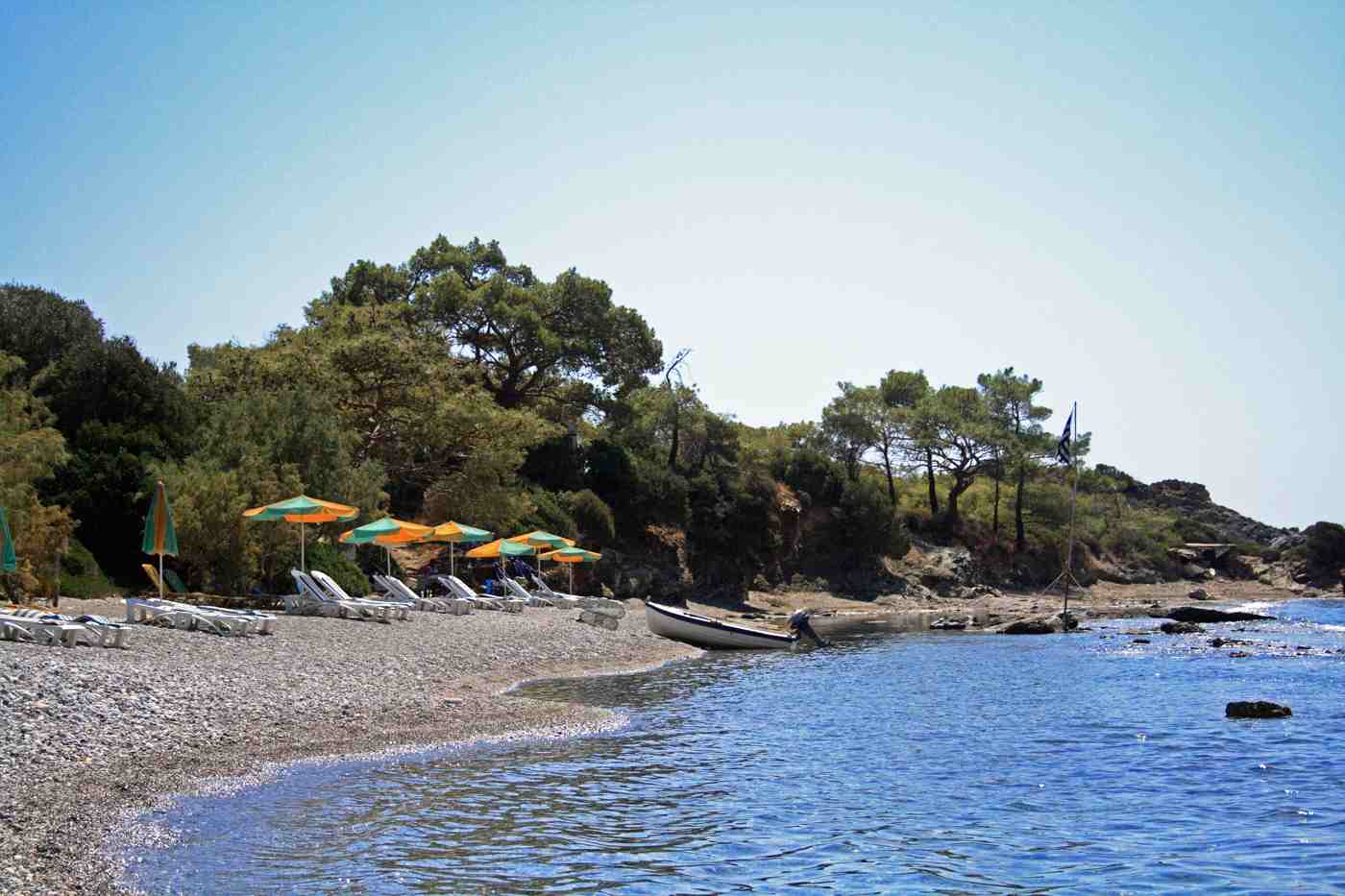
Samos eats from two landscapes at once, joining the seafood of the eastern Aegean with the slow cooking of its green mountain villages. Fish tavernas line the marina at Pythagorio and the long waterfront of Vathy, where the daily catch grills over charcoal beside the moored boats. Kokkari and the north-coast fishing villages plate octopus and small fried fish under tamarisk trees, backed by the pebble coves and the Ampelos slopes. Higher up, Manolates and Vourliotes serve goat, giouvetsi and wild greens under plane trees with valley views. Terraced vineyards tie the island together through the sweet Muscat wine that ends most meals. This range gives Samos a broader table than many Aegean islands of its size. Plan the whole trip with Greece Tours.
This guide maps where and what to eat across Samos, area by area and dish by dish. The overall food scene blends Aegean seafood, mountain-village cooking and the island’s PDO Muscat wine. The Pythagorio marina and the Vathy waterfront anchor the seafood side along the harbours. Kokkari and the north coast grill the daily catch beside their fishing quays, while the Ampelos villages hold the slow-cooked meat and greens. Local specialities include revithokeftedes, stuffed vine leaves, giouvetsi, grilled octopus, thyme honey, katsikaki and the island white cheese. Vegetarians find chickpea fritters, wild greens and vine leaves on most menus.
The sections below cover each dining area, the seafood culture, the mountain dishes, the local produce and the wine that closes a Samian meal.
What defines the food scene on Samos?
Samos combines Aegean seafood, mountain-village cooking and its own sweet Muscat wine. Fish tavernas, meze plates, slow-cooked meat, wild greens and thyme honey define a table that pairs coast and highland produce across the island.
Samos eats from two landscapes at once: the eastern Aegean sea and the green slopes of Mt Ampelos and Mt Kerkis. The coast supplies fish, octopus and shellfish, while the mountain villages send meat, cheese, wild greens and honey down to the tables. This split gives the island a broader menu than many Aegean islands of its size. Vathy and Pythagorio anchor the seafood side along their harbours, and the inland villages hold the slow-cooked tradition. Terraced vineyards on Ampelos tie the two together through the sweet Muscat wine that ends most meals. Karlovasi in the northwest adds a student cafe and meze scene around its second port.
Together these areas cover fresh fish, grilled meat, vegetable dishes and sweet dessert wine within one compact Aegean island.
Seafood defines the coastal tables of Samos, landed by boats that still work from Pythagorio, Vathy and Kokkari. Grilled octopus hangs to dry near the quays before it reaches the charcoal grill and the plate. Small fried fish, called marides and gavros, arrive as meze with lemon and ouzo. Larger fish come whole and grilled, priced by weight from the daily catch. Sea urchins, mussels and shrimp fill out the seafood side of the taverna menu. Cooks keep the treatment simple, with olive oil, oregano, lemon and salt rather than heavy sauces. This restraint lets the freshness of the catch lead each dish.
The fishing harbours of the island supply the tavernas directly, so fresh seafood stays central to how the island of Samos eats through the warm season.
Mountain cooking balances the seafood with meat, pulses and wild greens from the Ampelos slopes. Katsikaki, or oven-baked goat, ranks among the signature dishes of the inland villages. Giouvetsi pairs meat with orzo pasta in a tomato sauce baked in a clay pot. Revithokeftedes, fried chickpea fritters, come from the island’s pulse tradition and suit vegetarians. Horta, boiled wild greens dressed with oil and lemon, appear on most village tables. Local white cheese, thyme honey and stuffed vine leaves round out the highland menu. Cooks braise and bake these dishes slowly rather than grilling them fast like the coastal fish. The plane-shaded squares of Manolates and Vourliotes serve this food with valley views.
This mountain kitchen gives Samos a depth beyond its beaches and harbours.
Sweet Muscat wine closes the Samian table and ties the island’s food to its vineyards. The PDO Samos Muscat, pressed from Muscat Blanc a Petits Grains, grows on terraces up Mt Ampelos. Producers pour the sweet white as a dessert wine alongside honey pastries and fruit. Drier local whites and reds accompany the fish and meat through the meal. Karlovasi, the northwest port and university town, adds a livelier cafe and mezedopoleio scene. Students fill its bars and meze spots around the old tanneries and the harbour. Ouzo and tsipouro pour with small plates across the island’s tavernas. This drinking culture threads wine, spirits and food into a single evening rhythm.
The pairing of Muscat with the local table sets Samos apart from islands without a signature wine.
What are the fish tavernas on the Pythagorio marina like?
Pythagorio lines its horseshoe marina with fish tavernas beside the moored yachts and fishing boats. Waterfront tables serve grilled fish, octopus and seafood meze, drawn from the daily catch landed along the southeast harbour of Samos.
Pythagorio wraps its dining around a horseshoe harbour on the southeast coast of Samos. Fishing boats and yachts moor along the quay where the tavernas set their tables. The waterfront curves from the ferry jetty to the fortress hill above the port. Diners sit at the water’s edge with the moored fleet and the marina lights before them. Seafood leads the menus, supplied by the boats that still fish from this harbour. Grilled fish, octopus and small fried fish anchor the plates along the front. The UNESCO ancient harbour lies beneath and beside the modern one, tying dinner to deep history. Evening crowds fill the quay as the light fades over the water toward the Turkish coast.
This marina setting makes Pythagorio the main seafood-dining stage on the island.
Eating fish on the marina ranks among the core things to do in Samos for evening visitors. The tavernas display the day’s catch on ice for diners to choose their fish by weight. Whole fish grill over charcoal and arrive dressed with oil, lemon and oregano. Octopus hangs to dry near the quay before it meets the grill. Meze plates of marinated anchovy, taramas and grilled vegetables open the meal beside bread. Samos Muscat and local white wine pour alongside the seafood at the water’s edge. Prices track the marina setting, so scanning menus helps before sitting down. Tables fill early in peak weeks, and a harbour-front seat rewards booking ahead.
This ritual of a slow fish dinner by the boats defines Pythagorio nights through the season.
The Pythagorio waterfront runs from casual meze bars to full fish tavernas. Ouzeri tables serve small seafood plates with ouzo as an early-evening ritual. Fuller tavernas plate whole grilled fish, lobster pasta and shellfish for longer dinners. Charcoal grills scent the quay, and the catch changes with the season and the weather. Sea bream, red mullet and sardines feature when the boats land them fresh. Fried calamari, grilled octopus and prawns cross most seafood menus along the front. Bakeries and cafes along the back streets open early for coffee and fresh pastries. The marina stays busy from the evening passeggiata until late in the warm months.
This range lets diners choose a quick meze stop or a long seafood feast beside the moored boats of the harbour.
Pythagorio sits about 14 km southwest of Vathy and beside Samos International Airport. The town serves as the island’s yacht harbour and a hub for boat trips along the coast. Diners often pair a marina dinner with a day at the nearby beaches or ancient sites. The Eupalinos Tunnel and the Heraion sanctuary lie within a short drive of the port. Buses and taxis link Pythagorio to Vathy, Kokkari and the airport across the island. Parking fills fast near the front, so many walk in from the streets above. The harbour faces southeast, sheltered from the north meltemi that stirs the opposite coast. Calmer evening water makes the marina a reliable dinner spot even on windy days.
This position keeps Pythagorio central to how visitors eat on the southern side of Samos.
What is the Vathy waterfront dining scene like?
Vathy, the capital of Samos, spreads its tavernas and cafes along a deep bay and a long waterfront. Seafront tables serve fish, meze and Greek staples beside the ferry port and the old quarter of Ano Vathy.
Vathy, also called Samos Town, curves around a deep northeast bay and its long harbour. The capital stacks neoclassical houses up the slope above a waterfront lined with cafes and tavernas. The main ferry port anchors one end, and the promenade runs past squares and palm trees. Diners sit along the front with the bay, the moored ferries and the hills opposite in view. Seafood shares the menus here with grilled meat, salads and cooked-to-order dishes. The old upper quarter of Ano Vathy holds smaller tavernas in its stone lanes. Fishing boats still tie up along parts of the harbour beside the larger vessels. Evening walkers fill the waterfront as the cafes and tavernas set their tables.
This broad seafront makes Vathy the everyday dining centre of the island’s north coast.
Vathy sits about 10 km east of the fishing village of Kokkari, and the two share the north-coast seafood tradition. The capital’s tavernas plate grilled fish, fried calamari and octopus like the smaller ports. Cooked dishes, called mageirefta, fill the menus with baked and stewed options ready at midday. Moussaka, stuffed vegetables and bean stews suit diners who want more than grilled fish. Meze tables pair small seafood and vegetable plates with ouzo along the front. Bakeries and coffee shops open early for the working town rather than only for visitors. Local white cheese, olives and thyme honey appear on the Samian tables here too. Prices sit below the yacht-harbour level of Pythagorio, reflecting the working-capital setting.
This everyday food gives Vathy a broader table than the resort ports.
The waterfront of Vathy runs for over a kilometre from the port to the northern squares. Cafes, ouzeris and tavernas line the promenade beneath the tamarisk and palm trees. Pythagoras Square, marked by its lion statue, gathers cafe tables at the heart of the front. The old quarter of Ano Vathy climbs the hill in stone lanes above the bay. Smaller family tavernas there serve village dishes away from the harbour bustle. The bay shelters the town, so the water stays calm through the summer evenings. Ferry arrivals and departures give the port end a steady rhythm through the day. Locals and visitors share the promenade for the evening stroll and dinner.
This mix of working port, cafe-lined front and hillside old town shapes the atmosphere of dining in the capital.
Vathy’s tables draw on both the sea and the farms of the surrounding hills. The daily catch supplies the seafood, while inland villages send meat, cheese and greens. Samos Muscat and local wines pour alongside the food across the waterfront tavernas. Thyme honey from the island’s hillsides sweetens pastries and yogurt at the cafes. Revithokeftedes and stuffed vine leaves give vegetarians solid choices on most menus. The market streets behind the front sell cheese, olives, herbs and honey to take home. Grilled goat and slow-baked meat reach the capital from the Ampelos villages inland. Coffee culture runs strong, with the front busy from morning to late night.
This link between the harbour, the market and the mountain farms keeps the food of Vathy rooted in Samian produce.
How do Kokkari and the north-coast fishing villages grill the daily catch?
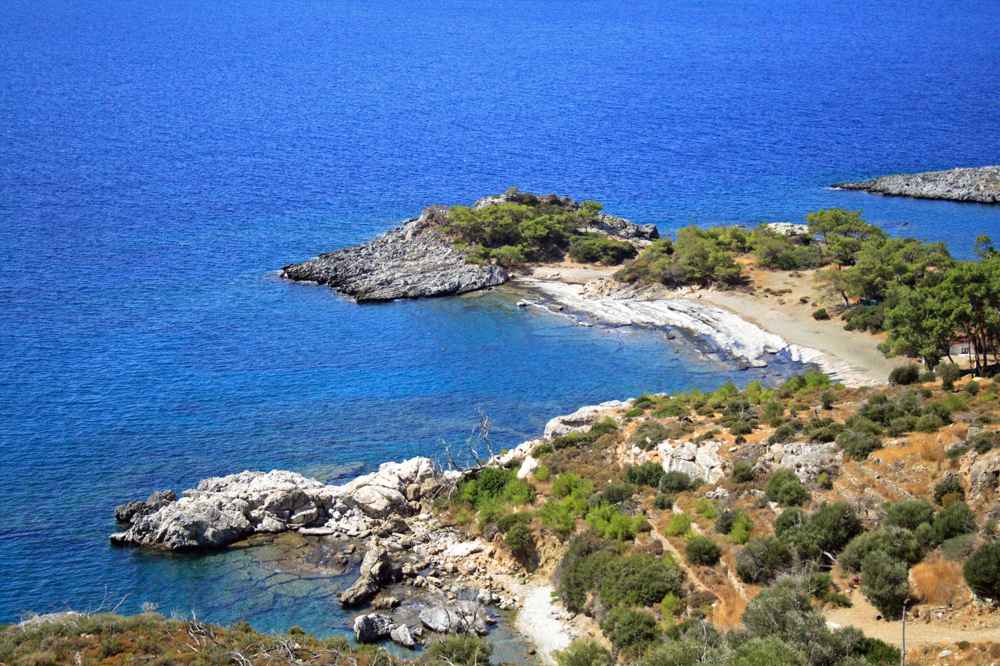
Kokkari and the north-coast fishing villages grill the daily catch beside their harbours. Waterfront tavernas plate grilled fish, octopus and meze under tamarisk trees, backed by the green Ampelos slopes and the pebble coves of the coast.
Kokkari lines its twin harbour basins with tavernas that cook the boats’ daily catch. Fishing craft still moor along the quay where nets dry beside the tables. Grilled fish, fried small fish and octopus lead the menus at the water’s edge. Tamarisk trees shade the terraces, and the chapel headland closes the view west. The wind that draws windsurfers also keeps the seafront fresh through summer evenings. Samos Muscat pours after dinner as the light fades behind the point. The village keeps its fishing roots even as tourism fills the pebble bay each season. Tables spread along the promenade between the two small port basins. This working-harbour setting gives Kokkari a seafood scene tied directly to the boats.
The north-coast catch reaches the plate within hours of landing here.
West of Kokkari, smaller settlements string along the north coast toward Karlovasi. Avlakia, Agios Konstantinos and Kontakeika hold small tavernas above quiet shingle bays. These villages serve grilled fish and meze on terraces set back from the coast road. The pine-backed coves of Tsamadou, Lemonakia and Tsabou lie within a short drive. Beach tavernas above these coves plate seafood, salads and cold drinks through the summer day. The catch here comes from the same north-coast boats that supply Kokkari. Slopes of Mt Ampelos rise directly behind the coast, green with pine and vine. Walkers descend from the mountain villages to eat fresh fish by the sea in the evening.
This chain of small ports and beach tavernas spreads north-coast dining well beyond the main village of Kokkari.
The north-coast tavernas build their menus around whatever the boats land that day. Octopus dries on lines near the harbours before it reaches the hot charcoal grill. Marides and gavros, small fried fish, arrive as meze with lemon and ouzo. Grilled sardines, bream and mackerel feature when the season and the weather allow. Mussels, shrimp and calamari fill out the seafood plates across the north coast. Cooks dress the fish plainly with oil, oregano and lemon to keep it fresh. Greek salad, tzatziki and fried courgette round out the seafood-led tables. Bread, olives and local cheese open most meals along the north-coast harbours. This simple, catch-led cooking defines the north-coast kitchen from Kokkari westward.
The freshness of the fish, not elaborate sauces, carries each plate here.
Evenings on the north coast centre on slow harbour dinners after a day at the beaches. Windsurfers and swimmers fill the Kokkari tavernas once the meltemi eases at dusk. The pebble bay, the chapel headland and the moored boats frame the seafront tables. Families move between the coves and the village for swims and meals through the day. Mountain trails from Vourliotes and Manolates bring walkers down to the coast for dinner. The green Ampelos backdrop sets these harbours apart from the open southern beaches. Ferries reach Vathy and Karlovasi within easy reach of the north-coast villages. Muscat wine, ouzo and the daily catch anchor the evening rhythm here.
This blend of beach days and harbour seafood dinners defines how the north coast of Samos eats through the warm months.
Why do the Ampelos mountain villages of Manolates and Vourliotes serve slow-cooked meat and greens?
Manolates and Vourliotes, mountain villages on Mt Ampelos, serve slow-cooked meat, wild greens and local cheese under plane trees. Shaded squares with valley views set the table for goat, giouvetsi, honey and Samos Muscat above the north coast.
Manolates and Vourliotes cling to the flank of Mt Ampelos above the north coast. Stone houses cluster around plane-shaded squares where the tavernas set their tables. Manolates sits higher, reached by a winding road or a marked footpath through pine and vine. Vourliotes stands about 5 km inland from Kokkari around a central square. Both villages trade the seafood of the coast for the slow cooking of the highlands. Valley views open from the terraces toward the sea far below. Streams, vineyards and terraced gardens line the roads that climb to the villages. Cool mountain air draws diners up from the hot coast on summer evenings. These settlements anchor the mountain-food tradition on the Ampelos slopes.
The plane trees, the springs and the stone lanes frame the village table here.
The mountain kitchen leads with meat, pulses and wild greens rather than fish. Katsikaki, oven-baked goat, ranks as the signature dish of these Ampelos villages. Giouvetsi bakes meat with orzo pasta in tomato sauce in a clay pot. Horta, boiled wild greens with oil and lemon, come from the surrounding slopes. Revithokeftedes, chickpea fritters, draw on the island’s long pulse tradition. Local white cheese, stuffed vine leaves and grilled sausage fill out the village plates. Thyme honey from the mountain hives sweetens the local desserts and yogurt. Cooks braise and bake these dishes slowly instead of grilling them fast. Bread, olives and cheese open the meal under the shady plane trees.
This slow highland cooking gives the Ampelos villages a table distinct from the coastal harbours.
Terraced vineyards around Manolates and Vourliotes grow the Muscat grapes of the island. The sweet PDO Samos Muscat presses from these slopes of Mt Ampelos. Producers and tavernas pour the dessert wine alongside honey pastries and fruit. Local reds and whites accompany the goat and giouvetsi through the meal. Springs feed the streams and the plane trees that shade the village squares. Vineyards, olive groves and gardens supply much of the food on the table. Cheese comes from the goats and sheep that graze the mountain terraces. The valley views stretch from the terraces down to the distant north coast. This tie between the vineyard, the garden and the table roots the mountain villages in Samian produce.
Muscat closes the meal here as it does across the island.
The Ampelos villages draw diners up from Kokkari and Vathy for cool evenings and slow food. Walkers reach Manolates and Vourliotes by marked trails through the pine and vine slopes. Day trippers pair a village lunch with a walk to the springs or the ridge. Plane-shaded squares fill in the evening as the coast heat fades below. Craft shops, small churches and stone lanes surround the taverna terraces. The pace stays slow, matched to the mountain setting rather than the resort coast. Muscat wine, thyme honey and grilled goat anchor the village meal. Cooler air and valley views reward the drive up from the harbours.
These villages give Samos a highland table that balances the seafood of the coast. The mountain kitchen completes the island’s range from marina fish to slow-cooked meat.
Which local specialities define the food in Samos restaurants?
Samos kitchens serve revithokeftedes, stuffed vine leaves, grilled octopus and katsikaki alongside local white cheese and thyme honey. These dishes draw on island farms, herb-covered hillsides and the daily catch across the coastal towns and mountain villages.
Revithokeftedes anchor the island’s small-plate cooking, formed from ground chickpeas, onion, mint and flour, then fried into crisp golden patties. Cooks across Pythagorio and Vathy serve them warm with a squeeze of lemon as a shared starter. Stuffed vine leaves, called dolmades, wrap rice, herbs and pine nuts inside tender leaves picked from the terraced hillsides. Village tavernas on Mt Ampelos prepare them either meat-filled and warm or lemon-bright and cold. Both dishes reach the table early in a meal and pair with bread, olives and a dip. Their ingredients grow close to each kitchen, so the flavours stay direct and seasonal. Chickpea fritters also appear on the mezze boards of the mountain villages inland.
Diners order them to open a long, unhurried island dinner beside the water.
Grilled octopus defines the seafood tables of Pythagorio and the Vathy waterfront. Tender tentacles char over charcoal after a spell drying in the sea air. Fishing boats at Kokkari and the northern coves land the daily catch, so menus list red mullet, sea bream and picarel by the kilo. Cooks dress the octopus with olive oil, vinegar and oregano and pour a shot of ouzo alongside. Small fish arrive lightly floured and fried, larger ones grilled whole and boned at the table. Prices track the catch and the season rather than a fixed card. Diners choose their fish from the ice display before it cooks.
This ritual of picking, weighing and grilling turns a seafood dinner into the true centre of a Samos evening by the harbour.
Katsikaki, young goat, carries the mountain-village cooking of Manolates and Vourliotes on the slopes of Mt Ampelos. Cooks braise it slowly with lemon and herbs or roast it in a wood oven until the meat falls from the bone. Free-grazing goats feed on wild thyme and oregano across the limestone hills, and that diet flavours the meat. Village tavernas serve katsikaki with roast potatoes, wild greens and a wedge of lemon under plane trees. The dish belongs to feast days and Sunday tables, yet appears on menus through the warm season. Diners climb from the coast to eat it where the goats graze. A carafe of village wine and fresh bread complete the plate.
This slow mountain cooking balances the lighter seafood of the shore below and rounds out the island table.
Local white cheese anchors the Samos table, a firm, salty product of goat and sheep milk from the island flocks. Tavernas serve it fried as saganaki, crumbled over salad, or plain with bread and olives to start a meal. Thyme honey, gathered from hives on the herb-covered hillsides, finishes plates and breakfasts across the island. Cooks drizzle it over fried cheese, spoon it onto thick yoghurt, and fold it into walnut pastries. Beekeepers work the slopes of Ampelos and Kerkis, where wild thyme scents the honey a deep amber. Both products travel home in jars and vacuum packs from village shops and cooperatives. Their salt-and-sweet contrast defines a Samos breakfast and a taverna dessert alike.
Diners taste the hillsides in every spoonful of the amber honey poured at the table.
How do you pair meals with sweet Samos Muscat?
Sweet Samos Muscat pairs with cheese, honey desserts and rich mountain dishes.
Samos Muscat comes from Muscat Blanc a Petits Grains grown on stone terraces climbing Mt Ampelos, and its sweetness shapes how the island eats. The PDO styles run from the fortified Vin Doux to the sun-dried Nectar and the naturally sweet Anthemis, each matched to a different course. A glass of Samos wine after dinner replaces a heavy dessert, poured cold in a small measure. Its floral, honeyed character meets the salt of local cheese and the crunch of walnut pastry. Diners sip it slowly as the plates clear and the conversation lengthens. The cooperative near Vathy and small wineries in the hills pour tastings that show the range.
This after-dinner ritual ties the island’s most famous product directly to its evening table and its cooking.
Fried cheese and thyme honey meet sweet Muscat in a classic island match, the wine’s sugar echoing the honey and cutting the salt. Rich katsikaki and slow-braised meat from the mountain villages balance a chilled glass poured at the meal’s end. Blue-veined and mature cheeses find a partner in the fortified styles, whose depth stands up to strong flavours. Dry Muscat, also made on Samos, turns instead to the seafood of Pythagorio and Kokkari, its crisp aromatics lifting grilled fish and octopus. Diners keep the sweet bottles for dessert and the dry for the main plates. Walnut cake, spoon sweets and baklava all take the sweet pour well.
This split between dry and sweet lets one grape carry a whole Samos dinner from the first plate to the last bite.
The Samos cooperative has long controlled and marketed the island’s Muscat, and a wine museum at Malagari near Vathy tells the story. Terraced vineyards climb Mt Ampelos to high altitude, where cooler nights concentrate the sugar and aroma in the small grapes. The sweet Samos Muscat carries a documented history reaching back to antiquity, praised across the Mediterranean in named eras. Growers sun-dry part of the harvest on mats to make the richest Nectar style. Visitors buy bottles to bring home from the cooperative, village shops and the wineries of Vourliotes and Manolates. A tasting flight shows how one grape yields fortified, sun-dried and naturally sweet wines.
Diners who taste the range at source later pour it with fuller understanding back at the taverna table.
Tavernas often pour a complimentary glass of Muscat or a spoon sweet to close a meal, a gesture of island hospitality. Diners order the wine by the glass or the small bottle rather than by the full-size format used for dry table wines. Waiters bring it chilled, since the sweet styles show best cold against warm dessert. A plate of fresh fruit, walnuts or a slice of cake arrives alongside the pour. The ritual slows the end of dinner and keeps the table occupied into the evening. Families share one bottle across the group as the children finish ice cream. This closing pour turns the last course into an event rather than an afterthought.
It anchors the sweet wine firmly to the rhythm of a Samos dinner by the sea.
What is the Karlovasi student cafe and mezedopoleio scene like?
Karlovasi hosts a University of the Aegean campus, and its students fill the town’s cafes and mezedopoleia. The northwest port town pours cheap coffee by day and small-plate ouzo dinners by night across Neo Karlovasi and the old waterfront warehouses.
Karlovasi spreads across three linked districts, Palaio, Meseo and Neo Karlovasi, around a working port on the northwest coast about 30 km from Vathy. The University of the Aegean campus brings a young population that fills the cafes through the academic year. Neo Karlovasi holds the busiest strip, where students nurse frappe and freddo espresso over books and laptops from morning. Prices sit below the resort towns, since the trade serves residents rather than summer visitors. The waterfront keeps grand old tanning warehouses and neoclassical mansions from the town’s leather-industry past. Cafes occupy restored buildings among them, mixing study, coffee and conversation through the day.
This everyday, year-round scene sets Karlovasi apart from the seasonal harbours of Pythagorio and Kokkari, giving the northwest a lived-in feel that the beach resorts lack.
Mezedopoleia drive the Karlovasi evening, small tavernas that serve ouzo and tsipouro with a parade of little plates. Diners order octopus, fried cheese, grilled sardines, chickpea fritters and salads to share across a long table. The bill stays modest, matched to student budgets and local wages rather than tourist menus. Waiters bring dish after dish as the drinks arrive, stretching dinner over hours. The port and the squares of Meseo Karlovasi hold the busiest of these spots. Live and recorded Greek music plays as the night lengthens and the tables fill. Groups linger past midnight in the warm season, the pace slow and unhurried.
This small-plate culture rewards ordering widely and sharing everything, turning a cheap dinner into a long, social meal by the northwest port and its old warehouses.
Karlovasi keeps a livelier late scene than its size suggests, powered by the university term. Bars off the waterfront and near the campus stay open late, playing rock, Greek pop and rebetiko to a young crowd. The broader picture of Samos nightlife centres on Pythagorio, Vathy and Kokkari, yet Karlovasi adds the island’s only true student energy. Cheap drinks, casual dress and music define the mood rather than dress codes or cover charges. The scene quietens sharply out of term, when the town returns to its resident rhythm. Coffee by day and ouzo by night frame the student calendar in the port.
This academic pulse gives travellers a different, everyday side of Samos, away from the marinas and beach bars of the coastal resorts.
Karlovasi works as a base for the northwest, close to the Potami waterfalls, the wild Seitani coves and the west end under Mt Kerkis. Bakeries and cafes open early for the ferry crowd, since the town is the island’s second port to Piraeus and the Aegean. Cheap souvlaki, bougatsa and student-priced plates fill the daytime menus around Neo Karlovasi. Diners eat well here without the marina premium of the southeast, then drive out to the beaches. The mezedopoleia and the port tavernas share the daily catch landed at the harbour. A meal in Karlovasi pairs practical prices with a genuine town rhythm off the tourist track.
This combination of study, port and mountain gateway gives the northwest a distinct table of its own on Samos.
Which vegetarian-friendly staples fill Samos menus?
Samos menus carry a deep run of vegetable-based staples from the Greek table. Cooks build meals around horta, gigantes beans, stuffed vegetables, chickpea fritters, fava and salads, so plant-based diners assemble a full mezze spread without meat or fish.
Horta, wild greens boiled and dressed with olive oil and lemon, appears on menus across Samos as a plant-based staple. Cooks gather the greens from the hillsides in the cooler months and serve them warm or at room temperature. Fava, a puree of yellow split peas topped with raw onion and oil, gives a filling meze on its own. Gigantes, large butter beans baked in tomato and herbs, turn up as a hearty vegetarian main across the island tavernas. Chickpea fritters, the local revithokeftedes, fry up crisp and need no meat at all. These dishes stem from a fasting tradition that made Greek cooking rich in plant-based plates.
Diners combine three or four of them into a full meal. This depth of vegetable cooking makes Samos straightforward for travellers who skip both meat and fish.
Gemista, tomatoes and peppers stuffed with rice, herbs and pine nuts, bake slowly into a satisfying vegetarian plate on Samos menus. Cooks make a meat-free version as standard, since the dish belongs to the fasting kitchen. Horiatiki, the village salad of tomato, cucumber, onion, olives and a slab of cheese, arrives fresh through the warm season. Fried cheese, saganaki, and grilled cheese options add protein without meat to a plant-based order. Dolmades wrap rice and herbs in vine leaves, offered warm or cold in a lemon dressing. Bread, olives, dips like tzatziki, and fava round out the table. Diners assemble these into a shared spread that fills without fish or meat.
This mix of stuffed vegetables, salad and cheese covers a full vegetarian dinner on the island without any special request.
The mountain villages of Manolates and Vourliotes cook close to their gardens, so vegetable dishes taste of the terraced slopes of Mt Ampelos. Wild greens, stewed okra, briam of roasted summer vegetables, and bean dishes fill the taverna tables under the plane trees. Local white cheese and thyme honey give vegetarian diners a sweet-and-salt finish without meat. Cooks pick tomatoes, courgettes and herbs within the village, so the plates change with the season. The cool hillside setting suits slow-baked vegetable casseroles served at midday. Diners climb from the beaches to eat this garden cooking with a valley view. Vineyards and olive groves ring the villages, supplying the oil and the wine on the table.
This produce-led kitchen gives plant-based travellers a distinct, seasonal option well away from the coast.
Ordering vegetarian on Samos rests on the meze format, where a table shares small plates rather than one main each. Diners ask for a run of vegetable dishes, dips and salads and build a meal from them. Strict vegans avoid the cheese and check that beans and greens come dressed only in olive oil, which cooks do by default in the fasting style. Bread, olives, fava, gigantes, horta and stuffed vegetables together make a filling, meat-free dinner. Tavernas in Pythagorio, Vathy and the mountain villages all carry these staples on the standard menu. Diners rarely need a dedicated vegetarian restaurant, since the everyday Greek table already leans plant-based.
This ease of ordering makes the large island comfortable for travellers who eat little or no meat and fish.
What defines the evening dining rhythm on Samos?
Samos dines late and slowly, in the Greek rhythm. Diners sit down after sunset, order mezze to share, and stretch the meal across hours on the marina fronts and village squares, closing with sweet Muscat as the evening cools.
Dinner on Samos starts late, rarely before sunset, when the heat drops and the waterfronts fill. Diners take tables on the Pythagorio marina and the Vathy harbour front as the boats settle and the lights come on. Waiters bring bread, olives and a first round of mezze while the group decides on fish or meat. The pace stays slow, with plates arriving in waves rather than as fixed courses. Children run between the tables while the adults linger over wine and small plates. Meals stretch two or three hours as a matter of course, not haste. The sea breeze and the harbour view set the backdrop for the long dinner.
This unhurried tempo marks the island evening, treating the meal as the main event of the night.
Up in the mountain villages the rhythm shifts to the shaded central squares of Manolates and Vourliotes under plane trees. Diners eat slow-cooked goat, wild greens and cheese with a carafe of village Muscat as the valley cools below. The cooler hillside air draws people up from the coast for a long, late dinner away from the beach heat. Tavernas serve into the night, the tables spilling across the square around a fountain or a church. Cats weave under the chairs and the talk runs on well past the plates. The setting trades the sea view for pine, vineyard and quiet. Diners drive back down the winding road under the stars after the meal.
This village supper gives the island a second, mountain rhythm alongside the busy harbours of the coast.
Sharing defines the Samos table, where a group orders plates for the centre rather than a single dish each. Diners spear octopus, fritters, cheese and salad from common plates while the drinks flow. Ouzo and tsipouro open the meal, poured over ice and cut with water as the mezze arrive. The order builds through the night, with more plates called as appetite and conversation demand. No rush moves the table toward the bill, which comes only when asked. Bread mops the oil and sauce left on the shared plates. This communal format turns dinner into a social event that binds a group for the evening.
It rewards ordering widely, eating slowly and treating the meal as the reason to gather rather than a stop before the night.
The evening closes with sweet Muscat, a spoon sweet or fresh fruit sent from the kitchen as a parting gesture. Diners move on to a marina cafe-bar or a village kafeneio for a nightcap once the plates clear. Warm nights keep the crowds outdoors from late spring to mid-autumn, when the tables stay full past midnight. The shoulder months turn quieter, the pace slower and the tavernas calmer as the season winds down. Families eat early and linger, while younger groups start late and carry on to the bars. The mix of harbour, village and beach setting gives each dinner a different backdrop. Diners end the night unhurried, matching the island’s easy tempo.
This closing ritual seals the Samos evening as a long, shared and central part of the day.
Frequently Asked Questions
Which area of Samos is best for seafood?
Pythagorio and Vathy hold the strongest concentration of fish tavernas on Samos, their marina and harbour fronts lined with places grilling the daily catch. Pythagorio’s marina puts seafood tables right beside the moored boats in the UNESCO harbour town, a scene built around the sea. Vathy, the capital, spreads fish tavernas along its deep-bay waterfront near the ferry quay. On the north coast, Kokkari and the fishing coves land and grill their own catch, giving a village alternative to the busier southeast. Menus list fish by the kilo, and diners pick from the ice display before it cooks.
Prices track the catch and the season rather than a fixed card, so the daily board matters more than the printed menu. Grilled octopus, small fried fish and whole grilled bream define the tables. Choosing a harbour-front seat in any of these towns puts a traveller close to the boats and the freshest landings, the heart of eating seafood on the island.
What dish you try first on Samos?
Grilled octopus makes the strongest first choice on Samos, a dish that captures the island’s seafood culture in one plate. Cooks char the tentacles over charcoal after drying them in the sea air, then dress them with olive oil, vinegar and oregano. It arrives as a shared starter beside a shot of ouzo, setting the tone for a long dinner. Revithokeftedes, the local chickpea fritters, run a close second, fried crisp and served warm with lemon as a meat-free opener. For a main, katsikaki, young goat braised or roasted in the mountain villages, shows the inland side of the island’s cooking.
Diners who want the full picture order octopus and fritters to start, then split a fish and a meat plate. The daily catch determines the fish, so the ice display guides the choice. Beginning with grilled octopus and a carafe of local wine gives a traveller the clearest single taste of how Samos eats by the sea.
What are the vegetarian options like on Samos?
Vegetarian diners eat easily on Samos, since the everyday Greek table leans heavily on vegetable dishes drawn from a fasting tradition. Horta, wild boiled greens dressed with oil and lemon, gigantes beans baked in tomato, fava puree, and gemista stuffed vegetables all appear as standard meat-free plates. Chickpea fritters, the local revithokeftedes, need no meat, and salads like horiatiki come topped with the island’s white cheese. Dolmades wrap rice and herbs in vine leaves, offered warm or cold. The meze format helps, because a table shares small plates rather than ordering one main each, so plant-based diners assemble a full spread.
The mountain villages of Manolates and Vourliotes cook close to their gardens, adding stewed okra, briam and bean dishes. Strict vegans skip the cheese and confirm the beans and greens come dressed only in olive oil, which cooks do by default. A traveller who eats no meat rarely needs a dedicated restaurant, since the standard menu already carries the options.
What is eating in the Samos mountain villages like?
The mountain villages of Manolates and Vourliotes on the slopes of Mt Ampelos offer the island’s best inland dining, cooking close to their gardens and vineyards. Tavernas set tables in shaded squares and on terraces under plane trees, with views over the valley to the sea. Menus lean to slow-cooked goat, wild greens, stewed vegetables, local white cheese and bean dishes, matched with the village’s own sweet and dry Muscat. The cooler hillside air draws diners up from the coast for a long, late lunch or dinner away from the beach heat. Portions come generous and prices sit below the marina towns, since the trade serves residents and walkers as much as visitors.
Marked footpaths link the two villages, so a walk pairs naturally with a meal. Diners reach them on a winding road up from Kokkari, about a twenty-minute drive. Eating in these villages gives a traveller the mountain, garden-led side of Samos that the seafood harbours never show.
What wine you drink with dinner on Samos?
Sweet Samos Muscat is the island’s signature pour, and diners drink it chilled after dinner rather than through the meal. The PDO styles run from the fortified Vin Doux to the sun-dried Nectar and the naturally sweet Anthemis, all matched to dessert, cheese and thyme honey. Dry Muscat, also made on the island, works through the meal instead, its crisp aromatics lifting grilled fish and octopus. Tavernas pour house wine by the carafe, a local red or white that suits the shared mezze plates. A complimentary glass of Muscat or a spoon sweet often closes the meal as a gesture of hospitality.
The terraced vineyards climbing Mt Ampelos, the cooperative near Vathy and the wineries of Vourliotes and Manolates supply the bottles. Diners keep the sweet styles for the last course and the dry or house wine for the main plates. Ordering a carafe with dinner and a small glass of sweet Muscat to finish follows the island’s own rhythm.
Do you book a table in high season on Samos?
Booking a table ahead helps in July and August, when Samos fills and the harbour-front tavernas of Pythagorio and Vathy draw the biggest evening crowds. A reservation matters most for a waterfront or marina-side seat at peak dinner hour, and for larger groups who want to sit together. Popular mountain-village tavernas in Manolates and Vourliotes also fill on warm nights, so a call ahead secures a terrace table with a view. Outside the peak weeks, in June and September, walk-in dining stays easy at most places, and the shoulder months of May and October rarely need a booking at all.
Dinner runs late in the Greek rhythm, so tables turn over slowly and a party without a reservation waits longer at prime time. Arriving early, before the local crowd sits down, is the simplest alternative to booking. A traveller who wants a specific view or a large table in high summer benefits from reserving, while quieter periods leave more flexibility.
What is eating out with kids like on Samos?
Families eat comfortably on Samos, since Greek tavernas welcome children and the shared-plate format suits young eaters. The meze spread lets kids pick from simple, familiar dishes, chips, bread, grilled chicken, cheese, pasta and plain fish, without a separate menu. Waterfront tavernas in Pythagorio and Vathy and beach tavernas at Votsalakia, Lemonakia and Psili Ammos give children room to move while the adults linger. Dinner starts late in the island rhythm, so families often eat early, before the local crowd, to match younger bedtimes. Portions come generous and easy to share, and cooks adjust plainer dishes for small tastes on request. Ice cream, fresh fruit and sweet spoon desserts close the meal for children.
The relaxed, outdoor setting and the slow pace let kids run between courses rather than sit still. A traveller with children finds the beach and harbour tavernas the easiest bases, pairing a swim with a long, unhurried family dinner by the water.