
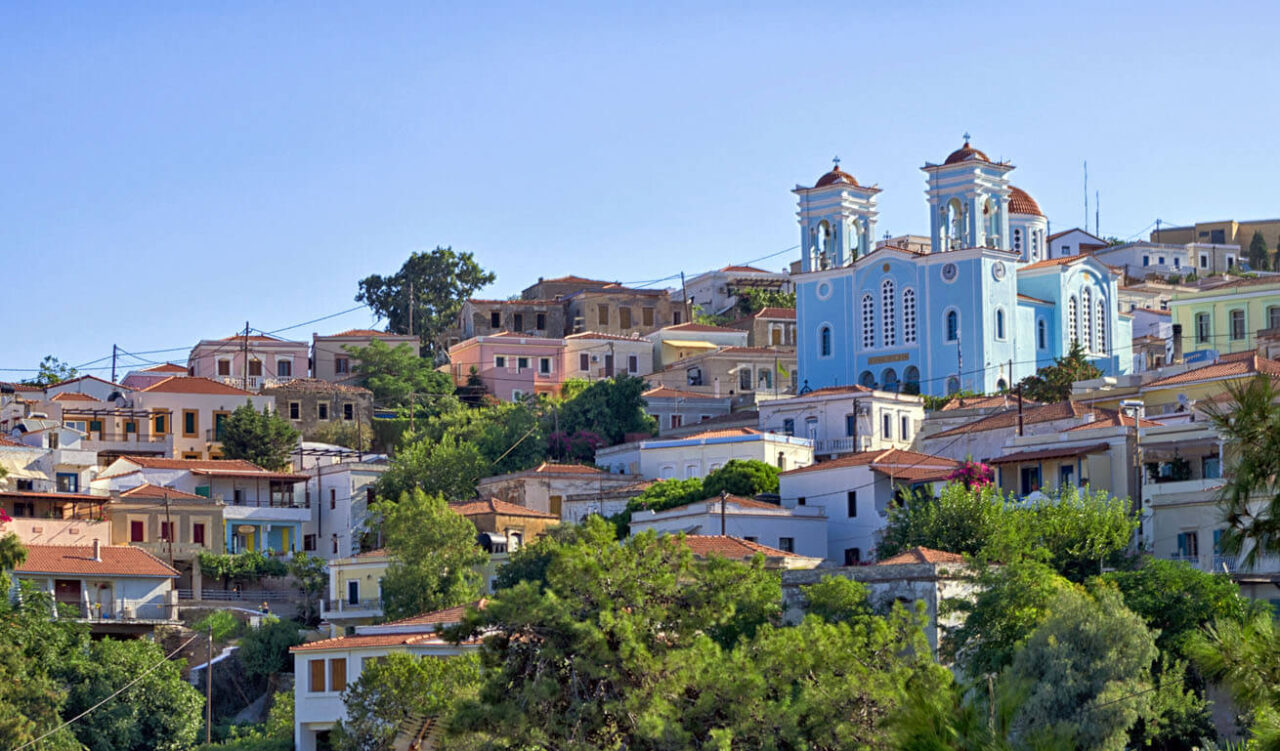
Discover Oinousses Island, Greece: a serene maritime gem near Chios with quiet coves, fresh seafood, and rich local culture—perfect for authentic island escapes.
Oinousses has one tour of its own, a sailing cruise from Chios; the other tours below run on Chios, the port for every crossing to the island.
Oinousses Travel Guide: Explore Greece’s Secluded Maritime Gem
Oinousses is one of those rare Greek islands that feels like a secret kept by sailors and families who’ve called it home for generations. Close to Chios yet distinct in character, this tiny archipelago combines a working maritime culture, calm bays, and a slow-paced village life that’s ideal for travelers seeking authenticity over crowds. In this travel guide, My Greece Tour will walk you through how to get there, where to stay, what to eat, and the best ways to explore the cluster of islets that make up Oinousses. Whether you’ve got a day to spare from Chios or a relaxed week to soak up sea air, our tips and suggested itineraries will help you make the most of this secluded maritime gem.
Quick Overview: What Makes Oinousses Special
Oinousses is an archipelago of small islands and islets in the northeastern Aegean, only about 8 nautical miles (roughly 15 km) east of Chios and close to the Turkish coast. Even though it’s modest size and population (the main island hosts fewer than 1,000 residents), it punches above its weight culturally and historically: Oinousses has produced a remarkable number of mariners and shipowners who helped build Greece’s modern shipping industry.
What sets Oinousses apart:
- Maritime heritage: The island’s identity is tied to the sea. You’ll notice maritime motifs everywhere: small museums, plaques honoring captains, and families with generations at sea.
- Low-key tourism: Unlike many Cycladic or Ionian hotspots, Oinousses hasn’t been overbuilt for visitors. Expect quiet lanes, family-run guesthouses, and friendly tavernas rather than crowded resorts.
- Natural coastline: The shoreline is rugged and intimate, with pebble beaches, sheltered coves, and clear water excellent for snorkeling.
- Proximity to Chios: It’s an easy hop from Chios, making it a perfect add-on for travelers exploring the northern Aegean.
In short, Oinousses is a destination for travelers who prefer atmosphere and local color to nightlife and package-tour amenities. We found it’s especially rewarding for anyone curious about Greek maritime life, peaceful swimming spots, and authentic island hospitality.
Where is Oinousses, and which islets make up the group?
Oinousses lies 2 kilometres off the north-east coast of Chios and 8 kilometres west of the Turkish coast. The group counts 16 islands and islets with 17.4 square kilometres of land. The main island covers 14.3 square kilometres and had 911 residents in 2021.
Oinousses forms its own municipality in the Chios regional unit of the North Aegean region, and the town of Oinousses is its seat. Locals call the main island Egnousa, after agnos, the ancient name of the chaste tree that grows all over it. The name Oinousses points to oinos, the Greek word for wine, because the island was known for its wine in antiquity.
Three settlements hold the population. Shepherds and farmers from Kardamyla on Chios settled for good at Kastro in the 18th century, about 2 kilometres north-west of the present port. In the 19th century the village spread east to Mandraki, which has since been designated a traditional settlement. Aspalathrokampos lies about 5 kilometres east of the town, facing the islet of Archontoniso.
- Pasas or Panagia: the second-largest island at 2.448 square kilometres, with a lighthouse built in 1863, an army post and a heliport.
- Vatos: the third-largest island at 0.386 square kilometres, with a highest point of 22 metres.
- Agios Panteleimon: the islet facing the harbour of Oinousses, with a navigation light and a bronze crowned mermaid on its south-east rock.
- Prassonisia: small islets west of Kastro, in view of its large white-pebble beach.
- Other islets: Archontoniso, Gadros, Gaidouronisos, Mallaropetra, Monaftis, Papapondikadiko, Pateroniso, Pontikonisi and Santa Panagia.
Geologically, the islands are mountain tops of Aegeis, the sunken land that once joined Europe, Asia and Africa. Their mainly limestone ground resembles Kara Burun in Erythraia and the coast of Kardamyla. The islets shelter the harbour from the south winds of the strait between Chios and the Erythraia peninsula. Northern beaches of Oinousses, such as Chochlakas and Katsika, take the August meltemi. The whole group belongs to the NATURA 2000 network, and the road network stays under 25 kilometres. To circle the islets by sea, start with Chios boat trips.
Why is Oinousses called the island of shipowners?
Oinousses earned the name through shipping families such as Lemos, Pateras, Hadjipateras, Samonas, Kollakis and Lyras. By the mid-1960s the island fleet counted 150 vessels, a total that put Oinousses at the top of world shipping for its size and population.
The early islanders kept sheep and farmed, and an English reporter later described the shift as “from sheep to ships”. In 1849 they built their own vessels at Plomari on Lesbos, and twenty families soon held 15 percent of the Chios merchant fleet. In the Crimean War of 1853 to 1856, island owners ran transports for the Turkish army from Smyrna to the Dardanelles. The profits paid for larger ships, which traded from the Black Sea to Egypt.
In 1905 the Pateras, Hadjipateras and Laimos families bought the Marietta Ralli, the first steamship of Oinousses. Estimates put the fleet above 65 ships between 1923 and 1939. In the Second World War the bulk of the fleet sank in Allied convoys in the Atlantic. After the war, Oinoussian owners received 14 of the 100 Liberty ships that the Greek government and shipowners secured from the United States.
- Maritime Museum: shipowner Nikolas Laimos created it in 1965, and it occupies the Pantelis Ant. Laimos mansion by the port. It holds ship models made by French prisoners in English prisons during the Napoleonic wars and paintings of island ships by Aristeidis Glykas.
- Merchant Marine Academy: the AEN of Oinousses opened at the port in 1965, trains deck officers only and offers a student residence.
- Naval school: the Naval Gymnasium of Oinousses opened on 23 November 1954 with 98 pupils.
- Mermaid statue: the bronze Oinoussiotissa, a crowned mermaid holding a sailing ship in her left hand, is the work of sculptor Maria Papakonstantinou.
- Unknown Sailor monument: donated by Nikolas Laimos in 1952 and made by Lazaros Lameras, it was the first statue in Greece for lost seamen and lists every Oinoussian sailor lost at sea.
The museum, the academy and both statues sit around the harbour, so a single visit from Chios covers them. See Chios day trips for the options. Nikolas D. Pateras, a seventh-generation shipowner originally from Oinousses, founded Contships Management Inc.
What is the Evangelismos Monastery of Oinousses?
The Evangelismos Monastery of Oinousses is a convent of the Annunciation of the Virgin Mary, 3 kilometres north-west of the town. It began in 1962 as a vow of the family of Panagos and Katingo Pateras, and it was inaugurated on 10 August 1965.
The Chios tourism office records that two shipping families built the monastery in the Byzantine style. It stands on the west coast, at the north-west tip of the island, and the southern beaches of Oinousses run from the monastery to the village.
Since its founding the convent has followed the old church calendar and the rule of Saint Sabbas. Its abbess was the nun Maria Myrtidiotissa, known before her vows as Katingo Pateras-Laimou. In 1971 the nuns attended the tonsure of the ascetic Sophia of Kleisoura, who took the monastic name Myrtidiotissa in honour of the abbess, her spiritual sponsor.
- Icons: works by Fotis Kontoglou, with relics and liturgical objects, decorate the katholikon, the main church.
- Frescoes: in 1963 Konstantinos Georgakopoulos, a student of Kontoglou who worked with him for 15 years, painted the katholikon in true fresco.
- Feast day: each 29 June the convent celebrates a saint’s feast with a procession down to its small harbour.
- Islet churches: the churches of Agios Panteleimon and Agia Aikaterini, on the islet facing the port of Oinousses, belong to the monastery.
- Guest hall: in the archontariki, visitors receive a treat from the convent’s own produce.
In the town, the cathedral of Agios Nikolaos honours the patron saint of Oinousses and keeps a piece of his relic, brought from Sicily in December 2001. It also holds part of the bones of Metropolitan Platon Fragkiadis of Chios. The Ottoman authorities hanged him in Chios in April 1822 and threw his body into the sea. The waves carried it to Oinousses, where the island priest Georgios Laimos recognised and buried it. Agios Georgios, the first church on the island, dates to 1750; the 1949 earthquake destroyed it, and the children of Anastasis Pateras restored it.
Getting There: Ferries, Timetables, And Practical Routes From Chios
Getting to Oinousses is straightforward if you base yourself on Chios. There are regular ferry connections operated by local lines: frequency increases in summer (June–September) and drops in the shoulder seasons.
Ferry basics:
- Route: Chios (port of Chios town, sometimes referred to as Vrontados, ferries operate too) to Oinousses main port (Ormos or Oinousses village harbor). The crossing takes roughly 30–60 minutes, depending on vessel type and stops.
- Operators: Local passenger ferries (small conventional ferries and occasionally catamarans) run the route. Timetables are seasonal, expect 1–3 crossings daily in high season: fewer in spring and autumn.
- Booking: For summer weekends or holiday periods, book in advance via operator websites or at Chios port ticket offices. For most mid-week trips, walk-up tickets are usually fine.
Practical tips:
- Early planning: If we’re arriving in Chios by plane or ferry, we leave an extra buffer (2–3 hours) before connecting to Oinousses in case of delays. The island’s schedule tends to be less forgiving than mainland connections.
- Cars: There are limited vehicle spaces on ferries. If you want a car on Oinousses, reserve a vehicle spot early; otherwise, consider renting on Chios and leaving it there if you’ll return the same day.
- From Chios airport: The airport is near Chios town; grab a taxi or bus to the port. Buses align roughly with ferry departures in summer, but they’re not frequent off-season.
- Private transfers and charters: If timetables don’t match your plans, hiring a private boat from Chios is a common solution for groups. It’s more costly but gives flexibility and access to smaller coves around the archipelago.
We recommend checking timetables a few days before travel and reconfirming locally: small Aegean services can shift with weather, demand, or operational changes.
Where To Stay: Villages, Guesthouses, And Booking Tips
Oinousses’ accommodation scene is modest and intimate, think family-run guesthouses, apartments, and a handful of simple pensions. There’s no mega-resort development here, which preserves the island’s charm.
Where to base yourself:
- Oinousses village (Chora/Ormos): The main settlement near the harbor is the most convenient place to stay. It’s where you’ll find tavernas, a mini-market, cafes, and the majority of guesthouses. Staying here means easy access to boats and village life.
- Small hamlets and isolated houses: A few scattered houses and rooms-to-let exist around the island. They offer quiet and seclusion but may require a short walk or a scooter to reach the harbor.
Types of places:
- Family pensions and rooms: Clean, economical, and reassuringly personal. Hosts often help with local tips, boat bookings, and simple breakfasts.
- Self-catering apartments: Good for longer stays or families, small kitchens let you shop at the local market and prepare meals from fresh produce and seafood.
- Private villas: Very limited: if you find one, it’s usually a renovated captain’s house with traditional touches. Book these well in advance.
Booking tips:
- Book early for July–August: Limited rooms fill quickly. If we were planning a summer stay, we’d book 2–3 months ahead.
- Check cancellation policies: Small owners may have stricter terms. Flexible booking is useful in shoulder seasons when ferries or the weather are less predictable.
- Ask hosts about transport: Some guesthouses coordinate with boat schedules or offer pickup options for groups arriving late on the island.
We’ve stayed in several small pensions and found the value is excellent, expect simple comforts, fresh sheets, and hosts who treat you like family rather than a room number.
Top Things To Do On Oinousses
Oinousses rewards a relaxed approach: put away the itinerary and leave room for wandering. Still, a few activities help capture the island’s character and maritime roots.
Stroll the harbor and village
Begin with the harbor area where fishing boats and small yachts bob quietly. We like to walk the short waterfront promenade, peek into maritime memorials, and sit at a café to watch local life, captains chatting, kids bicycling, and fishermen mending nets.
Visit the Maritime Museum
The small maritime museum (or local heritage collections) celebrates the island’s shipping families and seafaring traditions. It’s compact but packed with stories, old charts, photographs, and model ships.
Taste local products
Take time to try local cheeses, olives, and maritime-themed sweets. Several tavernas serve fresh fish caught that morning: ask the owner what was landed today.
Explore neighboring islets
The archipelago comprises tiny islets with dramatic coastlines and private-feeling coves. A boat trip (organized or private) is the best way to sample several in a day.
Relax and swim
Much of Oinousses’ charm is in its simple beaches, pebbly coves with clear water. Bring water shoes for some beaches and a good snorkel for rocky spots.
Photography and slow-paced wandering
We often find the best memories come from aimless wandering, sunlit alleys, blue shutters, and the small chapels that dot the landscape. Bring a camera and a willingness to get a little lost.
Sail Around The Archipelago (Boat Tours & Private Charters)
For us, the single most memorable activity is spending a day on the water. Boat options include:
- Shared boat tours: Economical and social, these run in summer and visit nearby islets, swimming spots, and secluded bays.
- Private charters: Ideal for couples or families who want flexibility. With a private skipper, we’ve anchored at tiny coves inaccessible to larger boats, enjoyed on-board lunches, and snorkeled without crowds.
- DIY rental: If you’re confident and have experience, renting a small motorboat from Chios or Oinousses is feasible; always check the weather and currents.
Where boats go: popular stops include the tiny islets north and east of the main island, sheltered bays with translucent water, and coastal caves where the light creates turquoise shades. Pack snorkeling gear, sun protection, and provisions: some trips include a simple picnic or stops at family-run beachside tavernas.
Beaches, Bays, And Coastal Walks: Best Spots For Swimming And Snorkeling
Oinousses isn’t about wide sandy beaches: it’s about intimate coves and crystalline waters. Here are reliable spots we recommend.
Main swims and coves:
- Agios Ioannis Bay: A pleasant pebble beach near the main village. It’s sheltered and great for casual swimming and a quick dip after exploring the harbor.
- Moni Islet coves: Several small inlets around the islets are reachable by short boat rides, excellent for snorkeling and clear visibility.
- Kerynia and small rocky bays: These quieter spots reward those who don’t mind pebbles and a short walk to reach the water. The sea here is often calm and clear.
Snorkeling tips:
- Bring fins and a mask: The best snorkeling on Oinousses happens along rocky bottoms and submerged ledges where small fish congregate.
- Watch for currents: The channels between islets can have modest currents; we always check local advice before swimming far from shore.
- Respect marine life: Don’t touch or remove shells and sea urchins. The marine ecosystem is delicate in these sheltered bays.
Coastal walks:
- Short harbor-to-church walks: Many coastal paths are short and well-marked, perfect for an evening stroll at golden hour.
- Ridge walks and viewpoints: Low ridgelines offer panoramic views of the archipelago and neighboring Chios. They’re easy hikes and very rewarding at sunrise or sunset.
We prefer late afternoons for swims, water warmed by the day, and fewer boats around. A small pair of water shoes makes pebble beaches far more comfortable.
Food, Drink, And Local Culture: What To Eat And Where
Food on Oinousses is unfussy, fresh, and deeply Mediterranean, with seafood, olive oil, simple grilled dishes, and island recipes passed down through families.
Dishes and specialties:
- Fresh fish and octopus: Many tavernas serve fish caught that day. Grilled, simply seasoned, and served with lemon, this is a must-try.
- Local cheeses: Sheep and goat cheeses, often served drizzled with local olive oil or alongside honey.
- Olive oil and olives: The island’s produce is extra flavorful; buy a small bottle as a souvenir.
- Traditional pies (pita): Spanakopita (spinach) and other savory pies are common as snacks or light lunches.
Where to eat:
- Harbor tavernas: The most social dining happens by the water. We like places where owners greet you, and fishermen bring in the day’s catch.
- Family-run cafes: For coffee and pastries, stop at a kafeneio where locals gather for conversation and cards.
- Seasonal pop-up spots: In summer, you might find small grill setups or seaside tables run by families cooking simple dishes. Ask a local: these tend to serve the freshest meals.
Cultural notes:
- Mealtime rhythm: Greeks on small islands eat late; dinner often starts around 9 PM in high season. But many tavernas will serve earlier for tourists.
- Hospitality: Hosts take pride in welcoming visitors. If we’re offered a small plate or a glass of tsipouro (an anise-flavored pomace spirit), it’s usually a gesture of friendliness.
We recommend trying a multi-course seafood meal with a small bottle of local wine or a round of ouzo to finish. It’s simple, satisfying, and memorable.
Practical Tips: Money, Safety, Connectivity, And Seasonal Considerations
A few practical notes can make the trip smoother.
Money and services:
- Cash is king: Many small shops and tavernas prefer cash. ATMs are scarce or non-existent on the island: withdraw cash on Chios before crossing over.
- Cards accepted selectively: Larger tavernas may accept cards, but don’t rely on them. Carry smaller denominations for local purchases and tip jars.
Safety and health:
- Basic medical services: There’s limited medical provision on Oinousses. For anything beyond minor issues, we’d plan to return to Chios or seek help there.
- Sun and sea safety: Strong sun and reflective water make sunscreen essential. Wear water shoes on pebble beaches and be conservative with open-water swims if you’re unfamiliar with currents.
Connectivity:
- Mobile coverage: GSM coverage is generally okay near the main village, but can be patchy in remote coves. Check your operator’s roaming plans in advance.
- Wi‑Fi: Guesthouses and tavernas often offer Wi‑Fi, but speeds are modest compared to urban centers. Consider offline maps and downloads if relying on navigation.
Seasonal considerations:
- High season (July–August): Warm sea, busiest ferry schedules, and the liveliest island atmosphere. Book accommodation early.
- Shoulder seasons (May–June, September): Mild weather, fewer crowds, and more comfortable exploration, our preferred time to visit.
- Off-season (October–April): Many services scale back or close. Ferries run less frequently, and some tavernas may be closed. Good for an off-grid, quiet experience, but plan logistics carefully.
Other practicalities:
- Language: Greek is primary; many islanders speak some English, especially younger hosts. A few Greek phrases go a long way and are warmly received.
- Waste and recycling: Small islands have limited waste services, avoid excessive packaging, and support local efforts by disposing of waste responsibly.
With these practicalities covered, we’ve found Oinousses to be a straightforward, low-stress island to visit, provided you prepare for modest infrastructure and embrace a slower pace.
Day Trips, Suggested Itineraries, And How To Make The Most Of A Short Visit
Oinousses is ideal for short visits from Chios or multi-day stays if you want to decompress. Here are itinerary ideas tailored to different trip lengths.
Half-day (ideal as an add-on from Chios)
- Morning: Arrive early from Chios, walk the harbor, and grab coffee.
- Mid-morning: Visit the maritime museum and stroll village lanes.
- Noon: Lunch at a harbor taverna and return to Chios in the afternoon.
Full day (best if ferries match your schedule)
- Early ferry to Oinousses.
- Morning: Coastal walk and museum visit.
- Midday: Boat trip around the archipelago with stops for two swims: picnic or lunch at a beachside taverna.
- Afternoon: Return to the main village, relax with coffee, buy local olive oil or small souvenirs, and catch an evening ferry back to Chios.
2–3 days (a relaxed mini-break)
- Day 1: Arrive, settle into a guesthouse, explore the harbor, and enjoy a slow seafood dinner.
- Day 2: Private or shared boat trip to nearby islets, snorkeling and beach time, and a sunset stroll.
- Day 3: Rent a scooter or walk to viewpoint ridges, visit tiny chapels, then depart mid-afternoon.
5–7 days (a slow, immersive stay)
- Alternate days of boat excursions with days dedicated to walking, reading by the sea, and sampling every taverna you can find.
- Use a day to visit Chios or arrange a private day charter to explore more distant islets and the coastline between Oinousses and Chios.
How to maximize a short visit:
- Prioritize one boat trip: The archipelago’s small bays are the highlight; reserve a morning or midday for a sea excursion.
- Book a harbor-side table: Meals with a view add disproportionate value to the experience.
- Travel light: Short ferry crossings reward nimble packing, one bag, and comfortable shoes.
- Connect with locals: Ask your host or taverna owner for the captain of the day; local recommendations often lead to the best coves and freshest food.
We’ve found that even a single day on Oinousses can feel restorative if you slow down and let the island set the pace.
Conclusion
Oinousses is a quietly powerful experience: a tiny island group where maritime history, clear water, and genuine hospitality combine into a travel moment that lingers. We recommend it for travelers who value authenticity, tranquil swims, and the chance to meet people for whom the sea is family. Plan carefully around ferry schedules, bring cash, and reserve lodging in summer, but beyond those practicalities, allow plenty of unstructured time. The reward is an island that feels like a well-kept secret, one we hope more travelers discover in respectful, low-impact ways.
Oinousses Travel FAQs
What is unique about Oinousses Island in Greece?
Oinousses is a small Greek archipelago known for its strong maritime heritage, low-key tourism, intimate pebble beaches, and authentic village life, making it ideal for travelers seeking peace and local culture.
How can I get to Oinousses from Chios?
Regular local ferries run from Chios to Oinousses, usually taking 30–60 minutes. Frequency rises in summer with 1–3 trips daily. Booking in advance during peak times is recommended.
Where should I stay on Oinousses for the best experience?
Most visitors stay in Oinousses village near the harbor, offering family-run guesthouses, tavernas, and easy access to boats. Booking early for July and August is important due to limited accommodations.
What are the top activities to do on Oinousses Island?
Popular activities include visiting the maritime museum, exploring the harbor, enjoying simple seafood meals, swimming in secluded coves, snorkeling, coastal walks, and taking boat trips around nearby islets.
When is the best time to visit Oinousses for pleasant weather and fewer crowds?
The shoulder seasons of May–June and September offer mild weather, less crowded ferries and tavernas, and more relaxed exploration compared to the busy summer months.
Are there any special tips for money and safety while visiting Oinousses?
Cash is preferred on Oinousses since ATMs are scarce and card acceptance is limited. Basic medical facilities exist, so plan for emergencies on Chios. Sunscreen and water shoes are essential for sun and sea safety.
Find more experiences in My Greece Tours: