
What do Patmos tours and this travel guide cover?
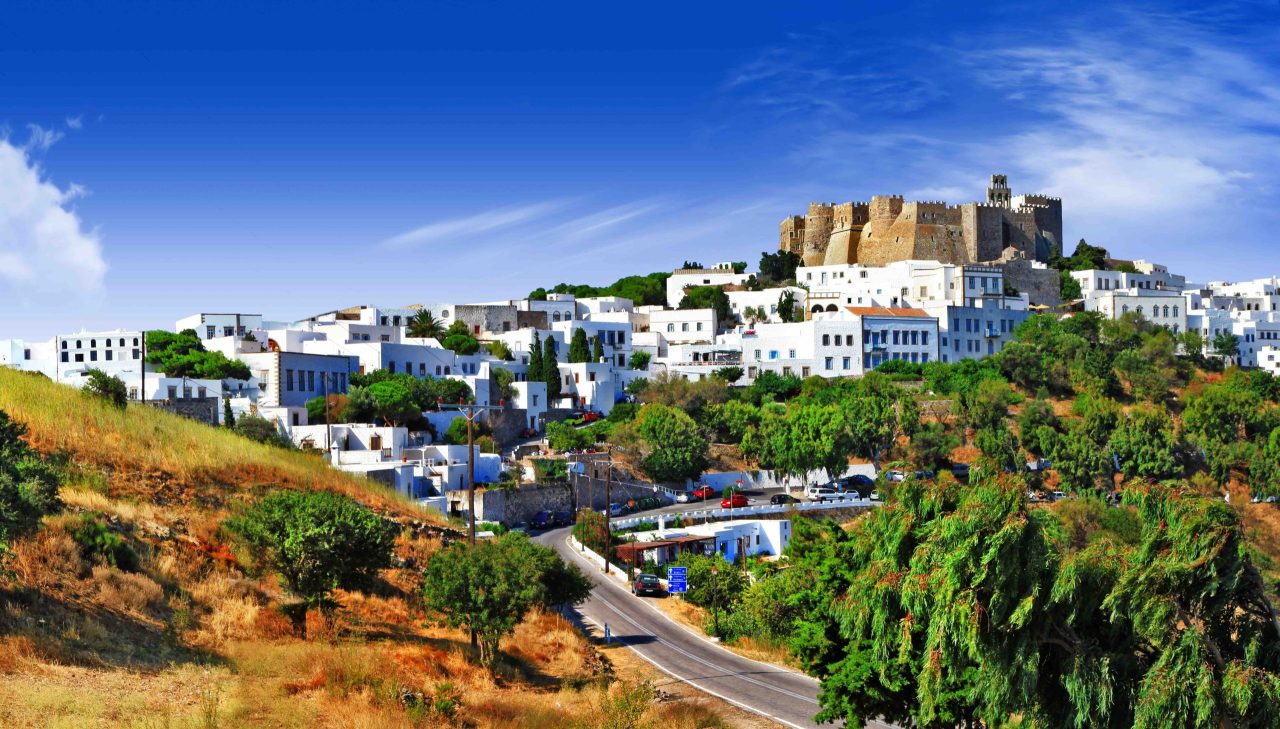
Patmos is a small, sacred island in the northern Dodecanese, famous as the place where Saint John wrote the Book of Revelation. It rewards slow travel: a UNESCO-listed monastery, whitewashed Chora, clear-water beaches, and a calm, romantic pace far removed from the party islands.
Patmos is one of those Greek islands that feels paused in time: whitewashed lanes, a hilltop monastery that has shaped Christianity’s story, quiet coves with impossibly clear water, and evenings that slow to a gentle, romantic tempo.
In this Patmos travel guide from My Greece Tours, we’ll walk you through why Patmos deserves a spot on your Aegean itinerary, practical ways to get there, the best things to do in Patmos, Greece, where to swim and sleep, and how to shape a visit, whether you’ve got a long weekend or a full week. We grew up visiting islands like this and now run local experiences through Greece Tours, so these are the tips we use when we plan itineraries for friends and guests.
What are the key facts for Patmos tours?
| Island group | Northern Dodecanese, eastern Aegean |
| Area / coastline | About 34 km² with a deeply indented coastline of roughly 63 km |
| Population | Around 3,000 permanent residents |
| Capital / main port | Chora (hilltop capital) and Skala (port) |
| Airport | None; reached only by ferry, via Kos or Samos |
| Famous for | Monastery of Saint John, Cave of the Apocalypse (both UNESCO World Heritage) |
| Best months | Late May–June and September–early October |
| Ferry from Piraeus | Roughly 7–12 hours depending on the vessel and stops |
Why book Patmos tours, and what makes the island special?
Visit Patmos for its rare mix of spiritual depth and quiet beauty: a UNESCO monastery and the Cave of the Apocalypse, a photogenic hilltop Chora, clear-water coves, and an unhurried, romantic atmosphere the party islands lost long ago.
Why do Patmos tours focus on spiritual history?
Patmos’s global fame rests on a single dramatic chapter: the Cave of the Apocalypse, where Saint John is said to have written the Book of Revelation around AD 95. Perched above it is the Monastery of Saint John the Theologian, a fortress-like complex founded in 1088 that dominates the island’s skyline and houses priceless manuscripts and icons, including one of the oldest surviving copies of the Gospel of Mark. Together the monastery, the cave and the medieval town of Chora were inscribed as a UNESCO World Heritage Site in 1999. Visiting these sites feels like stepping into living history, where religious devotion, medieval architecture, and Byzantine art converge in ways that still move many visitors.
What atmosphere do Patmos tours find in the villages?
Unlike Mykonos or Santorini, Patmos never became a party island. That’s its charm. Streets are narrow and respectful of tradition, tavernas feel family-run, and sunset time is for lingering rather than rushing. Couples come for intimacy and solitude, writers come for quiet inspiration, and anyone craving authenticity finds it readily. Even in July and August, the island retains a measured calm, partly because there is no airport to funnel in mass tourism, and we recommend Patmos to travelers who want romance without crowds.
Which Patmos tours suit hikers, beach lovers and slow travellers?
Patmos offers a pleasing mix: short coastal hikes between coves, longer inland walks with panoramic views, and easy boat hops to hidden beaches. Beaches range from well-serviced pebbly bays to near-deserted sand patches accessible only by a dirt track or the sea. For travelers who enjoy slow discovery, wandering lanes, sampling local food, and swimming in clear bays, Patmos is a near-perfect match. We’ll show where to find both the crowd-pleasers and the tucked-away spots locals keep to themselves.
When do Patmos tours run best?
The best time to visit Patmos is the shoulder season, late May to mid-June and September to early October, when the sea is warm enough to swim, the weather is reliably pleasant, and the island is lively without being crowded. July and August are hottest and busiest.
How do high and shoulder seasons change Patmos tours?
The peak season, July and August, brings warm seas and lively tavernas, but also higher prices and fewer quiet corners. Shoulder seasons, late May to mid-June and September to early October, are our top recommendation: the weather is reliably pleasant, sea temperatures are warm enough to swim, and the island feels alive without feeling overcrowded. If you prefer quiet walks and cooler evenings, plan for May or October. Winter is very quiet, many small hotels close, but the island’s spiritual sites remain accessible for contemplative travelers, and the great feast of Saint John still fills the monastery each autumn.
What weather do Patmos tours meet each month?
- May: Daytime highs ~20–24°C (68–75°F), sea ~19–20°C (66–68°F). Great for hiking and early-season swimming.
- June: 24–28°C (75–82°F), sea ~22–23°C (72–73°F). Warm and sunny.
- July–August: 28–32°C (82–90°F), sea ~24–25°C (75–77°F). Beach-perfect, busy.
- September: 25–28°C (77–82°F), sea ~24°C (75°F). Warm and relaxing.
- October: 20–24°C (68–75°F), sea cooling to ~22°C (72°F). Fewer tourists, lovely light.
Wind, especially the Meltemi that blows from the north in mid-summer, can be strong on some July and August days, making certain beaches choppier. That’s when sheltered, south- and east-facing coves and boat trips feel especially appealing, and when the short crossing to nearby Lipsi or Leros can be smoother than an exposed beach day.
Which festivals and religious events can Patmos tours join?
Religious observances are central to Patmos’s calendar. Key dates include:
- Holy Week and Easter: Patmos keeps some of the most solemn Orthodox Easter traditions in Greece, including the Niptiras ceremony in Chora on Holy Thursday, when the abbot re-enacts Christ washing the disciples’ feet.
- August 6 (Transfiguration) and August 15 (Dormition of the Virgin Mary), both widely celebrated across the Greek islands, with processions and special church services.
- September 26: Feast of Saint John, a major local feast with religious ceremonies and cultural events centered on the monastery. If you time your visit for this, book accommodation well in advance.
Outside these, smaller local festivals, panigiria, take place in villages throughout the summer, offering live music, dancing, and traditional food. We love combining a panigiri evening with a relaxed walk through Chora afterward.
How do Patmos tours reach the island and get around?
Patmos has no airport, so you arrive by ferry, an overnight boat from Piraeus or a short catamaran hop after flying into Kos or Samos. On the island, a modest bus network, taxis, and rented cars or scooters connect Skala, Chora, and the main beaches.
Which ferry routes reach Patmos?
Ferries run to Patmos from Piraeus (Athens‘ main port) less frequently than to larger islands: the overnight ferry is the most common option and takes roughly 7–12 hours depending on the vessel and stops. Regular connections exist from nearby Dodecanese and eastern Aegean islands, Kos, Rhodes, Samos, Leros, Lipsi, and Kalymnos, via regional ferries that take 1–4 hours depending on the route. Timetables shift seasonally: we always check the ferry companies (Blue Star Ferries for the long hauls, Dodekanisos Seaways for regional catamaran hops) a few days before travel and book ahead for summer.
| From | Typical journey | Notes |
| Piraeus (Athens) | ~7–12 hours | Mostly overnight; the classic long-haul route |
| Kos | ~2.5–4 hours | Nearest airport with frequent flights |
| Samos (Pythagorio) | ~1.5–3 hours | Catamaran day-trips and connections |
| Leros | ~1 hour | Frequent regional hops |
| Lipsi | ~30–45 minutes | Ideal quick day trip |
| Rhodes | ~4–6 hours | Longer, via intermediate islands |
Which airports and air-plus-ferry options serve Patmos?
Patmos doesn’t have a commercial airport with regular flights, only a small heliport. The nearest airports with frequent services are on Kos and Samos. A common approach is to fly into Kos or Samos and take a connecting ferry (or fast catamaran) to Patmos, a 1.5–4 hour sea journey. Rhodes is another option, though the ferry time is longer. During summer, some travel operators package flights to nearby islands plus a short ferry, which can save time and simplify transfers. Whichever route you pick, we recommend booking the ferry leg before the flight, since summer catamarans sell out faster than plane seats.
How do Patmos tours get around by bus, taxi, car or on foot?
Skala is the island’s main port and administrative hub, and Chora sits on a hill above it, about a 15-minute drive or a steep 30–40 minute walk up the old path. Public buses run between Skala, Chora, and major beaches like Grikos and Psili Ammos on a modest schedule that covers the needs of many visitors, though services thin out in the evening. Taxis are available but limited, so book ahead, especially for evening returns after sunsets. Renting a car or scooter unlocks flexibility for beaches and inland villages: roads are generally well-maintained but narrow in places. Patmos is also wonderfully walkable for short distances, and Chora, the monastery area, and nearby viewpoints are best explored on foot.
Which practical tips help on Patmos tours?
- Money: ATMs exist in Skala, but carry cash for small tavernas and remote spots, as some family-run places are cash-only.
- Connectivity: Mobile coverage is decent, and many hotels and cafés offer reliable Wi‑Fi. If you need constant connectivity, buy a local SIM at Kos or Samos before your ferry.
- Accessibility: The island’s steep paths and steps, especially in Chora and around the monastery, make full wheelchair access challenging. Some beaches have ramps or are more accessible, but overall Patmos favors travelers comfortable with steps.
- Safety: Patmos is very safe. Standard travel precautions are enough: secure belongings on beaches and be mindful of sun exposure and hydration when hiking.
How many days do Patmos tours need?
Two days cover the essentials, the monastery, the cave, Chora, and one beach. Three to four days add a boat trip and more beaches at a relaxed pace, while five to seven days let you hike, swim widely, and island-hop to Lipsi or Leros without rushing.
Which highlights fit Patmos tours of one or two days?
Day 1 (Arrival and Evening): Arrive at Skala, settle in, take a waterfront walk, and watch the sunset with a seafood dinner. Day 2 (Full Day): Morning visit to the Monastery of Saint John and the Cave of the Apocalypse, lunch in Chora, an afternoon swim at Psili Ammos or Grikos, then a late ferry or an overnight stay if possible.
Boats from Samos bring day visitors to Skala: the Patmos day trip from Samos page covers the ports, the crossing, the cave and the monastery.
This compressed plan covers the island’s essential experiences: spiritual heritage, Chora’s beauty, and a classic beach. It suits cruise passengers and island-hoppers passing through, and a guided tour of the monastery and cave makes the most of a tight morning.
What do Patmos tours of three or four days add?
Day 1: Arrive, easy evening in Skala with sunset drinks. Day 2: Chora and the monastery in the morning, a relaxed lunch, and a late-afternoon beach. Day 3: A boat trip to hidden coves (we recommend a private half-day charter if you’re celebrating), then an evening panigiri or a quiet dinner in a romantic taverna. Day 4: An optional hike across the island or a short day trip to Lipsi or Leros before departure.
This pace allows romance, a private boat experience, and an extra beach or hike, and it is the length most couples choose for a first visit.
What do Patmos tours of five to seven days include?
With a week, you can balance lazy beach days with longer hikes and a couple of day trips. We’d spend mornings exploring different beaches, Psili Ammos, Agriolivado, and small coves, save an afternoon for a longer hike toward Profitis Ilias for panoramic views, and set aside one full day for island hopping to nearby Lipsi or Leros. Block a leisurely day in Chora to wander museums and small shops, and one evening for a sunset cruise. This is the best way to inhale Patmos at a relaxed pace and still sample neighboring islands.
Which sights and beaches do Patmos tours visit?
The top sights are the Monastery of Saint John, the Cave of the Apocalypse, and the fortified hilltop town of Chora, all UNESCO-listed, plus the port of Skala. The best beaches are Psili Ammos, Grikos, and Agriolivado, alongside quiet coves reached by boat.
What do Patmos tours see at the Monastery of Saint John and the Cave of the Apocalypse?
The monastery (Moni Agiou Ioannou), founded in 1088 by the blessed Christodoulos, crowns Chora and houses a treasury of Byzantine icons and manuscripts, some dating back more than nine centuries. We recommend arriving early, before the mid-morning crowds, to appreciate the architecture and to join a short guided tour if available. The Cave of the Apocalypse, a short walk below on the road to Skala, is small but atmospheric, and many visitors report a profound, contemplative feeling there. Both are working religious sites, so bring respectful attire that covers shoulders and knees, and note that the monastery treasury keeps its own opening hours.
What do Patmos tours see in Chora?
Chora is one of Greece’s most photogenic hill towns. Paved lanes, whitewashed houses, and shuttered wooden doors wind around the monastery’s base, and behind many of them stand grand captains’ mansions from the island’s 17th- and 18th-century heyday. Climb to the viewpoints for sunset, and watch the light shift over the Aegean while the town’s bells mark the hour. Tiny museums and local shops sell religious icons, handicrafts, and local products, and the windmills above the town make a rewarding short walk.
What do Patmos tours find at Skala port?
Skala is where boats arrive, and life moves at a gentle pace. Waterfront cafés and seafood tavernas make it a pleasant place to people-watch, and the evening volta, or stroll, along the quay is a local ritual. Two small collections, the folklore and archaeological displays, offer context for the island’s past, and the town of ancient Patmos once stood on the Kastelli hill just above. From here you’ll board ferries and arrange excursions to the beaches and coves.


Which beaches do Patmos tours reach?
- Psili Ammos: The most famous beach on Patmos, with soft golden sand and clear water, reached by a 20-minute walk from the road or by taxi-boat from Skala. Popular but still relatively relaxed compared to major tourist islands.
- Grikos: A well-protected bay with a lovely beach, good facilities, and options for boat hire. Great for families, and home to the distinctive Kallikatsou rock.
- Agriolivado: A smaller sandy beach north of Skala with calm waters and a local taverna, for an easy afternoon swim.
- Lambi: A pebble beach in the north known for its multicolored volcanic stones, with a well-regarded taverna behind it.
- Hidden Coves: For quieter swimming, head to small coves along the southern and eastern coasts; some are reachable only by boat or a short hike. Pack snorkeling gear and water shoes, as these coves have pebbly bottoms but pristine visibility.
| Beach | Type | Best for | Access |
| Psili Ammos | Sand | Classic swim, taverna lunch | Walk or taxi-boat |
| Grikos | Sand & pebble | Families, facilities | Bus, car |
| Agriolivado | Sand | Easy afternoon swim | Bus, car |
| Lambi | Colored pebbles | Scenery, seafood | Car |
| Kambos | Sand | Watersports, shade | Bus, car |
Where do Patmos tours snorkel and swim?
The water clarity around Patmos is excellent. Snorkelers enjoy exploring near rocky outcrops around Grikos and the quieter coves on the southeast coast, where the Kallikatsou rock offers interesting underwater relief. If you charter a boat, ask the skipper to stop at multiple micro-bays, which have small reefs and interesting marine life. For calm swimming on windy days, choose north-facing coves and the sheltered side of Grikos bay that are protected from the Meltemi.
Which Patmos tours and activities fill a stay?
The best things to do in Patmos are touring the monastery and cave, exploring Chora, taking a boat trip to hidden coves and nearby islets, hiking the old stone trails, snorkeling in clear bays, and joining a cultural, cooking, or sunset-cruise experience with local hosts.
Which boat Patmos tours, charters and sunset cruises run?
One of the best ways to appreciate Patmos is from the sea. Half-day boat Patmos tours include stops for swimming, snorkeling, and visiting hidden coves, while full-day private charters let you tailor the route, perhaps combining a quiet beach with a remote lunch on board. Popular sea trips take in the offshore islets of Arki and Marathi and the beaches of neighboring Lipsi. Sunset cruises from Skala are intimate and romantic, so bring a light jacket for breezy evenings. We work with local skippers who know secret bays and will anchor where the water’s clearest.
Which hiking trails do Patmos tours walk?
Patmos’s trails are varied: short coastal routes between beaches, moderate inland hikes to Profitis Ilias and other high points, and mellow village-to-village walks along old monopatia (stone paths). Trails are generally well-marked, but bring good shoes, water, and a hat, as shade is scarce. A favorite is the ridge walk from Chora toward the island’s eastern lookouts, which rewards you with wide views, few people, and wildflowers in spring. The old path linking Skala, the cave, and Chora is a rewarding way to trace the pilgrims’ route on foot.
Which water sports can Patmos tours add?
Snorkeling is accessible from many beaches, and water visibility is excellent in summer. For diving, small local operators provide guided dives for certified divers, who can expect to explore rocky reefs, small caves, and marine life typical of the Aegean. Kayak rentals and paddleboards are available at some beaches, including Grikos and Kambos, and are a great way to explore shallow bays independently. On breezy afternoons, windsurfers make the most of the Meltemi in the more exposed northern bays.
Which guided Patmos tours cover religious heritage and local life?
Guided Patmos tours focused on the island’s religious heritage add layers to the monastery and cave visits, letting you learn about manuscript conservation, monastic life, and the island’s role in Byzantine history. We also recommend cooking classes in a village kitchen or a guided tasting of local honey, cheese, and pastries to learn about the island’s food traditions. These experiences are intimate and run by families who’ve lived here for generations, and they book up quickly in high summer.
Two private Patmos tours pair the Monastery of St. John with the Cave of the Apocalypse. Of the two Patmos tours, the guided one comes with transport and a licensed tour guide. The other one, a highlights tour, relies on a private driver. This route includes a walk on the cobbled streets of Chora, the hilltop town above Skala. Guests also visit the Simantiri Mansion, a historic house museum in the same town.
Another of the Patmos tours, the Old Patmos tour, covers monasteries and windmills. A private driver handles the route, with a guide as an option. Like both Patmos tours above, it stops at the Cave of the Apocalypse. Guests walk Chora’s winding streets up to the windmills on the ridge. Lambi beach, known for its colourful pebbles, is the coastal stop.
The fourth of these Patmos tours is a private history and heritage walking tour. A local guide leads guests through the island’s architectural heritage on foot. Of the four Patmos tours here, it is the only walking tour.
- Choose guided Patmos tours for first-time visitors who want a licensed guide.
- Choose driver-led Patmos tours for travellers who want a private driver.
- Choose heritage Patmos tours for walkers who like architecture.
Where do visitors on Patmos tours stay?
Stay in Skala for convenience and ferries, in Chora for atmosphere and sunset views near the monastery, in Grikos for a quiet, family-friendly beach base, or in Kampos for secluded villas. Most lodging is small, family-run, and best booked two to four months ahead for summer.
Which areas suit a base for Patmos tours?
- Chora: Ideal for atmosphere and proximity to the monastery and viewpoints, with many boutique guesthouses within walking distance of the top sights. Evenings are exceptionally quiet.
- Skala: Best for convenience, as ferries, restaurants, and tour operators are all here, making it a good choice for first-time visitors and those without a car.
- Grikos: Quieter, beach-focused, and family-friendly, with easy access to water activities and a handful of good tavernas.
- Kampos: A more secluded area to the north with villas and retreats, good for privacy, watersports, and long stays.
Which hotels suit couples and families?
Patmos’s lodging leans toward small, family-run hotels and renovated guesthouses rather than large resorts. Boutique hotels in Chora offer romantic rooms with terraces and sea views, while Skala’s options are practical and close to services. Families will find beachfront hotels in Grikos and around Skala convenient. For a special occasion, book a renovated stone mansion in Chora or a cliffside suite with sunset views, and reserve these well in advance for summer, since the island’s finest rooms are limited in number.
Which booking tips help in peak season?
Book early, two to four months before peak season, if you have specific hotels in mind, especially in Chora or waterfront properties. If you prefer quieter stays, choose Grikos or Kampos and rent a car. Consider family-run guesthouses for local warmth and useful insider tips, as they help arrange boat trips and restaurant tables. If you’re combining Patmos with island hopping, stagger your nights, a few on Patmos and one or two on a neighboring island, for variety without constant packing.
What and where do visitors on Patmos tours eat?
Eat fresh seafood, grilled vegetables, and local cheeses at the waterfront tavernas of Skala, in family-run kitchens in Chora, and on hillside terraces at sunset. Local specialties include cheese pies, chickpea fritters, and pougkia sweets, best paired with a chilled ouzo or local wine.
Which local dishes, seafood and sweets stand out?
Patmos cuisine emphasizes fresh seafood, simple grilled vegetables, and local cheeses. We always advise trying:
- Fresh grilled fish and octopus, caught that morning.
- Local cheese pies (tyropita) and spinach pies (spanakopita), and the island’s own soft cheese.
- Revithokeftedes (chickpea fritters) and hearty bean stews.
- Pougkia and other honey-and-cheese pastries, plus spoon sweets served after coffee as locals do.
Pair meals with a local white or a chilled ouzo for a traditional touch, and don’t leave without trying the island’s cheeses at a village taverna.
Where do visitors eat at sunset?
We can’t list every excellent place, but a few reliable categories stand out: waterfront tavernas in Skala for fresh fish, small family-run restaurants in Chora for classic Greek dishes, and a couple of hillside terraces for sunset dinners. Book a table facing west and let the light do the rest. For a romantic night, choose a terrace in Chora after a sunset walk, since the combination of candlelight and views over the Aegean is hard to beat, and reserve ahead in July and August.
What nightlife does Patmos offer?
Nightlife on Patmos is understated. Evenings favor seaside bars with acoustic music or cafés where locals gather for late-night conversation. Look for nights with live traditional music, as these panigiria and tavern evenings are warm and social rather than loud. After dinner, join locals for a gentle stroll through Chora or along Skala’s waterfront, which are the island’s real late-night attractions, along with a nightcap at a low-key cocktail bar by the water.
Which day trips and island hops do Patmos tours offer?
From Patmos you can day-trip by ferry to Lipsi, Leros, Kalymnos, and Samos, or by boat to the tiny islets of Arki and Marathi. Common island-hopping routes link Samos, Patmos, Leros, Kalymnos, and Kos, balancing short hops with varied landscapes.
Which nearby islands do Patmos tours visit?
Patmos tours reach a cluster of Dodecanese and eastern Aegean islands nearby. Popular nearby options:
- Lipsi: A small, relaxed island with lovely coves and friendly tavernas, just 30–45 minutes away and ideal for a day trip.
- Leros: A short ferry ride to charming harbors, Italian-era architecture, and WWII history.
- Kalymnos: Famous for sponge diving and world-class rock climbing, excellent if you want an active day.
- Samos: A larger, greener island with vineyards, archaeological sites, and more frequent flights to the mainland.
- Arki and Marathi: Tiny, near-untouched islets reached by small boat, for a castaway lunch and a swim.
Each island has a different character, and ferry schedules allow for flexible day-trip choices.
Which island-hopping routes link Patmos?
A practical route is Samos → Patmos → Leros → Kalymnos → Kos, which balances short hops with varied landscapes and activities. For shorter sequences, pair Patmos with Lipsi and Leros for relaxed days and quick returns to Skala. Check regional ferry timetables and book the longer legs in advance in summer, since the fast catamarans that link these islands fill up quickly and sometimes adjust their schedules for the wind.
How do Patmos tours combine with Kos, Rhodes and Athens?
Patmos works well as a quiet counterpoint to busier islands or mainland cities. Combine it with Kos or Rhodes for more nightlife and archaeological sites, or include a couple of nights in Athens before or after Patmos to catch museums and flights. If you fly into Kos or Samos, a direct ferry hop makes Patmos an easy addition to a broader Greek itinerary, and it pairs especially well with a few slow days after the intensity of the capital.
Why do Patmos tours suit slow travellers?
Patmos is a quietly powerful island: spiritual history, a picture-perfect Chora, intimate beaches, and gentle rhythms make it ideal for travelers seeking meaning, romance, or simply an escape from the crowds. Whether you have 48 hours or a full week, our Patmos travel guide shows that the island rewards a slow approach, mixing monastery visits with boat trips, lingering over seafood, and leaving time for a sunset that unfolds at its own pace. If you’d like help turning this into a tailored itinerary, we run local experiences at Greece Tours and are happy to design private boat trips, guided monastery visits, or a multi-day island-hopping plan that matches your pace and interests. Patmos doesn’t shout for attention, it waits, quietly beautiful, and when you arrive, you’ll understand why.
Which questions do travellers ask about Patmos tours?
Which sights do Patmos tours cover, according to this travel guide?
Sights include the Monastery of Saint John the Theologian and the Cave of the Apocalypse, Chora’s hilltop streets and viewpoints, the Skala waterfront, and top beaches like Psili Ammos and Grikos. All three UNESCO-listed monuments cluster around Chora, and early mornings are best to avoid crowds and fully appreciate the monastery and cave.
When do Patmos tours get good weather and fewer crowds?
Shoulder seasons, late May to mid-June and September to early October, offer pleasant weather, warm sea temperatures, and fewer tourists. July and August are beach-perfect but busier and pricier, while May or October are best for cooler evenings, hiking, and quieter village life. Winter is very quiet, though the spiritual sites stay open.
How do Patmos tours reach an island with no airport?
Fly to nearby islands like Kos or Samos (or Rhodes) and take a connecting ferry or fast catamaran to Patmos, a sea journey of roughly 1.5–4 hours. Overnight ferries also run from Piraeus in about 7–12 hours. Check Blue Star Ferries and regional operators such as Dodekanisos Seaways for seasonal timetables, and book ahead in summer.
How do Patmos tours get around to beaches and villages?
Use the modest public bus network between Skala, Chora, and the main beaches, or hire taxis (book ahead for evenings). Renting a car or scooter gives flexibility for remote beaches and inland hikes. Many highlights, including Chora, the monastery viewpoints, and Skala, are best explored on foot, and taxi-boats reach beaches like Psili Ammos.
How many days do you need in Patmos?
Two days cover the monastery, the cave, Chora, and one beach. Three to four days add a boat trip and more beaches at a relaxed pace, and five to seven days let you hike, swim widely, and island-hop to Lipsi or Leros. Most first-time couples find three to four days the ideal length for a romantic, unhurried visit.
Can Patmos tours combine island hopping, and which nearby islands are easiest?
Yes. Patmos pairs well with Lipsi, Leros, Kalymnos, and Samos for short ferry hops, and with the tiny islets of Arki and Marathi by small boat. Common routes include Samos→Patmos→Leros→Kalymnos→Kos. Ferry schedules vary seasonally, so plan connections and book the longer legs in advance for a smooth island-hopping itinerary.
Find more experiences in My Greece Tours:
- Kefalonia Tours and Excursions – Book Through the Locals for Unique Experiences
- Kos Tours and Travel: Discover Kos Greece with the Best Tours
- Kythira Travel Guide: Discover Kythera’s Beautiful Island
- Lefkada Slow Guide: Where to Stay in Lefkada Island, Greece – Best Areas and Hotel
- Meteora Greece: Explore Meteora Monasteries & Meteora Tours
- Milos Travel: The Ultimate Guide to Milos, Greece
- Mycenae Tours: Experience Legendary Archaeological Site
- Mykonos Greece: The Absolute Guide To Survive
- Mystras Tours: Uncover the Mysteries of Mystras with a Byzantine Castle Tour