
Crete Paragliding
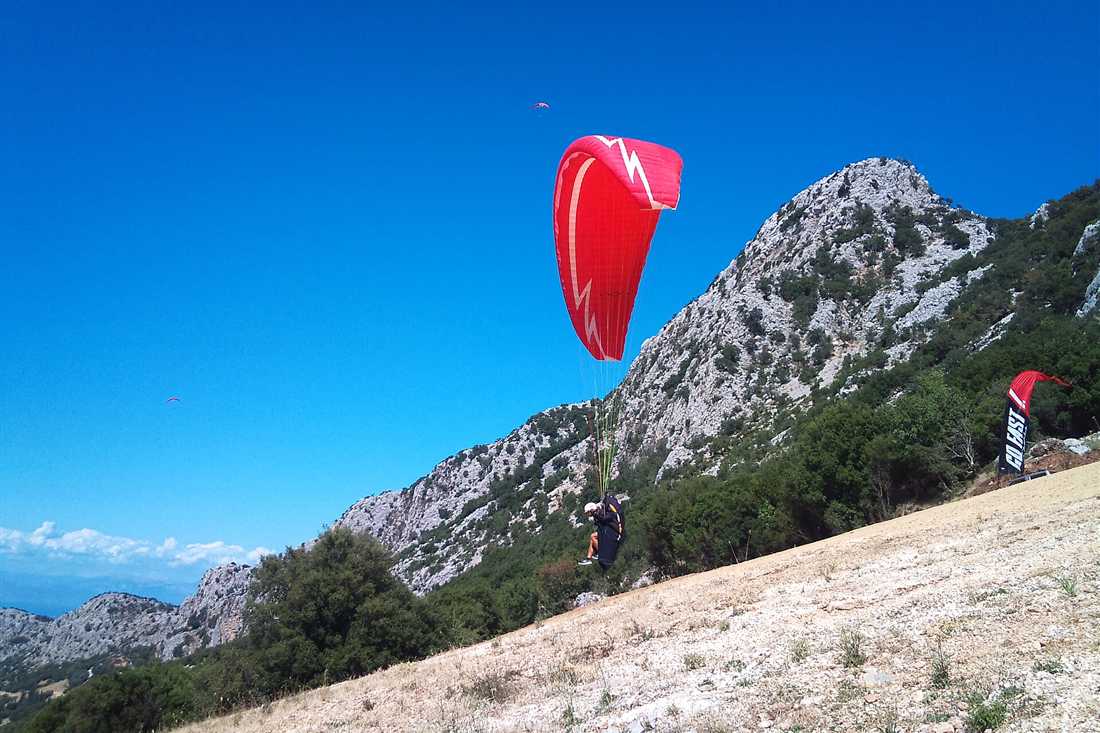
Crete paragliding is a tandem flight in which a certified pilot flies a fabric wing while a passenger with no experience sits in a harness in front, gliding above the Chania coast and the White Mountains. This page from Greece Tours explains how Crete paragliding works, from the briefing to the soft landing.
The two flights on sale both run in the Chania area of western Crete, and neither needs training, only sturdy shoes and a few running steps. The sections below cover the pilot and equipment, wind and the meltemi, the calmest hours to fly, what to wear, who can fly, and how to book a Crete paragliding flight.
What is Crete paragliding?
Crete paragliding is a tandem flight in which a certified pilot steers a fabric wing and a passenger with no experience rides in a harness on the same wing, launching from a slope near Chania and landing on a field.
The wing is a fabric canopy with no engine. Wind fills its cells and gives it shape, and the pilot steers with two brake lines. On Crete paragliding flights the passenger holds no controls and needs no training, because the pilot handles the take-off, the turns and the landing. The passenger sits in a seat-like harness with back protection, and the flight runs quietly on wind and rising air.
Crete paragliding is not the same as parasailing. In parasailing a boat tows a parachute on a rope, and the rider rises and sinks behind the boat. A paraglider flies free, with no rope and no boat, and the pilot uses the slope wind and rising warm air to stay up. The flight follows the landscape, not the wake of a boat, and both flights on sale around Chania are tandem paragliding.
Which Crete paragliding flights are on sale in Chania?
Two Crete paragliding flights are on sale in the Chania area: Chania: 30-Minute Paragliding Tandem Flight, and Paragliding in Chania. Both are tandem flights with a certified pilot, built for passengers with no experience at all.
The first listing, Chania: 30-Minute Paragliding Tandem Flight, names a 30-minute tandem flight in its title. The second, Paragliding in Chania, names the place and the activity. Both launch in the Chania area of western Crete, with one pilot and one passenger on each tandem wing. The take-off point depends on the wind of the day, so check each tour listing for the meeting point and the schedule.
Crete paragliding on both listings follows the same pattern: a briefing on the ground, a short take-off run, a guided glide and a soft landing. The details that matter sit inside each listing: what the flight includes, whether hotel pickup is part of it, and whether photos or video come with it. Read both listings side by side and compare the included items, the pickup area and the cancellation terms.
How does a tandem flight work step by step?
A Crete paragliding tandem flight runs in four steps: a ground briefing, a short take-off run downhill into the wind, the glide with the pilot steering, and a soft run-out landing on a field or beach.
The briefing comes first. The pilot fits the passenger harness and helmet, checks the straps, and explains the take-off: when the pilot calls, the passenger walks, then runs forward and keeps running until the feet leave the ground. On Crete paragliding days the pilot also shows the sitting position for the flight and the standing position for the landing, with the wing laid out on the slope behind the pair.
The take-off is a few running steps. The wind fills the wing, the pilot checks it overhead, and the pair run downhill until the wing lifts them. Once airborne, the passenger slides back into the seat and the pilot steers along the slope or over the coast. Before landing the pilot sets up a slow approach, the passenger stands up, and the pair touch down with a short run-out.
- Briefing – harness, helmet and take-off instructions.
- Take-off – a short run into the wind.
- Flight – a quiet glide with the pilot steering.
- Landing – a soft run-out on a field.
What does a first Crete paragliding flight feel like?
A first Crete paragliding flight feels calm: the take-off is a few running steps, the flight is quiet, and the harness swings gently like a seat. Motion-sick travellers tell the pilot, who keeps turns gentle.
The moment before take-off is the busiest part. The wing rises behind the pair with a light tug on the harness, and the running steps get lighter until the ground drops away. The lift is smooth, with no jolt. On Crete paragliding flights there is no engine noise, so the wind in the lines replaces the sound of footsteps and the pilot and the passenger talk at normal volume through the glide.
In the air the body sits back in the harness as in a chair. The wing sways in rising air, a gentle swing felt through the seat. Turns tilt the harness to one side, and a steeper turn adds a feeling of weight, so a passenger who wants a calm ride asks for wide turns. The air at altitude is cooler than at the beach, and the landing ends with a few soft steps.
Who flies the wing and what equipment is used?
On Crete paragliding flights a certified tandem pilot flies the wing, and the operator supplies the gear: a tandem wing, harnesses with back protection, a reserve parachute, a helmet and a radio. Check the listing for what each flight includes.
The tandem pilot holds a certification for flying with a passenger, a separate qualification from solo flying. The pilot reads the wind, chooses the moment to launch, steers the whole flight and lands the wing. The passenger has one job on the day: follow the running instructions at take-off and at landing. Crete paragliding pilots also carry a radio for contact with the ground from the launch to the landing field.
The tandem wing is larger than a solo wing, because it carries two people. The pilot sits behind the passenger, and both harnesses clip to the wing through connectors that join the pair. The harnesses have back protection built in, and the reserve parachute sits in a container on the harness for emergency use. Helmets come in different sizes, and the pilot checks the fit and the chin strap during the briefing.
- Tandem wing – a fabric canopy sized for two.
- Harnesses – seats with back protection.
- Reserve parachute – a backup canopy for emergencies.
- Helmet – fitted to the passenger at the briefing.
Why is Crete paragliding safe for passengers with no experience?
Crete paragliding is safe for beginners because a certified pilot makes every decision, flights run only in suitable wind, the gear includes back protection and a reserve parachute, and the operator reschedules when the weather turns bad.
Safety in tandem paragliding rests on three habits: a pilot who flies only in suitable conditions, gear checked before every flight, and a passenger who follows the briefing. The pilot inspects the wing, the lines and the harness buckles on the ground, including the helmet strap and harness fit on the passenger. Crete paragliding operators ground flights when the wind is too strong or gusty, rather than launch into rough air.
On a Crete paragliding flight the passenger adds to safety with simple actions. Keep running at take-off until the pilot says to sit back, since stopping early pulls the pair back onto the slope. Keep hands on the harness straps during the flight, never on the lines. Stand up and run at landing when the pilot calls. Tell the pilot about any back, neck or heart condition before the flight.
How do wind, weather and the meltemi affect Crete paragliding?
Wind decides every Crete paragliding flight: pilots fly only in steady, suitable wind, and the summer meltemi, a strong northerly wind in July and August, grounds flights on its strongest days. Operators reschedule for weather, so check the cancellation terms.
A paraglider launches into the wind, so the direction and strength of the wind on the slope matter more than sunshine. Too little wind makes the take-off run longer, and too much wind or gusty air makes flying rough. The pilot checks the wind at the launch before every flight and waits or cancels when it is outside safe limits. Low cloud over the launch also stops a tandem flight.
The meltemi blows from the north across the Aegean in July and August, and Chania sits on the north coast, facing it. Thermals, the columns of rising warm air over sunny slopes, let the pilot climb and extend the flight, but strong midday thermals also make the air bumpy. For Crete paragliding in high summer, book early in the trip, so a weather cancellation leaves days free for a new date.
When is the best time of day and season to fly?
Morning and late afternoon give the calmest air for Crete paragliding, and the main season runs from spring to autumn. Winter flights run on good-weather days, and high summer brings the meltemi, so early slots suit July and August.
Morning air is cool and smooth because the sun has not yet heated the slopes. Late afternoon brings the same calm as the thermals fade and the light turns warm and low. Midday in summer produces stronger thermals and more wind, which gives a bumpier ride. For a first Crete paragliding flight, a morning slot gives the gentlest air and leaves the rest of the day free for the beach or the old town.
Spring brings green hills and snow on the high peaks, a white backdrop to the view. Early summer and September offer warm air with less meltemi than July and August, and October keeps warm sea water and softer light. Winter flights run on good-weather days, so a winter visit still offers a flight, with more days lost to rain or strong wind. Check the listing for how the operator confirms each Crete paragliding slot.
Where does the view reach from the air above Chania?
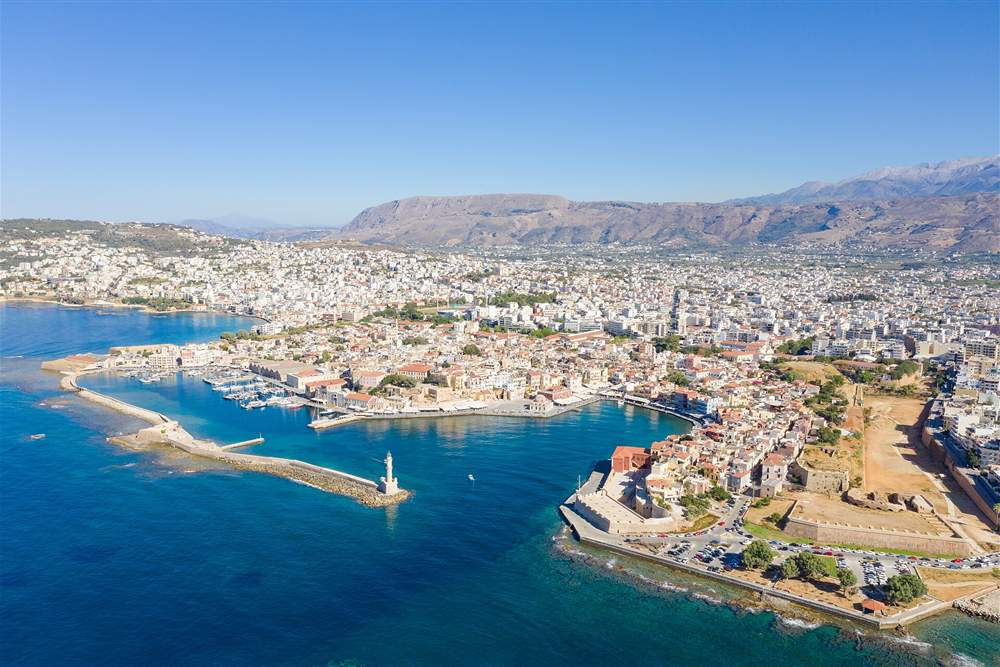
A Crete paragliding flight above Chania looks out over the White Mountains, the Chania gulf, Souda Bay, the Akrotiri peninsula and the old town with its Venetian harbour. The exact view depends on the take-off site and the wind.
The White Mountains, the Lefka Ori, rise to over 2,400 metres south of Chania and hold snow into spring. From a paraglider their grey limestone ridges fill the inland horizon. Northward the view opens over the Chania gulf, a wide curve of water and beach. On a clear day a long stretch of the north coast shows from the harness, with villages and olive groves laid out like a map.
Depending on the take-off site, Souda Bay cuts deep into the land to the east, sheltered by the Akrotiri peninsula to its north. Closer to the city, the old town and its Venetian harbour sit on the waterfront, with the lighthouse at the harbour mouth. Crete paragliding passengers who study a map before the flight pick out these landmarks faster from the air, and the pilot points them out on request.
- White Mountains – the Lefka Ori range inland.
- Chania gulf – the coast to the north.
- Souda Bay – a deep bay east of the city.
- Venetian harbour – the old town waterfront.
Who can go Crete paragliding, and who is advised not to?
Crete paragliding suits first-timers, adventure travellers and couples, who fly one at a time with the pilot. Check the listing for weight and age limits. Pregnant travellers and people with serious back, neck or heart conditions are advised not to fly.
No experience, fitness test or training is needed for the flight. The one physical demand is the take-off run, a few steps downhill, and the landing run-out, a few steps on flat ground. A traveller who walks and jogs a short distance on uneven ground manages both. Couples and friends fly one at a time, each with a pilot, so a group books one seat per person on the listing.
The flight puts load on the back and neck at take-off and landing, and the excitement of the launch raises the heart rate. For this reason pregnant travellers and anyone with a serious back, neck or heart condition are advised not to fly. Travellers who get motion sickness still fly, but they tell the pilot first. Anyone with a recent injury checks with a doctor before booking a Crete paragliding flight.
Which clothes and items do you bring for Crete paragliding?
For Crete paragliding wear sturdy closed shoes for the take-off run, long trousers, a light jacket for the cooler air at altitude, and sunglasses with a strap. Bring sunscreen, and leave hats, bags and loose items on the ground.
Shoes matter most. The take-off run crosses grass, gravel or dirt on a slope, and sandals or flip-flops slip or fall off. Trainers or light hiking shoes grip well and stay on through the landing run-out. Long trousers protect the legs from the harness straps and the ground, and a light jacket keeps the upper body warm, since the air at altitude is cooler than at sea level.
Loose items stay on the ground, because anything dropped from the air is lost and falls on the land below. A hat blows off in the wind, and the helmet replaces it. Sunglasses need a strap or a snug fit. Sunscreen goes on before the flight, since the sun at altitude is strong. On a Crete paragliding flight a phone comes along only on a secure strap and with the pilot’s agreement.
- Closed shoes – trainers or light hiking shoes.
- Long trousers – protection from straps and ground.
- Light jacket – warmth in the cooler air aloft.
- Sunscreen – applied before the flight.
How do booking, pickup, photos and cancellations work?
Crete paragliding flights are booked online through the tour listing, which states what the flight includes, whether hotel pickup is part of it, which photo or video options exist and the cancellation terms. The operator reschedules for weather.
Book a Crete paragliding flight a few days ahead in summer, and early in the trip rather than on the last day, so a wind cancellation leaves time for a new date. The listing shows whether the flight includes pickup from the hotel or a meeting point at the launch area. Give the operator a phone number that works on the island, since weather updates arrive close to the flight time.
Photos and video are an option on some Crete paragliding flights. When offered, the footage covers the take-off, the view and the landing, filmed from the wing or by the pilot. The listing states whether photos and video come with the flight or as an add-on, and how the files reach the passenger. Cancellation terms also sit on the listing, including what happens when the operator cancels for weather.
- Inclusions – the gear and services on the listing.
- Pickup – hotel transfer or a meeting point.
- Photos and video – included, optional or not offered.
- Cancellation – the terms for weather changes.
Can you combine a flight with a Chania day and other Crete adventures?
A morning Crete paragliding flight combines with an afternoon in Chania old town, a hike, a boat trip or a jet ski ride. Plan the flight early in the day and early in the trip, with room for wind changes.
After a morning landing, the afternoon suits a slow walk through Chania old town, with the Venetian harbour, the lighthouse and the narrow lanes of the old quarters. The view from the air makes the harbour easy to place later on the ground. A late-afternoon Crete paragliding slot pairs with a slow morning at a quiet beach on the Chania gulf, then the flight itself in the calm evening air.
Crete hiking routes run through the White Mountains and the gorges of the west, and Psiloritis, also called Mount Ida, rises further east to 2,456 metres as the highest peak on the island. At sea level, Crete boat trips follow the coast, and jet ski and stand-up paddle round out a water day. Keep a long hike and a flight on separate days, because tired legs make the take-off run harder.
Is Crete paragliding worth it?
Crete paragliding is worth it for travellers who want to see western Crete from above with no training: a certified pilot flies, the operator supplies the gear, and the view spans the White Mountains, the Chania gulf and the old harbour.
The flight gives a view no road or boat reaches: the mountains, the bays and the city in one frame, seen in silence from a seat in the air. It asks little of the passenger beyond a short run and a clear briefing, and the pilot handles every technical step. The two listings in the Chania area make Crete paragliding simple to fit into a stay on the north-west coast of the island.
The main planning point is weather. Book early in the trip, choose a morning or late-afternoon slot, and read the cancellation terms before booking. Wear closed shoes and a light jacket, and tell the pilot about any health condition. For more activities across the island, the Crete travel hub lists tours, day trips and adventures from Chania eastward, so a tandem flight becomes one part of a wider island plan.
Frequently Asked Questions
Do you need experience for Crete paragliding?
No experience is needed for Crete paragliding. Both flights on sale in Chania are tandem flights, so a certified pilot steers the wing and handles the take-off and landing, and the passenger follows a short briefing and runs a few steps at launch.
How long is a Crete paragliding flight?
The listing Chania: 30-Minute Paragliding Tandem Flight names a 30-minute tandem flight in its title. The second listing, Paragliding in Chania, states its own timing. Check each listing for the full schedule on the day.
What happens if the wind is too strong?
The pilot grounds the flight when the wind is too strong or gusty, and the operator reschedules for weather. The summer meltemi in July and August brings the strongest wind days, so book Crete paragliding early in the trip and check the cancellation terms.
What do you wear for a paragliding flight in Chania?
Wear sturdy closed shoes for the take-off run, long trousers, a light jacket for the cooler air at altitude and sunglasses with a strap. Apply sunscreen before the flight, and leave hats, bags and other loose items on the ground.
Can two people fly together on one wing?
No. Crete paragliding flights carry one passenger with one certified pilot on each tandem wing. Couples and friends fly one at a time, each with a pilot, so each person books a seat. Check the listing for weight and age limits.