
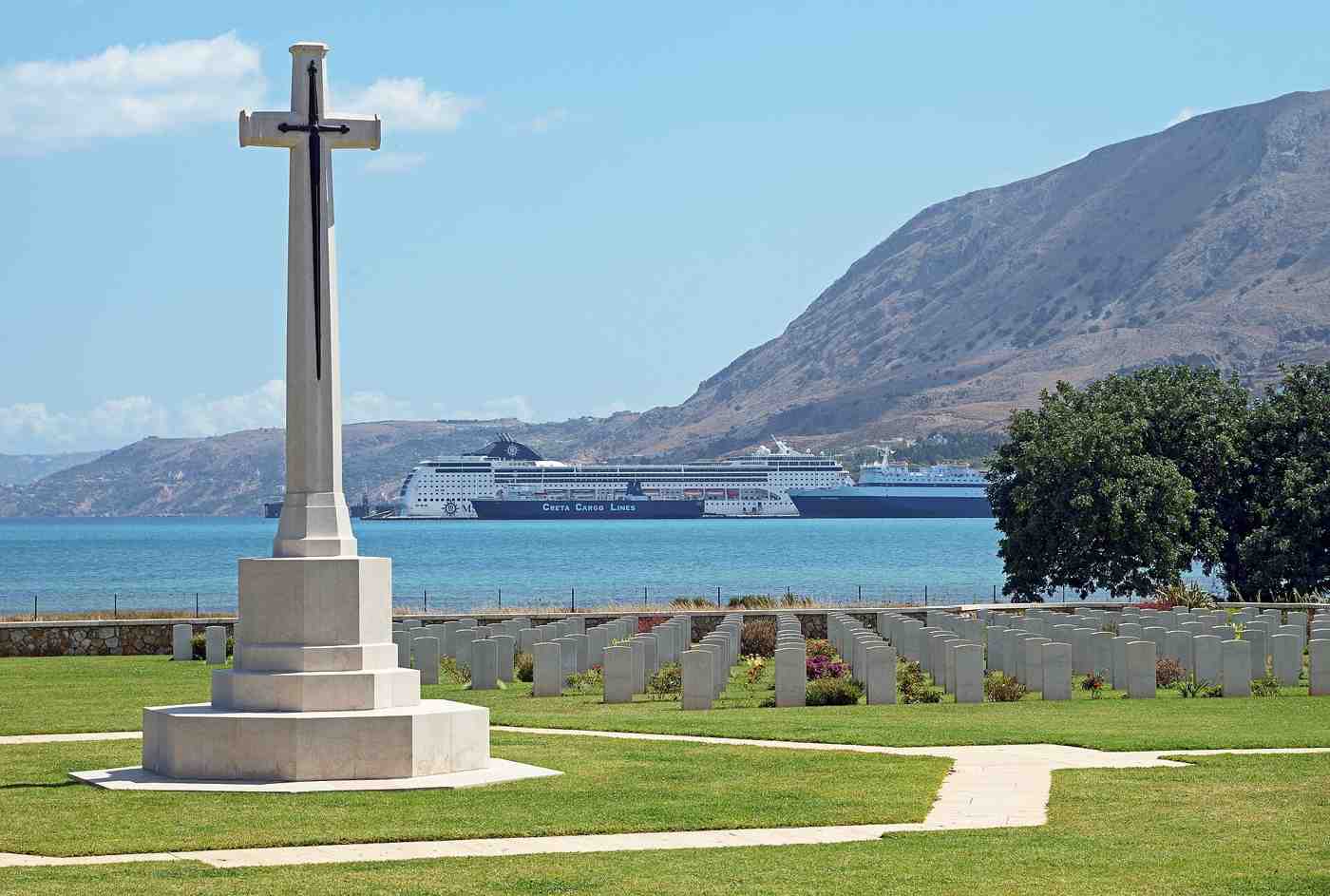
Souda Bay is one of the largest and safest natural harbours in the whole Mediterranean, a long, deep inlet cut into the north-west coast of Crete just east of Chania. Ferries from Piraeus glide in to dock at the port of Souda, and a naval base guards the sheltered water. The southern shore holds a moving Commonwealth war cemetery, its white headstones ranged above the sea. Two small fortified islets sit at the bay’s mouth, and the ancient hilltop city of Aptera watches over the water from the eastern heights. Plan your visit to this remarkable harbour with My Greece Tours.
Souda Bay pairs a solemn historic site with sweeping views over calm water, and it links the port town of Chania to the wider island beyond. The sections below cover the harbour itself, the war cemetery on the southern shore, the ferry crossings that arrive from Piraeus, the ancient city of Aptera on the eastern hill, and the fortified islets guarding the mouth of the bay. Read each part for practical detail, then set your route with our wider Crete travel guide before you travel to this corner of the island.
Why is Souda Bay one of the great harbours of Crete?
Souda Bay is a long, deep natural inlet on the north-west coast, one of the largest and safest harbours in the Mediterranean. Its sheltered water east of Chania holds a naval base and the ferry port serving the island.
Souda Bay reaches inland as a narrow, deep channel that ranks among the safest anchorages the Mediterranean can offer. The high ground on both sides shields the water from open-sea swell, and the depth lets large ferries and naval vessels ride at rest without any difficulty. A naval base guards the sheltered basin, so the bay carries clear strategic weight far beyond its everyday use as a passenger port. Travellers exploring the full range of things to do in Crete soon learn that this single harbour underpins the whole north-west coast of the island.
The bay sits just east of the busy port town of Chania, close enough that a short and easy drive brings you from the old Venetian waterfront straight to the modern quays where the island’s overnight ferries tie up each day.
The bay’s unusual shape gives it a rare double role, one part working port and one part landscape of deep, quiet beauty. The port of Souda handles the heavy traffic from mainland Greece, while the southern shore keeps its trimmed lawns, white headstones, and long sea views entirely free of industry. Aptera crowns the eastern hill above the water, and the twin islets of Souda and Nea Souda plug the narrow entrance to the sheltered basin. A stop at the bay rewards travellers heading toward Chania and the west of the island, and it frames the whole story of the harbour with one clear, uninterrupted horizon.
The contrast between the busy working quay and the calm southern bank defines the true character of the place and stays with almost everyone who visits it.
What can visitors see at the Souda Bay War Cemetery?
The Souda Bay War Cemetery on the southern shore holds the immaculately kept graves of Commonwealth soldiers who fell in the Battle of Crete during the Second World War. White headstones stand among lawns and flowers above the sea.
The war cemetery occupies a level plot on the southern bank, its long rows of white headstones set in trimmed lawns that run gently down toward the water. Gardeners keep the flowers, hedges, and grass in immaculate order through every season, so the ground reads as a place of quiet dignity rather than neglect. The Commonwealth soldiers buried here fell in the Battle of Crete during the Second World War, and the bronze register at the entrance records each name for visitors who wish to trace a relative. The mood across the grounds is quiet and deeply reflective.
The story of Cretan resistance runs deep across the island, and the Arkadi Monastery further east carries an older chapter of the same defiant spirit that visitors often trace on one memorable trip.
A visit to the cemetery asks for calm and respect rather than haste, and the peaceful setting rewards a slow walk between the headstones. The sea fills the whole view to the north, and the hills of the bay rise on either side, so the resting place feels held within the harbour it commemorates. Row upon row of headstones name young men from distant countries, a sobering reminder of how far the war reached. Entry is free, the gates stand open through daylight hours, and the shade is thin, so a hat and water help greatly in the warm summer months.
Pair the cemetery with a short drive up to Aptera on the eastern hill, and the day balances a solemn memorial with the wide, sunlit views that define this striking stretch of the coast.
How do ferries and the port shape travel to this part of Crete?
Ferries from Piraeus dock at the port of Souda, the main sea gateway to north-west Crete. The quays sit inside the sheltered bay, so arriving passengers step ashore a short drive from Chania and the western routes.
The port of Souda is the busy sea gateway for the whole north-west of the island, and the overnight ferries from Piraeus tie up here through the quiet early morning. The sheltered water lets the boats berth in calm conditions even when the open sea beyond the mouth runs rough, which keeps the crossing reliable across the long sailing season. Passengers who want the full practical picture of how to get to Crete will find that this one harbour handles the bulk of the western arrivals each year.
A short taxi or local bus ride carries you from the quay straight into the heart of Chania, so the port works as the practical front door to the whole region rather than a place to linger for long.
Timing the crossing well makes the arrival smoother, and the harbour rewards early risers with a soft, golden light spread over the still water. Booking a cabin on the night boat lets you sleep across the passage and step off rested, ready at once for the drive west into the mountains. Checking the best time to visit Crete helps you match your chosen ferry to calm seas and mild weather, since spring and autumn bring gentle crossings and pleasantly thin crowds. The port itself keeps a plain, workmanlike character, with cafes near the quay for a welcome first coffee.
Drivers can collect a hire car close to the terminal, which turns the sheltered bay into a natural launch point for the mountains, gorges, and beaches that lie further along the coast.
What is Aptera and why does it overlook Souda Bay?
Aptera is an ancient hilltop city on the eastern heights above the bay. Its ruins command a wide view over the sheltered water, a position that gave the old city control of the harbour and the coastal approaches below.
Aptera crowns the eastern hill above the bay, an ancient city whose walls, cisterns, and theatre still trace the outline of a once-powerful settlement. The site earned its strength from height, since the ridge looks straight down over the sheltered water and the coastal road that skirts it. Standing among the old stones, you grasp at once why the harbour mattered to every power that held the island. A trip up to Aptera pairs naturally with a stop at the bay below, and the short climb rewards you with the finest single view of the whole inlet.
The ruins spread across a broad plateau, so allow an unhurried hour to walk the paths between the cisterns, the temple foundations, and the later fortress on the seaward edge.
The view from the plateau ties the whole story of the harbour together in one sweep of the eye. The war cemetery sits on the far shore, the port of Souda works to the west, and the twin islets guard the mouth of the bay directly below. A visit near sunset paints the water gold and throws the hills into sharp relief, which makes the climb worth timing for the late afternoon. The great Roman cisterns rank among the best-preserved on the island, their vaulted chambers cool and dim against the heat outside.
Aptera turns a quick stop into a proper half-day, and it gives the whole coastline a sense of depth by joining the ancient past of the ridge to the living harbour and memorial spread out below.
How do the fortified islets guard the mouth of the bay in Crete?
Two small fortified islets, Souda and Nea Souda, sit at the mouth of the bay. Their old defensive walls once controlled every vessel entering the harbour, and they still frame the entrance to this sheltered stretch of Crete.
The islets of Souda and Nea Souda stand at the very mouth of the bay, twin rocky outcrops crowned by old defensive walls. Their position let past defenders watch and control every ship that tried to slip into the sheltered water beyond. The fortifications rank among the more stubborn strongholds the island has known, holding out long after other coastal defences had fallen. Boats crossing the bay pass close to the walls, so a short trip on the water gives the clearest sense of their scale and reach.
The islets set the western frame of a harbour that also holds a war cemetery, a working port, and the ancient ruins of Aptera, and together these landmarks make the bay a compact tour of the island’s layered history.
The islets close the bay’s story at its seaward edge, where the sheltered water meets the open channel toward the north coast. Viewed from Aptera on the eastern hill, the two rocks read as a natural gate across the entrance, and their walls catch the light in the early evening. Access is limited, so most travellers admire them from the shore, from the ferry deck, or from a small local boat that circles the bay. The stone ramparts show the wear of centuries, yet their bulk still hints at the wealth and effort that raised them.
A slow look at the islets rounds off a day that has moved from the solemn headstones of the cemetery to the ruins on the ridge, closing the loop of a harbour rich in both memory and view.
Frequently Asked Questions
Where is Souda Bay and how far is it from Chania?
Souda Bay lies on the north-west coast of Crete, just east of the town of Chania, cut deep into the shoreline as a long, sheltered natural harbour. The port of Souda sits at the head of the bay, and a short drive of roughly ten minutes connects the quays to the old Venetian centre of Chania. Regular buses and metered taxis run the route through the whole day, so travellers arriving by ferry reach the town quickly and without any fuss. The bay itself stretches for kilometres inland, ringed by high hills that shield the calm water from the open sea beyond its mouth.
Aptera crowns the eastern ridge, the war cemetery rests on the quiet southern shore, and the working port sits on the western side. This tight cluster of harbour, memorial, and ancient hilltop city makes the bay an easy and genuinely rewarding half-day trip from a Chania base, with each landmark only a short drive from the next.
Is the Souda Bay War Cemetery open to visitors?
The Souda Bay War Cemetery welcomes visitors through daylight hours, and entry to the grounds costs nothing at all. The grounds hold the graves of Commonwealth soldiers who fell in the Battle of Crete during the Second World War, kept in immaculate order with trimmed lawns, bright flowers, and long rows of white headstones set above the sea. A bronze register at the entrance lists every name, which helps relatives and researchers trace a particular soldier among the buried men. Visitors are asked to keep a quiet, respectful manner, since the site remains an active place of remembrance rather than a tourist attraction.
Shade is limited across the open lawns, so a hat, sunscreen, and water make the warmer summer months far more comfortable. The setting, with the open sea to the north and green hills rising on either side, lends the cemetery a calm dignity that leaves a lasting impression on almost everyone who walks its quiet paths.
Can visitors combine Souda Bay with other sights near Chania?
Souda Bay fits neatly into a wider day around Chania, since its landmarks sit close together on the eastern edge of the town. A typical loop starts at the war cemetery on the quiet southern shore, climbs to the ancient ruins of Aptera on the eastern hill, and takes in a fine view of the fortified islets at the mouth of the bay. Drivers can push further east to the Arkadi Monastery, a moving site tied to the same story of Cretan resistance that the cemetery commemorates so well. The port of Souda anchors the western side of the harbour, useful for anyone arriving or leaving the island by ferry.
Chania’s Venetian harbour, old town, and covered market lie only a short drive away, so the bay pairs easily with a relaxed afternoon in the town. This blend of solemn history, ancient ruins, and sweeping sea views turns the harbour into one of the most rewarding half-day trips in the whole region.