
To get from Chania to Paleochora, drive about 75 kilometres south-west over the mountains through Kandanos in 1.25 to 1.5 hours, take the direct KTEL bus in 1.5 to 2 hours, or arrive by the coastal ferry from Sougia or Elafonisi. Plan the whole trip with Greece Tours.
This guide covers the trip from Chania to Paleochora in full: where it is, the three ways to get there, the drive time, the direct bus, the town and its two beaches, the Venetian castle of Selino, what there is to do, the ferries to Elafonisi and Sougia, the best time and where to stay, families, and whether this south-west day trip to Paleochora is worth it.
Where is Paleochora from Chania?
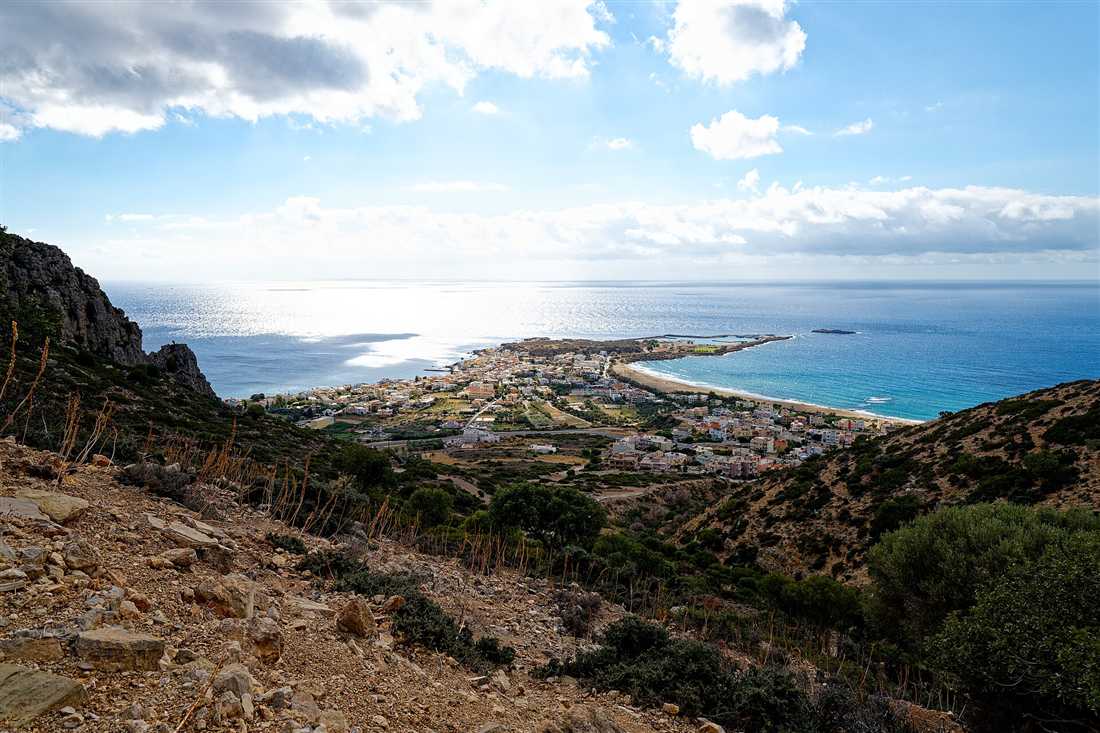
Paleochora sits on the south-west coast of Crete, in the Selino district of the Chania regional unit, about 75 km south-west of Chania city on the Libyan Sea. The town stands on a narrow peninsula with a sandy beach on the west side and a pebble beach on the east, below a Venetian castle.
The town anchors the far south-west corner of Crete, where the White Mountains drop toward the Libyan Sea and the coastline turns from cliffs to open bays. Chania, the regional capital and the nearest airport, lies to the north across the mountainous interior of the Selino district. The 75 km road distance separates two very different landscapes: the busy north coast around Chania and the quiet, sun-baked south coast that faces Africa.
Paleochora occupies a flat peninsula that juts into the sea, roughly 400 metres wide at its base. The Venetian castle of Selino crowns the low headland at the southern tip, and the settlement spreads north from it along the neck of land. This peninsula shape gives the town its defining feature: two coastlines within a five-minute walk of each other, one soft golden sand, the other grey sea-worn pebbles.
The wider Selino district frames the town with olive groves, greenhouse tomato farms and steep gorges that run down to the sea. Sougia lies to the east along the coast, Elafonisi to the west, and the Samaria Gorge exit at Agia Roumeli sits between them. Paleochora works as the western base for this stretch of the Libyan Sea coast, closer to Elafonisi than any other resort town.
How do you get from Chania to Paleochora?
Reach Paleochora from Chania three ways: drive south-west over the mountains through Kandanos in 1.25 to 1.5 hours, take the direct KTEL bus from Chania in 1.5 to 2 hours, or arrive by the coastal ANENDYK ferry that links Paleochora with Sougia and Elafonisi. A car delivers the most freedom.
The drive is the most direct route. From Chania the road runs west along the coast to Tavronitis, then turns inland and climbs south through the village of Kandanos before descending to the south coast at Paleochora. The full journey covers about 75 km on a paved but winding mountain road. A hire car gives you the freedom to stop at Elafonisi, Sougia or a hillside taverna on the way.
The KTEL bus connects Chania central bus station with Paleochora on a direct service, with no change of vehicle. The ride takes 1.5 to 2 hours and runs multiple times a day through the summer season, dropping passengers in the centre of Paleochora. This route suits travellers without a car who want a fixed price and a set timetable rather than mountain driving.
The third approach uses the sea. The ANENDYK coastal ferry links Paleochora eastward with Sougia, Agia Roumeli and Loutro, and westward with Elafonisi. Walkers finishing the Samaria Gorge or the coastal path board the boat at Agia Roumeli or Sougia and ride it into Paleochora harbour. The ferry turns the south coast into a linked chain of car-free villages.
How long does it take to drive from Chania to Paleochora?
The drive from Chania to Paleochora takes about 1.25 to 1.5 hours over roughly 75 km. The route heads south-west from Chania through Tavronitis and Kandanos, climbing over the hills of the Selino district on a winding but fully paved inland road before dropping to the south coast.
From Chania the road first runs west along the flat north coast to Tavronitis, a fast 20 km stretch. At Tavronitis the route turns inland and south, leaving the coast behind and starting the climb into the Selino hills. This is where the driving slows: the road narrows and bends through olive groves and small villages as it gains height.
Kandanos marks the midpoint of the mountain section, a village set among the hills with fuel and a taverna for a break. Past Kandanos the road crests the high ground of the Selino interior, then begins its long descent toward the Libyan Sea. The final kilometres open onto views of the south coast and the flat Paleochora peninsula ahead.
The 1.25 to 1.5 hour range reflects the terrain rather than traffic. Tour buses, farm vehicles and tight hairpins slow the pace on the inland climb, so the average speed stays well below a motorway figure. The road carries a full asphalt surface the whole way, with no gravel sections, which keeps it drivable in a standard hire car.
Can you take the bus from Chania to Paleochora?
Yes. The KTEL bus runs a direct service from Chania central bus station to Paleochora, a journey of 1.5 to 2 hours with no change of vehicle. The service operates multiple times a day through the summer season, drops passengers in the town centre, and follows a published seasonal timetable.
The bus departs from the KTEL central station in Chania, a short walk from the old town and the harbour. The route tracks the same road a car takes: west to Tavronitis, then south through Kandanos and over the Selino hills to the south coast. The bus stops at villages along the way, which stretches the time slightly beyond the private-car figure.
A single ticket covers the whole trip end to end, and the fare stays fixed regardless of the seat. Buy the ticket at the Chania station counter or from the driver, and confirm the return departure before leaving, because south-coast services thin out in the shoulder months. The Paleochora stop sits in the town centre, within walking distance of both beaches and the harbour.
The seasonal timetable matters. Summer brings the fullest schedule, with departures spread across the day and extra runs on peak dates; the winter timetable drops to a handful of services. Check the current KTEL Chania timetable before travelling, and plan the return around it, since the last bus north leaves Paleochora in the late afternoon.
What is Paleochora town like?
Paleochora is a relaxed, low-rise beach town on a narrow peninsula, with the wide sandy beach of Pachia Ammos on the west side and a long pebble beach on the east. A pedestrianised main street of tavernas runs through the centre, and the Venetian castle of Selino stands on the southern headland.
The town keeps a low, unhurried profile: two-storey whitewashed buildings, no high-rise hotels, and a grid of quiet streets between the two shores. Pachia Ammos, the west beach, is a broad band of golden sand with tamarisk trees for shade and shallow water that draws families. The east beach faces the harbour, a longer strand of grey pebbles that stays calmer when the west wind blows.
The main street closes to traffic in the evenings and fills with tavernas, cafes and a slow flow of walkers. Fish restaurants line the harbour, and family kitchens serve Cretan dishes a block inland from the sand. This bohemian, laid-back character has drawn independent travellers, walkers and long-stay visitors to Paleochora for decades, giving it a mellow feel distinct from the busy north-coast resorts.
On the southern headland, the Venetian castle of Selino overlooks both beaches and the open Libyan Sea. Built to guard this stretch of coast, its ruined walls give a short climb and a wide view over the peninsula, the harbour and the mountains behind. From the castle the town’s shape is clear: a thin finger of land with sand on one flank, pebbles on the other, and the sea on three sides.
What is the Venetian castle at Paleochora?
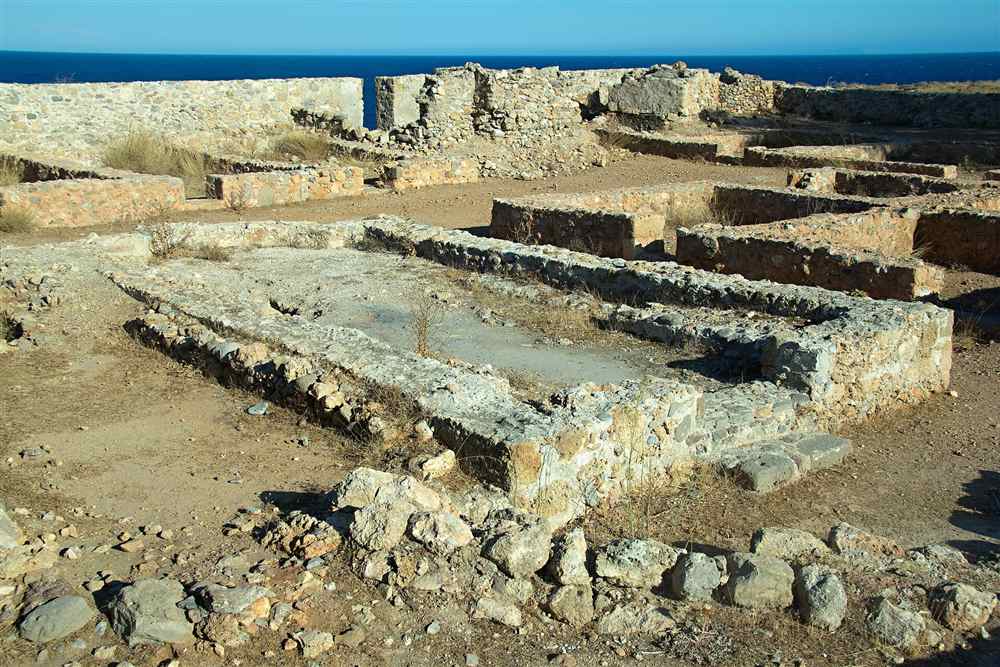
The Castle of Selino crowns the headland between Paleochora’s two beaches, a Venetian fort raised to guard the south-west coast. Barbarossa wrecked it, later raids finished the job, and low walls and towers now stand free to climb above the Libyan Sea.
The Venetians built the fort on the narrow rock spur that splits the peninsula, placing it 30 metres above the water so its garrison watched both bays at once. From the ramparts the sandy beach spreads to the west and the pebble shore drops to the east, and the whole coastline toward Elafonisi opens to the south. The stone footprint follows the natural ridge, a compact square enclosure with the stumps of corner towers still legible in the masonry.
The corsair Hayreddin Barbarossa stormed and slighted the castle during his raids along the Cretan coast, and the walls never regained their full height. What survives is a ring of low ashlar courses, two ruined tower bases, and a broken gateway, enough to trace the plan while leaving the summit open to the wind. The climb from the town square takes 8 minutes on a stepped path, and there is no ticket booth or fence.
Sunset is the reason most walkers time the ascent for the last hour of daylight, when the Libyan Sea turns copper and the fishing boats return to the eastern harbour below. The fort anchors the town’s history the way the harbour anchors its present, and a stop here pairs naturally with the wider run of day trips from Chania that trace Crete’s Venetian and Ottoman defences from the north coast to the south.
What is there to do in Paleochora?
Paleochora packs two beaches, a Venetian castle, a car-free taverna street, and a coastal footpath into one small peninsula. Swim, climb the fort, walk to Anidri and Gialiskari, board a ferry to Elafonisi or Sougia, or windsurf the open bay off the sandy shore.
The town sits on a thumb of land 1 kilometre long, with the wide sandy Pachia Ammos on the west side and a sheltered pebble beach on the east. Pachia Ammos runs 400 metres of soft sand that shelves gently into the Libyan Sea and warms early in the season, while the eastern pebbles stay calm when the west wind picks up. Swimmers cross from one shore to the other in a 5-minute walk across the neck of the peninsula.
The central street closes to traffic each evening, and the tavernas set their tables across the road under tamarisk trees for the length of the strip. A stroll here takes in the fishing harbour at the eastern end, the produce shops mid-town, and the path up to the Castle of Selino at the tip. This compact, walkable core is what marks Paleochora out from the larger resorts, and the full Paleochora guide maps the beaches, harbour, and footpaths in detail.
East of town a marked coastal path climbs over the headland to Anidri beach in 40 minutes and continues to Gialiskari’s coves beyond it, a route of 5 kilometres return through olive terraces and pine. Windsurfers rig on the open western bay where the afternoon breeze holds steady, boards and sails hire by the hour on the sand. Between the swimming, the walking, and the fort, a single day fills without a car once you have arrived.
Can you reach Elafonisi and Sougia by boat from Paleochora?
Yes. The ANENDYK coastal ferry sails west from Paleochora to Elafonisi and east to Sougia and Agia Roumeli in season. The boat links the roadless south-west shore, delivering the pink-sand lagoon without the long mountain drive.
Paleochora is the western hub of the ANENDYK south-coast line, the boat network that stitches together villages the road never reaches. The westbound sailing runs to Elafonisi in around 1 hour, tracing a coast of empty coves and white cliffs that no vehicle track follows. The eastbound sailing calls at Sougia in 50 minutes and continues to Agia Roumeli, the mouth of the Samaria Gorge, making Paleochora a natural start or finish for gorge walkers.
The Elafonisi run is the headline trip. It drops passengers at the shallow turquoise channel and the rose-tinted sand of the lagoon, then collects them in the afternoon, turning a distant beach into a half-day outing from the town front. Boarding is at Paleochora’s western jetty, and the Elafonisi Beach guide covers the lagoon, the crossing to the islet, and the shell-pink sand that gives the shore its colour.
Sailings run daily through the warm months and thin out at the shoulders of the season, so the timetable governs the plan rather than the reverse. Fares are collected on the quay, cars stay in Paleochora, and the ferry replaces a 2-hour road detour with a flat, scenic hour on the water. The boat is the reason the town works as a base for the whole south-west, not just its own two beaches.
When is the best time to visit Paleochora and where do you stay?
Late spring to early autumn is the window, when the sandy beach warms and the ferries run. Paleochora is a low-key resort of studios, rooms, and small family hotels, with tavernas along the front and sunsets over the Libyan Sea. Book ahead for the peak weeks.
The southern exposure gives Paleochora a longer swimming season than the north coast, and Pachia Ammos holds its warmth into October because the Libyan Sea sits a degree or two above the Cretan Sea. The heat of midsummer is tempered on the sand by the afternoon breeze that draws the windsurfers, while the shoulder weeks bring calm mornings and quiet tavernas. The town empties of crowds outside the peak, keeping its unhurried character even at the height of the season.
Accommodation is small in scale by design. The stock runs to self-catering studios, rented rooms above family houses, and a handful of low-rise hotels near the two beaches, with nothing on the block-resort scale of the north coast. Prices sit below Chania town in the shoulder months and rise through July and August, when the limited bed count fills and advance booking becomes the rule rather than the exception.
Evenings settle into a fixed rhythm: the pedestrian street fills with tables, the fishing boats unload at the eastern harbour, and walkers climb the castle rock for the sunset over the sea. This slow, bohemian pace is the draw, and pairing a Paleochora stay with a night or two in Chania balances the quiet south against the Venetian harbour and old town of the north.
What are the beaches at Paleochora?
Paleochora holds two beaches on its own peninsula: Pachia Ammos, a wide golden-sand beach on the west side, and a long pebble beach on the east by the harbour. Beyond the town, Anidri, Gialiskari, Grameno and Krios add sandy coves within a short drive or walk.
Pachia Ammos is the town beach and the draw. A broad band of soft golden sand runs down the west flank of the peninsula, shelving gently into shallow, warm water and backed by tamarisk trees, sunbeds and a line of tavernas. It faces the open sea, so the afternoon breeze reaches it and draws windsurfers to the same water that families swim in the calmer mornings.
The east beach is the sheltered counterpart. A long strand of grey sea-worn pebbles runs beside the fishing harbour, and when the west wind ruffles Pachia Ammos this side stays flat and calm. Swimmers cross from one shore to the other in a five-minute walk over the neck of the peninsula, picking whichever side the wind favours that day.
Beyond the town the coast opens into a string of quieter sandy coves. Anidri and Gialiskari lie east along the coastal path through the olive terraces, while Grameno and Krios sit a short drive west towards Elafonisi, each a low-key sandy bay with a taverna and clear water. Together they turn Paleochora into a base for beach-hopping the south-west shore.
Is Paleochora good for families?
Paleochora suits families well. The sandy Pachia Ammos shelves gently into shallow warm water, the town is flat and walkable with no through-traffic on the evening street, tavernas sit a few steps from the sand, and the calm pebble beach on the east side gives a sheltered swim when the west wind blows.
The west beach is the family anchor. Pachia Ammos gives soft sand for digging and a slow, shallow shelve that keeps young children within easy depth close to shore, and the tamarisk trees behind the sand throw shade through the middle of the day. Sunbeds, showers and tavernas line the back of the beach, so a family day needs little carried in.
The town’s flat, compact layout eases a visit with children. The two beaches, the harbour and the tavernas all sit within a few minutes on foot, the evening main street closes to cars, and the low-rise, unhurried setting keeps the pace gentle. Nothing is far, and the peninsula’s two shores mean a calm swim is always on one side or the other.
The one factor to plan around is the afternoon wind on the open west beach, which builds a small surf that older children enjoy and toddlers need watching in. Families follow the water to the sheltered east pebble beach on breezy afternoons, or take the morning swim on Pachia Ammos before the breeze sets in, so a calm option stays available through the day.
Is the trip from Chania to Paleochora worth it?
Yes. Paleochora is a laid-back beach town with two shores, a Venetian castle, ferries to Elafonisi, and a bohemian calm the north coast lost. The trade-off is a 75-kilometre mountain drive, and the reward ranks among Crete’s finest south-coast trips.
The value comes from the concentration. Few places on the island put a sandy beach, a pebble beach, a free-to-climb fort, a car-free taverna street, and a working ferry harbour inside a single 1-kilometre peninsula. The town rewards a day visitor and a week-long guest in equal measure, because the same compact core that fills an afternoon also anchors a longer stay reaching out to Elafonisi, Sougia, and the Samaria Gorge by boat.
The cost is the road. The drive from Chania climbs over the Selino mountains through 75 kilometres of switchbacks and takes 90 minutes at a steady pace, and that ascent deters the coach traffic that saturates the north. The barrier is exactly what preserves the quiet, so the effort of the crossing buys the calm on arrival rather than detracting from it.
As a base or a day out, Paleochora closes the south-west corner of any Chania itinerary. It links back to the beaches of the Libyan coast, forward to the pink sand of Elafonisi, and outward across the network of Chania day trips that reach from the north harbour to the southern sea. The mountain road is the price of admission, and the two beaches, the castle, and the ferries repay it in full.
Frequently Asked Questions
How do you get from Chania to Paleochora?
From Chania to Paleochora, drive about 75 kilometres south-west over the mountains through Tavronitis and Kandanos in 1.25 to 1.5 hours, take the direct KTEL bus in 1.5 to 2 hours, or arrive by the coastal ANENDYK ferry from Sougia, Agia Roumeli or Elafonisi.
How far is Paleochora from Chania?
Paleochora lies about 75 kilometres south-west of Chania on the Libyan Sea coast in the Selino district. The drive takes 1.25 to 1.5 hours over a winding but paved mountain road through Kandanos; the direct KTEL bus runs 1.5 to 2 hours.
Is the trip from Chania to Paleochora worth it?
The trip from Chania to Paleochora rewards visitors with a laid-back beach town on a peninsula, a sandy beach and a pebble beach, a free Venetian castle, and ferries to the pink sand of Elafonisi. The mountain drive is the trade-off for the quiet south-west coast.