
To get from Chania to Elafonisi, drive about 75 kilometres south-west over the mountains through the Topolia Gorge, take the seasonal direct bus, or sail the boat from Paleochora, to reach the pink-sand lagoon of Elafonisi. Plan the whole trip with Greece Tours.
This guide covers the trip from Chania to Elafonisi in full: the distance and drive time, the route through Topolia and the Enneachora, the seasonal bus, the boat from Paleochora, the organised tours, the parking, the best option, whether to drive or take the bus, the pink sand at the end, combining Elafonisi with Kedrodasos and Chrysoskalitissa, the best time, and whether it is worth the trip among the day trips.
How do you get from Chania to Elafonisi?
Four routes connect Chania to Elafonisi: a 75 km self-drive over the White Mountains, a seasonal direct KTEL coach, a boat that sails from Paleochora along the south-west coast, and an organised day tour with hotel pick-up.
Elafonisi sits on the remote south-western tip of Crete, far from the north-coast towns where most visitors stay. The pink-sand lagoon draws crowds from across the island, and each of the four routes suits a different traveller. Drivers gain full freedom over timing and stops through the mountain villages. The coach removes the strain of the winding descent. The boat turns the trip into a coastal cruise. The tour bundles transport, guiding and pick-up into one booking.
The self-drive is the most direct option and the fastest door-to-door for anyone based in Chania town or the surrounding beaches. The road climbs inland, crosses the mountain spine and drops to the coast at the lagoon. The KTEL bus runs the same corridor for travellers without a hire car. Both the boat and the tour appeal to those who prefer to leave the driving to someone else. Base your choice in Chania on how much control you want over the day and how confident you feel on Cretan mountain roads.
Timing shapes the experience more than the route. The lagoon fills by late morning in high summer, so an early start on any of the four options rewards you with clearer water and open sand. A dawn departure by car or on the first coach places you at the shore before the tour coaches arrive. The boat and the organised tours land you mid-morning, when the beach is already busy but the coastal approach makes the journey itself part of the reward.
Cost separates the four routes as clearly as convenience does. The self-drive splits fuel and the daily parking fee across a carful of passengers, which makes it the cheapest option for a group and the priciest for a solo traveller once the hire-car rate is added. The KTEL coach charges a fixed return fare per head, unbeatable for one or two people. The boat sits at the top of the range for the coastal experience it delivers, and the organised tour lands in the middle, with pick-up and guiding folded into a single price.
How far is Elafonisi from Chania and how long does it take?
Elafonisi lies about 75 km south-west of Chania. The drive takes 1.5 to 2 hours because the road climbs and twists over the White Mountains rather than running flat along a coast, so the distance translates into far more time behind the wheel than the kilometres suggest.
The 75 km figure measures the shortest driving route through the interior. On a map the two points sit close, yet no fast coastal highway links them. The road threads through gorges, mountain villages and hairpin descents, and this terrain sets the pace. Expect an average speed well below open-road figures, with long stretches where second and third gear carry you round the bends.
The 1.5 to 2 hour window depends on the season, the traffic and your own comfort with mountain driving. In peak summer, a queue of vehicles builds on the final descent to the beach, and the car parks back up by mid-morning, which adds minutes at the end. Off-season, with an empty road, confident drivers reach the lower end of the range. Photo stops in the Topolia Gorge and at the villages of the Enneachora stretch the trip in the other direction, and most travellers add a break for coffee in Elos or Chrysoskalitissa.
Plan the return with the same allowance. The climb back over the mountains takes as long as the descent, and afternoon light on tired eyes makes the winding road demanding at the end of a beach day. Leaving the lagoon by mid-afternoon puts you back in Chania before the light fades, which keeps the mountain section comfortable.
The distance from other bases shifts the figure. From the resorts of Platanias and Agia Marina west of Chania town, the drive shortens by a handful of kilometres because the route already runs in the right direction. From Rethymno or the Apokoronas villages east of Chania, add another 30 to 40 minutes on the north coast before the inland turn. Wherever you start, the mountain crossing between Kaloudiana and the coast forms the fixed core of the journey and sets the minimum time no route avoids.
How do you drive from Chania to Elafonisi?
Drive west from Chania toward Kissamos, turn inland at Kaloudiana, and follow the road south through the Topolia Gorge, the village of Elos and the Enneachora region. The winding descent past Chrysoskalitissa Monastery ends at the Elafonisi car parks.
The first leg runs along the north coast on the national road toward Kissamos, a fast and easy stretch. At Kaloudiana the route turns south and the character changes entirely. The road narrows and begins to climb into the hills, entering the dramatic Topolia Gorge, where a tunnel cut through the rock marks the gateway to the interior. Chestnut trees line the road as you reach Elos, the main village of the Enneachora, the district of “nine villages” scattered across the western uplands.
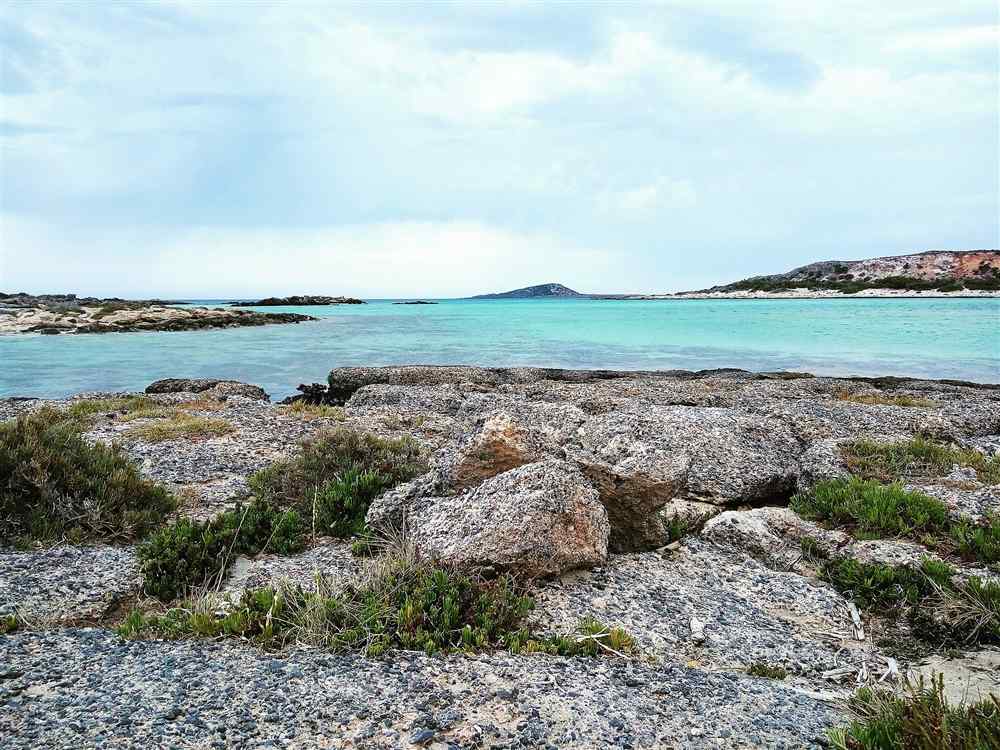
Beyond Elos the road continues through Vathi and toward Chrysoskalitissa, the whitewashed monastery perched on a rock above the sea. From the monastery the final descent drops sharply to the coast, with the pink-tinged lagoon and its islet spread out below. The tarmac is paved the whole way, though narrow in places, and the bends demand steady attention rather than speed. Passing points let oncoming vehicles clear the tighter sections.
The road ends at a cluster of car parks a short walk from the sand. From here a level path leads to the shore and the shallow crossing to the islet of Elafonisi. Fill the tank before leaving the north coast, because fuel stations thin out in the mountains, and carry water and supplies, as the shops near the beach are few and busy in high season.
Is there a bus from Chania to Elafonisi?
Yes. A seasonal direct KTEL coach runs from Chania central bus station to Elafonisi through the summer months. The single daily service departs in the early morning, takes roughly two hours over the mountain road, and returns in the late afternoon.
The bus operates only during the beach season, when demand justifies the long mountain run. It leaves from the KTEL station on Kydonias Street in the centre of Chania, the same terminal that serves destinations across western Crete. The morning departure is timed to reach the lagoon before the heat of midday, and the afternoon return gives a full stretch on the sand.
The journey follows the same inland route as the self-drive, through Kissamos, the Topolia Gorge and Elos, so passengers get the mountain scenery without handling the hairpins. The two-hour running time reflects the terrain and the stops the coach makes at villages along the way. A single return ticket covers the round trip, and the driver sells tickets on board when the station counter is closed for early departures.
Because one coach runs each direction each day, timing is fixed and firm. Miss the afternoon return and no later service follows, so arrive back at the beach car park in good time. Confirm the current departure and return hours at the KTEL station or its website before travelling, as the timetable shifts with the season and the exact minutes change from the shoulder months into high summer.
The coach fare undercuts every alternative for a solo traveller or a couple, and it frees you from the hairpins that make the self-drive tiring. The trade-off is rigidity: the single return time governs the whole day, and a full coach on a peak August morning leaves standing-room passengers or turns latecomers away. Reach the Kydonias Street station 15 minutes before the scheduled departure to claim a seat, and keep the return ticket safe for the boarding queue at the beach.
How do you reach Elafonisi by boat?
Yes. A daily boat sails from Paleochora to Elafonisi through the summer season, tracing the wild south-western coast of Crete. The crossing takes about an hour each way and turns the approach to the lagoon into a scenic cruise past cliffs and hidden coves.
The boat runs from the harbour at Paleochora, the small resort town on the south coast reached by its own road from Chania. This route suits travellers already staying on the south side or those combining the two beaches into a coastal itinerary. The vessel hugs the shoreline, passing rock formations and empty beaches inaccessible by road, before rounding the headland to the Elafonisi lagoon.
A single morning sailing carries passengers out, and an afternoon return brings them back, giving a half-day at the beach. The timetable is seasonal and weather-dependent, since the exposed south-west coast catches the wind, and rough water cancels the service. Book ahead in peak season, as capacity is limited and the boat fills on the busiest days.
Reaching the departure point means first driving or busing to Paleochora, roughly an hour and a half south-west of Chania on its own mountain road. For visitors who want the sea approach without a Paleochora base, the boat pairs naturally with a night in the town, turning a single beach trip into a two-part south-coast escape.
The same operator links Paleochora with Sougia, Agia Roumeli and the mouth of the Samaria Gorge along the south coast, so the Elafonisi crossing slots into a wider network of foot-passenger ferries. Walkers finishing the gorge ride the line west, and a night in Paleochora bridges the two beaches. The boat carries no vehicles, so drivers leave the car at the Paleochora harbour and return to the same spot, which suits a car-free day on the water.
Are there organised tours from Chania to Elafonisi?
Yes. Coach tours run daily from Chania to Elafonisi in season, with hotel pick-up included. A day-trip package bundles the return transport, an air-conditioned coach over the mountains, and free time at the lagoon, removing the driving and the parking hunt entirely.
The organised tour is the simplest option for travellers without a hire car who prefer not to tie their day to a single bus. A coach collects passengers from hotels and central meeting points across Chania and the nearby resorts in the early morning, then heads inland over the same mountain route through the Topolia Gorge and Elos. A commentary on the villages, the gorge and the monastery fills the drive.
At the beach the coach parks and passengers spend the core of the day at the lagoon, with a fixed return time in the afternoon. The package price covers transport and pick-up; food, drinks and any beach loungers are paid separately at the shore. This structure keeps the cost predictable and the logistics out of the traveller’s hands.
Tours book out fast in high summer, so reserve a place ahead of the travel date. The pick-up point and time arrive with the booking confirmation, and the coach keeps to a tight schedule to clear the mountain road before the afternoon crowds build on the descent. For a first visit to the far south-west with no car, the tour delivers the lagoon with the least effort.
Certain operators pair the Elafonisi run with a stop at Chrysoskalitissa Monastery or the chestnut village of Elos on the return leg, adding a cultural note to the beach day at no extra planning. The fixed group timetable is the main constraint, since the coach departs the lagoon at a set hour regardless of how the day is going. Travellers who want to stay past mid-afternoon or linger for sunset are better served by the self-drive, while those content with a full core-day at the beach gain the smoothest arrangement the tour offers.
Where do you park at Elafonisi?
Elafonisi has car parks set back a short walk from the beach, both a free roadside area and a paid lot closer to the sand. In peak season the parking fills by mid-morning, so an early arrival secures a space near the shore.
The road ends in a parking zone above the lagoon, and from here a flat, sandy path of a few hundred metres leads down to the water and the crossing to the islet. The nearest paid car park sits closest to the beach entrance and charges a flat daily fee in season. Free spaces line the approach road further back, and these fill first on busy days because they cost nothing.
The walk in from the car parks is level and easy, suitable for families carrying beach gear, though the open path offers no shade. Arriving before mid-morning in July and August is the surest way to park close, as the lots and the roadside verge saturate as the tour coaches and day-trippers converge. Once full, latecomers park further along the road and walk a longer stretch to the sand.
Return your vehicle to the same parking area for the drive back over the mountains, and note that the afternoon exodus creates a slow queue on the single descent road. Leaving either early or after the mid-afternoon rush eases the climb home. Bring cash for the paid lot, carry water for the sun-exposed walk, and lock valuables out of sight, as the car parks stand open and unattended through the day.
Motorhomes and larger vehicles park along the wider verges on the approach rather than in the tight beach lots, and the extra length demands an earlier arrival to find a workable spot. Coaches on the organised tours use a dedicated area near the beach entrance, which keeps the passenger walk short. Cyclists and motorcyclists slot in easily even on the busiest days, and a two-wheeled arrival sidesteps the descent-road queue that builds for cars in the late afternoon.
The parking sits within a protected Natura conservation zone, so the marked bays and the boundary ropes exist to shield the dune vegetation and the nesting habitat behind the sand. Keep to the surfaced areas, take all litter back over the mountains, and leave the pink shell sand on the beach where it belongs. Respecting the boundaries protects the fragile lagoon that draws you here and keeps the site open for the traveller arriving after you.
What is the best way to get from Chania to Elafonisi?
A hire car is the best way to reach Elafonisi from Chania. It grants an early departure, a flexible return, and stops at the villages along the 75 km route. Non-drivers take the direct seasonal bus, and the guided tour removes the driving entirely.
The verdict rests on freedom. A car parked outside your Chania hotel at dawn puts you on the pink sand before the coaches arrive, and it holds your towels, cool box and spare fuel for a coastline with no petrol station near the beach. You set the pace through the Topolia Gorge, pause for photographs above the chestnut villages, and turn for home the moment the afternoon wind rises. That control is the single biggest reason drivers rate the car above every alternative.
Travellers without a licence take the direct KTEL bus, which runs the Chania to Elafonisi corridor through the warm months and lands you a short walk from the lagoon. The organised excursion suits anyone who wants the day handed to them complete: a driver who knows the hairpins, a fixed pick-up outside the hotel, and no map-reading on the mountain descent. The wider menu of options sits on the day trips from Chania page, and each one delivers the same destination by a different door.
Is it better to drive or take the bus to Elafonisi?
Driving wins on freedom and timing; the bus wins on cost and stress. A car lets you leave at first light and detour to Kedrodasos, while the bus removes the strain of the winding mountain road and the fight for a parking space at the beach.
The trade-off is stark. With a car you own the schedule, arrive before the crowds, and carry everything the remote south-west lacks. The price is the road itself: the final stretch to Elafonisi is a single-lane ribbon of tight bends and blind corners that demands a steady hand and full attention. Parking fills fast once the sun is high, and a late arrival means a long walk from an overflow verge back to the sand.
The bus erases both problems. A KTEL driver handles every hairpin while you watch the gorge slide past the window, and the fare undercuts a day’s car hire and fuel by a wide margin. The cost is rigidity: one departure out, one departure back, and no side trip to the neighbouring wild coast. For a group splitting the hire between four, the car pays for itself and adds the detours; for a solo traveller who wants the beach and nothing else, the bus is the cleaner choice.
What is the drive from Chania to Elafonisi like?
The drive covers 75 km in about two hours through the Topolia Gorge tunnel, the chestnut villages of Elos and Kefali, and a final hairpin descent to the south-west coast. The scenery earns the journey time on its own.
You leave Chania on the coastal road west, then turn inland toward Voukolies and climb into the hills. The route threads the Topolia Gorge, where a short rock-cut tunnel opens onto sheer limestone walls and the tiny chapel of Agia Sofia set in a cave above the road. Past the gorge the tarmac winds through Koutsomatados and into the Innachori valley, a run of stone villages wrapped in chestnut and plane trees that turn gold in the shoulder months.
The last act is the descent. From the ridge above Chrysoskalitissa the road drops in a sequence of tight hairpins toward the sea, and the turquoise of the lagoon flashes between the bends long before you reach the car park. Drive it slowly, use the horn on blind corners, and let faster locals pass at the pull-ins. The two-hour figure holds only for an unhurried, empty road; add time for photo stops and for the crawl behind coaches in high season. The full hub of routes and beaches sits on the Chania guide.
Break the drive at Elos for a coffee under the plane trees, where the village square fills with the sound of running water and the smell of roasting chestnuts in autumn. The petrol stations thin out past Voukolies, so the earlier villages mark the last reliable fuel and refreshment before the coast. Signposting turns sparse on the final descent; follow the brown Elafonisi markers and trust the flashes of turquoise below rather than a phone signal that fades among the mountains.
What time do you leave Chania for Elafonisi?
Leave Chania between 7am and 8am. A departure at first light puts you on the sand by half past nine, ahead of the coaches, with the cool morning air, the empty lagoon, and the pick of the parking spaces.
Timing decides the character of the whole day. The tour buses roll out of Chania mid-morning and reach Elafonisi around eleven, and from that hour the car park tightens, the shallow water fills with families, and the heat on the exposed sand climbs hard. Beat them by two hours and you swim in glassy turquoise water over an empty pink shore, with the islet a private wade across the channel.
An early start also protects the return. The afternoon on this coast brings a stiff onshore wind that whips fine sand across the beach and turns the drive home into a tired slog. Leave the sand by early afternoon and you clear the hairpins before the light softens and reach Chania in good time for dinner. Set an alarm, load the car the night before, and treat the 7am roll-out as the non-negotiable core of the plan.
What is Elafonisi beach like when you arrive?
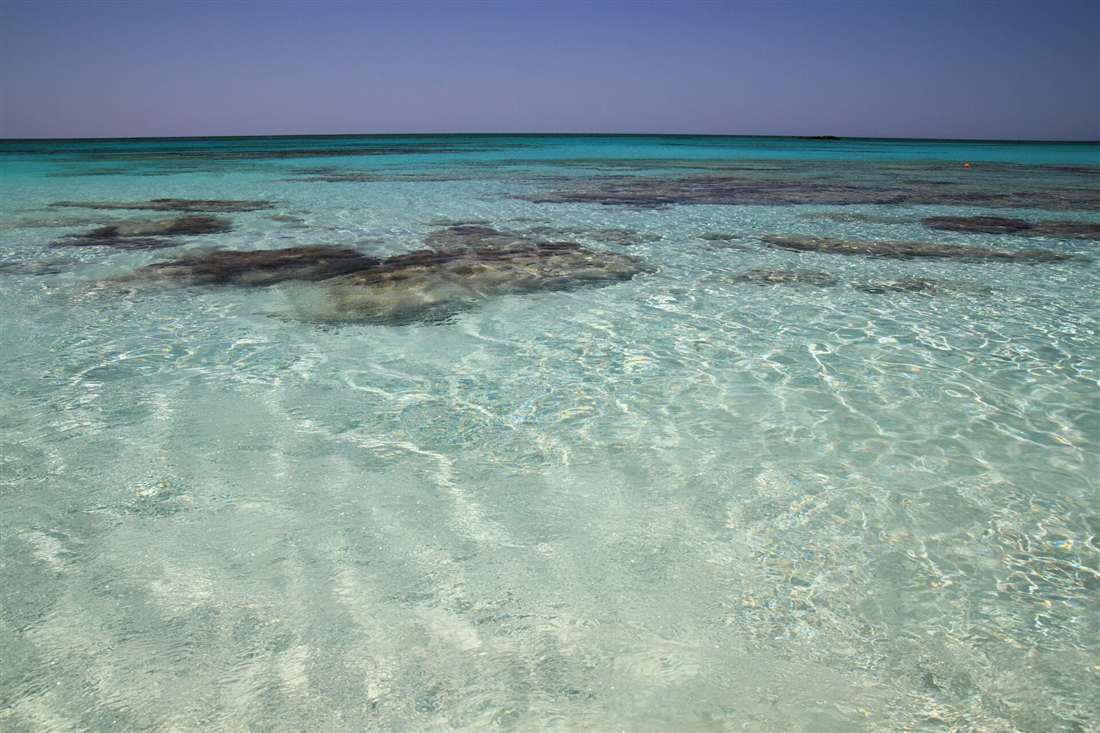
Elafonisi opens onto a shallow turquoise lagoon fringed with pink-tinged sand, coloured by crushed pink coral and shell. A knee-deep channel separates the mainland from a low islet of dunes, sea daffodils and hidden coves, waded on foot in minutes.
The first sight stops most arrivals in their tracks. The water sits in broad, warm, waist-high shallows that run out for a hundred metres before deepening, so the colour shifts from clear silver at the edge to vivid turquoise further out. The pink hue is real, strongest where the tide has washed fresh coral fragments up the strand, and it deepens under a low morning sun.
Wade the channel to the islet and the crowds thin at once. The far side is a protected reserve of soft dunes, endemic plants and small sheltered bays where the water lies mirror-still. A cedar-shaded picnic ground and a lighthouse ruin mark the outer point. Tread lightly: the whole area is a Natura protected site, the sea daffodils are protected, and removing the pink sand is forbidden. The full picture of the shore sits on the Elafonisi beach guide.
Can you combine Elafonisi with Kedrodasos and Chrysoskalitissa?
Yes. Kedrodasos sits a fifteen-minute walk east of Elafonisi, a wild cedar-backed beach with no facilities, and the whitewashed Chrysoskalitissa Monastery stands on its clifftop rock five kilometres north. A car links all three in a single unhurried day.
Kedrodasos rewards the walk. Where Elafonisi draws the crowds, its neighbour stays raw: a curve of pale sand and smooth rock shaded by ancient juniper, reached by a rough track and a short scramble over the dunes. There are no sunbeds, no bar and no shade beyond the trees, so it draws the swimmers and campers who want the same clear water without the throng. Bring everything with you and carry it out again.
Chrysoskalitissa crowns the trip. The monastery perches on a bare white rock above the sea, ninety steps climbing to a courtyard with a wide view over the south-west coast and, on the descent, a first glimpse of Elafonisi’s lagoon far below. Stop there on the way in for the light and the quiet, before the beach fills, or on the way out as the day cools. The three together turn a single beach run into a complete circuit of Crete’s wild south-western tip.
The order rewards planning. Reach Chrysoskalitissa first, before the light hardens and the tour groups climb the steps, then drop to Elafonisi for the main swim, and finish at Kedrodasos in the late afternoon when its cedar shade cools and the day-trippers have gone. This loop covers under ten kilometres of coast road between the three, so the driving stays light and the swimming stays long. A car makes it effortless; the bus ties you to Elafonisi alone.
Is Elafonisi a good day trip from Chania?
Yes. Elafonisi is one of the finest day trips from Chania. The two-hour drive through gorge and mountain village ends at a beach ranked among the most beautiful in Europe, and the pink sand and warm lagoon repay every kilometre.
The distance is the only real objection, and an early start dissolves it. Four hours of driving return, folded around six hours on a world-class shore, still leave Chania for breakfast and return it for dinner. The route is scenic rather than dull, so the journey counts as part of the experience instead of a price paid for it. Families with young children who dislike the winding descent lean toward the bus or the tour, and the day works just as well by either.
What lifts Elafonisi above the closer beaches is the payoff at the end. The shallow, safe, warm water suits toddlers and strong swimmers alike, the pink sand exists nowhere else on the island, and the protected islet adds a second wilder beach across the channel. Few day trips in Crete pack scenery, novelty and a swim of this quality into one outing, and that is why it tops the wish list of most visitors staying in Chania.
When is the best time to make the Chania to Elafonisi trip?
The best time is the shoulder months of May, June, September and early October, at first light. The sea stays warm, the crowds thin, the heat eases, and an early arrival dodges both the midday throng and the fierce afternoon wind.
High summer delivers the warmest water and the deepest pink sand, at the cost of packed sand, a full car park and blazing heat on an exposed shore with little natural shade. The shoulder months trade a degree or two of sea temperature for space, quiet and a gentler sun, and the mountain villages en route wear their best colour in late spring and early autumn.
Within any day, the morning is the prize. Arrive by half past nine and the lagoon lies calm and near-empty; linger past noon and the onshore wind builds, driving stinging sand across the beach and chopping up the shallows. Winter shuts the direct bus and strips the beach of its bar and sunbeds, though a car reaches an empty, dramatic shore under a low sun. Plan the trip for a calm-forecast shoulder-season morning and the coast delivers its best face.
What do you bring for the Chania to Elafonisi day?
Pack plenty of water, sun cover, a sunshade, sturdy footwear, and cash. The south-west coast is remote, the beach offers thin natural shade, and the small kiosks take notes over cards. Fuel the car in Chania before you leave.
Water and shade top the list. The beach bakes under full sun with no trees on the mainland side, so a beach umbrella or pop-up tent, high-factor sun cream, a hat and a long-sleeved cover-up turn a punishing afternoon into a comfortable one. Carry more drinking water than a normal beach day demands, as the seasonal kiosk sells out and prices climb once the crowds land.
Practicalities matter on a remote coast. Draw cash in Chania, since the beach bar and the monastery stall deal in notes and the nearest reliable machine sits far back up the road. Fill the tank before leaving the city; there is no petrol station near Elafonisi, and the hairpin climb home burns more than the outward run. Add water shoes for the coral-flecked shallows, a dry bag for the wade to the islet, and a rubbish bag to carry everything out, since Kedrodasos and the reserve have no bins. Pack a light picnic too: the single beach kiosk keeps short hours and the nearest taverna sits back up the mountain road toward the villages.
Is the trip from Chania to Elafonisi worth it?
Yes, the trip from Chania to Elafonisi is worth it. The pink-tinged sand, the shallow turquoise lagoon and the wade to the protected islet make one of Europe’s most beautiful beaches, and an early start turns the long drive into a reward.
Weigh it plainly. The debit is four hours of return driving on a scenic road that ends in a mountain descent, plus the effort of an early alarm and a car packed with water and shade. The credit is a beach that exists nowhere else on Crete: coral-pink sand, warm water shallow enough for a toddler and clear enough for a snorkeller, and a wild reserve across the channel that rewards the extra walk.
The maths favours going. Split the hire across a group, leave at first light, fold in Kedrodasos and Chrysoskalitissa, and the day returns far more than the drive costs. Even solo by bus, the fare buys a seat at a shore that fronts postcards across the island. Set the early departure, respect the winding road, protect the pink sand, and the Chania to Elafonisi run stands, without argument, as the finest beach day in western Crete.
Frequently Asked Questions
How do you get from Chania to Elafonisi?
From Chania to Elafonisi, drive about 75 kilometres south-west over the mountains through the Topolia Gorge and Elos, a 1.5 to 2 hour trip, take the seasonal direct KTEL bus, or sail the boat from Paleochora along the south-west coast.
How long is the drive from Chania to Elafonisi?
The drive from Chania to Elafonisi takes about 1.5 to 2 hours over the 75 kilometres, winding through the Topolia Gorge tunnel, the chestnut villages of the Enneachora and a hairpin descent to the lagoon and its car parks.
Is the trip from Chania to Elafonisi worth it?
The trip from Chania to Elafonisi rewards visitors with one of the finest beaches in Europe, a shallow turquoise lagoon and pink-tinged sand. An early start beats the crowds and the heat on the long drive south-west.