
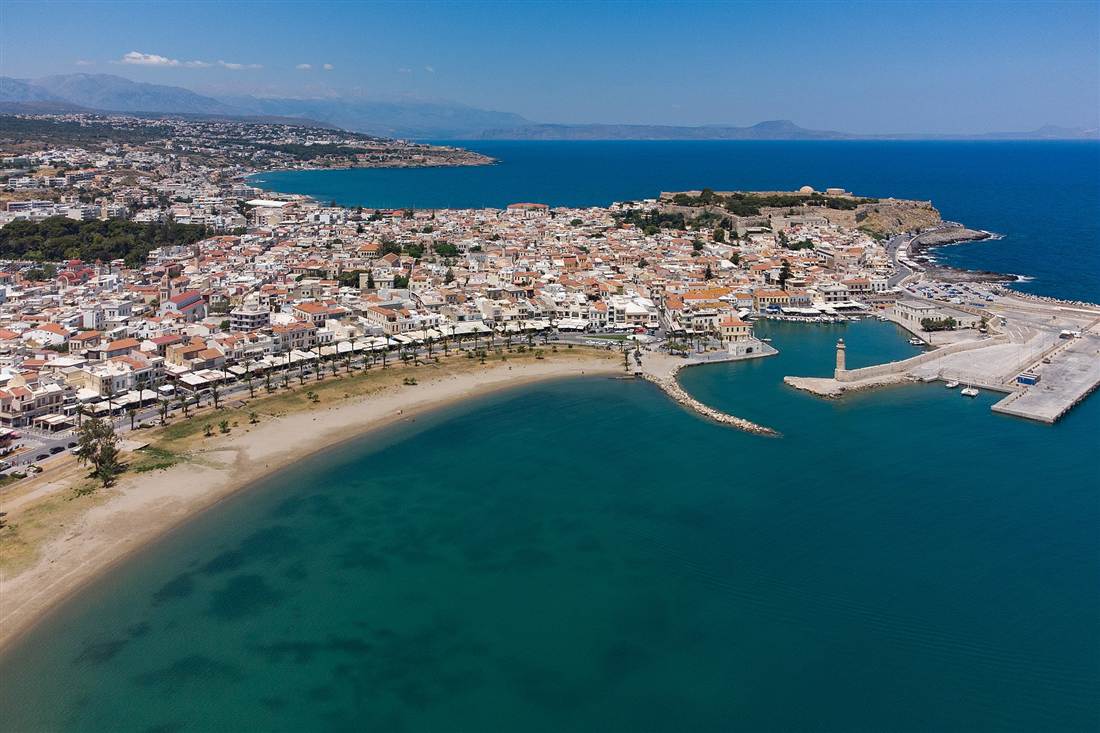
To get from Chania to Rethymno, take the frequent KTEL intercity bus or drive the E75 north-coast national road; the two Venetian towns lie about 60 kilometres apart, a 45-minute to one-hour journey, and Crete has no railway. Plan the whole trip with Greece Tours.
This guide covers Chania to Rethymno in full: the bus service and the frequency, the drive on the E75 and A90, the distance and times, the airport transfer, the taxi and private transfer, the Georgioupoli and Kournas Lake stops, why there is no train, the best option, the return, and whether Rethymno is worth a day trip, alongside the full Chania vs Rethymno comparison and the day trips.
How do you get from Chania to Rethymno?
Two routes connect Chania to Rethymno: the frequent KTEL intercity bus and the drive east on the E75/A90 national road. Rethymno lies about 60 km east of Chania, a trip of roughly one hour by either method. Crete runs no train.
The KTEL bus departs from Chania’s central bus station on Kydonias Street and reaches Rethymno’s terminal beside the harbour in about one hour. Departures run through the day at a steady frequency, and the flat fare sits in a low single-digit euro band, which makes the bus the default choice for travellers without a car.
The self-drive route follows the E75/A90 north-coast national road the whole way, hugging the coastline past Georgioupoli and Lake Kournas. A hire car adds the freedom to stop at beaches and villages that the bus passes without pause. The drive covers the same 60 km in 45 minutes to one hour, traffic depending, and delivers you straight to Rethymno’s old town car parks.
For a wider set of routes out of the region, the Chania hub maps the town’s connections across western and central Crete, Rethymno included.
How far is Rethymno from Chania and how long does it take?
Rethymno sits about 60 km east of Chania along the E75/A90 national road. The drive takes 45 minutes to one hour end to end. The KTEL bus covers the same distance in roughly one hour, including its stops at coastal villages en route.
The distance is measured city centre to city centre, from Chania’s old Venetian harbour to Rethymno’s Fortezza-crowned old town. The national road runs almost straight and flat across the northern shelf of Crete, so the kilometre count and the minute count stay close whichever direction you travel. There is no mountain crossing and no detour inland to slow the trip.
Drivers who leave outside peak hours reach Rethymno in about 45 minutes. The bus adds a handful of minutes for its scheduled halts and for the walk between the terminal and your final address, which puts the door-to-door time at just over an hour for most bus travellers. A private transfer trims the total by skipping intermediate stops entirely.
How do you take the bus from Chania to Rethymno?
Board the KTEL intercity coach at Chania’s central bus station on Kydonias Street. Buses depart at a frequent, steady rhythm through the day, the ride lasts about one hour, and the fare falls in a low single-digit euro band. Buy the ticket at the station counter or on board.
KTEL is Crete’s public intercity operator, and the Chania\u2013Rethymno line is one of the island’s busiest, so seats turn over quickly and the wait between departures stays short. The coaches are air-conditioned and carry luggage in a hold beneath the passenger deck, which suits travellers arriving with suitcases from the airport or the ferry port.
At the Rethymno end, the terminal stands on Igoumenou Gavriil Street beside the harbour, a flat ten-minute walk from the Venetian old town and the municipal beach. Timetables shift between the summer high season and the winter months, with extra departures added when demand climbs, so confirm the day’s schedule at the station board before you set out. The return leg follows the same line in reverse.
How do you drive from Chania to Rethymno?
Join the E75/A90 north-coast national road east of Chania and follow it the full 60 km to Rethymno. The route tracks the coastline past the Georgioupoli exit and Lake Kournas, and the drive lasts 45 minutes to one hour. Signposting for Rethymno is continuous.
Leaving Chania, the national road climbs gently onto the coastal shelf and settles into a fast, two-lane cruise with the Cretan Sea on your left and the White Mountains rising to the right. The Georgioupoli exit, roughly halfway, marks the turn-off for the resort’s long sandy beach and the eucalyptus-lined square, and the same junction feeds the short inland road up to Lake Kournas.
Fuel stations and roadside tavernas line the route at regular intervals, so a refuel or a coffee stop slots in without a detour. As you near Rethymno the road drops toward the coast and the Fortezza fortress fills the skyline ahead. Signs direct traffic to the old town’s paid car parks near the harbour and to the beachfront lots along the eastern seafront. A car unlocks the string of beaches and villages that the bus leaves behind, which the day trips from Chania guide sets out in full.
How do you get from Chania airport to Rethymno?
Chania International Airport sits on the Akrotiri peninsula northeast of the town. Reach Rethymno by a direct taxi or pre-booked transfer in about 50 minutes, or ride the airport bus into Chania town and change to the KTEL Rethymno coach. The taxi is the fastest single-hop option.
A direct taxi or private transfer from the airport arrival hall to Rethymno runs along the Akrotiri link road, joins the E75/A90 national road, and delivers you to your Rethymno address in under an hour. This suits arrivals with luggage, late-night landings, and groups splitting one fare, since the vehicle waits at the terminal and drives straight through.
The budget route uses two public legs: the airport shuttle bus into Chania’s central bus station, then the frequent KTEL coach on to Rethymno. The change adds waiting time between services, so the total door-to-door figure stretches past two hours, but the combined fare stays a fraction of the taxi cost. Travellers weighing the two towns before booking a base find the trade-offs laid out in the Chania vs Rethymno comparison.
Is there a transfer or taxi from Chania to Rethymno?
Yes. Private transfers and metered taxis both run the Chania\u2013Rethymno route door to door. A taxi fare for the 60 km sits in a mid-two-figure euro band, and a pre-booked private transfer quotes a fixed price for the same trip, both taking about 50 minutes to one hour.
A metered taxi from a Chania rank charges by distance and time, so the final figure moves with the exact pick-up and drop-off points and with the tariff in force at the hour of travel. Agreeing the approximate fare with the driver before departure keeps the cost clear, and a receipt is issued on request.
A pre-booked private transfer fixes the price at the point of booking and assigns a driver who meets you at a named time and place, luggage handling included. This route removes the wait for a rank taxi and the fare uncertainty, which makes it the steady choice for families, early departures, and travellers carrying heavy bags between hotels in the two towns.
What stops are worth making between Chania and Rethymno?
Four stops break up the 60 km drive: Georgioupoli, a river-mouth resort with a long sandy beach; Lake Kournas, Crete’s only freshwater lake; Almyrida, a sheltered swimming bay on the Apokoronas coast; and Vamos, a stone-built inland village of tavernas and workshops.
Georgioupoli sits directly off the national road at the halfway mark, and its eucalyptus square, tiny chapel on a sea-jetty, and kilometres of sand make it the easiest pause on the route. A short inland turn from the same junction climbs to Lake Kournas, ringed by mountains and fringed with pedal-boats and shallow swimming shallows in the warm months.
North of the road, the Apokoronas coast holds Almyrida and neighbouring Plaka, calm bays with clear water, waterfront tavernas, and views across to the Drapano headland. Inland, Vamos anchors a cluster of restored Venetian-era hamlets where carob mills and olive presses have been turned into guest houses and craft kitchens. Each stop adds an hour or a whole afternoon, which is the case for hiring a car rather than taking the direct coach.
Is there a train from Chania to Rethymno?
No. Crete carries no railway of any kind, so a train from Chania to Rethymno does not exist. The two towns connect only by road. The frequent KTEL bus and the drive on the E75/A90 national road cover the 60 km, alongside taxis and private transfers.
Greece’s national rail network runs on the mainland, and no line crosses to the islands. Crete’s public transport rests entirely on the KTEL intercity bus system, which links every major town along the north coast and reaches the larger inland and southern settlements. For the Chania\u2013Rethymno corridor, that means a coach every short interval through the day.
Travellers used to hopping between European cities by rail adapt quickly, because the bus fills the same role at a lower fare and a similar frequency. A hire car remains the alternative for anyone wanting to set their own timetable and reach the beaches and villages off the main road, none of which a railway reaches in any case.
How much does the bus from Chania to Rethymno cost?
The KTEL fare for the Chania\u2013Rethymno coach sits in a low single-digit euro band one way, one of the cheapest intercity trips on Crete. Children travel at a reduced rate, and a return ticket costs double the single. Buy at the station counter or from the driver on board.
The flat fare reflects the fixed route and the hour-long ride, and it holds across the daytime departures regardless of how busy the coach is. There is no premium for peak departures and no surcharge for luggage stored in the hold, so the price a traveller sees at the counter is the price paid.
Set against a taxi fare in the mid-two-figure band for the same 60 km, the bus undercuts the private options by a wide margin, which is the reason it carries the bulk of day-trippers between the two towns. A family of four still pays a fraction of a single taxi fare, and the reduced child rate widens the gap further. The saving funds a harbour-front lunch in Rethymno with room to spare.
When do the buses run between Chania and Rethymno?
KTEL coaches run the Chania\u2013Rethymno line from early morning to late evening at a frequent, steady rhythm, with departures every short interval through the busy daytime hours. The summer high season adds services; the winter timetable thins. The last evening departure sets the limit for a same-day return.
The first coaches roll out soon after dawn to carry commuters and early travellers, and the frequency holds through the middle of the day when demand from tourists peaks. Because the line is one of the island’s busiest, the gap between buses stays short enough that turning up at the station without a fixed departure in mind works for most of the day.
The schedule contracts in the evening and across the low-season months, so travellers planning a late return read the final departure from the station board rather than assuming a bus waits. Public holidays run a reduced timetable as well. Checking the day’s board at either terminal on arrival removes the guesswork and confirms both the next departure and the last one home.
What is the road like between Chania and Rethymno?
The E75/A90 national road between Chania and Rethymno is a fast, two-lane coastal highway in sound condition, flat and near-straight across the northern shelf of Crete. It carries steady traffic without the hairpins of the island’s mountain roads, which makes the 60 km an easy, undemanding drive.
The road holds a consistent surface and clear lane markings the whole way, with the Cretan Sea on the northern side and the foothills of the White Mountains to the south. Overtaking lanes appear on the gentler gradients, and the junctions for Georgioupoli, Lake Kournas, and the Apokoronas villages are signposted well ahead of each turn.
Traffic thickens near the two town edges at the start and end of the day, and the summer months add tour coaches and hire cars to the flow, so the middle of the day runs freer than the rush hours. Drivers new to Crete find this stretch the most relaxed on the island, a straightforward warm-up before any venture onto the mountain and south-coast routes that demand more concentration.
Where do you park in Rethymno on arrival?
Rethymno concentrates its parking around the harbour and the eastern seafront, in paid municipal car parks and metered street bays a short walk from the Venetian old town. The narrow old-quarter lanes carry little through traffic, so drivers leave the car at the edge and continue on foot.
The largest lots sit near the Fortezza and along the beachfront to the east of the centre, both within a flat ten-minute walk of the Rimondi Fountain and the harbour tavernas. These fill through the summer middle of the day, so an earlier arrival secures a space closer to the old town without a circuit of the streets.
Street parking works on marked bays with payment by machine or app during the daytime hours, and the labyrinth of the old quarter itself stays largely closed to cars, which keeps its arched lanes calm for walking. Bus travellers sidestep the whole question, since the KTEL terminal stands beside the harbour and drops passengers within the old town’s reach on foot.
What is the best way to get from Chania to Rethymno?
The best method depends on your luggage and your plan. Carless travellers take the frequent KTEL bus for its low fare and one-hour ride. Anyone wanting the coastal stops and a free schedule hires a car. Families and late arrivals book a private transfer for door-to-door speed.
The bus wins on cost and simplicity: a low single-digit fare, a departure every short interval, and terminals in both town centres within walking distance of the old quarters. It removes parking worries entirely, which matters in Rethymno’s tight Venetian streets where car access thins toward the harbour.
The hire car wins on reach and freedom. It turns a one-hour transfer into a coastal day out, stringing together Georgioupoli, Lake Kournas, Almyrida, and Vamos on a single drive, and it drops you at beaches the coach passes by. The private transfer wins on effort: a fixed price, a named driver, luggage carried, and no changes. Match the method to the trip and each option earns its place.
Do you need a car in Rethymno, or is the town walkable?
Rethymno’s old town, harbour, Fortezza, and municipal beach cluster within a flat, walkable core, so a day visitor needs no car inside the town. A car earns its keep only for the coastal stops on the way and for reaching beaches and villages beyond the centre.
The Venetian quarter packs its sights into a compact grid of pedestrian lanes, and the walk from the harbour tavernas to the Fortezza ramparts and on to the Rimondi Fountain takes minutes. The long municipal beach begins at the eastern edge of the centre, so an afternoon swim follows the morning sightseeing on foot.
Beyond the town, the Arkadi Monastery in the hills, the palm-fringed Preveli beach on the south coast, and the villages of the Amari valley reward a car, and these turn a Rethymno day into a longer touring base. For a visitor whose plan is the old town and the beach, though, the bus in and the feet on the ground cover the ground without a hire car at all.
How do you get from Rethymno back to Chania?
The return runs on the same KTEL line in reverse, departing Rethymno’s harbour-side terminal on Igoumenou Gavriil Street for Chania’s central station in about one hour. Buses leave at a frequent rhythm through the day, with the last service in the evening. Drivers retrace the E75/A90 national road west.
Buying the return ticket at the Rethymno counter secures a seat on the westbound coach, and the frequency through the daytime hours means a missed departure costs a short wait rather than a lost afternoon. The evening timetable thins, so travellers planning a late return check the final departure time on the station board before setting out for the day.
By car, the westbound drive mirrors the outbound leg exactly: join the national road at Rethymno, follow the coast past Lake Kournas and Georgioupoli, and arrive at Chania in 45 minutes to one hour. The setting sun sits ahead on a late-afternoon return, so the coastal stretch delivers the trip’s finest light on the way back.
How early do you leave Chania for a full day in Rethymno?
A mid-morning KTEL bus out of Chania lands you in Rethymno before midday, which opens a full day for the old town, the Fortezza, lunch by the harbour, and an afternoon on the beach. The one-hour ride keeps a leisurely start well within reach of a same-day return.
Because the journey runs just an hour and the buses depart at a frequent rhythm, there is no dawn start to catch. A coach around mid-morning delivers the whole afternoon and early evening in Rethymno, with time to climb the Fortezza ramparts, wander the Venetian lanes, and settle at a fish taverna without rushing.
Drivers gain even more flexibility, adding the Georgioupoli and Lake Kournas stops on the way east and still reaching Rethymno by lunch. Whichever method you choose, the short distance turns the day trip into an unhurried outing rather than a race against the clock, with the evening return bus setting the only firm deadline.
Is Rethymno worth a day trip from Chania?
Yes. Rethymno rewards a day trip with the best-preserved Venetian old town in Crete, the vast Fortezza fortress above the harbour, and a long sandy beach on the eastern seafront. The one-hour bus or drive from Chania makes a full day easy, with time for lunch by the water.
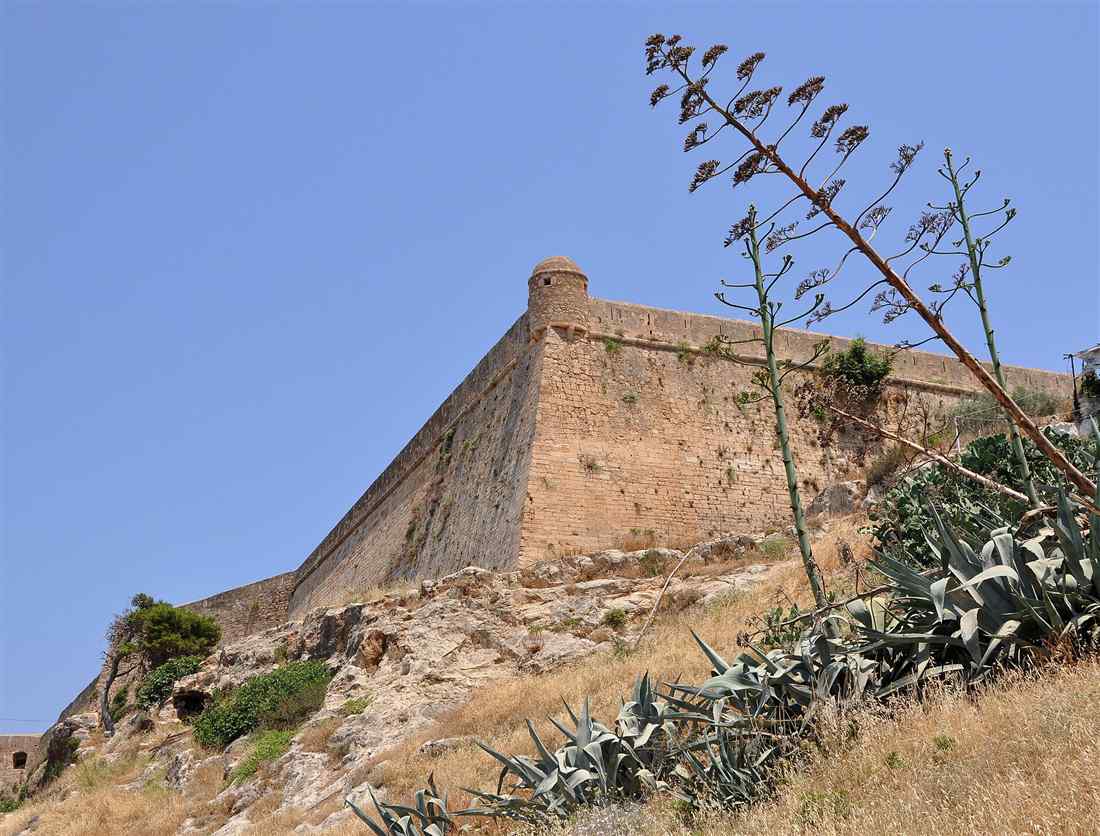
Rethymno’s old town is a dense weave of Venetian and Ottoman streets, arched doorways, the Rimondi Fountain, and a minaret-topped skyline, all walkable from the harbour in minutes. The Fortezza, a star-shaped fortress on the headland, opens onto ramparts with wide views over the sea and the roofs below, and the small harbour beneath is lined with fish tavernas.
East of the centre the municipal beach runs for kilometres of shallow sand backed by caf\u00e9s, which balances the sightseeing with an afternoon swim. A morning bus out and an evening bus back frames the day without a car, and the drive adds the coastal stops for anyone extending the outing. Rethymno earns its place among the finest day trips within an hour of Chania.
Frequently Asked Questions
How do you get from Chania to Rethymno?
The KTEL intercity bus runs frequently from Chania to Rethymno on the E75 national road, taking about one hour. Driving the 60-kilometre route takes 45 minutes to an hour; Crete has no train, so the bus and a hire car are the two ways.
How far is Rethymno from Chania?
Rethymno lies about 60 kilometres east of Chania along the E75 north-coast national road, passing Georgioupoli. The drive takes 45 minutes to an hour, and the KTEL bus a little longer with its stops.
Is there a train from Chania to Rethymno?
No train runs between Chania and Rethymno, because Crete has no railway. The frequent KTEL intercity bus and a hire car are the two ways to travel the national road between the two Venetian towns.