
Bekiris Cave is the sea cave hidden at the far end of Agioi Anargyroi beach on Spetses, one of the small adventures that make the island’s green southwest coast so memorable. Swimmers duck through a low opening in the rock into a shadowed chamber where light filters across a still pool. This My Greece Tours guide explains where the cave is, how to reach it, its role in the island’s history, and how to visit it safely.
The cave sits within the wider bay of Agioi Anargyroi, roughly 8 kilometres from Spetses Town on a car-free island, so most visitors combine it with a beach day. Local tradition remembers it as a wartime hideout during the 1821 War of Independence, when islanders sheltered inside its concealed chamber. Today it draws families with confident swimmers, snorkellers, and photographers, and it rewards anyone who chooses a calm, settled day to make the short crossing.
Where is Bekiris Cave on Spetses?
Bekiris Cave lies at the far western end of Agioi Anargyroi beach, on the sheltered southwest coast of Spetses, where the sand gives way to a low rocky headland about 8 kilometres from Spetses Town.
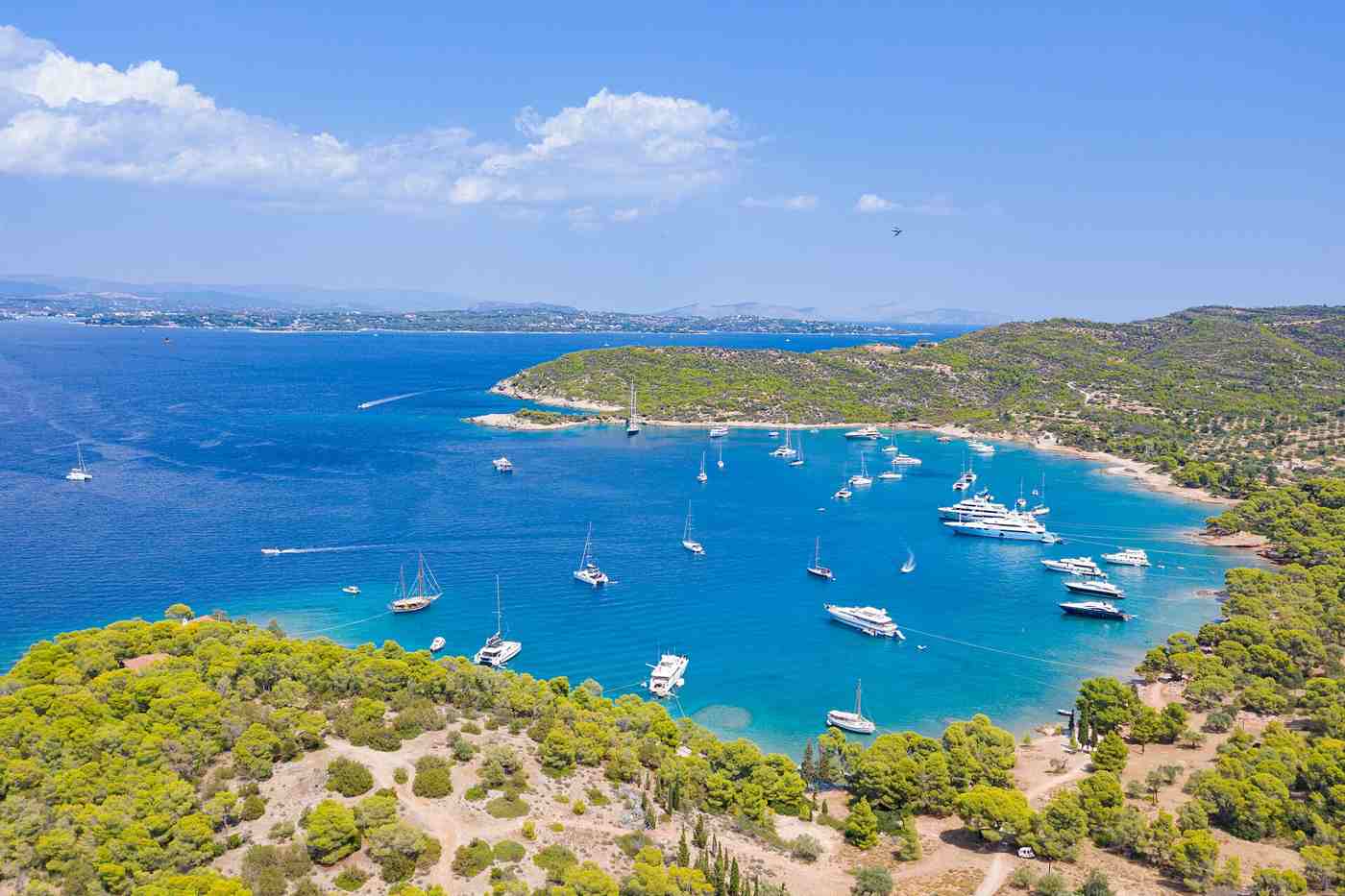
Bekiris Cave, known in Greek as the Spilia tou Bekiri, occupies the rocky point that closes the western end of Agioi Anargyroi bay on the green southwest shore of Spetses. From Spetses Town it lies roughly 8 kilometres away along the coastal road that loops around the island, on the stretch that holds several of the finest swimming spots. The cave itself is not a separate destination but a feature of the beach. Reaching it means reaching Agioi Anargyroi first and then crossing to the far side of the sand. The setting is classically Spetsiot: pine-clad hills roll down to a broad arc of sand and pebbles.
At the western tip the shoreline turns to weathered rock that hides the low entrance to the cave.
It is easy to locate once you are on the sand. The bay curves in a long shallow arc, and the organised sunbeds and beach bar cluster toward its centre, leaving the western end quieter and more natural. Walk or swim to that far corner and you reach the rocks where the entrance hides at water level.
The full picture of the bay, its facilities, and the cave is set out in our guide to Agioi Anargyroi beach, which places Bekiris Cave in the context of a complete day at the island’s most famous stretch of coastline, from the long sandy shore to the sheltered water that makes the crossing to the cave possible.
Geographically, Agioi Anargyroi and its cave sit partway along the southwest coast between Spetses Town and the western tip of the island. The neighbouring bay of Agia Paraskevi lies a little further west. The deep inlet of Zogeria is off to the northwest, so visitors combine two or three of these beaches in a single outing by bicycle or boat. This corner of the island faces southwest and is shielded from the meltemi winds that ruffle north-facing coasts, which keeps the sea around the cave calm on most summer days.
That shelter is precisely what makes the short swim into Bekiris Cave feasible, since the low entrance is only safe to approach when the water is settled and flat rather than pushing waves against the rock.
The cave’s position at the base of a rocky headland means it is invisible from most of the beach until you are close to the western point. This concealment is part of its character and helps explain its historic use as a refuge, since a hidden sea cave offered natural cover. The rock around the entrance is uneven and can be slippery. The approach on foot requires care, while the swim in follows the shoreline from the beach to the mouth of the cave.
Standing at the western end of Agioi Anargyroi and looking at the plain wall of rock, first-time visitors are often surprised that a chamber lies behind it at all, which is a large part of the cave’s appeal once they discover the opening.
What is Bekiris Cave like inside?
Bekiris Cave opens from a narrow, low sea entrance into a larger chamber where the water forms a small, still pool and daylight filters through gaps in the rock, casting shifting reflections across the cool, shadowed walls.
The interior of Bekiris Cave is the reward for the short adventure of getting in. Beyond the low entrance the passage widens into a chamber where the sea washes gently and settles into a small, calm pool. The contrast between the bright, sunlit bay outside and the cool, shadowed space within is immediate and striking, and it is this atmosphere that visitors remember most. Light enters through the mouth and through gaps in the rock overhead. The chamber is never wholly dark. Instead, beams and reflections play across the walls and the surface of the water.
The effect changes with the angle of the sun through the day, which is why many people time a visit for when the light falls most dramatically into the interior of the cave.
The pool inside the cave is generally shallow and sheltered compared with the open bay, making the chamber feel enclosed and protected once you have passed through the entrance. The rock walls rise around you, worn smooth in places by the sea. The sound of water echoing in the confined space adds to the sense of having found a hidden pocket of the coastline. Because the cave is a natural formation with no lighting, walkways, or safety infrastructure, it retains a raw, unmanaged character that appeals to travellers looking for something beyond an organised beach. The floor and lower rock can be slick.
Movement inside is best taken slowly, and it is wise to keep track of the entrance and the state of the sea while you explore the chamber.
Scale is part of the surprise. From the beach the western rocks look unremarkable. The space behind them is large enough to swim and move around in, which is why the cave has drawn curious visitors for generations. The chamber is not a vast cavern but a genuine sea grotto, intimate and atmospheric rather than cavernous. Its charm lies in that human scale and the quality of the filtered light. A mask and snorkel reveal the submerged rock and the play of light beneath the surface, while a waterproof camera captures the reflections that make the cave a favourite subject for photographs.
The combination of shadow, reflected light, and enclosed calm gives the interior a quiet drama that a photo only partly conveys.
The cave is at its most beautiful and most accessible in settled summer weather, when the sea outside is flat and the light is strong. On such days the entrance is easy to pass and the pool inside is glassy and clear. When any swell is running, however, the character of the place changes completely: water surges through the low mouth, the entrance becomes hazardous. The calm interior gives way to churning sea. For this reason the cave rewards patience and good timing far more than boldness. Choosing a still morning, checking the water before you commit.
Treating the crossing with respect are what allow you to experience the chamber at its best rather than at its most dangerous, and they matter more here than at any organised beach.
How do you get into Bekiris Cave?
You reach Bekiris Cave either by swimming from Agioi Anargyroi beach along the shore and through the low sea entrance, sometimes ducking under an overhang, or by carefully scrambling over the rocks at the side to a higher opening.
There are two established ways into Bekiris Cave, and the right choice depends on the sea and on your confidence in the water. The classic approach is to swim. From the western end of Agioi Anargyroi you follow the shoreline to the rocky point and then pass through the narrow opening at the base of the rock, which at times means ducking briefly under a low overhang before surfacing in the chamber within. This swim is short and, on a calm day, straightforward for competent swimmers, which is why it is the most popular route.
The water in the sheltered bay is usually flat enough to make the crossing simple, though the final approach through the low mouth of the cave calls for a steady, unhurried stroke rather than any rush.
The alternative is to scramble over the rocks at the side of the cave to reach a higher entrance on foot. This route avoids a full swim but demands care, because the stone is uneven and can be slippery where the sea wets it. Sturdy footwear with grip is important here, and water shoes are the sensible choice, since they protect your feet on the sharp rock and give traction on the wet surfaces. The scramble suits visitors who would rather not swim through the low opening, but it is not a maintained path and should be approached slowly and deliberately.
Whichever route you take, it is worth watching how others are managing the crossing on the day and judging honestly whether the conditions and your own ability match the effort involved.
Timing the crossing to the sea is the single most important factor. On calm, settled days the entrance is easy and the swim in is a pleasure. When any swell is pushing into the mouth of the cave, the crossing becomes genuinely dangerous and is best abandoned. Because there is no formal path, no railing, and no lifeguard, visitors enter the cave entirely at their own risk and must take responsibility for reading the conditions. It is wise to go with a companion rather than alone, to keep an eye on the entrance while inside. Never to force a crossing that does not feel safe.
The cave will still be there on a calmer day, and patience is always the better choice than pushing through in marginal water.
Reaching the beach itself is the first step, and on a car-free island that takes a little planning. From Spetses Town, Agioi Anargyroi lies about 8 kilometres away, reached by bicycle or scooter along the coastal road or by water taxi from the Dapia quay. Our guide to how to get to Spetses covers the hydrofoils and ferries from Piraeus and the short crossings from Kosta and Porto Heli, while the companion guide to getting around Spetses explains the bicycles, scooters, and water taxis that move visitors about the island. Allow a relaxed hour or so by bicycle at a gentle pace, less by scooter, and take water and sun protection because shade along the road is intermittent.
Arriving fresh at the beach with your swimming and rock-climbing energy intact makes the short adventure to the cave far more enjoyable than a tiring journey would.
What is the history of Bekiris Cave in the 1821 War of Independence?
Bekiris Cave served as a hideout during the 1821 Greek War of Independence, when local tradition holds that the women, children, and elderly of the area sheltered inside its concealed chamber to escape danger during the naval conflict.
The history of Bekiris Cave is bound up with the Greek War of Independence that began in 1821. It is this story that gives the natural formation its deeper meaning. Local tradition holds that during the revolution the women, children, and elderly of the area took refuge inside the hidden chamber to escape the threat of raids from the sea. The cave’s concealed entrance and enclosed interior made it a natural place of safety, invisible from the open bay and difficult for outsiders to find. This account has attached itself firmly to the site.
It is retold to nearly every visitor who makes the crossing, turning a swim into a low sea cave into a small encounter with the island’s revolutionary past.
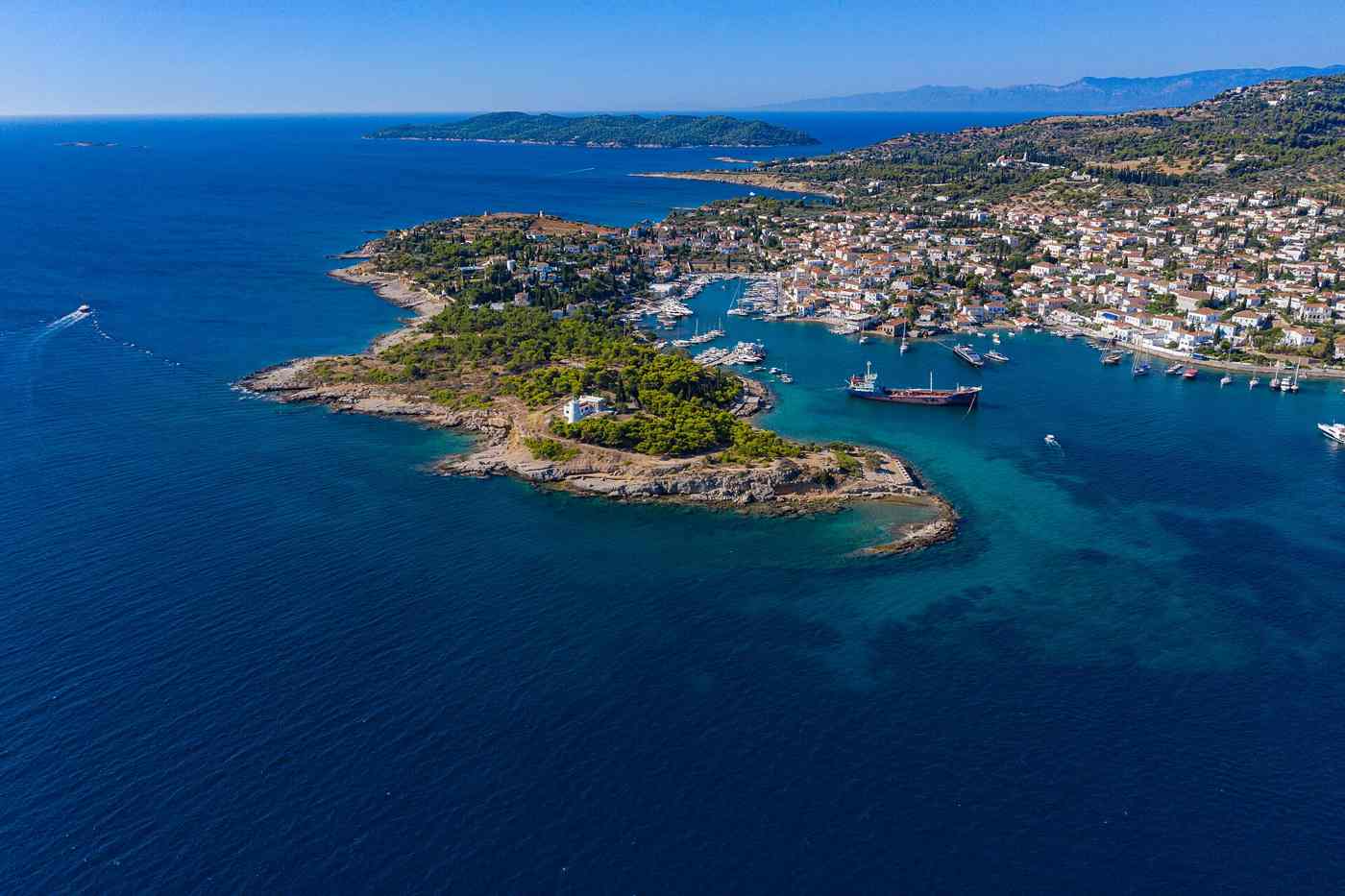
Spetses played a leading part in the naval war of independence, far out of proportion to its small size. The island contributed ships, sailors, and money to the Greek cause, and its fleet took part in the sea battles that helped secure the revolution. The most celebrated figure of that effort was Laskarina Bouboulina, the ship-owner and naval commander who became a heroine of the war and remains the island’s proudest symbol. Against this background, the idea of a hidden cave used as a wartime refuge fits naturally into the island’s broader story of resistance and sacrifice during the long years of the revolution.
The people sheltering in Bekiris Cave belonged to the same community that was sending its men and vessels to fight at sea, which is why the site resonates as more than a simple curiosity today.
Understanding Spetses’s role in the revolution enriches a visit to the cave, and the island preserves that history in places worth pairing with a trip to Agioi Anargyroi. The the Bouboulina Museum in Spetses Town, housed in the mansion of the heroine herself, tells the story of the woman who symbolises the island’s part in the war and displays objects from her life and campaigns. Seeing the cave and then learning about Bouboulina, or the reverse, joins the natural and the human sides of the same history. That the hidden chamber at the end of the beach becomes a tangible link to the events that the museum records in detail a short ride away in town.
It is worth treating the wartime story as tradition rather than precisely documented fact, in keeping with how it has been passed down. The essential point is well founded: Spetses was deeply involved in the 1821 revolution, and the island’s caves and hidden places carry memories of that dangerous time. Standing inside the cool, shadowed chamber, with the sea washing at the entrance and light filtering through the rock, it is easy to imagine why such a place would have offered a measure of safety when danger came from the water. That imaginative connection, more than any plaque or exhibit, is what makes the history of Bekiris Cave feel present.
It gives the short adventure of reaching it a resonance that a purely scenic swim would lack.
Is Bekiris Cave safe to visit?
Bekiris Cave is safe to visit in calm, settled weather for confident swimmers who take sensible precautions, but the low entrance becomes hazardous when any swell is running, and there is no path, railing, or lifeguard.
Safety at Bekiris Cave depends almost entirely on the sea and on honest self-assessment, because the site is completely unmanaged. There is no formal path down to the entrance, no railing on the rocks, no lighting inside the chamber, and no lifeguard watching the crossing. On a calm, flat day these absences matter little for a competent swimmer, and thousands of visitors pass in and out each summer without incident. The moment the sea picks up, however, the picture changes sharply: water surges through the narrow mouth of the cave, the rocks become dangerous to scramble over. The low entrance can trap the unwary.
The single most important safety rule is therefore to check the sea state before committing and to abandon the crossing if any swell is pushing into the cave.
The cave suits confident swimmers far more than nervous ones, and the swim through the low opening should not be attempted by anyone uncomfortable in open water. Because the entrance sometimes requires ducking briefly under an overhang, a calm and controlled swimming style matters more than speed or strength. Those who prefer to avoid the swim can scramble over the rocks to a higher entrance. That route brings its own hazards on wet, uneven stone and is not necessarily safer. Going with a companion rather than alone is strongly advisable, so that someone is aware of your movements and can help if a problem arises.
Keeping an eye on the entrance and the sea while inside the chamber ensures you are not caught out by a change in conditions.
Sensible equipment reduces the risks considerably. Water shoes protect your feet from sharp rock and give grip on slippery surfaces, both in the water and on any scramble. They are the single most useful item to bring. A mask lets you see the submerged rock clearly, which helps you judge the passage, and swimming within your comfortable depth keeps a margin of safety. Because the interior is shadowed, letting your eyes adjust before moving around avoids stumbles on the uneven floor. None of these precautions is complicated, but together they turn the crossing from a gamble into a manageable adventure.
The guiding principle throughout is that the cave is entered at your own risk, so caution and preparation are the responsibility of every visitor rather than of any authority.
For families, the safety calculation hinges on the swimming ability of the children involved. The cave is suitable for families with confident, competent swimmers. For older children the short crossing can be an exciting highlight of a beach day, provided a parent goes along and the sea is calm. It is not appropriate for weak swimmers, very young children, or anyone unsure in the water, and forcing a reluctant child through the low entrance is unwise.
The sheltered main beach of Agioi Anargyroi, with its gently shelving sand and shallow water, is the safer place for younger children to play, while the cave remains an option for the stronger swimmers in the group who can manage the crossing comfortably in good conditions.
What should you bring to visit Bekiris Cave?
Bring water shoes for grip on the slippery rocks, a mask and snorkel to see the underwater passage, a waterproof camera for the light inside, plus water, sun protection, and a towel for the beach day itself.
Water shoes are the most useful thing to pack for Bekiris Cave, and they make the difference between a comfortable visit and a painful one. The rock around the entrance and inside the chamber is uneven, sharp in places. Slippery where the sea wets it, so proper footwear protects your feet and gives traction on both the scramble and the swim. Ordinary flip-flops are easily lost in the water and offer no grip, whereas snug water shoes stay on and let you move confidently over the rocks.
Having secure footing frees you to enjoy the place rather than pick your way gingerly across every wet surface.
A mask and snorkel greatly enhance a visit, turning the crossing into a chance to explore rather than simply to reach the chamber. The clear water around the western rocks of Agioi Anargyroi reveals the submerged passages, the play of light beneath the surface. The small fish that shelter among the rocks, and seeing the low entrance clearly from below also helps you judge the swim. Snorkelling gear is inexpensive, easy to carry, and adds an entire dimension to the experience for very little effort. Many visitors combine the cave with snorkelling along the rocky edges of the bay.
Packing a mask serves both purposes and makes the western end of the beach far more rewarding than a plain swim would be on its own.
A waterproof camera or a protected phone is worth bringing for anyone who wants to capture it. The reflections on the water and walls. The contrast between the bright entrance and the shadowed interior, make the cave a favourite photographic subject, though a dry phone is easily ruined on the swim in, so waterproofing matters. Beyond the cave-specific items, the ordinary essentials of a Greek beach day still apply: plenty of drinking water, strong sun protection, a hat, and a towel. The southwest coast catches the sun for most of the day.
There is little shade on the rocks themselves, so staying hydrated and protected is as important here as anywhere on the island.
It helps to travel light but complete, since you will be moving between the sand and the water and possibly over rocks. A small dry bag keeps valuables and a phone safe while you swim to the cave, and it is easily carried. Leaving larger belongings at a sunbed or with a companion on the beach avoids the awkwardness of managing gear on the crossing. Because Agioi Anargyroi has a beach bar and taverna, you need not carry food and drink for the whole day, though bringing your own water is still wise.
Packing thoughtfully for the specific demands of the cave, rather than only for a standard beach outing, is what lets you make the most of this particular corner of the Spetses coastline in comfort and safety.
When is the best time to visit Bekiris Cave?
The best time to visit Bekiris Cave is on a calm, settled summer day when the sea is flat, ideally in the morning before any afternoon breeze, and in the shoulder months of June or September to avoid the peak.
Calm sea is the decisive condition for visiting Bekiris Cave, far more than the calendar. The low entrance and the swim in are only safe and enjoyable when the water is flat, so a settled day matters more than anything else. Within a typical summer day, the sea is often at its stillest and glassiest in the morning, before an afternoon breeze picks up, which makes an early visit the most reliable choice for a smooth crossing. The sheltered southwest position of Agioi Anargyroi keeps the bay calmer than exposed north-facing coasts.
It is well protected from the meltemi winds of high summer, but you should always judge the water on the day rather than assume the cave will be accessible.
The light inside the chamber also rewards good timing, since the beauty of the cave depends on daylight filtering through the entrance and the gaps in the rock. When the sun is high and strong, the interior glows and the reflections are at their most vivid. The middle hours of a bright day can be the most rewarding for the visual experience, even though they are also the hottest and busiest on the beach. Balancing the calm morning sea against the brighter midday light is part of planning a visit.
Many people compromise by arriving mid-morning, when the water is still settled and the light is already strong enough to reveal the chamber at its best without waiting for the crowds of the afternoon.
Across the season, the swimming months from late spring to early autumn are the practical window for the cave, and the shoulder months are especially pleasant. June and September bring warm water and settled weather with noticeably thinner crowds than the July and August peak, so the beach and the cave feel lively rather than overwhelmed.
To fit a cave visit into the wider rhythm of an island trip, our guide to the best time to visit Spetses explains how the seasons shape the island as a whole, from the quiet green months to the busy heart of summer, helping you choose when the weather, the sea, and the crowds combine most favourably for a day at Agioi Anargyroi and its hidden cave.
In the off-season, from late autumn through winter, the cave is still there but a visit becomes impractical for most travellers. The sea is colder and rougher, the beach facilities close. The seasonal boats and buses that reach the southwest beaches stop running, so getting to Agioi Anargyroi depends entirely on your own bicycle or scooter. The rocky point and its cave remain atmospheric for a walk on a mild winter day, but the swim into the chamber belongs firmly to the warm, calm months.
For anyone planning specifically to enter Bekiris Cave, therefore, the target is a settled day between about May and September, with the sea checked on the morning of the visit and a flexible attitude if conditions are not right.
Can you snorkel and take photos at Bekiris Cave?
Bekiris Cave is excellent for snorkelling and photography, with clear water around the rocky entrance revealing submerged passages and small fish, while the light filtering into the shadowed chamber makes it one of the island’s most photographed natural spots.
Snorkelling is one of the chief pleasures of a visit to Bekiris Cave, and the clear water of the southwest coast makes it especially rewarding. Around the rocky western end of Agioi Anargyroi the seabed becomes more interesting than on the open sand, with submerged rocks, crevices, and small fish sheltering among them. A mask and snorkel let you explore these underwater passages and see the low entrance to the cave from below, where the light shafts down through the water. The visibility on a calm day is excellent, often revealing the bottom metres down, so even a gentle snorkel along the rocks is absorbing.
This underwater dimension is why visitors regard the western end of the bay as the most engaging part of a day at Agioi Anargyroi.
Photography is the cave’s other great draw, and the interior is genuinely photogenic in a way that few natural spots on the island match. The contrast between the bright, sunlit bay outside and the cool, shadowed chamber within creates dramatic images, while the beams of light entering through the mouth and the gaps in the rock cast reflections that dance across the water and walls. Capturing these effects rewards patience and attention to the angle of the sun, and the results are often the standout shots of a Spetses trip. A waterproof camera or a well-protected phone is essential, since the swim in will ruin any unprotected device.
Steadying yourself in the still pool inside gives the best chance of a sharp image in the low light.
Combining snorkelling and photography makes the most of a single visit, and the two activities complement each other naturally. Snorkelling reveals the underwater structure and the fish, while a waterproof camera lets you record both the submerged scene and the light in the chamber above. For visitors keen to see more of the coast in the same way, the wider waters around Spetses reward exploration by boat, and our guide to Spetses boat tours describes the trips that circle the island and reach beaches and sea caves that are harder to visit by land. Several of these coves lie along the same green southwestern shore.
A boat excursion can extend the snorkelling and photography of Bekiris Cave into a fuller day on and under the water.
A few practical habits improve both the snorkelling and the photographs. Going when the sea is flat keeps the water clear and the light steady, since a swell stirs up sediment and reduces visibility. Calm conditions also make it safe to linger at the entrance to compose a shot. Respecting the marine life by looking rather than touching keeps the underwater scene intact for others. Staying aware of your position relative to the entrance prevents you from drifting in a way that could be dangerous if conditions change. With a mask, a waterproof camera.
A settled sea, the western end of Agioi Anargyroi offers a combination of clear-water snorkelling and dramatic cave photography that ranks among the most memorable experiences on the Spetses coast.
How does Bekiris Cave fit into a day out on Spetses?
Bekiris Cave fits naturally into a beach day at Agioi Anargyroi, adding a short adventure to a long swim, and it pairs well with the island’s other southwest beaches, boat trips, and the revolutionary history of Spetses Town.
For most visitors, Bekiris Cave is one highlight of a broader day at Agioi Anargyroi rather than a destination in itself. The natural rhythm is to reach the beach in the morning, settle in for a swim and some time on the sand. Then cross to the western rocks for the short adventure of the cave when the sea is calm and the light is good. Afterwards, the beach bar and taverna at Agioi Anargyroi provide lunch and cold drinks steps from the water. A cave visit slots comfortably into a relaxed, unhurried beach day rather than demanding a special expedition of its own.
This combination of a long organised beach and a genuine natural adventure at its edge is exactly what makes Agioi Anargyroi and its cave the coastal outing that most first-time visitors to Spetses are told they should not miss on the island.
The cave also pairs well with the other beaches of the green southwest coast, since Spetses is compact and its finest swimming spots cluster along the same shore. The neighbouring bay of Agia Paraskevi lies a little further west. The deep, sheltered inlet of Zogeria is off to the northwest, so a day that includes Bekiris Cave can easily take in a second or third beach by bicycle or boat. Our overview of Spetses beaches sets Agioi Anargyroi and its cave alongside these alternatives, from lively organised sands to quiet pebble coves, so you can build a route that suits your mood and your means of travel around the largely car-free island.
Cycling from cove to cove or hopping between them by boat lets you compare the busy sands of Agioi Anargyroi with the quieter beaches in a single, satisfying day on the water.
Adding a dose of the island’s history rounds out a day that begins at the cave, since the hideout story ties directly to Spetses Town’s revolutionary heritage. After a morning at Agioi Anargyroi, a ride back to town lets you visit the mansion museums and the elegant waterfront, and our guide to things to do in Spetses gathers the town’s museums, historic houses, and landmarks into a plan for the rest of the day. Following the cool, shadowed chamber where islanders once sheltered with the story of Bouboulina and the naval war told in town joins the natural and human threads of the same history into a satisfying whole across a single island day.
It gives the afternoon a purpose beyond simply resting after a swim.
A day built around Bekiris Cave feels unhurried and self-contained in a way that suits the island’s relaxed pace. The hub guide to Spetses gathers the beaches, the town, the history, and the practicalities of getting around into one place, so you can see where a cave visit fits within a longer stay. Whether you treat the cave as the centrepiece of a beach day, a stop on a tour of the southwest coves, or a prelude to an afternoon among the mansions and museums of the town, it consistently earns its place as one of the small, memorable adventures that give a trip to Spetses its particular character.
Frequently Asked Questions
What is Bekiris Cave on Spetses?
Bekiris Cave, known in Greek as the Spilia tou Bekiri, is a sea cave at the far western end of Agioi Anargyroi beach on the southwest coast of Spetses, where the sand gives way to a low rocky headland. From the water its entrance appears as a narrow, low opening at the base of the rock. Behind it lies a larger chamber where the sea forms a small, still pool and daylight filters through gaps in the rock. The contrast between the bright bay outside and the cool, shadowed interior gives the cave a striking atmosphere. It is famous both as a small natural adventure, reached by swimming or scrambling over the rocks.
Remembered in local tradition as a hideout for islanders during the 1821 War of Independence. Today it draws swimmers, snorkellers, and photographers to the western corner of the island’s best-known beach.
How do you get inside Bekiris Cave?
You can get inside Bekiris Cave in two ways, depending on the sea and your confidence. The classic route is to swim from the western end of Agioi Anargyroi beach along the shore to the rocky point and through the low sea entrance, sometimes ducking briefly under an overhang before surfacing in the chamber within. On a calm day this short swim is straightforward for competent swimmers. The alternative is to scramble over the rocks at the side of the cave to a higher opening on foot, which avoids the swim but demands care on uneven, slippery stone. Water shoes with good grip are important.
Whichever route you choose, the sea state is decisive: the crossing is only safe when the water is flat. It becomes dangerous when any swell pushes into the mouth of the cave. There is no path, railing, or lifeguard, so you enter entirely at your own risk.
Is Bekiris Cave safe for families and children?
Bekiris Cave is suitable for families with confident, competent swimmers, but it is not appropriate for weak swimmers or very young children. For older children who swim well, the short crossing to the cave can be an exciting highlight of a beach day, provided the sea is calm and a parent goes along to supervise. Because the low entrance sometimes requires ducking under an overhang and the rocks can be slippery, a calm, controlled approach matters more than speed. Water shoes help protect feet and give grip. The site is completely unmanaged, with no path, railing, lighting, or lifeguard, so parents must judge the conditions and their children’s ability honestly.
Younger children are far better suited to the main beach of Agioi Anargyroi, which has soft sand, a gently shelving seabed, and calm, shallow water. Keeping the youngest members on the beach while stronger swimmers explore the cave is the sensible arrangement in good weather.
Why was Bekiris Cave used as a hideout in 1821?
Bekiris Cave was used as a hideout during the Greek War of Independence, which began in 1821, because its concealed entrance and enclosed chamber made it a natural place of safety. Local tradition holds that the women, children. Elderly of the area sheltered inside the cave to escape the threat of raids from the sea, hidden from view in the shadowed interior that is invisible from the open bay. Spetses played a leading role in the naval war of independence, contributing ships, sailors. Money to the Greek cause, and it was the home of the celebrated heroine Laskarina Bouboulina.
Against this background, a hidden sea cave used as a refuge fits naturally into the island’s story of resistance and sacrifice. The account is best treated as tradition rather than precisely documented fact. The island’s deep involvement in the revolution is well established, which gives the story its lasting resonance for visitors today.
What should I bring to visit Bekiris Cave?
The most useful item to bring to Bekiris Cave is a pair of water shoes, which protect your feet from sharp rock and give grip on the slippery surfaces around the entrance and inside the chamber, whether you swim in or scramble over the rocks. A mask and snorkel greatly improve the visit, letting you explore the submerged passages and small fish around the rocky point and see the entrance clearly from below. Because the light filtering into the chamber is the cave’s signature feature, a waterproof camera or a well-protected phone is worth carrying to capture the reflections, as an unprotected device is easily ruined on the swim.
A small dry bag keeps valuables safe during the crossing. Beyond the cave-specific gear, the usual Greek beach essentials apply: plenty of drinking water, strong sun protection, a hat. A towel, since the southwest coast catches the sun for most of the day and there is little shade on the rocks.
When is the best time to visit Bekiris Cave?
The best time to visit Bekiris Cave is on a calm, settled summer day when the sea is flat, because the low entrance and the swim in are only safe and enjoyable in still water. Within the day, the sea is often at its calmest and glassiest in the morning, before an afternoon breeze picks up. An early visit is the most reliable, though the light inside the chamber is brightest and most dramatic when the sun is high. Across the season, the swimming months from late spring to early autumn are the practical window.
The shoulder months of June and September are especially pleasant, offering warm water and settled weather with thinner crowds than the July and August peak. In winter the sea is colder and rougher, the beach facilities close, and the seasonal boats stop running, so a cave visit becomes impractical. Always check the sea on the day and postpone if any swell is running.
Can you snorkel and take photographs at Bekiris Cave?
Yes, Bekiris Cave is one of the best spots on Spetses for both snorkelling and photography. The clear water around the rocky western end of Agioi Anargyroi reveals submerged rocks, crevices. Small fish, and a mask and snorkel let you explore these underwater passages and see the low cave entrance from below, with visibility often reaching metres on a calm day. Inside the chamber, the light filtering through the entrance and the gaps in the rock casts shifting reflections across the water and walls. The contrast between the bright bay outside and the shadowed interior makes for dramatic images.
A waterproof camera or a well-protected phone is essential, since an unprotected device will not survive the swim in. Going when the sea is flat keeps the water clear and the light steady for both activities, while respecting the marine life and staying aware of your position at the entrance keeps the visit safe and rewarding.