
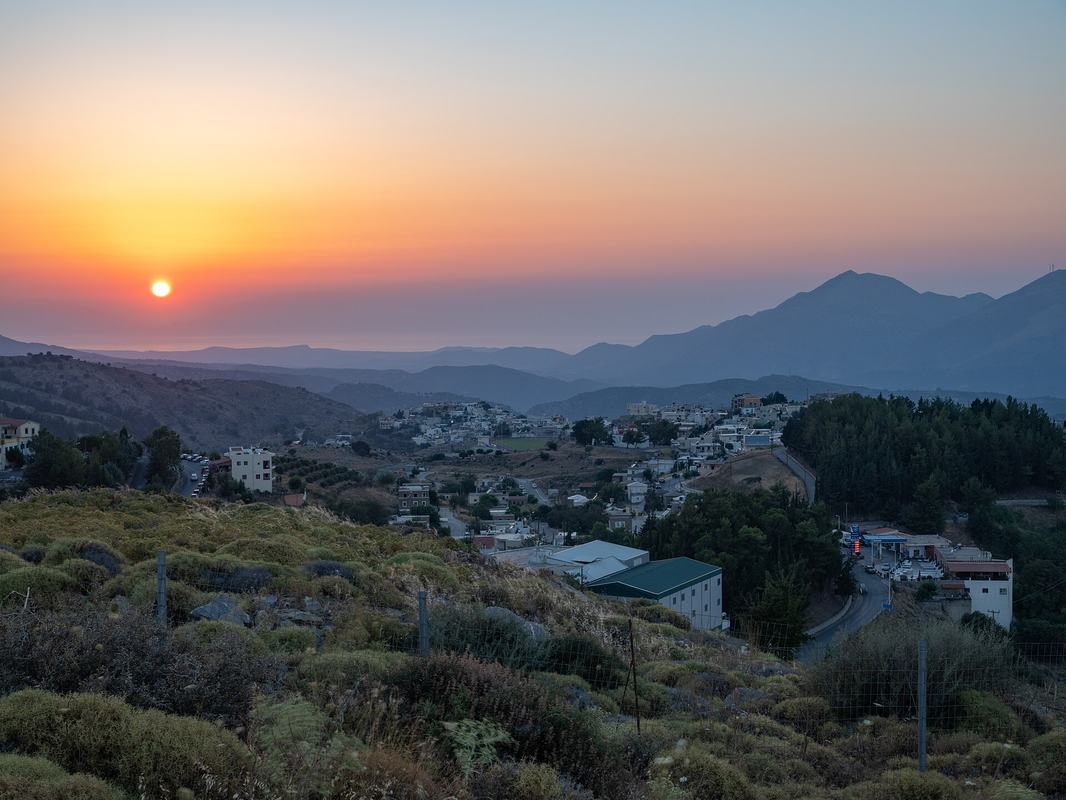
Anogeia rises boldly on the slopes of Mount Psiloritis in central Crete, a village where music echoes through stone streets and pride runs deeper than the mountain springs. The lyra’s haunting notes drift from tavernas, weaving together stories of resistance, resilience, and an unbroken cultural thread that survived destruction and rebirth. Handwoven textiles hang in workshops, mountain lamb roasts over open fires, and the highland air carries the scent of wild herbs. This is Crete at its most authentic, where tradition is not performed but lived daily. Experience this remarkable highland culture with My Greece Tours.
The village sits high in the Rethymno region, commanding views across the rugged interior and serving as the gateway to Psiloritis, the island’s highest summit. Nearby, the Nida Plateau stretches wide and the Ideon Cave holds mythological significance. Anogeia’s streets tell stories of wartime destruction and determined reconstruction, while its tavernas and music halls keep Cretan traditions vibrantly alive. The sections below cover the village’s musical heritage, resistance history, mountain setting, cultural crafts, and culinary traditions. For broader island context, consult our comprehensive Crete travel guide.
What Makes Anogeia Central to Crete’s Musical Tradition?
Anogeia is renowned across Crete as a wellspring of traditional music centered on the lyra, a three-stringed bowed instrument. The village has produced celebrated musicians who preserve and innovate within Cretan musical forms, keeping alive centuries-old melodies and improvised mantinades.
The lyra defines Anogeia’s soundscape, its resonant tones accompanying weddings, festivals, and everyday gatherings in the village’s kafeneia and tavernas. Musicians here master the instrument from childhood, learning not just technique but the emotional depth and storytelling power embedded in Cretan music. The tradition passes from generation to generation through direct apprenticeship rather than formal schooling. Improvised couplets called mantinades accompany the music, witty or poignant verses that comment on love, loss, politics, and daily life. This living tradition makes Anogeia a pilgrimage site for those seeking authentic things to do in Crete beyond the coastal resorts.
The village celebrates its musical heritage through festivals and spontaneous performances that erupt in tavernas late into the night, a stronghold of Cretan music and the lyra. Visitors encounter music not as staged entertainment but as organic expression woven into social fabric. The lyra’s voice mingles with the laouto, a long-necked lute providing rhythmic foundation, creating the characteristic sound of highland Crete. This musical culture reflects the village’s broader identity: fiercely independent, deeply rooted, and unapologetically itself. The melodies carry the weight of history, the joy of survival, and the defiance that defines Anogeia’s character through centuries of occupation and hardship.
How Did Anogeia’s Resistance History Shape the Village?
German forces burned Anogeia during the Second World War in reprisal for resistance activities, destroying the village entirely. The inhabitants rebuilt their community stone by stone, transforming destruction into a monument to resilience that defines Anogeia’s identity and pride to this day.
The burning occurred in August of the mid twentieth century, part of brutal reprisals following the kidnapping of a German general by Cretan resistance fighters. The occupiers razed every building and executed male villagers, attempting to erase Anogeia from the map. The survivors returned to rubble and ash, facing the choice between abandonment and reconstruction. They chose to rebuild, hauling stone from the mountainside and reconstructing homes, churches, and community spaces with their own hands. This collective act of defiance became foundational to village identity, a story retold in songs, commemorated in monuments, and visible in the determined character of contemporary Anogeia.
A paved road climbs from the village to the high Nida Plateau and the foot of the Psiloritis peaks.
The rebuilt village honors its resistance legacy through memorials and annual commemorations that draw Cretans from across the island. The scars of occupation transformed into sources of pride rather than trauma, woven into the cultural fabric alongside music and craft traditions. This history connects Anogeia to broader Cretan narratives of resistance against Venetian, Ottoman, and German occupiers. Visitors traveling from Rethymno encounter a village where historical memory remains vivid and present, where the past informs contemporary identity without imprisoning it. The rebuilt stone houses stand as testament to human determination and communal solidarity.
What Role Does Mount Psiloritis Play in Anogeia’s Character?
Mount Psiloritis, also called Ida, rises directly above Anogeia as Crete’s highest peak, shaping the village’s climate, economy, and identity. The mountain provides summer grazing for sheep and goats, attracts hikers seeking the summit, and connects the village to ancient mythology.
The mountain’s presence dominates every vista from Anogeia, its summit often snow-capped well into spring while the village basks in highland sunshine. The neighbouring village of Axos sits lower on the same northern slopes. Shepherds drive flocks to high pastures on the Nida Plateau during warmer months, following transhumance patterns practiced for millennia. The altitude and terrain produce distinctive grazing that flavors the lamb and goat meat served in village tavernas, giving local dishes their characteristic taste. Hikers use Anogeia as a base for ascending Psiloritis, tackling trails that wind through alpine meadows, past shepherd huts, and up to the barren summit. The mountain also holds the Ideon Cave, mythologically significant as a possible birthplace of Zeus.
Psiloritis shapes daily life through weather patterns, economic rhythms, and cultural identity. The village experiences genuine seasons, with cold winters unknown on the coast and crisp mountain air year-round. This highland environment distinguishes Anogeia from beach resorts and lowland towns, creating a distinct microclimate and way of life. Visitors arriving from Heraklion notice the temperature drop and landscape shift as the road climbs toward the village. The mountain provides not just backdrop but active participant in village life, source of water, pasture, mythology, and the rugged character that defines highland Cretan culture.
What Craft Traditions Distinguish Anogeia in Crete?
Anogeia maintains a strong tradition of handwoven textiles, particularly colorful rugs, blankets, and decorative pieces created on traditional looms. Women weavers preserve techniques passed through generations, producing distinctive geometric patterns and vibrant colors that identify their work as uniquely Anogian.
The weaving tradition centers on wool from mountain sheep, spun and dyed using both traditional natural dyes and modern colors to create bold, graphic patterns. Looms occupy workshops and homes throughout the village, their rhythmic clacking a counterpoint to the lyra’s melodies. The textiles feature geometric designs in red, black, white, and earth tones, patterns that carry symbolic meanings and regional identification. Visitors can watch weavers at work, observe the entire process from raw wool to finished piece, and purchase textiles directly from the artisans who created them. This craft tradition provides economic sustenance and cultural continuity, connecting contemporary Anogeia to centuries of highland material culture.
The weavings serve both practical and decorative purposes, functioning as floor coverings, wall hangings, bed covers, and saddle blankets. The craft represents female knowledge and skill passed from mother to daughter, a parallel tradition to the male-dominated musical heritage. Workshops welcome visitors interested in understanding the technical complexity and artistic vision behind each piece. The textiles have gained recognition beyond the village, sold in shops throughout Crete and sought by collectors of traditional crafts. This weaving tradition, like the music, embodies Anogeia’s commitment to preserving cultural practices that might elsewhere have succumbed to industrial production and imported goods, maintaining authenticity in an increasingly homogenized world.
What Culinary Experiences Define a Visit to Anogeia?
Mountain lamb roasted with wild herbs dominates Anogeia’s taverna menus, reflecting the pastoral economy and highland environment. The meat’s distinctive flavor comes from animals grazing Psiloritis slopes, eating aromatic plants unavailable at lower elevations. Local cheeses and rustic breads complete traditional meals.
Tavernas prepare lamb in traditional ways, slow-roasted in wood ovens or grilled over open fires, seasoned simply with oregano, thyme, and salt to let the meat’s natural flavor dominate. The taste differs markedly from coastal lamb, carrying the essence of mountain pastures and wild vegetation. Meals begin with dakos, barley rusks topped with tomato and cheese, and include local graviera cheese aged in village cellars. The potatoes served alongside often come from highland gardens, their flavor concentrated by altitude and cool nights. Wine flows freely, often local varieties suited to mountain growing conditions. This represents authentic Cretan food rooted in place and tradition rather than tourist expectations.
Dining in Anogeia carries social dimensions beyond mere eating, with meals extending through multiple courses and hours of conversation, music, and raki. Taverna owners often join tables, sharing stories and songs, blurring the line between host and guest. The food reflects seasonal availability and pastoral rhythms, with spring lamb particularly prized and autumn bringing game from mountain hunting. Visitors seeking culinary authenticity find it here, far from beach resort buffets and international menus. The village near Zaros shares this commitment to traditional mountain cuisine. The best time to visit Crete for experiencing Anogeia’s food culture runs from spring through autumn, when tavernas buzz with life and ingredients reach peak flavor.
Frequently Asked Questions
How do I reach Anogeia from the main Cretan cities?
Anogeia lies approximately fifty kilometers southwest of Heraklion and thirty-five kilometers southeast of Rethymno, accessible by car via well-maintained mountain roads that climb steadily from the coast. From Heraklion, the route follows the national highway west before turning south toward the mountains, passing through agricultural valleys before the serious ascent begins. The drive takes roughly an hour from either city, though the winding mountain sections require careful attention and slower speeds. Public buses connect Anogeia to both Heraklion and Rethymno, operating on limited schedules that favor morning departures and afternoon returns. Rental cars provide the most flexibility for exploring the village and surrounding mountain areas, including the Nida Plateau and trailheads for Psiloritis.
The roads offer spectacular views as they climb, with the landscape shifting from olive groves to oak forests to bare mountain slopes. Visitors should check weather conditions during winter months, as snow occasionally affects mountain roads and requires appropriate vehicle equipment.
What should I expect regarding accommodation and facilities in Anogeia?
Anogeia offers modest accommodation options including small hotels, guesthouses, and rooms to rent, reflecting its character as a working village rather than a tourist resort. The facilities are clean and comfortable but generally simple, emphasizing authentic mountain hospitality over luxury amenities. Most accommodations are family-run, with owners providing local knowledge and dining recommendations. The village has tavernas, kafeneia, bakeries, and small shops supplying daily necessities, but lacks the commercial infrastructure of coastal towns. ATMs are available, though carrying cash is advisable for smaller purchases and traditional establishments. Mobile phone coverage is generally reliable, and most accommodations offer internet access.
The village caters primarily to Greek visitors and hikers rather than international package tourists, creating an atmosphere of genuine cultural immersion. Visitors should not expect extensive English signage or menus, though taverna owners and shopkeepers typically manage basic communication. The reward for accepting simpler facilities is access to authentic highland culture, spectacular mountain scenery, and experiences unavailable in more developed tourist areas.
Can I experience traditional music during a visit to Anogeia?
Traditional music permeates Anogeia’s social life, particularly during weekends, festivals, and summer months when the village population swells with returning emigrants and visitors. Tavernas frequently host spontaneous performances, especially on Friday and Saturday evenings, where musicians gather to play lyra and laouto, often joined by singers improvising mantinades. The experience is participatory rather than staged, with locals dancing, singing, and encouraging visitors to join the celebration. Major festivals, particularly the feast day of Agios Ioannis in late June, feature extensive musical performances and traditional dancing that continue through the night. Visitors should ask taverna owners about upcoming musical gatherings or simply listen for the sound of the lyra drifting through evening streets.
The music scene operates on informal schedules rather than fixed performance times, requiring flexibility and willingness to stay late. Respectful visitors who show genuine interest in the music and culture often receive warm welcomes and invitations to join tables where musicians play. This represents living tradition rather than folklore performance, offering rare access to authentic cultural expression that has survived centuries of historical upheaval and social change.