
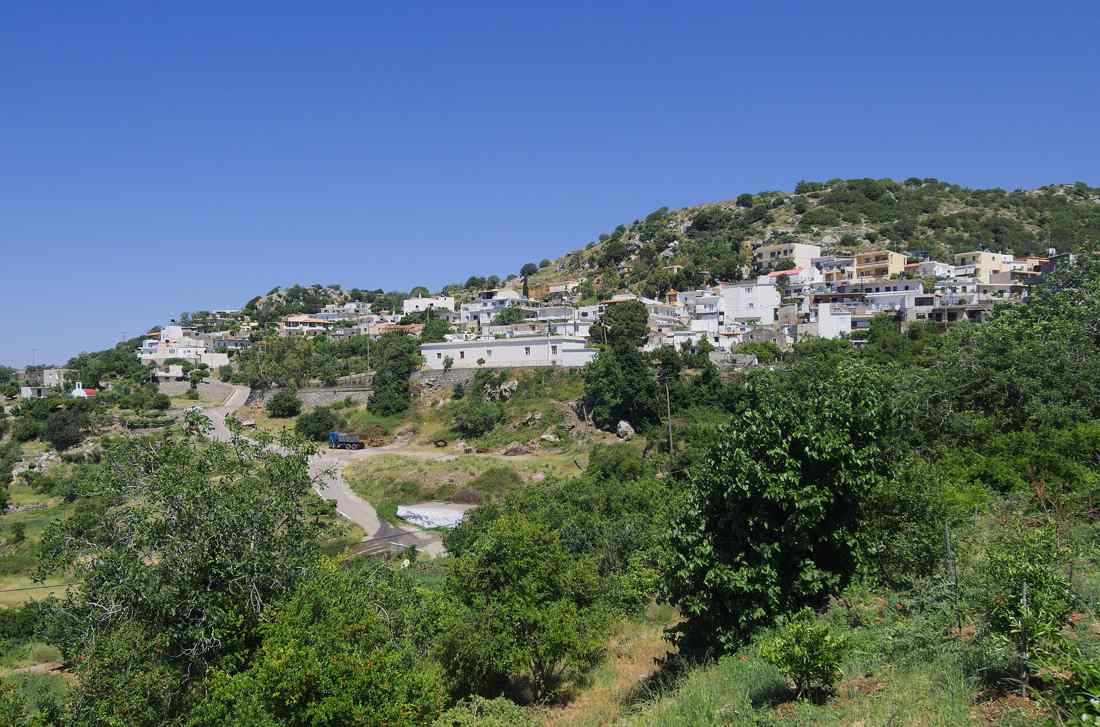
Axos rises on the northern slopes of Psiloritis in the Mylopotamos area of Rethymno, a traditional mountain village built on the foundations of an ancient city. Stone houses cascade down the slope beneath plane trees and springs, while scattered ruins and old churches preserve centuries of history. The village sits on the scenic route climbing toward the Anogeia plateau and the high country of central Crete, offering travellers a quiet stop far from coastal resorts. Tavernas, weaving workshops and honey sellers line the narrow streets, and the cool mountain air carries the scent of herbs and fresh bread. Discover authentic Cretan mountain life with My Greece Tours.
The village stands between the regional capital and the high plateau, making it an ideal base for exploring the interior of the island. Ancient walls, Byzantine chapels with frescoes and a small folklore collection tell the story of continuous habitation from antiquity to the present day. The Melidoni cave lies within easy reach, and the road continues upward to the Nida plateau and the summit trails. The sections below cover the history, location, attractions and practical details that make Axos a rewarding destination for those seeking mountain tradition and natural beauty. For broader context, consult our Crete travel guide.
Where is Axos located in Crete?
Axos sits in the Mylopotamos area of the Rethymno region, on the northern slopes of Psiloritis mountain between the coastal town and the Anogeia plateau, along the scenic mountain road leading to the high country.
The village occupies a strategic position on the route that climbs from the coastal plain into the central massif of the island. Travellers heading toward Anogeia and the Nida plateau pass through Axos, making it a natural stopping point for those exploring the interior. The northern slopes of the mountain receive more rainfall than the southern face, and springs feed the plane trees that shade the village squares. Stone houses step down the hillside, their terraces overlooking valleys planted with olives and vines. The altitude brings cooler temperatures even in summer, and the air carries the scent of wild thyme and oregano from the surrounding slopes.
The road continues upward past the village, winding through oak forests and rocky pastures toward the high plateau.
The location places Axos within reach of both the coast and the mountain peaks. Rethymno lies to the north, accessible by a winding road that descends through olive groves and small hamlets. The Melidoni cave, with its stalactites and historical significance, sits just a short drive away. To the south, the road climbs toward the Nida plateau and the trails that lead to the summit of the mountain. The village serves as a gateway to the high country, where shepherds still tend flocks and traditional ways persist. The surrounding landscape offers hiking trails, ancient paths and panoramic views across the valleys to the Cretan Sea.
The position between coast and mountain gives Axos a character distinct from both beach resorts and isolated highland settlements.
What is the history of Axos in Crete?
Axos stands on the site of an important ancient city of the same name, with continuous habitation from antiquity through Byzantine and Venetian periods to the present, evidenced by scattered ruins and old churches with frescoes.
The ancient city flourished during the Classical and Hellenistic periods, minting its own coins and maintaining trade links across the island. Archaeologists have identified walls, foundations and other remains scattered around the modern village, though systematic excavation has been limited. The settlement survived the Roman conquest and continued through the Byzantine era, when churches were built and decorated with frescoes that still adorn their interiors. Venetian rule brought new architectural influences, visible in the stonework of older houses and public buildings. Ottoman occupation did not erase the village’s identity, and Axos maintained its Greek character through centuries of foreign rule. The continuity of settlement makes the village a living link to the deep past of the island.
The folklore collection housed in the village preserves tools, textiles and household objects that illustrate daily life in the mountain communities over the past two centuries. Old churches scattered through the settlement and the surrounding countryside contain frescoes dating from the Byzantine and Venetian periods, their colours faded but their religious scenes still legible. The tradition of weaving persists in workshops where artisans produce textiles using techniques passed down through generations. Honey production continues as it has for centuries, with beekeepers tending hives on the mountain slopes. The village maintains its traditional character despite modern changes, and the stone houses, narrow lanes and shaded squares recall the rhythms of life before mass tourism transformed the coast.
The past remains visible in every corner of Axos.
What can visitors see and do in Axos?
Visitors explore scattered ancient ruins, old churches with frescoes, a small folklore collection, stone houses, tavernas, workshops selling weavings and honey, springs, plane trees and the scenic road toward Anogeia and the Nida plateau.
The village itself invites leisurely exploration on foot, with narrow lanes winding between stone houses and small squares shaded by plane trees. Springs provide fresh water and create cool microclimates where locals gather to talk and visitors rest after walking. The folklore collection displays traditional tools, costumes and household items that illustrate mountain life before mechanization. Old churches open their doors to reveal frescoes painted centuries ago, their religious imagery still vivid despite the passage of time. Workshops sell handwoven textiles produced on traditional looms, and honey sellers offer jars filled with the nectar of mountain wildflowers. Tavernas serve grilled meats, fresh vegetables and local wine, their terraces overlooking the valleys below.
The pace of life slows in Axos, and the village offers a respite from the crowds and noise of the coast.
The surrounding area provides opportunities for hiking, photography and exploration of the natural landscape, including the historic Melidoni cave in the Mylopotamos hills. The road toward the Nida plateau passes through changing vegetation zones, from olive groves to oak forests to alpine pastures. Psiloritis rises to the south, its summit visible from the village on clear days. The Melidoni cave lies within easy driving distance, its chambers filled with stalactites and stalagmites. Trails lead from the village into the countryside, following old paths used by shepherds and farmers. The mountain air, the scent of herbs, the sound of bells from grazing flocks and the panoramic views combine to create an experience far removed from the beach resorts.
Axos rewards those seeking things to do in Crete beyond the standard tourist circuit.
What makes Axos one of the hidden gems in Crete?
Axos remains off the main tourist routes, offering authentic mountain tradition, ancient history, cool springs, stone architecture, local crafts and a quiet atmosphere far from coastal resorts, appealing to travellers seeking the real Crete.
The village receives fewer visitors than coastal attractions or the more famous mountain settlements, preserving a way of life that has largely disappeared from the developed parts of the island. Stone houses retain their traditional character, and the community maintains customs that date back generations. The workshops produce weavings and honey for local use as much as for sale, and the tavernas serve food prepared according to recipes handed down through families. The springs and plane trees create a cool, green environment even in the heat of summer, and the altitude moderates the temperature. The absence of large hotels, souvenir shops and tour buses allows the village to retain its authenticity.
Visitors who take the time to stop and explore find a living example of mountain Crete, where tradition and modernity coexist without the former being reduced to mere spectacle.
The location on the route to the high plateau means that most travellers pass through without stopping, continuing upward to more famous destinations. Those who pause discover a village that rewards curiosity and unhurried exploration. The ancient ruins, Byzantine frescoes and folklore collection offer historical depth, while the workshops, tavernas and daily life of the community provide contemporary context. The natural setting, with its springs, trees and mountain views, creates a physical environment that shapes the character of the place. Axos represents one of the hidden gems in Crete, a destination that reveals its qualities gradually to those willing to look beyond the obvious attractions.
The village offers a glimpse of the island as it was before tourism became the dominant industry, and that glimpse grows rarer with each passing year.
How does Axos fit into a Crete travel itinerary?
Axos serves as a quiet mountain stop between Rethymno and the Anogeia plateau, ideal for travellers exploring the interior, seeking traditional villages, visiting the Melidoni cave or heading to the Nida plateau and Psiloritis summit trails.
The village works well as a half-day stop on a journey from the coast into the mountains, allowing time to walk the lanes, visit the churches, browse the workshops and enjoy a meal at a taverna. Travellers can combine Axos with the Melidoni cave, spending the morning underground and the afternoon in the village. Those planning to explore the high plateau and the mountain peaks can use Axos as an introduction to the region, acclimatizing to the altitude and the pace of mountain life before continuing upward. The village also functions as a base for day trips, with Rethymno and the coast accessible to the north and the interior accessible to the south.
The accommodation options remain limited, but the tavernas provide good food and the setting offers tranquility.
Incorporating Axos into a broader exploration of the island adds depth and variety to the experience. The contrast between the coastal resorts and the mountain villages illustrates the diversity of the island, and the journey from sea level to the high plateau passes through distinct ecological and cultural zones. Cretan food tastes different in the mountains, where grilled meats, wild greens and mountain herbs dominate the menu. The village represents a different aspect of the island, one rooted in agriculture, animal husbandry and the rhythms of the seasons rather than tourism and the beach. Travellers who limit themselves to the coast miss this dimension entirely.
Axos offers a window into the interior, and that window opens onto a landscape and a way of life that define the island as much as the famous beaches and archaeological sites.
Frequently Asked Questions
Is Axos worth visiting if I only have a short time in Crete?
Axos rewards visitors who have time to explore the interior and appreciate traditional mountain villages, but it may not suit those with only two or three days who want to focus on the most famous sites. The village offers no major archaeological monuments or spectacular natural features, but rather a quieter experience of authentic Cretan life. Travellers with a week or more can easily incorporate Axos into a route that includes Rethymno, the Melidoni cave, the Anogeia plateau and the Psiloritis trails. The village works particularly well for those who enjoy walking through traditional settlements, tasting local food, and experiencing the slower pace of mountain communities.
The journey from the coast to Axos takes less than an hour, making it accessible even for those based in Rethymno. The decision depends on your interests and priorities, but the village provides a genuine alternative to the beach resorts and crowded tourist attractions.
What is the best time of year to visit Axos?
Spring and autumn offer the most comfortable conditions for visiting Axos, with mild temperatures, green landscapes and fewer visitors. Spring brings wildflowers to the mountain slopes, and the springs run full after winter rains. The plane trees provide fresh shade, and the air smells of herbs and blossoms. Autumn delivers cooler weather after the summer heat, and the harvest season fills the tavernas with fresh produce and local wine. Summer remains pleasant at the altitude of Axos, cooler than the coast but still warm enough for outdoor exploration. Winter can bring cold temperatures and occasional snow, though the village remains accessible and the tavernas stay open.
The churches and workshops welcome visitors year-round, and the village maintains its character through all seasons. The best time depends on your tolerance for heat and your interest in seasonal activities, but spring and autumn generally provide the ideal balance of weather, scenery and local life.
Can I find accommodation and food in Axos?
Axos has limited accommodation compared to coastal resorts, with a small number of rooms and guesthouses available for overnight stays. Most visitors treat the village as a day trip from Rethymno or a stop on the way to the Anogeia plateau and the high country. The tavernas serve traditional mountain food, including grilled meats, fresh vegetables, local cheeses and wine produced in the region. The meals emphasize simple preparation and quality ingredients, reflecting the agricultural traditions of the area. The tavernas open for lunch and dinner, and the terraces offer views over the valleys. The workshops sell honey, weavings and other local products, but the village has no supermarkets or large shops.
Travellers planning to stay overnight should book ahead, particularly during peak season. Those seeking extensive tourist infrastructure should base themselves on the coast and visit Axos as a day trip, while those wanting a quiet mountain experience can use the village as a base for exploring the interior.