
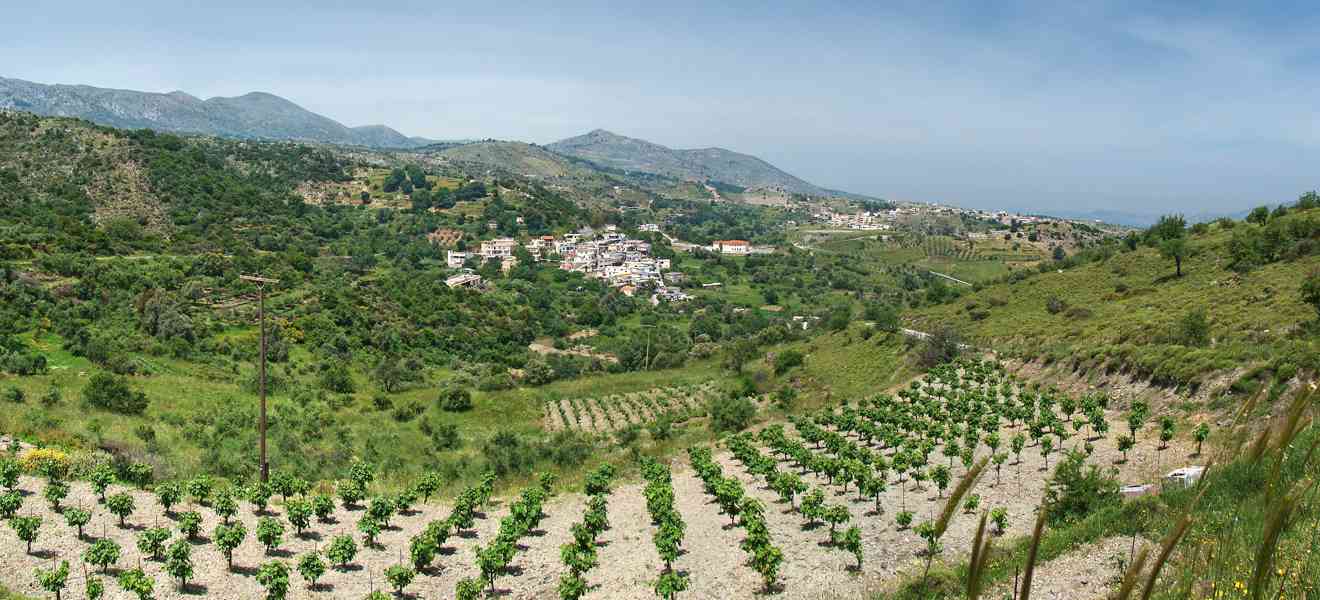
Zoniana clings to the northern slopes of Psiloritis in the Mylopotamos area of Rethymno, a mountain village where stone houses cluster around narrow lanes and shepherds still drive their flocks to high pastures. The village has earned its reputation primarily through the Sfendoni cave, the largest and most spectacular show cave on the island, where visitors walk through chambers filled with stalactites, stalagmites and delicate rock curtains. Beyond the cave, Zoniana maintains its rugged pastoral character through sheep and goat herding, traditional weavings, local cheese and mountain honey. Plan your visit with My Greece Tours.
The mountain road connecting the village with nearby settlements offers dramatic views across the Rethymno highlands, positioning Zoniana as a natural stop between lower villages and the high plateau. Visitors find cool respite inside the cave on hot summer days, then explore the wax museum of Cretan history or wander streets where pastoral traditions remain vibrant. The sections below cover the cave’s geological wonders, the village’s mountain character, practical visiting details and how Zoniana fits into broader highland exploration. Consult our comprehensive Crete travel guide for additional context on the island’s mountain communities.
What makes the Sfendoni cave special in Crete?
The Sfendoni cave is the largest and most impressive show cave on the island, with extensive chambers of stalactites, stalagmites and dramatic rock curtains. Visitors follow a lit walkway through the cavern, past formations built over millennia.
The cave system extends through the mountain limestone, revealing chambers where water has sculpted elaborate formations over geological time. Stalactites hang from ceilings in dense clusters, stalagmites rise from the floor in columns of varying thickness, and delicate rock curtains drape across walls in translucent sheets. The lit walkway guides visitors safely through the main passages, allowing close observation of the formations without damaging the fragile mineral deposits. Cool air circulates through the cavern year-round, maintaining a constant temperature that contrasts sharply with summer heat outside. The cave’s scale surpasses other accessible caverns on the island, offering the most comprehensive underground experience available to tourists.
Guided tours explain the geological processes that created these features, detailing how mineral-rich water deposits calcium carbonate layer by layer. The Sfendoni cave ranks among the top things to do in Crete for visitors interested in natural wonders beyond beaches and archaeological sites.
The cave’s discovery and development for tourism brought attention to Zoniana, transforming the village from an isolated pastoral community into a destination for day-trippers exploring the Rethymno highlands. The installation of lighting and walkways made the formations accessible while preserving their natural state, balancing tourism with conservation. Visitors descend into the mountain through a constructed entrance, then follow the path through successive chambers, each revealing different types of formations. The temperature drop provides immediate relief on hot days, making the cave particularly popular during summer months. Photography captures the illuminated formations, though the scale and three-dimensional complexity of the chambers exceed what images can convey.
The cave operates with scheduled hours and guided entry, ensuring visitor safety and protecting the delicate environment. Emerging back into daylight, visitors gain appreciation for the geological forces shaping the island’s limestone mountains and the hidden worlds beneath Psiloritis slopes.
How does Zoniana maintain its pastoral traditions?
Sheep and goat herding remain central to village life, with flocks grazing the mountain slopes and producing milk for local cheese. Stone houses preserve traditional architecture, weavings continue on hand looms, and honey comes from hives on the surrounding slopes.
The village economy still revolves around animal husbandry, with shepherds maintaining flocks that graze the scrubby vegetation covering the mountainside. Goats browse on aromatic herbs and tough shrubs, while sheep crop the grasses in higher meadows during warmer months. Milk from these animals goes into traditional cheese production, following recipes passed through generations and yielding products with distinctive mountain flavors. Women weave textiles on looms set up in homes, creating patterns and techniques specific to the region’s craft traditions. Honey production takes advantage of the diverse wildflowers blooming across the slopes, with beekeepers placing hives where thyme, sage and other aromatic plants provide nectar.
Stone construction dominates the village architecture, with houses built from local rock and featuring small windows suited to the mountain climate. The rugged character of daily life contrasts with coastal resort areas, offering visitors insight into highland communities. The village’s location near Anogeia connects it to a broader network of mountain settlements sharing similar pastoral economies and cultural practices.
The wax museum near the village presents scenes from Cretan history, using figures to illustrate key moments and traditional ways of life across the centuries. This cultural attraction complements the natural wonder of the cave, giving visitors a fuller picture of the region’s human story alongside its geological features. Village kafeneions serve as gathering places where shepherds discuss flock management, weather patterns and mountain routes. The seasonal rhythm of pastoral life still governs the community calendar, with spring lambing, summer grazing on high pastures, autumn shearing and winter sheltering in lower elevations. Younger residents balance traditional activities with modern employment, maintaining connections to herding and craft production while pursuing other opportunities.
The village’s persistence in pastoral traditions makes it representative of highland Crete’s cultural continuity, where ancient practices adapt to contemporary circumstances without disappearing entirely. Visitors seeking hidden gems in Crete find authentic mountain life in communities like Zoniana, far from tourist-oriented coastal developments.
Where is Zoniana located in Crete’s geography?
The village sits on the northern flank of Psiloritis mountain in the Mylopotamos area of the Rethymno region. The mountain road connects Axos below with Anogeia and the high plateau above, positioning Zoniana as a natural stopping point between elevations.
Psiloritis dominates the central Cretan landscape, its massif rising to the island’s highest summit and creating distinct climatic and ecological zones at different elevations. Zoniana occupies the middle slopes on the northern side, where the terrain transitions from lowland olive groves to high mountain pastures. The road ascending from Axos winds through this transition zone, passing through Zoniana before continuing upward toward the Nida plateau and the settlements clustered near the mountain’s upper reaches. The Mylopotamos area encompasses the northern approaches to the massif, a region characterized by steep valleys, scattered villages and terrain too rugged for intensive agriculture.
The Rethymno regional unit extends from the north coast inland to the mountain spine, with Zoniana falling in the highland portion where pastoral economies predominate over tourism or commercial farming. The village’s elevation provides cooler temperatures than coastal areas, with winter snow possible and summer heat moderated by altitude and mountain breezes.
The positioning between Axos and Anogeia makes Zoniana accessible as part of a mountain circuit, allowing visitors to combine the cave visit with exploration of neighboring communities and highland landscapes. The road quality permits ordinary vehicles to reach the village, though the route includes curves and gradients typical of mountain driving. Distance from Rethymno town requires commitment to a half-day or full-day excursion, as the journey involves significant elevation gain and travel time. The village lacks the tourist infrastructure of coastal destinations, with limited accommodation and dining options reflecting its small population and pastoral focus.
Visitors typically arrive during daylight hours, tour the cave, perhaps visit the wax museum, then continue to other mountain destinations or return to coastal bases. The geographic isolation that preserved traditional life also limits the village’s integration into mass tourism circuits, maintaining an authentic character that appeals to travelers seeking genuine highland experiences rather than commercialized attractions.
What practical information helps visitors plan a trip to Zoniana?
The Sfendoni cave keeps scheduled hours and guided entry, and usually closes in winter, so confirm opening times before travelling. The cool cave needs a light jacket, and dining is limited, so bring supplies or plan meals elsewhere.
Cave tours run at set intervals during the tourist season, with guides leading groups through the lit passages and explaining the formations. Winter closures protect both visitors and the cave environment during periods of reduced demand and potentially hazardous conditions. The constant underground temperature hovers around fifteen degrees Celsius, creating a significant contrast with summer surface temperatures that can exceed thirty-five degrees. Visitors wearing shorts and light shirts for the heat outside find the cave uncomfortably cold without additional layers, so bringing a jacket or sweater proves essential. The walkway includes steps and uneven surfaces, requiring sturdy footwear rather than flip-flops or sandals.
Photography is generally permitted, though flash use may be restricted to protect formations and other visitors’ experiences. Tour duration typically spans thirty to forty-five minutes, allowing time to traverse the main chambers at a pace that permits observation without rushing. Ticket purchase occurs at the cave entrance, with modest fees supporting maintenance and guide salaries.
The village itself offers limited tourist services, with perhaps one or two small cafes serving basic refreshments but no full restaurants or hotels. Visitors planning extended time in the area should base themselves in larger settlements and treat Zoniana as a day-trip destination. The mountain road requires attention to driving, particularly for those unaccustomed to narrow, winding routes with limited guardrails and occasional livestock crossings. Mobile phone coverage may be intermittent in the mountains, so downloading maps and directions before leaving coastal areas proves prudent. The wax museum keeps its own schedule, which may not align with cave hours, requiring separate inquiry for those interested in both attractions.
Spring and autumn offer ideal visiting conditions, with moderate temperatures, blooming wildflowers or autumn colors, and fewer crowds than peak summer. The cave’s cool interior makes it particularly valuable during July and August heat waves, when the temperature difference provides dramatic relief and the underground environment offers a unique respite from the intense Cretan sun beating down on exposed slopes and valleys.
How does Zoniana fit into broader Crete mountain exploration?
The village pairs naturally with Anogeia and the Nida plateau, forming a highland circuit of pastoral traditions and mountain landscapes. The cave adds a geological dimension, and the mountain road links communities of similar character across the slopes.
Travelers interested in highland Crete can construct itineraries that link Zoniana with neighboring villages, each offering distinct attractions while sharing common pastoral traditions and mountain settings. Anogeia provides a larger settlement with more services, historical significance from wartime resistance, and access to the highest reaches of Psiloritis. The Nida plateau offers alpine scenery, the Ideon cave associated with mythological traditions, and summer grazing grounds where shepherds maintain seasonal camps. Axos contributes archaeological remains and another perspective on village life at lower elevations. Combining these destinations creates a full day or multi-day exploration of the Rethymno highlands, revealing how geography shapes culture and economy across different elevations.
The Sfendoni cave distinguishes Zoniana from purely cultural or scenic stops, adding a natural wonder to the mix of attractions and appealing to visitors who might not otherwise venture into the mountains. The geological formations provide educational value alongside aesthetic impact, teaching about limestone karst processes and underground water systems.
The mountain circuit also offers escape from coastal crowds, particularly during peak summer when beaches and resort towns overflow with tourists. Highland villages maintain quieter rhythms, with visitor numbers a fraction of those at major archaeological sites or popular beaches. The cooler temperatures at elevation make summer exploration more comfortable, while spring brings wildflower displays across the mountain meadows. Autumn colors transform the deciduous vegetation, and winter snow occasionally blankets the higher elevations, creating dramatic seasonal variations. Photographers find compelling subjects in the interplay of light and landscape, the texture of stone architecture, and the faces of shepherds who embody continuity with the past.
The pastoral economy produces foods unavailable in supermarkets, with local cheese, honey and herbs carrying flavors specific to the mountain environment. Visitors seeking authentic experiences beyond the standard tourist circuit discover in Zoniana and its neighbors a different Crete, one where ancient patterns persist and the land still shapes daily life in fundamental ways that coastal development has largely erased.
Frequently Asked Questions
Can you visit the Sfendoni cave year-round?
The cave typically operates from spring through autumn, with winter closures common due to reduced visitor numbers and potentially difficult access conditions when weather turns harsh in the mountains. Exact opening dates vary by year and depend on management decisions, weather patterns and maintenance schedules. Visitors planning trips during shoulder seasons or winter months should contact local tourism offices or the cave administration directly to confirm current status before making the journey. Summer months from May through September offer the most reliable access, with daily tours running at regular intervals and extended hours to accommodate peak demand. The cave’s popularity during hot weather stems from its cool interior, making it particularly attractive when surface temperatures soar.
Spring visits coincide with wildflower blooms across the surrounding slopes, while autumn brings harvest activities and the beginning of olive processing in lower elevations. Confirming hours and availability prevents disappointment after the drive up the mountain road, ensuring the cave is open and tours are operating when you arrive at the entrance.
What else can you see near Zoniana besides the cave?
The wax museum near the village presents scenes from Cretan history through life-sized figures depicting key events and traditional activities across the centuries. This cultural attraction operates independently from the cave, with its own schedule and admission. The village itself rewards brief exploration, with stone architecture, narrow lanes and glimpses of pastoral life providing authentic mountain atmosphere. The surrounding landscape offers hiking opportunities for those equipped with proper footwear and water, with trails leading to higher elevations or connecting to neighboring settlements. Anogeia lies a short drive away, offering a larger village with more services, historical significance and access to the Nida plateau.
Axos sits at lower elevation on the descent toward the coast, with archaeological remains and another traditional community. The mountain road itself provides scenic value, with viewpoints overlooking valleys and distant glimpses of the north coast. Combining Zoniana with these nearby destinations creates a fuller highland experience, moving beyond a single attraction to explore the broader mountain region and its interconnected communities, landscapes and cultural traditions that define this part of Rethymno’s interior.
Is Zoniana suitable for families with children?
The Sfendoni cave appeals to children fascinated by underground environments, stalactites and the adventure of exploring beneath the mountain. The lit walkway and guided tours provide safe access, though parents should ensure children can manage steps and uneven surfaces without difficulty. The cool temperature requires appropriate clothing for youngsters who may not regulate body heat as effectively as adults. Tour duration of thirty to forty-five minutes suits most children’s attention spans, offering enough time to appreciate the formations without becoming tedious. The village itself presents fewer specific attractions for children, functioning primarily as a working pastoral community rather than a tourist destination with dedicated family facilities.
The mountain setting allows for outdoor exploration if families bring appropriate supplies and supervision, with open spaces for running and natural features to investigate. The drive up the winding mountain road may challenge children prone to motion sickness, so parents should plan accordingly with breaks and remedies. Overall, the cave visit works well for families with school-age children interested in nature and geology, while the village and surrounding area require more parental creativity to engage younger visitors beyond the main attraction of the underground chambers and their spectacular formations.