
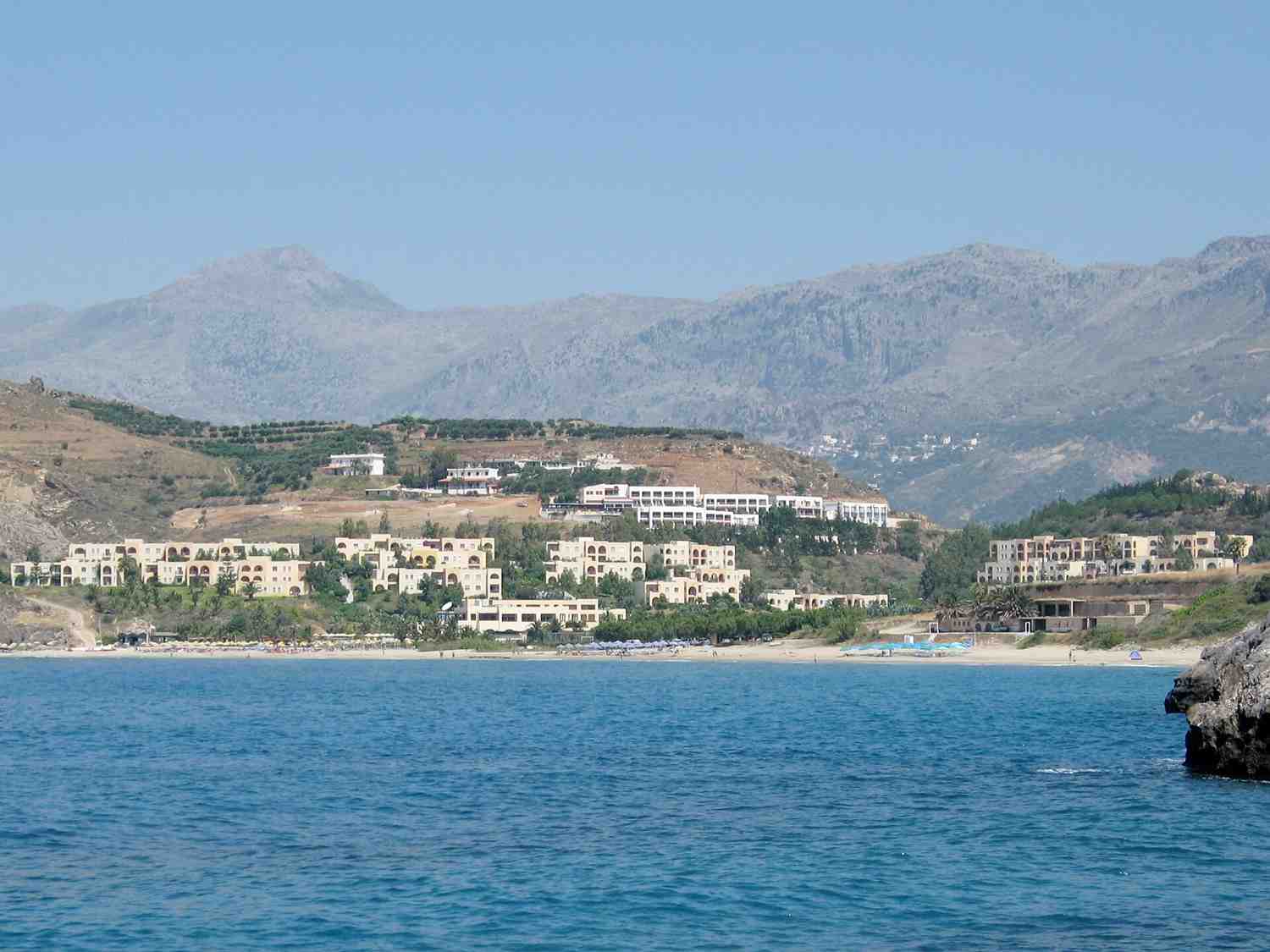
Damnoni Beach curves along the southern shore of Crete, a sheltered crescent of golden sand and turquoise water tucked between rocky headlands in the Rethymno region. Low cliffs frame the bay, and a couple of tavernas and a small hotel provide simple facilities without overwhelming the natural setting. The calm, warm water shelves gently, drawing families and swimmers, while the surrounding rocks attract snorkellers. Neighbouring coves, including Ammoudi and the quieter Little Damnoni, lie within a short scramble over the headlands, and naturists favour certain stretches. A short drive east of Plakias, Damnoni remains low-key even in high summer, offering an easy swim stop on a southern touring day. Plan your visit with My Greece Tours.
The beach sits on the Libyan Sea coast, where the south-facing orientation ensures warm water and shelter from the northern winds that buffet other parts of the island. Preveli palm beach lies nearby, and the fishing village of Plakias provides a relaxed base for exploring this stretch of coastline. The sections below cover the character of the beach, its practical details, the neighbouring coves, what to expect through the seasons, and how Damnoni fits into a wider tour of the south coast. For broader island context, consult the Crete travel guide.
What makes Damnoni Beach distinctive among Crete’s south coast beaches?
Damnoni combines a wide sandy crescent with sheltered, clear water and easy access from Plakias. The gentle shelving and calm conditions suit families, while neighbouring naturist coves and snorkelling rocks add variety within a short walk.
The beach stretches in a broad arc, backed by low cliffs that block the wind and create a microclimate warmer than exposed stretches of the Libyan Sea. Golden sand meets turquoise water that deepens gradually, allowing children to paddle safely and adults to swim without navigating sharp drop-offs. Two tavernas sit behind the sand, serving grilled fish and salads under shaded terraces, and a small hotel provides rooms for visitors who prefer to stay beside the water rather than drive from Plakias each day. The setting remains undeveloped compared with the north-coast resorts, preserving a quiet atmosphere even when sunbeds fill the central section in July and August.
Rocky headlands frame both ends of the bay, and paths lead over them to smaller coves where naturists gather and snorkellers explore underwater ledges.
Damnoni ranks among the accessible Crete beaches that balance convenience with natural beauty, avoiding both the isolation of remote southern strands and the crowds of the northern package-holiday strips. The drive from Plakias takes ten minutes along a paved road, and a small car park sits just above the sand. Visitors often combine Damnoni with Preveli beach to the west, where a palm-lined river meets the sea, or with a loop through the Kourtaliótiko Gorge. The beach works equally well as a dedicated swim day or a brief stop on a longer southern tour, and the tavernas stay open from late spring through early autumn, ensuring refreshment even outside peak season.
How do you reach Damnoni Beach and what facilities are available?
A paved road runs east from Plakias for four kilometres, ending at a small car park above the beach. Two tavernas serve food and rent sunbeds, and a hotel offers accommodation. Showers and toilets sit near the tavernas.
The road from Plakias follows the coast, passing olive groves and glimpses of the sea before descending to the car park. Spaces fill quickly in July and August, particularly between late morning and mid-afternoon, so an early arrival secures easier parking. Stone steps lead down to the sand, and the beach opens out in both directions. Sunbeds and umbrellas cluster in the central section, rented by the day from the tavernas, while the edges of the bay remain free for visitors who bring their own mats. The tavernas serve grilled octopus, Greek salads, and cold beer, with tables set on terraces that catch the sea breeze.
The hotel at the eastern end of the beach offers simple rooms with balconies overlooking the water, catering to guests who prefer to wake beside the waves.
Mobile phone signal reaches the beach, and the tavernas accept card payments, though carrying cash remains prudent for smaller purchases. No lifeguards patrol the water, so swimmers take responsibility for their own safety, and the gentle shelving makes supervision of children straightforward. The beach stays clean, with bins provided near the tavernas, and the water quality remains high throughout the season. Visitors with mobility challenges will find the stone steps manageable but steep, and the sand itself is soft enough to require effort when walking. The setting suits those seeking a quiet day by the sea without sacrificing basic comforts, and the proximity to Plakias ensures that additional services, including supermarkets and pharmacies, lie within a short drive.
What are the neighbouring coves and how do you explore them?
Little Damnoni lies over the western headland, reached by a rocky path in ten minutes. Ammoudi sits further west, requiring a longer scramble. Both coves attract naturists and offer quieter swimming. Snorkelling around the rocks reveals fish and underwater formations.
The path to Little Damnoni begins at the western end of the main beach, climbing over rocks and following a faint trail worn by repeated footsteps. The cove opens out as a smaller crescent of sand and pebbles, backed by cliffs and usually less crowded than Damnoni itself. Naturists favour this spot, and the absence of facilities reinforces the sense of seclusion. The water remains calm, and the rocky edges provide good snorkelling, with small fish darting among the stones and occasional octopuses hiding in crevices. Ammoudi lies further along the coast, requiring a longer walk over uneven terrain, and the effort deters casual visitors, leaving the beach to those willing to scramble.
Both coves lack shade, so bringing an umbrella or timing the visit for late afternoon avoids the midday heat.
Exploring these neighbouring stretches adds variety to a day at Damnoni, and the short walks offer views back across the bay and out to the Libyan Sea. The rocks between the coves host lizards and wildflowers in spring, and the absence of development preserves a sense of discovery. Snorkellers should bring their own gear, as rental equipment is not available at the smaller coves, and water shoes protect feet from sharp stones when entering the sea. The naturist tradition at Little Damnoni and Ammoudi reflects the relaxed attitude common on Crete’s south coast, where remote beaches often attract those seeking privacy.
Families with young children typically stay on the main Damnoni beach, where the facilities and gentler access suit their needs, while adventurous swimmers and snorkellers venture to the quieter coves. Just along the coast, the clear diving water of Schinaria beach draws snorkellers to a quieter bay.
When is the best time to visit Damnoni Beach on Crete?
Late May through June and September offer warm water, open tavernas, and fewer crowds than July and August. The south-facing orientation ensures calm conditions and warmer sea temperatures than northern Crete beaches, extending the comfortable swimming season into autumn.
The sheltered position and southern exposure create a microclimate that warms the water earlier in spring and keeps it pleasant later into autumn than beaches facing north. By late May, the sea temperature reaches comfortable levels for extended swimming, and the tavernas open for the season. June brings warm days without the peak-season crowds, and the surrounding hills still show green from spring rains. July and August see the beach at its busiest, with sunbeds filling by mid-morning and the car park reaching capacity, though the atmosphere remains relaxed compared with the package-holiday resorts further north.
September offers the best balance of warm water, reliable sunshine, and thinning crowds, as families return home and the beach reclaims its quieter character. October remains pleasant for hardy swimmers, though the tavernas may close by mid-month.
Winter visits are possible for those touring the south coast, but the tavernas shut and the beach takes on a wilder aspect, with waves occasionally breaking over the sand during storms. Spring wildflowers bloom on the cliffs in March and April, and the landscape turns lush after winter rains, though the water remains too cold for most swimmers until May. The shoulder seasons suit visitors who prioritise tranquillity and exploration over guaranteed beach weather, and combining Damnoni with inland things to do in Crete such as gorge walks and village visits creates a varied itinerary.
The south coast generally receives less rain than the north, and the mountains protect the shore from the worst of the winter weather, making Damnoni a viable stop even outside the traditional beach season.
How does Damnoni fit into a wider tour of Crete’s south coast?
Damnoni pairs naturally with Plakias as a base, Preveli palm beach to the west, and the drive east toward Agia Galini. The beach serves as an easy swim stop on a southern touring day along the Libyan Sea.
The south coast of Rethymno region offers a string of beaches and villages linked by a scenic coastal road, and Damnoni sits at the heart of this stretch. Plakias, four kilometres west, provides a larger selection of tavernas, accommodation, and a longer beach, making it a practical base for day trips. Preveli lies further west, where a palm-lined river meets the sea in a dramatic gorge setting, and the combination of Damnoni and Preveli in a single day creates a satisfying contrast between sheltered cove and wild river mouth. East of Damnoni, the road winds through hills toward Agia Galini, passing small villages and olive groves, with occasional viewpoints overlooking the Libyan Sea.
The drive rewards those who enjoy winding mountain roads and discovering quiet beaches between the better-known stops.
Damnoni also features among the hidden gems in Crete that balance accessibility with a sense of discovery, avoiding the extremes of total isolation and overdevelopment. Visitors touring the south coast often spend several days exploring the area, using Plakias or a nearby village as a base and venturing out each day to different beaches, gorges, and mountain villages. The Kourtaliótiko Gorge, north of Preveli, offers a dramatic drive through towering cliffs, and the Kourtaliotis River creates waterfalls and pools that attract hikers. Combining coastal swimming with inland exploration makes the most of the region’s variety, and Damnoni’s convenient location and reliable conditions ensure it remains a highlight of any southern itinerary.
The beach suits both dedicated sun-seekers and active travellers who want a refreshing swim between longer excursions.
Frequently Asked Questions
Is Damnoni Beach suitable for families with young children?
Damnoni suits families well, thanks to the gentle shelving of the sand and the calm, clear water that allows parents to supervise children easily. The beach lacks strong currents, and the gradual deepening means toddlers can paddle safely at the water’s edge while older children swim further out. Sunbeds and umbrellas provide shade, and the two tavernas serve simple meals that appeal to children, including chips, grilled chicken, and fresh fruit. Toilets and showers sit near the tavernas, and the compact size of the beach means families can settle in one spot without walking long distances. The neighbouring coves attract naturists and are less suitable for young children, so families typically stay on the main Damnoni beach.
The drive from Plakias takes only ten minutes, making it easy to return to accommodation for afternoon naps or to fetch forgotten items. The low-key atmosphere and absence of water sports or loud music create a relaxed environment where children can play in the sand and swim without overstimulation.
Can you snorkel at Damnoni Beach and what will you see?
The rocky headlands at both ends of Damnoni and the neighbouring coves offer good snorkelling, with clear water revealing underwater rock formations, small fish, and occasional octopuses. The central sandy section holds less interest for snorkellers, but swimming out to the rocks on either side brings you into territory where marine life gathers. Damselfish, wrasse, and small bream dart among the stones, and the crevices hide crabs and sea urchins. The water clarity on the south coast generally exceeds that of the north, and the Libyan Sea’s warmth encourages a variety of species. Snorkellers should bring their own masks and fins, as rental equipment is not available at Damnoni, though shops in Plakias stock basic gear.
The rocks can be sharp, so water shoes protect feet when entering and exiting the water. The best snorkelling occurs in the morning when the water is calmest and visibility highest, and the absence of boat traffic keeps the underwater environment peaceful. Little Damnoni and Ammoudi offer quieter snorkelling with fewer swimmers, rewarding those willing to walk over the headlands.
What should you bring for a day at Damnoni Beach?
Sunscreen, a hat, and plenty of water are essential, as the south coast sun beats down intensely in summer and shade is limited outside the taverna terraces. Sunbeds and umbrellas are available to rent, but bringing your own beach mat or towel allows you to settle on the free sections at the edges of the bay. Snorkelling gear enhances the visit if you plan to explore the rocks, and water shoes protect feet from sharp stones in the shallower areas. Cash covers taverna meals and sunbed rental, though card payments are accepted at the main establishments. A small cooler with snacks and drinks reduces costs and ensures refreshment if the tavernas are busy.
A waterproof bag protects phones and valuables from sand and splashes, and a good book or e-reader fills the hours between swims. Visitors planning to walk to Little Damnoni or Ammoudi should wear sturdy sandals or shoes with grip, as the rocky paths require careful footing. The car park sits just above the beach, so you can return to your vehicle easily if you forget something, but bringing everything you need for the day avoids repeated trips up the steps.