
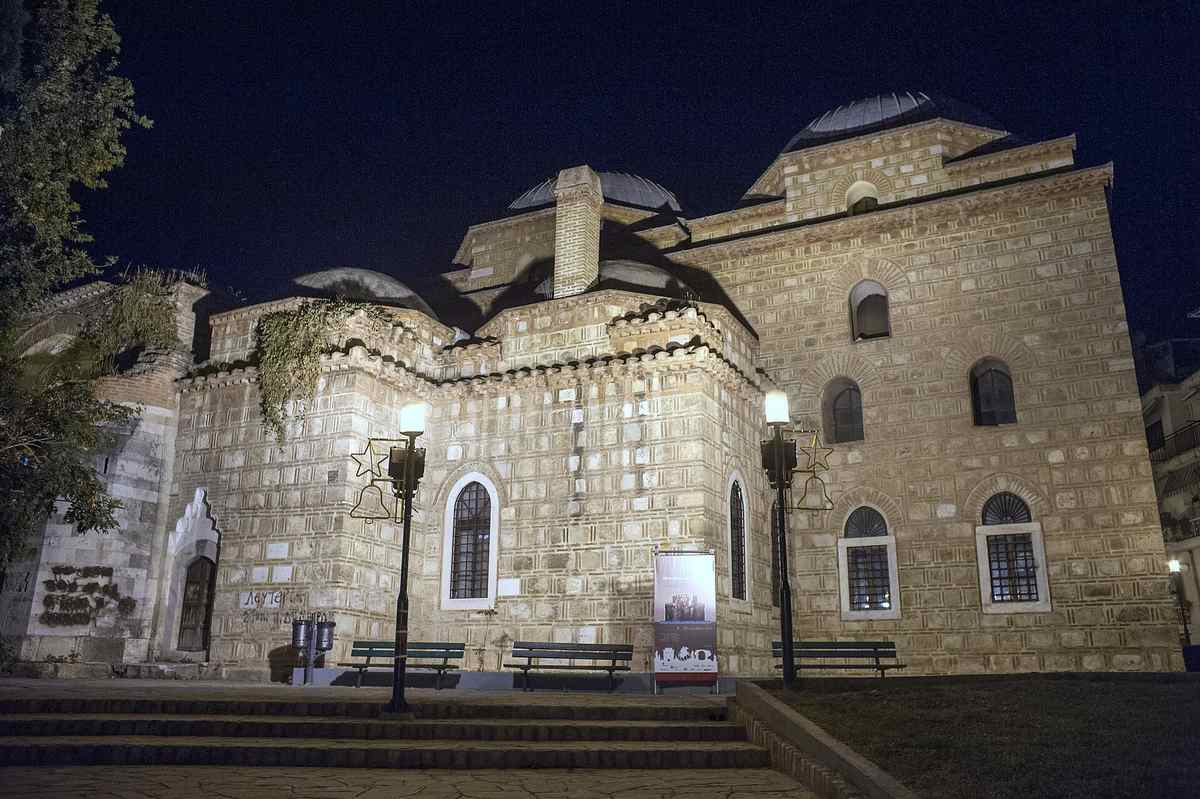
The Alaca Imaret stands as a testament to Thessaloniki’s rich Ottoman heritage. Founded by Ishak Pasha, a vizier of the sultan, this fifteenth-century mosque and almshouse is located in the city’s upper central area. Originally, the complex served as a place of worship and charity, providing meals to students and the less fortunate. The term ‘Alaca’ refers to the vibrant, variegated colours of its once-standing minaret. Today, the Alaca Imaret functions as a cultural and exhibition venue, drawing visitors to its historic halls. As one of Thessaloniki’s unique landmarks, it offers insight into the city’s diverse past and evolving present with My Greece Tours.
Exploring Thessaloniki offers a journey through diverse historical layers, with the Alaca Imaret as a notable highlight. This Ottoman-era mosque and almshouse reveals stories of charity and faith in its architecture. The sections below cover the site’s history, architectural features, and its transformation into a cultural venue. Delve into the heart of this captivating city with Thessaloniki tours to discover more about its intriguing past. The Alaca Imaret, alongside other landmarks such as Bey Hamam and the Rotunda, forms part of an intricate mosaic of historical treasures.
What is the historical significance of the Alaca Imaret?
The Alaca Imaret serves as a historical link to Thessaloniki’s Ottoman past, showcasing the city’s diverse cultural heritage through its architecture and original function as a mosque and almshouse.
The Alaca Imaret was established in the fifteenth century by Ishak Pasha, a prominent Ottoman vizier. This historical site was more than just a mosque; it functioned as an almshouse, providing food for both students and the poor. The complex’s dual role highlights the Ottoman Empire’s emphasis on charity and community service. As a place of worship and social welfare, the Alaca Imaret was integral to the daily life of Thessaloniki’s residents. Its foundation marks an era where faith and philanthropy were deeply intertwined, reflecting the values of the time and offering a glimpse into the societal structure of the Ottoman period.
The architectural design of the Alaca Imaret further emphasizes its historical significance. The building follows the inverted-T or Bursa plan, common in Ottoman architecture. This layout includes a central domed hall and flanking chambers, indicative of its dual purpose as a mosque and almshouse. The structure’s design facilitated both religious gatherings and the distribution of food, underscoring its multifaceted role in the community. As a surviving example of this architectural style, the Alaca Imaret provides insight into the design principles of Ottoman religious and public buildings, showcasing how architecture served both aesthetic and functional needs.
The loss of the original minaret, which was a defining feature of the Alaca Imaret, marked a significant change in its historical narrative. The name ‘Alaca’, meaning variegated, refers to the colourful stone-and-brick minaret that once stood proudly beside the mosque. Its removal after Thessaloniki transitioned to Greek control signifies the shifts in cultural and political landscapes over time. Despite this change, the Alaca Imaret remains a vital link to the city’s Ottoman era, continuing to tell the story of its past through its enduring walls. This transformation in its physical structure mirrors the broader historical changes experienced by Thessaloniki.
How does the architecture of the Alaca Imaret reflect its Ottoman roots?
The architecture of the Alaca Imaret mirrors Ottoman design with its Bursa plan, central domed hall, and intricate muqarnas decorations, illustrating the aesthetic and functional priorities of the era.
The Alaca Imaret’s architecture is a quintessential example of Ottoman design principles. The use of the inverted-T or Bursa plan demonstrates the functional and aesthetic considerations typical of Ottoman mosques and public buildings. This layout, featuring a central domed hall flanked by chambers, was ideal for accommodating both worshippers and those receiving charity. The design facilitated a seamless blend of spiritual and communal activities, reflecting the dual purpose of the complex. Such architectural choices underscore the importance of integrating religious and social functions in Ottoman society, offering a window into the architectural innovations of that era.
One of the most striking architectural features of the Alaca Imaret is its entrance, adorned with carved stalactite, or muqarnas, decorations. These intricate carvings are a hallmark of Islamic architecture, adding both decorative beauty and structural complexity. The muqarnas not only enhance the visual appeal of the entrance but also serve as a testament to the craftsmanship and artistic sensibilities of the time. This attention to detail is evident throughout the building, from the domes to the portico, highlighting the Ottoman emphasis on artistic expression within architectural forms, thus enriching the cultural tapestry of Thessaloniki.
The Alaca Imaret’s original minaret, which inspired its name, was another key architectural element. Though it no longer stands, the minaret’s memory lives on in the site’s name, ‘Alaca’, meaning variegated. The minaret was constructed using diagonally banded stone and brick, creating a vibrant visual effect that was both distinctive and emblematic of Ottoman architectural innovation. Its removal marks a loss in the physical landscape but not in the cultural memory, as the Alaca Imaret continues to represent the architectural and historical legacy of the Ottoman era in Thessaloniki. This enduring connection highlights the lasting influence of Ottoman architecture.
What role does the Alaca Imaret play today?
The Alaca Imaret now functions as a cultural and exhibition venue, hosting concerts, talks and shows that draw on Thessaloniki’s layered heritage.
The Alaca Imaret has undergone a transformation from its original role as a mosque and almshouse to a vibrant cultural venue. This shift reflects the broader changes in Thessaloniki, where historical sites are being repurposed to serve modern cultural needs. As a venue for exhibitions and events, the Alaca Imaret provides a unique setting that combines historical ambiance with contemporary cultural activities. This new role allows the site to continue serving the community, albeit in a different capacity, by fostering cultural engagement and education, thus preserving its relevance in a modern context.
Exhibitions held at the Alaca Imaret showcase a wide range of cultural themes, often focused on the history and heritage of Thessaloniki and the broader region. The venue’s historical significance enhances these events, providing a backdrop that enriches the visitor experience. From art exhibitions to historical displays, the Alaca Imaret plays a crucial role in promoting cultural understanding and appreciation. Its function as an exhibition space also helps preserve the building’s legacy, ensuring that its historical and architectural value is recognised by future generations, maintaining its status as a cultural beacon.
The location of the Alaca Imaret, situated among the lanes below Ano Poli, adds to its appeal as a cultural venue. This area is known for its rich history and traditional architecture, making it a fitting context for the Alaca Imaret’s current role. Visitors exploring Ano Poli can easily include a visit to the Alaca Imaret in their itinerary, enhancing their understanding of Thessaloniki’s diverse cultural landscape. The site’s continued use as a cultural venue ensures that it remains a living part of the community, contributing to the city’s dynamic cultural scene and offering a bridge between past and present.
Why is the Alaca Imaret also called the Ishakiye?
The Alaca Imaret is called the Ishakiye because it was founded by Ishak Pasha, a vizier of the Ottoman sultan, reflecting the personal and historical significance of its founder.
The name ‘Ishakiye’ connects the Alaca Imaret to its founder, Ishak Pasha, a significant figure in the Ottoman administration. As a vizier, Ishak Pasha was responsible for various public works and charitable endeavours, with the Alaca Imaret being one of his notable contributions. Naming the complex after him highlights his role in its establishment and his broader influence in the region. Such honorary naming practices were common in the Ottoman era, serving to memorialise the contributions of influential figures within their lifetime, thus cementing their legacy in the cultural landscape.
Ishak Pasha’s decision to establish the Alaca Imaret reflects the Ottoman emphasis on integrating social welfare with religious practice. By founding a complex that served both as a mosque and an almshouse, Ishak Pasha embodied the values of charity and communal responsibility. The Ishakiye, therefore, stands not only as a monument to architectural and cultural heritage but also as a testament to the social priorities of its time. Its dual naming as the Alaca Imaret and the Ishakiye underscores the multifaceted legacy of its founder, highlighting his vision for a harmonious society.
The historical context of the Alaca Imaret’s founding provides insight into the social and political climate of the Ottoman Empire. Ishak Pasha’s role as a vizier would have involved significant responsibilities, including overseeing public construction projects. His investment in the Alaca Imaret indicates a commitment to enhancing the welfare and spiritual life of Thessaloniki’s inhabitants. The continued use of the name ‘Ishakiye’ serves as a reminder of his contributions and the enduring impact of his vision. Visitors today can appreciate the historical depth associated with the site’s dual naming, which adds layers of narrative to the architectural experience.
What is unique about the Alaca Imaret’s current function?
The Alaca Imaret’s adaptation from a religious site to a cultural venue is unique, allowing it to serve modern cultural needs while preserving its historical essence.
The Alaca Imaret’s transformation into a cultural venue is a unique adaptation that reflects a broader trend of repurposing historical sites. This change allows the building to maintain its relevance in contemporary society while preserving its architectural and historical significance. By hosting cultural events, the Alaca Imaret continues to serve as a community hub, albeit in a modern context. This adaptation showcases the flexibility of historical architecture in meeting the evolving needs of urban communities, ensuring the site’s continued use and preservation, thus linking the past with the present.
The cultural programmes at the Alaca Imaret are diverse, ranging from art exhibitions to historical displays. These events attract both locals and tourists, providing opportunities for cultural exchange and education. The venue’s historical ambiance enhances these events, offering a unique backdrop that enriches the visitor experience. By serving as a cultural space, the Alaca Imaret helps promote appreciation for Thessaloniki’s rich heritage, making it a vital part of the city’s cultural landscape. Its current function bridges the gap between past and present, fostering a deeper understanding of the city’s history and cultural evolution.
The Alaca Imaret’s location in the heart of Thessaloniki makes it an accessible and attractive destination for cultural activities. Situated near other historical sites like Ottoman Thessaloniki, it is ideally positioned to be part of cultural itineraries. Visitors can explore the city’s Ottoman heritage through a visit to the Alaca Imaret, complemented by nearby attractions. This strategic location enhances its role as a cultural venue, drawing visitors who are interested in both historical and contemporary cultural experiences. The site’s continued use reflects the dynamic interplay between history and modernity in Thessaloniki, offering a comprehensive cultural journey.
How can visitors explore the Alaca Imaret and its surroundings?
Visitors can explore the Alaca Imaret and its surroundings through walking tours that highlight Thessaloniki’s Ottoman heritage and the vibrant culture of Ano Poli.
Visitors interested in exploring the Alaca Imaret can do so through guided tours that offer insights into the site’s historical and architectural significance. These tours often include other Ottoman landmarks in Thessaloniki, providing a comprehensive overview of the city’s rich heritage. The Alaca Imaret’s central location makes it an ideal starting point for such explorations, allowing visitors to experience the layers of history that characterise Thessaloniki. By participating in a Thessaloniki walking tour, visitors can gain a deeper understanding of the cultural and historical narratives that define the city, making for an enriching experience.
The area surrounding the Alaca Imaret, particularly Ano Poli, offers a glimpse into Thessaloniki’s past with its traditional architecture and narrow lanes. This neighbourhood is known for its historical charm, making it a popular destination for those interested in exploring the city’s Ottoman roots. Walking through Ano Poli, visitors can appreciate the blend of historical and contemporary elements that define this vibrant area. The proximity of the Alaca Imaret to other historical sites enhances the overall experience, providing a rich tapestry of cultural insights and historical connections.
A visit to the Alaca Imaret can be complemented by exploring nearby attractions such as Bey Hamam and the Rotunda. These sites offer additional perspectives on Thessaloniki’s diverse historical landscape. By including these landmarks in their itinerary, visitors can gain a more comprehensive understanding of the city’s multifaceted heritage. The combination of these sites with the Alaca Imaret offers a well-rounded exploration of Thessaloniki’s past, making for a memorable cultural experience. Guided tours often provide context and historical background, enriching the visitor’s journey through this historic city.
What architectural features define the Alaca Imaret?
The Alaca Imaret is defined by its Bursa plan architecture, central domed hall, flanking chambers, and decorative muqarnas at the entrance, showcasing Ottoman architectural principles.
The architecture of the Alaca Imaret is characterised by the Bursa plan, a distinctive layout that reflects Ottoman architectural principles. This plan includes a central domed hall surrounded by flanking chambers, creating a harmonious balance between form and function. The design facilitates both religious activities and the distribution of charity, embodying the dual purpose of the complex. The architectural style is indicative of the era’s emphasis on blending aesthetic beauty with practical utility, providing insight into the cultural values of the time and highlighting the innovative approaches to mosque design.
A notable architectural feature of the Alaca Imaret is its domed portico, which consists of five bays. This element adds to the grandeur and symmetry of the facade, enhancing the overall aesthetic appeal of the building. The portico serves as a transitional space between the exterior and interior, welcoming visitors into the historical ambiance of the site. The domes themselves are a hallmark of Ottoman architecture, symbolising the celestial sphere and underscoring the spiritual significance of the building. This architectural design reflects the intricate craftsmanship and attention to detail typical of Ottoman religious structures, illustrating the era’s architectural advancements.
The entrance of the Alaca Imaret is adorned with muqarnas, or carved stalactite decorations, which are a signature feature of Islamic architecture. These intricate carvings not only add decorative beauty but also demonstrate the technical skill of the artisans who crafted them. The muqarnas serve as a visual focal point, drawing attention to the entrance and setting the tone for the architectural elegance within. This attention to decorative detail highlights the cultural and artistic priorities of the Ottoman era, where aesthetics and functionality were seamlessly integrated into architectural design. These features continue to captivate visitors, offering a glimpse into the artistic heritage of the past.
Frequently Asked Questions
What is the current use of the Alaca Imaret?
The Alaca Imaret currently serves as a cultural and exhibition venue. It hosts a variety of cultural events and exhibitions, providing insight into Thessaloniki’s diverse cultural heritage. This adaptation allows the historical building to remain relevant and continue serving the community.
Who founded the Alaca Imaret and why?
The Alaca Imaret was founded by Ishak Pasha, a vizier of the Ottoman sultan, in the fifteenth century. It was established as both a mosque and an almshouse, reflecting the Ottoman values of charity and community service. Ishak Pasha’s contributions highlight the social priorities of the era.
What is unique about the Alaca Imaret’s architecture?
The Alaca Imaret’s architecture is unique due to its Bursa plan layout, central domed hall, and intricate muqarnas decorations. These features reflect Ottoman architectural principles, combining aesthetic beauty with practical utility, and highlight the cultural values of the time.
Why is the Alaca Imaret named ‘variegated’?
The Alaca Imaret is named ‘variegated’ due to its once-standing colourful minaret, constructed with diagonally banded stone and brick. The term ‘Alaca’ refers to this vibrant feature, which was a distinctive element of the mosque’s original design.
Can visitors tour the Alaca Imaret?
Yes, visitors can tour the Alaca Imaret, often as part of guided tours that explore Thessaloniki’s Ottoman heritage. These tours provide insights into the site’s historical and architectural significance, offering a comprehensive understanding of the city’s rich past.
Where is the Alaca Imaret located?
The Alaca Imaret is located in the upper central part of Thessaloniki, below Ano Poli. This area is known for its historical significance and traditional architecture, making it an ideal setting for exploring Thessaloniki’s diverse cultural heritage.