
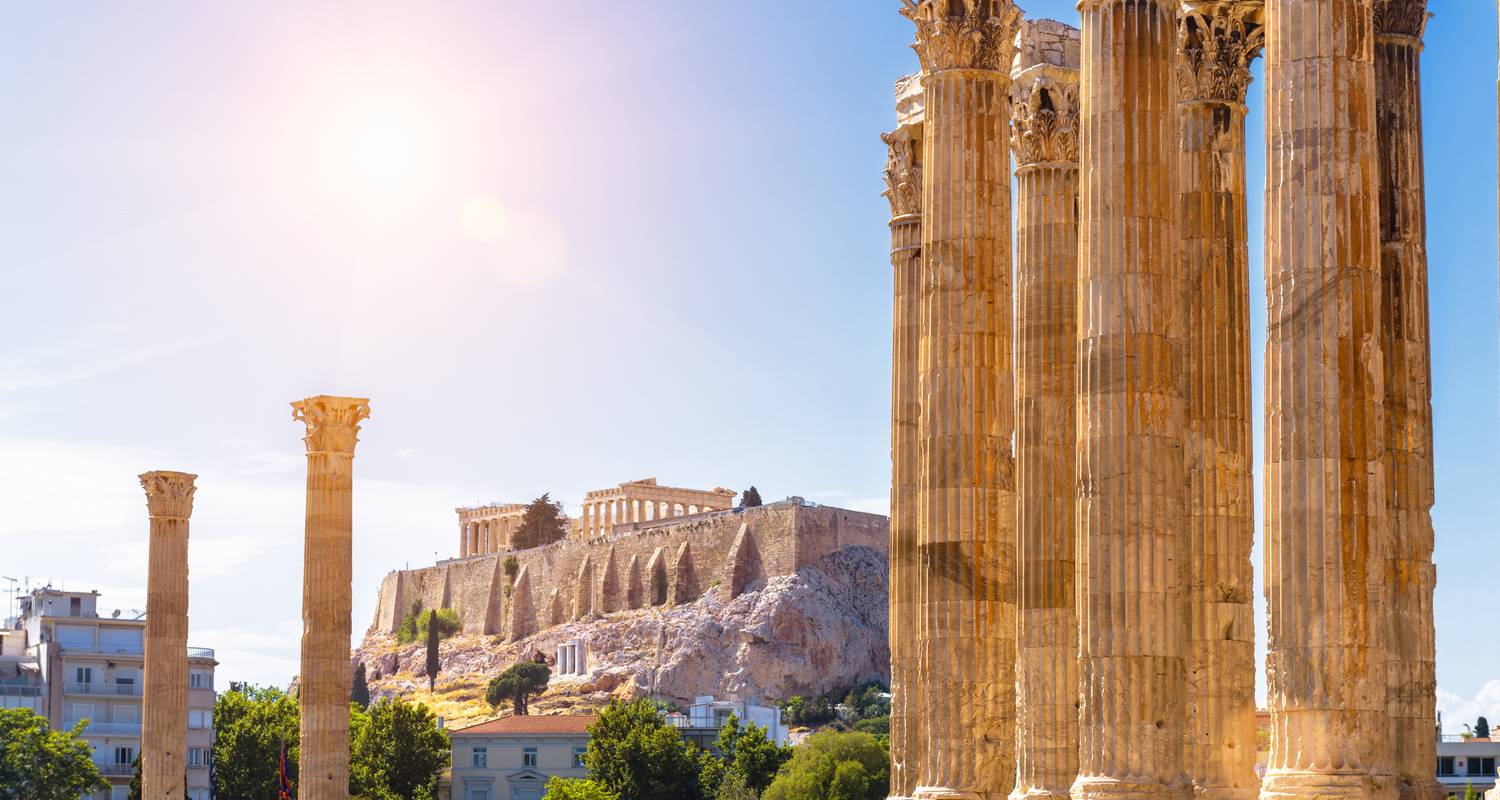
Guide to ancient Greek ruins: how to plan smarter, beat heat and crowds, and read sites fast. Plan the whole trip with Greece Tours. Must-sees from Athens, Acropolis, Delphi & Olympia to Delos & Knossos.
Every summer we end up doing the same thing in Greece: we say, “This year we’ll relax,” and then, somehow, we’re hiking up to another acropolis at 10 a.m., squinting at weathered marble, trying to picture a temple roof that’s been gone for two thousand years.
If that sounds familiar, you’re in the right place. We’ve spent a lot of time island-hopping and road-tripping through places like Athens, Delphi, Olympia, Mycenae, Epidaurus, Delos, Sounion, and Crete (Knossos included). And when you’ve walked enough ruins in real heat, with real crowds, you learn what actually helps: how sites are laid out, how to plan days so you’re not miserable, and what details to look for so the stones stop feeling “random.”
This guide to ancient Greek ruins is practical on purpose. We’ll keep the history accurate but focused on what you’ll notice on-site, plus how to visit smart, respectfully, and with context you can actually use.
Key Takeaways
- Use this guide to ancient Greek ruins to recognize core site types—acropolis, sanctuary, agora, palace, theater, and tomb—so you can read a site’s layout instead of seeing “random stones.”
- Spot the era fast by looking for clues on-site: Bronze Age cyclopean walls and tombs, Classical balance and temple proportions, and Hellenistic scale and drama layered across multiple building phases.
- Plan a smarter guide to ancient Greek ruins itinerary by clustering regions (Athens/Attica, Delphi, Peloponnese, islands, Crete, Northern Greece) and pacing yourself with one major site per day, plus a smaller stop or museum.
- Beat heat and crowds by arriving at opening time, targeting shoulder seasons, and using museums at midday as both context and air-conditioned recovery.
- Pack for footing and understanding—grippy shoes for slippery marble, sun and water essentials, plus a map and audio/guide support to make temples, theaters, and inscriptions click quickly.
- Visit ethically to protect fragile heritage by staying on marked paths, avoiding climbing or “souvenirs,” following photo rules, and supporting preservation through official tickets, museums, and licensed guides.
How Ancient Greek Ruins Are Organized (And Why It Matters)
Ancient Greek ruins aren’t just “old buildings in a field.” Most sites follow a logic, religious, civic, defensive, or ceremonial. Once we understand that logic, visits get easier: we know where to walk first, what to look at second, and why a few scattered blocks might be more important than a big pile of stones.
Major Site Types: Acropolis, Sanctuary, Agora, Palace, Theater, Tomb
Here’s the quick map of the most common site types we’ll run into across Greece:
- Acropolis: A high, defensible rock (natural fortress) that often became the city’s sacred core. The classic example is the Acropolis of Athens, a “sacred rock” layered with temples and monuments. When we’re on an acropolis, we’re usually dealing with elevation, wind, and a cluster of major buildings in a compact space.
- Sanctuary: A religious complex dedicated to a god, set up for ritual, offerings, and festivals. Delphi’s Sanctuary of Apollo is the best-known: terraces, treasuries, a temple, a theater above, and a stadium even higher.
- Agora: The civic and commercial heart, markets, politics, and daily life. At the Ancient Agora of Athens, we can still feel the “city” vibe: stoas (covered walkways), administrative buildings, and temples like the Temple of Hephaestus.
- Palace: Elite residential and administrative complexes. In Greece, this often means Bronze Age centers, especially Minoan Crete. Knossos is the headline: a multi-phase palace rebuilt more than once (earthquakes were not gentle).
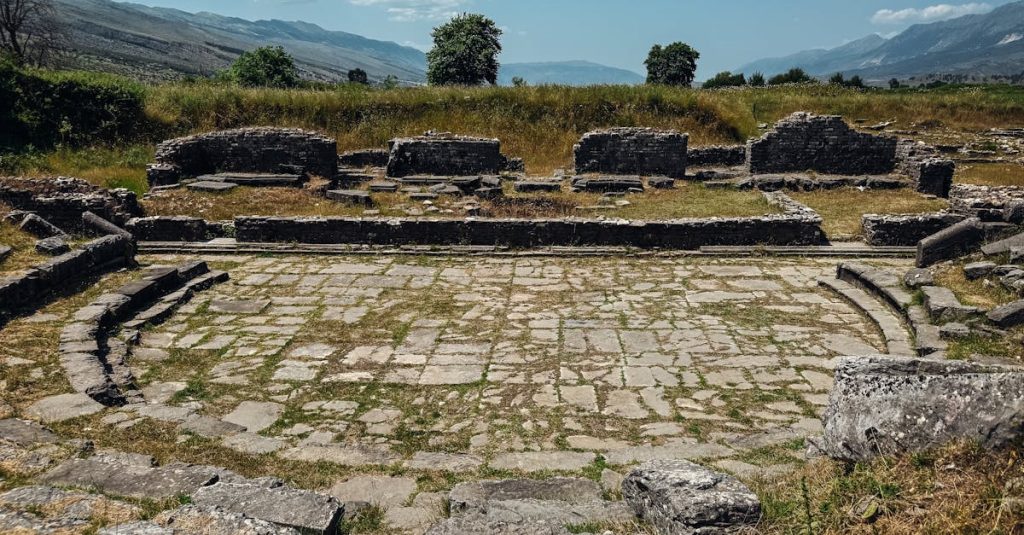
- Theater: Performance venues engineered for sightlines and acoustics. Greek theaters typically hug a hillside: they’re as much landscape design as architecture.
- Tomb: Burials range from simple graves to monumental structures. Mycenae is famous for its tholos tombs, including the so-called “Tomb of Agamemnon” (often called the Treasury of Atreus).
If we walk into a site knowing its “type,” we’ll automatically ask better questions. In a sanctuary, we look for processional routes and viewpoints. In an agora, we look for public space and building footprints. In a palace, we look for storage, workshops, and circulation, and how people moved.
Classical Vs. Bronze Age Vs. Hellenistic: What You’ll Notice On-Site
A lot of travelers say, “I can’t tell what I’m looking at.” Usually, it’s because they’re mixing periods in their head. On the ground, the differences are surprisingly visible.
- Bronze Age (roughly 1600–1100 BC in mainland ‘Mycenaean’ terms): We’ll notice massive fortification walls, heavy stonework, and a sense of “defend and control.” Mycenae is the perfect example: the Lion’s Gate, cyclopean masonry, and tomb architecture that feels engineered for permanence.
- Classical (5th–4th century BC): This is the era many people picture, refined proportions, clean lines, and the “ideal” Greek temple aesthetic. In Athens, the Parthenon (Pentelic marble glowing honey-gold in the sun) is the poster child. Classical sites often feel deliberately composed: harmony, balance, and a clear visual hierarchy.
- Hellenistic (from the late 4th century BC onward): Scale and drama start to increase, and cities become more outward-facing and monumental. We’ll often see grander urban planning, bigger sanctuaries, and architecture that feels like it’s trying to impress visitors as much as it serves locals.
And here’s the hidden trick: many famous ruins are layer-cakes. A Classical temple might sit on earlier foundations: a Hellenistic stoa might wrap around an older sacred zone. When signage mentions “phases,” it’s not academic fluff; it’s explaining why the stones don’t match.
How To Plan A Ruins Trip In Greece
Planning ruins in Greece is less about ticking boxes and more about managing heat, distance, and attention span. The best trips we’ve had weren’t the ones with the most sites; they were the ones where each site had enough time (and enough energy) to land.
Build An Itinerary By Region And Pace (City Hops Vs. Road Trip)
We usually plan in “clusters,” because Greece rewards regional focus.
- City hops (base-and-day-trip style): Athens is the obvious base. We can pair the Acropolis + museum days with easy add-ons like Cape Sounion. If we want a second base, Nafplio in the Peloponnese is a favorite for Mycenae/Epidaurus/Corinth.
- Road trip (best for depth): If we’re comfortable driving, the Peloponnese becomes a ruins buffet, Ancient Corinth, Mycenae, Epidaurus, Olympia, Mystras (medieval but worth it), with beaches and tavernas in between. Central Greece (Delphi, Thermopylae area) also works well by car.
A practical pacing rule we use:
- One major site per day (Acropolis, Delphi, Olympia, Knossos)
- Plus one small/medium site or museum if we still have energy
Ruins aren’t just walking, they’re climbing, reading, imagining. Our brains get tired before our legs admit it.
Tickets, Combined Passes, Opening Hours, And On-Site Rules
A few realities that save time (and sometimes a lot of waiting):
- Opening hours change seasonally. Summer schedules usually run longer, but shoulder seasons can surprise us with earlier closures.
- Combined tickets/passes can be worth it in high-density areas (especially Athens) if we’re hitting multiple archaeological sites within the validity window.
- Some sites have one-way routes or controlled entries (the Acropolis is a common example in peak season). That affects how we plan our “photo moments” and which entrance we use.
- Rules are stricter than they look. Expect “do not step” zones, roped-off areas, and staff reminders. This isn’t about spoiling fun; it’s about preventing erosion and accidents.
If we’re traveling with family or a mixed group, we also check:
- whether the site has accessible paths (many don’t)
- whether there’s shade/water on-site (sometimes minimal)
Best Times To Visit: Season, Time Of Day, And Crowd Strategy
If we could put one line on a billboard for ruins in Greece, it would be: go early.
- Time of day: We aim for opening time. The light is better, the heat is lower, and the site feels more like a place than a queue. Late afternoon can also work, but many sites close before golden-hour dreams come true.
- Season:
- Shoulder season (spring/fall) is the sweet spot: good temperatures, fewer crowds, and more forgiving walking.
- High summer is absolutely doable, but we plan around heat. Midday at an exposed sanctuary is a recipe for headaches.
- Crowd strategy: For headline sites (Acropolis, Delphi, Knossos), we either:
- arrive at opening, or
- Pair them with a museum visit at midday (air-conditioning is a gift), then return to outdoor walking later.
What To Bring For Comfort And Context (Heat, Sun, Footing, Maps)
The difference between “magical” and “why did we do this?” is usually one forgotten item.
For comfort:
- Real shoes (not slick sandals): marble can be polished and slippery, especially on the Acropolis.
- Sun protection: hat, sunscreen, and sunglasses. The Greek sun is not playing.
- Water and electrolytes: many sites have limited options inside.
- Light layers: wind on hilltops (Sounion, Acropolis, Delphi) surprises people.
For context:
- A simple site map (paper or downloaded). Signal isn’t always reliable.
- A short guidebook or an audio guide, or we hire a guide when the site is complex (Delphi and Knossos are top picks).
- We like to do a quick “two-minute read” before entering: who was worshipped here, what’s the main monument, what’s the site’s time period?
That tiny bit of context makes everything click faster once we’re inside.
Must-See Ancient Greek Ruins By Region
Greece is dense with ancient sites, but not all ruins deliver the same “first-time wow.” Below are the places we keep returning to, and the ones we recommend when friends ask for a guide to ancient Greek ruins that won’t waste their limited days.
Athens And Attica: The Essential Classics
Athens is unavoidable in the best way.
- The Acropolis of Athens: The Parthenon is the star, but the experience is the whole hill, with gateways, temples, and viewpoints over the modern city. In the right light, the Pentelic marble looks almost warm.
- Acropolis Museum: We consider this non-optional if we want the Acropolis to make sense. Seeing original sculptures and understanding what’s missing (and why) changes the hilltop visit.
- Ancient Agora of Athens: Our favorite “I can picture life here” site. The Temple of Hephaestus is one of the best-preserved temples in Greece, and the agora’s layout teaches us how a Greek city functioned day to day.
Attica beyond the city:
- Cape Sounion (Temple of Poseidon): A clifftop temple with sea views that feel almost theatrical. It’s an easy day trip, especially if we time it for late afternoon (with a realistic eye on closing hours).
Central Greece: Delphi And Neighboring Sacred Landscapes
Delphi is the site that converts skeptics.
- Sanctuary of Apollo: The terraces force us to climb through the story, treasuries, the temple zone, then higher up to the theater and stadium. The landscape does half the work: it feels “chosen.”
- The Tholos at Delphi: Those iconic circular ruins with a few standing columns are short, photogenic, and easy to understand even without a deep background.
- Delphi Archaeological Museum: Essential for context. Statues, offerings, and inscriptions here aren’t “extras”, they’re the missing pieces of what we’re walking through outside.
If we have a car, Central Greece also pairs well with smaller stops and viewpoints. Delphi isn’t just a site: it’s part of a sacred landscape where terrain and religion are tied together.
Peloponnese: Olympia, Mycenae, Epidaurus, And Ancient Corinth
If we want maximum ruins per mile, the Peloponnese is our playground.
- Olympia: More than a stadium photo-op. We walk the sanctuary where athletes, pilgrims, and politicians mixed, then let the museum fill in the details (and, honestly, give us shade).
- Mycenae: The mood shifts here: older, heavier, more defensive. The Lion’s Gate is a moment. The tholos tombs nearby (including the so-called Tomb of Agamemnon) show off Bronze Age engineering and elite power.
- Epidaurus: The theater is the headline, and yes, the acoustics are real. But we also pay attention to the sanctuary setting, which was a healing center, not just an entertainment venue.
- Ancient Corinth: Great for understanding geography and trade. The location explains the city’s importance immediately, and the archaeological zone is easy to navigate.
A note from experience: these sites look close on a map, but Greek roads (and summer traffic) can stretch drive times. We plan fewer stops than we think we can handle.
Islands: Delos, Sounion Day Trips, And Aegean Highlights
Islands aren’t only beaches. A few island sites are genuinely world-class.
- Delos: A UNESCO World Heritage Site and one of the most evocative places to wander if we like open-air archaeology. Sanctuaries of Apollo and Artemis, house ruins, sacred lakes, Delos feels like a whole ancient town paused mid-sentence.
- Sounion as a “near-island” feeling day trip: It’s technically Attica, but the sea-and-temple combination scratches the same itch, especially for travelers short on island days.
Across the Aegean, we’ll find smaller ruins too, often less restored, sometimes barely signposted, but memorable because we have them almost to ourselves.
Crete And The Bronze Age: Knossos And Beyond
Crete deserves its own category because it’s not just “Greek ruins”, it’s Minoan Bronze Age culture with different architecture and different vibes.
- Knossos: The palace complex is sprawling, multi-layered, and famous for reconstructions. Some visitors love that; others find it confusing. We get the most out of Knossos when we treat it like a map of a living administrative center, storage rooms, corridors, and ceremonial spaces, rather than hunting for one perfect “temple photo.”
Beyond Knossos, Crete has additional archaeological sites and excellent local museums that help us understand the Bronze Age world without guessing.
Northern Greece: Royal Tombs And Macedonian-Era Sites
Northern Greece often gets skipped, which is exactly why we like it.
This region connects to the Macedonian era and later developments, and it’s where we find royal tombs and sites with a different feel from the southern “temple circuit.” If our trip allows, adding northern stops can balance the itinerary, with fewer crowds in many cases, and a fresh architectural and historical perspective.
If we’re building a longer route, we can pair northern sites with nature and food-focused days (because ruins plus mountain tavernas is a very good combination, just saying).
What To Look For On Site (So Ruins Make Sense Fast)
The fastest way to enjoy ancient Greek ruins is to stop waiting for a “complete building.” Instead, we learn a few visual cues. Then we can walk into almost any site in Greece and orient ourselves in minutes.
Temple Layout 101: Steps, Columns, Cellas, And Orientation
Most Greek temples follow a recognizable pattern.
- Steps (stylobate and crepidoma): Even when columns are gone, the stepped platform often remains. It tells us the temple’s footprint and scale.
- Columns and order: Doric is sturdy and simple; Ionic is slimmer with scroll-like capitals. If we see scattered column drums, we look for their diameter and spacing to imagine the colonnade.
- Cella (naos): The inner chamber where the cult statue lived. We usually can’t “see” the statue anymore, but we can often see the walls or the base outlines.
- Orientation: Many temples face east-ish. When we notice orientation, we start to understand how the sun, ritual timing, and approach routes mattered.
A small habit that helps: we stand at what would’ve been the main entrance and look outward. Greek sacred architecture often frames a view of a processional path, an altar area, or the landscape beyond.
Theater And Stadium Clues: Acoustics, Sightlines, And Seating Tiers
Greek theaters are among the easiest ruins to read because their function is so clear.
- Acoustics: The bowl shape isn’t accidental. Even without testing it (and we shouldn’t disrupt tours), we can see how sound would travel.
- Sightlines: We sit (briefly) and look toward the stage area. The relationship between audience and performance space is tight, intimate, compared to later mega-venues.
- Seating tiers: Look for divisions in seating; some areas were reserved, some marked by status. At better-preserved theaters, we can spot the logic of crowd flow and entrances.
Stadiums are similar: long track, banking or seating, and ceremonial entryways. At Olympia, the setting also reminds us that these were religious festivals as much as athletic competitions.
Reading Inscriptions, Stones, And Reconstructions Without Guessing
It’s tempting to invent a story when we see a carved block. But we can do better with a few grounded techniques:
- Use signage as “anchors,” not novels. We read for: building name, date range, purpose, and any notable reconstruction.
- Look for clamp cuttings and dowel holes. These marks show how blocks were joined. They’re often the best evidence that a “pile of stones” was once a precisely engineered structure.
- Notice material changes. Different stone types or color shifts can indicate repairs, later additions, or modern restoration.
- Reconstructions: Some sites (Knossos, especially) include reconstructed elements. We treat them as interpretive tools, not literal truth. The value is in understanding layout and use, even if details are debated.
When we’re unsure, we do one simple thing: we walk to the on-site museum (if there is one) before we leave. A five-minute look at labeled fragments can save us from an hour of confident guessing.
How Greek Ruins Differ From Roman Ruins In Design And Purpose
A lot of us first meet antiquity through Roman sites, big amphitheaters, baths, and triumphal arches. Greek ruins can feel subtler at first. But once we know what Greece is “doing,” the differences become part of the fun.
Greek Sacred Architecture And City Life Vs. Roman Engineering And Spectacle
Broadly speaking (with plenty of exceptions), we can think like this:
- Greek emphasis: sacred landscapes, civic identity, proportion, and the relationship between a building and its setting. Greek temples weren’t usually designed as interior gathering spaces for large congregations. Ritual happened outside, at altars and in open precincts.
- Roman emphasis: infrastructure and engineering at scale, roads, aqueducts, massive enclosed venues, and architecture that often projects imperial power. Roman entertainment architecture also leans into spectacle: amphitheaters, enormous baths, and multi-purpose urban monuments.
So when we’re standing at Greek ruins and thinking, “Why is the interior so small?”, that’s the point. The temple is a house for the god, not a church-like hall for the crowd.
Why So Many Greek Temples Are Roofless Today
This is one of the most common on-site questions, and it’s not because the Greeks “built badly.”
Greek temples were typically roofed with wooden beams and covered with tiles. Over centuries, a few things happened:
- Earthquakes (common in Greece) destabilized structures.
- Fires and weather destroyed timber roofs and weakened masonry.
- Spoliation: later builders reused cut stone, metal clamps, and even marble blocks. If a site became a convenient quarry, the roof and upper courses were the first to go.
- Time + maintenance: roofs are maintenance-heavy. Once upkeep stops, collapse is a matter of when, not if.
The silver lining is that roofless temples make the geometry visible. We can read column spacing, wall thickness, and overall plan more easily, even if we have to imagine the shade that once existed.
Ethical Visiting And Preservation Basics
The best ruins experiences come with a responsibility: if we want these places to still feel powerful for the next visitors (and the next generation of Greeks), we have to treat them as fragile, not indestructible.
Respectful Behavior, Restricted Areas, And Photography Expectations
A few norms keep us on the right side of both etiquette and preservation:
- Stay on marked paths and respect ropes and barriers. They’re not there for decoration: they protect unstable ground, mosaics, and sensitive foundations.
- Don’t climb on walls or columns. Even if a block looks “solid,” repeated foot traffic causes erosion and micro-damage.
- No pocket souvenirs: taking a small fragment is still taking. Sites lose information when objects are removed.
- Photography: Generally, we can take photos outdoors freely, but rules may change in museums or special exhibitions. If signs say no flash or no photos, we follow them.
- Voices and behavior: These are cultural heritage sites, not theme parks. We can enjoy ourselves without turning a sanctuary into a stage.
And one more practical thing: Greek marble can be slippery. Ethical visiting also means safe visiting, because rescues and accidents damage sites, too.
How To Support Sites And Museums Without Harming Them
If we want to help, we don’t need to do anything dramatic.
- Buy legitimate tickets (and keep them if asked for checks). Revenue supports staffing and maintenance.
- Visit the site museums and local archaeological museums. They’re often where the real “storytelling” happens, and our entry helps keep them running.
- Consider a licensed guide for complex sites. A good guide reduces wandering into restricted areas and helps us see what matters without touching or moving anything.
- Support local communities: eat nearby, stay local, buy from real artisans. Sustainable tourism is preservation.
When we travel as guests, curious, careful, and informed, ruins don’t just survive. They stay meaningful.
Conclusion
Ancient Greek ruins can feel overwhelming at first because they’re not built for modern visitors; they’re fragments of sacred life, civic life, and power struggles that played out in sun, dust, and stone. But once we know the basic site types, recognize the period clues, and plan around Greek reality (heat, distance, crowds), everything becomes clearer.
If we do one thing differently on our next trip, let it be this: pick fewer sites, arrive earlier, and give each place enough quiet time to “speak.” Start with Athens and the Acropolis if it’s our first visit, then branch out by region, Delphi for the sacred landscape, the Peloponnese for density, Delos for atmosphere, and Crete for the Bronze Age world.
And when we’re standing in front of a roofless temple with only columns left, good. That’s not a disappointment. It’s an invitation to see how carefully the Greeks shaped space, light, and meaning. The stones are doing more than we think: we just need the right lens to read them.
Frequently Asked Questions About Ancient Greek Ruins
What is a guide to ancient Greek ruins supposed to help you understand on-site?
A good guide to ancient Greek ruins helps you read what you’re seeing, not memorize dates. It explains site “types” (acropolis, sanctuary, agora, palace, theater, tomb), how routes are laid out, and what clues—like temple footprints or terraces—make scattered stones feel meaningful in context.
How can I tell if I’m visiting Bronze Age, Classical, or Hellenistic Greek ruins?
Look for visible building style differences. Bronze Age sites (like Mycenae) feel defensive, with massive “cyclopean” walls and tholos tombs. Classical ruins (like the Parthenon) emphasize balance and refined temple proportions. Hellenistic ruins often feel more monumental and dramatic in scale and planning.
How do I plan a ruins itinerary in Greece without burning out?
Cluster sites by region and pace your days around heat and attention span. A reliable rule is one major site per day (Acropolis, Delphi, Olympia, Knossos), plus one smaller site or a museum if you still have energy. Places like Athens or Nafplio make day trips easier and less rushed.
What should I bring when visiting ancient Greek ruins in summer?
Prioritize footing, sun, and hydration. Wear real shoes (polished marble can be slippery), bring a hat/sunscreen/sunglasses, and carry water plus electrolytes since services can be limited. For context, download a site map and consider an audio guide or licensed guide—especially at complex sites like Delphi or Knossos.
Why are so many Greek temples roofless today?
Most temples originally had timber roofs with tiles, which are vulnerable over centuries. Earthquakes, fires, weathering, and later stone reuse (spoliation) removed upper courses and roofing first. Once maintenance stopped, collapse was inevitable. The upside is that roofless temples make plans and geometry easier to “read” on-site.
What’s the best way to choose must-see ancient Greek ruins by region?
Match regions to what you want to experience. Athens and the Acropolis are the classic starting point, especially with the Acropolis Museum. Delphi is ideal for sacred landscapes and terraces. The Peloponnese offers density (Mycenae, Epidaurus, Olympia, Corinth). For islands, Delos is a standout; for the Bronze Age, Crete’s Knossos is key.
See more in My Greece Tours: