
The tours below are full-day trips to Hydra from Athens and Nafplio.
Hydra Boat Tours And Trips: Complete Travel Guide To Exploring Hydra By Sea
When people ask me which Greek island feels made for boat lovers, I always put Hydra in my top three. The combination of a car‑free island, dramatic rocky coastline, hidden coves, and deep-blue water makes Hydra one of the most memorable places in Greece to explore by sea.
On Greece Tours, Hydra sits with its Saronic neighbours Aegina, Poros and Spetses, and each island has its own page.
I’m Yannis, your local Greek tour guy. I grew up between Milos and Santorini and I’ve spent more summers than I can count island hopping around Greece, Hydra included. In this Hydra travel guide I’ll walk you through everything you need to know about Hydra boat tours, day trips, and sailing adventures, from how to get here from Athens to the best beaches and coves you can only reach by boat.
If you’re planning to visit Hydra Greece, whether for a romantic weekend, a Hydra day trip from Athens, or a longer Hydra holiday, this guide will help you choose the right boat tours, know what to expect, and make the most of your time on the water.
Read more in Mygreecetours.
Discover Hydra Island And Its Car-Free Coastal Charm
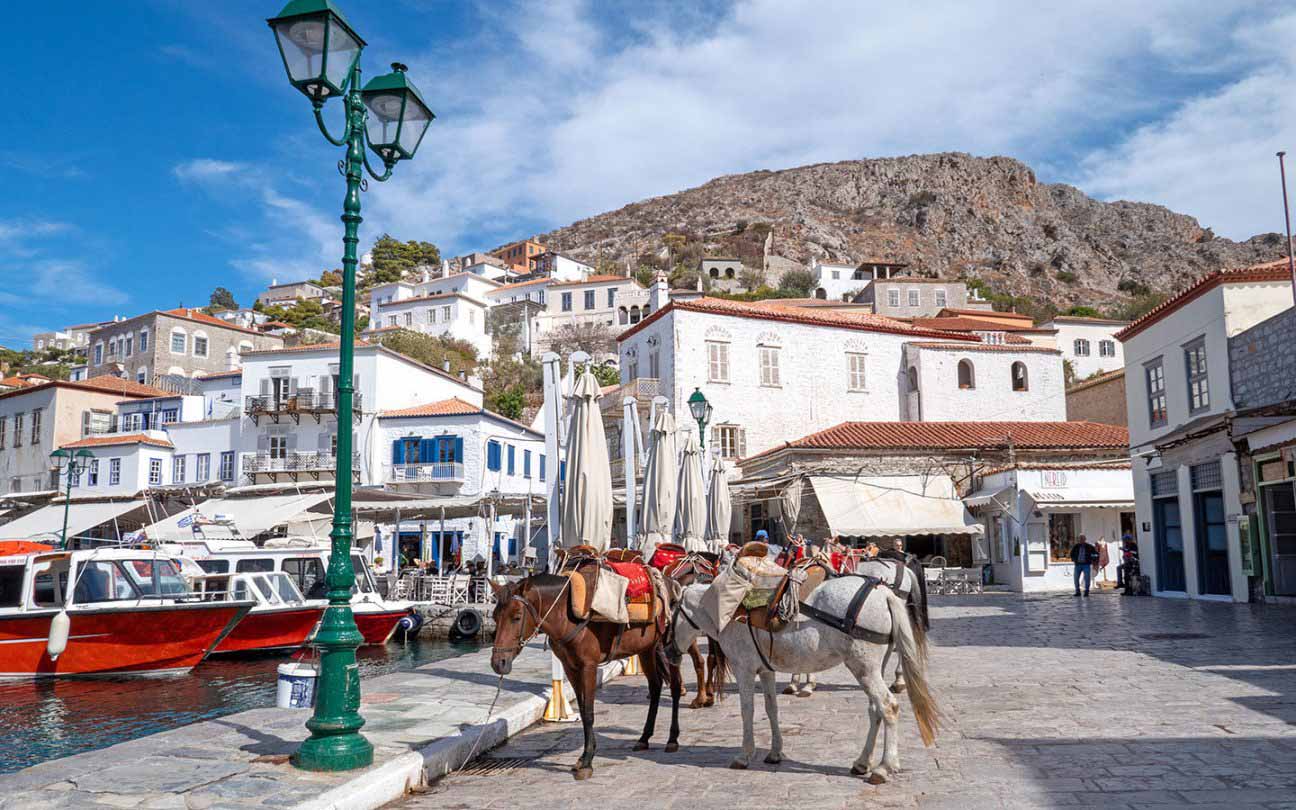
The first thing that surprises most visitors when they arrive in Hydra port is the silence.
No cars. No scooters. Just the sound of waves, the clink of yacht masts, and the occasional stubborn donkey disagreeing with its owner.
Hydra is a small island in the Saronic Gulf, close to Athens but with a completely different rhythm. Because there are no cars allowed, everything happens on foot, by donkey, or by boat. That shapes the entire experience and makes Hydra boat tours one of the most natural, relaxed ways to explore the island.
Along the coast, steep rocky hills fall straight into the sea, forming:
- Tiny natural harbors and coves
- Flat rock platforms perfect for sunbathing and cliff jumping
- Pebbly and sandy beaches that you can’t reach by road
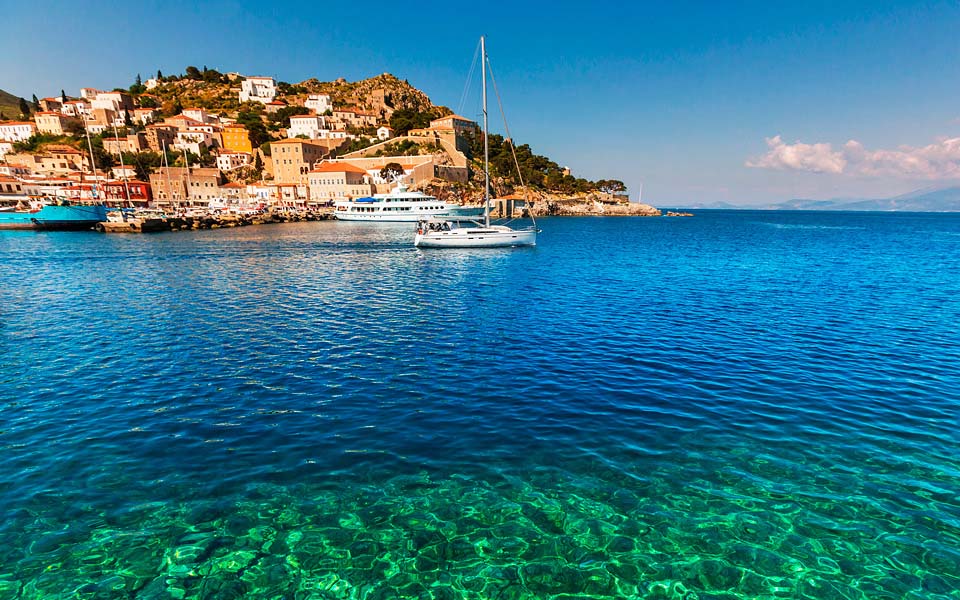
Hydra town itself curves around the horseshoe-shaped harbor. Traditional stone mansions climb the slopes behind the port, and from the water you get the best view of the island’s famous architecture. This is why, if you ask me, the best things to do in Hydra Greece always include at least one boat trip: you simply see a different island from the sea.
Because Hydra tourism focuses more on slow travel than big resorts, boat tours here feel more personal. You’re not just ticking off Hydra Greece attractions: you’re slipping into the island’s everyday life, fishermen heading out at dawn, teens diving from rocks in the afternoon, couples toasting the sunset on a small boat cruise.
If you love a mix of scenery, swimming, a bit of history, and zero stress, Hydra by sea is exactly your style.
Where is Hydra, and what is the island like?
Hydra is one of the Saronic Islands, set in the Aegean between the Myrtoan Sea and the Argolic Gulf and separated from the Peloponnese by a narrow strip of water. The island covers 49.6 km², and its municipality counted 2,070 residents in 2021.
In antiquity the island was called Hydrea, from the Greek word for water, after its natural springs, and the local Arvanite name is Nidhra. The island is now almost dry: Hydra imports water by boat from the mainland, a desalination plant opened in 2014, and households store winter rain in cisterns beneath their houses. The climate of Hydra is hot semi-arid, with an average temperature of 20.4°C and about 390 mm of rain a year.
The municipality of Hydra joins the main island with Dokos, an island of 13.5 km², and uninhabited islets, and it belongs to the Islands regional unit of Attica. Bare rocky hillsides alternate with pine-forested valleys, cypress and olive trees, wild cyclamen and poppies. A fire during the 2007 heat wave destroyed much of the pine forest east of the port, while the woods above Kamini and around Molos, Bisti and Agios Nikolaos survived.
- Hydra port: the main town, built around a crescent-shaped harbour, with about 1,900 residents at the 2011 census.
- Kamini and Vlychos: coastal hamlets west of the port.
- Mandraki: a bay and hamlet east of the port.
- Palamidas, Episkopi and Molos: the outlying hamlets; vases and coins of the Byzantine era came to light at Episkopi.
The law bans cars and motorcycles on Hydra, along with scooters, bicycles and e-bikes, so rubbish trucks are the only motor vehicles; horses, mules, donkeys and water taxis carry people and goods, and the town is compact enough to cross on foot. In 2007 a National Geographic Traveler panel of 522 experts rated Hydra the top Greek island, 11th of 111 islands worldwide, for keeping its integrity of place. Our page on how to get to Hydra sets out every ferry route, and Hydra’s donkeys have a page of their own.
How did Hydra’s fleet shape the Greek War of Independence?
Hydra turned to the sea because its ground was infertile, and Hydriot ships trading under the Russian flag made the island rich. During the revolution of 1821 Hydra gave about 150 ships and supplies, and Admiral Andreas Miaoulis used Hydriot fire ships against the Ottoman fleet.
Farmers and herders lived on Hydra in the second half of the third millennium BC, obsidian from Milos has turned up on the island, and fragments of vases, tools and the head of an idol came to light on Mount Chorissa. Herodotus records that around the 6th century BC the island belonged to Ermioni, which sold it to Samos, and Samos ceded it to Troizina. Pirate raids emptied Hydra under the Latin Empire, and in the early 16th century Arvanites from the Ermionida in the Peloponnese settled the island and built the port town.
The first school for mariners on Hydra opened in 1645, and the first Hydriot vessel on record was launched in 1657. Trade took off after the Treaty of Passarowitz in 1718: a 250-ton ship launched in 1757 outgrew the small sachtouri and latinadiko, up to 50 vessels lay in the roads of Hydra by 1771, and ten years later the island had fitted out 100. The Treaty of Küçük Kaynarca let Hydriot captains sail under the Russian flag to the Black Sea, and from 1785 they traded on their own account between southern Russia and the Italian ports of Ancona and Livorno. By the end of the 18th century Hydriot ships reached France, Spain and the Americas, and Napoleon gave the cathedral its silver chandelier in thanks for the crews that ran the British blockade with food for France.
- Andreas Miaoulis (1768–1835): merchant, shipowner and admiral of the Greek fleet.
- Lazaros Kountouriotis (1769–1852): the richest captain on Hydra and the biggest funder of the war.
- Georgios Kountouriotis (1789–1858): shipowner and later Prime Minister of Greece.
- Antonios Kriezis (1796–1865): shipowner, admiral and later Prime Minister of Greece.
- Anastasios Tsamados (1774–1825): captain of the brig Aris, killed at the Battle of Sphacteria.
In the early 19th century Hydra counted about 125 boats and 10,000 sailors, and at the outbreak of the revolution it had 16,000 inhabitants. The island did not join at once: in April 1821 Antonis Oikonomou expelled the Ottoman governor and declared for independence against the will of its leaders, who had him hunted down and killed that December. Once committed, the fleets of Hydra, Psara and Spetses took control of the eastern Aegean from the Ottoman Empire.
Independence cost Hydra its Russian-flag privileges, its shipowners missed the move to steam, and the trade passed to Piraeus, Patras and Syros. Sponge fishing carried the island until 1932, when Egypt banned fishing along its coast, and famine during the occupation of 1941 to 1943 killed an estimated eight per cent of the population. Every year in the last week of June, the Miaoulia Festival honours the admiral’s naval victories and ends with a re-enactment at sea of the burning of an Ottoman armada, followed by fireworks. Our history of Hydra follows the full story.
What do the captains’ mansions of Hydra house today?
The captains’ mansions of Hydra now hold public institutions: the Tsamados mansion houses the Maritime Academy, the Tombazis mansion belongs to the Athens School of Fine Arts, and the Lazaros Kountouriotis mansion operates as a branch of the National Museum of History.
The mansions ring the harbour as a record of the wealth that shipping brought in the 18th and 19th centuries. The Tsamados family donated their mansion, on the left as you enter the harbour, to host the Greek Maritime Academy, and a second Tsamados house on the hill went to the church as a weaving school for textiles and carpets; it now belongs to the Colloredo-Mansfeld family and is known as the Old Carpet Factory. The descendants of Lazaros Kountouriotis donated his mansion to the Historic-Ethnologic Institute of Greece.
- Furniture collections: the mansions of Lazaros and George Kountouriotis, Boudouris, Kriezis, Voulgaris, Sachinis and Miaoulis keep 18th-century island furniture.
- Cathedral: the old Monastery of the Dormition of the Virgin on the quayside, with the tomb of Lazaros Kountouriotis.
- Monasteries: six Orthodox monasteries stand on Hydra, with Profitis Ilias, founded in the 19th century, and Agia Efpraxia on the hill above the harbour.
Our pages on Hydra’s mansions, Hydra museums and Hydra monasteries cover each building in depth, and the Hydra town page covers the harbour and its lanes.
Which artists and writers made Hydra their home?
In the 1950s and 1960s Hydra became the home of an expatriate community of artists that included Norwegian novelist Axel Jensen, Australian writers Charmian Clift and George Johnston, and Canadian singer-songwriter Leonard Cohen, who wrote “Bird on the Wire” and “So Long, Marianne” there.
Cohen lived on Hydra with Marianne Ihlen, Jensen’s former wife, and the 2019 documentary Marianne & Leonard: Words of Love and Polly Samson’s 2020 novel A Theatre for Dreamers retell those years. Near Cohen’s house, the home of the painter Panayiotis Tetsis now operates as a museum. Henry Miller wrote about the island in The Colossus of Maroussi (1941), and Charmian Clift’s Peel Me a Lotus (1959) records her family’s life on Hydra.
- Films: Boy on a Dolphin (1957), Phaedra (1962), Island of Love (1963) and The Trip to Greece (2020) were shot on Hydra.
- Books: The Sea Change by Elizabeth Jane Howard (1959), Fugitive Pieces by Anne Michaels (1996) and The Riders by Tim Winton (1996) are set on or about the island.
- Galleries: collector Dakis Joannou opened the Hydra branch of the Deste Foundation in June 2009, and Wilhelmina’s Art Gallery at Mandraki shows contemporary art.
- Stage: the Hydrama Theatre and Arts Centre, active since 2001, stages free theatre and dance during the Hydra Performing Arts Festival every summer.
Hydra also hosted an annual conference on rebetiko, the Greek urban folk music, every mid-October, and Gabriela Staebler’s Island of Cats – Hydra is one of the photo books devoted to the island. Our page on Hydra’s artists tells the full story of the colony and its houses.
How To Get To Hydra And Start Your Boat Adventures
Before we talk specific Hydra boat tours, let’s get you onto the island.
Visitors based in the Argolid reach the island in a long day: the Hydra day trip from Nafplio page covers the tours, the boat and ferry routes and the swim spots.
Hydra ferry from Athens (Piraeus)
The easiest way to get to Hydra from Athens is by high-speed ferry from Piraeus port.
- Route: Piraeus – Poros – Hydra (sometimes continuing to Spetses)
- Duration: About 1.5–2 hours depending on stops
- Companies: Hellenic Seaways / Blue Star Ferries and others
- Frequency: Several departures per day in high season (fewer in winter)
Book your Hydra ferry from Athens in advance for weekends and summer, especially if you’re planning a Hydra day trip from Athens and want specific times.
When you arrive, the boat will pull directly into Hydra port, no big harbor complex, just a beautiful stone waterfront lined with cafes, small hotels, and fishing boats.
Can you bring a car to Hydra?
No, and that’s part of the charm. Hydra is car‑free. You’ll leave cars and motorbikes on the mainland (typically at Metochi on the Peloponnese or in Piraeus). On the island you’ll walk, or you’ll use:
- Sea taxis
- Organized boat tours
- Donkeys or mules (mainly for luggage and construction, not sightseeing)
Where your boat adventures begin
Almost all Hydra tours and boat trips start from the main harbor or from nearby small piers like Kamini.
When you step off the ferry:
- Look to your right and left along the harborfront, here you’ll see tour kiosks and small boats advertising Hydra sailing and boat tours.
- Ask at your accommodation: many hotels and guesthouses work with trusted skippers.
- If you’re here on a Hydra day trip from Athens, some agencies include a short boat excursion in a combined package.
Because the port and old town are compact, you can walk from your hotel to your departure point in just a few minutes. No taxis, no stress, no traffic. Just grab a hat, sunscreen, and your towel, and you’re ready to go.
Types Of Boat Tours And Trips Around Hydra
Over the years I’ve tried almost every type of Hydra boat tour available. Each one has a slightly different vibe and is better suited for different travelers, families, couples, solo travelers, or groups of friends.
Days at sea with a local fisherman, with lines in the water and the catch cooked on board, are covered on the Hydra fishing trip page.
Around-The-Island Sightseeing Cruises
If it’s your first time and you’re wondering what to see in Hydra Greece from the sea, this is the classic choice.
What to expect:
- A loop (full or partial) around Hydra’s coastline
- Commentary from the skipper about Hydra history and culture
- 1–3 swim stops at beaches or coves
- Views of monasteries, lighthouses, and remote chapels perched on cliffs
These are usually shared group tours on a medium-sized boat. You meet other travelers, get a good overview of the island, and you don’t need to plan anything.
Perfect for: First-time visitors, short stays, and anyone who wants a general Hydra sightseeing & swimming combo in one trip.
Hidden Coves And Beach-Hopping Boat Tours
Hydra doesn’t have long sandy beaches like some other Greek islands. Instead, it has:
- Rocky platforms with ladders into the sea
- Pebbly bays with crystal water
- Tiny coves where the water is so clear you almost don’t need a mask
Beach-hopping Hydra boat tours focus on these spots. You’ll usually:
- Visit 3–5 Hydra beaches and coves
- Have time to swim, snorkel, and sunbathe
- Sometimes stop at a taverna by the sea for lunch
Skippers often adjust the route based on the wind, so you get the calmest water and best visibility.
Perfect for: Swimmers, snorkelers, families, and anyone escaping crowded organized beaches.
Sunset And Romantic Cruises In Hydra
For a romantic weekend in Hydra Greece, this is the must-do.
Sunset cruises usually:
- Depart late afternoon from Hydra port
- Cruise along the west coast of the island
- Stop for a swim if the sea is calm
- Serve wine, beer, or bubbles with light snacks
You’ll watch the sun sink behind the Peloponnese while Hydra town lights slowly appear. From the water, the Hydra port and old town look like a painting, stone mansions glowing under the evening light.
Perfect for: Couples, honeymooners, proposals, or anyone who wants that classic Greek-island-sunset experience without the crowds.
Private Charters, Sailing Trips, And Yacht Cruises
If you want full flexibility, look at private Hydra sailing and boat tours.
On a private charter you can:
- Design your own itinerary with the captain
- Choose quieter swim stops away from groups
- Combine snorkeling, fishing, or even a bit of sailing
- Arrange special occasions (birthday, anniversary, small wedding group)
Boats range from simple motorboats to luxury yachts. Prices are higher than group tours, of course, but if you’re sharing with friends or family, it can be excellent value.
Perfect for: Families with kids (custom pace), groups of friends, or travelers who’ve already visited Hydra and want something new.
Hydra Day Trips Combining Nearby Islands
Thanks to Hydra’s position in the Saronic Gulf, some tours link multiple islands into one full day.
Common combos include:
- Hydra – Dokos – Spetses
- Hydra – Poros – Aegina (more often from Athens, but sometimes via private charters based in Hydra)
These day trips to Hydra Greece and nearby islands usually include:
- Island-hopping by motorboat or small yacht
- Swim stops at uninhabited Dokos island (a local favorite for pristine water)
- Free time on another island’s port town
Perfect for: Travelers on a longer Hydra holiday who want variety, or repeat visitors who’ve already seen the main Hydra beaches and want to explore the wider area.
To take the helm yourself, a Hydra boat rental hands you a small boat at the harbour, with or without a licence, for a day among the coves.
Classic Hydra Boat Tour Itineraries
To make planning easier, let me walk you through the Hydra boat tours I see most people booking, and the ones I recommend when friends message me last minute from Athens.
Half-Day Hydra Boat Tour Highlights
A half-day tour (3–4 hours) is ideal if:
- You’re on a Hydra day trip from Athens
- You want time for Hydra walking tours and museums on the same day
- You’re traveling with kids who tire easily
Typical half-day itinerary:
- Departure from Hydra port mid-morning or early afternoon
- Quick coastal cruise past Kamini and Vlychos, with views of traditional stone houses and small chapels
- First swim stop at a beach like Bisti or Mandraki
- Second stop at a cove or small bay, often with time for snorkeling
- Slow return to Hydra harbor along a different stretch of coastline
You’ll cover one side of the island, get great views of Hydra port and old town from the sea, and still have half a day free for other things to do in Hydra.
Full-Day Around-The-Island Routes
With a full-day tour (6–8 hours), you can see much more of Hydra’s wild side.
Typical full-day around-the-island trip:
- Morning departure from Hydra port
- Cruise along the northern coastline, passing monasteries and remote chapels
- Swim stops at 3–5 different spots, including:
- One family-friendly beach (like Mandraki or Bisti)
- One more remote cove with deeper water for snorkeling
- One wild bay with impressive rock formations
- Optional lunch stop at a seaside taverna or picnic on board
- Late afternoon return, sometimes timed to catch the golden hour light
You’ll get a real sense of the island’s geography, from more developed bays to untouched stretches of rock and pine.
Hydra Day Trip From Athens With Boat Excursions
If you’re short on time but don’t want to miss Hydra, a Hydra day trip from Athens that includes a mini boat tour is a smart choice.
You usually:
- Take an early morning ferry from Piraeus to Hydra
- Spend some free time exploring Hydra port and old town
- Join a 2–3 hour boat excursion, often a coastal cruise with one or two swim stops
- Return to town for a late lunch or early dinner
- Catch the afternoon or evening ferry back to Athens
This way you still experience Hydra beaches, the car-free harbor, and at least one swim in that legendary clear water, even on a tight schedule.
If you’re planning this yourself (not through a package), my tip is to book your boat tour time before your ferry tickets, so you can choose ferry departures that fit your chosen excursion.
Best Beaches, Coves, And Swimming Spots To Visit By Boat
Now to the fun part: where you’ll actually jump into the water.
Some Hydra beaches are reachable on foot, but many of the best swimming spots are easier, and more enjoyable, to reach by boat. Here are the ones I recommend most often.
Mandraki, Bisti, And Other Family-Friendly Stops
If you’re traveling with kids or you like facilities (sunbeds, tavernas), ask your skipper for these:
- Mandraki Beach
One of the more organized beaches on Hydra, in a sheltered bay. Sandy/pebbly, with sunbeds, water sports in season, and usually calm water. Great first stop on many Hydra tours.
- Bisti Beach
Pine trees behind the beach, clear shallow water, and often a relaxed, low-key vibe. Ideal for snorkeling right off the shore and for families who want easier entry into the sea.
- Vlychos & Plakes (often on walking/boat combos)
These can be reached on foot or water taxi, but many boat tours include a quick stop here. Quiet, pretty, and close to Hydra town.
These spots give you the classic Hydra holidays feeling: sun, clear sea, maybe a cold beer or fresh fish lunch right on the water.
Agios Nikolaos, Limnioniza, And Remote Wild Coves
For a wilder side of Hydra, look for tours that include:
- Agios Nikolaos Beach
A gorgeous cove on the southwest coast, usually reached by boat. Turquoise water, pebbles, and beautiful scenery all around. On the right day it looks like a travel poster.
- Limnioniza
More remote, with a wild vibe and very clear water. It’s a favorite for people who prefer less infrastructure and more nature.
- Dokos Island (nearby)
Technically not Hydra, but many Hydra boat tours include a stop here. Uninhabited, dry, and rocky, but with unbelievable water clarity.
These are places where you won’t find big crowds or loud beach bars. Just rocks, sea, and maybe a few other boats swinging gently on their anchors.
Top Snorkeling And Diving Spots Around Hydra
Hydra isn’t a hardcore diving destination like some parts of Crete, but it does have excellent visibility and beautiful underwater scenery.
Popular snorkeling and light diving areas include:
- Rocky shores around Bisti and Mandraki
- Coves near Agios Nikolaos
- Drop-offs and reefs around Dokos island (for more advanced divers)
On many Hydra snorkeling and diving-friendly tours you’ll get:
- Masks and snorkels included, or you can bring your own
- Time at spots with interesting rocks and fish
- Clear enough water that even people who “don’t usually snorkel” end up staying in longer than they planned
If you’re a certified diver, ask around Hydra port for dive centers or check in advance online. Offerings can change by season, but in recent years there have been operators organizing guided dives at selected sites.
Practical Tips For Booking Hydra Boat Tours
Let’s talk logistics so you don’t overpay, get stressed, or miss out.
Where To Find And Choose Boat Tour Operators
You’ll find Hydra boat tours mainly in three ways:
On the harborfront
As you walk around Hydra port, skippers and agencies display boards with tour options, times, and prices. This is very common and normal in Greek island ports.
Through your hotel or guesthouse
Many accommodations have favorite partners. If you tell them what you want (half-day, full-day, sunset, private charter), they can usually arrange it.
Online in advance
Useful if you’re visiting in July–August or on a popular weekend and don’t want to risk sold-out tours.
When comparing operators, I look for:
- Clear description of the route and duration
- Maximum group size (smaller groups feel more relaxed)
- What’s included (drinks, snacks, snorkeling gear)
- Reviews mentioning safety, friendliness, and flexibility
What Is Included, Typical Prices, And Extra Costs
Prices change slightly each season, but to give you a rough idea (per person for group tours):
- Short coastal/sunset cruise (1.5–2.5 hrs): usually the cheapest option
- Half-day tours (3–4 hrs): mid-range price
- Full-day tours (6–8 hrs): higher price but often best value per hour
Private charters are typically priced per boat, not per person, so if you’re 4–6 people, the cost per person can actually be quite reasonable.
Common inclusions:
- Skipper and fuel
- Soft drinks and water, sometimes beer or wine
- Simple snacks (fruit, biscuits, nuts) or light lunch on full-day tours
- Basic snorkeling gear
Possible extra costs:
- Lunch at a taverna (if not included)
- Extra fuel if you request a custom, longer route on a private charter
- Tips for the crew (optional but appreciated if you enjoyed the tour)
Safety, Weather, And Sea Conditions To Know
Hydra is usually blessed with good weather in the main season, but the sea still deserves respect.
My safety tips as your “Greek tour guy”:
- Check the wind forecast (especially the meltemi in summer). Strong north winds can make some routes uncomfortable: good skippers will adjust.
- Listen to the crew’s instructions about where to jump or not jump.
- Bring a hat, sunglasses, and high SPF sunscreen. The reflection off the water is strong.
- If you get seasick easily, choose a shorter tour or ask for a larger, more stable boat and sit toward the center.
Reputable operators will cancel or reschedule if conditions are genuinely unsafe. If someone insists on going out in clearly bad weather, I’d simply choose someone else.
Hydra Town, Walking Routes, And Things To Do Between Boat Trips
Hydra isn’t just about the sea. Between your boat tours you should absolutely explore the Hydra port and old town, museums, and coastal walking paths. This is where you feel the island’s character.
Hydra Port, Old Town, And Harborfront Promenade
The main harbor is the heart of Hydra tourism.
I like to:
- Start with a coffee at a harborfront café and watch fishing boats come and go.
- Wander the narrow lanes uphill, admiring traditional stone Hydra architecture.
- Pop into small boutiques and galleries hidden in side streets.
From the harbor, short paths lead to:
- Spilia and Hydronetta: rocky swimming spots with ladders and bars
- Kamini: a small fishing harbor with tavernas and a quieter vibe
In the evening, the promenade is perfect for a relaxed stroll before or after a Hydra boat tour sunset cruise.
Museums, Monasteries, And Historic Landmarks
For a small island, Hydra has a surprisingly rich history, especially in the Greek War of Independence.
Key spots include:
- Historical Archives Museum of Hydra
Exhibits, documents, and artifacts from Hydra’s maritime past.
- Miaoulis and Kountouriotis mansions (museums)
These historic homes of naval leaders give insight into local life in the 18th–19th centuries.
- Monastery of the Assumption of the Virgin Mary
Right above the harbor, this white monastery complex dominates the town’s skyline.
- Profitis Ilias Monastery (for hikers)
A longer walk, but the views over Hydra and the sea are spectacular on a clear day.
These sites add depth to your Hydra travel guide experience, suddenly those old stone mansions you see from the boat have a story.
Coastal Walks To Beaches And Viewpoints
One of my favorite things about Hydra is that you can combine Hydra walking tours and beaches easily without ever seeing a car.
Classic coastal walks:
- Hydra Town – Kamini – Vlychos – Plakes
A beautiful, mostly easy walk along the coast. You pass tiny chapels, fishing boats, and stone houses. You can walk out and return by water taxi or boat tour.
- Hydra Town – Spilia – Hydronetta
Short but scenic, leading to rocky swimming spots with diving platforms and great sunset views.
These Hydra beaches walking routes give you different angles of the island than you see from the boat, and you can always mix it up, walk one way, boat the other.
Best Time To Visit Hydra And Where To Stay For Boat-Based Holidays
If your main goal is to enjoy Hydra boat tours, timing and location on the island matter.
Seasons, Weather, And Sea Temperatures
Hydra has a typical Mediterranean climate, but for sea activities some months are better than others.
- May – June
One of my favorite periods. Warm but not too hot, fewer crowds, and increasingly pleasant sea temperatures (still fresh in May, comfortable by June). Ideal for hiking and boating.
- July – August
Peak season. The warmest sea temperatures, long days, and the busiest period for Hydra tourism. More boats, more energy, but also more people, book tours and hotels early.
- September – early October
Fantastic for Hydra holidays focused on swimming and relaxation. The sea is still warm from the summer, the light is softer, and the island is calmer.
- Winter and early spring
Some boats still operate, but options are limited and the sea can be cold and rough. Better for quiet walks and culture, less for full-on beach and boat days.
So, the best time to visit Hydra for boat tours is late May to early October, with June and September as sweet spots if you want good weather without peak crowds.
Areas And Hotels Ideal For Sea And Boat Lovers
Hydra isn’t huge, but where you stay can affect how easy it is to reach your boat departures.
- Hydra Town (Port Area)
Best choice if boat tours are your priority. You’ll be steps away from departure points, restaurants, and shops.
- Kamini
A short coastal walk from Hydra port, with a more local, fishing-village feel. Some smaller boats depart from here too.
- Vlychos / Plakes
Quieter, more spread out. Great sea views, but you’ll typically use water taxis or walk to the port for tours.
When looking for Hydra accommodation and hotels as a boat lover, I’d focus on:
- Short walking distance to Hydra port
- Early breakfast or takeaway options (for morning tours)
- Good soundproofing if you’re near the harborfront (it can be lively at night in high season)
Whether you’re planning a quick Hydra day trip from Athens or a full week of Hydra sailing and boat tours, staying close to the port keeps everything effortless.
Conclusions
Hydra is one of those islands where the sea isn’t just a backdrop, it’s the main stage. With no cars, dramatic rocky coastlines, and villages that seem to rise straight out of the water, exploring Hydra by boat simply makes sense.
From relaxed half-day coastal cruises and family-friendly beach-hopping tours to romantic sunset trips and private sailing charters, there’s a Hydra boat tour for every kind of traveler. Combine that with the island’s rich history, museums, monasteries, and easy coastal walking routes, and you have a destination that works beautifully for both quick getaways and longer Hydra holidays.
If you’re planning to visit Hydra Greece soon and you’re still unsure which tours to choose, start with one half-day boat trip around the coast, add a sunset cruise if you’re staying overnight, and leave at least one morning or evening to simply wander Hydra port and old town on foot.
And if you see a Greek guy on the harbor, coffee in hand, watching the boats and telling stories about Milos, Santorini, and Kleftiko, come say hi. It might just be me, happy to help you plan your next adventure on the Greek seas.
Key Takeaways
- Hydra’s car-free charm, dramatic rocky coastline, and hidden coves make it one of the best Greek islands to explore by sea, and an ideal focus for any Hydra tours boat tours and trips travel guide.
- Most Hydra boat tours start from Hydra Town’s harbor and range from short sunset cruises and half-day coastal trips to full-day around-the-island routes and private yacht or sailing charters.
- Family-friendly itineraries typically include organized beaches like Mandraki, Bisti, and Vlychos, while more adventurous Hydra boat trips head to remote coves such as Agios Nikolaos, Limnioniza, and nearby Dokos island for pristine swimming and snorkeling.
- For travelers on tight schedules, a Hydra day trip from Athens pairs a fast ferry from Piraeus with a 2–4 hour boat excursion so you can experience the island’s beaches, coves, and harbor views in a single day.
- The best time to base your Hydra travel around boat tours is late May to early October—especially June and September—staying near Hydra port or Kamini so you can easily join tours, coastal walks, and sunset cruises.
Hydra Boat Tours & Trips – Frequently Asked Questions
What are the best types of Hydra boat tours for first-time visitors?
For first-time visitors, around-the-island sightseeing cruises and half-day Hydra boat tours are ideal. They typically include a coastal loop, 1–3 swim stops at beaches like Mandraki or Bisti, and commentary about Hydra’s history, monasteries, and coves, giving you a relaxed overview of the island from the sea.
How do I get from Athens to Hydra to join boat tours?
You reach Hydra from Athens by high-speed ferry from Piraeus, usually via the Piraeus–Poros–Hydra route. The trip takes about 1.5–2 hours. Ferries run several times daily in high season, and most Hydra boat tours depart directly from the main harbor once you arrive.
When is the best time of year to visit Hydra for boat tours and swimming?
The best time for Hydra boat tours and swimming is late May to early October. June and September are sweet spots, with warm weather, pleasant sea temperatures, and fewer crowds than July–August. Winter and early spring are quieter with limited boat options and cooler, sometimes rougher, seas.
Which Hydra beaches and coves are best to visit by boat?
Popular stops on Hydra boat trips include Mandraki and Bisti for family-friendly swimming and facilities, plus Vlychos and Plakes near town. For wilder scenery, ask for Agios Nikolaos, Limnioniza, or nearby uninhabited Dokos island, which offer clear turquoise water, rocky coves, and quieter, more natural surroundings.
How much do Hydra boat tours typically cost and what’s included?
Prices vary by season and duration, but short coastal or sunset cruises are usually the cheapest, half-day tours mid-range, and full-day trips the highest yet best value per hour. Most include skipper and fuel, water and soft drinks, basic snacks, and sometimes snorkeling gear; lunch and tips are extra.
Are Hydra boat tours suitable for families with kids and non-swimmers?
Yes. Many Hydra boat tours focus on calm, sheltered beaches like Mandraki or Bisti, which have easier water entry and facilities. Skippers can choose gentler routes on windy days. Non-swimmers can stay on board, use life jackets, or enjoy shallow areas, making these trips family-friendly with proper supervision.
See more in My Greece Tours:
- Mycenae Tours: Experience Legendary Archaeological Site
- Mykonos Greece: The Absolute Guide To Survive
- Mystras Tours: Uncover the Mysteries of Mystras with a Byzantine Castle Tour
- Naxos Greece: The Ulitmate Guide & Incredible Things to Do
- Paros Greece Travel Guide: Things to Do in Paros, Explore Paros Island
- Paxi Antipaxi Tours: Explore Paxos and Antipaxos – Experience Paxos Tours & Antipaxos Tours
- Pelion Greece: The Ultimate Pelion Travel Guide