
Hydra history is remarkable for a small. Rocky island: a barren refuge that grew into one of the wealthiest and most powerful maritime nations in Greece. Then into a decisive naval force in the War of Independence. From humble beginnings as a shelter for refugees, the island built a great merchant fleet. Earned the nickname Little England for its prosperity. Produced the ships, captains and fortunes that helped win Greece its freedom. That extraordinary story is written into the stone captains’ mansions, the cannons and the museums of the town today, and understanding Hydra history transforms a visit to the island. Plan the whole trip with Greece Tours.
The arc of Hydra history runs from a poor, pirate-threatened settlement to a golden age of seafaring wealth and revolutionary heroism. Followed by a graceful decline into the preserved, elegant island of today. Its captains turned trade into a navy, its shipowners financed the revolution, and admirals such as Andreas Miaoulis became national heroes. This guide traces the story from the island’s early settlement, through its rise as a naval and commercial power and the golden age of the mansions. To its central role in the Greek War of Independence, its heroes, its later history. Where to see Hydra history for yourself in the town.
What is the history of Hydra in brief?
Hydra rose from a poor, rocky refuge to a great maritime power in the 18th century, grew rich from shipping and trade, and played a decisive role in the 1821 Greek War of Independence with its fleet and captains.
The history of Hydra is a story of dramatic rise and graceful decline. A barren, rocky island with little farmland, it was settled by people seeking refuge and turned to the sea to survive. Over the 17th and 18th centuries its inhabitants built a powerful merchant fleet and a far-reaching trading network. The island grew astonishingly wealthy and populous. Far beyond what its size suggest. This maritime prosperity laid the foundation for everything that followed and shaped the elegant town that visitors admire today.
That wealth and sea power then found their greatest purpose in the Greek War of Independence, which broke out in 1821, when Hydra threw its fleet and fortune behind the struggle and became one of the three great naval islands of the revolution. After independence the island’s commercial role faded, and it declined quietly through the later 19th century, but its stone mansions and traditions survived. Rediscovered in modern times by artists and travellers, Hydra is now a beautifully preserved monument to its own extraordinary history.
What are the origins and early history of Hydra?
Hydra was inhabited in antiquity but grew significant from the 15th century, when refugees from the mainland, including Albanian, Epirot and Cretan settlers, moved to the rocky island to escape raids and Ottoman rule.
Hydra’s earliest history reaches back to antiquity, with traces of Mycenaean presence, but for centuries the arid, rocky island saw little of note. Its significant story begins from around the 15th century, when waves of refugees settled there, seeking safety from the raids, wars and upheavals of the mainland. Around the mid-15th century and after, people came from Albania, Epirus, Crete and other regions. Moving to the island and often building inland, away from the coast, to escape the pirates and raiders who plagued the seas.
The land itself shaped their fate. Hydra is barren and mountainous, with little water and almost no farmland, so the growing population not live from agriculture. Instead, they turned to the sea, first for fishing and modest trade and increasingly for shipping and commerce. This necessity, born of a harsh, rocky home, set the island on the path that make it great, as its people became sailors, shipbuilders and merchants. The early history of Hydra is thus the story of a poor refuge that the sea transform into a power.
How did Hydra become a great naval and commercial power?
From the 17th and especially the 18th century, Hydra built a large, fast merchant fleet and a wide trading network, growing immensely rich, particularly during the Napoleonic Wars. Its prosperity and skilled shipbuilders earned it the nickname Little England.
The heart of Hydra history is its rise as a maritime power. From the 17th century, and above all through the 18th, the islanders built an ever-larger fleet of fast. Well-built merchant ships and developed a trading network that reached across the Mediterranean and beyond. Hydriot captains carried grain and goods, ran blockades and seized opportunities in wartime. The island grew steadily richer and more populous. Its wealth concentrated in the hands of powerful ship-owning families.
This prosperity peaked around the turn of the 19th century, especially during the Napoleonic Wars, when Hydriot ships profited hugely from the disrupted seas. The island became famous for its skilled shipbuilders and its wealthy, worldly captains, earning the nickname Little England for its riches and its fleet. The fortunes made in these years built the grand stone mansions that still define the town. Created the concentration of ships. Money and seafaring skill that soon be turned to the cause of Greek freedom. This golden age is the pivot of Hydra history.
What are the captains’ mansions and the golden age?
During its golden age, Hydra’s wealthy sea captains and shipowners built grand stone mansions, the archontika, around the harbour in the 18th and 19th centuries.
The most visible legacy of Hydra history is the town itself, and above all the captains’ mansions that climb the slopes around the harbour. Built in the 18th and early 19th centuries at the height of the island’s wealth, these grand stone houses. Known as archontika, were the homes of the rich sea-captain and shipowner families whose fleets made Hydra powerful. Solid, elegant and often storeys high, with fine courtyards and painted interiors, they gave the town an architectural grandeur unusual for a small Greek island.
The great families, names such as Koundouriotis, Tombazis, Voulgaris and Kriezis. Built these mansions to match their status and fortunes. Their scale speaks of a time when Hydra rivalled far larger places. Today several of the mansions can be visited or admired. One houses a branch of the Athens School of Fine Arts, linking the island’s grand past to its modern life as an artists’ haven. Walking among these houses, described more fully on the page for Hydra Town, is to walk through the golden age of Hydra history.
What was Hydra’s role in the Greek War of Independence?
Hydra was one of the three great naval islands of the Greek War of Independence, which it joined in 1821.
The proudest chapter of Hydra history is its role in the Greek War of Independence. When the revolution against Ottoman rule broke out, it was proclaimed on Hydra in 1821, and the island threw its enormous maritime resources behind the cause. Its wealthy captains converted their fleet of fast merchant ships into a navy. Contributing a large number of vessels. The island became one of the three great naval islands of the struggle, alongside Spetses and Psara, that carried the war at sea.
Hydriot ships and crews played a decisive part in the naval war. Their fast vessels and, above all, their fireships harried and destroyed far larger Ottoman fleets, breaking blockades and winning crucial victories that kept the revolution alive. The island poured not only its ships but its wealth into the struggle, financing the cause when money was desperately needed. This is why a small island holds such a central place in the Greek national story. Why its role in 1821 is the climax of Hydra history and a source of enormous pride.
Who were the heroes of Hydra’s history?
Hydra’s greatest heroes were Admiral Andreas Miaoulis, who led the Greek fleet and its devastating fireship attacks, and Lazaros Koundouriotis, the island’s richest shipowner and the largest financier of the 1821 revolution. Many other captains also distinguished themselves.
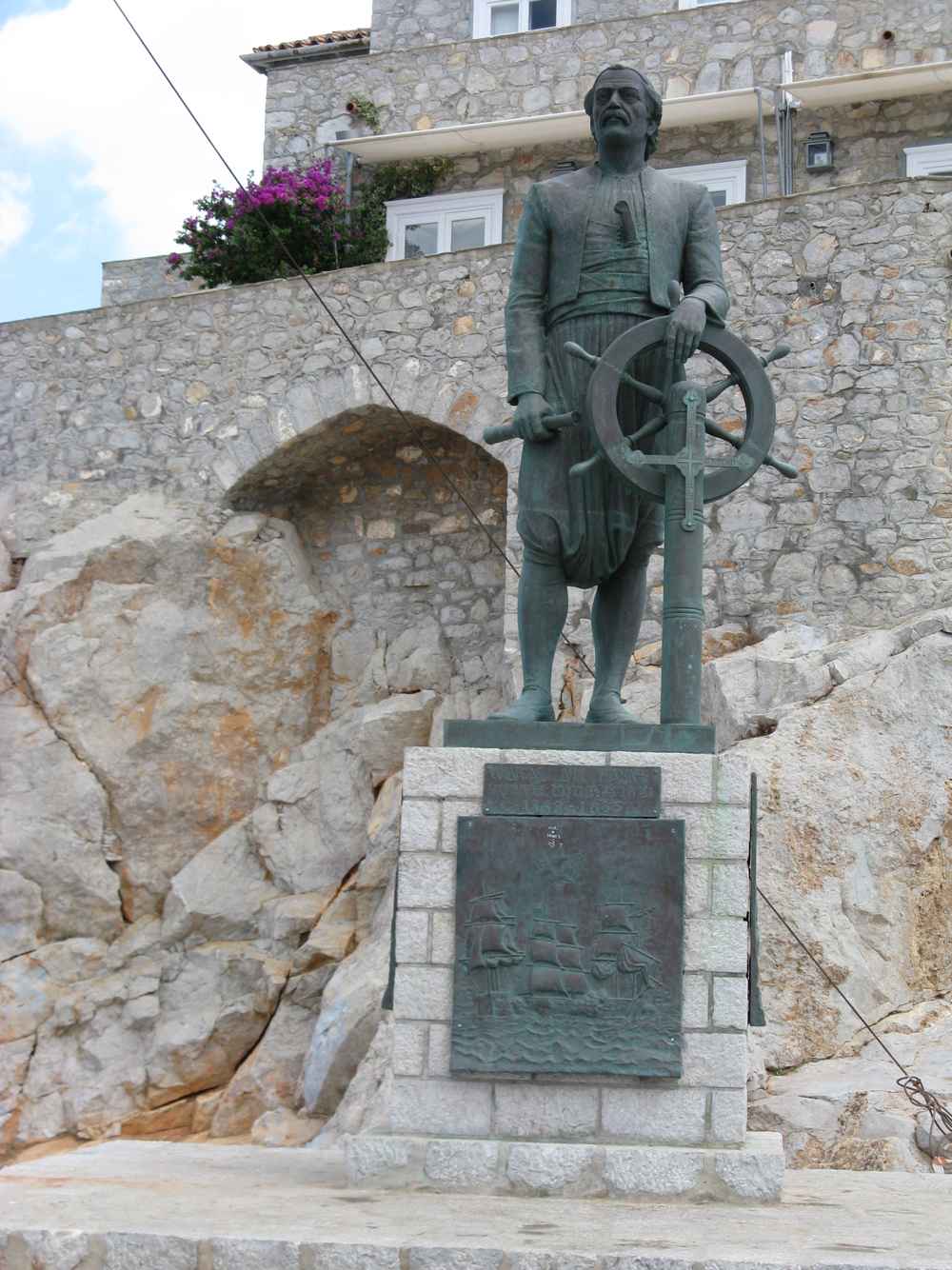
Hydra history produced some of the greatest heroes of the Greek revolution. The most famous is Admiral Andreas Miaoulis, who commanded the Greek fleet and led the fireship attacks that decimated the Ottoman navy. Becoming one of the towering figures of the war and a national hero whose statue stands proudly on the Hydra waterfront. His daring and skill at sea were central to the naval victories that made independence possible, and his name is inseparable from the island.
Alongside Miaoulis stood Lazaros Koundouriotis, the largest shipowner on Hydra and the single greatest financier of the revolution, who poured his vast fortune into the cause. The island also produced a host of other bold captains and fireship commanders, such as Sachtouris, Tsamados, Kriezis and Tombazis, who led the naval struggle. Together these men embodied the courage, wealth and seamanship of Hydra at its height. Their homes. Portraits and stories fill the mansions and museums of the town, keeping the heroic era of Hydra history vividly alive.
What happened to Hydra after independence?
Hydra’s commercial fleet and wealth declined through the later 19th century as shipping changed and the island’s role faded.
The later history of Hydra is one of quiet decline followed by rediscovery. Once independence was won, the island’s great merchant fleet and its wealth gradually faded, as the age of sail gave way to steam, trade patterns shifted and the fortunes that had built the town were no longer renewed. Through the later 19th century Hydra grew quieter and its population fell. The island slipped from the centre of Greek life into a gentle. Provincial calm, its grand mansions standing as reminders of a vanished golden age.
In more modern times, however, Hydra found a new role. Its unspoilt beauty, its stone town and its car-free calm drew artists, writers and travellers, who fell in love with the island and helped preserve it. Strict protection of its architecture and the enduring ban on vehicles have kept Hydra remarkably intact, so that its historic town survives largely as it was. Today the island lives from tourism and its artistic reputation, and its whole history, from naval power to preserved gem, is part of what makes it so special.
Where can you see Hydra’s history today?
You can see Hydra’s history in the captains’ mansions around the harbour, the Historical Archives Museum and the Lazaros Koundouriotis Historical Mansion, the cannons and Miaoulis statue on the quay, and the monasteries and churches, all telling the island’s maritime.
The history of Hydra is not confined to books; it is written all over the town. The captains’ mansions around the harbour are the grandest reminders of the golden age. Several are open as museums. Above all the Lazaros Koundouriotis Historical Mansion, restored to show how a wealthy Hydriot family lived. Down by the waterfront, the Historical Archives Museum holds documents, portraits. Weapons and ship models that trace the island’s rise and its part in the revolution, making it the best place to understand Hydra history in depth.
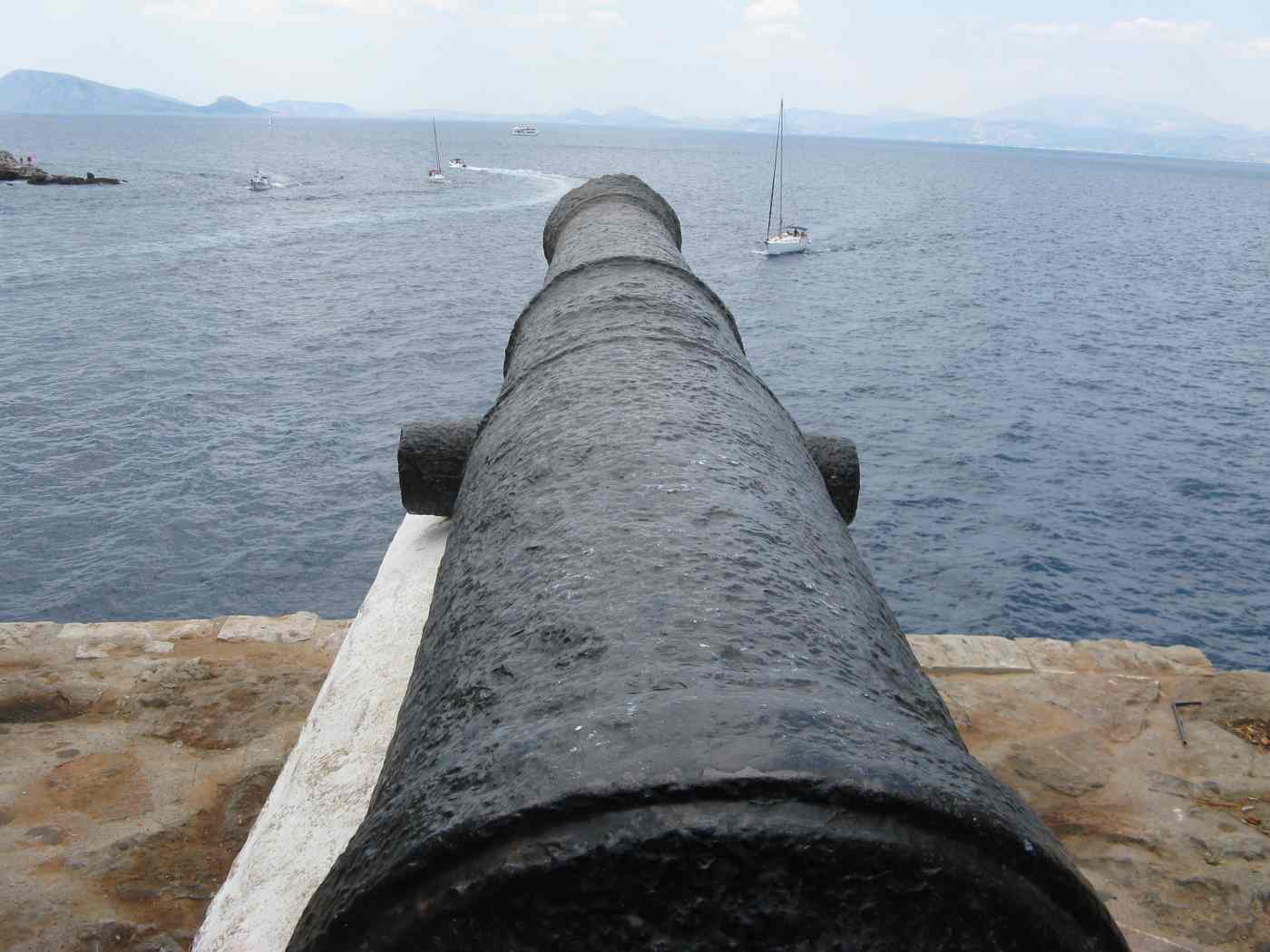
Around the town, the physical traces of the past are everywhere: the cannons that still guard the harbour mouth. The statue of Admiral Miaoulis on the quay, the cathedral and its Byzantine museum. The mountain monasteries founded in the revolutionary era. Reading the town through the lens of its history, on a walk covered further in the guide to things to do in Hydra, turns sightseeing into something deeper. To visit Hydra with its history in mind is to see far more than a pretty harbour.
Frequently Asked Questions
Why was Hydra important in the Greek War of Independence?
Hydra was important in the Greek War of Independence because it was one of the three great naval islands of the revolution. Alongside Spetses and Psara. It contributed a large fleet, skilled crews and enormous wealth to the cause. When the war broke out in 1821, the island’s wealthy captains converted their fast merchant ships into a navy. Hydriot vessels, especially their fireships, harried and destroyed far larger Ottoman fleets in decisive actions. The island also financed much of the struggle, with shipowners such as Lazaros Koundouriotis pouring their fortunes into it. This combination of ships, seamanship and money made Hydra one of the most crucial contributors to Greek independence.
Which is why it holds such a proud place in the national story.
Why was Hydra so wealthy and called Little England?
Hydra grew wealthy because, with barren land and little farming, its people turned to the sea and built a large. Fast merchant fleet and a wide trading network from the 17th and 18th centuries. The island prospered enormously, especially during the Napoleonic Wars, when its ships profited from the disrupted seas by carrying goods and running blockades. Its skilled shipbuilders, worldly captains and concentration of maritime wealth earned it the nickname Little England, a small island with an outsized fleet and fortune. This wealth built the grand stone captains’ mansions that still define the town and created the ships and money that later power the island’s decisive role in the Greek War of Independence.
Who was Andreas Miaoulis?
Andreas Miaoulis was Hydra’s greatest hero and one of the foremost admirals of the Greek War of Independence. A Hydriot ship-owner and captain, he commanded the Greek fleet and led the fireship attacks that devastated the much larger Ottoman navy. Winning crucial victories at sea that helped make Greek independence possible. His daring, skill and leadership made him a national hero, and his statue stands prominently on the Hydra waterfront today, honouring his role. Miaoulis embodies the courage and seamanship of Hydra at the height of its power. His name is inseparable from both the island’s history and the wider story of the Greek revolution.
Where can you learn about Hydra’s history on the island?
The best places to learn about Hydra’s history are its museums and mansions in the town. The Historical Archives Museum of Hydra, by the waterfront, holds documents, portraits. Weapons and ship models tracing the island’s rise as a naval power and its role in the 1821 revolution. The Lazaros Koundouriotis Historical Mansion, a grand restored captain’s house, shows how a wealthy Hydriot family lived and offers superb views. Around the town you can also see the cannons at the harbour, the statue of Admiral Miaoulis, the cathedral’s Byzantine museum, and the historic captains’ mansions. Together these sites bring the whole sweep of Hydra history vividly to life for visitors.
How did Hydra get its name and origins?
The name Hydra comes from the Greek word for water, hydor, which is something of an irony, as the island is famously dry and barren with very little fresh water. The name is thought to date from antiquity, when the island have had more springs. Beyond its ancient name and traces of Mycenaean presence, Hydra had little recorded history until the 15th century, when refugees fleeing raids and upheavals on the mainland settled the rocky island, some coming from Albania, Epirus and Crete. Because the land not support farming, these settlers turned to the sea.
It was this maritime turn, born of a harsh and waterless home, that set in motion the extraordinary rise that defines Hydra history.