
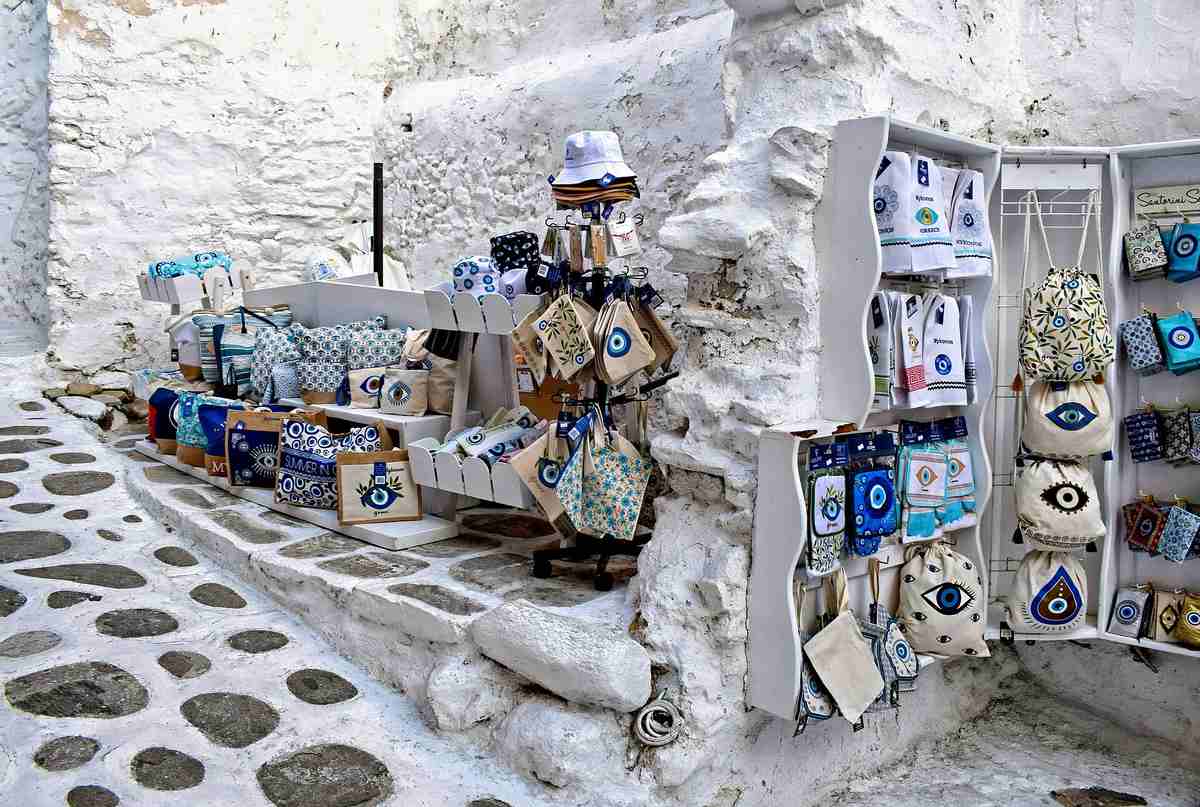
Thassos shopping rewards travellers who want to carry the island home in a jar, a bottle or a block of stone. Market stalls and family shops here sell the same olive oil, honey and wine that fill the local table, alongside marble crafts and herbal soap made from island plants. The port town of Limenas and the southern hub of Limenaria hold most of the shops, while village producers sell straight from the press or the hive. This guide sorts the best souvenirs and edible gifts, shows where to find them, and explains how to shop for the real thing. Plan it beside our wider guide to Thassos so buying fits your route.
Every product worth buying on the island traces back to its hills, forests and quarries rather than a souvenir factory. The sections below walk through edible gifts, local drinks, marble and stone crafts, and natural cosmetics, then close with practical advice on authenticity and carrying food home. Each answers one question a shopper tends to ask before filling a bag. You will learn which oil and honey to trust, where the workshops sit, and how to pack a bottle for the flight. Read it alongside our guide to Thassos tours so a morning among the shops slots neatly into your days across the island.
What can you buy as souvenirs and local products on Thassos?
Thassos souvenirs fall into four groups: edible gifts such as olive oil, honey and olives; local drinks like wine and tsipouro; marble and stone crafts; and natural cosmetics made from island herbs. Most come straight from local producers.
Souvenirs on Thassos grow out of the island’s own land rather than an import warehouse. Olive groves, pine forests, vineyards and marble quarries each supply a product that carries the island’s name. Shoppers therefore find shelves stacked with green-gold oil, dark pine honey, cured olives and clear tsipouro rather than mass-made trinkets. Blocks of white Thassian marble and bars of olive-oil soap sit beside them on the same counters. This close tie between landscape and product marks the difference between a genuine island gift and a generic Greek keepsake. Buyers who understand where each item comes from shop with far more confidence. A short walk through any village shop shows the whole range at once.
Edible gifts form the largest and most popular group by far. Bottles and tins of Thassos olive oil lead every shopping list, followed by jars of pine and thyme Thassos honey. Vacuum packs of wrinkled throumba olives, dried mountain herbs and spoon sweets round out the basket. These products keep for months, travel safely in a suitcase and taste of the exact hillside they came from. Families who press oil often keep bees and cure olives too, so a single stall can cover most of the list. Reading our guide to Thassos food and cuisine first helps a shopper know what to look for.
Local drinks give the island a second strong shopping category. Village wineries bottle red and white from their own vines, while small distillers turn the grape must into clear, warming tsipouro. Bottles of both make handsome gifts and pour a memory of the trip long after it ends. Herbal spirits and jars of honey-sweetened liqueur appear beside them on many shelves. These drinks connect the shopping bag directly to the meze table where islanders actually use them. Choosing a bottle from a named village adds a story that a supermarket brand cannot match. Buyers simply need to pack glass carefully for the journey home, a point the final section covers in detail.
Crafts and cosmetics complete the picture beyond food and drink. Workshops cut and polish the island’s famous white marble into coasters, bowls, worry beads and small sculptures. Soap makers blend local olive oil with herbs and honey into bars and creams that fill gift baskets. Potters and weavers in the hill villages add ceramics and textiles to the mix. These non-edible souvenirs suit travellers who want a keepsake that will not be eaten within a week. Each still carries a clear link to the island’s raw materials and its old trades. The sections that follow take each of these groups in turn, starting with where to find the shops themselves.
Where are the best places to shop on Thassos?
Limenas, the island’s capital and main port, holds the widest choice of shops, while Limenaria anchors the south. Village producers in Panagia, Potamia and Theologos sell oil, honey and crafts straight from the source, often cheaper than the resorts.
Limenas, the main town and port, is the natural starting point for any shopping trip. Streets behind the old harbour fill with delicatessens, gift shops and cooperative outlets selling oil, honey, olives and wine under one roof. The town sees the most visitors, so its shops carry the broadest range and stay open longest into the evening. Waterfront stalls sell herbs, soap and marble trinkets to passing strollers. Buying here suits travellers short on time who want everything gathered into a single afternoon. Prices run a little higher than the villages, yet the choice and convenience often justify the difference. A slow wander through the back lanes turns up the smaller, more characterful stores.
Limenaria, the largest town on the southern half of the island, anchors shopping away from the capital. Its long seafront and main street hold supermarkets, bakeries and gift shops that serve both locals and the nearby resorts. Nearby Potos adds a tourist-focused strip of stalls selling olive oil, honey, soap and souvenirs to beachgoers. Shoppers based in the south therefore need not drive to Limenas for the essentials. The southern towns also sit close to several producing villages inland. Combining a town shop with a village visit gives the best mix of range and authenticity. Anyone staying near Thassos wine country finds the vineyards within easy reach of these towns.
Village producers offer the most rewarding and authentic shopping on the island. Panagia and Potamia, the stone-built villages above Chrysi Ammoudia, keep shops selling honey, herbs, sweets and woven goods along their narrow lanes. Theologos, the old capital in the hills, sells local wine, tsipouro, oil and cured meats direct from the makers. Buying at the source means tasting before choosing and hearing how each product was made. Prices at a village press or hive usually undercut the resort shops as well. The drive inland also rewards shoppers with mountain scenery and quiet squares under plane trees. A morning spent this way blends sightseeing and souvenir hunting into one trip.
Roadside stalls and seasonal markets fill the gaps between the towns and villages. Producers set up tables along the ring road to sell honey, oil, olives and herbs straight from the farm. Many Greek island towns also hold a weekly open-air market where growers bring fruit, vegetables and preserves. Asking at your accommodation reveals the market day and the best local stalls near your base. These informal outlets often sell the freshest goods at the fairest prices on the island. Cash is handy here, since a farm stall rarely takes a card. Shopping this way puts money straight into the hands of the people who make the products.
Which edible gifts should you bring home from Thassos?
Olive oil and honey top every edible-gift list, joined by throumba olives, dried herbs and spoon sweets. These keep for months, survive a suitcase and taste of the island. Buying from a producer guarantees the real thing rather than a re-labelled import.
Olive oil ranks first among the island’s edible gifts by some distance. Presses in the villages sell low-acidity, green-peppery oil in tins and bottles, often straight from the current harvest. Thassos olive oil carries a strong reputation across northern Greece, so a good tin makes a gift that impresses at home. Some producers steep the oil with wild oregano, rosemary or thyme for an aromatic finishing version. Tins travel better than glass and protect the oil from light on the journey. Tasting straight from the tap at a working press shows how fresh island oil differs from a supermarket bottle. A litre or two slips easily into checked luggage.
Honey follows oil as the island’s second great edible souvenir. Beekeepers sell dark, resinous pine honey and lighter, floral thyme honey in sealed jars from roadside stalls and shops. Thassos honey draws its flavour from the pine forests and thyme-covered slopes, and many stalls let buyers taste before choosing. A sealed jar survives a suitcase without trouble and keeps for a year or more at home. Producers also fold honey into walnut and fig spoon sweets, which make a smaller, lighter gift. Choosing honey straight from the person who keeps the hives guarantees a pure, unblended product. This durability keeps honey near the top of every visitor’s shopping list.
Throumba olives and dried herbs fill out the savoury half of the basket. Growers cure the wrinkled throumba olive on the branch in dry salt, producing a meaty, rich fruit sold in vacuum packs. Bundles of dried oregano, thyme, sage and mountain tea come cheap and pack flat into any bag. Jars of pickled kritamo, the wild rock samphire, add an unusual and very local option. These products all keep well and carry a strong sense of the exact hillside they came from. Our guide to Thassos food and cuisine explains how islanders actually cook with each of them. Buying a small selection lets a traveller recreate an island meal back home.
Spoon sweets and local cheese close the list of edible gifts. Cooks simmer walnut, fig, quince and bitter orange in honey and syrup, then seal the glossy preserve in jars. The green-walnut karidaki, cooked almost black and gently bitter, ranks among the most prized. Vacuum-packed island feta and hard grating cheeses travel for a short trip, though they keep less well than a sealed jar. Village shops line their shelves with these preserves, and a single spoonful with coffee closes an island meal the traditional way. Buyers should check that every lid seals tightly before packing them among clothes. A well-chosen jar keeps the flavour of Thassos alive long after the holiday ends.
What local drinks make the best gifts from Thassos?
Village wine and tsipouro make the best drink gifts, poured straight from barrel or still by their makers. Reds and whites from local vines and clear grape spirit both bottle a memory of the meze table. Ouzo and herbal liqueurs offer lighter alternatives.
Wine gives the island its most traditional bottled gift. Village wineries around Theologos, Maries and the southern slopes press red and white from their own vines, sometimes selling straight from the barrel. Thassos wine reaches the table young and honest rather than polished, which suits the island’s rustic cooking. A bottle from a named village carries a story that a supermarket brand cannot match. Some growers welcome visitors to taste before buying, turning a purchase into a short cellar tour. Wrapping the bottle well protects it for the flight home in checked luggage. A pair of local reds makes a gift that pours the whole trip back at the dinner table.
Tsipouro stands beside wine as the island’s signature spirit gift. Distillers turn the grape must left after the wine harvest into a clear, strong spirit sold in reused bottles and proper labelled ones alike. Thassos tsipouro arrives warming and fragrant, sipped slowly with meze rather than knocked back. A bottle bought direct from a village still costs little and carries real character. Some makers flavour their tsipouro faintly with aniseed, edging it towards ouzo in style. Buyers should confirm the bottle is sealed for travel, since a loose cork spells trouble in a bag. A carafe of house tsipouro sits at the centre of every proper island evening, and a bottle brings that home.
Ouzo and herbal liqueurs offer lighter, milder alternatives to strong tsipouro. The aniseed spirit turns milky with ice and water, and a labelled island bottle makes an easy, familiar gift. Small producers also steep local herbs and honey into sweet liqueurs meant for sipping after a meal. These softer drinks suit recipients who find raw tsipouro too fierce for their taste. Bottles come in a range of sizes, so a shopper can bring several small gifts rather than one large one. Delicatessens in Limenas and Limenaria stock the widest selection under one roof. Choosing a mix of spirits and liqueurs covers different tastes among friends and family at home.
Packing bottles safely matters as much as choosing them well. Glass belongs in the middle of checked luggage, wrapped in clothes or bubble wrap and sealed inside a plastic bag. Airline rules bar spirits and wine from hand luggage above small limits, so bottles must go in the hold. Some shops sell protective sleeves or box a bottle for travel on request. Confirming that every cap and cork sits tight prevents a leak among your clothes. Buyers based in the south can stock up near Thassos wine country before the drive back to the port. A little care at the shop counter saves a ruined suitcase later on.
What marble, stone and craft souvenirs come from Thassos?
White Thassian marble, quarried on the island since antiquity, becomes coasters, bowls, worry beads and small sculptures in local workshops. Potters and weavers add ceramics and textiles. These crafts give travellers a lasting keepsake rather than an edible one.
Marble defines the island’s craft tradition more than any other material. Quarries have cut the bright white Thassian stone since antiquity, supplying temples and statues across the ancient Greek world. Workshops today shape offcuts and small blocks into coasters, bowls, mortars, worry beads and carved figures. Thassos marble takes a high polish and glows with a soft translucence that machine-cut imports lack. A marble piece makes a heavy but lasting souvenir that ties directly to the island’s oldest industry. Shops in Limenas and near the old quarries sell the widest choice. Buyers should weigh the extra luggage against the pleasure of owning a piece of genuine Thassian stone.
Stone and marble crafts suit shoppers who want a keepsake beyond food. Small mortars and pestles cut from local marble work in a real kitchen and last a lifetime. Polished coasters, cheese boards and candle holders make lighter, more portable options. Some artisans engrave ancient motifs or the island’s name into the surface for a clear souvenir touch. These pieces cost more than a jar of honey, yet they never spoil and rarely break. A marble worry-bead string, the classic Greek komboloi, packs small and carries strong local meaning. Choosing a workshop rather than a mass-market gift shop puts the purchase closer to the craftsman who made it.
Ceramics and pottery add colour to the island’s craft shelves. Potters in the hill villages throw bowls, plates and jugs glazed in blues, greens and earth tones drawn from the landscape. Hand-painted tiles showing olives, fish or village scenes make flat, packable gifts. These pieces suit a kitchen or a wall back home and survive travel when wrapped with care. Small studios sometimes let visitors watch the wheel or the kiln at work. Buying pottery direct from a maker supports a craft that competes hard against cheap imports. A single glazed bowl brings a splash of the island’s colour to a table far from the Aegean.
Textiles, jewellery and woven goods round out the craft category. Weavers produce table linen, throws and small rugs on traditional looms in the mountain villages. Jewellers set local stone and silver into rings, pendants and worry beads with island motifs. Woven baskets and bags make practical, lightweight souvenirs that fold flat into a suitcase. These handmade goods carry the mark of a specific maker rather than a factory line. Village shops and the occasional craft fair offer the best and most personal selection. Pairing a craft purchase with an edible gift gives a friend at home both a keepsake and a taste of the island at once.
Which natural cosmetics, soap and herbal products can you buy on Thassos?
Olive-oil soap, herbal creams, honey-based balms and dried mountain herbs make up the island’s natural cosmetics. Small makers blend local oil, beeswax and wild plants into bars and lotions. These light, fragrant products pack easily and make inexpensive, thoughtful gifts.
Olive-oil soap leads the island’s range of natural cosmetics. Soap makers boil local oil with lye and scent it with lavender, olive leaf or thyme, then cut and cure it into simple bars. Olive-oil soap cleans gently and suits sensitive skin, which makes it a safe gift for almost anyone. Bars weigh little, pack flat and never leak, so they slip easily into a full suitcase. Shops stack them in baskets by colour and scent, often beside the honey and herbs. Buying a handful covers several small gifts at once for a modest outlay. A bar of island soap carries the scent of Thassos into a bathroom far from Greece.
Creams, balms and oils extend the natural-cosmetics shelf beyond soap. Makers blend olive oil, beeswax and honey into hand creams, lip balms and body butters sold in small pots. Herbal salves using island sage, immortelle or St John’s wort promise soothing, traditional remedies. These products lean on the same oil and honey that fill the food shops, so their origins stay clearly local. Small pots pack neatly and pass airport liquid limits when kept under the size cap. Delicatessens and pharmacies in the main towns stock the widest choice. A pot of honey balm or olive-oil cream makes a light, practical and thoughtful souvenir.
Dried herbs and herbal teas bridge the cosmetics and food shelves neatly. Gatherers collect wild oregano, thyme, sage and Greek mountain tea from the slopes and dry them into fragrant bundles. Mountain tea, brewed as an infusion, has a long reputation across Greece as a soothing winter drink. Bundles and bags of herbs cost little, weigh almost nothing and pack completely flat. Buyers use them in the kitchen and the teapot alike, which widens their appeal as gifts. Village stalls and the honey producers usually sell herbs alongside their main goods. A bag of island oregano lifts a home kitchen long after the trip has ended.
Natural sponges and simple wellness goods complete the category. Shops near the harbours sometimes stock Aegean sea sponges, a traditional bath item gathered across the Greek islands. Beeswax candles, scented sachets and herbal pillows appear beside the soap and creams. These small, low-cost items make easy gifts for a long list of friends back home. Their light weight and sturdy packing suit a traveller already carrying oil and wine. Choosing products made from island materials keeps the purchase honest and local. A basket of soap, herbs and a candle gathers several thoughtful gifts into one affordable, easy-to-carry bundle.
How do you shop authentically and take food home safely from Thassos?
Buying direct from producers, tasting before you pay and choosing sealed jars and tins guarantees authentic Thassos goods. Pack oil, honey and bottles in checked luggage, wrapped and bagged. Cash helps at village stalls, and airline liquid limits keep spirits out of hand luggage.
Authenticity starts with buying as close to the producer as possible. Presses, hives and wineries in the villages sell their own goods, so a shopper knows exactly what the jar or bottle holds. Tasting before paying, standard at most stalls and shops, quickly separates a fresh island product from a re-labelled import. Asking how and where an item was made tells an honest maker from a reseller. Cooperative shops in Limenas also guarantee genuine local origin under one roof. Prices at the source usually undercut the resort gift shops as well. Shopping this way keeps money with the islanders and puts the real thing in your bag.
Sealed packaging matters as much as origin when choosing edible gifts. Tins and vacuum packs protect oil and olives from light and air better than open bottles. Jars of honey and spoon sweets should show a tight, unopened lid before they go in the bag. Vacuum-packed cheese travels for a short trip, though a sealed jar always keeps longer. Checking every seal at the counter prevents a leak among your clothes later. Reputable shops label their products clearly with the maker and the village. A quick look at the packaging at the point of sale saves disappointment and mess when the suitcase opens at home.
Packing for the flight decides whether the goods arrive intact. Oil, honey, wine and tsipouro all count as liquids, so they must travel in checked luggage under airline rules. Bottles and tins belong in the middle of the case, wrapped in clothes and sealed inside plastic bags against leaks. Airport security bars all but tiny liquids from hand luggage, which rules out carrying oil aboard the cabin. Small soap bars, dried herbs and marble pieces can ride in either bag without trouble. Weighing the case before leaving avoids an excess-baggage charge on a heavy load of oil and stone. A little planning keeps every purchase safe from shop counter to home kitchen.
A few practical habits make the whole shopping trip run smoothly. Carrying cash helps at village stalls and farm tables, where cards rarely work. Shopping earlier in the trip lets a traveller taste, compare and return for a favourite before leaving. Combining a village visit with a beach or sightseeing day turns errands into part of the holiday. Reading our guides to Thassos food and cuisine and the wider Thassos region first sharpens any shopping list. A well-planned run through the presses, hives and workshops leaves a bag full of honest island goods. The shopping, in the end, carries the flavour of Thassos home.
Frequently Asked Questions
What is Thassos famous for buying?
Thassos is famous for edible gifts drawn straight from its land: cold-pressed olive oil, wrinkled throumba olives, and dark pine and lighter thyme honey. Bottles of village wine and clear tsipouro carry the flavour of the local meze table home. The island is equally known for its bright white marble, quarried since antiquity and shaped into coasters, bowls and worry beads by local workshops. Natural olive-oil soap, herbal creams and dried mountain herbs offer light, inexpensive souvenirs. Most of these products come directly from the families who press the oil, keep the bees or cut the stone, which separates genuine island goods from mass-made imports. A mixed bag of oil, honey and marble sums up what the island is best known for buying.
Where is the best shopping on Thassos?
Limenas, the island’s capital and main port, offers the widest and most convenient shopping, with delicatessens, cooperative outlets and gift shops behind the old harbour. Limenaria, the largest town in the south, anchors shopping for travellers based on that half of the island, and nearby Potos adds a tourist strip of souvenir stalls. The most authentic and often cheapest shopping happens in the producing villages inland. Panagia and Potamia sell honey, herbs and woven goods along their stone lanes, while Theologos offers wine, tsipouro and oil straight from the makers. Roadside stalls around the ring road sell farm-fresh honey, oil and olives, usually for cash. Combining a town shop for range with a village visit for authenticity gives the best of both.
Is there a market on Thassos?
Greek island towns commonly hold a weekly open-air market, and Thassos follows the same pattern, with growers bringing fruit, vegetables, honey and preserves to a set spot on a set day. Because the day and location vary by town and season, the surest way to find the current market is to ask at your accommodation when you arrive. Producers also set up roadside stalls along the ring road throughout the season, selling honey, olive oil, olives and dried herbs straight from the farm. These informal stalls often offer the freshest goods at the fairest prices, though they usually take cash rather than cards. The cooperative shops and delicatessens in Limenas and Limenaria provide a reliable year-round alternative when no market is running.
Can I bring olive oil and honey home from Thassos?
Olive oil and honey both travel home easily from Thassos, provided they go in checked luggage rather than hand baggage. Airport security treats oil, honey and any liquid above small limits as banned from the cabin, so bottles, tins and jars must ride in the hold. Tins protect olive oil from light and survive knocks better than glass, which makes them the safer choice. Sealed jars of honey keep for a year or more and pack well when wrapped in clothes and bagged against leaks. Placing everything in the middle of the case guards against breakages. Travellers within the European Union face no customs limits on these foods for personal use, while those flying further afield should check their own country’s import rules.
What souvenirs are unique to Thassos?
White Thassian marble is the souvenir most unique to the island, cut from quarries worked since antiquity and shaped into coasters, bowls, mortars and worry beads found in few other places. Throumba olives, cured on the branch in dry salt and sold as Throumba Thassou, are another distinctly local product prized across northern Greece. Pine honey gathered from the island’s dense forests carries a dark, resinous character tied to that landscape. Pickled kritamo, the wild rock samphire from the sea cliffs, offers an unusual jarred souvenir. Green-walnut karidaki spoon sweet rounds out the specialities hard to find elsewhere. Choosing these over generic Greek souvenirs gives a gift that could only have come from Thassos.
When are shops open on Thassos?
Shops on Thassos keep longer hours through the busy summer season, when tourist-focused gift shops and delicatessens in Limenas, Limenaria and Potos often stay open late into the evening. Traditional Greek trading hours can include an afternoon break, with smaller shops closing for a few hours around midday before reopening in the cooler evening. Village producers, presses and hives tend to sell whenever someone is home, so a quick phone call or a word at your accommodation helps time a visit. Outside the summer months, many tourist shops reduce their hours or close, while the year-round stores in the main towns stay open for local trade. Sundays and holidays can see reduced opening, so a weekday afternoon in season is the safest bet.