
Apokries, the Greek pre-Lenten carnival, wakes Thassos from its winter quiet with three weeks of feasting, masks and satire. The season opens well before spring, filling village squares with costumed revellers and the smell of grilled meat. Households across the island mark each stage of the countdown to Lent, from the meat feasts of the second week to the cheese dishes of the last. Children parade in fancy dress through the lanes of the port and the mountain villages alike. The carnival closes on Clean Monday, when families climb the hills to fly kites and spread a table of Lenten food. Plan a late-winter escape around these customs across Thassos and watch the island celebrate before the tourists return. Plan the whole trip with Greece Tours.
Carnival on Thassos rewards travellers who want the island stripped of its summer crowds and living by its own calendar. The sections below trace the whole Apokries season: what the carnival means, when its three weeks fall, the grilling ritual of Tsiknopempti, the masked customs of the villages, the kite-flying of Clean Monday, the Lenten dishes that follow, and why late winter is a rewarding time to arrive. Each heading answers a single question with concrete detail, so the festive calendar sits beside quiet coves, pine forests and tavernas cooking for locals rather than visitors. Read on for customs, dates and dishes, then fold the celebrations into a wider island plan across Thassos.
What is the Apokries carnival season on Thassos?
Apokries is the Greek Orthodox carnival, a three-week season of feasting and masquerade that runs before Lent. Thassos celebrates it in late winter with masked parties, satirical costumes and grilled-meat feasts, ending on Clean Monday as Great Lent begins.
Apokries takes its name from the Greek words for abstaining from meat, marking the last chance to feast before the long fast of Lent. The season stretches across three weeks, each with its own foods and its own mood. Thassos keeps the tradition on a village scale, without the giant floats of the mainland carnival cities. Masquerade, dancing and satire fill the squares of Limenas, Theologos and the mountain settlements through the weeks. Tavernas stay busy with grilled meat and local wine as neighbours gather after dark. The whole island treats the carnival as a shared countdown to the discipline of Great Lent. This blend of feasting and folk custom gives Apokries its particular character on Thassos.
Carnival differs sharply from the summer Thassos festivals that fill the warm months with music. Summer panigyria honour patron saints outdoors, drawing visitors to open-air dancing under the stars. Apokries instead belongs to the cold season, when the island lives for itself rather than for tourism. Costumes, satire and indoor feasting replace the beach concerts and coastal fairs of the summer. The carnival gathers families and neighbours who know one another, not the holiday crowds of high season. Both traditions grow from the same rhythm of the Greek year, yet their settings stand apart. Grasping this contrast helps a traveller pick the season that suits the Greece they want to find.
Apokries also leads directly into the solemn weeks that end with Easter in Thassos, the island’s greatest religious festival. Carnival marks the joyful prelude, all feasting and laughter, before the fasting of Great Lent sets in. Clean Monday divides the two, closing the revels and opening the forty-day road to Pascha. The mood swings from masks and grilled meat to quiet churches and Lenten tables within a single day. Travellers who follow the calendar from carnival to Easter watch the island move from celebration to devotion. The two seasons frame the whole of the Thassian spring between them. Understanding their link makes the winter carnival easier to place within the island’s yearly round.
Community lies at the heart of the Thassos carnival, which depends on villagers rather than on staged spectacle. Families sew their own costumes, and children plan their disguises for weeks before the parades. Local clubs and councils organise dances in the village halls and squares through the season. Returning islanders come home from Kavala and Thessaloniki to share the feasting with relatives. Tavernas and bakeries turn the customs into daily life, from grilled meat to carnival sweets. The celebration owes nothing to tourism and everything to the island’s own memory of the season. This rootedness in village life keeps Apokries genuine on Thassos, a world away from any commercial parade.
When does the Thassos carnival take place?
Apokries falls in late winter, across the three weeks before Clean Monday and the start of Great Lent. The dates move each year with the Orthodox Easter calendar, usually landing between February and early March, and the carnival always ends on Cheesefare Sunday.
Apokries unfolds over three distinct weeks, each carrying its own name and its own table. The first week, called Profoni or the announcement, opens the season and signals the feasting to come. The second is the meat week, Kreatini, when households eat freely and grilling reaches its height. The third and final week, Tyrini or cheese week, allows dairy but sets meat aside before the fast. Cheesefare Sunday closes the carnival on the eve of Clean Monday and Great Lent. The rhythm walks the island gently from indulgence toward restraint over twenty-one days. This three-week frame gives the Thassos carnival its shape and its steady countdown to Lent.
Dates for the carnival shift every year, tied to the movable feast of Orthodox Easter. Clean Monday falls seven weeks before Easter Sunday, and the three carnival weeks run back from there. The Greek Church follows its own reckoning, so the season usually opens in February and ends in late February or early March. Cold, short days and bare hillsides frame the celebrations, far from the island’s summer face. Travellers planning a carnival trip do well to confirm the Orthodox dates before booking flights or ferries. Ferries from Kavala and Keramoti keep to the thinner winter timetable during these weeks. Checking the calendar first remains the surest step in timing a visit to the Thassos carnival.
Tsiknopempti, or Smoky Thursday, marks the loudest single day of the carnival on Thassos. The day falls in the middle of the meat week, eleven days before Clean Monday. Grilled meat scents the air of every village as households and tavernas fire up their charcoal. The name comes from tsikna, the smell of meat searing over the coals, which hangs over the island. Friends gather around the grill through the afternoon and into the night for the year’s great barbecue. The port town of Limenas fills with the smoke and clamour of the feast. This mid-carnival Thursday stands as the culinary peak of the whole Apokries season.
Cheese week brings the carnival to its close in a gentler key than the meat feasts before it. Dairy, eggs and cheese carry the table now, while meat leaves the plate ahead of Lent. Bakeries turn out cheese pies and sweet fried dough as the villages ready for the fast. Costume dances and masked parties reach their climax across the final weekend of the season. Cheesefare Sunday, the last day before Clean Monday, ends the revels with a family feast. The island falls quiet at midnight as Great Lent begins and the fasting takes hold. This tapering final week lets Thassos step from carnival into Lent without a jarring break.
What is Tsiknopempti (Smoky Thursday) like on Thassos?
Tsiknopempti is the Thursday of carnival meat week, when Thassos grills meat in great quantity. Households, tavernas and friends fire up charcoal from the afternoon, and the smell of searing meat, the tsikna, drifts through the villages until late into the night.
Tsiknopempti turns the whole of Thassos into an open-air grill for a single winter day. Charcoal fires light in courtyards, on balconies and outside tavernas from the early afternoon. Pork chops, sausages, souvlaki and lamb hiss over the coals across the island. The smell of grilling meat, the tsikna that names the day, settles over the port and the villages. Neighbours share cuts across garden fences and pull passing friends to the fire. The custom marks a last great meat feast in the middle of the carnival’s meat week. This island-wide barbecue makes Smoky Thursday the most sociable and aromatic day of the Thassos carnival.
Tavernas across Thassos build their whole evening around the grill on Smoky Thursday. Tables fill early, and owners keep the charcoal glowing for hours to feed a steady stream of guests. Groups of friends, workmates and families book ahead to claim their place at the feast. Wine, tsipouro and the island’s own ouzo flow alongside plate after plate of grilled meat. The dishes of Thassos food and cuisine take a smoky, carnival turn on this one night. Music and laughter carry from the tavernas out into the cold streets until late. This shared night of grilling binds the island community in the depth of winter.
Tsikna gives Smoky Thursday both its name and its purpose in the carnival calendar. The word describes the scent of fat and meat charring over hot coals, unmistakable across a village. Greek custom sets this Thursday as the signal to eat meat freely before the coming fast. The day falls in the second carnival week, the meat week that gives the season its indulgence. Farmers and butchers on Thassos prepare for the surge in demand well ahead of the date. The ritual reaches back through generations as a marker of the turning year. This deep-rooted grilling day ties the modern feast to the old rhythm of Lent and carnival.
Visitors find Tsiknopempti one of the easiest carnival customs to join on Thassos. Tavernas welcome travellers to the grill, and a booked table secures a seat at the feast. The smell of the charcoal leads a newcomer straight to the heart of the celebration. Warm layers help, since the grilling spills outdoors into the cold of a Thassian winter night. Groups of locals fold strangers into their tables with the island’s habitual welcome. A share of grilled meat, a glass of tsipouro and a round of songs make the evening. This open, food-driven Thursday offers travellers a genuine taste of carnival on the island.
How do Thassos villages celebrate carnival with masks and costumes?
Thassos villages mark carnival with masquerade, costume parades and satirical disguises. Adults and children dress up, mock public figures and roam the squares of Limenas and the mountain villages, while local clubs stage dances and children’s fancy-dress competitions.
Masquerade sits at the centre of the carnival across the villages of Thassos. Revellers hide behind masks and costumes, free for a season to tease, joke and overturn the usual order. Disguises range from traditional folk figures to sharp caricatures of politicians and public life. Groups roam from square to taverna, teasing friends who struggle to name the faces behind the masks. Satire runs through the custom, letting the island laugh at authority under cover of the costume. Music and dancing follow the masked bands wherever they gather through the evening. This licence to mock and play defines the spirit of Apokries in the Thassian villages.
Children carry the carnival with as much energy as their elders across Thassos. Schools and family homes prepare fancy-dress costumes for weeks ahead of the parades. Small pirates, superheroes and folk characters fill the streets of the port and the villages. Local councils stage children’s costume competitions in the squares and halls during the season. Parents follow with cameras as the young paraders show off their disguises to the crowd. Sweets and streamers pass from hand to hand along the route of the march. This children’s carnival keeps the custom alive and passes it down to the island’s next generation.
Village halls and squares host the carnival dances that anchor the season on Thassos. Cultural clubs organise costume balls with live music, food and prizes for the finest disguise. The old capital of Theologos village keeps an especially traditional carnival in its stone-built lanes. Circle dances draw villagers of every age into the same steps their grandparents danced. Clarinet, bouzouki and drum drive the music late into the cold winter nights. Costumed revellers move between the halls, the squares and the tavernas as the evening builds. These organised village dances give the Thassos carnival its structure and its communal heart.
Satire threads through the Thassian carnival as it does across the wider Greek north. Costumes lampoon the events and figures of the year, turning grievances into laughter for a night. Regional carnival traditions of Macedonia and Thrace, strong in nearby Kavala and Xanthi, frame the island’s own customs. Travellers can pair the Thassos celebrations with a mainland carnival reached by the short ferry crossing. Bell-wearers and animal-hide disguises survive in the folk carnivals of the surrounding region. The island keeps its version intimate, built around its villages rather than grand parades. This satirical, folk-rooted masquerade sets the tone of Apokries from the port to the mountain squares.
What happens on Clean Monday (Kathara Deftera) on Thassos?
Clean Monday is the first day of Great Lent and the end of carnival, a public holiday across Greece. Families on Thassos head outdoors to fly kites on the hills and beaches, then share a Lenten spread of seafood, olives, halva and lagana bread.
Clean Monday opens Great Lent and draws a firm line under the carnival season on Thassos. The day marks the start of the forty-day fast that leads to Orthodox Easter. Its name speaks of cleansing, a fresh beginning after the indulgence of the three carnival weeks. Greeks treat it as a national holiday, so shops close and families spend the day together outdoors. Mild breaks in the winter weather often coax islanders onto the beaches and hilltops. The mood turns calm and hopeful, trading the noise of carnival for the quiet of the fast. This turning point gives Clean Monday its distinct place between feasting and Lent on Thassos.
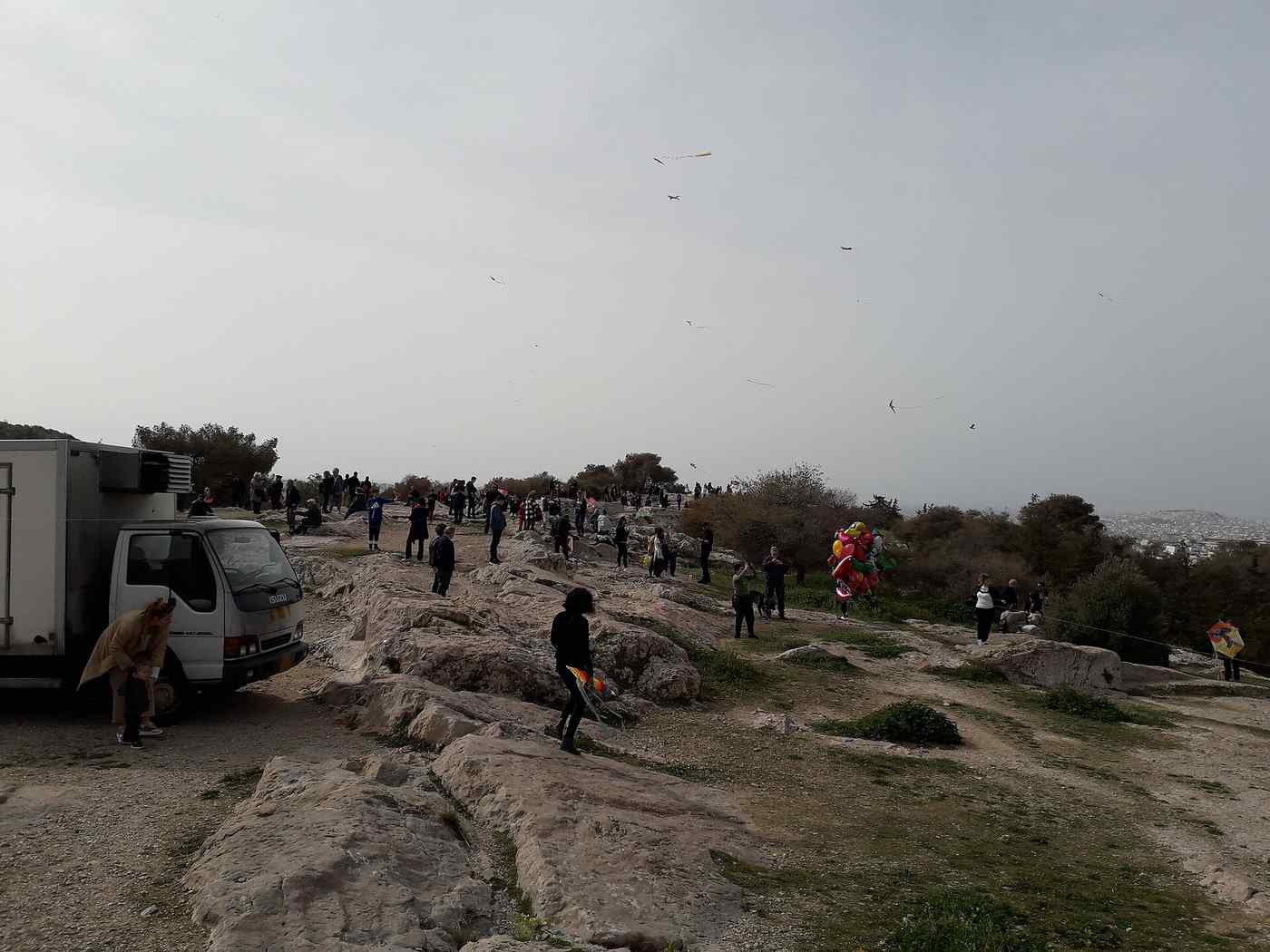
Kite-flying crowns Clean Monday for families across Thassos and the whole of Greece. Parents and children take to open ground on the hills and the empty winter beaches. Bright paper kites climb into the fresh late-winter wind above the coast and the pine slopes. The custom carries an old meaning, lifting the spirit toward heaven at the start of the fast. Shops stock kites for weeks ahead, and homemade versions still appear in the villages. Groups picnic on the grass with their Lenten food while the kites tug overhead. This shared afternoon of kite-flying gives Clean Monday its bright, open-air character on the island.
Beaches and hilltops fill with picnicking families on Clean Monday across Thassos. Coastal spots near Limenas and the sandy bays of the west coast draw groups with baskets of food. Village clubs sometimes lay on open feasts with Lenten dishes, music and dancing for all comers. Warm layers matter, since the sun of the day gives way to a cold island evening. Kites, footballs and long walks fill the hours between the courses of the meal. The empty winter beaches take on a rare, festive life for this single holiday. This outdoor gathering turns Clean Monday into one of the island’s most sociable winter days.
Lent begins in earnest once the kites come down and Clean Monday ends on Thassos. The strict fast of the forty days sets in, reshaping the island’s tables until Easter. Meat, dairy and rich foods leave the plate for the plain dishes of the Orthodox fast. Churches shift to the long, quiet services that lead toward the drama of Easter in Thassos. The carnival, so loud only a day before, gives way to devotion and restraint. Villagers settle into the rhythm of the fast that will end at the midnight Resurrection. This clean break from feasting to fasting closes the Apokries season on the island.
What foods define the carnival and Clean Monday on Thassos?
Carnival food on Thassos moves from meat to cheese to fasting fare. Meat week centres on grilled pork and sausages, cheese week on pies and dairy, and Clean Monday on nistisima: lagana flatbread, taramosalata, olives, halva, beans and seafood such as octopus and squid.
Meat dominates the carnival table through the second week of Apokries on Thassos. Grilled pork, sausages, souvlaki and slow-roasted cuts crowd the plates of Smoky Thursday. Households empty their larders of meat before the coming weeks of restraint. Hearty stews and roasts appear at family tables through the whole of the meat week. Local wine and tsipouro wash down the rich dishes at gatherings across the island. Butchers and tavernas prepare for the surge that peaks on Tsiknopempti night. This week of meat gives the carnival its indulgent core before the gentler cheese week arrives.
Cheese and dairy carry the table through the third and final carnival week on Thassos. Cheese pies, tyropita and creamy pasta dishes replace the grilled meat of the week before. Eggs, milk and the island’s own cheeses fill the plates as meat leaves the menu. Bakeries sell sweet fried dough and honeyed treats for the closing days of the season. The cheese week eases the island toward the coming fast without a sudden change. Families gather for a last dairy feast on Cheesefare Sunday before Clean Monday. This softer week bridges the meat feasts of carnival and the strict Lenten table ahead.
Nistisima, the Lenten foods, define the Clean Monday table across Thassos. Lagana, a flat unleavened bread baked only on this day, anchors the spread. Taramosalata, the pink fish-roe dip, sits beside olives, pickles and dolmades on the cloth. Seafood without red blood is allowed, so octopus, squid, shrimp and mussels appear in abundance. Gigantes beans, fava and stuffed vine leaves round out the fasting meal. Halva, the semolina or tahini sweet, closes the table as the traditional Clean Monday dessert. This spread of nistisima shows that the fast opens with a feast of its own on the island.
Local produce shapes the carnival and Lenten tables alike across Thassos. Island honey, olive oil and cheeses feature through the season, while tsipouro warms the winter gatherings. The dishes of Thassos food and cuisine shift with the calendar from meat to cheese to the fast. Tavernas adjust their menus week by week to follow the customs of Apokries. Bakeries turn out lagana and halva as Clean Monday nears, selling out through the morning. Home cooks pass their carnival and Lenten recipes down within the island’s families. This seasonal round of food ties the Thassos carnival tightly to the produce of the island.
Why visit Thassos during the carnival season?
Carnival offers a rare look at Thassos in winter, free of tourists and living by local custom. Travellers join grilled-meat feasts, masked village dances and Clean Monday kite-flying, enjoy low rates and empty beaches, and meet the island’s genuine community.
Winter strips Thassos back to its local self during the carnival season. Beaches lie empty, and the resorts of the summer stand shuttered and quiet along the coast. Villages move at their own pace, given over to islanders rather than to visitors. Carnival fills this calm with costume, grilled meat and dance, all staged for the community. Travellers who arrive now meet the island’s real winter life, not a tourist performance. Prices sit far below the summer peak, and rooms rarely need booking ahead. This genuine, low-season character rewards the traveller who seeks Thassos beyond its beaches.
Carnival hands the winter visitor a full calendar of custom to share on Thassos. Smoky Thursday brings the island-wide grill, open to any traveller with a booked taverna table. Masked dances and children’s parades fill the village squares through the three-week season. Clean Monday closes the carnival with kite-flying and a Lenten feast on the hills and beaches. Each event welcomes newcomers, folding them into the island’s own celebration without ceremony. The customs reveal a Greece far removed from the sunbeds and cocktails of high summer. This packed winter programme gives a trip real depth beyond the scenery alone.
Late winter shows Thassos in a green, quiet guise unknown to summer visitors. Rain leaves the pine forests lush and the mountains bright under passing clouds. Cool, short days suit walking the trails and the villages between the carnival events. Anyone weighing the seasons can compare them in our guide to the best time to visit Thassos. Warm layers handle the cold evenings, while bright spells open the hills for kite-flying and picnics. The sea stays too cold for swimming, so the trip trades beaches for culture and calm. This off-season face of the island gives carnival travellers a Thassos the crowds never see.
Planning a carnival trip calls for care around the winter timetable and the movable dates. Ferries from Kavala and Keramoti run on the thinner winter schedule, so checking sailings ahead pays off. Some hotels and tavernas close for the low season, making an operating base worth booking early. Confirming the Orthodox dates fixes Tsiknopempti and Clean Monday on the traveller’s own calendar. Warm, layered clothing handles the cold days and the outdoor feasting of the season. A car helps in reaching the mountain villages where the carnival keeps its oldest form. Careful timing turns a quiet winter break into a front-row seat at the Thassos carnival.
Frequently Asked Questions
When is Apokries celebrated in Greece?
Apokries, the Greek carnival, runs for three weeks and ends on Clean Monday, the first day of Great Lent. Its dates move each year with the Orthodox Easter calendar, since Clean Monday falls seven weeks before Easter Sunday. The season usually opens in February and closes in late February or early March, though it can shift within those months. The first week is Profoni, the announcement; the second is the meat week with Smoky Thursday at its centre; the third is cheese week, ending on Cheesefare Sunday. Greeks across the country and on Thassos celebrate the whole stretch with feasting, masquerade and satire. Travellers planning a carnival trip do well to confirm the Orthodox dates in advance, since they rarely match the fixed carnival calendars of western Europe.
What does the word Apokries mean?
Apokries comes from the Greek words apo, meaning away from, and kreas, meaning meat, so the name signals the giving up of meat before Lent. The word names the whole pre-Lenten carnival season, the last stretch of feasting before the forty-day fast. Greeks also call the celebration Karnavali, borrowed from the Italian carnival tradition. The singular form, Apokria, refers to the carnival itself, while the plural covers the run of festive weeks. The season builds toward Clean Monday, when the fasting of Great Lent begins in earnest. Meat leaves the table during the final cheese week, honouring the meaning built into the name. On Thassos, as across Greece, the word carries the whole spirit of masquerade, grilling and satire that fills the weeks before the fast.
What is Tsiknopempti?
Tsiknopempti, or Smoky Thursday, is the day of the carnival meat week when Greeks grill meat in great quantity. The name joins tsikna, the smell of meat charring over coals, with Pempti, the Greek word for Thursday. The day falls eleven days before Clean Monday, in the middle of the second carnival week. Households, tavernas and groups of friends light charcoal from the afternoon and grill pork, sausages and lamb into the night. The custom marks a last great meat feast before the restraint of the coming weeks. On Thassos the smell of the grill drifts across the port of Limenas and the mountain villages alike. Booking a taverna table lets a traveller share the island’s loudest and most aromatic carnival day with the locals.
What is Clean Monday (Kathara Deftera)?
Clean Monday, Kathara Deftera in Greek, is the first day of Great Lent and the close of the carnival season. The day falls seven weeks before Orthodox Easter and ranks as a national holiday across Greece. Its name speaks of a clean start, washing away the indulgence of the three carnival weeks before the fast. Families spend the holiday outdoors, flying kites on the hills and beaches and picnicking on Lenten food. The table carries nistisima, the fasting dishes: lagana bread, taramosalata, olives, halva and shellfish without red blood. Meat and dairy leave the menu for the forty days that lead to Easter. On Thassos, Clean Monday brings families to the winter beaches and hilltops for one of the island’s brightest cold-season days.
Why do Greeks fly kites on Clean Monday?
Kite-flying on Clean Monday is one of the most cherished customs of the Greek calendar, marking the start of Great Lent. The tradition carries a spiritual meaning, sending the kite and the spirit upward toward heaven at the opening of the fast. Families gather on open hills and empty winter beaches to launch bright paper kites into the late-winter wind. The custom pairs with a Lenten picnic of lagana, halva, olives and seafood spread on the ground. Children and adults share the flying, and villages sometimes hold informal contests for height and staying power. The open-air ritual turns a solemn religious date into a bright, communal holiday. On Thassos the coast and the pine-clad hills give families wide, breezy ground for the Clean Monday kites.
Is Thassos a good place to experience Greek carnival?
Thassos offers a genuine, village-scale Greek carnival, well suited to travellers who want custom over spectacle. The island keeps Apokries intimate, built around the squares of Limenas, Theologos and the mountain villages rather than giant parades. Smoky Thursday fills the tavernas with grilled meat, and masked dances run through the three-week season. Clean Monday closes the carnival with kite-flying and Lenten feasting on the empty winter beaches. Prices sit well below the summer peak, and the island lives its real off-season life during these weeks. Nearby mainland carnivals in Kavala and Xanthi lie a short ferry crossing away for travellers who want more. Anyone seeking an authentic Greek carnival, free of crowds and staged shows, finds a rewarding one on Thassos.