
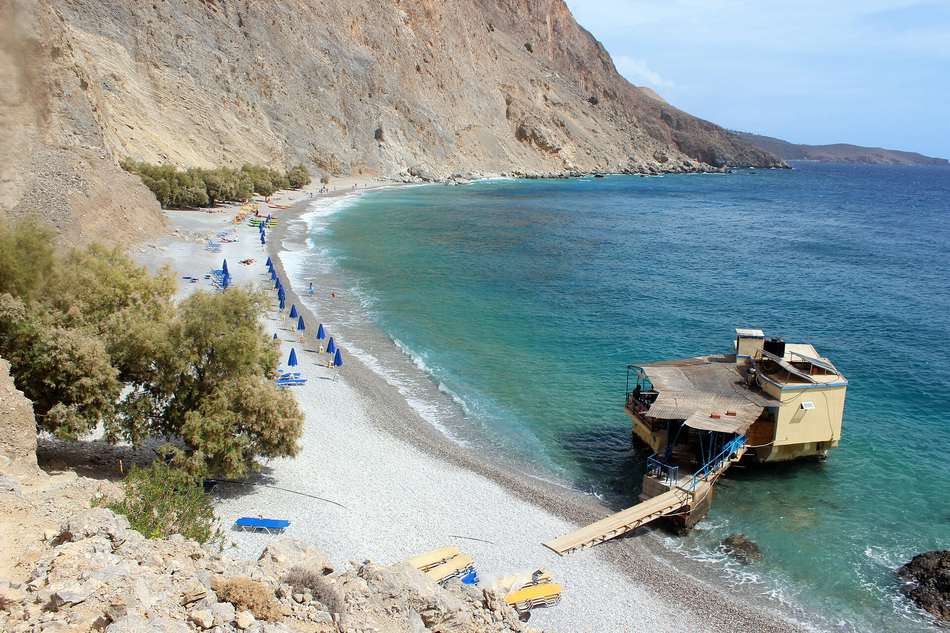
Sweet Water beach, known locally as Glyka Nera, hides beneath towering grey cliffs on Crete’s remote southern shore between Loutro and Chora Sfakion. Cold freshwater springs bubble up through the pebbles at the shoreline, creating small pools where swimmers cool off after the cliff-path hike or boat ride that brings them here. The beach has no road, one seasonal taverna, and a reputation among free campers and naturists who prize its isolation and crystalline water. Strong swimmers and adventurous walkers find this undeveloped cove a world apart from any resort, best explored with My Greece Tours.
The sections below cover how to reach this roadless beach, what makes the freshwater springs unique, where to stay nearby, and what to pack for a day on the shingle. Sweet Water suits visitors who relish wild coastlines, clear deep water, and the effort required to reach Crete’s least accessible corners. Consult our full Crete travel guide for context on the Sfakia region and southern shore. Prepare for a beach that rewards self-sufficiency and offers nothing but cliffs, springs, and the open Libyan Sea.
How do you reach Sweet Water beach on Crete’s south coast?
Sweet Water has no road. Visitors hike a narrow cliff path from Chora Sfakion or Loutro, or board summer taxi-boats that shuttle along the coast. The walk takes stamina; the boat ride offers easier access.
The cliff path from Chora Sfakion hugs the coastline for roughly ninety minutes, threading between rock face and sea with exposed sections that demand sure footing and a head for heights. Walkers set out early to avoid midday heat, carrying water and sun protection for the shadeless route. The trail drops steeply to the beach, rewarding effort with views of the Libyan Sea and the grey cliffs that frame the cove. Hikers from Loutro follow a similar coastal track, equally dramatic and equally demanding. Both paths suit confident walkers comfortable with uneven ground and steep gradients. The Sfakia region maintains these trails, but they remain rugged and unmarked in places, requiring attention and daylight.
Summer taxi-boats depart Chora Sfakion and Loutro throughout the day, landing passengers directly on the shingle for a modest fare. The boats run from late spring through early autumn, weather permitting, and offer the simplest access for families, older visitors, or anyone carrying beach gear. Captains announce return times; the last boat typically leaves mid-afternoon, so day-trippers plan accordingly. Overnight campers arrange pickup the following day or walk out along the cliff path. The boat ride itself reveals the coastline’s drama, passing sea caves and isolated coves inaccessible by land. Combining the boat one way with the cliff walk the other makes a rewarding loop for fit walkers seeking things to do in Crete beyond conventional sightseeing.
What are the freshwater springs at Glyka Nera?
Cold freshwater seeps up through the pebbles at the shoreline, creating small pools where bathers dig into the shingle. The springs give the beach its Greek name, Glyka Nera, meaning sweet water, and offer refreshment after swimming.
The springs emerge where the beach meets the sea, invisible until you dig a shallow depression in the shingle and watch cold, clear water fill the hollow. Bathers scoop out pools large enough to sit in, enjoying the contrast between the icy spring water and the warm Libyan Sea lapping a metre away. The phenomenon results from freshwater aquifers draining through the porous limestone cliffs, surfacing at the tide line where pressure and geology align. The water tastes clean and mineral-free, a welcome drink on a hot day, though most visitors bring bottled water for the hike.
Children delight in digging their own pools, and the springs have drawn travellers to this remote cove for generations, long before the beach gained its current reputation among naturists and free campers.
The springs flow year-round, though summer heat and reduced rainfall can weaken the seepage by late August. Early summer offers the strongest flow, when snowmelt from the White Mountains recharges the aquifers feeding the coast. The cold water provides natural air conditioning, cooling feet and legs after the cliff-path walk or a swim in the deep blue water offshore. The beach takes its character from this freshwater gift, distinguishing it from the countless pebble coves along Crete’s southern shore. Visitors to Loutro and the wider Sfakia coast often hear about Glyka Nera from locals who remember camping here in decades past, when the springs and isolation defined the beach’s appeal.
Where can you stay near Sweet Water beach in Crete?
Free camping on the beach itself attracts hardy visitors with tents and sleeping bags. Chora Sfakion and Loutro, each a boat ride or hike away, offer guesthouses, tavernas, and rooms for those preferring a bed and shower.
Camping directly on the shingle has long been Sweet Water’s signature accommodation, drawing backpackers and adventurers who pitch small tents beneath the cliffs and wake to sunrise over the Libyan Sea. The beach has no facilities beyond the seasonal taverna, so campers bring everything: tent, sleeping mat, food, water, and a headlamp for the night. Authorities tolerate low-impact camping, though regulations shift and visitors should respect the environment by packing out all waste. The experience suits those comfortable with basic conditions, sharing the cove with naturists and fellow campers who value solitude over comfort. Nights are quiet except for the surf, and stars fill the sky without light pollution.
The taverna, reached by steps cut into the cliff, serves simple meals and cold drinks during daylight hours, closing by evening.
Chora Sfakion, the nearest village with a road, offers family-run guesthouses, waterfront tavernas, and minimarkets where hikers stock up before heading to Sweet Water. The village sits twenty minutes away by boat or ninety minutes on foot, providing a base with showers, Wi-Fi, and cooked breakfasts. Loutro, a car-free hamlet accessible only by boat or trail, clusters white houses around a tiny harbour and caters to walkers exploring the coast. Both villages serve as gateways to the region’s Crete beaches and coastal paths. Day-trippers sleep in Chora Sfakion or Loutro and boat to Sweet Water for swimming and spring-water pools, returning before dark.
Overnight campers use the villages to resupply, shower, and charge devices between nights on the shingle.
What makes Sweet Water one of the hidden gems in Crete for wild swimming?
High cliffs drop straight into deep, clear blue water, creating ideal conditions for strong swimmers. The beach has no development, no crowds, and no lifeguards—just clean sea, pebble shore, and the isolation that defines Crete’s wildest coves.
The water deepens abruptly a few metres from shore, allowing swimmers to dive from the shingle into crystalline blue that reveals every rock and fish below. The seabed drops away along the cliff base, where the grey rock face continues underwater, creating natural diving platforms for confident swimmers who scramble onto ledges and jump into the deep. Visibility extends ten metres or more on calm days, and the lack of sand means the water stays clear even when surf stirs the shingle. The cove faces south into the open Libyan Sea, so waves can build when wind blows from Africa, but summer mornings often bring glassy conditions perfect for long swims parallel to the cliffs.
The absence of boat traffic, jet skis, and beach umbrellas preserves the wild character that draws swimmers seeking hidden gems in Crete far from resort zones.
Strong swimmers explore the coastline east and west, discovering sea caves and submerged rocks where fish gather in the shade. The cliffs provide no shade on the beach itself, so swimmers retreat to the water throughout the day, alternating between the warm surface layer and the cold spring pools at the shoreline. The beach’s reputation among naturists means swimwear is optional, and the relaxed atmosphere reflects the self-selected crowd of campers, hikers, and adventurous travellers who make the effort to reach this roadless cove.
Families with young children find the deep water and lack of facilities challenging, so Sweet Water remains the domain of adults comfortable with wild swimming, basic conditions, and the responsibility that comes with visiting a beach without lifeguards, shops, or mobile signal.
What should you pack for a day at Glyka Nera beach?
Bring water, snacks, sun protection, and sturdy shoes for the cliff path. A hat, towel, and cash for the taverna complete the essentials. The beach has no shops, shade, or facilities beyond the seasonal taverna.
The cliff path and shadeless beach demand at least two litres of water per person, more in midsummer heat. Hikers wear closed-toe shoes with grip for the rocky trail, switching to sandals or water shoes on the shingle. Sunscreen, a wide-brimmed hat, and sunglasses protect against relentless sun reflected off white pebbles and blue water. A lightweight towel or sarong provides a clean surface on the stones, and a dry bag keeps phones and cameras safe if waves splash the shore. Snacks—fruit, nuts, sandwiches—sustain energy for the walk, though the taverna serves grilled fish, salads, and cold beer for those carrying cash.
The taverna accepts euros only, no cards, and prices reflect the effort of supplying a roadless beach. Swimmers bring masks and snorkels to explore the clear water, and a small first-aid kit addresses blisters or scrapes from the trail.
Overnight campers add a lightweight tent, sleeping bag, and headlamp to the list, plus enough food and water for their stay. Rubbish bags are essential; campers pack out everything they bring, leaving no trace on the beach. A portable phone charger keeps devices alive for photos and emergencies, though mobile signal is weak or absent. The seasonal taverna opens mid-morning and closes by late afternoon, so campers planning dinner bring a camp stove or cold meals. Toilet facilities are minimal, so campers dig cat-holes well above the high-tide line and pack out toilet paper. The effort required to reach and camp at Sweet Water filters out casual visitors, leaving the beach to those prepared for self-sufficiency.
Day-trippers arriving by Crete boat trips carry less gear but still need sun protection, water, and cash for the taverna and return fare.
Frequently Asked Questions
Is Sweet Water beach suitable for families with children?
Sweet Water presents challenges for families with young children. The cliff path from Chora Sfakion or Loutro is narrow, exposed, and steep in places, unsuitable for toddlers or pushchairs. The water deepens abruptly just offshore, with no shallow paddling area, so children must be strong swimmers under constant supervision. The beach has no lifeguards, no shade, and no facilities beyond the seasonal taverna. The presence of naturists, while generally discreet, may not suit all families. The taxi-boat offers easier access than the hike, but the beach itself remains rugged and undeveloped. Families with older, confident children who enjoy hiking and wild swimming can manage a day visit, bringing plenty of water, snacks, and sun protection.
Chora Sfakion and Loutro offer more family-friendly beaches with shallow water, tavernas, and easier access. Sweet Water rewards adventurous families prepared for basic conditions, but younger children and those seeking comfort will find better options along the south coast.
Can you camp overnight at Glyka Nera beach?
Free camping has long been part of Sweet Water’s culture, attracting backpackers and adventurers who pitch tents on the shingle beneath the cliffs. Authorities have historically tolerated low-impact camping, though regulations can change and visitors should check current rules before planning an overnight stay. Campers must be entirely self-sufficient, bringing tent, sleeping gear, food, water, and all supplies, then packing out every scrap of waste. The beach has no toilets, showers, or bins, so responsible camping means digging cat-holes well above the tide line and carrying out rubbish. The seasonal taverna closes by evening, leaving campers to their own resources for dinner and breakfast. Nights are quiet, dark, and star-filled, with the sound of surf on pebbles.
The experience suits hardy travellers comfortable with basic conditions and the ethics of leave-no-trace camping. Day-trippers who prefer a bed and shower stay in Chora Sfakion or Loutro, visiting Sweet Water by boat or trail for swimming and spring-water pools before returning to village comforts.
What is the best time of year to visit Sweet Water beach?
Late spring through early autumn offers the best conditions, when taxi-boats run daily and the seasonal taverna opens. June and September bring warm water, reliable sunshine, and fewer visitors than the peak weeks of July and August. The freshwater springs flow strongest in early summer, fed by snowmelt from the White Mountains recharging the coastal aquifers. Midsummer heat can be intense on the shadeless beach, and the springs may weaken by late August after months of drought. The cliff path becomes dangerously slippery in winter rain, and the taverna closes from late autumn through early spring, leaving the beach entirely without services.
Strong hikers visit in April or October, when wildflowers colour the cliffs or the first autumn storms clear the summer haze, but they must be prepared for cooler water and the possibility that boats are not running. The south coast enjoys milder winters than northern Crete, but Sweet Water remains a summer destination, best visited when infrastructure supports the roadless location and warm sea temperatures reward the effort of reaching this wild, undeveloped cove.