
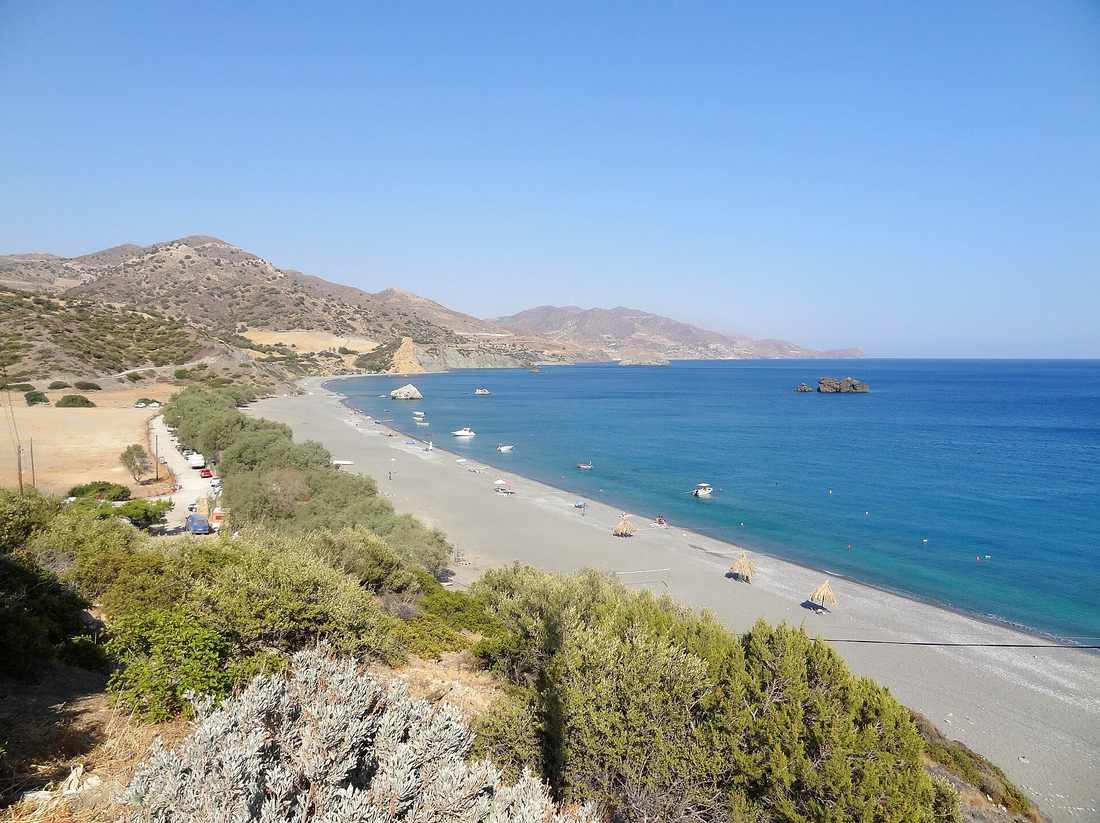
Kali Limenes sits on the far southern coast of Crete, in the Heraklion region. It lies below the barren Asterousia mountains and faces the open Libyan Sea. The name translates as Fair Havens, and the settlement earns it. A string of pebbly coves, very clear water and a sheltered harbour define the shore. A long, winding mountain drive from the Messara plain is the only way in. This is one of the emptiest corners of the island, a sun-baked place of solitude rather than resorts. A small oil-tanker terminal on an offshore islet and two tavernas make up its working life. Plan the drive and the swimming with My Greece Tours.
The Apostle Paul is recorded in the Acts of the Apostles as sheltering in this harbour on his voyage to Rome. A chapel on a small offshore islet marks the tradition. That early Christian link, the raw mountain setting and the warm, calm water draw travellers who want the quietest edge of the coast. The sections below cover how to reach Kali Limenes, what stands there today, the Saint Paul story, the beaches and monastery nearby, and how it fits a wider Crete travel guide. Each answer opens with the direct point.
Where is Kali Limenes on Crete’s south coast?
Kali Limenes lies on the far south coast of Crete in the Heraklion region, below the Asterousia mountains and facing the Libyan Sea. It sits south of the Messara plain, reached by a long, winding mountain road across the range.
The settlement occupies a low, rocky stretch of shore at the southern foot of the arid coastal range. That range walls off the Messara plain from the Libyan Sea. Kali Limenes faces open water toward the African coast. No large town stands for a wide radius, and no coastal road ties it into a resort strip. The approach runs south from the Messara farmland. It climbs over the bare ridge of the Asterousia mountains on a slow, twisting road, then drops to the coast. That barrier of rock and distance keeps the place quiet. It gives the settlement a sun-baked, end-of-the-world character. The character defines the whole southern edge of the island.
It stands well away from the built-up north-coast resorts and their heavy summer traffic.
The harbour itself is a natural anchorage. It is a genuine haven on an otherwise exposed and cliff-bound coast. That shelter is how it earned the name Fair Havens in the first place. Small offshore islets break the swell and protect the coves. One of those islets carries the tanker terminal that gives the bay its only industry. Distances from the north-coast cities and the airport run long, because every route crosses the mountains. A visit here reads as a deliberate detour rather than a casual stop on a day tour. That remoteness places Kali Limenes among the least-developed pockets of the south coast of Crete.
It is a corner reached only by travellers who have chosen to seek it out, and the quiet on the shore reflects that effort.
How do you reach Kali Limenes and what stands there today?
Reach Kali Limenes by a long, winding drive south over the Asterousia mountains from the Messara plain. Today it is a quiet, sun-baked settlement of pebbly coves, very clear water, a small oil-tanker terminal on one islet and two tavernas.
The drive is the gatekeeper of the whole experience. A single mountain road climbs out of the Messara farmland. It threads over the ridge of the range and winds down to the shore. The settlement stays cut off from the fast north-coast routes and their crowds. There is no bus-tour bustle and no built-up seafront. Services stay minimal: two tavernas, a scatter of rooms for rent, and the fuel installation on the offshore islet. The reward for the effort is water of exceptional clarity over pebble and rock. Swimming stays calm through the long warm season. Quiet coves let a visitor spend an afternoon almost alone on the shore.
This is a place built around solitude and slow days rather than nightlife or crowds of any kind.
The working detail sets Kali Limenes apart from a pure beach hamlet. It also gives the bay its unpolished edge. An oil-tanker terminal occupies one of the small islets in the bay. The terminal is a reminder that the sheltered harbour still serves shipping, as it has across the centuries. The pebbly coves sit along the mainland shore below the mountains. The water stays warm and transparent, and the two tavernas serve travellers who have made the long drive south. Visitors who want the emptiest corners find real reward here. The setting pairs well with the broader run of Crete beaches along this southern coast.
The contrast between the industrial islet and the deserted coves gives the harbour a distinctive feel that a packaged resort never matches.
Why is Kali Limenes tied to Saint Paul in the Acts of the Apostles?
Kali Limenes is tied to Saint Paul because the Acts of the Apostles records him sheltering in its harbour, named Fair Havens, on his voyage to Rome. A chapel on a small offshore islet marks the tradition and keeps the memory alive.
The Acts of the Apostles names Fair Havens as a harbour on the south coast of the island. Paul’s ship carried him under guard toward Rome. It waited out difficult sailing conditions in this sheltered bay. The Greek form of that ancient name, Kali Limenes, has carried down to the modern settlement. The place holds a rare direct thread back to first-century scripture. A small chapel built on one of the offshore islets marks the spot honoured in local tradition. It is a plain, whitewashed structure standing over the very water the account describes. That connection turns a remote bay into a site of quiet pilgrimage. Travellers read the harbour through the lens of early Christian history.
The link gives the long southern drive an added layer of meaning beyond the swimming.
The early Christian association deepens the appeal of a coast already known for solitude. The Asterousia range behind the settlement has sheltered monastic life across the centuries. The nearby Moni Odigitrias monastery continues that long religious presence. The Saint Paul tradition sits within a wider sacred landscape rather than standing on its own. Visitors who follow the coastal history of the island often pair Kali Limenes with the region’s monasteries and hermit caves. That route threads the scriptural harbour into a slower cultural loop across the south. The setting counts among the genuine hidden gems in Crete.
It is valued for its scriptural memory and quiet monasteries as much as for its warm, empty swimming below the mountains. The history and the water together shape its lasting appeal.
What beaches and sights lie near Kali Limenes?
Near Kali Limenes stand the Moni Odigitrias monastery and rough paths to isolated beaches such as Agiofarango, reached through a gorge to the sea. The pebbly coves at the harbour itself offer warm, very clear swimming below the mountains.
The harbour coves come first for most visitors. They are pebbly, transparent and calm. They give warm swimming through the long southern season with almost no company on the shore. From the wider area, rough tracks and footpaths lead to isolated beaches cut off from the road by the mountains. Chief among them is the cove reached at the mouth of the Agiofarango Gorge. That short walking canyon opens onto a sheltered pebble beach on the Libyan Sea. The walk down through the rock to the water ranks among the finest short hikes on the whole southern coast. The stretch rewards travellers willing to leave the paved road and cross the bare Asterousia terrain on foot.
Water and stout shoes matter on the exposed ground.
Inland from the coast stands the Moni Odigitrias monastery. It is a fortified religious house set among the arid hills. The monastery has long been a spiritual anchor for this remote district and a natural stop on any route through the range. Further west along the south coast lies the wide sandy bay at Matala. Its cave-riddled cliffs give a busier, well-known counterpoint to the deep solitude of Kali Limenes. The two pair readily on a single southern loop by car. Together the scriptural harbour, the working monastery, the gorge beach and the famous cave bay let a visitor build a full day.
The route runs across the southern flank of the island, from near-silent coves to a popular shore. Each stop marks a distinct layer of the coast’s history.
Who should base a trip around Kali Limenes in Crete?
Kali Limenes in Crete suits travellers who want the emptiest corners of the coast, warm swimming, early Christian history and deep solitude. It rewards drivers ready for a long mountain route and content with two tavernas rather than full resort services.
The setting speaks to a specific traveller rather than the general resort crowd. It suits anyone seeking solitude, warm and clear water and a break from the packed north-coast strips. The long, winding drive filters out casual day-trippers. The coves stay quiet even through the warm months. The pace slows to swimming, reading and unhurried meals at the two tavernas by the shore. Walkers gain access to the gorge beaches and mountain paths. Travellers with an interest in scripture come for the Saint Paul harbour and its islet chapel. The place asks for a car and patience with the mountain road.
It wants a taste for empty landscapes rather than crowds, nightlife or a wide choice of amenities and shops along the front. The trade for that quiet is real, and it defines the visit.
For trip planning, Kali Limenes works best as a striking southern excursion within a broader island route. It makes a poor sole base, given its distance from services and towns. Pair it with the Messara plain, the Phaistos and Gortyna archaeology, and the sands of Matala. Together they build a strong south-central day out by car. Travellers can slot the harbour into the wider framework of a full things to do in Crete plan. That framework balances the famous sites against these emptier edges of the coast. The result is a route that swings from busy monuments and popular beaches to a sun-baked, scripture-touched bay.
There the mountains meet the Libyan Sea in near silence, a rare contrast to find within a single island route.
Frequently Asked Questions
Is Kali Limenes worth the long drive from the Messara plain?
The drive rewards travellers who value solitude over convenience. A single mountain road climbs south from the Messara farmland. It crosses the bare ridge of the range and drops to the coast. That distance keeps the coves quiet through the warm season. The payoff is water of exceptional clarity and warm swimming. A genuine early Christian harbour, tied to the Acts of the Apostles, adds depth to the stop. Near-total peace holds even at the height of the visitor months. Two tavernas cover meals, and the pebbly coves stay empty against the packed north-coast resorts. Travellers who want busy beaches, nightlife or a wide range of shops will not find them in this remote corner.
Those after the emptiest edge of the south gain a real reward. A swim, a visit to the islet chapel and a quiet meal by the shore make the winding road worthwhile, and the stretch ranks among the least-visited on the whole island.
Can you swim at Kali Limenes and reach nearby beaches on foot?
Swimming at the harbour coves is the main draw here. The water runs warm, calm and very clear over pebble and rock. Small offshore islets shelter the coves and give the bay its Fair Havens character. From the wider settlement, rough tracks and footpaths cross the mountain terrain to isolated coves shut off from the road. The best-known runs through a short walking gorge. That gorge opens onto a sheltered pebble beach on the Libyan Sea. Sturdy footwear and carried water matter on those routes. The terrain is bare and exposed with little shade across the arid hills. The tanker terminal sits on one islet apart from the swimming coves and does not intrude on them.
The pebbles and clear shallows suit strong and cautious swimmers alike. Travellers combining the harbour swim with a gorge walk build a full, quiet day on foot and by car. The route runs across this remote southern flank, well away from the resort beaches of the north.
What is the historical importance of Kali Limenes?
Its importance rests on a rare scriptural link. The Acts of the Apostles records the Apostle Paul sheltering in the harbour named Fair Havens. His guarded voyage toward Rome paused in this bay. The ancient Greek name Kali Limenes has carried down to the modern settlement below the mountains. A chapel on a small offshore islet marks the spot honoured in local tradition. It stands plainly over the water described in the account. That first-century thread sits within a wider sacred landscape. The fortified Moni Odigitrias monastery inland and the hermit caves of the range have sustained monastic life across the district for centuries.
Travellers who read the coast through its history treat the bay as a quiet point of pilgrimage rather than a beach alone. They thread it into a slower cultural route across the south. The harbour ranks among the genuine hidden corners of the coast. It is valued for the meeting of early Christian memory, mountain solitude and the warm, transparent water of the Libyan Sea.