
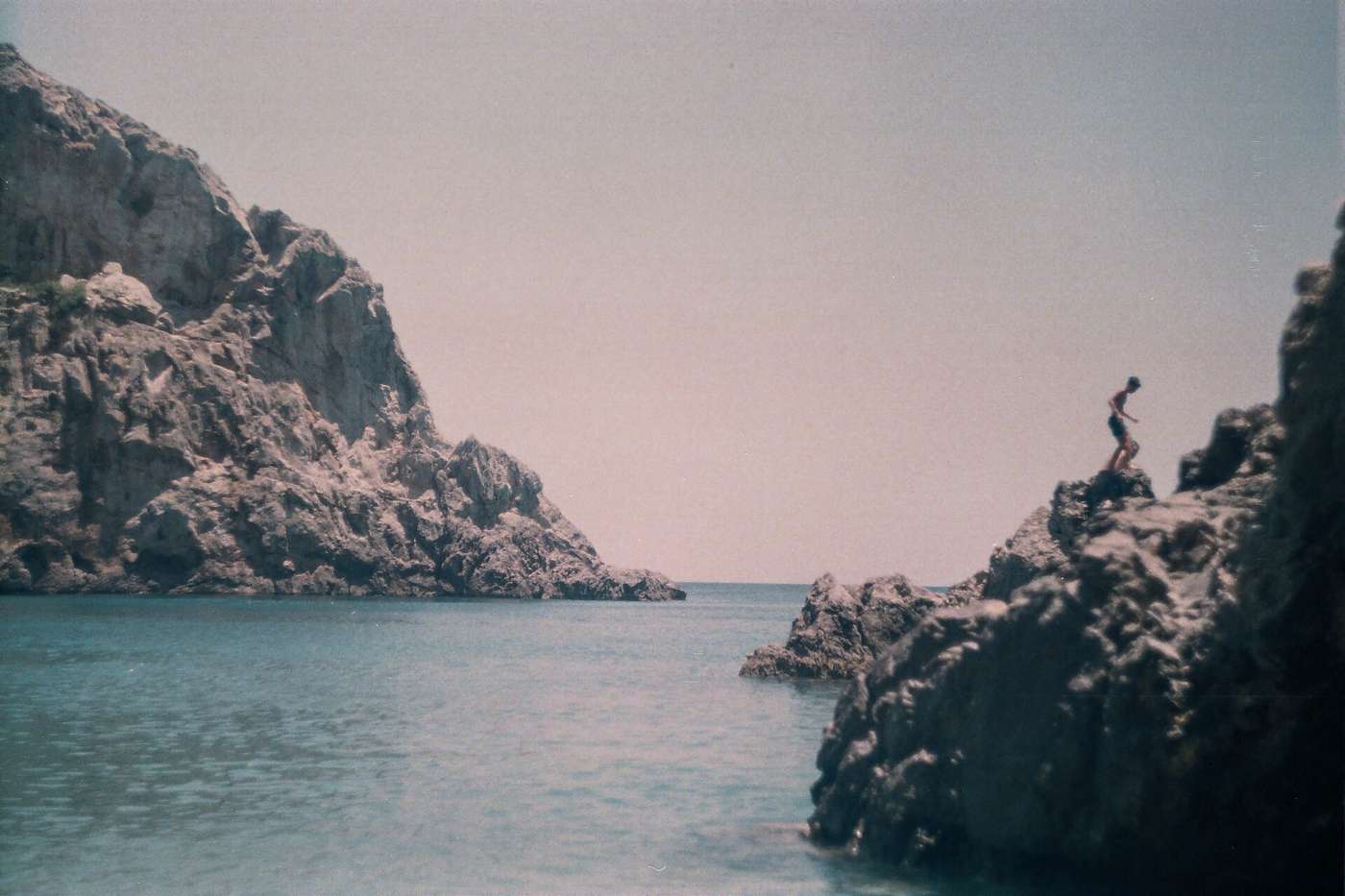
Agiofarango Gorge cuts through the Asterousia mountains on the far south coast of Crete, deep inside the Heraklion region near the Odigitria monastery. The name means ‘gorge of the saints’, drawn from the hermit caves and rock chapels that monks once used inside its walls. A gentle two-kilometre walk between tall limestone cliffs delivers you to a small sandy and pebble beach on the Libyan Sea. The water runs clear, deep and cool, and rock-climbers share the cliffs with swimmers. You reach this remote southern edge on a long drive over the Asterousia, a route worth planning carefully with My Greece Tours.
The gorge stays far quieter than the celebrated western canyons, and its remoteness is exactly the appeal for travellers who want space and silence. The sections below cover the walk itself, the beach at the mouth, the chapel of Agios Antonios, the practical drive across the Asterousia, and how the ravine fits the wider Crete travel guide. Read each answer first for the quick facts, then the paragraphs beneath for detail on water, shade, swimming and the freshwater well. Careful planning turns a demanding southern excursion into one of the island’s most rewarding escapes.
What makes Agiofarango Gorge one of the quieter walks in Crete?
Agiofarango sits on the remote Asterousia coast of Crete, far from the busy western canyons. A gentle two-kilometre path between limestone cliffs, a long southern drive and zero facilities keep crowds thin and the atmosphere calm throughout.
The walk begins near the Odigitria monastery and follows a dry riverbed south towards the Libyan Sea. Tall limestone walls press close on both sides, throwing shade across the path in the early hours and framing a narrow ribbon of sky above your head. The gradient stays gentle across the two-kilometre route, so steady walkers of ordinary fitness manage it in under an hour without difficulty. Rock chapels and hermit caves punctuate the cliffs, quiet reminders of the monks who gave the ravine its name centuries ago. You will want sturdy shoes for the loose stones underfoot and a hat for the exposed final stretch.
The remoteness rewards planning, and pairing this hike with the wider list of things to do in Crete helps you build a full, well-paced southern day out.
Silence defines the experience more than any single view along the route. The western gorges draw coaches and long queues through the summer, yet Agiofarango often holds only a scatter of climbers and swimmers even in July. That calm comes at a price: the site offers no kiosk, no shade shelter and no water tap, so every walker carries supplies in on foot. Reaching the trailhead means a slow drive across the Asterousia mountains on narrow, winding roads, which discourages casual day-trippers from making the trip. The effort filters the crowd and preserves the deep hush of the ravine.
Serious walkers who want more demanding terrain can extend into the broader network of hiking in Crete, linking Agiofarango with rugged routes across the island’s remote southern coast.
What is the beach at the mouth of the gorge like?
The path opens onto a compact beach of sand and pebbles on the Libyan Sea. The water is clear, deep and cool, popular with swimmers and rock-climbers. No sunbeds, tavernas or shade exist, so visitors bring everything themselves.
The cove sits directly beneath the towering cliffs, giving swimmers a striking backdrop of pale limestone dropping straight into deep blue water. The seabed shelves quickly, so the water turns deep within a short wade from shore, which suits strong swimmers and snorkellers looking for clarity. Rock-climbers favour the steep faces above the pebbles, and you will often spot bright ropes hanging from the sun-baked crags. The exposure means the afternoon sun hits the sand hard, and the cliffs offer little relief once the morning shadow lifts off the beach. Bring an umbrella, ample water and reef-safe sunscreen for the full visit.
Travellers comparing coastlines across the island will find this cove ranks among the more dramatic Crete beaches, precisely because it stays raw, wild and completely unbuilt.
Timing shapes the visit more than any other factor. Arrive by mid-morning to claim the thin band of shade and swim while the water stays calm, then walk back before the midday heat peaks over the ravine. The Libyan Sea can pick up an afternoon breeze that stirs small waves against the pebbles, refreshing for swimmers but choppier for careful snorkelling. Sturdy water shoes protect your feet on the sharp, stony entry to the sea. The lack of any commercial footprint is the whole point here: you eat what you carry in and leave nothing at all behind.
Visitors chasing quiet, unspoilt shorelines rate Agiofarango among the finest hidden gems in Crete, a beach earned on foot rather than reached by any convenient coastal road.
Why does the chapel of Agios Antonios stand near the shore?
The little chapel of Agios Antonios sits near the beach beside a freshwater well, echoing the monastic past that named the gorge ‘of the saints’. Hermit monks once lived in the surrounding caves, and the chapel marks that long spiritual heritage.
The whitewashed chapel is small and plain, yet its position at the very edge of the sea makes it deeply memorable to walkers. It honours Saint Antony, a fitting patron for a place shaped by desert-style hermit life and long solitude. Beside it stands a freshwater well, historically vital in a ravine with no other reliable water supply for the monks. The caves and rock chapels higher up the gorge housed hermits across earlier centuries, and their carved stone dwellings remain visible from the path today. You can step inside the chapel for a quiet, cool moment before or after a long swim.
The whole scene rewards slow attention, so build extra time into your visit rather than rushing straight back to the trailhead and the waiting car above.
The freshwater well deserves respect rather than reliance from visitors. It served monks and shepherds through the driest summer months, but walkers should not depend on it for drinking water today; treat it firmly as heritage, not a working tap. The chapel and well together tell the human story of a landscape that looks empty and barren at first glance. Candles and small offerings left inside show the site still draws pilgrims and passing walkers throughout the season. Photographers love the sharp contrast of the plain white walls against the raw grey cliffs and deep blue sea beyond.
Understanding this monastic thread enriches the walk far more than the coastal scenery alone, and it anchors Agiofarango firmly within the cultural depth of the wider Asterousia region and its long history.
How do you reach Agiofarango Gorge across south Crete?
You drive over the Asterousia mountains in the Heraklion region of south Crete, heading for the Odigitria monastery trailhead. The final approach uses narrow, partly unpaved roads, so allow extra time and choose a sturdy, high-clearance vehicle where possible.
The route climbs and winds through the Asterousia range, a remote massif that separates the fertile Messara plain from the Libyan Sea below. Drivers pass through small inland villages before the tarmac gives way to rougher gravel track near the monastery. Odigitria monastery makes the natural parking point and orientation marker, and the gorge trail starts a short distance beyond its gates. Progress feels slow on these roads, so budget generous driving time in each direction and set off well before midday. A compact hire car manages the approach in dry conditions, though higher clearance adds real confidence on the stony final stretches.
Pairing the drive with the nearby coastal village of Lentas lets you turn the long journey south into a satisfying full-day loop rather than a single hurried stop.
Fuel, water and food should all be sorted before you leave the larger towns, because the Asterousia offers no reliable services near the trailhead itself. Phone signal drops across parts of the range, so download offline maps in advance and note the turnings carefully. Start early to walk during the cooler morning hours and to avoid driving the narrow, unlit sections at dusk on the way home. Countless travellers combine Agiofarango with the famous caves and beach at Matala, which sits within easy reach on the same southern coast.
Planning the sequence carefully keeps the whole day relaxed rather than rushed, and it lets you enjoy both the remote ravine and its better-known neighbour without racing the fading light back over the mountains at dusk. Book fuel stops into the plan so the drive feels like part of the adventure.
Where does Agiofarango fit among the hidden corners of Crete?
Agiofarango belongs to the wild Asterousia coast, one of the least developed corners of Crete. It rewards travellers who prefer effort and solitude over easy access, sitting alongside remote southern beaches and gorges rather than the polished northern resorts.
The southern Asterousia coast forms a completely different Crete from the busy, developed north. No large resorts, marinas or beach clubs interrupt this shoreline; instead a string of small coves and ravines opens quietly to the Libyan Sea. Agiofarango stands out even here for its rare combination of a walkable gorge, a swimmable beach and a genuine monastic history in one compact place. Travellers who value that raw character usually build a route linking three or four such spots rather than treating the ravine as a single isolated stop. The absence of crowds stays consistent across the range, not a passing seasonal fluke.
Explorers hunting this kind of empty, demanding terrain will find Agiofarango sits comfortably among the island’s most celebrated wild corners, earning its place through remoteness, silence and genuine effort.
Fitting Agiofarango into a wider trip takes a little thought and honest planning. A single day covers the drive, the walk and a long swim, yet the surrounding coast rewards a slower pace across three or four days for those with time. Nearby beaches, gorges and monasteries share the same rugged, sun-bleached mood, so a southern base suits explorers far better than a north-coast resort hotel. The reward is a stretch of Crete that still feels genuinely undiscovered by mass tourism and its coaches.
Walkers combining coast and mountain often thread the ravine into a longer overland programme, using Agiofarango as the coastal highlight at the very end of a demanding drive through the empty heart of the Asterousia range. That final swim beneath the cliffs rewards every slow kilometre of the approach and lingers in the memory long afterwards.
Frequently Asked Questions
How long is the walk through Agiofarango Gorge?
The walk runs roughly two kilometres each way, following a gentle path along a dry riverbed between tall limestone cliffs from near the Odigitria monastery down to the beach. The gradient stays easy, so ordinary walkers of average fitness complete it comfortably in around forty minutes each direction, plus stops for photographs and rest. Loose stones underfoot make sturdy shoes worthwhile, and the enclosing cliffs provide welcome shade during the early morning hours before the sun climbs high. There are no facilities on the route at all, so carry all the water and shade you need for the whole outing from the start.
Most visitors linger at the beach for a long swim before walking back, which turns the excursion into a relaxed half-day rather than a quick stroll. Starting early keeps the climb back cool and comfortable, and it leaves ample daylight for the slow drive home across the Asterousia mountains afterwards.
Can you swim at the beach in Agiofarango Gorge?
Yes, swimming is the main draw at the end of the gorge and the reason the walk earns its reputation. The path opens onto a small beach of sand and pebbles on the Libyan Sea, where the water is clear, deep and cool throughout the season. The seabed shelves quickly, so the water becomes deep close to shore, which suits confident swimmers and snorkellers looking for clarity. Rock-climbers share the cove, using the steep cliffs that rise directly above the pebbles beside the swimmers. No sunbeds, tavernas or shade structures exist at the beach, so bring an umbrella, water and reef-safe sunscreen for the exposed afternoon sun. Water shoes help on the sharp, stony entry to the sea.
Mornings tend to be calm and glassy, while an afternoon breeze can raise small waves against the pebbles. Arriving early lets you swim in still water and walk back before the midday heat builds over the ravine.
Are there any facilities at Agiofarango Gorge?
No, the site has no facilities at all, which is central to its remote, unspoilt character and enduring quiet. You will find no kiosk, cafe, taverna, toilet, sunbed or shade shelter at either the trailhead or the beach itself. The only water source is the historic freshwater well beside the chapel of Agios Antonios, and that should be treated as heritage rather than a modern drinking supply. Every walker must carry in enough water, food, shade and sun protection for the entire visit, then carry all rubbish back out again. The nearest reliable services sit in the villages well back across the Asterousia mountains, so stock up fully before the final drive to the trailhead.
Phone signal is patchy across the range, so download offline maps in advance and plan for self-sufficiency. This demanding approach is exactly what keeps Agiofarango quiet, clean and free of the crowds that fill the island’s more developed gorges and beaches.