
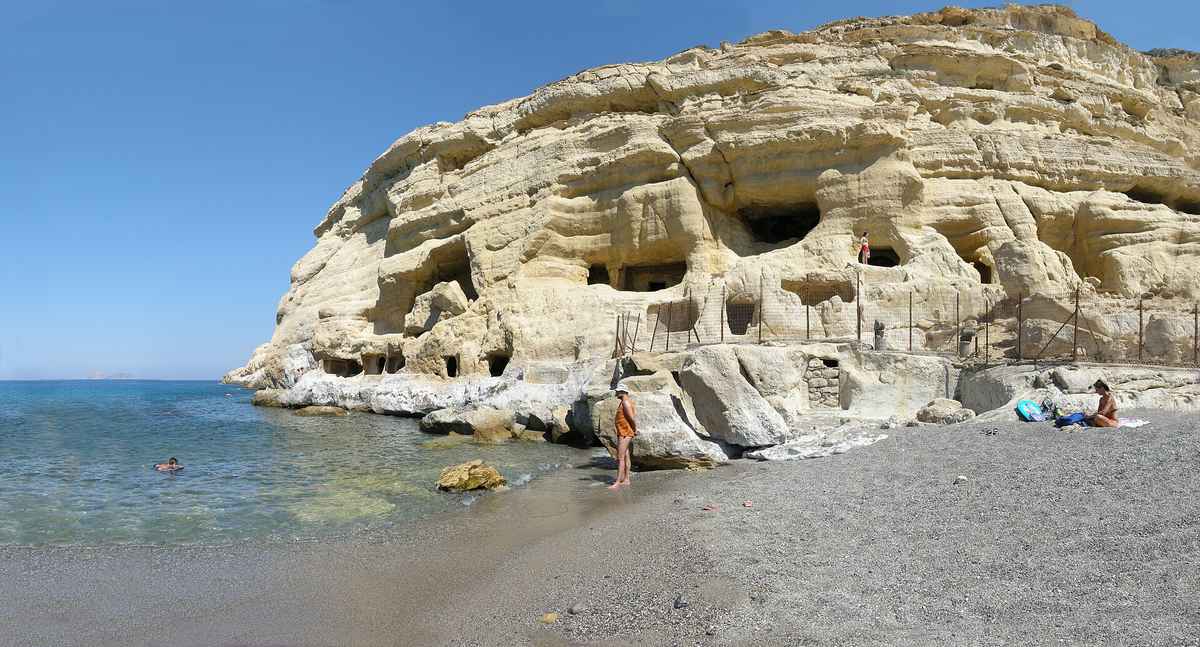
Matala is a small resort on the Gulf of Messara, along the south coast of Crete in the Heraklion region. Its landmark is a low sandstone cliff at the north end of the beach, riddled with man-made caves cut in antiquity as tombs. That same cliff later drew a wandering community of travellers and musicians who camped in the hollows and gave the village a lasting name. The main beach is a broad sweep of sand backed by a strip of canteens, and its west-facing bay stages the finest sunsets on this coast. Plan a south-coast day that fits Matala into a wider route when you book with My Greece Tours.
Matala rewards travellers who want a beach with real history behind it rather than a plain stretch of sand. Our wider Crete travel guide shows where the village sits on the Messara plain and how it links to the Minoan palace of Phaistos and the sands of Kommos nearby. The sections below cover the cave cliff and its ancient tombs, the hippie era that made the village famous, the walk to Red Beach next door, the archaeological sites across the plain, and the practical planning that turns a visit into a smooth south-coast day.
What are the caves at Matala on Crete?
The caves are man-made chambers cut into the soft sandstone cliff at the north end of the beach. Carved in antiquity as Roman and early-Christian tombs, they now form a ticketed archaeological site above the sand.
The cliff at Matala rises pale and honeycombed above the north end of the beach, and the hollows in its face are the reason travellers first came here. These chambers were carved by hand into the soft sandstone in antiquity, cut as tombs during the Roman and early-Christian eras. The rock cuts easily, so the openings range from shallow niches to deeper rooms with squared corners and low resting ledges. The result reads almost like a small stacked cliff town, tiers of dark mouths ranged above one another. Standing on the warm sand below, you can trace how the ancient masons followed the natural seams and grain of the stone.
The cliff faces the bay, so the low evening light rakes across the openings and deepens every shadow along the pocked Crete beaches of the south.
The caves now form a fenced archaeological site with a ticket booth at the entrance, so access runs through a controlled gate rather than a free scramble. A path and steps lead up from beach level into the lower tiers, where you can step inside the larger chambers and look back out over the water. The site protects the fragile rock from the wear that decades of open climbing had caused. Interpretive signs explain the tombs and the layers of use the cliff has seen across the centuries. Wear firm shoes for the uneven stone, and take water, since the exposed face holds the heat through the afternoon.
A visit here ranks among the most memorable things to do in Crete for anyone who likes a beach with a story carved into the rock behind it.
Why is Matala famous for its hippie history?
In the late twentieth century Matala drew travellers, artists, and musicians who lived in the cliff caves and camped on the beach. That free-spirited community made the remote fishing village world-famous and shaped its identity to this day.
Matala’s second life began when the ancient caves found a new set of residents. In the late twentieth century the village became a gathering point for travellers, artists, and musicians drawn by the free-spirited mood of the era. They lived in the cliff hollows and camped on the sand, and word of the community spread far beyond Crete. Certain visitors who passed through went on to become well-known names, which only deepened the legend. The remote fishing village, once known only to local farmers of the Messara, found itself on a wider map almost overnight.
That reputation has never quite faded over the years, and it still colours how the wider world pictures this small south-coast bay tucked behind its honeycombed cliff of ancient tombs.
The village leans into that heritage rather than hiding it. Painted lettering, a relaxed cafe strip, and an annual music festival on the beach all nod back to the free-spirited years that made the name. The mood today is gentler and more organised than the raw era it recalls, yet the spirit lingers in the murals and the easygoing pace. Travellers who remember the stories come to see the caves and the bay for themselves. Younger visitors arrive for the beach and stay for the atmosphere. The cliff cannot be camped in now, since it sits behind the fence of the archaeological site, but the sand below still fills with a laid-back crowd through the long evenings.
Sitting on the beach as the sun drops into the bay, you sense why the place held so large a crowd.
How do you reach Red Beach from Matala?
Red Beach lies just south of Matala, over the headland that closes off the main bay. A signed cliff path climbs from the village and crosses the ridge on foot in around twenty to thirty minutes, ending at a quieter reddish-sand cove.
A short walk carries you from the busy main bay to a far quieter cove next door. Red Beach sits south of Matala, tucked behind the headland that closes off the main beach, and a signed footpath is the way across. The trail climbs out of the village, rises over the rocky ridge, and then drops down the far side to the cove. Firm shoes and a steady pace suit the uneven ground, which is loose and stony in places rather than a smooth track. The reward at the end is a beach named for its warm reddish sand, backed by cliffs and open to the Libyan Sea.
The walk itself gives fine views back over Matala bay and out across the water toward the wide horizon of the south coast. The quieter sands of Kalamaki stretch along the same gulf to the north.
Red Beach feels wilder and less developed than the sand you leave behind, part of its appeal for walkers who want a spot away from the canteens, much like the remote beach at the mouth of the Agiofarango Gorge further along the coast. Services are minimal here, so carry water, snacks, and shade, and treat the cove as a self-sufficient stop rather than an organised beach. The swimming is clear and the setting dramatic beneath the cliffs, which makes the effort of the crossing worthwhile on a calm day. A boat also runs from Matala in the busy months for travellers who would rather skip the climb both ways.
Small hidden coves like this one number among the hidden gems in Crete that reward a short walk off the main beach. Time the return for the cooler part of the day, since the ridge holds little shade at midday.
What sites near Matala are worth visiting on Crete?
The Messara plain around Matala holds major sites. The Minoan palace of Phaistos rises on a ridge inland, sandy Kommos beach lies close by, and the road runs north toward Heraklion, the region’s capital and museum city.
Matala sits at the coastal edge of the broad Messara plain, and that plain holds the richest history on the island. The Minoan palace of Phaistos rises on a ridge inland, a vast ruined complex that ranks second only to Knossos among the palaces of Crete. A short drive links the beach to the site, so a morning among the ancient courts and storerooms pairs naturally with an afternoon swim at Matala. Kommos beach lies close by along the coast, a long sandy stretch that shelters the remains of a Minoan harbour town at its northern end.
The combination of ruins and open sand makes this pocket of the south coast a rewarding base for travellers who like their beach days framed by deep history and quiet countryside.
The wider region opens up from here toward the north coast and its capital. The road runs inland and over the hills to Heraklion, where the archaeological museum gathers the finds from Phaistos, Knossos, and the other Minoan sites into one collection. Travellers who spend a morning at the palace often round out the story with a museum visit on a cooler day. The west of the south coast holds its own draws too, and the palm-lined river mouth of Preveli beach makes a memorable day out along the same shore. A hire car ties these scattered sites together far better than the bus network does.
The Messara rewards a slow pace, with village tavernas, olive groves, the harbour town of Agia Galini, and quiet back roads filling the space between the ruins and the sea.
How should you plan a visit to Matala on Crete?
Reach Matala by car from Heraklion in around an hour and a half, arrive early for cave-site parking, and stay for sunset. Bring shoes for the cliff steps, water, and shade for the exposed beach.
A visit to Matala works best with a little forward planning, since the village sits well south of the main resort towns. The drive from Heraklion runs around an hour and a half over the hills and down onto the Messara plain, so a hire car gives the easiest access and the freedom to fold in Phaistos on the way. Parking near the beach and the cave site fills through the middle of the day in the busy months, which makes an earlier arrival the calmer choice. The archaeological site keeps set hours and charges an entrance ticket, so check the timing before you climb up to the caves.
Firm shoes handle the uneven steps and the loose stone of the cliff path far better than sandals do on the warm, worn rock.
The rhythm of a good day here often builds toward the evening. The bay faces west, so the sunset over the water is the moment most travellers plan around, and the canteen strip behind the sand stays open to serve it. A day that starts with the palace of Phaistos, moves to a swim and the cave site at Matala, and ends with the light dropping into the Gulf of Messara makes a full south-coast outing. Bring water and shade, since the open beach and the exposed cliff hold little cover through the hottest hours. Those who want the quieter cove next door can add the walk to Red Beach before the heat peaks.
Matching the plan to the day’s warmth keeps this remote corner comfortable from a morning ruin to a slow evening on the sand.
Frequently Asked Questions
Are the caves at Matala free to visit?
No. The cave cliff at Matala is a protected archaeological site with a fenced entrance and a ticket booth, so a small admission charge applies to go up among the hollows. The fence and the controlled gate exist to guard the fragile sandstone, which decades of open climbing had worn down before the site was managed. A path and steps lead from beach level into the lower tiers of chambers, where you can step inside the larger cut rooms and look back out over the bay. The site keeps set opening hours, which shorten outside high summer, so check the timing before you plan the climb.
The beach itself, spread below the cliff, stays open and free to use through the day. Firm shoes suit the uneven rock of the steps, and water helps on the exposed face, since the pale stone holds the afternoon heat and offers almost no shade once you leave the deeper chambers.
Is Matala worth visiting on Crete?
Matala rewards travellers who want more from a beach than plain sand. The honeycombed cliff of ancient tombs gives the bay a setting found nowhere else on the south coast, and the free-spirited history that made the village famous still colours its relaxed mood today. The broad sandy beach faces west, so the sunsets over the Gulf of Messara rank among the finest on this shore. A short cliff path leads to the quieter cove of Red Beach next door for those who want an easy walk away from the canteens.
The village also makes a natural base for the wider Messara plain, with the Minoan palace of Phaistos and the sands of Kommos close by inland and along the coast. Travellers touring the south of the island fold Matala into a route that pairs deep history with swimming, which makes the long drive down from the north coast well worth the effort.
When is the best time to visit Matala on Crete?
The swimming season on Crete’s south coast runs long, and the shoulder months either side of high summer suit Matala especially well. Late spring warms the sea for comfortable swimming while the beach and the cave site stay quieter than in peak weeks. Early autumn keeps the water warm after the summer sun and eases the fierce midday heat that bakes the exposed cliff. High summer delivers the most reliable sunshine and the liveliest evenings on the canteen strip, though the beach and the parking fill through the middle of the day.
The south coast often stays calmer than the north when the meltemi wind stirs the exposed northern shores on breezy afternoons, which makes Matala a smart choice on windy days. Whatever the month, an early arrival helps at the cave site and the beach parking, and timing a visit toward the west-facing sunset rewards travellers with the bay at its most striking as the light drops into the water.