
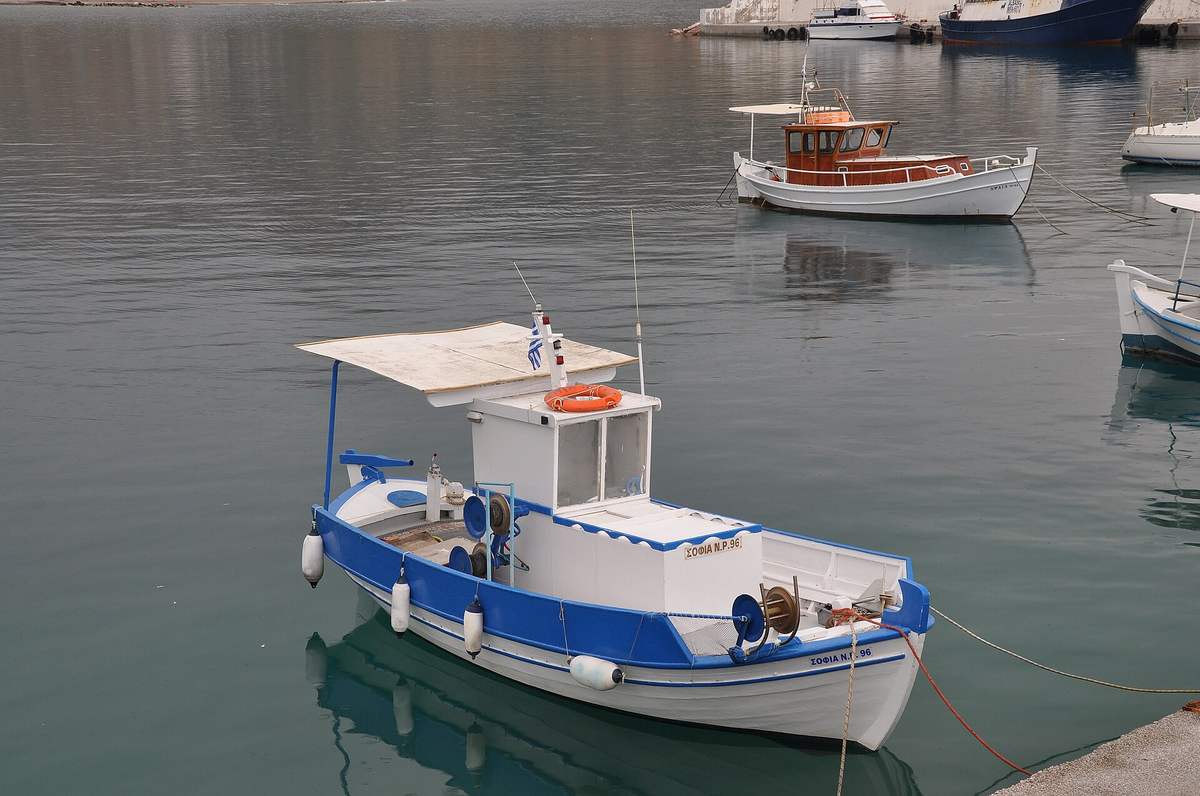
Agia Galini spills down a steep hillside to meet the Gulf of Messara on Crete’s southern shore. This former fishing village has grown into a relaxed resort that retains its small-scale charm and friendly atmosphere. The harbour forms the heart of town, lined with traditional tavernas and cafés where locals and visitors gather to watch boats bob on the water. Sandy and pebbly beaches stretch along the coast, while boat trips depart for secluded coves. The town sits at the border of the Rethymno and Heraklion regions, offering sunny weather and a sheltered position that makes it ideal for exploring the south coast with My Greece Tours.
The central location of Agia Galini provides easy access to iconic sites across the Messara plain. Day trips reach the archaeological site of Phaistos, the hippie beach at Matala, and the palm-fringed sands of Preveli. The town itself offers a quieter alternative to busier northern resorts, with a pace of life that slows down in the evening as the sun sets over the harbour. High summer brings crowds, yet the village maintains its welcoming character year-round. The sections below cover everything from harbour life to beach excursions, helping you plan your visit with our comprehensive Crete travel guide.
What makes Agia Galini’s harbour special in Crete?
The harbour is the social and visual centrepiece of Agia Galini, curving around a small bay with colourful fishing boats and excursion vessels. Tavernas and cafés line the waterfront, offering fresh seafood and views across the Gulf of Messara.
The harbour at Agia Galini creates a postcard scene that draws visitors down the steep village streets. Fishing boats still moor alongside tourist craft, maintaining the working character that defined the town for generations. Tavernas occupy every available waterfront spot, their tables spreading onto the promenade where diners watch the sunset paint the water gold and pink. The harbour wall extends into the sea, providing a walking route for evening strolls and a vantage point for photographing the village as it climbs the hillside. Fishermen mend nets in the early morning, and excursion boats advertise trips to remote beaches throughout the day.
The atmosphere shifts from quiet industry at dawn to lively socialising after dark, when locals and tourists mingle over meals and drinks. This blend of authentic maritime life and tourist infrastructure gives Agia Galini its distinctive character among southern Cretan resorts. East along the same coast, the family beach of Kokkinos Pyrgos lines the Messara shore.
Waterfront dining forms a central part of the Agia Galini experience, with tavernas competing on freshness and hospitality rather than elaborate menus. Octopus hangs to dry outside kitchens, and fish displays showcase the morning catch from the gulf. The harbour promenade becomes a natural gathering place where families stroll after dinner and children play safely away from traffic. Stone steps lead up from the waterfront into the residential quarters, where whitewashed houses cascade down the slope in tiers. The compact layout means everything remains within walking distance, though the steep inclines provide a workout for those staying in upper neighbourhoods.
Exploring things to do in Crete often leads travellers to harbour towns like this one, where traditional life continues alongside tourism without losing its soul.
Which beaches can you reach from Agia Galini?
The main town beach offers sand and pebbles immediately east of the harbour. Boat trips run to Agios Georgios and Agios Pavlos, two quieter coves with clearer water and fewer crowds, accessible by sea or rough track.
The town beach extends east from the harbour, a mix of sand and smooth pebbles that fills with sunbeds and umbrellas during high season. The water stays calm in the sheltered gulf, making it suitable for families with young children. Tavernas back the beach, providing refreshments without requiring a long walk from your towel. The beach lacks dramatic scenery but offers convenience and easy access for those staying in the village centre. Early morning and late afternoon bring the best conditions, with fewer people and softer light. The western side of the harbour has rockier access but attracts snorkellers exploring the clear water near the breakwater.
Locals swim from various points along the coast, following paths down the cliffs to small platforms and inlets known mainly to residents.
Boat excursions open up superior swimming spots along the coast. Agios Georgios sits in a scenic bay to the west, its sand and turquoise shallows framed by cliffs, not far from the three rock stacks of Triopetra. Agios Pavlos offers two beaches separated by a rocky headland, with a small chapel and a handful of tavernas serving the few visitors who make the journey. These coves remain quieter than the town beach, attracting those willing to take a boat ride or navigate unpaved roads. Captains also run trips to Preveli beach, the famous palm-fringed river mouth further west. The boats typically depart mid-morning and return mid-afternoon, allowing time for swimming and lunch.
Tickets sell from kiosks along the harbour, with prices varying by destination and season.
How does Agia Galini connect to other south Crete destinations?
Agia Galini sits centrally on the south coast, making day trips practical to Matala, Phaistos, and Preveli. The town lies roughly equidistant from Rethymno and Heraklion, connected by mountain roads that wind through inland villages.
The location of Agia Galini makes it a useful base for exploring the Messara plain and the southern coastline. Phaistos, the Minoan palace site, lies about thirty minutes inland by car, offering a less crowded alternative to Knossos. The drive crosses fertile agricultural land where olives and vegetables grow in the shadow of the Asterousia mountains. Matala, with its famous caves and hippie heritage, sits forty minutes west along the coast road. The route passes through small farming communities and offers glimpses of the Libyan Sea. Preveli monastery and its palm beach lie further west still, requiring an hour of driving on winding roads that climb into the foothills before descending to the coast.
The mountain village of Zaros makes a pleasant inland excursion, known for its spring water and lakeside tavernas.
Reaching the north coast requires commitment to mountain driving. Rethymno lies about an hour and fifteen minutes north through the mountains, following a road that switchbacks through traditional villages and offers dramatic views. Heraklion sits a similar distance to the northeast, accessed via routes that cross the island’s spine. These journeys showcase Crete’s interior landscapes, with gorges, plateaus, and stone villages appearing around each bend. Bus services connect Agia Galini to both northern cities, though schedules favour morning departures and afternoon returns. Rental cars provide flexibility for exploring at your own pace.
The south coast position means the town receives more sunshine and less wind than northern resorts, creating a microclimate that extends the swimming season into spring and autumn. Deciding where to stay in Crete often involves choosing between north coast convenience and south coast tranquillity.
What is the atmosphere like in Agia Galini throughout the year?
Agia Galini maintains a relaxed, friendly character despite summer crowds. High season brings busy tavernas and full beaches, while spring and autumn offer quieter exploration. The town never feels overwhelming, keeping its small-village intimacy year-round.
Summer transforms Agia Galini into a bustling resort where northern Europeans fill the hotels and apartments climbing the hillside. The harbour tavernas stay open late, with music drifting across the water and families lingering over meals until midnight. The town beach becomes a patchwork of umbrellas, and boat trips depart with full passenger lists. Yet the scale remains manageable, with none of the sprawling development that characterises larger resorts. The steep topography limits expansion, preserving the compact village layout. Locals maintain their routines, opening shops in the morning and closing for afternoon rest before the evening rush. The atmosphere stays welcoming rather than transactional, with taverna owners remembering repeat visitors and shopkeepers offering advice on excursions.
Greek families holiday here alongside international tourists, giving the town a domestic tourism character that differs from purely foreign-focused destinations.
Spring and autumn reveal a quieter side of Agia Galini, when the pace slows and prices drop. Tavernas reduce their hours, and some hotels close entirely until the season resumes. The weather remains pleasant for walking and sightseeing, with warm days and cool evenings perfect for exploring inland sites without summer heat. Wildflowers colour the hillsides in spring, while autumn brings harvest activity to the surrounding farms. Winter sees the town return to its local roots, with fishing and agriculture resuming primary importance. The handful of year-round tavernas serve residents and the occasional off-season traveller seeking authentic Cretan life. The mild climate means swimming remains possible on warm winter days, though facilities close and beaches empty.
This seasonal rhythm gives Agia Galini an authenticity that permanent resorts lack, connecting visitors to the traditional patterns of Mediterranean coastal life.
What practical considerations apply to visiting Agia Galini in Crete?
The steep hillside means walking involves constant climbing. Parking fills quickly in summer, with spaces limited near the harbour. Accommodation ranges from simple rooms to small hotels, mostly family-run. Shops and services cover basic needs without extensive choice.
The topography of Agia Galini presents the main practical challenge, with steep streets connecting the harbour to accommodation higher up the slope. Visitors with mobility limitations should book rooms near the waterfront, though these fill earliest and cost more. The climb back from dinner provides exercise but can feel demanding in summer heat or after a long beach day. Narrow streets mean cars navigate carefully, with passing requiring patience and occasional reversing. Parking near the harbour becomes competitive in high season, with drivers circling for spaces or leaving vehicles in upper neighbourhoods and walking down. The town lacks the infrastructure of larger resorts, with no large supermarkets or international chains.
Small shops sell essentials, and bakeries provide morning pastries, but extensive shopping requires trips to larger towns. ATMs serve the main street, and tavernas increasingly accept cards, though cash remains useful for smaller purchases.
Accommodation in Agia Galini tends toward traditional rather than luxurious, with family-run hotels and apartment blocks dominating the options. Rooms often feature simple furnishings and balconies with sea or mountain views, prioritising location over amenities. Air conditioning appears in most properties, essential for summer comfort. Booking ahead becomes necessary for July and August, when the town reaches capacity. Shoulder season offers better availability and negotiable rates. The harbour tavernas serve similar menus focused on grilled fish, Greek salads, and standard mezze, with quality varying by kitchen rather than concept. Vegetarians find options limited beyond salads and fried vegetables. The town attracts independent travellers and couples rather than party crowds, creating a family-friendly evening atmosphere.
English appears widely in tourist businesses, though learning basic Greek phrases enhances interactions with older residents and shop owners in the upper village.
Frequently Asked Questions
How do you get to Agia Galini from Heraklion airport?
Heraklion airport lies approximately seventy-five kilometres from Agia Galini, requiring about ninety minutes of driving. Rental cars offer the most flexible option, allowing stops at sites like Phaistos en route. The road heads south from Heraklion through the Messara plain, passing agricultural land and small villages before reaching the coast. Signposting remains clear, though the final approach involves winding descent to the harbour. Public buses connect Heraklion to Agia Galini, departing from the main bus station rather than the airport. Services run once or twice daily depending on season, with schedules favouring morning departures. The journey takes longer than driving due to stops in villages along the route.
Taxis provide direct transfers but cost significantly more than buses or rental cars. Arranging a transfer through your accommodation offers another option, with guesthouses sometimes collecting guests for a fee. The route from Chania airport takes roughly two hours, crossing the island via Rethymno and then heading south through mountain roads.
Can you visit Agia Galini as a day trip or is overnight better?
Agia Galini works better as a base for exploring the south coast rather than a day-trip destination from northern resorts. The drive from Heraklion or Rethymno takes over an hour each way, consuming much of a day just for travel. The town reveals its character gradually, with the harbour atmosphere developing as the day progresses toward evening. Staying overnight allows you to experience sunset from the waterfront tavernas and morning light on the gulf before crowds arrive. The location makes Agia Galini ideal for reaching Matala, Phaistos, and Preveli without returning to the north coast each night.
Two or three nights provide enough time to explore the town, take a boat trip to secluded beaches, and visit nearby archaeological sites and villages. Day visitors from northern resorts often feel rushed, arriving at midday when heat peaks and leaving before the evening ambiance develops. The town lacks major monuments or attractions that justify a dedicated day trip, instead offering a relaxed base for regional exploration. Travellers focused on northern Crete can skip Agia Galini without missing essential sites, while those exploring the south find it a convenient and characterful place to stay.
What should you know about eating and drinking in Agia Galini?
Harbour tavernas dominate the dining scene, serving fresh fish, grilled meats, and standard Greek dishes in waterfront settings. Prices remain reasonable compared to northern tourist centres, though quality varies between establishments. Locals tend to favour specific tavernas, providing a clue to better kitchens. Fish gets priced by weight, so clarify costs before ordering to avoid bill shock. Octopus, calamari, and sea bream appear on most menus, alongside moussaka, souvlaki, and Greek salads. Vegetarian options exist but lack variety beyond fried vegetables and cheese dishes. Breakfast typically means coffee and pastries from bakeries rather than hotel buffets, with traditional Greek breakfast rare outside larger hotels.
Cafés along the harbour serve coffee and drinks throughout the day, becoming social hubs where locals gather. Wine lists feature Cretan varieties, with raki offered as a digestif at meal’s end. Lunch tends toward lighter fare, with tavernas busiest in the evening when the harbour fills with diners. Reservations help in high season, particularly for waterfront tables at sunset. Tipping follows Greek custom, with rounding up the bill or leaving small change appreciated rather than percentage-based gratuities expected.