
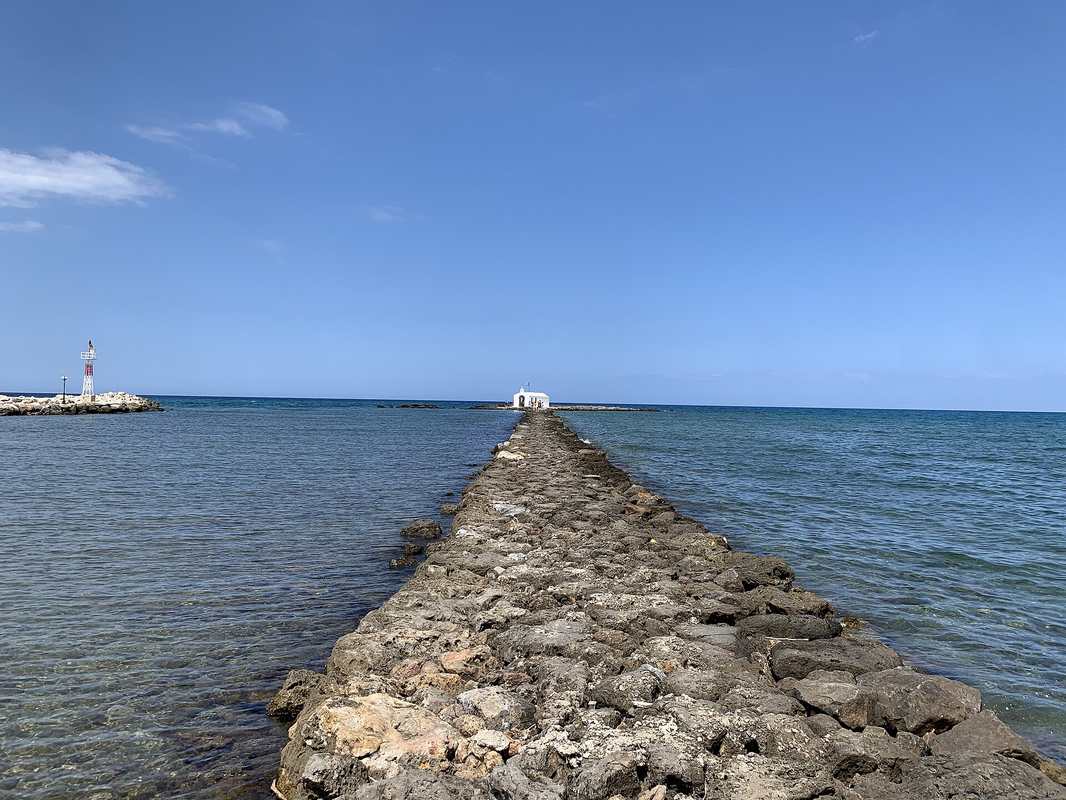
Georgioupoli occupies a prime stretch of Crete’s north coast between Chania and Rethymno, where the Almyros river meets the sea. This low-key resort village centres on a large square shaded by tall eucalyptus trees and fronts a sandy beach that stretches for kilometres along the bay. The tiny chapel of Agios Nikolaos stands offshore, reached by a stone causeway that leads into the water. Families appreciate the calm atmosphere, shallow water near the river mouth, and proximity to Lake Kournas inland. Plan your visit with My Greece Tours.
The village appeals to travellers seeking a quieter alternative to busier Cretan resorts, with tavernas lining the square and the long beach offering ample space even in peak season. Swimmers take care further from shore where currents can develop, though the river mouth area remains gentle for children. The sections below cover the beach, the offshore chapel, family facilities, Lake Kournas nearby, and practical tips for your stay. For broader island context, consult our Crete travel guide.
What makes Georgioupoli beach special on Crete’s north coast?
The beach runs for kilometres along the bay, offering fine sand and ample space. Shallow water near the Almyros river mouth suits families with young children, though currents develop further out.
Georgioupoli beach stretches eastward and westward from the river mouth, creating one of the longest uninterrupted sandy shores on this part of the coast. The sand remains fine and pale, and the beach width varies with the season but generally provides enough room that visitors spread out comfortably even during summer. Eucalyptus trees fringe the landward edge near the village square, offering natural shade for those who prefer to escape the midday sun. Sunbeds and umbrellas appear in clusters, yet long stretches remain free for those who bring their own equipment or prefer to lay a towel directly on the sand.
The combination of length, sand quality, and easy access from the village square makes this beach a central draw for the resort, and it features prominently among Crete beaches suited to relaxed, multi-day stays.
Water conditions vary along the beach. Near the river mouth, the Almyros flows gently into the sea, creating a zone where the water remains shallow and calm, ideal for toddlers and young swimmers. Parents wade out with children, and the riverine influence keeps the seabed soft and the waves minimal. Further from the river, the open bay asserts itself, and currents can develop, particularly when winds pick up or during seasonal swells. Swimmers venturing beyond the shallow zone take the usual precautions, watching for flags and staying aware of conditions. Lifeguards patrol certain sections in high season, though coverage varies.
The beach’s length means you can choose your spot according to your comfort level, with the river mouth offering the gentlest entry and the open stretches appealing to stronger swimmers who enjoy a bit more wave action. West along the shore, the long sands of Episkopi beach stretch toward Rethymno.
How do you reach the chapel of Agios Nikolaos offshore?
A stone causeway leads from the beach into the sea, connecting the shore to the tiny chapel. You walk along the stones, which remain above water in calm conditions, to reach Agios Nikolaos standing offshore.
The causeway begins at the beach and extends seaward, built from large stones that form a narrow path. Visitors walk single file or in small groups, stepping carefully on the uneven surface. The structure remains exposed in typical conditions, though waves can wash over the stones during rough weather or high seas, making the crossing slippery and sometimes impassable. The chapel itself sits on a small rocky outcrop, whitewashed and compact, with a blue-domed roof typical of Greek island churches. Agios Nikolaos serves as a landmark visible from the village and the beach, and the walk out to the chapel has become a signature activity for guests staying in Georgioupoli.
Photographers favour the late afternoon light, when the sun angles across the water and the chapel glows against the sea.
The chapel remains a working place of worship, though its size limits interior access to one or two visitors at a time. Most people walk out to admire the structure from the outside, take photographs, and enjoy the perspective looking back toward the beach and the village. The causeway walk takes only a few minutes each way, yet the experience of standing offshore, surrounded by water, adds a memorable dimension to a beach day. Families include the walk as part of their routine, and children enjoy the adventure of stepping along the stones. The chapel and causeway appear in countless holiday snapshots and feature in lists of things to do in Crete for visitors seeking photogenic, accessible highlights.
Why does Georgioupoli suit families visiting Crete with children?
The village offers a calm atmosphere, shallow water near the river mouth, a long beach with space to play, and easy facilities around the central square. Lake Kournas lies nearby for variety.
Georgioupoli lacks the intense nightlife and crowds of larger resorts, creating a quieter environment where families can relax without constant noise or traffic. The central square, shaded by eucalyptus trees, hosts tavernas with outdoor seating where parents dine while children play safely within sight. The beach lies steps from the square, so moving between accommodation, meals, and the sea involves minimal walking. Shallow water near the river mouth means young children paddle and splash under supervision without parents worrying about sudden depth changes. The beach’s length provides space for ball games, sandcastle building, and exploration, and the flat terrain makes pushchair access straightforward.
Facilities including cafes, mini-markets, and ice-cream vendors cluster around the square, so essentials remain close at hand. The village scale keeps everything walkable, and the overall pace suits the rhythms of family holidays focused on beach time and simple pleasures. Georgioupoli appears frequently in guides to Crete with kids for these practical reasons.
Lake Kournas lies a short drive inland, reachable by car or taxi, offering a freshwater alternative to the sea. Families spend half-days at the lake, where pedal boats and calm water provide different activities. The combination of beach and lake within easy reach adds variety to a week-long stay, preventing boredom for children who tire of the same beach every day. Tavernas in Georgioupoli serve straightforward Greek dishes that appeal to younger palates, including grilled meats, chips, and simple pasta, alongside fresh fish and salads for adults. Accommodation ranges from small hotels to apartment complexes with kitchenettes, allowing families to prepare snacks or breakfast in their rooms.
The village’s position between Chania and Rethymno also makes day trips feasible, so families can explore wider Crete while returning each evening to the familiar base of Georgioupoli.
What is Lake Kournas and how close is it to Georgioupoli?
Lake Kournas is Crete’s only natural freshwater lake, lying a short drive inland from Georgioupoli. Visitors reach it by car in under fifteen minutes, finding pedal boats, tavernas, and scenic mountain-backed water.
The lake sits in a bowl surrounded by hills, its waters fed by springs and remaining fresh year-round. Tavernas line the shore, offering shaded terraces where you can eat while looking out over the water. Pedal boats and small rowboats rent by the hour, and families take to the lake for gentle paddling, often spotting terrapins basking on rocks or swimming near the reeds. The water remains cool even in summer, and swimming is possible, though most visitors prefer the pedal boats for a leisurely circuit of the lake. The setting feels tranquil, with the hills rising steeply behind and the water reflecting the sky.
Birdlife includes ducks and herons, and the reeds at the lake’s edges provide habitat for smaller species. The drive from Georgioupoli climbs inland through olive groves and small villages, and the change in scenery from coast to mountains adds interest. Lake Kournas serves as a popular half-day excursion for guests based in the resort.
Parking sits just above the lake, and a short walk down brings you to the water’s edge. Tavernas compete for custom, and the quality varies, though most serve reliable Greek standards including fresh salads, grilled meats, and local wine. The lake’s status as Crete’s only natural freshwater body makes it a minor curiosity, and guidebooks mention it regularly. Visitors combine the lake with stops at nearby villages or continue further into the hills for mountain views. The proximity to Georgioupoli means you can visit the lake in the morning and return to the beach by early afternoon, or reverse the sequence depending on weather and preference.
The lake rarely becomes overcrowded, even in peak season, and retains a peaceful character that contrasts with the busier coastal attractions.
Where should you stay in Georgioupoli and what facilities exist?
Accommodation clusters around the central square and along the beach road, ranging from small hotels to apartment complexes. Tavernas, cafes, mini-markets, and car-rental offices serve the village, with Chania and Rethymno nearby for broader needs.
Hotels in Georgioupoli tend toward the modest end of the scale, offering clean rooms, balconies, and breakfast rather than luxury amenities. Apartment complexes provide kitchenettes and more space, appealing to families or longer stays. Most properties lie within a short walk of both the square and the beach, and the village’s compact size means location matters less than in larger resorts. Rates remain moderate compared to Chania or Rethymno, and the atmosphere stays low-key throughout the season. Tavernas around the square serve traditional Greek food, fresh fish, and grilled meats, with outdoor seating under the eucalyptus trees creating a pleasant evening setting.
Cafes open early for breakfast and remain busy through the day, offering coffee, pastries, and light snacks. Mini-markets stock essentials including sunscreen, snacks, and basic groceries, though the selection remains limited. For serious shopping or specific needs, visitors drive to Chania or Rethymno, both reachable in under half an hour. Car-rental offices operate in the village, and arranging a vehicle on arrival makes exploring the wider region straightforward. Georgioupoli features in discussions of where to stay in Crete as a quiet, family-friendly base.
The village lacks major nightlife, with evening activity centred on taverna dining and strolls along the beach. Bars exist but remain low-key, and the atmosphere quietens by midnight. This suits families and couples seeking relaxation rather than party-goers. ATMs and a small medical centre serve basic needs, though serious medical issues require travel to larger towns. The beach road runs parallel to the shore, carrying light traffic, and pedestrian crossings connect the square to the sand. Parking appears along the road and near the square, usually free or very cheap. The village’s position on the main coastal road between Chania and Rethymno means bus connections run regularly, and taxis wait near the square.
Visitors without cars can reach Chania by bus for day trips, returning in the evening. The combination of beach access, simple facilities, and proximity to larger towns makes Georgioupoli a practical choice for travellers who want a quiet base with easy reach of wider Crete.
Frequently Asked Questions
When is the best time to visit Georgioupoli?
Late spring and early autumn offer the most comfortable conditions, with warm weather, calm seas, and fewer crowds than the peak summer months. May, June, September, and early October see daytime temperatures in the mid-twenties to low thirties Celsius, ideal for beach days without the intense heat of July and August. The sea warms through spring and remains swimmable well into autumn. Summer brings the busiest period, with families filling the resort during school holidays, though the long beach absorbs visitors without feeling overcrowded. Tavernas and facilities operate fully from late April through October, with some closing or reducing hours outside this window.
Winter sees the village quiet, with many hotels and restaurants shut, though the beach remains accessible and the mild climate allows off-season walks. Spring wildflowers colour the inland hills, and autumn light enhances photography. Shoulder seasons offer better rates on accommodation and a more relaxed pace, appealing to couples and retirees who avoid peak crowds.
Can you swim safely at Georgioupoli beach?
Swimming near the river mouth remains safe for most visitors, with shallow, calm water ideal for children and less confident swimmers. The Almyros river creates a gentle zone where the seabed slopes gradually and waves stay minimal. Further along the beach, away from the river’s influence, the open bay can develop currents, particularly when winds strengthen or during seasonal swells. Swimmers venturing into deeper water take the usual precautions, watching for flags, staying aware of conditions, and avoiding swimming alone. Lifeguards patrol certain sections during high season, though coverage varies and you should not rely on constant supervision. The beach’s length means you can choose your entry point according to your ability and comfort level.
Families with young children stick to the river mouth area, while stronger swimmers explore the open stretches. Avoid swimming immediately after heavy rain, when the river can carry debris or discoloured water. Overall, the beach suits a wide range of swimmers provided you exercise common sense and respect the sea’s variability.
What else can you do near Georgioupoli besides the beach?
Lake Kournas lies a short drive inland, offering pedal boats, swimming, and tavernas beside Crete’s only natural freshwater lake. The drive takes under fifteen minutes, and the mountain-backed setting provides a scenic contrast to the coast. Chania sits to the west, reachable in around half an hour, where the Venetian harbour, old town lanes, and covered market reward a full day’s exploration. Rethymno lies to the east, also about half an hour away, with its own Venetian fortress, old quarter, and long town beach. Inland villages dot the hills behind Georgioupoli, and drives through olive groves and past small churches reveal traditional Cretan life away from the resorts.
Hiking trails lead into the White Mountains for those seeking more active pursuits, and organized excursions to Samaria Gorge or other natural sites depart from nearby towns. The village itself offers gentle walks along the beach, the causeway to Agios Nikolaos chapel, and evening strolls around the eucalyptus-shaded square. Taverna-hopping, trying different beaches along the coast, and simply relaxing fill the days for visitors content with a slower pace.