
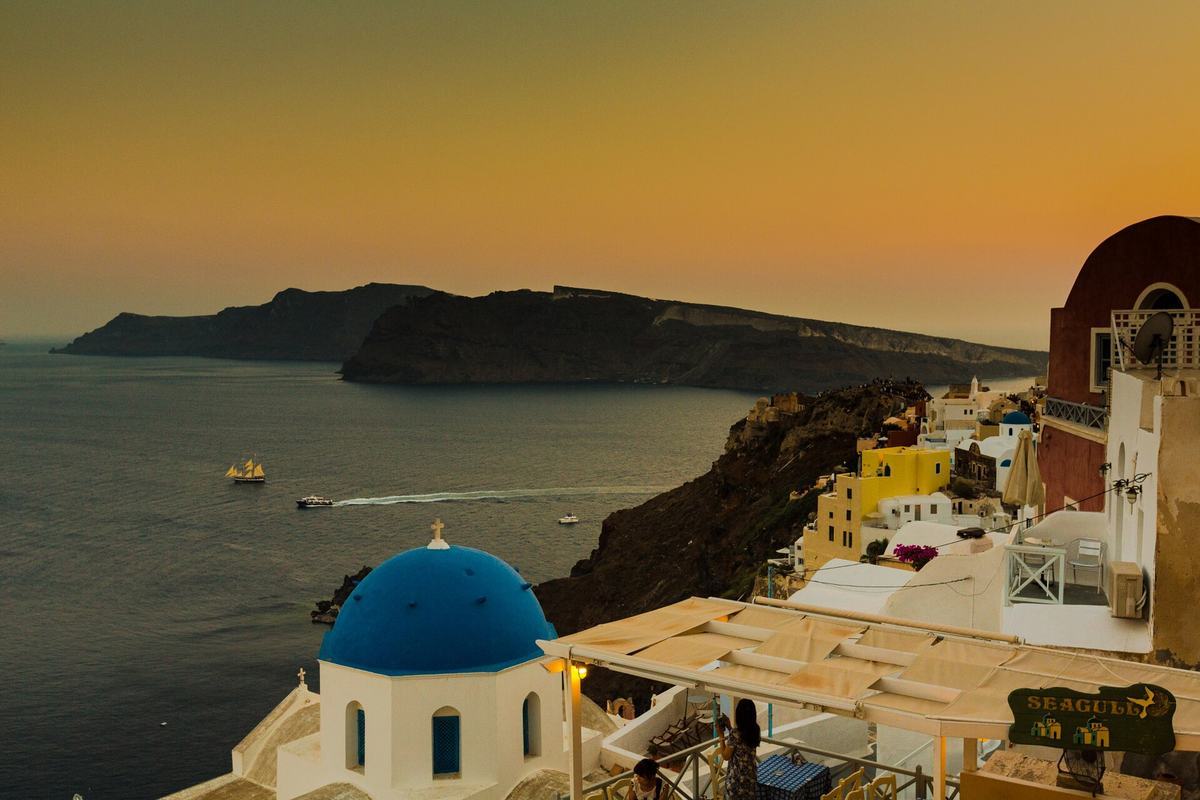
Santorini cave houses, or yposkafa, are dwellings hand-dug into the soft caldera cliff, once the homes of poor sailors and now the island’s most coveted luxury suites, with private plunge pools and sunset views in Oia, Imerovigli and Fira. This guide covers what they are, the history, the experience, where to find them and how to book.
Cave houses are the iconic place to stay in the wider Santorini travel guide. They are unique to the caldera rim. The sections below cover cave houses.
What are Santorini cave houses?
Santorini cave houses, called yposkafa, are homes carved horizontally into the soft volcanic rock of the caldera cliffs. They have barrel-shaped ceilings, arched doorways and narrow façades. Found only on the caldera’s edge, they are now often luxury suites.
Cave houses are Santorini’s signature form of building. The Greek word yposkafa means dug into the rock. Builders hollowed them out horizontally into the soft layer of pumice and volcanic ash that forms the caldera cliffs. The result is a home with a barrel-vaulted ceiling, arched interior doorways, small front windows and a slim façade where it meets the cliff face.
The thick rock gives the cave house its comfort. Metres of stone above each room hold a steady temperature, so the interior stays cool through the fierce summer and warm through the windy winter. Today the caldera-edge dwellings have been restored and turned into boutique hotels and suites. The cave house is now both a piece of living history and the most sought-after place to stay on the island, set within the wider where to stay in Santorini.
The shape of a cave house follows the rock, not a floor plan. Rooms flow into one another under curved ceilings, and walls are rarely straight. Whitewash coats every surface, inside and out, reflecting the strong Aegean light. This organic form is why no two suites are quite alike, and why the cave house has become the visual signature of the whole island.
What is the history of cave houses?
Cave houses began as the homes of Santorini’s poorer residents, often sailors and farmers. They could not afford to build on the land above, so they dug into the cliff. Cheap and sheltered, the yposkafa housed ordinary families for generations.
The cave house has risen from poverty to prestige. For centuries the yposkafa were the dwellings of Santorini’s working people. The sailors, fishermen and farm labourers lacked the means to build a freestanding house on the plateau above. Instead they excavated cheap, durable homes straight into the soft caldera rock, below the grander captains’ mansions that lined the same cliffs.
The caves suited the harsh island life. They stayed cool in the fierce summer, warm in the windy winter and safe from the elements. Whole communities of them honeycombed the cliffs. The social order was legible in the stone: sea captains and merchants built proud neoclassical mansions on top, while labourers carved their homes into the cliff below.
Tourism reversed that hierarchy. As visitors flocked to the caldera, the once-modest caves gained new value from their unrivalled position on the cliff edge. Owners restored and enlarged them, and the humble yposkafa became the foundation of the island’s luxury accommodation. The rooms that once sheltered the poorest islanders now command the highest rates, set out alongside the guides to Oia and Fira.
What is it like to stay in a cave house?
Staying in a cave house means a suite carved into the cliff, with smooth curved white walls and often a private plunge pool or terrace. It usually has a direct view over the caldera and sunset. The thick rock keeps the rooms cool and quiet.
A cave suite is an experience in itself. The rooms keep the soft, rounded forms of the original excavation. Smooth whitewashed walls curve up into vaulted ceilings, giving a calm, cocooning feel quite unlike a standard hotel room. The best suites add a private plunge pool or hot tub on a terrace hung over the cliff. You can swim or soak while gazing straight out at the caldera, the volcano and the sunset.
The rock itself shapes the comfort. The metres of stone above each suite keep the interior naturally cool and remarkably quiet, even in high summer. Modern conversions add air conditioning, fine bathrooms and full comforts while keeping the cave character intact. This marriage of tradition and indulgence explains the appeal, set out alongside the guides to a Santorini honeymoon and the sunset.
The terrace is the heart of the stay. Breakfast arrives at the room in the caldera hotels, so guests eat with the whole bay spread out below. By day the terrace is a private sun deck; by evening it becomes a front-row seat for the sunset over the volcano. This blend of privacy and spectacle is what sets the cave suite apart from a standard sea-view hotel room.
Where are the cave houses in Santorini?
Cave houses cluster in the caldera-edge villages of Oia, Imerovigli, Firostefani and Fira on the island’s west side. Oia holds the largest concentration and the most photogenic setting. All four villages share the view west over the caldera.
The cave suites line the western, caldera-facing cliffs. Oia has the highest number and the most romantic setting, prized by photographers and honeymooners. Imerovigli sits highest on the rim, quieter and grander, and is known as the balcony of the caldera. Firostefani is calmer still, a short walk from Fira along the cliff path. Fira itself is the busiest and most central, with the widest choice of caves and easy reach of shops and restaurants.
Each village suits a different traveller. Oia rewards those who want the classic sunset and the blue-domed views. Imerovigli and Firostefani suit couples seeking quiet with the same caldera outlook. Fira works best for first visits and shorter stays, close to the bus station, the cathedral and the cable car. Choosing the right village matters as much as choosing the suite, set out alongside the guide to Imerovigli.
A handful of caves also sit away from the caldera. Villages such as Pyrgos and Megalochori hold restored yposkafa without the sunset view, and these cost far less. They trade the caldera panorama for authentic village life, church squares and quiet lanes. Travellers who value character over the vista often find these inland caves the better bargain.
How much do cave houses cost and how do you book?
Cave houses are a luxury splurge. Caldera-view suites in Oia rank among the priciest rooms in Greece, often several hundred euros a night in peak summer. Cave rooms set back from the edge cost less. Book early, as top suites sell out.
Price follows the view. The caldera-facing cave suites in Oia command the highest room rates in the country, frequently several hundred euros a night in peak summer. Suites with a private plunge pool sit at the top of the range. Cave rooms set back from the edge, without the direct caldera view, cost noticeably less and still keep the vaulted character.
Booking early is the single most useful step. The best sunset-view suites sell out well in advance for the summer season. Reserve through hotels, villa specialists or trusted rental platforms, and confirm in writing whether the suite truly faces the caldera and the sunset. A room described as a cave suite may still look inland, so check the photos and the exact position, set out alongside the guide to Santorini on a budget.
Season swings the price sharply. High summer brings the top rates and the tightest availability, while spring and autumn offer the same suites for a fraction of the peak cost. Shoulder-season travellers gain warm weather, softer light and calmer villages, along with a far better chance of securing a caldera-view cave at a rate that makes the splurge easier to justify.
Are cave houses a good choice for families or comfort?
Cave houses suit couples and comfort-seekers more than young families. They are often reached by stepped paths with no lift, and some rooms have limited natural light. Families with small children or guests with mobility needs should check access carefully.
The setting that makes cave houses special also shapes their practicalities. The caldera villages tumble down steep cliffs, so the suites are often reached only by flights of steps, with no road access and no lift to the door. Porters carry luggage down, but the climb back up in summer heat is real. Couples and active travellers rarely mind, while families with prams or guests with mobility needs may prefer a village on flatter ground.
Light and space vary from cave to cave. The rooms are dug into rock, so windows sit only on the front façade, and interiors can feel dim at the back. The best conversions solve this with skylights, wide terrace doors and pale finishes. Read recent guest photos rather than staged shots, and ask about room size, natural light and the number of steps, set out alongside the guide to Santorini with kids.
A cave suite rewards a certain kind of trip. It is built for a romantic escape, a honeymoon or a milestone celebration, where the view and the setting are the point. Travellers who want a pool for the children, level access and a beachfront base are better served elsewhere on the island. Matching the cave to the trip is the surest way to a stay that lives up to the photographs.
Why is the caldera view so prized?
The caldera is the flooded crater of a collapsed volcano, ringed by sheer cliffs. A cave house on the rim looks west over this vast blue bay to the volcanic islets and the sunset, a view rated among the finest sea views on Earth.
The view is the reason cave suites cost what they do. The caldera was formed when a huge volcanic eruption collapsed the centre of the island, leaving a deep, water-filled crater ringed by cliffs. Villages such as Oia and Imerovigli sit right on that rim, so a caldera-facing cave suite looks straight down onto the water and across to the small volcanic islands of Nea Kameni and Palea Kameni.
Light gives the view its drama. Through the day the caldera shifts from bright morning blue to the deep gold of the afternoon. As the sun drops behind the volcano, the whole bay glows red and violet, and the whitewashed villages catch the last light. A private cave terrace turns this daily event into a personal one, watched from a plunge pool or a shaded ledge, set within the wider guide to the Santorini caldera.
How are cave houses built and restored?
Cave houses are dug into the soft volcanic rock, not built up from foundations. Restorers reinforce the original cave, add plumbing and power, then whitewash the curved walls. The vaulted shape and thick rock walls stay, blending old structure with modern comfort.
The building method is subtraction, not addition. Rather than laying stone or brick, the original owners hollowed the home out of the cliff, shaping rooms by removing rock. The soft pumice and ash carved easily yet held firm once shaped, which is why the arched, vaulted form recurs across every yposkafa. This is the opposite of a conventional house raised from a foundation.
Restoration keeps the shell and updates the inside. Modern conversions reinforce the cave, run in water, drainage and electricity, and fit bathrooms and kitchens without squaring off the curved walls. The vaulted ceilings, arched doorways and slim façades survive, so a restored cave suite still reads as the historic dwelling it always was. That respect for the original form is why the caves keep their character, set out alongside the guides to Firostefani and Santorini history.
Preservation rules shape what owners can do. Santorini protects the traditional look of the caldera villages, so extensions and bold changes to the cliff face are tightly controlled. This keeps the white, tiered profile of Oia and Imerovigli intact and stops the caves losing their form. The limits also cap how many cave suites exist, which helps explain the scarcity and the price of a genuine caldera-edge stay.
Frequently Asked Questions
What is a Santorini cave house?
A Santorini cave house, or yposkafa, is a home carved horizontally into the soft volcanic rock of the caldera cliffs, with barrel-vaulted ceilings and arched doorways. Once the homes of poor sailors, they are now restored into luxury cave suites with caldera and sunset views.
Where are the cave houses in Santorini?
The cave houses are in the caldera-edge villages of Oia, Imerovigli, Firostefani and Fira on the island’s west side, with Oia having the largest number. All share the famous view west over the caldera, the volcano and the sunset, which makes them the most sought-after places to stay.
Are Santorini cave houses expensive?
Santorini cave houses are a luxury splurge, with caldera-view cave suites in Oia among the priciest rooms in Greece, often several hundred euros a night in peak summer. Cave rooms set back from the edge cost less. Book well ahead, as the best sunset-view suites sell out.
Why do cave houses stay cool in summer?
Cave houses stay cool because they are dug into the caldera rock, with metres of stone above each room. The thick volcanic rock holds a steady temperature, keeping the interior cool through the summer heat and warm in the windy winter, long before modern air conditioning was added.