
The 4-day Greece food and history tour joins Delphi and an olive farm lunch, the Meteora monasteries, a cruise to Hydra, Poros and Aegina, and the Acropolis with a food walk in Athens. Tours across the rest of the country are listed on Greece Tours.
The sections below cover what the Greece food and history tour includes, each site, olives and pistachios, the island foods, the Athens tastings, season and booking, with links into the Delphi pages. The tours shown are checked on GetYourGuide and Viator.
What is the 4-day Greece food and history tour?
The Greece food and history tour connects Athens with Delphi, Meteora, three Saronic islands, and the Acropolis. It lasts four days. The plan pairs archaeological visits with an olive farm lunch, a cruise meal, and an Athens tasting walk.
Hotel pickup in Athens begins this Greece food and history tour. The vehicle drives through Boeotia towards Delphi. The route reaches Castalia Spring and the archaeological site. Lunch follows at a family-run olive farm below Mount Parnassus. The first day then continues north towards Kalambaka. The town stands at the foot of the Meteora rocks.
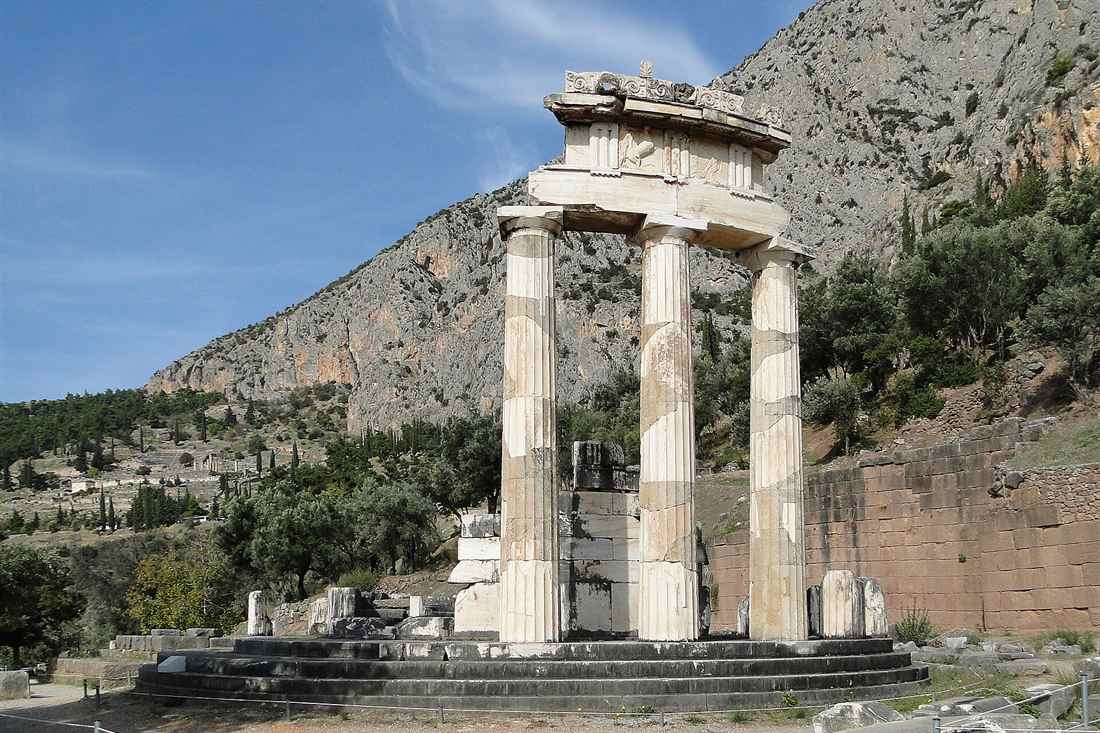
At Delphi, this Greece food and history tour follows the Sacred Way. It passes the Treasury of the Athenians and the Polygonal Wall. The route ends at the Temple of Apollo. The sanctuary sits between Mount Parnassus and the Pleistos Valley. Its terraces follow the slope above the valley floor.
The farm stop gives this Greece food and history tour a direct food connection on its first day. An olive oil tasting accompanies a traditional lunch made with ingredients from the farm. Greek cuisine uses olive oil as a central ingredient alongside wheat and wine. The tasting connects a regional crop with a prepared meal.
After lunch, the vehicle continues to Kalambaka, the town below Meteora. The day closes with sunset views over the rocks, followed by an overnight stay in Kalambaka. Breakfast comes before the next day’s monastery visits. This Greece food and history tour therefore places the first overnight stop near the next morning’s monasteries.
What does the Greece food and history tour include?
The Greece food and history tour includes Athens transfers and selected accommodation. It also includes transport, meals, tastings, a cruise, and an Acropolis visit. Optional entrance tickets and licensed site guides at Delphi and Meteora remain separate choices on the listing.
Hotel pickup and drop-off in Athens operate every day. A private air-conditioned vehicle with an English-speaking driver covers Days 1, 2, and 4. Port transfers support the island cruise, while bottled water is provided in the vehicle. Pickup times are confirmed the day before each tour day. The vehicle serves the inland schedule on three days.
The Greece food and history tour includes three nights with breakfast. One night is in Kalambaka. Two nights are in Athens, creating a base after the inland day. Hotel accommodation tax is payable directly at the hotel. Gratuities are also listed as tour items.
The food elements cover olive oil tasting and a farm lunch near Delphi. The Saronic Islands cruise includes lunch on board. The Athens tasting walk includes koulouri, bougatsa, and souvlaki with tzatziki. The Acropolis visit includes a licensed guide and entrance ticket. Delphi and Meteora tickets remain a separate option.
- Hotel pickup and drop-off in Athens every day. This covers the start and return points for each scheduled day.
- Private air-conditioned vehicle with an English-speaking driver on Days 1, 2, and 4. Bottled water is provided.
- Three nights’ accommodation with breakfast. One night is in Kalambaka, and two nights are in Athens. The overnight split follows the inland route. Breakfast is included at each listed accommodation stop.
- Olive oil tasting and farm lunch near Delphi. The Saronic Islands day cruise includes lunch and port transfers. These two meal stops connect inland farming with a day at sea. The cruise adds a separate lunch setting.
- Licensed Acropolis guide and entrance ticket. The Athens food tasting walk is also included. The route ends in central Athens after the Acropolis Museum.
- Delphi and Meteora tickets are available as separate options. Licensed site guides are also separate. Hotel tax and gratuities are excluded.
Which places does the tour visit over four days?
The Greece food and history tour visits inland sanctuaries, a monastery landscape, and Thermopylae. It also reaches three Saronic islands and central Athens. The order moves from Delphi to Meteora before returning to Athens for the cruise and final Acropolis day.
Day 1 links Athens with Delphi, Castalia Spring, and the archaeological site. This Greece food and history tour then follows the Sacred Way. It passes the Treasury of the Athenians, Polygonal Wall, and Temple of Apollo before the olive farm. Lunch follows the archaeological visit.
The Greece food and history tour then reaches Kalambaka beneath Meteora. Day 2 visits two cliff-top monasteries and valley viewpoints. It stops at Thermopylae for the monument to Leonidas and the 300 Spartans. The vehicle arrives back at an Athens hotel in the late afternoon.
Day 3 crosses the Saronic Gulf by cruise. Hydra offers car-free lanes. Poros presents its clock tower and waterfront houses. Aegina closes the island sequence with town time and local pistachios. Lunch is served on board during the cruise. Cruise timings can change with weather. The transfer returns travellers to their Athens hotel in the evening.
On Day 4, the Acropolis visit covers the Parthenon, Temple of Athena Nike, and Erechtheion. The route continues to the Acropolis Museum. It ends with a central Athens food tasting walk at traditional shops. The listed tasting foods include koulouri, bougatsa, and souvlaki with tzatziki. Hotel drop-off follows the final stop.
The Delphi stop suits travellers who want archaeological context beside regional food. This Greece food and history tour places both experiences on Day 1. A separate Delphi day trip from Athens also places the sanctuary within a comparison point for planning. Both routes begin in Athens and focus on Delphi. The comparison keeps the sanctuary as the central inland site.
- Delphi, Castalia Spring, the archaeological site, and the family-run olive farm below Mount Parnassus.
- Kalambaka, Meteora’s two visited monasteries, valley viewpoints, and Thermopylae.
- The Saronic Gulf, Hydra, Poros, and Aegina, in that cruise order.
- The Acropolis, Acropolis Museum, and central Athens tasting route.
How does it differ from other multi-day tours from Athens?
This Greece food and history tour connects Delphi with a four-day route from Athens. It adds sanctuaries, a UNESCO-listed religious centre, and food experiences to a multi-day itinerary. The result joins historical places with regional culture instead of treating each stop as a separate excursion.
The Greece food and history tour begins with Delphi rather than a single nearby city excursion. The listing places Castalia Spring and the archaeological site on the first day, then continues through Central Greece. This route gives Delphi a central role before the itinerary moves to other parts of Greece. The first day starts with hotel pickup in Athens.
A separate Athens excursion with an island cruise and day trips follows a different planning pattern. This tour groups accommodation, daily Athens pickup and drop-off, and a private vehicle on selected days. A cruise transfer also appears in the four-day plan. The structure reduces separate transport arrangements between major stops. It also includes bottled water in the vehicle.
The Greece food and history tour also links site interpretation with local eating traditions. The listing includes an olive oil tasting near Delphi and breakfast with three nights of accommodation. Lunch is served during the cruise. These inclusions create distinct meal settings across the itinerary without naming an extra restaurant stop. The tasting remains part of the Delphi day.
- Four days connect Athens with Central Greece and the Saronic Gulf.
- Three nights include one stay in Kalambaka and two in Athens.
- Hotel pickup and drop-off in Athens apply every day.
- Entrance tickets for Delphi and Meteora appear as a separate option.
The Greece food and history tour differs from a short Delphi visit through its overnight design. After Delphi, the route reaches Kalambaka before returning to Athens. The listing also includes an English-speaking driver in a private air-conditioned vehicle. That vehicle applies on Days 1, 2 and 4. Athens transfers also support the route. Breakfast is included with accommodation in Athens.
What do you see at Delphi on the food and history tour?
At Delphi, this Greece food and history tour follows the Sacred Way from Castalia Spring to Apollo’s sanctuary. The route passes the Treasury of the Athenians and Polygonal Wall before reaching Apollo’s Temple. Each landmark explains how pilgrimage, civic identity, and religion met here.
The Greece food and history tour first reaches Castalia Spring, a water source connected with the ancient sanctuary. The official Delphi site places the Sanctuary of Apollo north of the modern road. The Sanctuary of Athena Pronaia lies south. The two sanctuaries form separate parts of the archaeological landscape. This layout helps visitors read Delphi as more than one monument.
The Sacred Way rises through the Sanctuary of Apollo. Treasuries from Greek cities once stood along both sides. Votive offerings and sculpted monuments marked the route. Their placement shows civic gratitude and identity beside the processional path. The Treasury of the Athenians remains one of its named stops. Its position makes the climb easy to follow during the site visit.
A two-day Delphi and Meteora itinerary can frame the sanctuary within a shorter regional plan. This four-day route instead places the site inside a wider sequence beginning in Athens. The distinction matters because Delphi appears as both an archaeological visit and a turning point in the route. The site supplies the itinerary’s clearest link between landscape, ritual, and political history.
- Castalia Spring introduces the water landscape beside the sanctuary.
- The Sacred Way climbs through terraces and civic offerings.
- The Treasury of the Athenians represents a city-state monument.
- The Polygonal Wall supports the terrace around Apollo’s temple.
The Greece food and history tour reaches the Temple of Apollo after the listed Sacred Way. Its visible ruins preserve the sanctuary’s central religious focus. The surviving temple is a Doric peripteral building from the fourth century BC. The official site places the omphalos in its cella and the Delphic maxims in its vestibule. These details connect architecture with ritual.
Why did the ancient Greeks consult the oracle at Delphi?
The ancient Greeks consulted Delphi because the Pythia served as Apollo’s oracle at a pan-Hellenic sanctuary. This Greece food and history tour presents the site as a place where religious authority shaped civic decisions. Pilgrims travelled there for answers linked to public and personal choices.
The Greece food and history tour reaches a sanctuary. UNESCO describes it as a religious centre and symbol of ancient Greek unity. The oracle’s influence grew from the eighth century BC. Its religious and political importance increased in the sixth century BC. Delphi attracted pilgrims from across the Greek world. The sanctuary connected local ritual with decisions affecting distant communities.
The Pythia was the high priestess of Apollo’s Temple at Delphi. Ancient accounts describe petitioners preparing questions, presenting gifts, and processing along the Sacred Way. They entered the temple after this preparation. Priests also helped organise the consultation. The ritual therefore involved preparation as well as the spoken oracle. This sequence gave the consultation a defined religious setting.
The Greece food and history tour shows why the oracle’s answers mattered to city-states and individuals facing decisions. A closer look at Delphi’s oracle explains its authority beyond the hillside. The omphalos, known as the navel of the world, expressed Delphi’s central place in ancient religious thought. This symbol linked the sanctuary with sacred geography and explains its political reach.
A four-day ancient Greece route from Athens places this question beside remains. The Greece food and history tour connects ritual with architecture. The Temple of Apollo, treasuries, theatre, and Sacred Way show how belief received architectural form. The theatre rose above the sacred area. Delphi therefore explains the historical purpose behind the stones, not only the names of individual ruins.
What is the olive farm lunch near Delphi?
An olive farm lunch near Delphi pairs a meal with an olive oil tasting below Mount Parnassus. On this Greece food and history tour, local ingredients meet the working landscape. The farm sits between Delphi and the Corinthian Gulf.
The family-run olive farm follows Delphi and comes before the drive towards Kalambaka. The meal uses ingredients from the farm, while the tasting focuses on olive oil. This Greece food and history tour therefore adds production to the regional food story.
The farm sits below Mount Parnassus, in Central Greece. The slopes descend towards the Corinthian Gulf, where olive cultivation shapes the local landscape. A Greece food and history tour meal links agriculture, preparation, and land. The olive grove supplies both a view and a working context.
The tasting also gives context for an olive oil tasting in Athens. Oil changes with cultivar, harvest stage, altitude, and extraction process. Tasting separates those qualities from bread, herbs, or cooked food. This Greece food and history tour keeps the product at the center.
A traditional farm lunch has no fixed named menu. It uses ingredients from the farm. That detail keeps the focus on local supply, rather than on a dish. The tour does not promise a fixed recipe. The farm setting shows harvest handling and preparation without naming an unconfirmed recipe.
Why is the plain below Delphi called a sea of olives?
The plain below Delphi looks like a sea of olives. The Amfissa grove spreads across hundreds of hectares towards the Corinthian Gulf. This Greece food and history tour places lunch near a cultivated landscape. The grove also forms protected heritage.
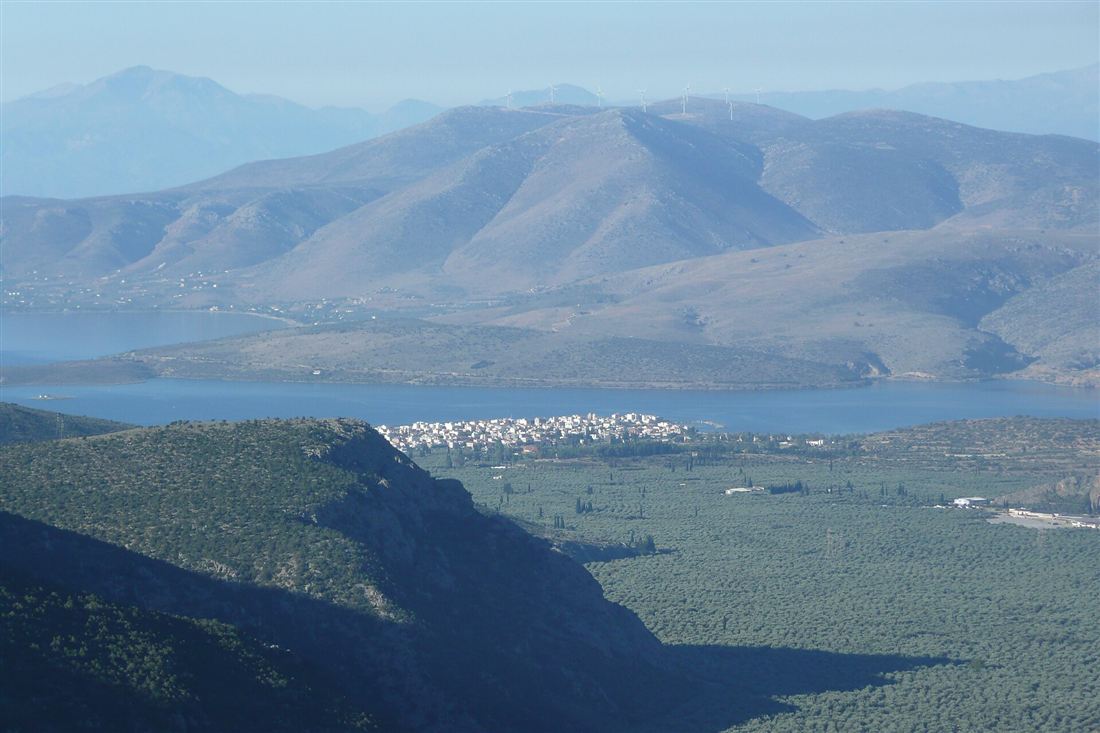
The grove extends from the Delphi area towards the Gulf of Corinth. The grove covers hundreds of hectares of cultivated land in Central Greece. The trees cover the lower landscape, while Mount Parnassus rises behind the farm area. This Greece food and history tour reaches that agricultural setting after visiting Delphi. The view changes from built heritage to cultivated ground.
- Amfissa, also called Amphissis, is a Greek table-olive cultivar grown near Delphi.
- The Amfissa grove holds about 1.2 million olive trees below Mount Parnassus.
- Amfissa olives hold Protected Designation of Origin status in the European Union, tied to Fokida.
- The grove forms part of the protected Delphic landscape, with stone terraces and old paths.
- The olives serve as table fruit and are pressed at mills for olive oil.
Amfissa olives are large, with rich flesh and a full-bodied flavor. The cultivar grows in Central Greece near Delphi. This Greece food and history tour introduces the region through a tasting. It does not use an invented farm label or named recipe. The olive gives the landscape an edible identity.
The grove also preserves older paths and stone terraces dividing properties. An ancient route once linked Delphi with the port of Kirra. The landscape records movement, cultivation, and access to the Gulf in one connected area. That continuity explains the phrase sea of olives. The grove is a working agricultural area, not only a scenic backdrop.
For a related kitchen-based experience, the Delphi cooking class offers a separate food focus. This itinerary includes the farm lunch and oil tasting. Keeping those experiences distinct makes the itinerary easier to understand. Each activity retains its own setting and purpose.
How did olive oil shape ancient Greek life?
Olive oil supported ancient Greek cooking, trade, body care, lighting, and religious practice. In a Greece food and history tour, the Delphi-area tasting turns those uses into a present-day food connection. The tasting presents a current regional product, not an ancient menu.
Ancient Greek cuisine rested on cereals, olives, and grapes. Olives appeared as appetizers, while vegetables were seasoned with olive oil, vinegar, and herbs. Olive oil also formed part of early pancakes made with flour, honey, and curdled milk. This Greece food and history tour links that culinary history with a living farm product. The ingredient crossed breakfast, cooking, and preservation.
Oil carried economic value beyond the household. Mycenaean Greece exported olive oil during the Late Bronze Age. Production used pressing methods, and stored oil moved through Mediterranean exchange networks. These facts explain why groves mattered as productive land, not only scenery. They also explain the crop’s role in regional wealth.
Greeks used olive oil on the body during athletic training. It also served cosmetics, medicines, soaps, and traditional oil lamps. Religious practice gave oil an added symbolic role, including ritual consecration and offerings connected with sacred life. The same Greece food and history tour presents oil first through taste, then through history. Each use shows a different need.
The olive tree carried civic meaning in Greek mythology. Athens linked its identity to Athena’s gift of an olive tree. This Greece food and history tour shows how agriculture entered public belief. The oil remained practical, serving food preparation and daily care. The crop connected household tasks with civic identity.
What are the monasteries of Meteora?
The monasteries of Meteora are Eastern Orthodox communities built on high sandstone pillars. UNESCO recognises the complex as a World Heritage Site. A Greece food and history tour visits two monasteries. The sites depend on each monastery’s weekly closing day, with viewpoints over the valley.
Meteora lies in Thessaly, between Kalabaka and Kastraki, near the Pineios River. Its name means “suspended in the air,” matching the elevated monastic setting. A Greece food and history tour places this landscape beside the route’s religious history. Monks settled in caves during the 11th century. A small community formed below the rocks by the late 12th century.
Twenty-four monasteries stood here at the site’s peak in the 16th century. Six monasteries remain, while four still house religious communities, according to UNESCO. A Greece food and history tour encounters this heritage beside the sandstone landscape. The complex entered the UNESCO World Heritage List in the late 20th century. Its value combines architecture, worship, frescoes, and geology.
- Great Meteoron is the oldest and largest surviving monastery, founded by Athanasios the Meteorite on Broad Rock.
- Varlaam was rebuilt in the 16th century and contains a church with post-Byzantine frescoes in its katholikon.
- Holy Trinity stands on a steep rock summit above the valley near Kalabaka in Thessaly.
- Saint Stephen became a convent for nuns in the 20th century and remains active.
- Saint Nicholas Anapausas preserves wall paintings from the 16th century inside its small rock setting.
Visitors enter active monasteries as religious places, not only as historic buildings. Clothing rules require covered shoulders and knees, with skirts provided for women at the entrance. A Greece food and history tour reaches these buildings as part of the Meteora day. They appear as active religious communities, rather than isolated monuments. Their churches and cells still support worship.
The tour includes a visit to two cliff-top monasteries. Entrance tickets for Meteora are available as a separate option. The exact inclusions depend on the selected booking. The Meteora monasteries page explains how the surviving communities fit within the wider complex. It also traces access, surviving communities, and the UNESCO setting.
How did monks build and live on the Meteora rocks?
Monks reached Meteora through ladders, ropes, and baskets before stairs were cut into the rock. This demanding life shaped the monasteries that a Greece food and history tour explores above the Thessalian plain. Their design reflects retreat, worship, and shared work.
Hermits chose caves and ledges for prayer, silence, and retreat. Their settlements followed Eastern Orthodox forms of eremitic, skete, and cenobitic monasticism. An eremitic monk lived in isolation. A Greece food and history tour introduces the other forms. A skete joined a small group under an elder. A cenobitic monastery shared worship, work, meals, and rooms.
Athanasios Koinovitis arrived from Mount Athos in the 14th century. Between the mid-14th century and late 14th century, he founded Great Meteoron on the Broad Rock. A Greece food and history tour follows this history above the plain. Political instability increased the value of inaccessible peaks. The rock offered refuge, while a removable ladder controlled entry.
- Rope nets lifted people and supplies beside the cliffs before modern stairs reached the summits.
- Drawn-up ladders blocked access during periods of danger.
- Monks replaced ropes after wear or damage during the long ascent.
- Stone stairs and paths were cut into the rocks in the 1920s.
- Monastic compounds combined churches, cells, kitchens, hospitals, refectories, and rooms for shared work by resident communities.
Monastic work supported daily life and property care. Communities also produced goods and received donations from pilgrims. UNESCO records 16th-century frescoes as a key stage in post-Byzantine painting. These paintings remain part of Meteora’s religious meaning. Monks and nuns still maintain living practices. Their work continues within active communities.
A Greece food and history tour reaches the monasteries after breakfast from Kalambaka. The route then continues toward Athens, with a stop at Thermopylae. The climb involves steep paths and steps. Comfortable walking shoes suit this part of the itinerary. The two monasteries depend on the weekly closing schedule. Pickup returns to Athens in the late afternoon.
How were the Meteora rock pillars formed?
Meteora’s pillars formed from sandstone and conglomerate deposited by ancient rivers. Uplift, faulting, and erosion created the platforms supporting monasteries. This gives a Greece food and history tour a geological setting as distinctive as its buildings.
The rocks began as sediment in a delta at the edge of a lake. Streams carried stones, sand, and mud into the basin for millions of years. UNESCO dates deposits to 60 million years ago. Later movements lifted seabed and produced a high plateau with vertical fault lines. A Greece food and history tour crosses this setting after leaving Delphi.
Water entered the faults and weakened the exposed rock. Wind and temperature changes enlarged the cracks, leaving isolated pillars and rounded boulders. A Greece food and history tour shows these forms from valley viewpoints. The pillars are not volcanic plugs. Their material is sedimentary sandstone and conglomerate. Rounded stones appear within the coarser rock.
Certain peaks rise more than 400 metres. Their steep sides explain why early hermits found the upper surfaces difficult to reach. The geological story continues through the present landscape. Rain, wind, temperature shifts, and earthquakes remain natural forces affecting the rocks. The Meteora geology page connects the rock texture with monasteries above. It clarifies the link between landform and settlement.
For religious history, the tour places the surviving communities within the wider complex. The rocks and buildings form one cultural landscape. At sunset, the tour stops near Kalambaka for views over the rocks. The following morning includes two monastery visits and valley viewpoints. Geological form and monastic life meet in this route. The valley reveals the pillars’ vertical scale.
What does the Saronic cruise add to the food and history tour?
The Saronic cruise gives this Greece food and history tour a full island day. It adds island food, seafaring history and town walks. Lunch is served on board. Hydra, Poros and Aegina each offer their own setting, story and local taste.
Day three crosses the Saronic Gulf after a transfer to the port. The route includes Hydra, Poros and Aegina, then returns to the Athens hotel in the evening. This structure places three island cultures inside one Greece food and history tour without another mainland transfer. The order separates inland sightseeing from the sea, giving the day a clear change.
The meal at sea creates a shared pause between shore visits. The listing includes lunch on board, while each island supplies a different visual subject. Hydra brings stone lanes and mansions, Poros brings a waterfront town, and Aegina brings pistachios. Together, these stops give the Greece food and history tour a clear island focus.
The Saronic Islands tour options show how these islands sit near Athens. The cruise adds a maritime thread, since boats and trade connect food with island history. That link gives the Greece food and history tour a sense of place. It shows how island identity grows from movement, trade and food beside water.

What makes Aegina pistachios special?
Aegina pistachios give the Greece food and history tour a named island product with protected status. Local soil, dry conditions, careful harvesting and wide uses explain their value. The cruise ends on Aegina, where travellers try them.
Aegina lies in the Saronic Gulf, about 27 kilometres from Athens. The island has volcanic ground, fertile plains and a dry climate. These conditions support pistachio trees and help explain why the crop became Aegina’s characteristic agricultural product. The landscape turns tasting into a lesson about farming. Dry ground and volcanic rock explain why the nut belongs to Aegina’s story.
- Protected name: “Fistiki Aeginis” holds Protected Designation of Origin status in the European Union.
- Harvest season: growers gather the nuts in late summer, and the island festival runs in mid-September.
- Uses: shops sell them fresh or roasted, and producers use them in sweets and bars.
- Island character: volcanic soil and a dry climate give the crop its local identity.
The product’s history reaches into island agriculture. Systematic pistachio cultivation began in the late 19th century. By the mid-20th century, pistachio trees had replaced much other farm activity on the island. The crop then became central to local trade, processing and visitor interest. Peeling and preparation created another stage between orchard work and the products displayed in island shops.
A pistachio stop changes the meaning of a tasting. Visitors meet a crop tied to land, cultivation and local trade, rather than a generic snack. The Aegina pistachios page adds detail on the product’s protected identity. That context gives the Greece food and history tour a food story. The product carries a place name, farm history and taste into the itinerary.
The tour listing says the cruise’s last stop is Aegina, where travellers can try the island’s pistachios. The tasting connects the port visit with a product grown on the island. It also gives the Greece food and history tour a clear final island flavour before the return crossing. The final stop joins a named crop with the wider sea route.
Which island foods and stories mark Hydra and Poros?
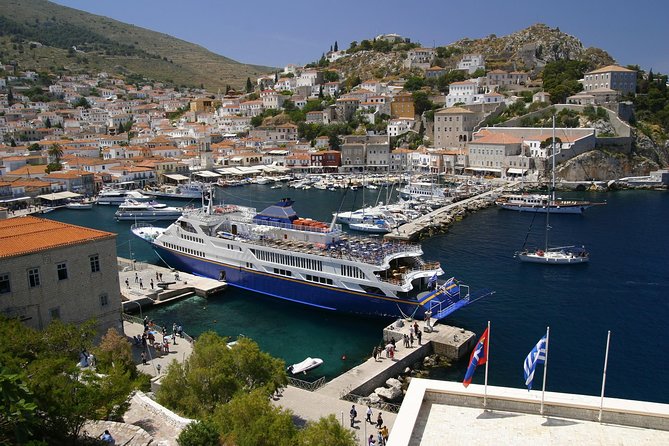
Hydra and Poros mark the Greece food and history tour through two maritime settings. Hydra links seafood and merchant history with car-free stone lanes. Poros combines fishing traditions, neoclassical houses and a waterfront clock tower.
Hydra’s food reflects its connection with the sea. Local dishes include savoro-style red mullet, cuttlefish pilaf and calamari. Island cooks also make gogles pasta, wild-herb pies, almond biscuits and honeyed lalangites. This Hydra island overview connects the dishes with the harbor.
Hydra has no wheeled vehicles, including cars, motorcycles, bicycles and scooters. The tour listing therefore places the visit within lanes designed for walking. Its harbor, stone streets and mansion fronts make movement part of the Greece food and history tour experience. Poros changes the rhythm with a waterfront shaped by boats, fishing and rising streets.
Poros presents a different food story within the Greece food and history tour. Fishermen still mend nets at Pounta beside fishing boats and yachts. The town climbs above the channel that separates the island from the Peloponnese. Red roofs, blue shutters, courtyards and columns line its streets. The historic clock tower faces the sea and provides a clear point for orientation.
Poros also carries a naval past. It hosted the first naval base of the modern Greek state during the War of Independence. Its older name, Kalaureia, and the Sanctuary of Poseidon add an earlier layer. Together, Hydra and Poros join merchant shipping, recipes, fishing, architecture and naval history within the Saronic Gulf.
Why does the tour end at the Acropolis?
The tour ends at the Acropolis. This hill gathers Athens’ religious, political, and artistic history in one place. The Greece food and history tour connects that ancient setting with the Acropolis Museum. It then reaches a central Athens tasting walk.
Day four starts with a guided visit to the Acropolis, the rocky citadel above Athens. The Greece food and history tour gives this final morning a focused historical centre. The route includes the Parthenon, the Temple of Athena Nike, and the Erechtheion. Each building belongs to the sacred complex dedicated primarily to Athena.
The Greece food and history tour places these monuments before the Acropolis Museum. That order moves from surviving buildings to objects and sculptures preserved inside a modern museum. It also gives the final day a clear movement from outdoor archaeology to indoor collections. Museum displays add details that the weathered stones cannot show.
The Acropolis has served as a sacred precinct since the eighth century BC. Its hill rises above modern Athens. Its monuments record changing religious and political roles across later periods. The site became a centre of Athena’s cult before the classical building program. Earlier habitation reached back to the Neolithic period, adding deep time beneath the later temples.
For wider context, the Acropolis’s long history explains why the summit closes the historical route. The Greece food and history tour finishes with a walk through central Athens after the museum visit. This ending places ancient stonework beside the living capital. Athens remains the setting where the tour’s historical and culinary themes meet without adding another transfer.

What does the Parthenon tell about ancient Athens?
The Parthenon shows how fifth-century-BC Athens joined religious devotion, civic wealth, and skilled marble construction. On a Greece food and history tour, its columns and sculpture reveal the Acropolis. They present Athens’ central public symbol.
Pericles directed the Acropolis building program during the fifth century BC. The Greece food and history tour treats the temple as the central example of that public investment. The Parthenon was dedicated to Athena and served as the Delian League’s treasury. Its construction followed Persian destruction, linking the new temple with recovery and power.
The Greece food and history tour introduces a temple built from Pentelic marble. Architects Ictinus and Callicrates designed it, while Phidias supervised its sculptural decoration. Construction began in the fifth century BC, and work on its artwork continued after the main structure stood. The temple’s dedication honoured Athena, the city’s patron goddess, through architecture and sculpture.
- Its Doric outer order gives the temple a firm, measured rhythm.
- Its sculpted metopes and frieze carried religious and civic imagery.
- Its inner chamber held the cult image of Athena Parthenos.
- Its treasury role connected worship with Athenian power.
The building measures about 69.5 metres long and 30.9 metres wide. Its present condition also reflects later conversion into a church, mosque, and ammunition store. A Venetian bombardment damaged the structure during the seventeenth century, leaving the ruin seen today. Earlier changes had already altered its use, but the seventeenth-century explosion caused the major surviving break.
Read the Parthenon’s architectural story before the visit. The Greece food and history tour makes the structure easier to read as both temple and civic statement. Its scale, material, and setting show the resources behind classical Athens. The hill’s position above the city made the temple visible across Attica. Its height strengthened the civic message.
How did Athena’s olive tree win Athens?
In the founding myth, Athena offered the first olive tree during a contest with Poseidon for Athens’ patronage. The Greece food and history tour links that story to Athena and the Acropolis. It also links olives with Greek culture.
Poseidon struck the ground with his trident and produced a salt-water spring. Athena offered the first domesticated olive tree, and Cecrops judged her gift more useful. The contest explained the city’s name through a story about divine gifts and civic choice. Cecrops, the legendary early king, accepted Athena’s gift for the people. His decision gave the myth a civic conclusion.
The Greece food and history tour presents this myth beside places dedicated to Athena. The story explains the goddess’s close connection with the city named after her. Athena’s roles included wisdom, warfare, handicraft, and protection of the city. Her cult title Athena Polias meant Athena as guardian of the city. That title placed protection at the centre of Athenian identity.
An olive tree supplied wood, oil, and food in the mythic account. Those practical products made the gift a sign of prosperity rather than a decorative plant. The tree therefore joined religious meaning with materials used in ordinary Athenian life. Olive wood, oil, and fruit gave the myth an economic meaning as well as a sacred one. These products lasted.
- Athena’s tree became a symbol of the city’s protection.
- Olive oil formed one practical part of Athena’s gift.
- The olive joined Athena’s other symbols, including the owl and helmet.
- The myth connected a useful crop with civic identity.
The Erechtheion area preserves the myth’s strongest Acropolis setting. Ancient traditions placed Athena’s sacred olive tree beside that sanctuary, keeping the contest tied to the hill. The sanctuary also contained cults connected with Athena Polias and Poseidon-Erechtheus. Its complex layout reflected the older sacred stories attached to the Acropolis summit. The building preserved older traditions within one sanctuary.
The Greece food and history tour therefore ends its historical route with a living symbol. Athena’s olive represents a gift that joined belief, daily work, and the city’s name. It gives the final Acropolis visit a clear link between myth and material culture. The olive story also prepares visitors to notice Athena’s symbols across the monuments.
What does the food tasting walk in Athens cover?
The Greece food and history tour ends with a central Athens tasting walk. It follows the Acropolis and Acropolis Museum. Traditional shops provide koulouri, bougatsa and souvlaki with tzatziki. These stops connect everyday snacks with older grain, pastry, grilling and yogurt traditions.
The walk takes place on the fourth day after the guided Acropolis visit. Its tasting stops stay within central Athens, rather than adding another archaeological site. The Greece food and history tour presents three eating experiences. They include ring-shaped bread, filled pastry and grilled meat. Each item uses a different texture. The contrast keeps the tasting easy to follow.
Koulouri brings sesame-coated bread into the tasting sequence. Bougatsa adds crisp phyllo with a filling. Souvlaki supplies small meat pieces grilled on a skewer, while tzatziki adds a cold yogurt-based sauce. Together, the foods show how texture shapes a short urban tasting. The sequence also moves from bakery counter to grill, creating a change between bites. It guides the palate.
For planning context, the Athens street-food guide explains how these foods fit daily eating patterns. The tour listing names the tasting walk, but it does not name shops or a fixed route. It describes the food, not a storefront. That distinction keeps the description precise. It also avoids inventing a shop name. The route remains open within central Athens.
The walk follows a practical order for tasting. Bread offers a light opening. Pastry adds a richer middle bite. Souvlaki with tzatziki finishes with savory flavors. The Greece food and history tour includes wheat, dairy and meat. Dietary requirements belong in the booking discussion, because each food has a different profile. The items have distinct serving temperatures. Their textures differ.


What is the Varvakios Central Market of Athens?
The Greece food and history tour’s market context is Varvakios Central Market. It stands between Athinas, Sofokleous, Euripidou and Aiolou Streets. Construction plans began in 1876. The market opened in 1884, and its glass roof and basements followed in 1886.
The market’s Greek name, Varvakios Agora, honors Ioannis Varvakis. His donation paid for construction. The site began as an open-air market, with vendors working from shacks near the Roman Agora. Its later building placed food trading inside a city block. The Greece food and history tour’s theme fits this continuing activity. Shoppers, cooks and vendors meet within the same block.
A fish market occupies the building’s centre. Fresh fish arrives daily, including sardines, anchovies and mackerel. The surrounding market area also contains meat, vegetables, fruit, olives, cheese, yogurt, pastry and rice. It also sells pulses, spices, nuts and dried fruit. This range gives the Greece food and history tour a local-food backdrop. It shows how ingredients reach the city kitchen.
The market links directly with the food language heard during a meze and ouzo walk. Meze means small sharing dishes. Market eateries serve marinated anchovies, smoked mackerel and lamb meatballs. This tradition uses small portions for conversation and comparison. It gives diners a shared table language. Shared dishes also make differences between recipes easier to notice.
Varvakios also preserves working food customs. A fish stall can clean and pack a purchase, while a nearby eatery can grill fish. Mokka, a coffee roastery housed there since 1922, serves Greek coffee brewed on warm sand with sweet accompaniments. That detail gives the market a clear link to preparation. It adds coffee to the market’s sensory range.
Which Greek dishes carry history on the plate?
The Greece food and history tour presents dishes with older Greek, Byzantine, Roman, Ottoman and regional connections. Each bite carries a different record. The examples include ancient skewers, Byzantine ring bread, Byzantine pastry language and yogurt sauces shaped across Southeast Europe.
The tasting foods work as small historical documents. Their ingredients remain simple, yet their names reveal movement across empires and regions. The list below separates each dish’s recorded connection. A visitor can notice history without turning lunch into a lecture. The Greece food and history tour makes those links edible. The short descriptions keep attention on food history and preparation.
- Koulouri: This sesame-coated ring bread connects with Byzantine kollikion, a small ring bread mentioned in ninth-century writing. It also carries the later Greek name used for simit.
- Bougatsa: Its name comes from Byzantine Greek pogátsa. The Roman phrase pānis focācius means “hearth bread.” Northern Greece developed its recognised regional versions.
- Souvlaki: The word means a small skewer and traces to Medieval Greek soúvla. Santorini excavations found Bronze Age cooking supports designed for skewered food.
- Tzatziki: Greek versions combine strained yogurt, cucumber, garlic and olive oil. Yogurt-based condiments existed in antiquity, while the modern name developed through Turkish cacık.
These dishes also explain why the Greece food and history tour treats food as historical evidence. Wheat, olive oil and wine formed a Mediterranean foundation. Trade and empire added new techniques, names and ingredients. The plate records movement without a museum stop. It links domestic cooking with public eating spaces. This keeps each claim tied to a named dish.
The plate therefore moves between periods without leaving Athens. Koulouri recalls Byzantine bread. Bougatsa preserves layered pastry language. Souvlaki retains skewer cooking. Tzatziki reflects a shared regional condiment tradition. The Greece food and history tour places these connections beside present-day eating. That pairing keeps historical detail close to the tasting. A single tasting can hold different historical layers at once.
A food tasting walk gives those connections a physical form. The hand, grill, oven and serving bowl each preserve a different action. That combination makes the final Athens stop more than a snack break. It turns the Greece food and history tour into a close reading of familiar dishes. The result joins movement, memory and appetite in one final stop.
Which season suits the Greece food and history tour?
Late spring and early autumn suit this Greece food and history tour. Athens then has warm days without midsummer heat. These seasons also support walking at Delphi, Meteora, the Acropolis, and central Athens. Autumn remains warm through October, while winter brings more rain.
Late spring brings green countryside around Delphi and comfortable temperatures for the Sacred Way. The archaeological site rises on the southwestern slope of Mount Parnassus, with the Pleistos valley below. A family-run olive farm near the mountain provides the listed olive oil tasting and lunch.
Athens has a Mediterranean climate with hot, dry summers and mild, rainy winters. The Athens weather calendar helps match clothing with walking, steps, and open-air viewpoints. This Greece food and history tour crosses exposed archaeological ground, so comfortable shoes matter at Delphi and Meteora. Both sites include steep paths and steps.
Early autumn gives this Greece food and history tour a warm setting across the Saronic Gulf. The cruise links three islands with different landscapes and town layouts. Hydra has steep stone lanes and no wheeled vehicles. Poros sits beside a narrow channel, while Aegina lies between Athens and the Peloponnese. The operator states that cruise timing can change with weather.
Winter is mild, but rain can affect a four-day schedule. Summer brings dry days and intense heat on stone. Each Meteora monastery closes weekly, so the two visits depend on the day. A light rain layer helps during stops on archaeological paths in winter and spring. This Greece food and history tour crosses three sites.
How do you book and cancel the Greece food and history tour?
Booking this Greece food and history tour starts with a four-day date and the Athens pickup details. The listing includes hotel pickup and three nights with breakfast. Free cancellation applies up to 24 hours before departure.
Choose the date, review the Athens pickup details, and state dietary requirements during booking. Pickup times arrive the day before each tour day. The private vehicle operates on Days 1, 2, and 4, while port transfers support the Saronic Islands cruise. This Greece food and history tour uses Athens as the start and return point.
- Select a four-day departure from Athens.
- Review pickup details and accessibility information.
- Share dietary requirements before the tour.
- Check optional Delphi and Meteora tickets.
- Cancel at least 24 hours before departure for a full refund.
The listing includes an English-speaking driver, bottled water, hotel transfers, and accommodation tax paid directly at the hotel. This Greece food and history tour also includes three nights with breakfast in Kalambaka and Athens. Delphi and Meteora entrance tickets remain a separate option. A licensed Acropolis guide and entrance ticket are included, while gratuities are excluded.
The tour is a new activity with no reviews yet. This Greece food and history tour has no guest rating, so the itinerary provides the clearest planning details. A driver cannot guide inside archaeological sites or museums. At Meteora, shoulders and knees require coverage, and a skirt is provided for women at the entrance.
Frequently Asked Questions
How long does this four-day tour last?
The tour lasts four days and starts from Athens. The Greece food and history tour begins at Delphi and ends with the Acropolis and a tasting walk. Day one includes the farm tasting and Kalambaka. Day two visits two monasteries before Thermopylae. Days three and four cover the cruise, Acropolis, museum, and food walk.
What happens at the olive farm lunch?
The listing places the lunch at a family-run olive farm below Mount Parnassus after the Delphi visit. The meal uses ingredients from the farm, and the stop includes an olive oil tasting. Greek cuisine commonly uses wheat, olive oil, vegetables, grains, fish, meat, cheese, yogurt, herbs, and lemon. This setting connects regional food with the mountain landscape.
Which islands appear on the cruise?
The cruise crosses the Saronic Gulf and stops at Hydra, Poros, and Aegina. Hydra offers car-free lanes, stone mansions, and a harbor. Poros has a clock tower and neoclassical houses above the waterfront. Aegina is the final stop, where the listing includes time to wander town and try pistachios. Lunch is served aboard the cruise.
How does the tour cover Meteora monasteries?
The itinerary visits two cliff-top monasteries at Meteora. The Meteora visitor information page explains the complex. The complex has six monasteries and UNESCO World Heritage status. Monastic communities formed there in the 14th century, after hermits used the caves from the 11th century. Each monastery has a weekly closing day, so the pair varies. Covered shoulders and knees are required.
What does the Acropolis visit include?
The guided Acropolis visit includes the Parthenon, Temple of Athena Nike, and Erechtheion, followed by the Acropolis Museum. The citadel stands on a rocky outcrop above Athens. Its fifth-century BC building program included the Propylaea, Erechtheion, Parthenon, and Temple of Athena Nike. The hill covers about three hectares.
What foods appear on the Athens tasting walk?
The food tasting walk visits traditional shops in central Athens. Its listed tastings are koulouri, bougatsa, and souvlaki with tzatziki. Koulouri is a ring-shaped sesame bread. Bougatsa is filo pastry with a filling. Souvlaki is grilled meat, a Greek street food. These three stops cover bread, pastry, and grilled food.
Does the tour have customer reviews?
The listing marks the activity as new and shows no reviews yet. That status gives no guest rating or review history for this exact four-day itinerary. The stated inclusions remain the reference: transport, accommodation, breakfasts, lunches, tastings and the Acropolis visit. The listing also identifies the activity as a private group.