
A day trip to Delphi is the classic escape from Athens into ancient Greece and the mountains. This guide covers whether Delphi is worth the journey, how long the day takes and what the itinerary looks like, what you see at the sanctuary and museum, the choice between an organized tour and going independently, what a tour includes and costs, how to add Arachova or Osios Loukas, the best season, the public-bus option, and the tips that keep the day running smoothly.
Delphi lies about 180 kilometres northwest of Athens on the slopes of Mount Parnassus, roughly three hours each way, so an early start is the key to a full day at the oracle. You can see the site with a licensed guide through My Greece Tours.
Is Delphi worth a day trip from Athens?
Delphi is worth a day trip from Athens because it holds the UNESCO-listed Sanctuary of Apollo, the seat of the ancient oracle, the standing columns of the Temple of Apollo, and the bronze Charioteer, all set on the slopes of Mount Parnassus. The site ranks as the top mainland day trip from the Greek capital, and the reasons run deeper than the drive.
In antiquity Delphi was the religious centre of the Greek world, the place the Greeks called the omphalos, the navel of the earth. Pilgrims and city-states travelled here to consult the Pythia, the priestess of Apollo, whose pronouncements shaped wars, colonies, and law. Kings sent gold, cities built stone treasuries along the Sacred Way, and the sanctuary grew into a museum of the classical age. A day trip places a visitor inside that record, walking the same terraced path the ancients climbed toward the temple.
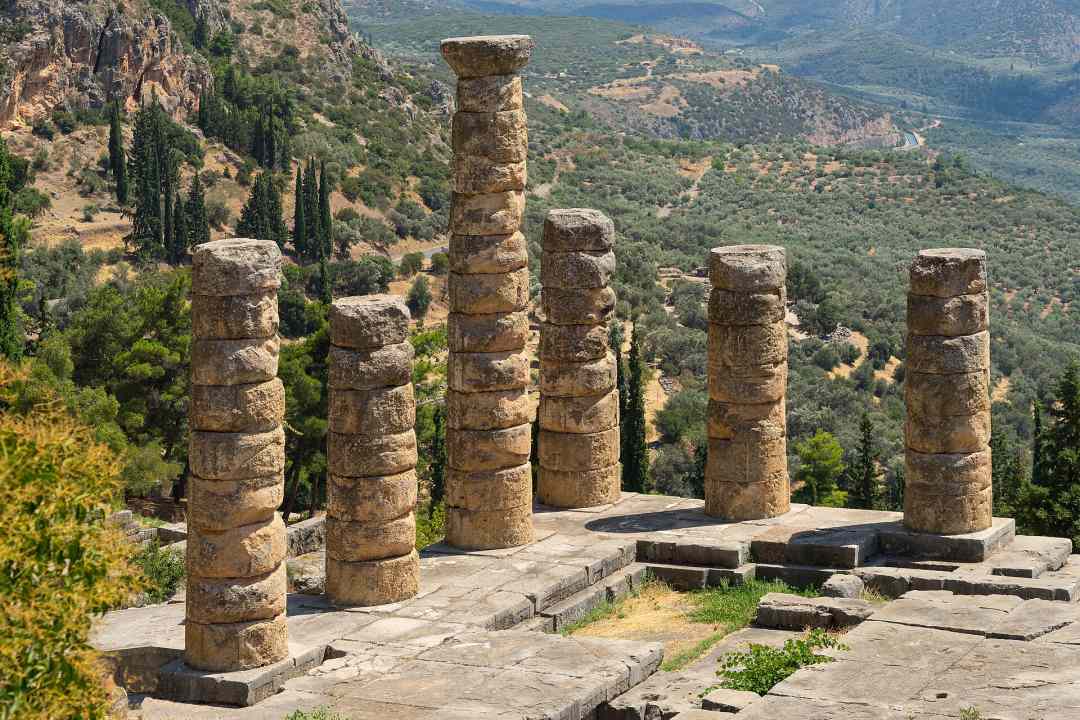
The setting carries the visit as much as the ruins do. Delphi sits at an altitude of about 600 metres on Mount Parnassus, above a sea of olive groves that runs down the Pleistos valley toward the Gulf of Corinth. The Phaedriades cliffs rise behind the sanctuary, and the light on the grey limestone shifts through the day. The Temple of Apollo stands on this terrace, its remaining Doric columns marking the spot where the oracle spoke.
The archaeological museum completes the case. It holds the Charioteer of Delphi, one of the finest surviving bronze statues from the fifth century BC, alongside the twin kouroi of Kleobis and Biton, the Sphinx of Naxos, and the frieze of the Siphnian Treasury. The full destination guide at the Delphi hub sets out how the sanctuary, the museum, and the mountain town of Arachova fit into a single day out of Athens.
How long is a Delphi day trip, and what is the itinerary?
A Delphi day trip runs about ten to twelve hours door to door: a morning drive of roughly three hours each way, three to four hours at the archaeological site and museum, and a lunch stop in the stone town of Arachova on the way back. The distance from Athens to Delphi is about 180 kilometres by road.
The drive north-west follows the national road toward Thebes and Livadeia, then climbs into the mountains through Arachova before dropping to Delphi. Guided coach tours and small-group vans leave central Athens in the early morning, between 07:00 and 09:00, to reach the sanctuary before the midday heat and the largest crowds. Drivers who set out early gain quieter terraces and cooler air for the uphill walk through the ruins.
On arrival the itinerary splits between the open-air sanctuary and the indoor museum. Visitors walk the Sacred Way up to the Temple of Apollo, continue to the theatre and the stadium, then descend to tour the Delphi Archaeological Museum. Many tours add the Athena Pronaia sanctuary and the round tholos, which sit a short walk east of the main gate. Lunch follows in Arachova, a mountain town of stone houses and weaving workshops that produces its own cheese, honey, and red wine.
A sample timeline maps the full day. Departure from Athens at 08:00, arrival at Delphi around 11:00, three hours across the site and museum until 14:00, lunch in Arachova until 15:30, and return to Athens by 18:30 to 19:00. The plan absorbs a photo stop at a mountain viewpoint and the walk back uphill from the stadium, which sits at the highest point of the sanctuary.
What do you see on a Delphi day trip?
A Delphi day trip covers the Sacred Way, the Temple of Apollo, the ancient theatre and stadium, the Athena Pronaia sanctuary with its round tholos, the Castalian Spring, the archaeological museum with the Charioteer, and the stone mountain town of Arachova. Each stands within a short walk of the main gate, and together they form one continuous itinerary.
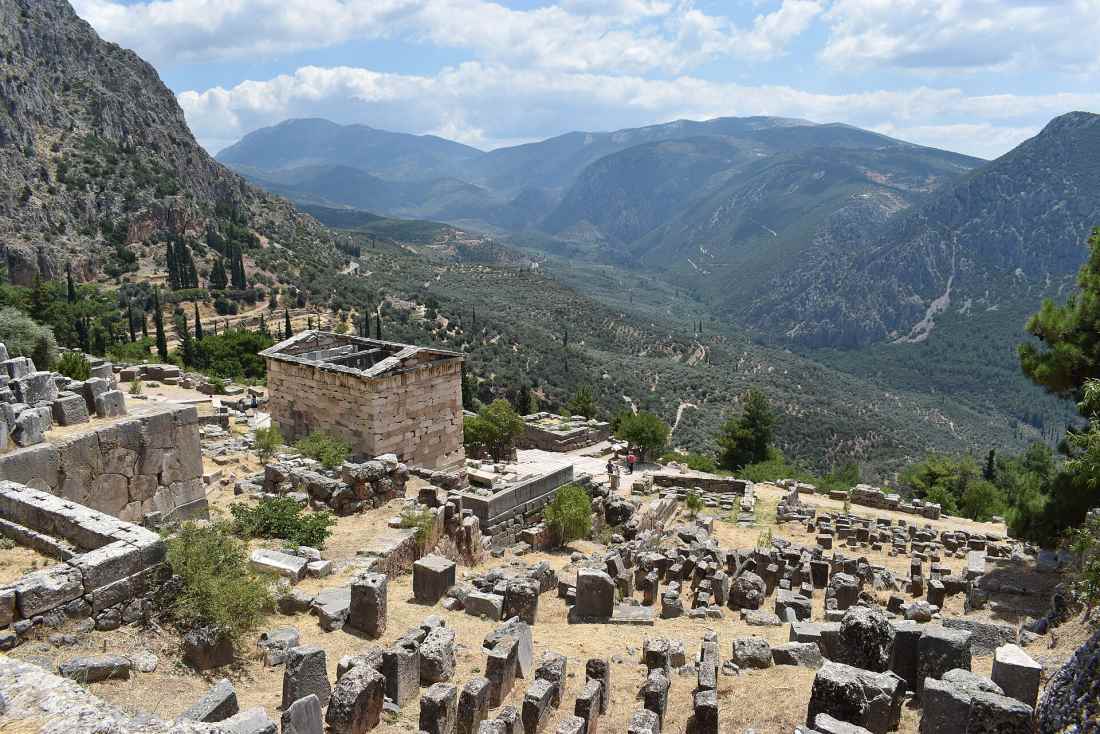
The Sacred Way is the paved processional path that switchbacks up the hillside from the entrance to the temple terrace. Pilgrims once passed the treasuries of the city-states along its course, small stone buildings that held votive offerings. The reconstructed Treasury of the Athenians marks the halfway point, its white marble walls carved with inscriptions. Above it stand the Doric columns of the Temple of Apollo, the sanctuary’s centre, where the Pythia delivered the oracle from an inner chamber.
The route continues upward. The theatre sits above the temple and seats about 5,000 spectators, with a view straight down the valley to the olive groves and the gulf beyond. A steep path leads to the stadium at the top of the site, where the Pythian Games ran every four years; the stone starting line and the tiers of seats survive. Below the road, on the eastern approach, the Athena Pronaia sanctuary holds the tholos, a circular structure of three surviving columns that has become the emblem of Delphi.
The full circuit takes in these features:
- The Sacred Way and the Treasury of the Athenians
- The Temple of Apollo and its Doric columns
- The ancient theatre and the hilltop stadium
- The Athena Pronaia sanctuary and the round tholos
- The Castalian Spring at the foot of the Phaedriades cliffs
- The Delphi Archaeological Museum and the bronze Charioteer
- The stone town of Arachova on Mount Parnassus
The museum and the town close the day. Inside the museum the Charioteer holds the central hall, his inlaid glass eyes intact after twenty-four centuries, surrounded by the Sphinx of Naxos, the Siphnian frieze, and the marble omphalos stone that marked the navel of the world. Arachova, fifteen minutes east by road, offers lunch and a last mountain view, its stepped lanes lined with shops selling formaela cheese, thyme honey, and hand-woven textiles before the drive back to Athens.
Is it better to do Delphi as an organized tour or independently?
An organized coach tour suits most Athens visitors because it removes the three-hour drive, includes a licensed guide who reads the ruins for you, and delivers you to the site without parking or navigation. Independent travel by rental car or KTEL bus rewards travellers who want their own pace.
The organized tour handles every logistic in one price. A driver covers the 180-kilometre route from Athens along the National Road to Livadeia and up the slopes of Mount Parnassus, so you arrive rested rather than tired from mountain switchbacks. A licensed archaeological guide walks the Sacred Way with you, names the Treasury of the Athenians, the Temple of Apollo and the theatre, and explains the oracle’s role at the panhellenic sanctuary. The site rewards a guide: the stones sit as low foundations and scattered column drums, and a self-guided visitor reads a field of rubble without one.
Self-driving a rental car gives full control of the schedule. You leave Athens at your own hour, stop in Arachova on the way, linger at the Castalian Spring below the sanctuary, and drive back when you choose. The trade-off is the mountain road, the parking, and buying and reading the site alone. Renting a compact car costs a standing rate of around 40 to 70 euros per day plus fuel and tolls, and the drive runs about three hours each way.
The KTEL intercity bus is the budget route. Buses depart from the Liosion terminal in Athens direct to Delphi village, take around three hours, and cost a standing fare in the region of 15 to 20 euros each way. The bus drops you in the modern town, a ten-minute walk from the archaeological site, and the timetable runs a handful of departures a day, which forces an early start and a fixed return. A bus traveller still buys the entrance and tours the ruins without a guide unless one is hired at the gate. Reserve the site entrance ahead through the Delphi tickets guide to skip the queue.
What does a Delphi day tour from Athens include and cost?
A standard Delphi day tour includes round-trip transport by coach or minibus, a licensed guide, and hotel or central pickup, and many packages add the site entrance. Prices run a standing range of around 90 to 160 euros per person, with small-group and private tours at the higher end.
The core inclusions are consistent across operators. Transport moves you both ways between Athens and Delphi, a licensed guide leads the sanctuary and the archaeological museum, and pickup collects you from a hotel or a central meeting point. The differences that move the price are group size, whether the entrance ticket sits inside the package, and whether the route adds a second stop. A typical tour covers:
- Round-trip transport by air-conditioned coach or minibus from Athens.
- A licensed, English-speaking archaeological guide at the sanctuary and museum.
- Hotel pickup and drop-off, or a central meeting point in the city.
- The Delphi site and museum entrance, on packages that state it as included.
- A lunch stop in Arachova or Delphi village, with the meal paid on the day unless the tour lists it.
Large-coach tours carry the lowest per-person price, in the region of 90 to 110 euros, because the cost of the driver, guide and vehicle spreads across a full bus of travellers. Small-group minibus tours cap the party at a handful of people, cost around 120 to 160 euros, and give more time with the guide and a faster pace through the site. Private tours with a car and personal guide run higher and set their own schedule. Read each listing for the entrance line: a tour advertised at the low end sometimes excludes the site ticket, which adds the standing gate fee on arrival.
Lunch is the common exclusion. Most tours build in a stop at a taverna in Arachova or Delphi village and give free time to eat, but the meal is paid separately unless the description names lunch as included. Budget a standing 15 to 25 euros for a taverna lunch on top of the tour price, and carry water and small cash for the café stops. Confirm the pickup point and time at booking, because a Delphi day runs long and departures leave central Athens early in the morning.
Can you combine Delphi with Arachova or Osios Loukas on a day trip?
Yes. Many Delphi day trips pair the sanctuary with the stone mountain town of Arachova for lunch, and longer tours add the UNESCO monastery of Hosios Loukas near Distomo for its Byzantine mosaics. A self-drive fits both stops into a single full day with an early start.
Arachova sits at 950 metres on the slopes of Parnassus, a short drive above Delphi, and makes the natural lunch and coffee stop. The town stacks grey-stone houses up the mountainside, lines its main street with shops selling local cheese, honey, red wine and woven textiles, and holds tavernas that serve mountain cooking. A combined tour halts here for an hour of free time to eat and walk the lanes, and a self-driver reaches it in a fifteen-minute drive from the archaeological site.
Hosios Loukas is the second major stop, a monastery near Distomo founded over the tomb of the hermit Saint Luke of Steiris. It ranks among the finest surviving examples of middle Byzantine architecture in Greece and holds gold-ground mosaics and frescoes inside its two linked churches, the Katholikon and the Church of the Theotokos. The monastery carries UNESCO World Heritage status alongside the monasteries of Daphni and Nea Moni. It lies roughly a 40-minute drive from Delphi, so a tour that includes it runs longer and starts earlier than a Delphi-only day.
A self-drive links all three in one day when you leave Athens early. Drive first to Delphi for the sanctuary and museum in the cooler morning, break for lunch in Arachova, then turn toward Distomo for Hosios Loukas in the afternoon before the return leg to Athens. The route covers real mountain distance and the monastery keeps set opening hours, so plan the order to reach Hosios Loukas well before it closes. Organized operators sell the same combination as a single extended tour, which removes the driving and the timing pressure and keeps the museum and monastery entrances inside one guided schedule.
What is the best time and season for a Delphi day trip?
The best Delphi day trip starts at first light, before the tour coaches arrive and before the midday heat settles on the terraces. Spring and autumn deliver mild temperatures and clear views across the valley, summer adds long daylight, and winter brings snow to Parnassus.
An early departure from Athens puts you on the archaeological terraces around opening time, when the Sacred Way climbs quietly toward the Temple of Apollo and the light rakes across the ruins from the east. The coaches from Athens reach the entrance later in the morning, so the first hour on site stays uncrowded. Reaching the Charioteer of Delphi in the museum before the group tours file in gives you an unhurried look at the bronze.
Spring, from March through May, and autumn, from late September through November, hold the mildest weather of the year. Daytime temperatures sit in a comfortable range for the steep climb up the sanctuary, the surrounding hills turn green, and the air stays clear enough to see the olive groves running down to the Gulf of Corinth at Itea. These two windows pair walking comfort with long-distance visibility.
Summer stretches daylight well into the evening, which widens the return schedule and leaves room for a stop in Arachova on the way back. The trade-off is heat on the exposed slopes by late morning, so the summer plan front-loads the open-air ruins and reserves the indoor museum for the hottest part of the day. Winter turns the setting alpine: snow caps Mount Parnassus above the site, the crowds thin to a handful, and the archaeological area keeps shorter opening hours, so confirming the winter timetable before you set out keeps the day on track.
How do you do a Delphi day trip by public bus from Athens?
The KTEL Fokidas bus runs from the Liosion terminal in Athens to Delphi in about three hours each way. A morning outbound service and a planned afternoon return give a self-guided visitor roughly four hours on site, enough for the ruins and the museum with tight timing.
Buses depart from Terminal B on Liosion Street, north of the Athens centre and reachable by city bus or taxi. The KTEL Fokidas coaches follow the route through Livadeia and Arachova before dropping passengers at the edge of Delphi village, a short walk from both the archaeological site and the museum. The ride climbs steadily through the Boeotian plain and into the mountains, so the seats on the right side face the valley views on the approach.
Buying the ticket in advance secures a seat on the busy morning service, and the KTEL Fokidas counter at Liosion handles same-day sales when seats remain. The outbound morning departure and the mid-to-late afternoon return frame the day, so checking the exact return time at the counter on arrival in Delphi locks in the plan. A margin of thirty minutes before the return departure covers the walk back from the site to the village stop.
The timing runs tight but works for a focused visit. With about four hours on the ground, the efficient order climbs the Sacred Way to the temple and the theatre first, drops back to the museum second, and holds the last stretch for a quick lunch in the village before the coach leaves. Skipping the stadium at the top of the site trims the walk when the return clock is short. For a fuller sanctuary walk and the wider planning picture, the Delphi hub sets out the full route through the ruins.
What are the best tips for a Delphi day trip from Athens?
Book the tour or the site ticket ahead in high season, leave Athens early, and wear grippy shoes for the polished marble. Carry water and sun cover for the open slopes, save the indoor museum for the midday heat, and set aside time for lunch in Arachova on the return.
Advance booking removes the two friction points that slow a peak-season day: a sold-out coach and a queue at the ticket window. In the busy months the combined site-and-museum ticket sells fast at the gate, and reserving it online sends you straight past the line. An early start compounds the benefit, delivering you to the terraces during the quiet first hour and clearing the steep climb before the sun reaches the upper stadium.
- Book ahead in high season — reserve the guided tour or the combined site-and-museum ticket to skip the gate queue.
- Start early — the first hour on the Sacred Way stays cool and uncrowded before the coaches arrive.
- Wear grippy shoes — the ancient marble and worn stone underfoot turn slick, and the path to the temple rises sharply.
- Carry water and sun cover — the sanctuary sits on an exposed south-facing slope with little shade.
- Time the museum for midday — the indoor galleries house the Charioteer and the treasury sculptures out of the afternoon heat.
- Stop in Arachova — the stone village on the Parnassus flank sits on the road back for a late lunch.
Footing decides the pace of the visit. The Sacred Way and the steps to the theatre and stadium consist of ancient stone and marble that hold a polish from centuries of feet, so soles with grip keep the climb steady. Water and a hat handle the exposure, since the terraces face the sun with almost no cover, and refilling before the ascent avoids the walk back down for supplies. Slotting the museum into the hottest hours turns the heat into an advantage, moving you indoors to the Charioteer and the Siphnian frieze while the open ruins bake.
The return leg carries its own reward. Arachova straddles the road between Delphi and Athens on the slope of Parnassus, and a lunch stop there breaks the three-hour drive with a mountain-village meal of local formaela cheese and roast meat. Building thirty to forty minutes into the schedule for the stop keeps the day from ending as a straight dash back to the capital, and the village setting closes the trip on the mountain that frames the sanctuary itself.
Do you do a Delphi day trip or stay overnight in Delphi?
A Delphi day trip from Athens fits the ruins, the museum and the mountain drive into a single outing with no hotel change, while an overnight in Delphi village puts you at the gates before the coaches and hands you a slow evening over the olive plain.
The day trip works for a tight schedule. A coach or private driver collects you in central Athens, covers the roughly 180 kilometres each way, and returns you to the city the same night. Your luggage stays in your Athens room, you skip a second check-in, and you keep the evening in the capital for dinner. One ticket, one guide and one seat hold the whole plan together.
The overnight rewards a slower pace. Staying in Delphi village places you within walking distance of the archaeological site, so you reach the Sacred Way at opening and walk the Temple of Apollo before the tour buses arrive from Athens. The low sun lights the terraces, and the crowd thins. Read about beds, tavernas and the mountain setting on our Delphi village guide.
An overnight also opens the next morning. With a night in the village you add the Castalian Spring, the gymnasium terrace, the Corycian Cave on Mount Parnassus, or a climb toward the summit ridge. Sunset falls across the olive plain that runs down to the Gulf of Corinth, and the village stays quiet once the day groups leave. The day trip trades that calm for a single run from the capital.
What do you need to know before booking a Delphi day trip?
Confirm what the fare covers before you pay, note the pickup point and departure time, and pack for a long day on a winding mountain road. The Delphi ruins reward a guide, and the switchbacks test anyone prone to motion sickness.
Start with the fare. Tour prices fall into two kinds: one bundles the site entrance and museum ticket, the other covers transport and the guide alone and leaves admission for the gate. Read the inclusions line by line, and check whether entry to the archaeological site and the Delphi Archaeological Museum sits inside the price or on top of it. Our Delphi tickets guide sets out the entry fees and the combined site-and-museum option.
Then the logistics. Central Athens pickups run early, often before dawn, and the full outing runs ten to twelve hours door to door once you count the drive, the guided walk and the return. Confirm the exact pickup spot and the departure time at booking, and build the rest of your Athens plans around a late return to the city.
Pack for the terrain. Delphi climbs the slope of Mount Parnassus, the paths are stone and gravel, and the road bends through tight switchbacks above Arachova. Bring:
- water for the exposed terraces
- sun cover for the open site
- grippy shoes for the loose stone paths
- a motion-sickness remedy for the winding ascent
A guide turns the scattered foundations into a story you can follow, naming the Sanctuary of Apollo, the Treasury of the Athenians and the theatre so the stones read as a city rather than rubble. The oracle sat at the heart of this sanctuary, and the guided narrative ties the ruins to the myths that filled them, which the KTEL bus and a bare ticket leave you to piece together alone.
Is a Delphi day trip suitable for families or older travellers?
A Delphi day trip suits families and older travellers who pace the walking, since the site is open-air with room to move, but the long drive and the steep, uneven terraces set real limits. An early start and a slower loop make the day comfortable for mixed groups.
Children take to the open ground of the sanctuary, where the theatre steps, the stadium track and the hunt for the bronze Charioteer in the museum hold their attention across a morning. The site rewards a slow pace rather than a race to the top, and the museum gives a cool, level indoor break from the climb. The ten-to-twelve-hour day and the three-hour drive each way are the main strain, so a private car or a small-group tour that allows rest stops suits a family better than a full coach.
Older travellers manage the lower terraces and the museum with ease, while the upper Sacred Way, the theatre and the hilltop stadium demand a steady climb on worn marble. Turning back at the temple terrace still covers the heart of the sanctuary, and the level museum holds the Charioteer and the treasury sculptures within reach of everyone. Grippy shoes, water, and a shaded rest at the café by the gate keep the day within comfort for any age.
Frequently Asked Questions
Is Delphi worth a day trip from Athens?
Delphi is the top mainland day trip from Athens: the UNESCO sanctuary of Apollo, the ancient oracle, the Temple of Apollo, and the bronze Charioteer in the museum, set on the slopes of Mount Parnassus above a sea of olive groves.
How long does a Delphi day trip take?
A Delphi day trip runs about ten to twelve hours door to door, with roughly three hours’ drive each way, three to four hours at the site and museum, and a lunch stop in Arachova on the way back.
How far is Delphi from Athens?
Delphi is about 180 kilometres northwest of Athens by road, reached in around three hours through Thebes and Livadeia and up the mountain through Arachova.
Is it better to visit Delphi on a tour or independently?
An organized tour removes the mountain drive, the parking and the navigation and adds a licensed guide who reads the ruins; a rental car or the KTEL bus gives independent travellers their own pace at a lower cost.