
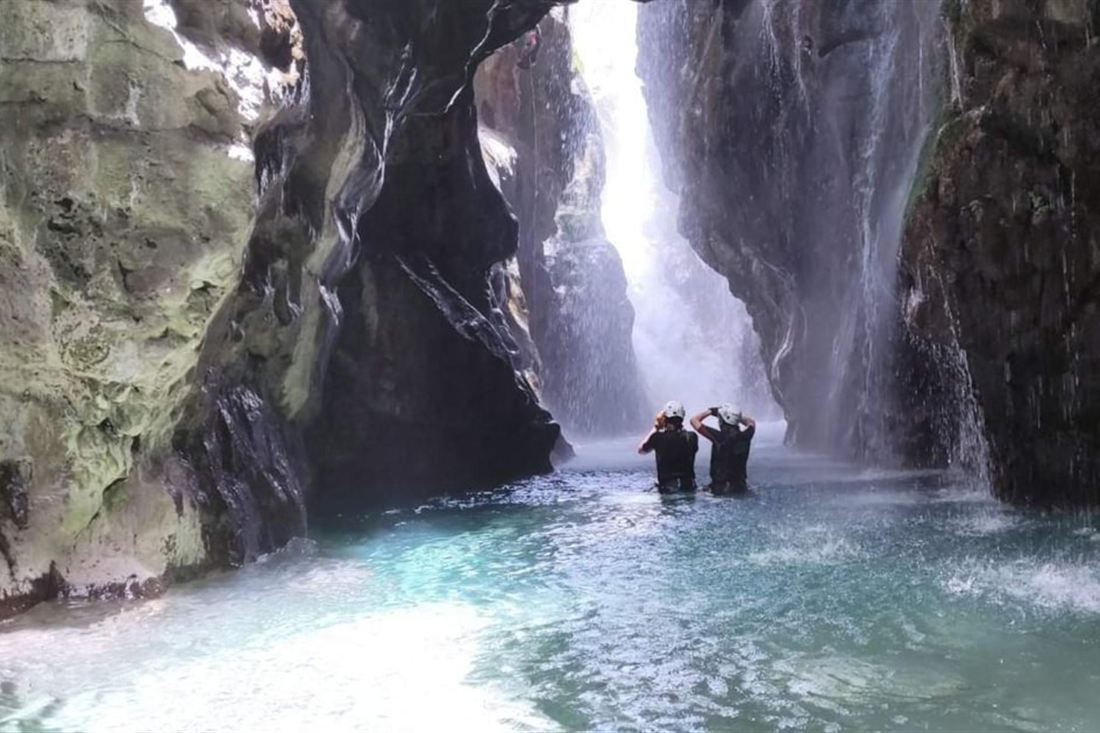
Crete canyoning is the sport of travelling down a river gorge on foot, by rope and by water, with rappels down waterfalls, jumps into pools and short swims. Guided tours run in the gorges near Rethymno and Chania. Tours across the rest of the country are listed on Greece Tours.
The sections below cover the tours, the canyons, each route, the difference from a gorge hike, the steps, rappelling, gear, grades, who it suits, safety and season, inclusions, getting there and booking, with links into the Crete pages. The tours shown are checked on GetYourGuide.
What is Crete canyoning?
Crete canyoning is the sport of travelling down a gorge on foot, by rope and through water. Guided groups walk the gorge floor, rappel down rock walls and waterfalls, jump into pools and swim. Crete canyoning runs in gorges near Rethymno, Chania, Heraklion and Lasithi.
A canyon is a narrow gorge cut by water. Where a gorge hike stops at a drop, canyoning carries on down it with ropes, harnesses and helmets.
Crete is cut by gorges between its mountains and the sea. Only a handful hold the drops and pools that make Crete canyoning possible, and certified guides lead groups through them.
The sport arrived on Crete with mountain guides and outdoor centres that rig fixed anchors in the gorges. Bolts and chains at the top of each drop hold the ropes, and guides check them before every season.
Each route ends where the gorge meets a road, a village or the sea. On the Diplochahalo route the exit is a beach, so the swim at the end of Crete canyoning comes with sand underfoot.
No experience is needed on the beginner routes. Guides teach every skill on the day, from fitting the harness to the first rappel, and carry the team ropes.
Which Crete canyoning tours can you book?
Three GetYourGuide listings cover Crete canyoning and its gorges: a canyoning tour in the Kourtaliotiko Gorge, canyoning in the Diplochahalo Gorge above Seitan Limania, and a guided hike through the Kritsa Canyon. Local outdoor centres run Crete canyoning in all four regions of the island.
- Rethymno: Kourtaliotiko Gorge Canyoning Tour with 2 Rappels.
- Chania: Canyoning in the Diplochahalo Gorge, ending at Seitan Limania.
- Agios Nikolaos: Kritsa Canyon Guided Hiking Tour, a walk with no ropes.
- Canyoning Crete Outdoor Center: routes in Heraklion, Rethymno, Chania and Lasithi.
- Eco Events, Rethymno: daily canyoning in the Kourtaliotiko Gorge.
The Kourtaliotiko tour meets in the village of Koxare, south of Rethymno. The Diplochahalo trip starts on the Akrotiri peninsula near Chania.
The Kritsa trip is a hike, not a rope descent. It suits walkers who want the walls and narrow passages of a canyon without the rappels.
Which gorges are used for Crete canyoning?
Crete canyoning uses the Kourtaliotiko Gorge near Rethymno, the Diplochahalo Gorge near Chania and the Ha Gorge in eastern Crete, plus other canyons in the four regions. Each gorge has its own drops, water and season, from beginner routes to expert descents.
- Kourtaliotiko Gorge: a river gorge south of Rethymno with year-round springs and a waterfall.
- Diplochahalo Gorge: a short technical canyon on the Akrotiri peninsula.
- Ha Gorge: a deep, narrow canyon for expert teams.
- Kritsa Canyon: a walking canyon in the Dikti mountains above Kritsa.
The gorges differ in water. Kourtaliotiko has a river that flows all year, while Diplochahalo holds little water outside the rainy months. Water decides how much swimming and jumping a Crete canyoning route holds.
Heavy rain changes gorges too. A local guide knows the current state of each route and picks the one that fits the group and the day.
What does Crete canyoning in the Kourtaliotiko Gorge involve?
Crete canyoning in the Kourtaliotiko Gorge follows a river fed by year-round springs. The group rappels down the rock wall beside a waterfall, jumps into clear pools and swims between them. The GetYourGuide tour includes two rappels, and Eco Events gives three to four hours for the route.
The river in the gorge feeds the palm-lined beach of Preveli further south. Its springs keep the water flowing in summer, which is rare for a Cretan gorge.
Eco Events rates the route as medium and runs it every day. The team supplies a neoprene suit and full canyoning gear, and an entrance fee for the gorge is paid on the spot.
Groups range from 2 to 12 people. The meeting point is the village of Koxare, at the top of the gorge, south of Rethymno.
What does Crete canyoning in the Diplochahalo Gorge involve?
Crete canyoning in the Diplochahalo Gorge descends a short, technical canyon on the Akrotiri peninsula. The route has six rappels, two of them high, and passes a cave inside a 38-metre drop. It ends on the sand at Seitan Limania.
The gorge is about 1 kilometre long and starts near the village of Chordaki. Little water runs through it, so this Crete canyoning route is about ropes and rock rather than swimming.
The cave sits in the middle of the highest drop. It runs about 20 metres into the rock and holds stalactites and stalagmites, the stone icicles that hang from the roof and rise from the floor.
The exit is the cove of Seitan Limania, also called Stefanou beach. Canyoners arrive on the beach still in helmets and harnesses, ready for a swim.
How does Crete canyoning differ from a gorge hike?
A gorge hike follows a path and stops where the rock drops away. Crete canyoning keeps going down the drops with ropes, through pools and over waterfalls. Hikers wear boots and carry water; canyoners wear wetsuits, helmets and harnesses and follow a certified guide.
The Kritsa Canyon tour shows the difference. It is a guided walk through narrow rock walls in the Dikti mountains, near Agios Nikolaos, with no ropes and no rappels.
The long walking gorges of the island, such as Samaria and Imbros, follow marked paths for hours. Crete canyoning routes are shorter in distance but slower, since each drop takes time to rig and descend.
Walkers who want more paths without ropes find them on the Crete hiking page.
What happens step by step on a Crete canyoning tour?
A Crete canyoning tour starts with the gear fitting and a safety briefing at the meeting point. The group walks to the top of the gorge, practises the rappel, then works down the canyon with rappels, jumps and swims. The day ends at the gorge exit.
- Meet the guides at the village or car park.
- Put on the wetsuit, harness, helmet and shoes.
- Listen to the safety briefing and the hand signals.
- Walk to the top of the first drop.
- Rappel, jump and swim down the canyon in turn.
- Change into dry clothes at the exit.
Guides rig every rope and check each harness before a descent. On a Crete canyoning tour, one guide goes first and waits at the bottom while another stays at the top.
Communication matters in a noisy gorge. Waterfalls drown out voices, so guides use whistles and hand signals, taught in the briefing, to tell each canyoner when to start, stop or wait.
Jumps are always a choice. A guide checks the depth of each pool first, and anyone who prefers can be lowered by rope or walk round.
What is rappelling in Crete canyoning?
Rappelling, also called abseiling, is going down a rock wall on a rope. In Crete canyoning, you sit back in your harness, walk your feet down the wall and let the rope slide through a metal device. The guide controls the rope from above or below.
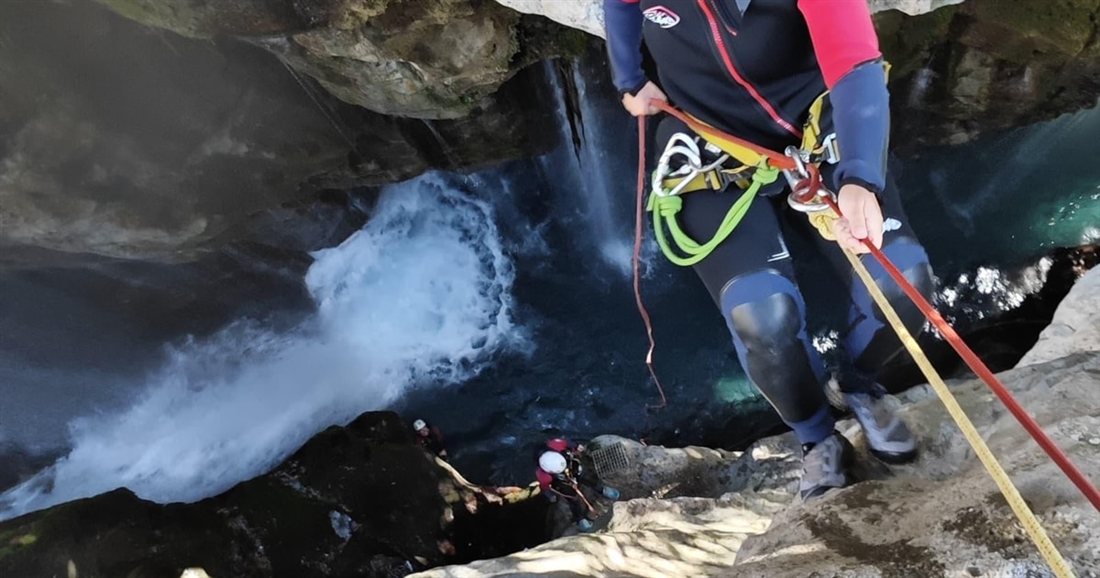
The metal device is called a descender. It adds friction to the rope, so you go down slowly and stop when you hold the rope with your braking hand.
Guides belay beginners on the first drop. A belay is a second rope held from above, so the guide can stop or lower a canyoner at any moment, even if the canyoner lets go.
The key is the body position. You lean back with straight legs and feet apart, like sitting in a chair. Leaning in towards the rock makes your feet slip.
Each Crete canyoning route has its own drops. The Kourtaliotiko tour has two rappels beside its waterfall, and the Diplochahalo route has six, with a highest drop of 38 metres.
Which gear does Crete canyoning use?
Crete canyoning uses a neoprene wetsuit, a helmet, a harness, ropes and a descender. The outdoor centres supply all the personal and team equipment. Guests bring sports shoes that cover the ankle, a swimsuit and a change of clothes.
- Wetsuit: neoprene that keeps you warm in cold gorge water.
- Helmet: protects your head from rock and falling stones.
- Harness: the belt and leg loops that hold you on the rope.
- Ropes and descender: rigged and checked by the guides.
- Shoes: hiking or sports shoes with good grip, your own.
Canyoning Crete Outdoor Center lists all the technical gear, statutory taxes and high-definition photos of the day in its tours. On the Kourtaliotiko route, Eco Events adds specialist instruction from its guides to the kit.
The same gear works on the canyons of the mainland. The site covers Papigo canyoning in Zagori and Evia canyoning.
How are Crete canyoning routes graded?
Crete canyoning routes are graded with the European canyoning scale. It gives three scores: v for the vertical drops, a for the water, and a Roman numeral for length and commitment. Low scores mean short, easy drops and little water.
The vertical score runs from v1 to v7, from short slides to long, hard rappels. The water score runs from a1 to a7, from dry or shallow routes to deep, fast water.
The commitment score runs from I to VI. It shows how long the route takes and how hard it is to leave before the end.
Beginner Crete canyoning routes sit low on all three scores, with short drops, shallow pools and an exit before the afternoon heat. Expert canyons such as the Ha Gorge score high on the vertical and commitment scales.
Guides match the route to the group. Eco Events rates its Kourtaliotiko Crete canyoning tour as medium, while local gorge ratings give the Diplochahalo Gorge 6 out of 10.
Who suits Crete canyoning?
Crete canyoning suits active people from 10 years old who are not afraid of heights. Canyoning Crete Outdoor Center takes children from 10 with a guardian, asks for basic fitness and needs no experience. Swimming matters on the wet routes such as Kourtaliotiko.
- Age: 10 and over, with a guardian for children.
- Fitness: basic, enough for walking over rocks for hours.
- Experience: none needed on beginner routes.
- Heights: no fear of heights, since every rappel leaves the ground.
- Swimming: needed on routes with pools and jumps.
Groups on the Kourtaliotiko tour run from 2 to 12 people. Families with younger children find gentler days out on the Crete with kids page.
People with knee, back or heart problems talk to the guide before booking. A Crete canyoning day asks for climbing over boulders as well as hanging on a rope.
How safe is Crete canyoning, and when does it run?
Crete canyoning is safe with certified guides, checked gear and the right weather. Guides watch the forecast, since rain can raise the water fast. The season runs from winter through spring to mid-summer, depending on the rain each year.
Water is the main hazard in a canyon. Heavy rain upstream can turn a calm gorge into a fast stream, so guides cancel or change routes when storms are forecast.
The season follows the water. Wet routes carry more water after the winter rains, while dry canyons such as Diplochahalo stay open longer into summer. Kourtaliotiko’s springs keep its river flowing all year.
Weather and crowds across the year are compared on the best time to visit Crete page.
How long does Crete canyoning last, what is included, and how do you get there?
Crete canyoning lasts three to five hours, including the walk in and out. Tours include the guides, all technical gear, a wetsuit and photos. Groups meet at a village or car park near the gorge and drive there themselves.
- Kourtaliotiko Gorge: 3 to 4 hours; meet in Koxare village; wetsuit and gear included.
- Diplochahalo Gorge: about 3 hours; start near Chordaki; exit at Seitan Limania.
- Canyoning Crete Outdoor Center: 3 to 5 hours; gear, taxes and photos included.
Koxare lies on the road from Rethymno to Plakias and the palm beach of Preveli.
A hire car makes the meeting points easy to reach. For a guided day with transport on the island’s rough roads, the Crete jeep safari covers the mountains by 4×4.
How do you book and cancel Crete canyoning?
You book Crete canyoning online through GetYourGuide or directly with the outdoor centres. Eco Events gives a full refund for cancellations up to 24 hours before the start. Guides move or cancel a Crete canyoning trip when rain makes the water unsafe.
Each listing shows the free dates and meeting point once you choose a day. Give your shoe size and a phone number when you book, since gear is fitted to each guest.
A base near the gorges saves driving. The where to stay in Crete page compares Rethymno, Chania and the south coast towns.
Frequently Asked Questions
What do you bring to Crete canyoning?
Bring hiking shoes with ankle support, a second pair of shoes and socks, a swimsuit and a towel. Add comfortable sports clothes, dry clothes for afterwards, a light windproof jacket, water and energy snacks. Tie long hair back, since it goes under a helmet all day.
Can you do Crete canyoning if you cannot swim?
On dry routes, yes. The Diplochahalo Gorge carries little water, so the day there is about ropes and rock. Wet routes such as Kourtaliotiko include pools and jumps, where swimming matters. Tell the guide before booking, and the team picks a Crete canyoning route that fits.
How cold is the water on Crete canyoning?
Spring water in a shaded gorge stays cold even in summer, which is why every tour supplies a neoprene wetsuit. The suit traps a thin layer of water that your body warms. The water in a deep canyon sees little sun, so it stays cool long after the air warms up.
Do you get photos of your Crete canyoning day?
Yes, on two of the tours the guides shoot the day. Canyoning Crete Outdoor Center includes high-definition photos of the excursion, and Eco Events lists photos in its Kourtaliotiko trip. Phones stay in a sealed bag or at the car, since water and rock are hard on screens.
Is the Ha Gorge part of beginner Crete canyoning?
No. The Ha Gorge is a deep, narrow canyon for experienced teams, with a long chain of rappels. Beginner tours use gentler routes such as Kourtaliotiko. The gorge itself, its walls and its access are covered on the Ha Gorge page.
Is Crete canyoning possible in winter?
Yes, on the right routes. Canyoning Crete Outdoor Center runs trips from winter through spring and into mid-summer, as long as the rain allows. Winter Crete canyoning needs a thicker wetsuit and a dry day after the storms, when the water has dropped back to a safe level.
Is Crete canyoning the same as coasteering?
No. Coasteering follows a rocky sea coast, with swimming, scrambling and jumps from the shore. Crete canyoning goes down a gorge from the mountains towards the sea, with ropes, rappels and freshwater pools. The Diplochahalo route links the two worlds, since it ends on a sea beach.