
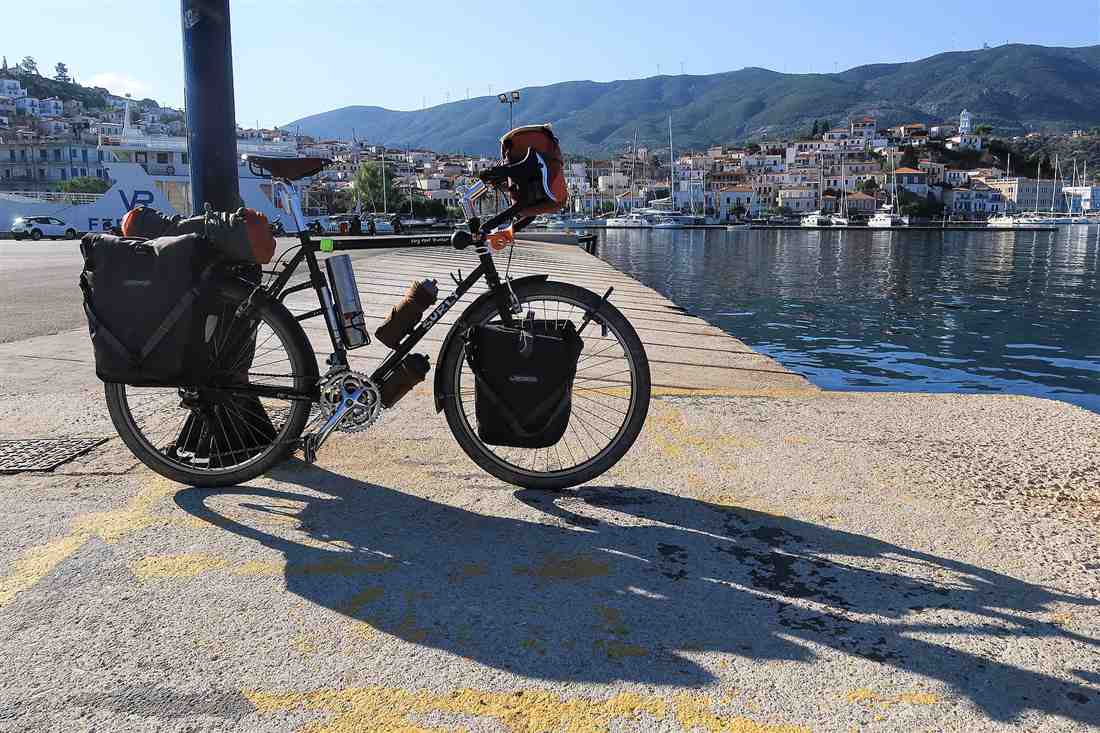
Corfu E-Bike Tour
A Corfu e-bike tour is a guided ride on a pedal-assist electric bike through the olive groves, hill villages and farm lanes of Corfu, with olive oil or wine tasting stops on some routes. Greece Tours lists four rides of this kind, three of them based in the south around Chlomos, Lefkimmi and Moraitika.
The motor adds power only while the rider pedals, so a Corfu e-bike tour turns steep climbs into steady spins. The sections below cover the four tours on sale, fitness, the tasting stops, road safety, the best season, and how heat and battery range shape the ride.
What is a Corfu e-bike tour?
A Corfu e-bike tour is a guided ride on a pedal-assist electric bicycle through the Corfu countryside, following quiet lanes, olive-grove tracks and village roads, with tasting or photo stops built into the route.
The bike looks like a normal bicycle, with a battery on the frame and a small motor in the wheel hub or at the pedals. A Corfu e-bike tour opens the green interior of the island to riders who never train on a road bike. The Corfu island hub lists the other ways to see the island.
Corfu is green and hilly, with olive groves on almost every slope. The routes follow the lanes between these groves, pass through hill villages and stop where the view opens over the coast. Corfu e-bike tours keep the pace social, so riders talk, take photos and ask the guide about farming, food and village life along the way.
Which Corfu e-bike tours are on sale?
Four Corfu e-bike tours are on sale: an e-bike tour with olive oil tasting, a discovery ride into nature and local life around Chlomos, a wine tasting and winery visit in Lefkimmi, and a guided olive oil tasting ride in Moraitika.
Each listing title names the main stop, and the title is the clearest sign of what the day holds. Two rides centre on olive oil, one on wine and one on the landscape and daily life of the villages. Three of the four sit in the south of the island, lower and quieter than the mountainous north.
The four tours differ in focus more than in equipment, since all of them use pedal-assist e-bikes and mix riding with stops. A food lover picks an olive oil ride, a wine drinker picks the Lefkimmi winery visit, and a rider who wants countryside picks the Chlomos discovery ride. The list below names each Corfu e-bike tour by its listing title.
- E-Bike Tour with Olive Oil Tasting – a ride with an olive oil tasting stop.
- E-Bike Discovery Ride into Nature and Local Life – a countryside ride around Chlomos.
- E-Bike Tour with Wine Tasting and Winery Visit – a winery ride around Lefkimmi.
- Guided E-Bike Tour with Olive Oil Tasting Experience – a guided ride from Moraitika.
How do pedal-assist e-bikes work on the Corfu hills?
A pedal-assist e-bike adds motor power only while the rider turns the pedals. On EU pedelecs the motor is rated at 250 watts and stops assisting at 25 km/h, so on a Corfu e-bike tour the bike gives a steady push on every climb.
A switch on the handlebar sets the assist level, from a low eco mode for flat lanes to a high mode for steep ground, and a small display shows the mode and the charge left. The rider still steers, brakes and changes gear as on a normal bicycle. Above 25 km/h the motor cuts out and the bike rolls on pedal power alone.
Battery range depends on the assist level, the height climbed, the rider’s weight and the wind. A Corfu e-bike tour climbs more than a ride on flat ground, and riders who leave the bike in its highest mode drain the battery fastest. The efficient plan is low assist on the flat and high assist only on steep sections. Check the tour listing for how charging is handled.
Who suits a Corfu e-bike tour, and how fit do riders need to be?
A Corfu e-bike tour suits anyone who rides a bicycle with confidence, including couples, friends and riders who have not cycled for years. The motor handles the climbs, so a moderate level of fitness covers the ride.
The Corfu terrain is hilly, and without a motor the climbs to villages such as Chlomos turn into hard work. With pedal assist the effort drops to a steady spin, and riders of different fitness levels stay together. Balance and control matter more than strength: riders start, stop and steer on narrow lanes, cross loose gravel on olive-grove tracks and brake on short descents.
Corfu e-bike tours suit travellers who care about food, landscape and village life more than speed. The tasting stops break up the ride, and the pace leaves time for photos. Riders with knee, back or balance problems check with the operator before booking, and families read the listing for the minimum age.
Where do the south Corfu routes lead?
Three Corfu e-bike tours ride in the south of the island: around Chlomos, a hill village with views over the south coast and the Korission lagoon; from Moraitika on the south-east coast; and around Lefkimmi, the main town of the south.
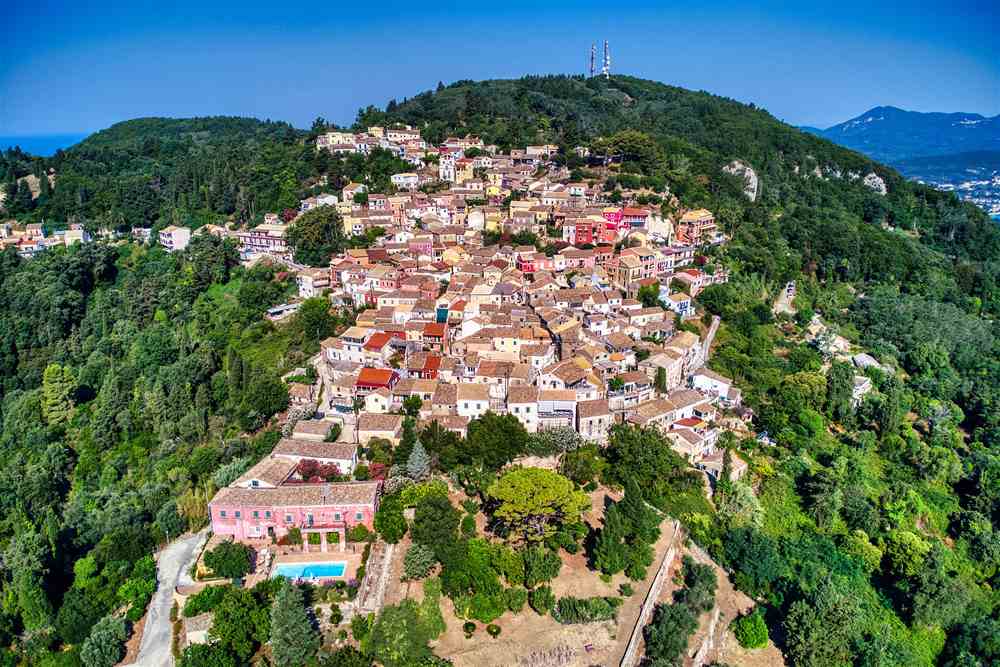
Chlomos sits high on a hill, and its lanes look down over olive groves to the sea and the Korission lagoon. The Chlomos discovery ride centres on nature and local life, so its stops focus on landscape and village streets. Moraitika is a resort on the south-east coast, and its guided Corfu e-bike tour adds an olive oil tasting to the ride.
Lefkimmi is the main town of the south, with a river canal running through its centre, and the wine tasting ride with a winery visit is based there. The south is farm country, with vineyards, olive groves and small villages between the two coasts. Riders who want to see more of the countryside after the tour find further stops on the Corfu villages page.
What is it like to ride through the Corfu olive groves?
Riding through the olive groves on a Corfu e-bike tour means shaded earth tracks and narrow lanes between tall, old olive trees, with stone walls and farm buildings along the way. The ground turns uneven in places, so riders keep a steady speed.
Corfu olive trees grow tall, and the oldest carry thick, twisted trunks. The shade under the canopy keeps the tracks cooler than the open road, which matters in summer. The tracks run on packed earth and gravel, with roots and loose stones in places. On a Corfu e-bike tour the steady push of the motor keeps the bike moving on loose ground, and riders keep both hands on the bars.
The groves are working farmland: Corfu carries millions of olive trees, a large share planted under Venetian rule, when growers were rewarded for planting them. The Corfu olive oil page covers that story in depth. In the north, the groves climb the slopes of Mount Pantokrator, at 906 m the highest peak in the north of the island.
What happens at the olive oil tasting stop?
At the olive oil tasting stop, riders taste extra virgin olive oil and learn its three main traits: fruity, bitter and peppery. Two Corfu e-bike tours include this stop, one of them the guided ride from Moraitika.
An olive oil tasting follows a simple method. The taster warms a little oil in a small cup, smells it for grassy or fruity notes, then sips it while drawing in air. Bitterness shows on the tongue and the peppery kick shows in the throat, and both mark a fresh extra virgin oil. Bread, olives and local products join some tasting tables, so check what each Corfu e-bike tour serves.
Corfu also grows kumquats, a small citrus fruit made into liqueur, sweets and preserves, and some tastings on the island include kumquat products. The stop breaks up the ride and gives time to rest the legs. For a full day of local food, the Corfu food tour covers the island’s dishes in more depth and fits on a different day from the ride.
Which wines does the Lefkimmi winery visit pour?
The Lefkimmi winery visit pours Corfu wines, and the island’s local grapes include Kakotrygis for white wine and Petrokorintho for red. The exact wines vary by winery and season, so check the listing of this Corfu e-bike tour for what the tasting serves.
Kakotrygis is a white grape grown on Corfu, and Petrokorintho is a local red grape. A winery visit on Corfu covers the vines, the cellar and how the wine is made, and the listing confirms what this visit includes. The ride to the winery crosses the farmland around Lefkimmi, where vineyards sit between the olive groves.
Riders who drink on an e-bike ride keep the tastings small, since they still ride back with the group. Water between glasses helps in the heat. The Corfu wine tasting page covers the island’s wine in more detail for anyone planning a full tasting day. A wine-focused Corfu e-bike tour gives a first taste of that scene on two wheels.
How does a guided ride compare with an e-bike rental?
A guided Corfu e-bike tour includes a planned route, a local guide and arranged stops, while an e-bike rental gives freedom of timing but leaves navigation, traffic and battery planning to the rider. First-time visitors to Corfu gain most from a guided ride.
Corfu has narrow lanes, steep climbs and olive-grove tracks that phone maps do not always show clearly. A guide knows which lanes stay quiet, where the climbs start and where the group stops for water and shade. The guide also brings local knowledge of farming, food and village history. On a guided Corfu e-bike tour, the rider only needs to pedal and follow.
A rental suits confident riders who have ridden e-bikes before and want to set their own pace over a full day. Rental riders plan the route around battery range, carry their own water and find a place to charge. They also face traffic on the main roads alone. Corfu e-bike tours remove that planning, and on the tasting rides the stops come arranged.
What does the tour listing need to confirm before booking?
Before booking a Corfu e-bike tour, check the listing for the meeting point, the start time, the length of the ride, what the tasting includes, whether a helmet comes with the bike, the guide’s languages and the cancellation terms.
Details vary by operator, and the listing is the reliable source. The meeting point matters because the south tours start away from Corfu Town, so check whether hotel pickup is part of the booking or a car or taxi is needed. The length of the ride and the height climbed show how hard the day is, and the tasting line shows what food and drinks the Corfu e-bike tour includes.
Anyone travelling with children reads the age rules and asks whether smaller bikes exist. Food allergies and alcohol limits are worth raising with the operator in advance, since both the olive oil and wine rides serve food or drink. Reviews from past riders show how each Corfu e-bike tour runs on the day.
- Meeting point – where the ride starts and how to reach it.
- Ride length – the time on the bike and the height climbed.
- Tasting – what the olive oil or wine stop serves.
Can riders stay safe on Corfu roads?
Yes, riders on a Corfu e-bike tour stay safe by riding single file, wearing a helmet, following the guide’s line and taking care on the main roads, where cars, buses and scooters share narrow lanes. Summer heat and sun add a second risk.
Corfu roads are narrow, with tight bends, stone walls and little room at the edge. Traffic is heavier on the main roads and around the resorts in summer, and drivers meet riders on blind corners. Riding single file, keeping right and leaving space between bikes lets cars pass. On olive-grove tracks the risks are loose gravel and roots, so riders brake before bends, not in them.
Heat catches visitors out. July and August bring strong sun and high temperatures, and the motor hides how hard the body works. Riders drink water at every stop, wear sunscreen and sunglasses, and cover their shoulders. A Corfu e-bike tour in summer runs best in the morning, before the midday heat.
- Helmet – worn on every ride, on roads and tracks alike.
- Single file – one bike behind the other on narrow lanes.
- Water – a drink at every stop, even without thirst.
- Sun cover – sunscreen, sunglasses and light sleeves.
When is the best time for a Corfu e-bike tour?
The best time for a Corfu e-bike tour is spring or autumn, when the hills are green, the air is mild and the roads are quieter. In July and August, a morning ride avoids the midday heat.
Spring on Corfu brings wildflowers under the olive trees and green hills after the winter rain. Early autumn keeps the sea warm and the days mild, and grape harvest time arrives in the vineyards of the south. Summer is the busiest season, with the hottest days in July and August. Check the tour listing for the dates each Corfu e-bike tour runs.
Time of day matters as much as the month. A morning start gives cooler air, soft light for photos and quieter roads. Late afternoon rides catch low sun over the olive groves. On some days the wind builds in the afternoon, and a headwind on an open stretch drains the battery faster, so riders save charge with low assist on the flat.
- Spring – green hills, wildflowers and mild air.
- Summer – hot days and early starts.
- Autumn – a warm sea, mild air and the grape harvest.
Why choose an e-bike over a scooter, ATV, car or hiking?
A Corfu e-bike tour covers more ground than hiking, reaches lanes and tracks that cars avoid, and moves quieter and slower than a scooter or ATV, which keeps riders close to the groves, the smells of the countryside and village life.
Each way of exploring Corfu has its place. A scooter or ATV covers long distances fast and suits riders who want to see a large part of the island in a day, and the Corfu scooter and ATV rental page covers those options. A car handles the long drives to the far north and the mountain roads.
Hiking gives the closest look at the land, and the Corfu Trail crosses the island from south to north on foot. A Corfu e-bike tour sits between these options: slower than a scooter, so riders hear and smell the countryside, and faster than walking, so one ride links groves, villages and a tasting stop.
- E-bike – quiet and guided, with tasting stops.
- Scooter or ATV – fast, with traffic to handle alone.
- Car – the easiest reach to the far north.
- Hiking – the slowest pace, on foot.
Is a Corfu e-bike tour worth it?
Yes, a Corfu e-bike tour is worth it for travellers who want the green interior, the olive groves and village life of the island in one ride, with local food or wine built in and the hills made easy by pedal assist.
The ride fills the gap between a beach day and a long drive. It shows farmland that visitors in cars pass at speed, and it links that landscape to the olive oil and wine on the table. The motor takes the effort out of the climbs, the guide handles the route, and the tasting stops add local flavour that a rental bike lacks.
Riders who dislike heat pick a spring or autumn date, or a summer morning. Food lovers pick the olive oil or wine rides, and riders who want open countryside pick the Chlomos discovery ride. Travellers who enjoy one Corfu e-bike tour find the same format on other Greek islands.
Frequently Asked Questions
Do riders need cycling experience for a Corfu e-bike tour?
Riders need to ride a bicycle with confidence: start, stop, steer and brake on narrow lanes. No racing fitness is needed, because the pedal-assist motor carries most of the effort on the climbs and the guide sets a steady pace for the group.
How fast does an e-bike go on Corfu?
The motor on an EU pedelec is rated at 250 watts and stops assisting at 25 km/h. On a Corfu e-bike tour the guide sets the pace to suit lanes, tracks and the group.
Which Corfu e-bike tours include a tasting?
Three of the four tours on sale name a tasting in the title: two olive oil tastings, one of them the guided ride from Moraitika, and a wine tasting with a winery visit in Lefkimmi. The Chlomos ride centres on nature and local life.
What do riders wear on a Corfu e-bike tour?
Riders wear light, breathable clothes, closed shoes with flat soles, sunglasses, sunscreen and a helmet. In July and August a water bottle and a layer that covers the shoulders protect against the sun on open stretches.
When is the best time to book a Corfu e-bike tour?
Spring and autumn give the mildest riding weather on Corfu, with green hills and cooler air. In July and August a morning start avoids the midday heat. Book ahead in the summer season and check the tour listing for dates and start times.