
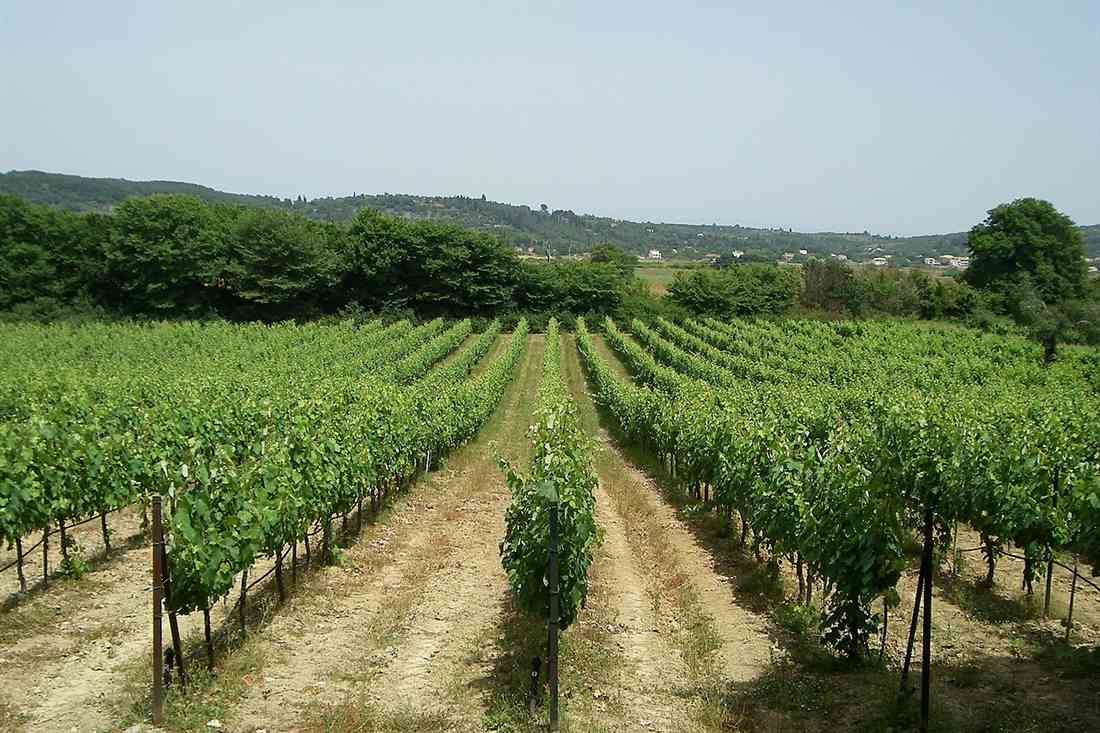
A Corfu wine tasting takes you inland to a family estate in the Ropa valley or on the ridge above the town, through the vineyard and the cellar, and on to a seated tasting of four to six wines with olive oil, cheese and cured meat. Plan the rest of the island with Greece Tours.
This guide covers the visit: which estates receive visitors, the island’s own grapes and how they taste, what a tasting and a guided tour cost, the food served alongside, how to reach the estates, the harvest season, the village day that pairs with it, and how to book.
What does a Corfu wine tasting involve?
A visit to an estate in the island’s interior, a walk through the vineyard and the cellar, and a seated tasting of four to six wines with olive oil, cheese and cured meat, run over two to four hours with transport included on the guided versions.
A Corfu wine tasting runs inland from the coast. Corfu is not Santorini or Nemea. The island makes wine in small volumes from grapes almost nobody outside the Ionian has heard of, and the estates receiving visitors are family operations of a few hectares rather than industrial cellars. Bottles cost from ten to twenty-five euros at the cellar. Ambelonas stands on the ridge above Corfu Town. A Corfu wine tasting books out two to four days ahead in August. Choes runs a wine room inside the old town. Robola arrives on the island from Kefalonia. The name means hard to harvest, from uneven ripening. Ermones lies fifteen minutes from the Theotoky vines. Corfu takes double the rainfall of the Cyclades. The Campiello quarter holds the old-town wine rooms. A Corfu wine tasting pours four to six wines at the table. Corfiot whites run softer and lower in alcohol than Aegean ones. Four million olive trees were planted under Venetian rule. Guided tours pair a Corfu wine tasting with an olive press. Bourdeto, sofrito and pastitsada come from the estate kitchen.
Clay soils here replace the volcanic ash of the Aegean. That shapes the visit. The host is the owner in most cases, the tasting room seats a dozen, and the conversation covers what the island’s damp winters and clay soils do to a grape rather than a rehearsed script about terroir. Spoon sweets are made from the same kumquat fruit. Olive oil is tasted alongside the wine at most estates. Estates pack bottles for hold luggage without being asked. Kumquat liqueur closes a Corfu wine tasting. Sinarades sits among the villages on the same route. Minibus pickup covers Corfu Town, Gouvia, Dassia and Ipsos. Winter visits to a Corfu wine tasting run by appointment. Harvest falls in late August and September. Theotoky Estate sits in the Ropa valley near Giannades. The tasting fee is credited against a case purchase. The Goulis winery works the south of the island. Giannades, Liapades and Doukades sit near the estates. Kakotrygis is the island’s own white grape.
Which estates receive visitors?
Theotoky Estate in the Ropa valley near Giannades, Ambelonas Corfu on the ridge above Corfu Town, the Goulis winery in the south, and the Choes wine room in the old town for a tasting without the drive.
Theotoky Estate sits in the Ropa valley near Giannades. Theotoky is the oldest name on the island and sits in the flat, green Ropa valley inland from Ermones, with vines, olives and a cellar in a nineteenth-century building. It is the estate most guided tours pair with a village afternoon. Corfiot whites run softer and lower in alcohol than Aegean ones. Giannades, Liapades and Doukades sit near the estates. Bourdeto, sofrito and pastitsada come from the estate kitchen. Petrokoritho and Skopelitiko are the local reds. A Corfu wine tasting runs inland from the coast. Spoon sweets are made from the same kumquat fruit. A Corfu wine tasting books out two to four days ahead in August. Kumquat liqueur closes a Corfu wine tasting. The name means hard to harvest, from uneven ripening.
The tasting fee is credited against a case purchase. Ambelonas sits ten minutes from Corfu Town on the Kefalomantouko ridge and works as an evening rather than a day: a vineyard, a restored press, a kitchen doing Corfiot dishes and a tasting table under vines. The Goulis winery works the south of the island. Guided tours pair a Corfu wine tasting with an olive press. The Ropa valley floods in winter and stays green into June. The e-bike version rides the flat Ropa valley floor. Clay soils here replace the volcanic ash of the Aegean. Ambelonas stands on the ridge above Corfu Town. Estates pack bottles for hold luggage without being asked. Robola arrives on the island from Kefalonia. Minibus pickup covers Corfu Town, Gouvia, Dassia and Ipsos.
A Corfu wine tasting pours four to six wines at the table. The old-town rooms are the third option. A boutique tasting at a wine bar in the Campiello covers the island’s labels and the Ionian’s neighbours in ninety minutes with no transport at all, which suits a cruise call or a rainy afternoon. Four million olive trees were planted under Venetian rule. Kakotrygis is the island’s own white grape. The Kefalomantouko ridge overlooks the town from the west. A Corfu wine tasting seats about a dozen in the tasting room. Bottles cost from ten to twenty-five euros at the cellar. Olive oil is tasted alongside the wine at most estates. Choes runs a wine room inside the old town. Sinarades sits among the villages on the same route.
Which grapes are grown on Corfu?
Kakotrygis is the island’s own white, Petrokoritho and Skopelitiko the reds, with Robola from Kefalonia and international varieties filling the rest of the plantings.
Ambelonas stands on the ridge above Corfu Town. Kakotrygis carries the tasting. The name means hard to harvest, from bunches that ripen unevenly and force pickers through the rows twice, and the wine comes out dry, low in acid and faintly floral, quite unlike an Aegean white. Estates pack bottles for hold luggage without being asked. Robola arrives on the island from Kefalonia. Minibus pickup covers Corfu Town, Gouvia, Dassia and Ipsos. Corfu takes double the rainfall of the Cyclades. Theotoky Estate sits in the Ropa valley near Giannades. Corfiot whites run softer and lower in alcohol than Aegean ones. Giannades, Liapades and Doukades sit near the estates. Bourdeto, sofrito and pastitsada come from the estate kitchen. Petrokoritho and Skopelitiko are the local reds.
A Corfu wine tasting books out two to four days ahead in August. Petrokoritho gives a light red that drinks cool in summer, and Skopelitiko is deeper and rarer. Both are grown in hectares rather than square kilometres, and a bottle of either is the souvenir the estates push hardest, with reason. Choes runs a wine room inside the old town. Sinarades sits among the villages on the same route. Ermones lies fifteen minutes from the Theotoky vines. Harvest falls in late August and September. A Corfu wine tasting pours four to six wines at the table. The Goulis winery works the south of the island. Guided tours pair a Corfu wine tasting with an olive press. The Ropa valley floods in winter and stays green into June. The e-bike version rides the flat Ropa valley floor.
Olive oil is tasted alongside the wine at most estates. Corfu’s rainfall is double that of the Cyclades and the vines sit in clay rather than volcanic ash. The wines are softer, lower in alcohol and less mineral than the Aegean whites most visitors expect. Kumquat liqueur closes a Corfu wine tasting. The name means hard to harvest, from uneven ripening. Winter visits to a Corfu wine tasting run by appointment. The Campiello quarter holds the old-town wine rooms. The tasting fee is credited against a case purchase. Four million olive trees were planted under Venetian rule. Kakotrygis is the island’s own white grape. The Kefalomantouko ridge overlooks the town from the west.
What does a Corfu wine tasting cost?
From about 25 to 45 euros for a tasting at the estate, 60 to 110 euros for a guided tour with transport and a food pairing, and 15 to 30 euros for a wine-room flight in the old town.
The Goulis winery works the south of the island. The guided fare covers the driver, the guide, the winery fee and the plate. The estate-door version is cheaper and needs a car, and the arithmetic turns on the same point it does everywhere: one driver stays sober or the taxi eats the saving. Giannades, Liapades and Doukades sit near the estates. Kakotrygis is the island’s own white grape. The Ropa valley floods in winter and stays green into June. Petrokoritho and Skopelitiko are the local reds. A Corfu wine tasting seats about a dozen in the tasting room. Clay soils here replace the volcanic ash of the Aegean. Spoon sweets are made from the same kumquat fruit. Olive oil is tasted alongside the wine at most estates. Estates pack bottles for hold luggage without being asked. Kumquat liqueur closes a Corfu wine tasting. Sinarades sits among the villages on the same route. Minibus pickup covers Corfu Town, Gouvia, Dassia and Ipsos. Winter visits to a Corfu wine tasting run by appointment. Harvest falls in late August and September.
Four million olive trees were planted under Venetian rule. Bottles run from about 10 to 25 euros at the cellar and higher for the aged reds. Estates credit the tasting fee against a case, and they pack for hold luggage without being asked. Guided tours pair a Corfu wine tasting with an olive press. Bourdeto, sofrito and pastitsada come from the estate kitchen. The Kefalomantouko ridge overlooks the town from the west. The e-bike version rides the flat Ropa valley floor. A Corfu wine tasting runs inland from the coast. Bottles cost from ten to twenty-five euros at the cellar. Ambelonas stands on the ridge above Corfu Town. A Corfu wine tasting books out two to four days ahead in August. Choes runs a wine room inside the old town. Robola arrives on the island from Kefalonia. The name means hard to harvest, from uneven ripening. Ermones lies fifteen minutes from the Theotoky vines. Corfu takes double the rainfall of the Cyclades.
What food comes with the wine?
Corfiot cheese, cured meat, olives, bread and the estate’s own olive oil, extended on the longer visits to a full table with bourdeto, sofrito or pastitsada cooked in the estate kitchen.
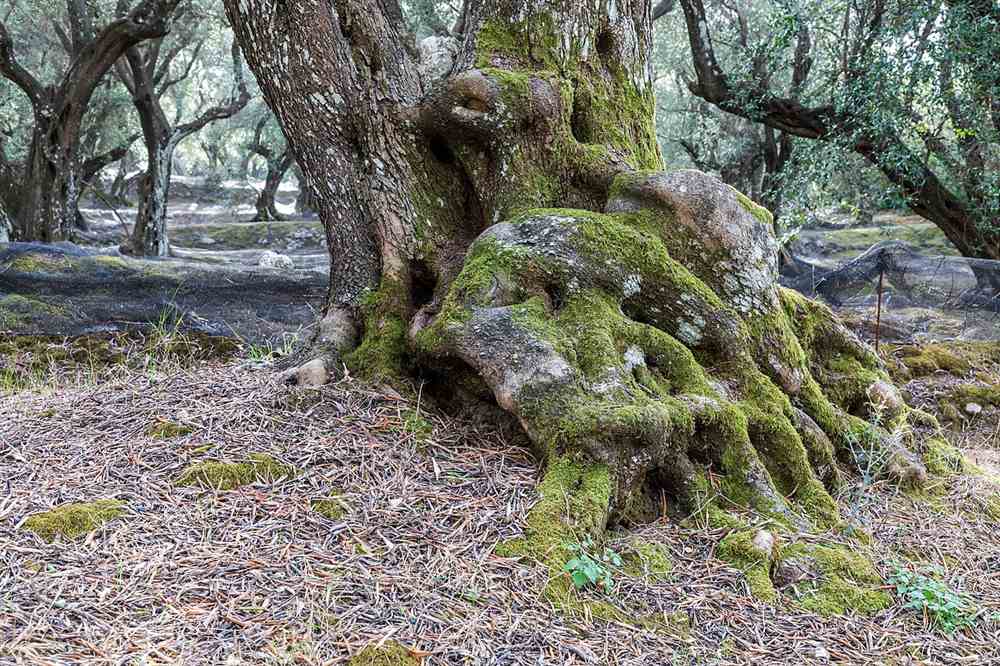
Choes runs a wine room inside the old town. The oil is half the point here. Corfu carries roughly four million olive trees planted under Venetian rule, and the estates that make wine almost always press oil as well, so the tasting runs across both. Robola arrives on the island from Kefalonia. The name means hard to harvest, from uneven ripening. Ermones lies fifteen minutes from the Theotoky vines. Corfu takes double the rainfall of the Cyclades. The Campiello quarter holds the old-town wine rooms. A Corfu wine tasting pours four to six wines at the table. Corfiot whites run softer and lower in alcohol than Aegean ones. Four million olive trees were planted under Venetian rule. Guided tours pair a Corfu wine tasting with an olive press. Bourdeto, sofrito and pastitsada come from the estate kitchen. The Kefalomantouko ridge overlooks the town from the west. The e-bike version rides the flat Ropa valley floor. A Corfu wine tasting runs inland from the coast. Bottles cost from ten to twenty-five euros at the cellar.
Kumquat liqueur closes a Corfu wine tasting. Kumquat appears at the end. The fruit came to Corfu in the nineteenth century, the island turned it into a liqueur and a spoon sweet, and every tasting closes with a glass of it. The wider table sits at Corfu food and wine. Sinarades sits among the villages on the same route. Minibus pickup covers Corfu Town, Gouvia, Dassia and Ipsos. Winter visits to a Corfu wine tasting run by appointment. Harvest falls in late August and September. Theotoky Estate sits in the Ropa valley near Giannades. The tasting fee is credited against a case purchase. The Goulis winery works the south of the island. Giannades, Liapades and Doukades sit near the estates. Kakotrygis is the island’s own white grape. The Ropa valley floods in winter and stays green into June. Petrokoritho and Skopelitiko are the local reds. A Corfu wine tasting seats about a dozen in the tasting room. Clay soils here replace the volcanic ash of the Aegean.
How do you get to the estates?
By tour minibus with hotel pickup from Corfu Town, Gouvia, Dassia and Ipsos, by hire car on the island’s cross-roads, or on the e-bike tours that pair a ride through the Ropa valley with a tasting at the end.
Kakotrygis is the island’s own white grape. The Ropa valley is twenty-five minutes from Corfu Town and fifteen from Ermones. The roads are narrow and unsigned in places, which is the argument for the minibus beyond the drink-driving question. The Ropa valley floods in winter and stays green into June. Petrokoritho and Skopelitiko are the local reds. A Corfu wine tasting seats about a dozen in the tasting room. Clay soils here replace the volcanic ash of the Aegean. Spoon sweets are made from the same kumquat fruit. Olive oil is tasted alongside the wine at most estates. Estates pack bottles for hold luggage without being asked. Kumquat liqueur closes a Corfu wine tasting. Sinarades sits among the villages on the same route. Minibus pickup covers Corfu Town, Gouvia, Dassia and Ipsos. Winter visits to a Corfu wine tasting run by appointment. Harvest falls in late August and September. Theotoky Estate sits in the Ropa valley near Giannades.
Bourdeto, sofrito and pastitsada come from the estate kitchen. The e-bike version rides the flat valley floor rather than the hills, covers ten to fifteen kilometres and finishes at the estate. It suits travellers who want the landscape as well as the cellar and does not require fitness beyond a bicycle. The Kefalomantouko ridge overlooks the town from the west. The e-bike version rides the flat Ropa valley floor. A Corfu wine tasting runs inland from the coast. Bottles cost from ten to twenty-five euros at the cellar. Ambelonas stands on the ridge above Corfu Town. A Corfu wine tasting books out two to four days ahead in August. Choes runs a wine room inside the old town. Robola arrives on the island from Kefalonia. The name means hard to harvest, from uneven ripening. Ermones lies fifteen minutes from the Theotoky vines. Corfu takes double the rainfall of the Cyclades. The Campiello quarter holds the old-town wine rooms. A Corfu wine tasting pours four to six wines at the table.
When is the harvest, and does the season matter?
Late August into September for the harvest, with visits running from April to October. Harvest week puts the crush and the press in front of visitors; the rest of the season shows a quiet cellar and a full tasting room.
The name means hard to harvest, from uneven ripening. Spring is green here in a way the Aegean never is: the Ropa valley floods in winter and stays lush into June. That is the season for the vineyard walk rather than the cellar. Ermones lies fifteen minutes from the Theotoky vines. Corfu takes double the rainfall of the Cyclades. The Campiello quarter holds the old-town wine rooms. A Corfu wine tasting pours four to six wines at the table. Corfiot whites run softer and lower in alcohol than Aegean ones. Four million olive trees were planted under Venetian rule. Guided tours pair a Corfu wine tasting with an olive press. Bourdeto, sofrito and pastitsada come from the estate kitchen. The Kefalomantouko ridge overlooks the town from the west. The e-bike version rides the flat Ropa valley floor. A Corfu wine tasting runs inland from the coast. Bottles cost from ten to twenty-five euros at the cellar. Ambelonas stands on the ridge above Corfu Town.
Minibus pickup covers Corfu Town, Gouvia, Dassia and Ipsos. Winter visits happen by appointment. The estates stay open for groups, the kitchen still cooks, and the island’s rain makes the indoor half of the visit the better half. Winter visits to a Corfu wine tasting run by appointment. Harvest falls in late August and September. Theotoky Estate sits in the Ropa valley near Giannades. The tasting fee is credited against a case purchase. The Goulis winery works the south of the island. Giannades, Liapades and Doukades sit near the estates. Kakotrygis is the island’s own white grape. The Ropa valley floods in winter and stays green into June. Petrokoritho and Skopelitiko are the local reds. A Corfu wine tasting seats about a dozen in the tasting room. Clay soils here replace the volcanic ash of the Aegean. Spoon sweets are made from the same kumquat fruit. Olive oil is tasted alongside the wine at most estates.
Can you combine a tasting with the villages?
Yes. The standard guided day pairs an estate with two or three interior villages, an olive press and a viewpoint, running five to six hours from the coast and back.
Petrokoritho and Skopelitiko are the local reds. The villages inland from the Ropa valley are the ones the coast road never reaches: Giannades, Liapades, Doukades and Sinarades, with squares, bell towers and tavernas that see coaches rather than crowds. They sit at Corfu villages. A Corfu wine tasting seats about a dozen in the tasting room. Clay soils here replace the volcanic ash of the Aegean. Spoon sweets are made from the same kumquat fruit. Olive oil is tasted alongside the wine at most estates. Estates pack bottles for hold luggage without being asked. Kumquat liqueur closes a Corfu wine tasting. Sinarades sits among the villages on the same route. Minibus pickup covers Corfu Town, Gouvia, Dassia and Ipsos. Winter visits to a Corfu wine tasting run by appointment. Harvest falls in late August and September. Theotoky Estate sits in the Ropa valley near Giannades. The tasting fee is credited against a case purchase. The Goulis winery works the south of the island.
The e-bike version rides the flat Ropa valley floor. The olive stop is standard on these tours and worth the time. Corfu’s oil is its bigger agricultural product by far, and the presses explain the island’s landscape better than any viewpoint does. It is covered at Corfu olive oil. A Corfu wine tasting runs inland from the coast. Bottles cost from ten to twenty-five euros at the cellar. Ambelonas stands on the ridge above Corfu Town. A Corfu wine tasting books out two to four days ahead in August. Choes runs a wine room inside the old town. Robola arrives on the island from Kefalonia. The name means hard to harvest, from uneven ripening. Ermones lies fifteen minutes from the Theotoky vines. Corfu takes double the rainfall of the Cyclades. The Campiello quarter holds the old-town wine rooms. A Corfu wine tasting pours four to six wines at the table. Corfiot whites run softer and lower in alcohol than Aegean ones. Four million olive trees were planted under Venetian rule.
Who does a Corfu wine tasting suit, and how do you book?
Couples, small groups and travellers who have done the beaches. Book two to four days ahead in July and August; the estates run small tasting rooms and turn away walk-ins on a busy afternoon.
Corfu takes double the rainfall of the Cyclades. Group sizes run from four to sixteen on the shared tours and up to forty at the larger estates for a private booking. Dietary needs and the language go on the booking rather than being raised at the table. The Campiello quarter holds the old-town wine rooms. A Corfu wine tasting pours four to six wines at the table. Corfiot whites run softer and lower in alcohol than Aegean ones. Four million olive trees were planted under Venetian rule. Guided tours pair a Corfu wine tasting with an olive press. Bourdeto, sofrito and pastitsada come from the estate kitchen. The Kefalomantouko ridge overlooks the town from the west. The e-bike version rides the flat Ropa valley floor. A Corfu wine tasting runs inland from the coast. Bottles cost from ten to twenty-five euros at the cellar. Ambelonas stands on the ridge above Corfu Town. A Corfu wine tasting books out two to four days ahead in August. Choes runs a wine room inside the old town.
Harvest falls in late August and September. Cancellation runs free to twenty-four hours with most operators. The tasting pairs naturally with an evening in the old town afterwards, covered at Corfu Town, and the island as a whole sits at Corfu. Theotoky Estate sits in the Ropa valley near Giannades. The tasting fee is credited against a case purchase. The Goulis winery works the south of the island. Giannades, Liapades and Doukades sit near the estates. Kakotrygis is the island’s own white grape. The Ropa valley floods in winter and stays green into June. Petrokoritho and Skopelitiko are the local reds. A Corfu wine tasting seats about a dozen in the tasting room. Clay soils here replace the volcanic ash of the Aegean. Spoon sweets are made from the same kumquat fruit. Olive oil is tasted alongside the wine at most estates. Estates pack bottles for hold luggage without being asked. Kumquat liqueur closes a Corfu wine tasting.
Frequently Asked Questions
What does a Corfu wine tasting cost?
From about 25 to 45 euros for a tasting at the estate, 60 to 110 euros for a guided tour with transport and a food pairing, and 15 to 30 euros for a wine-room flight in the old town.
Which wineries can you visit on Corfu?
Theotoky Estate in the Ropa valley near Giannades, Ambelonas Corfu on the Kefalomantouko ridge above Corfu Town, the Goulis winery in the south, and the Choes wine room inside the old town.
Which grapes are grown on Corfu?
Kakotrygis is the island’s own white, with Petrokoritho and Skopelitiko for the reds and Robola from Kefalonia alongside them. The wines run softer and lower in alcohol than Aegean whites.