
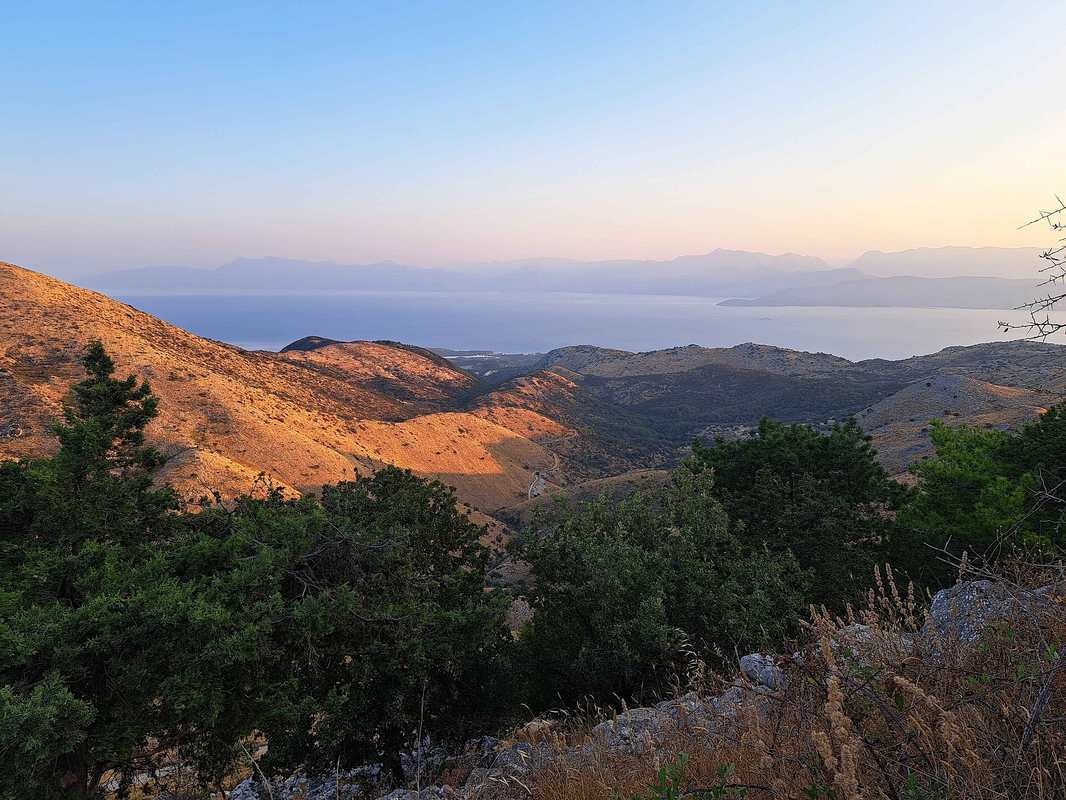
Running the length of the island from the far south to the north, the Corfu Trail is a 180-kilometre waymarked long-distance walking route that takes 10 to 15 days to complete. It reveals a green, traditional Corfu far from the resorts. This guide covers the route, the day walks, the difficulty and the best time to hike. Plan the whole trip with Greece Tours.
The trail showcases the island’s wild interior, an active highlight of the wider Corfu tours and travel guide. It links villages, hills and coast end to end. The sections below cover the walk.
What is the Corfu Trail?
The Corfu Trail is an established long-distance walking route running about 180 kilometres from south to north. Waymarked at the turn of the millennium, it crosses hills, villages, olive groves and coast, showing a green Corfu beyond the resorts.
The Corfu Trail is the island’s great walk. It was created and waymarked at the turn of the millennium by long-time resident Hilary Whitton Paipeti, and threads roughly 180 kilometres along the length of the island, from the dramatic white cliffs of the far south to a wild beach in the north. Rather than sticking to the coast, the route climbs through the green interior. It links mountain villages, olive groves, monasteries, viewpoints and quiet beaches, offering a side of Corfu that beach holidays never reveal. The trail has become one of the best-known long-distance walks in Greece, drawing walkers from across Europe, set within the wider things to do in Corfu. The route has a clear shape.
What is the route?
The trail runs south to north, starting amid the white cliffs of Arkoudilas near Kavos and ending at the wild beach of Agios Spyridon. It passes 13 villages used as daily stops, including Lefkimmi, Benitses, Pelekas, Liapades and Old Perithia.
The route is designed as a journey across the whole island. Beginning in the dramatic south among the white cliffs of Arkoudilas near Kavos, it heads north through a sequence of landscapes, from the southern beaches and the Korission Lagoon area up through the central hills around Pelekas and the west-coast villages, over the slopes of Mount Pantokrator and down to its end at the beautiful, wild beach of Agios Spyridon on the north coast. Thirteen settlements serve as natural daily stops, among them Lefkimmi, Benitses, Pelekas, Liapades, Agios Georgios Pagon, Spartylas and Old Perithia, each offering food and a bed, set out alongside the guides to Pelekas and Mount Pantokrator. It need not be walked in full.
How long and how hard is it?
The full Corfu Trail takes most walkers 10 to 15 days, depending on pace. Despite its length, the route avoids steep passages where possible, making it a walk of low to moderate difficulty, though good fitness and proper footwear help.
The trail is long but not punishing. Walking its full 180 kilometres typically takes between 10 and 15 days. That pace leaves time for the villages and quiet corners along the way. Most walkers use the 13 daily stops to break the route into manageable stages with overnight stays.
The route crosses hills and the flanks of Mount Pantokrator, yet it was planned to avoid the steepest and most tiring passages. This gives it an overall low to moderate difficulty rather than that of a high mountain trek. Even so, the daily distances, summer heat and rough ground call for reasonable fitness, sturdy walking shoes and enough water. The effort sits alongside the guide to the best time to visit Corfu. Day walks are an easy alternative.
Can you walk just part of it?
You can walk just part of the Corfu Trail as day hikes, choosing scenic sections near your base rather than the whole route. Popular stretches include the west-coast villages around Pelekas and the climb toward Mount Pantokrator.
Most visitors experience the trail in pieces. There is no need to commit to the full two-week walk: the route is made up of distinct sections that work beautifully as half-day or day hikes, letting you sample the best scenery near wherever you are staying. Fine shorter stretches include the green hills and viewpoints around Pelekas on the west coast, the olive groves and villages of the centre, and the climb through the north toward Mount Pantokrator and the ghost village of Old Perithia. Local guides and walking companies also offer guided sections and self-guided itineraries, set out alongside the guides to Corfu villages and a Corfu itinerary. Timing and navigation matter.
When is the best time and how do you navigate?
Spring and autumn, especially April, May, September and October, are the best times to walk, with mild temperatures and green landscapes. The trail is waymarked with yellow CT signs and arrows, and an official guide app aids navigation.
Timing and good navigation make the walk a pleasure. The ideal seasons are spring and autumn. April, May, September and October bring mild temperatures and the island at its greenest, while the heat of July and August makes long daily stages hard going. The route is waymarked throughout with aluminium yellow “CT” signs, backed up by painted arrows and blazes at key points. These markers can fade, so carrying the official guide is wise.
The Official Guide to the Corfu Trail, written by its creator and resident walking expert, is now available as an app. It gives detailed directions and stage information for each day. The app pairs well with a paper map for the sections where signs are worn. This guidance sits alongside the guide to Corfu car rental for reaching trailheads. Which way to walk is the next question.
Which direction should you walk the Corfu Trail?
Most walkers follow the Corfu Trail from south to north, the direction in which it was designed and waymarked. This builds toward the scenic climax of Mount Pantokrator and ends at the wild beach of Agios Spyridon.
Direction shapes the rhythm of the walk. The trail was laid out and waymarked from south to north, so the yellow signs and the official guide read most clearly that way. Starting in the far south among the Arkoudilas cliffs, walkers build gradually through the softer central hills before the high point of Mount Pantokrator near the end. This ordering saves the grandest scenery for the final days and finishes at a swimmable beach, a natural reward. Walking north to south is possible for those basing themselves differently, though the waymarks then face away from you. The choice sits alongside the guide to Corfu villages along the way. Somewhere to sleep matters each night.
Where do you stay on the Corfu Trail?
You stay on the Corfu Trail in the villages that serve as daily stops, using small guesthouses, rooms, studios and family-run hotels. Because the route was planned around 13 settlements, each stage usually ends where beds and tavernas are available.
Accommodation follows the trail’s daily stages. The route was deliberately shaped so that each day finishes in a village with somewhere to sleep, from Lefkimmi and Benitses in the south to Spartylas and Old Perithia in the north. Options are simple rather than luxurious, typically family-run rooms, studios and small guesthouses, with the occasional larger hotel near the coast. Booking ahead in spring and autumn is wise, as choices in the smaller inland villages are limited. Some walkers arrange luggage transfers between stops so they carry only a daypack. This network of village stops sits alongside the guide to where to stay in Corfu. Food and water keep the walk going.
What is eating and drinking like on the trail?
Eating on the Corfu Trail centres on village tavernas serving Corfiot dishes, grills and fresh produce, with cafés and shops for supplies. Carrying water is essential on the longer inland stages, since taps and springs are not always reliable.
Meals are part of the pleasure of the walk. Most daily stops have a taverna or two plating Corfiot specialities such as sofrito, pastitsada and grilled meats, alongside salads and local produce. Village shops and cafés cover breakfast and picnic supplies for the trail. Between settlements, though, services thin out, so walkers pack snacks and refill water bottles whenever they can. On the hot inland climbs the sun is strong and shade is patchy, making a good water supply the single most important item after footwear. Ionian wine rewards the evening after a long stage. These flavours sit alongside the guide to Corfu food and wine. Packing the right kit completes the plan.
What should you pack for the Corfu Trail?
Pack sturdy walking shoes, sun protection, a hat and enough water for each stage, plus the official guide or app for navigation. Add light layers for cool mornings, a swimsuit for beaches, and a daypack if transfers carry your bag.
The right kit keeps the walk comfortable and safe. Broken-in walking shoes or light boots handle the rough, stony ground far better than trainers. Sun protection matters through much of the year, so a hat, sunglasses and high-factor sunscreen belong near the top of the bag. A refillable water bottle or two covers the gaps between villages, and light layers handle cool mornings and breezy ridges. A swimsuit is worth carrying for the coves and the finish at Agios Spyridon. With luggage transfers arranged, walkers manage the day on a light daypack. This list sits alongside the guide to the island’s Corfu beaches. The questions below cover the points travellers ask most.
Frequently Asked Questions
How long is the Corfu Trail?
It runs about 180 kilometres, the length of the island from the south near Kavos to Agios Spyridon in the north. It takes most walkers 10 to 15 days to complete in full, using the 13 villages along the route as daily stops.
Is the Corfu Trail difficult?
The trail is of generally low to moderate difficulty, as the route was planned to avoid the steepest passages where possible. Even so, the daily distances, rough ground and summer heat mean good fitness, sturdy footwear and plenty of water are needed.
When is the best time to walk the Corfu Trail?
Spring and autumn are best, especially April, May, September and October, with mild temperatures and green landscapes. These seasons avoid the intense summer heat of July and August, which makes the long daily walking stages much harder.