
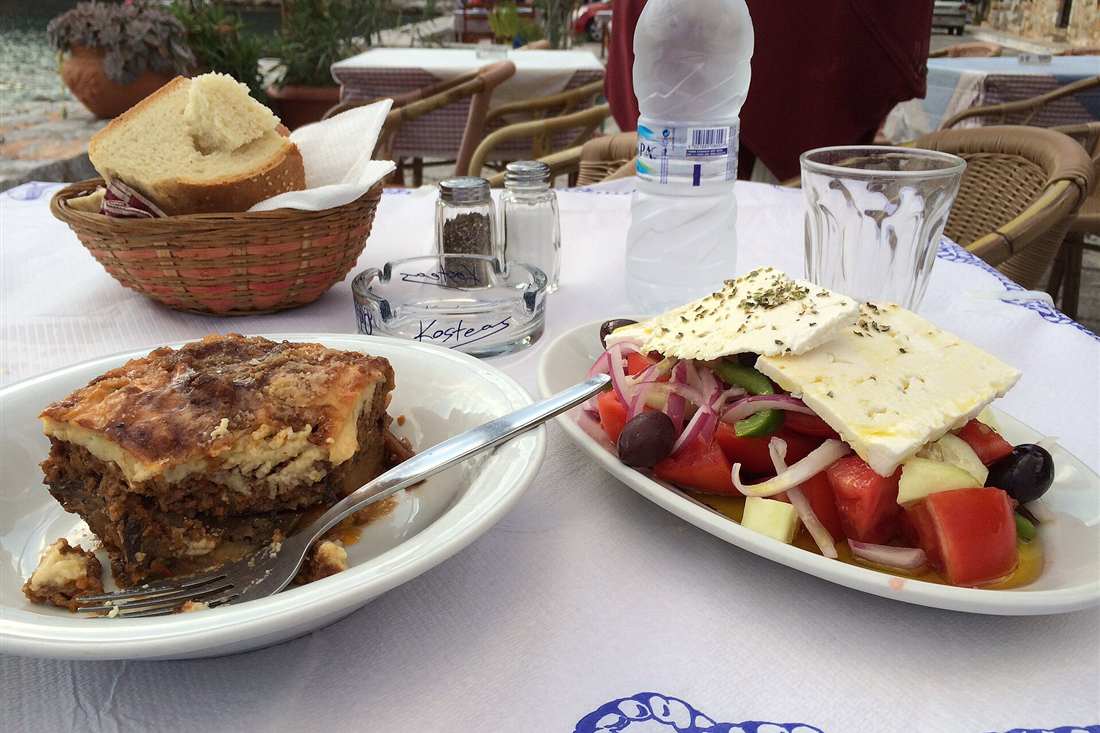
A Corfu food tour is a guided tasting walk through the kantounia of the old town, stopping at a traditional grocery for noumboulo and cheeses, at a taverna for sofrito and pastitsada, and at a kumquat shop for the island’s liqueur. Plan the whole trip with Greece Tours.
This guide covers the Corfu food tour in full: where the walk goes, what you taste, the kumquat, the market stop, the bicycle tour and the olive oil trip by minivan, how long it takes, the group size, what it costs, the dietary options, the season, and how to book.
What Is a Corfu Food Tour and What Does It Include?
This is a guided walking tasting route through the old town, pairing narrow-lane stops at a bakery, a delicatessen, a grocery and a taverna with a guide’s commentary, so every stop combines a bite, a story and a place to remember.
For a first day on the island, a Corfu food tour sets the ground for the rest of the trip. A Corfu food tour is booked ahead for a fixed, agreed price per person. A guide sets the walking group loose on Corfu Town’s old quarter with stops arranged in advance. A standard route runs three hours and covers six to eight stops: a bakery, a cheese counter, a delicatessen selling cured pork, a kumquat shop, a market hall and a taverna table.
The dietary requirements are declared before a Corfu food tour is confirmed. Every stop pairs a taste with an explanation: the guide names the producer, states where the ingredient is made on the island, and ties the dish to a street or a family business. The tasting covers bread, cheese, cured meat, olive products, a sweet and a savory course — a moving meal, not a string of samples.
A Corfu food tour runs three hours or a longer half day with lunch. Drinks accompany the food at set points — a kumquat liqueur pour at the fruit shop, wine or ouzo at the taverna. The walk ends on something sweet, loukoumades or gelato, within a short stroll of the Liston or the Spianada.
Where Does a Corfu Food Tour Walk Through the Old Town?
This walk moves on foot through the kantounia — the narrow stone alleys of the old town — past the Liston arcade and the open Spianada, with the Old Fortress visible along the route, at an easy, unhurried pace.
The choice of Corfu food tour comes down to the route, the hour and the format. For a first day on the island, a Corfu food tour sets the ground for the rest of the trip. The kantounia define the walk: narrow lanes, laundry lines overhead, doorways opening onto shop counters. A guide threading a small group through these alleys stops at a bakery door, points out a Venetian-era balcony, and moves on without blocking the lane.
A Corfu food tour includes the minivan transfer on the olive oil trip. The route opens onto the Liston, the arcaded row of cafés built in the French style along the Spianada, the square that separates the old town from the Old Fortress. The guide explains the square’s role in town life before the group catches a clear view of the fortress ramparts.
The stops on a Corfu food tour take in a grocery, a bakery and a taverna. The walking distance stays under two kilometers, broken into short stretches between stops. Cobbled surfaces and intermittent steps run through the old town, and the guide adjusts timing for a slower group without cutting stops.
What Do You Taste on a Corfu Food Tour?
Tastings on this walking route run from kumquat sweets and liqueur to noumboulo, the island’s smoked pork fillet, Greek cheeses at a traditional grocery, sofrito and pastitsada at a taverna table, bourdeto, and a finishing course of loukoumades or gelato.
A private Corfu food tour keeps the walk to one party. The choice of Corfu food tour comes down to the route, the hour and the format. The kumquat stop covers the fruit in three forms — candied peel, marmalade and the bright orange liqueur distilled from it — tasted together so the sweet preserve and the sharp spirit stay distinct. Noumboulo follows at a delicatessen counter: a smoked, cured pork fillet unique to Corfu, sliced thin so its smoke and salt register on their own.
The kumquat liqueur is the set piece of a Corfu food tour. A grocery stop lays out island cheeses side by side, a firm aged wheel next to a soft fresh one, with the guide naming the milk source behind each. At the taverna table the group tastes sofrito, thin beef braised in garlic and white wine, and pastitsada, a tomato-and-spice beef stew over thick pasta.
Booking a Corfu food tour ahead secures the date and the place on the walk. Bourdeto, the island’s fish stew made red with paprika instead of tomato, appears on tours where the taverna stop runs two courses. For the full list of Corfiot dishes beyond one walking route, the Corfu food and wine guide covers the island’s wider table in more depth.
What Is the Kumquat and Why Does Every Tasting Walk Include It?
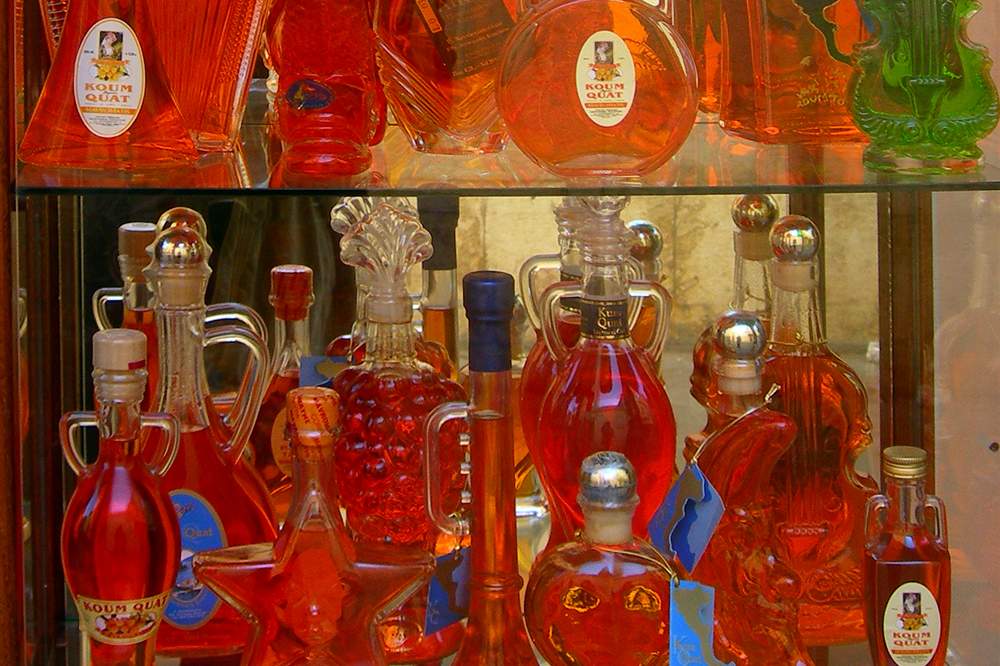
The kumquat is a small citrus fruit brought to Corfu in the nineteenth century and grown almost nowhere else in Greece, and it appears on every Corfu food tour because the liqueur, marmalade and candied peel made from it are found on the island alone.
The morning slot on a Corfu food tour fills first in high season. A private Corfu food tour keeps the walk to one party. A British resident introduced the kumquat tree to Corfu, and the island’s soil and climate kept cultivation local rather than spreading across Greece — a point every guide raises at the tasting counter. The whole fruit, peel included, is eaten fresh, candied or distilled, unlike most citrus, where the peel is discarded.
Every Corfu food tour starts with the meeting point and the plan for the walk. The liqueur is the best-known product: kumquats steeped and distilled into a bright orange spirit, sold across the old town and poured as a tasting sample at the fruit shop. Marmalade from the same fruit sits beside the liqueur bottles, thicker and less sweet than standard citrus marmalade, with visible strands of peel through it.
A Corfu food tour ends with loukoumades or a scoop of artisan gelato. Production stays concentrated in and around Corfu Town, where the fruit is processed shortly after harvest to keep the liqueur’s color and scent strong. The tasting stop lets the group compare candied peel, marmalade and liqueur side by side, tracing one fruit through three finished products at the counter.
What Happens at the Market Stop on the Walk?
The market stop moves the group through stalls of fresh produce and fish, where the guide points out what is in season, names the local growers behind the stalls, and explains how island cooking changes with the calendar.
Families take a Corfu food tour for the short walk and the seated stops. The morning slot on a Corfu food tour fills first in high season. Corfu Town’s food market runs stalls of vegetables, herbs and fruit alongside a fish section where the morning catch sits on ice. The guide picks two or three vendors known for a specific product — an olive variety, a wild green, or fish caught close to the island.
A Corfu food tour carries water and shade stops through the summer months. Seasonal explanation is central to this stop: the guide names what is at its peak that week, from spring greens to autumn citrus, and ties it to a dish the group tasted earlier or will taste at the taverna. This is where the walking tour connects the shopping a local family does to the plates served at home.
The guide on a Corfu food tour introduces the shopkeepers along the way. Produce comes from farms across the island and from smaller growers who sell only what came in that morning, so the stalls change from one visit to the next. The guide’s running commentary separates a live market stop from a scripted tasting.
What Is the Corfu Food Tour by Bicycle?
This version by bicycle swaps the walking route for a slower ride through the old town and into the quieter suburbs, covering more ground than the walking format while stopping at a similar run of bakeries, groceries and a taverna.
A Corfu food tour runs through the kantounia of the old town. Families take a Corfu food tour for the short walk and the seated stops. The ride starts inside the old town at an easy pace, since the kantounia are too narrow for cycling at speed, then moves out toward residential streets a walking tour never reaches, adding stops outside the historic center — a family-run bakery or a smaller grocery.
The set price on a Corfu food tour covers the guide, the food and the drinks. Pace stays moderate, suited to a rider with ordinary fitness rather than one chasing distance or hills; flat coastal and town streets make up most of the route. Stops mirror the walking tour’s structure — cheese, cured meat, kumquat products and a taverna course — over wider suburban ground.
A Corfu food tour crosses the narrow alleys, the Liston arcade and the market. This version suits travelers wanting a longer, more active outing than the standard walk without needing cycling experience, and it fits families with older children riding on quiet streets. Bicycles and helmets come from the meeting point.
What Is the Olive Oil and Kumquat Tasting Tour by Minivan?
The olive oil and kumquat tasting tour by minivan leaves Corfu Town for the island’s countryside, stopping at a working olive mill to see the pressing and at a kumquat distillery, with tastings of oil and liqueur at both.
The price of a Corfu food tour covers the guide, the tastings and the drinks. A Corfu food tour runs through the kantounia of the old town. The minivan collects the group from a central meeting point and drives into olive groves that cover much of Corfu’s interior, planted generations back and still harvested by the same families. At the mill, the guide walks the group through the pressing before a tasting where different oils are compared on bread.
Planning a Corfu food tour ahead beats the scramble for a summer date. A kumquat distillery stop follows, showing the fruit’s path from grove to bottle: the steeping, the distillation and the bottling of the liqueur tasted earlier in town.
For cyclists, a Corfu food tour runs on two wheels through the suburbs. This trip runs longer than the walking format, since driving time between stops adds to the schedule, and it suits travelers with a rental car or those staying near the pickup point. Certain routes continue toward the west coast afterward, passing near Paleokastritsa before returning to town.
How Long Does a Corfu Food Tour Take?
A standard walking tour runs three hours on foot, covering six to eight stops across a walking distance under two kilometers, while half-day versions that add a full lunch extend to four hours or longer.
A Corfu food tour runs three hours or a longer half day with lunch. The price of a Corfu food tour covers the guide, the tastings and the drinks. The three-hour format moves at a steady pace rather than long pauses: five to ten minutes at a bakery or cheese counter, longer at the taverna table where the group sits for two courses. This length keeps the tour to a single morning or evening, leaving the rest of the day free.
A Corfu food tour is booked ahead for a fixed, agreed price per person. Half-day versions add a full taverna lunch in place of a tasting-sized course, plus extra stops such as the market, and run close to four hours door to door. The minivan trips to the olive mill and kumquat distillery run longer again, since driving time outside town adds to the total.
The dietary requirements are declared before a Corfu food tour is confirmed. Timing accounts for the pace of the old town itself — narrow lanes fill with locals and visitors through the day, and the guide builds in slack rather than rushing between stops. A Corfu food tour booked for the morning finishes before the midday heat sets in during the warmer months.
How Big Are the Groups on the Walk?
Group size on the walking tour stays capped at a small number of participants, with a private option available for a family or a pair wanting the guide’s full attention and a pace set entirely by them.
The stops on a Corfu food tour take in a grocery, a bakery and a taverna. A Corfu food tour runs three hours or a longer half day with lunch. A small-group cap matters most at the counter stops: a bakery or a delicatessen needs the space to hand out tastings without a queue forming, and a narrow kantouni cannot hold a crowd without blocking the lane. Keeping numbers low is a practical constraint, not just a comfort choice.
For a first day on the island, a Corfu food tour sets the ground for the rest of the trip. The guide’s attention scales with the smaller number too — questions get answered on the spot, a slower taster is not left behind, and the taverna table seats the whole group together. Larger shared departures still stay within the tour’s stated cap.
A Corfu food tour includes the minivan transfer on the olive oil trip. A private booking removes the shared-departure schedule entirely: the start time, the pace between stops and the time spent at any one counter shift to suit the booking party. This suits a family with young children who need slower transitions, or a couple wanting extra time at the kumquat stop.
Who Guides a Corfu Food Tour?
A licensed local guide leads every Corfu food tour, introducing the group to the same shopkeepers, bakers and producers they know personally, and weaving the island’s Venetian and Greek history into the route between tasting stops.
The stops on a Corfu food tour take in a grocery, a bakery and a taverna. Guides working this route hold official licensing and know the old town’s shopkeepers by name, a relationship built over repeated visits, which keeps tasting portions consistent from one departure to the next. Producers met along the way, from the cheese seller to the kumquat distiller, speak directly to the group.
The choice of Corfu food tour comes down to the route, the hour and the format. History runs alongside the food throughout the walk: the Venetian rule that shaped the old town’s architecture and a handful of its dishes, the French period behind the Liston’s arcades, and the British era tied to the kumquat’s arrival surface at the point in the route where they matter most.
The kumquat liqueur is the set piece of a Corfu food tour. These tours run in English as standard, with guides available in other languages depending on the departure — a detail to confirm at booking. Private bookings can request a specific language directly.
What Does a Corfu Food Tour Cost and What Is Included in the Price?
Pricing for this walking tour is set per person at the time of booking and covers the guide, every tasting along the route, and the drinks served at each stop, with a full taverna lunch included on the half-day versions that carry one.
Booking a Corfu food tour ahead secures the date and the place on the walk. The per-person rate covers the guide’s fee and every item tasted on the walk — bread, cheese, cured meat, kumquat products, the taverna course and the closing dessert — so nothing extra is paid at any stop, including the kumquat liqueur sample and any wine or ouzo at the taverna.
A private Corfu food tour keeps the walk to one party. Half-day tours that carry a full lunch price higher than the standard three-hour walk, reflecting the larger meal and the longer time on the route. The minivan trips to the olive mill and kumquat distillery price separately, since transport and two tastings sit outside the walking tour’s scope.
Every Corfu food tour starts with the meeting point and the plan for the walk. Child pricing applies on family bookings, and private tours price differently from shared departures since the group size and the guide’s exclusivity change the arrangement. Exact rates are confirmed at booking and depend on the season and which version of the tour is selected.
What Dietary Requirements Does the Tour Accommodate?
The walking tour accommodates vegetarian and vegan diets with substitutions arranged at the bakery, cheese and taverna stops, and shopkeepers along the route declare gluten and nut content on request, provided the requirement is noted at booking.
A Corfu food tour ends with loukoumades or a scoop of artisan gelato. Vegetarian substitutions replace the cured-meat tastings — the noumboulo stop in particular — with an equivalent plant-based item at the same counter, arranged in advance so the shopkeeper has the alternative ready. Vegan travelers get a fuller adjustment at the taverna too, since sofrito and pastitsada are both meat dishes; a vegetable-based plate replaces them on request.
The morning slot on a Corfu food tour fills first in high season. Gluten and nut declarations come directly from the shopkeepers and the taverna kitchen: bread, certain cheeses and desserts including loukoumades carry gluten by default, and nut traces appear in certain sweets and in the kumquat products. Flagging a requirement at booking gives the kitchens time to prepare a separate item.
A Corfu food tour carries water and shade stops through the summer months. The kumquat liqueur tasting is the one alcohol pour built into the standard route, and travelers who decline alcohol are offered the marmalade or candied peel instead. Advance notice at booking is the one requirement across every substitution — same-day requests limit what a small shop can arrange.
Is the Tour Suitable for Children and for Limited Mobility?
The walking tour welcomes children at a reduced price and suits most fitness levels, though the old town’s cobbled lanes and intermittent steps make the walking route difficult for a wheelchair or a traveler who cannot manage uneven ground for an extended period.
The guide on a Corfu food tour introduces the shopkeepers along the way. Children join the walking tour from a young age with a lower per-person rate, and the format — short stops, small tastings, frequent pauses — suits shorter attention spans better than a seated multi-course meal. The taverna stop offers a plain option alongside sofrito and pastitsada for a child who prefers a simpler dish.
Families take a Corfu food tour for the short walk and the seated stops. Mobility on the walking route is limited by the old town itself: kantounia lanes are cobbled and narrow, with short flights of steps between certain stops that cannot be avoided. A traveler using a wheelchair or a walker fits better with the minivan trip, where the ground is level.
The set price on a Corfu food tour covers the guide, the food and the drinks. Shade and seating come at set points — the taverna stop and the Liston arcade both offer cover from direct sun — but stretches between stops run in open lanes without shade. Rest breaks fold into a private booking for a slower-moving group.
When Is the Best Season for a Food Tour in Corfu?
A Corfu food tour runs from April through November, with a morning departure suited to the market’s freshest stalls and an evening departure timed to the cooler hours, while the shoulder months of spring and late autumn bring smaller crowds and a greener island.
A Corfu food tour crosses the narrow alleys, the Liston arcade and the market. Morning tours coincide with the food market at its busiest, when the fish counters still hold the day’s early catch and the produce stalls sit at their fullest, giving the guide the widest range of seasonal items to point out. Evening tours trade the market for a cooler walk and a taverna stop closer to dinner than a midday tasting.
A Corfu food tour runs through the kantounia of the old town. Cruise-ship days bring a rise in foot traffic through the Liston and the lanes nearest the port, and a guide familiar with the schedule times departures to avoid the busiest hours. Midsummer heat is the other factor to plan around, since the open Spianada carries no shade through the day.
Planning a Corfu food tour ahead beats the scramble for a summer date. The shoulder months either side of summer bring a quieter old town, easier movement through the kantounia, and a countryside still green from spring rain or the first autumn showers, visible on the minivan route past the olive groves. A traveler splitting time between town and the coast can pair the walking tour with a separate day toward Corfu‘s beaches or villages.
How Do You Book a Corfu Food Tour and Where Does It Fit in a Trip?
Booking this walking tour ahead of the travel date secures the preferred slot, since morning departures fill first in high season, and confirming dietary requirements and the meeting point at booking leaves a half-day tour with the rest of the day free for other plans.
For cyclists, a Corfu food tour runs on two wheels through the suburbs. Advance booking matters most for the morning departure in the peak summer weeks, when cruise-ship arrivals and the rise in visitor numbers fill the earliest slots. Booking directly states the date, the group size and any dietary requirement, which the guide passes on to the shopkeepers and the taverna before the walk begins.
The price of a Corfu food tour covers the guide, the tastings and the drinks. The meeting point sits within the old town, close to the Liston or the Spianada, and confirmation of the exact location arrives with the booking rather than being left to a same-day search. Arriving a few minutes ahead of the stated time keeps the group’s schedule intact for every stop that follows.
A Corfu food tour is booked ahead for a fixed, agreed price per person. A three-hour walking tour fits neatly into a morning or an evening without displacing the rest of a day’s plans, leaving the afternoon free for the beach, a museum visit or a trip further along the island. Travelers who want to cook the dishes tasted on the walk can follow it with a Corfu cooking class booked for a separate day of the same trip.
Frequently Asked Questions
How long is a Corfu food tour?
The walking tour runs three hours through the old town. The tours that carry a sit-down lunch of sofrito or pastitsada run a half day, and the olive oil and kumquat trip by minivan takes a longer half day.
What is included in a Corfu food tour?
The licensed guide, every tasting on the route and the drinks that go with them. The half-day tours add the taverna lunch. The bicycle tour includes the bike and the helmet.
What do you taste on a Corfu food tour?
Kumquat liqueur and marmalade, noumboulo fumicado smoked pork fillet, Greek cheeses and cold cuts at a grocery, sofrito and pastitsada at a taverna, and loukoumades or artisan gelato at the end.