
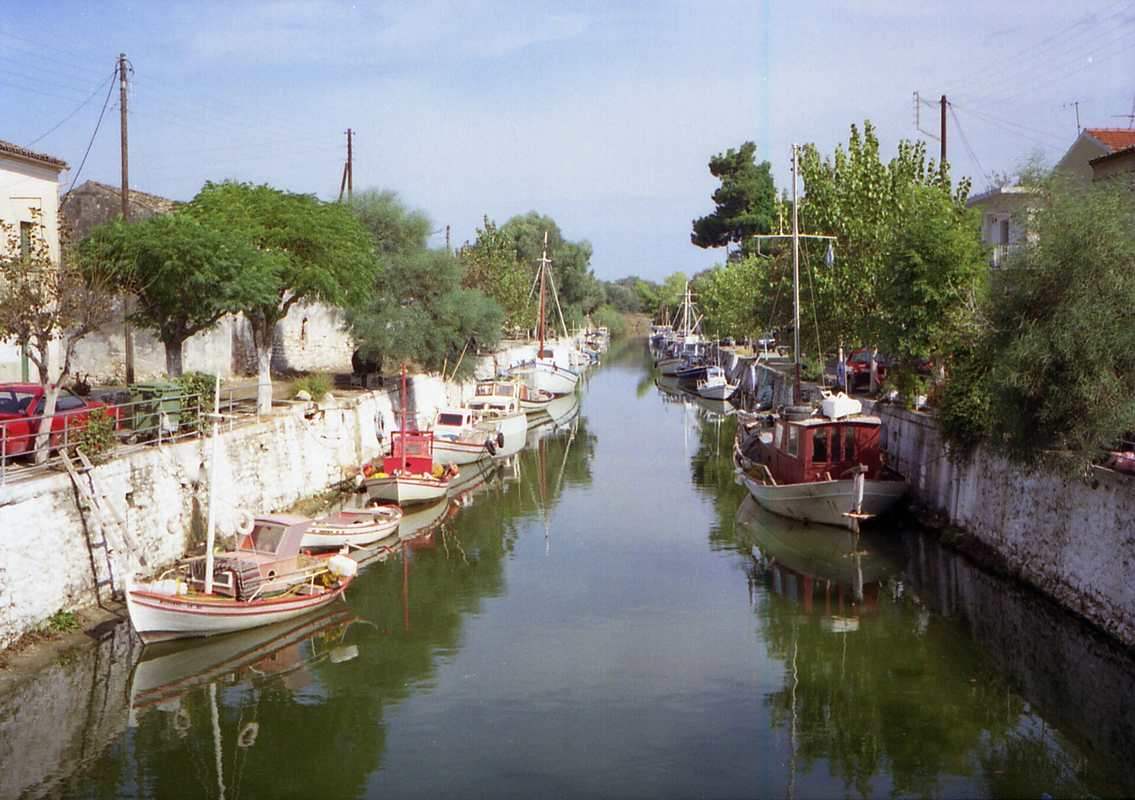
Lefkimmi Corfu is the largest and most traditional town of the south, divided by a picturesque canal lined with tavernas, with old mansions, churches and the historic Alykes salt pans, now a birdwatching reserve, about 40 kilometres from Corfu Town. This guide covers the canal town, the salt pans, the beaches and how to visit.
Lefkimmi offers an authentic, untouristy slice of Corfu, a traditional corner of the wider Corfu tours and travel guide. It sits in the far south of the island. The sections below cover the town.
What is Lefkimmi like?
Lefkimmi is the largest town in southern Corfu and one of its most traditional, divided by a small river or canal into two parts, the riverside area known as Potami. With narrow streets, tall houses, old churches and cafés, it offers an authentic, untouristy glimpse of everyday Corfiot life.
Lefkimmi is the real, working heart of the south. The largest town in the region, around 40 kilometres from Corfu Town, it is split by a small river, or canal, into two halves, with the picturesque riverside quarter known as Potami, meaning river. Far from the resorts, it is one of the most traditional places on the island, a maze of narrow, winding streets lined with tall houses, old mansions, centuries-old churches and local cafés where life carries on much as it always has. For visitors wanting to see authentic Corfiot daily life rather than tourism, Lefkimmi is a rewarding stop, set within the wider Corfu villages. The canal is its centrepiece.
What is the canal like?
Lefkimmi’s centrepiece is its picturesque canal, the small river that runs through the town to the sea, flanked by traditional restaurants and tavernas. Local fishing boats are moored along it, and waterside dining on fresh fish and Greek dishes is one of the town’s great pleasures.
The canal gives Lefkimmi its charm and its character. The little river winds through the town toward the sea, its banks lined with traditional tavernas and restaurants where you can sit over fresh fish, Corfiot dishes and a cool drink while watching the water and the moored fishing boats. Strolling along the canal and exploring the lanes that lead off it reveals beautifully preserved old mansions and historic churches, a wealth of traditional architecture rarely seen in the resort areas. The riverside setting, the everyday bustle and the local tavernas make Lefkimmi a genuinely atmospheric place to wander and eat, set out alongside the guide to Corfu food and wine. The salt pans are a natural highlight.
What are the Lefkimmi salt pans?
The Lefkimmi salt pans, or Alykes Lefkimmis, on a peninsula at Molos, are historic salt works dating from the 13th century and used until. Now a protected Natura nature reserve, they are an important birdwatching site where over 180 species, including flamingos, have been recorded.
The salt pans are Lefkimmi’s natural treasure. Set on a peninsula at the village of Molos near the town, the Alykes Lefkimmis were a major source of salt from the 13th century until production ceased, and you can still see the ditches, corridors and abandoned tools of the former works. Today the marshland is protected within the European Natura network, prized above all for its birdlife: more than 180 species have been observed, including gulls, shelducks, flamingos, avocets, terns and plovers, with spring and autumn the best times for migratory birds. Two restored Venetian warehouses now house an environmental education centre, set out alongside the guide to the Korission Lagoon and its birdlife. The south’s beaches lie close by.
What beaches and sights are nearby?
Near Lefkimmi you can swim at Alykes Beach by the salt pans and find quiet, almost untouched virgin beaches along the east coast, plus the little Church of Panagia Zeli. The long sandy beaches of the south and the party resort of Kavos lie a short drive away.
Lefkimmi is a gateway to the quiet south. Beside the salt pans, Alykes Beach offers swimming and sunbathing in a peaceful setting, and along the nearby east coast lie several unnamed, almost untouched virgin beaches for those happy to seek them out, along with the small Church of Panagia Zeli. A short drive away are the broad sandy beaches and dunes of the southern coast, while the island’s party capital, Kavos, sits at the very tip beyond the town. This makes Lefkimmi a handy, authentic base for exploring the often-overlooked south of Corfu, set out alongside the guides to Kavos and Corfu beaches. Getting there is best by car.
How do you get to Lefkimmi?
You reach Lefkimmi in about an hour by car from Corfu Town, around 40 kilometres south, with parking in the town. Green Buses also serve Lefkimmi from Corfu Town, and a car helps for reaching the salt pans, the beaches and the wider south at your own pace.
Lefkimmi lies in the deep south, so allow time for the journey. By car it is roughly an hour from Corfu Town, around 40 kilometres down the island on good roads, with parking in and around the town. Green Buses connect Corfu Town with Lefkimmi and continue to Kavos, so the town can be reached without a car, though services thin out in the evening. A hire car is the most flexible way to combine a visit to the canal town with the salt pans at Molos, the quiet southern beaches and the Korission Lagoon further up the coast, set out alongside the guides to how to get to Corfu and Corfu car rental. The questions below cover the points travellers ask most.
Frequently Asked Questions
What is Lefkimmi Corfu known for?
Lefkimmi is known as the largest, most traditional town of southern Corfu, with a picturesque canal lined with tavernas, old mansions and churches, and the historic Alykes salt pans nearby, now a protected birdwatching reserve. It offers an authentic, untouristy experience.
What are the Lefkimmi salt pans?
The Lefkimmi salt pans, or Alykes Lefkimmis, at Molos, are historic salt works dating from the 13th century and used until. Now a protected Natura reserve, they are an important birdwatching site where over 180 species, including flamingos, have been recorded.
How far is Lefkimmi from Corfu Town?
Lefkimmi is about 40 kilometres south of Corfu Town, roughly an hour’s drive down the island. Green Buses also connect Corfu Town with Lefkimmi and Kavos, though a car helps for reaching the salt pans, the southern beaches and the wider south at your own pace.