
Balos beach lies at the quiet southwest end of Samos, tucked under the steep slopes of Mount Kerkis beyond the resort of Votsalakia. A pebble-and-sand cove with clear, cool water, it sits near the end of the coast road at Marathokampos bay, far from the busier north and east of the island. Drivers reach it in about an hour from Pythagorio, and the great mountain rising behind gives the shore a dramatic frame. This guide covers where Balos is, the cove and its water, the Kerkis backdrop, the low-key feel, and the light facilities of sunbeds and a taverna or two. Plan the whole trip with Greece Tours.
Balos rewards visitors who want calm over crowds. The southwest coast stays cut off behind Mount Kerkis, so day-trippers thin out and the cove keeps a slow rhythm through the summer. Clear water, a scattering of sunbeds and a taverna behind the pebbles make an easy beach day, while the huge grey mountain frames every view. The bay pairs well with a Kerkis hike or a climb to the Cave of Pythagoras above Marathokampos. Read on for how to reach Balos, what the swimming and snorkelling are like, the mountain setting, the uncrowded mood, and the simple food and shade waiting on the shore.
Where is Balos beach on Samos, and how do you reach it beyond Votsalakia?
Balos beach lies on the southwest coast of Samos, just beyond Votsalakia near the end of the coast road at Marathokampos bay, tucked under the steep slopes of Mount Kerkis away from the towns.
Balos sits at the far southwest of Samos, reached by driving west from Votsalakia and Kampos along the shore road toward Marathokampos bay. The route runs beneath Mount Kerkis, the island’s high peak, and passes the resort strip before the road quietens near Balos. Most visitors arrive by rented car or scooter, since buses to this corner of Samos run rarely and stop short of the cove. The drive from Pythagorio takes about an hour, and from Vathy closer to ninety minutes across the mountainous interior. A small parking area sits behind the beach, and the road continues a short way west before fading toward the remote coves that walkers and boats reach.
Signs for Marathokampos and Votsalakia guide the way. The final approach is flat once the mountain road descends to the shore.
The cove marks the western end of the developed southwest coast, where the long strand of Votsalakia gives way to smaller, quieter bays. Balos shares the same shoreline as neighbouring Votsalakia beach, yet feels a step removed from its hotels and busier sands. Marathokampos village sits up the hillside above the bay, an old settlement that lends its name to the whole gulf. Below it the coast road threads past Kampos, Votsalakia and Balos in a line, each cove smaller and calmer than the last. The southwest faces the open Aegean and the profile of Mount Kerkis frames every view. Small islands and islets show on the horizon across the water on clear mornings here.
Marathokampos bay curves gently, sheltering the southwest beaches from the strongest summer winds.
Balos closes the string of southwest beaches that begins east at Kampos and Votsalakia. The tarmac narrows past the last tavernas and rooms, then reaches the parking behind the pebbles. Walkers press on west from here, where a rough track and coastal path lead toward hidden inlets with no road access. Boats from Votsalakia and the harbour of Ormos Marathokampou also drop swimmers along this stretch in summer. The village port of Ormos Marathokampou lies about three kilometres east, a working fishing and yachting harbour with ferries in the season. Balos therefore sits between the resort sands to the east and the wild coast to the west, an easy place to reach yet far from the island’s crowds.
The southwest corner rewards a slow, unhurried drive.
Reaching Balos rewards modest effort with calm and space. The southwest lies farther from the airport and the main towns than the north-coast resorts, so day-trippers thin out and the cove keeps a settled rhythm. Drivers bring water, since services fade west of Votsalakia and the last shops sit back in Kampos and Marathokampos. Afternoon light falls warm on this west-facing shore, and the sun sets over the sea rather than behind the mountain. Balos pairs well with a morning on Mount Kerkis or a visit to the Cave of Pythagoras above Marathokampos, both a short drive up the slope. The bay makes a fitting end to a southwest loop, a quiet swim after the heights.
Sturdy shoes and a full tank help on the winding approach.
What is the beach like at Balos on Samos, with its pebbles and clear water?
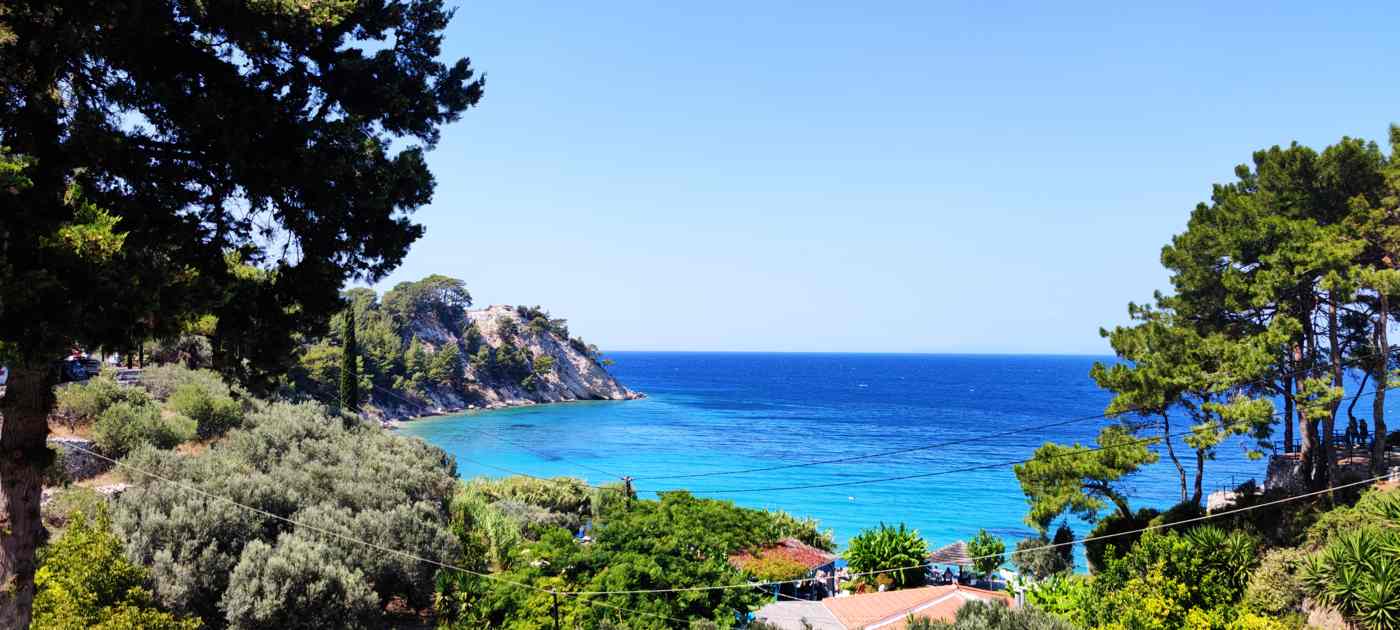
Balos is a pebble-and-sand cove with clear, cool water that deepens quickly off the shore, backed by a low natural fringe rather than buildings, giving swimmers and snorkellers bright, transparent sea over a clean seabed.
The shore at Balos mixes fine grey pebbles with patches of coarse sand, a texture common to the southwest coast of the island. Underfoot the pebbles give way to sand in the shallows, so the entry stays comfortable for most swimmers. Among the ranked Samos beaches, Balos counts as one of the calmer southwest options, less groomed than Votsalakia yet just as clear. The water reads turquoise near the shore and deep blue further out, with good visibility for snorkelling around the rockier edges of the bay. Sea urchins cling to the submerged rocks at the cove’s flanks, so water shoes protect bare feet.
The pebbles keep the sea free of stirred sand, holding the clarity even on breezier days. Flat rocks at either end give snorkellers clear entry points.
Swimming at Balos suits confident and casual bathers alike. The seabed shelves at a gentle angle near the centre of the cove, then drops to cool, clear depths a short way out. Families keep to the shallow middle, where the mixed sand and pebble bottom stays even and free of sudden ledges. The clean water carries little seaweed, and small fish gather over the rocks at each headland. On calm mornings the surface lies flat and glassy, ideal for a long swim across the bay. The southwest position shelters Balos from the meltemi on most summer days, so the sea often stays calmer here than on the exposed north coast.
Cooler currents can reach the cove, refreshing the water through the hottest afternoons of the season.
The clarity of the water ranks among the reasons visitors drive out to Balos. Fine pebbles and a rocky fringe keep the sea transparent, so the bottom shows plainly about three metres down. Snorkellers follow the rock shelves at the edges, where wrasse, bream and the occasional octopus shelter among the stones. The open Aegean here brings clean, unpolluted water with no river mouth or harbour nearby to cloud it. Midday sun lights the shallows to a pale turquoise that darkens toward the deeper centre of the bay. The cove faces west and south of the Kerkis massif, catching sun from late morning until it sinks over the sea.
Little shade falls on the pebbles, so an umbrella or the taverna canopy matters through high summer.
Balos changes character with the wind and the hour. Early in the day the cove lies still, the water mirror-flat and the pebbles cool underfoot. By afternoon a light southwest breeze can ripple the surface, though the bay stays sheltered compared with the open north coast. Strong meltemi spells push swell onto the southwest more rarely, and the cove often holds calm water when the north beaches churn. Swimmers read the sea before entering, since the pebble shelf can steepen after a blow. The clean, deep water suits stronger swimmers who want space away from the crowds. Children paddle at the shallow centre while adults strike out toward the headlands.
The mixed pebble-and-sand floor stays firm and clear, holding the cove’s reputation for bright, transparent bathing.
How does Mount Kerkis shape the setting behind Balos beach on Samos?
Mount Kerkis rises steeply behind Balos to about 1,434 metres, the highest peak on Samos, its grey limestone bulk filling the northern sky above the cove and giving the southwest shore its dramatic, mountainous frame.
Mount Kerkis, also called Kerketeas, climbs directly from the southwest shore to about 1,434 metres, so the beach sits at the foot of the island’s tallest mountain. Its steep grey-limestone flanks rise almost from the water, a rugged wall of rock, scree and low scrub above the cove. The massif runs the length of the southwest, sheltering Balos and Votsalakia beneath it and casting long shadows as the day ends. Caves, chapels and old hermitages dot the slopes, and the mountain forms a protected natural area of the island. The summit often wears a cap of cloud while the coast below stays clear and sunny.
Seen from the pebbles, Kerkis dominates every photograph, its scale dwarfing the boats and umbrellas along the sunlit shore below.
The mountain gives Balos a backdrop unlike any beach on the north or east of the island. From the shore the eye climbs from turquoise shallows across the pebbles and up the bare rock to a summit often lost in haze. Late afternoon turns the western face gold, then pink, before the sun drops into the sea beside the headland. The bulk of Kerkis also blocks the interior road, so the southwest stays cut off and quiet behind its wall of stone. Walkers use Balos and Votsalakia as a base for the long summit hike, which climbs from Votsalakia or the monastery of Evangelistria on the flank.
The trail needs a full day, water and firm boots, and it repays the effort with views across the Aegean.
Kerkis anchors a full day that mixes mountain and sea. Hikers climb toward the Cave of Pythagoras above Marathokampos in the morning, then cool off at Balos in the afternoon. The southern slopes hold the tiny cave-chapel of Panagia Sarantaskaliotissa, reached by carved steps on the walk above the coast. The whole massif is limestone, riddled with caves and springs, and its height wrings rain from passing cloud to keep the slopes greener than the dry south. Griffon vultures and other raptors ride the updrafts over the ridges through the day. From Balos the mountain reads as a single steep pyramid, though its true bulk spreads far behind.
The contrast of cool blue sea and high grey rock defines the southwest coast of the island.
The Kerkis backdrop shapes how Balos feels through the day. Morning sun clears the eastern ridge late, so the cove warms slowly while the peak catches first light. Midday flattens the shadows and the rock glares pale above the blue. Evening is the mountain’s finest hour, when the western wall glows and the sea below turns copper before dusk. The great height also cools the air after sunset, drawing a light land breeze down the slopes to the shore. Photographers frame the lone pyramid of rock over the pebbles and the moored boats for the classic southwest image.
No building rises tall enough to break the line of the mountain, and the view stays as open as it has for ages along this quiet coast.
Why does Balos beach on Samos feel low-key and quiet compared with the north?
Balos sits far in the southwest, remote from the airport and the popular north-coast resorts around Kokkari, so day-trippers thin out and the cove keeps a slow, uncrowded rhythm even through the busy summer weeks.
The quiet at Balos comes first from distance. The southwest lies about an hour from Pythagorio and the airport, and farther still from the north-coast resorts around Kokkari where most package visitors base themselves. Fewer hotels line the shore than at Votsalakia, and no large complex sits directly behind the pebbles. The cove draws mainly drivers who seek a calmer swim, walkers off the Kerkis trails, and guests from the small rooms of Marathokampos and Kampos. Coach tours rarely reach this end of the coast, since the road narrows and parking is limited near the beach. The result is a relaxed shore where towels spread with room to spare even in high summer.
Space and silence set Balos clearly apart from the packed north-coast beaches.
The pace at Balos stays slow through the whole day. Mornings are near-empty, with two or three early swimmers and the taverna setting out its chairs. Even at the August peak the pebbles fill gently rather than jam, and there is room to walk the waterline. The lack of loud beach bars keeps the soundtrack to waves, cicadas and the wind off Kerkis. Families and older couples favour this calm over the busier scenes east, and repeat visitors return for the same unhurried feel. Sunset empties the cove early, since most drive back before dark on the winding road.
The southwest holds a rhythm closer to old Samos than to the developed strips, a shore that rewards those who make the longer trip out here.
The low-key feel also owes much to the landscape itself. Mount Kerkis walls off the interior, so no through-road funnels traffic to the cove, and Balos stays a destination rather than a stop. The southwest villages of Marathokampos and Votsalakia keep a farming and fishing character under the tourist season, and their tavernas serve a local crowd out of high summer. Development here stayed low and spread thin, without the tall hotels of the north. Olive groves and vineyards run down toward the shore, and goats graze the lower slopes of the mountain. The overall mood is rural and unhurried, a corner of Samos that trades nightlife and crowds for quiet water and big views.
Visitors who want stillness make Balos their chosen quiet shore.
Quiet at Balos does not mean empty or dull. The cove has enough life for a comfortable beach day, with a taverna, a row of sunbeds and steady swimmers through the season. None of the crush of the resorts. Solo travellers, couples and families who prefer calm find the balance here suits them. The drive out filters the crowd, leaving mainly those who choose the spot on purpose. Afternoons can gather a modest group when Votsalakia fills and swimmers spread west to Balos for more room. Even then the cove holds space, and the long shoreline absorbs the numbers with ease.
The southwest keeps its unhurried tone from the first swim to the last, a fitting close to a slow day under the mountain by the sea.
What facilities does Balos beach on Samos offer, from sunbeds to tavernas?
Balos offers light, low-key facilities rather than a full resort setup: a scatter of sunbeds and umbrellas over part of the pebbles, and a taverna or two behind the shore serving food and drinks through the summer season.
Facilities at Balos stay simple and seasonal. A run of sunbeds and umbrellas covers one part of the pebbles in summer, hired for the day, while the rest of the cove stays free for towels. A taverna or two sits just behind the beach, serving Greek dishes, fresh fish, snacks and cold drinks through the warm months. The kitchens lean on local produce and the sweet Samos Muscat rounds off a lunch by the water. Shade is thin beyond the umbrellas, so an early spot under the taverna canopy or a brought umbrella helps in high summer. Prices and exact opening months vary with the season, and services wind down as autumn arrives.
Balos runs on the light touch of the quiet southwest Samos coast.
Eating at Balos centres on the taverna behind the pebbles. The menu keeps to Aegean staples — grilled fish, octopus, salads, and slow-cooked dishes — with the day’s catch from the southwest boats. Tables sit in the shade near the shore, so lunch runs long between swims. A cold drink, a plate of mezedes and a view of Kerkis fill an easy afternoon. The taverna also serves as the cove’s shade and shelter when the sun is high, and its canopy draws those without an umbrella. Opening runs with the season, busiest at midsummer and quieter at the shoulders.
No supermarket or kiosk sits on the beach, so swimmers bring extra water and any beach kit from the shops in Votsalakia and Marathokampos before the drive out.
Sunbeds at Balos cover only a stretch of the shore, leaving the cove partly wild. Pairs of loungers under straw umbrellas line up near the taverna, rented by the day, while the ends of the beach stay open for free towels on the pebbles. Water shoes ease the walk over the stones to the sea, since the pebbles turn hot by midday. A small car park behind the beach holds the day’s vehicles, and it fills by late morning at the August peak. The cove has no lifeguards, showers or organised watersports, in keeping with the low-key southwest. Swimmers bring their own gear for snorkelling and shade.
The plain setup suits the cove’s quiet character, a beach for calm swimming and long lunches rather than busy resort services.
Planning a day at Balos rewards modest foresight. Arriving before midday secures a shaded table and a spot in the small car park behind the pebbles. A hat, water shoes and a beach umbrella cover the gaps in the light facilities, since natural shade is scarce. Cash suits the taverna and the sunbed hire, as card machines are not certain on this quiet coast. The southwest position gives long afternoon sun, so late swimmers enjoy warm water and soft light until the mountain shadow reaches the shore. A stop in Votsalakia or Marathokampos on the way fills the cooler and the fuel tank.
Balos then delivers a full, unhurried beach day, simple in its comforts and rich in the calm and scenery of the southwest coast.
How do you reach Balos along the southwest coast road near Marathokampos bay?
The coast road reaches Balos on the far southwest of Samos, past Votsalakia and Kampos, ending near Marathokampos bay. Drivers follow the shoreline route below the mountain for about the final kilometres.
Marathokampos bay anchors the southwest corner of Samos, and the paved coast road runs the whole way to it. Drivers leaving Vathy, the island capital, cover about 50 km through the Ampelos foothills before dropping to the shore. The route from the airport near Pythagorio measures a similar distance across the middle of the island. Karlovasi on the northwest coast sits about 25 km away over the western hills. The last stretch hugs the waterline past Votsalakia and Kampos, two linked resort strips that share one long beach. Balos lies a short drive beyond them, where the tarmac thins under the mountain.
Signposting stays light, so the settlement name Marathokampos guides the final turns toward the water and the pebble shore. The last mile drops steeply to sea level below the peak.
A small unpaved area near the shore holds the cars that reach Balos, and it fills slowly outside the peak weeks. Most visitors arrive by rental car or scooter, since the bay sits at the quiet end of the network. Bus links to the southwest run a handful of times each day toward Marathokampos and Votsalakia, then stop short of the smaller coves. The final approach narrows to a single lane bordered by tamarisk trees and low walls. Speed drops as the surface turns rough near the beach entrances. Drivers coming for sunset allow extra minutes, because the light fades fast behind the ridge.
A taverna or two mark the parking spots, and their terraces overlook the pebble shore just below the road. Signs for Balos stay small and easy to miss.
West of the main cove the coast road loses its asphalt and climbs into rock and scrub. Two-wheel-drive cars handle the paved section with ease, yet the rougher extensions suit sturdier vehicles or walkers. The drive itself rewards the effort, tracing a green coastline where the mountain fills the windscreen for kilometres. Olive terraces and pine break the slope above the road, and small chapels mark the bends. Traffic stays thin even at midday, so the run feels calm compared with the busy north around Kokkari. Pull-offs let drivers stop for photos of the bay curving toward the headland.
The combination of short distance and empty tarmac makes the southwest an easy half-day loop from almost any base on Samos. Cyclists share the quiet tarmac with the light summer traffic.
Fuel stations cluster around Marathokampos and Votsalakia rather than at Balos itself, so a full tank before the final leg saves a backtrack. Shops in the two resort strips cover water, snacks and beach kit for the day ahead. The narrow lane discourages large campervans, which park more comfortably in the wider bays to the east. Morning arrivals find the coolest driving and the emptiest verges near the shore. Return journeys after sunset run slower, because the unlit road twists below the peak. A single main junction inland links Balos with Pythagorio, Vathy and the airport, keeping navigation simple.
Balos rewards the drive with a shoreline where the road, the pebbles and the mountain all sit within a short walk of each other. The bay closes the southwest coast road neatly.
What lies in the remote coves west of Balos reached on foot or by boat?
Rough tracks and boat trips open the coves west of Balos, where the coast road gives out below the mountain. Walkers follow goat paths along the shore, while small boats reach the inlets from Votsalakia and Kampos.
Beyond Balos the shoreline breaks into a string of small coves that the road never reaches. Steep ground pushes the path onto rock ledges and pebble strands separated by low headlands. Walkers set out early, carrying water and firm shoes, since shade stays scarce along the exposed stretch. The payoff is water that deepens to a clear blue over a clean seabed, with few other swimmers in sight. Each inlet holds room for only a handful of towels, so arrivals spread out naturally along the stones. The mountain wall rises straight from the sea here, and its scree slopes catch the afternoon light.
Distances stay modest, with the nearest hidden cove about twenty minutes on foot from the last taverna at Balos beach. Loose gravel underfoot slows the pace between the coves.
Small boats give the easiest access to the coves west of Balos, launching from the jetties at Votsalakia and Kampos. Local operators run short hops along the coast in the calm morning hours before the wind builds. Kayaks and stand-up boards suit stronger paddlers who hug the shoreline between the rock points. The sea near the mountain drops quickly, so snorkellers find clear sightlines over the boulders close in. Boats anchor off the pebbles while swimmers wade the last metres to land. The lack of a road keeps these spots empty even when Balos fills, which draws visitors seeking solitude.
Return trips time themselves against the meltemi, since the afternoon swell around the headland turns the water choppier for small craft. Life jackets and a dry bag suit the short crossings.
The walking route west traces old fishermen and shepherd paths that predate the modern road. Cairns and worn ground mark the way where the trail crosses bare rock above the waterline. Sturdy footing matters, because loose stones and short scrambles interrupt the flatter sections of the path. Views open at each rise toward the open Aegean and the faint outline of nearby islets. The trail eventually climbs away from the sea toward the flanks of the mountain and its high refuge. Walkers turn back at their own limit, since no facilities exist beyond the last cove. A hat, sunscreen and two litres of water cover the basics for the round trip.
The quiet here contrasts sharply with the organised beaches about two kilometres east at Votsalakia. Wild goats graze the rocky ground above the trail. The route rewards patience with total quiet.
Calm days suit the western coves best, when the sea lies flat and the paths stay dry underfoot. Strong meltemi winds push waves onto the exposed pebbles and make boat landings awkward. Swimmers judge the swell before entering, since currents run stronger around the headlands than inside Balos bay. No lifeguards patrol these inlets, so families with young children stay on the main beach. Phone signal fades under the mountain, which makes a simple plan and a fixed return time sensible. The seabed of clean pebbles and boulders rewards mask-and-snorkel exploration in the sheltered corners.
These remote coves reward self-reliant visitors who carry their own shade, water and food for a full day away from any taverna or shop. Clear skies and light winds make the safest window for the walk.
Why does the southwest give Balos meltemi shelter and long afternoon sun?
The southwest coast turns its back on the meltemi, the strong summer wind from the north, so Balos often stays calmer than Kokkari. Afternoon sun sweeps the bay until it drops behind the ridge.
The meltemi dominates the Aegean summer, funnelling down from the north across the top of Samos. North-coast beaches around Kokkari and Tsamadou take the wind head-on and often churn with whitecaps. Balos sits on the opposite side of the island, screened by the bulk of the mountain and the western ridges. The peak acts as a giant windbreak, so the bay keeps flat water on days when the north howls. Swimmers cross easily and snorkel with good visibility while the far coast fights the gusts. Sailors and windsurfers chase the wind north, leaving the southwest to calmer pursuits.
The contrast lets visitors match the beach to the forecast, moving south when the meltemi strengthens and north when it drops to a whisper. The mountain ridge blocks the worst of the northern gusts.
Sun tracks across Balos from late morning until it slips behind the western skyline. The southwest aspect holds warmth into the afternoon, long after shaded north-coast coves lose their light. Swimmers enjoy the warmest sea temperatures of the day between two and five in the afternoon. The pebble-and-sand shore stores heat, so bare feet find it hot near the waterline by midday. Sunset arrives early against the mountain, which throws a long shadow over the bay before the horizon dims. Photographers time the last hour for golden light on the water and the grey scree above. Umbrellas and tamarisk shade matter here, because the open aspect gives little natural cover through the hottest stretch of the whole afternoon.
The bay faces the open sea toward the setting sun.
Certain wind patterns still reach the southwest despite the shelter of the mountain. Southerly and westerly breezes push small waves onto Balos while the north coast lies calm. Local knowledge reads the day: a northern meltemi favours Balos, a southern flow favours Kokkari. The bay rarely turns rough, yet afternoon gusts can whip sand along the open shore. Kite and windsurf crews therefore keep to the northern bays where the wind runs steady and strong. Families read the flags and the taverna umbrellas to judge conditions before settling in. The general rule holds across the whole season. Balos earns a reputation as a reliable fallback when the meltemi shuts the busier northern beaches.
Swimmers switch coasts with the wind to find flat water. Local forecasts guide the daily choice.
Summer heat on the southwest climbs into the mid-thirties Celsius through the peak weeks. The dry mountain air and steady sun keep the shore warm from late spring into autumn. Sea temperatures near the surface reach the mid-twenties by high season, comfortable for long swims. Spring brings green slopes on the mountain and cooler, breezier days better suited to walking than bathing. Autumn holds the warm sea while the crowds thin and the light softens over the bay. Rain stays rare in the summer months, so beach plans rarely change at short notice. The combination of meltemi shelter and a long sunny afternoon gives Balos one of the steadier microclimates for swimming on the whole of Samos.
Warm evenings extend the swimming day well past the early sunset.


How do you combine Balos with a Mount Kerkis walk or the Cave of Pythagoras?
Balos pairs with a climb on the highest peak of Samos or a visit to the cave above Marathokampos. The trailheads sit within a short drive of the beach, letting visitors swim and explore in one day.
The mountain that shelters the bay also gives the southwest its best walking. Mount Kerkis rises to about 1,434 m, the highest point on Samos and a landmark across the eastern Aegean. Trails start from Votsalakia and the monastery of Evangelistria, climbing through pine and bare rock to the summit ridge. The full ascent takes strong walkers around six to seven hours for the round trip. Shorter routes reach the monastery and the caves on the lower slopes in half a day. Walkers finish hot and dusty, which makes a swim at Balos the natural reward afterwards.
Early starts beat the midday heat, so most hikers climb at dawn and reach the beach by mid-afternoon for the calmer water. The peak dominates every view along the southwest shore.
Above Marathokampos the slopes hold the Cave of Pythagoras, a rocky refuge linked by legend to the philosopher. A steep marked path climbs from the road to the cave mouth and a small chapel built into the rock. The walk up gains height quickly, rewarding the effort with wide views over Marathokampos bay and Balos below. Water seeps from the cave, feeding a spring that once supplied the hidden shelter. The round trip takes about an hour and a half of steady climbing on rough ground. Firm shoes and water matter, since the path stays exposed to the sun throughout.
Visitors pair the cave in the cool morning with an afternoon on the beach, covering history and swimming in one short loop. The chapel and spring reward the steep climb.
Marathokampos village crowns the hill above the bay, its lanes tumbling down toward the sea. The old settlement holds tavernas, a church square and views that stretch across the gulf to the mountains of Turkey. Visitors combining a walk with a swim often base a day around the village, the cave and the shore. The short distances make the loop easy: village, trailhead and beach sit within about two kilometres of each other. A morning climb, a midday meal in the old square and an afternoon at Balos fill the day without rushing. The route suits drivers with a rental car, since buses serve the coast rather than the upper slopes.
This blend of mountain, history and quiet water sums up the appeal of the southwest corner of Samos.
Votsalakia beach lies minutes east of Balos and adds a longer, busier strip for a change of scene. The two shores share the same mountain backdrop but differ in mood and facilities. Cyclists and walkers link them along the coast road for an easy shoreline outing. A day can string together a foothill trail, a cave visit and swims at both bays. Boat trips from Votsalakia extend the range west to the coves the road cannot reach. Sunset draws people back to Balos, where the light lingers on the water below the peak. The cluster of mountain, cave, village and quiet coves turns the southwest into a self-contained base.
It rewards visitors who give it a full day rather than a quick stop. A single base covers mountain, sea and history.
Who does the quiet bay of Balos suit and what are the best times to go?
Balos suits couples, walkers and swimmers who want a calm shore over a lively resort scene. Late spring and September bring warm water, thin crowds and easy parking under the mountain.
Couples and calm-seekers find Balos an easy match, with its low-key tavernas and quiet pebble shore. Walkers use it as a base for the mountain and the coves west of the bay. Swimmers and snorkellers value the clear, sheltered water and the clean seabed close in. Families with older children settle in well, since the shallows stay calm on meltemi days. Photographers come for the mountain backdrop and the long southwest light toward sunset. The bay suits drivers, because a car unlocks the village, the trailheads and the hidden coves nearby. Visitors chasing beach bars, water sports and nightlife head north to Kokkari or Pythagorio instead.
Balos rewards those who trade organised buzz for space, quiet and a dramatic natural setting under the peak. Solo travellers and readers value the calm too.
Mornings at Balos stay coolest and emptiest, ideal for a swim before the sun swings overhead. Midday brings the strongest heat and the fullest parking, so early arrivals claim the best shade. Afternoons hold the warmest sea and the softest light as the sun tracks toward the ridge. Sunset empties the beach slowly, leaving a handful of diners on the taverna terraces above the pebbles. Night falls dark and quiet here, with little light beyond the village on the hill. Weekday visits beat weekends, when islanders and other travellers add to the modest crowd. The rhythm of the bay favours a slow, unhurried day rather than a packed schedule, matching the mood of the whole southwest coast.
Stars fill the dark sky once the last taverna closes for the night.
Late spring turns the mountain slopes green and warms the sea enough for the first long swims. June and early July bring reliable sun, calm water and space on the shore before the peak rush. August fills the parking and the tavernas, yet Balos stays quieter than the northern resorts even then. September holds warm sea, thinner crowds and softer light, which regulars often rate the finest month. October cools the air while the water stays swimmable on calm days. Winter closes most facilities, leaving the bay to walkers and the occasional local. The shoulder months reward visitors who want the mountain, the coves and the beach with room to spare and easy parking near the shore.
Spring wildflowers colour the lower slopes of the mountain above the bay.
Balos rewards a little planning, since facilities stay basic and the nearest shops sit back in the resort strips. Water, snacks and sunscreen cover a full day, along with firm shoes for the coastal paths. Shade comes from a handful of umbrellas and the tamarisk trees, so an early spot near cover helps in high summer. Cash suits the small tavernas, where card machines cannot always be relied on. A rental car turns the bay into a hub for the mountain, the cave and the western coves. Calm forecasts and morning starts give the best of the quiet shore under the peak.
The southwest corner rewards visitors who slow down, letting the pace of Balos and its huge mountain backdrop set the day. The southwest stays the calmest corner of the island.
Frequently Asked Questions
Is Balos beach good for families with kids?
Balos works for families with children who can handle a pebble-and-sand shore and calm, clear water. The bay sits on the sheltered southwest coast, so it stays flat on the days when the meltemi wind blows from the north. Shallow water near the shore lets younger swimmers wade and paddle within easy reach of a parent. No lifeguard patrols the beach, so adults supervise closely, especially where the seabed drops toward the boulders further out. Water shoes help small feet cross the pebbles and protect against sea urchins on the rocks. Shade is limited to a scattering of umbrellas and tamarisk trees, so families arrive early to claim a spot near cover.
A taverna or two supply drinks, snacks and simple meals through the day. The quiet setting suits families who want a relaxed swim over water sports or a busy resort beach. Older children who enjoy snorkelling and short coastal walks gain the most from a day at Balos.
Is there parking at Balos beach?
Parking at Balos consists of a small unpaved area near the shore, close to the tavernas and the beach entrances. The space holds a modest number of cars and fills fastest around midday in the peak summer weeks. Early arrivals find the easiest spots and the last patches of natural shade under the tamarisk trees. The final approach runs down a narrow lane, so large campervans and wide vehicles struggle and park more easily in the bigger bays to the east. Most visitors reach Balos by rental car or scooter, since bus services stop short of the smaller southwest coves. No charge applies at the informal parking, though drivers leave room for others along the tight verges.
Scooters and motorbikes slot in easily even when the car space fills. Drivers staying for sunset take extra care on the unlit return, because the road twists below the mountain. A little patience and an early start make parking straightforward through most of the season.
Are there sunbeds and umbrellas at Balos?
Sunbeds at Balos come in small numbers, set out by the one or two tavernas that back the beach. The bay keeps a low-key character, so the rows stay short compared with the organised strips at Votsalakia or on the north coast. Visitors who order food or drinks at a taverna usually gain the use of a lounger and umbrella. The scattered layout leaves plenty of open pebbles for those who bring their own mat and shade. Umbrellas matter here, because the southwest aspect gives the bay long, strong afternoon sun with little natural cover. Arriving early secures a bed near the water on busy days in high summer.
The pebble-and-sand mix sits comfortably under a towel once a mat softens the stones. Prices stay modest and are best confirmed on the spot, since they change through the season. The simple set-up matches the quiet mood of a beach that trades facilities for space and calm.
Is Balos good for snorkelling?
Snorkelling at Balos rewards swimmers with clear water and a clean seabed of pebbles, sand and boulders. The sheltered southwest position keeps visibility high on calm days, when the meltemi blows itself out over the northern coast. Rocky sections at each end of the bay hold the most marine life, from small fish to sea urchins among the stones. The water deepens gradually, giving beginners easy entry and confident swimmers room to explore further out. A mask, snorkel and water shoes cover the basics, since urchins cluster on the submerged rocks. Morning hours bring the flattest sea and the best light for looking down through the clear water.
The remote coves west of the main bay offer even quieter snorkelling for those who reach them on foot or by boat. Currents strengthen around the headlands, so swimmers judge conditions and stay within the calmer central bay when the wind picks up. Balos suits snorkellers who value clarity over facilities.
How do you get to Balos beach on Samos?
Getting to Balos means driving to the far southwest of Samos, past Votsalakia and Kampos to the end of the coast road near Marathokampos bay. From Vathy, the island capital and main ferry port, the route covers about 50 km across the Ampelos foothills. The airport near Pythagorio sits a similar distance away over the middle of the island. Karlovasi on the northwest coast lies roughly 25 km off over the western hills. A rental car or scooter gives the easiest access, since buses serve Marathokampos and Votsalakia but stop short of the smaller coves. The final lane narrows and turns rough near the beach, so drivers slow over the last stretch.
Signposting stays light, and the village name Marathokampos guides the closing turns toward the water. Boat trips from Votsalakia reach Balos and the coves west of it during calm morning hours. The short distances make the southwest an easy half-day trip from any base on the island.
Can you combine Balos with a Mount Kerkis hike?
Combining Balos with a Mount Kerkis hike works well, since the trailheads sit within a short drive of the beach. Kerkis rises to about 1,434 m, the highest peak on Samos, with paths starting near Votsalakia and the monastery of Evangelistria. The full summit round trip takes strong walkers around six to seven hours, while shorter routes reach the monastery and lower caves in half a day. An early start beats the midday heat, so hikers climb at dawn and descend to the shore by mid-afternoon. A swim at Balos then cools tired legs in the calm, clear water below the peak.
Firm shoes, a hat and two litres of water cover the climb, which stays exposed to the sun. The southwest catches warm afternoon light, giving a relaxed end to an active day. This pairing of mountain and quiet bay suits walkers who want both height and sea in a single outing on Samos.
Which months are quietest at Balos beach?
Quiet months at Balos fall outside the peak of July and August, when the shoulder season thins the crowds. Late spring warms the sea for the first long swims while the mountain slopes stay green from the winter rains. June and early July bring reliable sun and calm water with space still open on the shore. September ranks among the finest months, holding warm sea, softer light and far fewer visitors than high summer. October keeps the water swimmable on calm days as the air cools and facilities begin to close. Even in August the southwest stays quieter than the busy northern resorts around Kokkari.
Weekdays beat weekends across the season, since islanders add to the modest crowd on their days off. Winter leaves the bay to walkers and the occasional local, with tavernas mostly shut. Visitors seeking calm, easy parking and warm water aim for late spring or September under the mountain.