
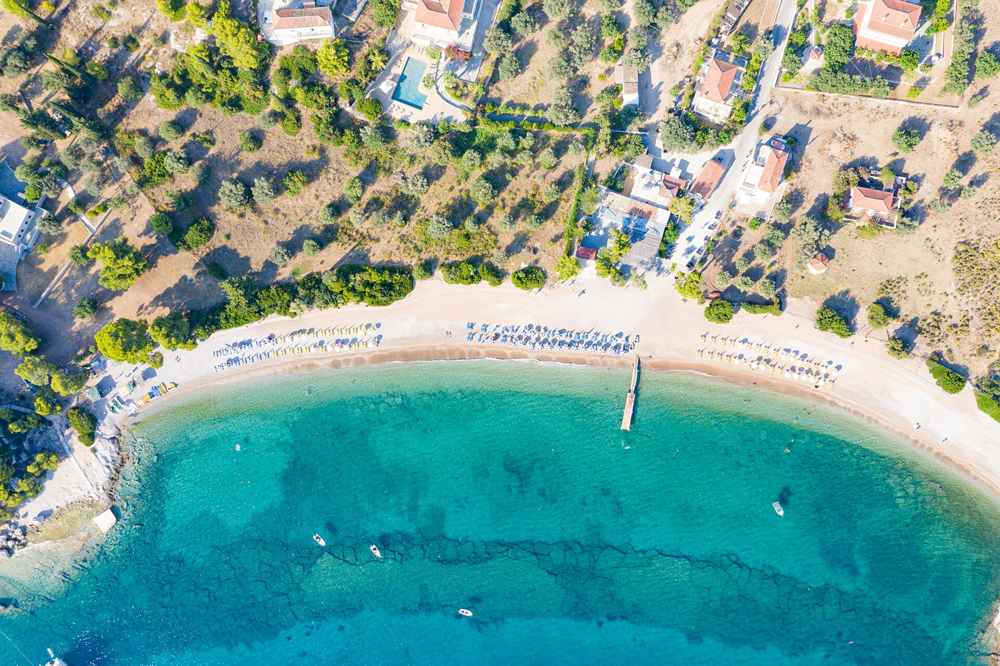
The Old Harbour of Spetses, known to islanders as Baltiza, is the traditional shipbuilding port that curves east of the Dapia, the town’s main quay. Wooden boats are still built and repaired by hand in its tarsanas boatyards, while moored yachts, cocktail bars, and seafood tavernas line the water. This My Greece Tours guide explains what the Old Harbour is, how to reach it, and why it is the island’s evening hub.
Reached on foot along the waterfront from the Dapia in about fifteen to twenty minutes, or by a short water-taxi hop, Baltiza is a working harbour rather than a manicured marina. The church of Panagia Armata stands near its mouth and anchors the island’s great September festival. Below we distinguish the Old Harbour clearly from the town centre and set out its boatyards, bars, tavernas, and history for a first visit.
What is the Old Harbour of Spetses?
The Old Harbour of Spetses, called Baltiza, is the island’s traditional shipbuilding port, a sheltered inlet east of the Dapia lined with working boatyards, moored yachts, bars, and tavernas, and overlooked by the church of Panagia Armata.
Baltiza is the historic heart of maritime Spetses, the inlet where the island’s seafaring wealth was born and where its boatbuilding tradition still survives. Set into the coast a short walk east of the Dapia, it served as the main port in the age of sail, when Spetsiot merchant ships and the fleet of the War of Independence were built, moored, and repaired here. Stone mansions, or archontika, of the old shipowning families rise around its rim, and the church of Panagia Armata guards its entrance. Today the basin shelters a mix of traditional caiques, fishing boats, and visiting yachts.
For an overview of the island and how its sights connect, our guide to Spetses sets the Old Harbour in its wider context.
The name Baltiza is used almost interchangeably with the Old Harbour, and both refer to the same sheltered creek that cuts into the eastern side of Spetses Town. The inlet is long and narrow, protected from the open sea, which is exactly why it was chosen as a shipyard and anchorage centuries ago. Its calm water and gently shelving shore suited the launching and beaching of wooden hulls. A stone breakwater and a small lighthouse mark the mouth, and the tiny chapels clustered at the entrance are among the most photographed sights on the island.
Walking its full length, from the boatyards at the head of the creek out to the lighthouse, takes only minutes but passes through the whole story of Spetsiot seafaring, from working slipway to whitewashed chapel.
Unlike a modern marina, the Old Harbour remains a genuine working port rather than a purpose-built leisure development. Half-finished wooden hulls sit on slipways, timber and tools lie about the yards, and the smell of resin and fresh-cut wood hangs in the air near the tarsanas. This authenticity is a large part of Baltiza’s appeal, because it has not been sanitised for visitors. Alongside the workaday boatbuilding, the harbour has become fashionable, its quays lined in the evening with yachts, bars, and restaurants. The contrast between craft and glamour, between a shipwright’s shed and a cocktail terrace metres away, gives the Old Harbour its distinctive character.
It is at once the island’s most historic industrial site and its liveliest night-time destination, a combination found in few other Greek ports.
For a visitor, the Old Harbour rewards a slow wander at almost any hour. By day you can watch shipwrights at work, admire the moored yachts, photograph the lighthouse and the chapels, and step inside Panagia Armata. By evening the same quays fill with diners and drinkers as the bars and tavernas come alive. The walk out from the Dapia along the waterfront is a pleasure in itself, passing the Poseidonion Grand Hotel and the town beach on the way. Because Spetses is largely car-free, you approach on foot, by bicycle, by water taxi, or by horse-drawn carriage.
Our guide to getting around Spetses explains these car-free options for reaching Baltiza and moving on to the rest of the island.
How is the Old Harbour different from the Dapia?
The Old Harbour, or Baltiza, differs from the Dapia in being the island’s traditional working shipyard and evening hub, while the Dapia is the main ferry quay and daytime social centre; the two lie about a fifteen-minute waterfront walk apart.
The Dapia and the Old Harbour are the two poles of Spetses Town, and understanding the difference helps you navigate the island. The Dapia is the main quay where hydrofoils and ferries dock, ringed by cafes, shops, and the historic cannon emplacement that gave it its name. It is the arrival point and the daytime hub, busy with new visitors, water taxis, and horse-drawn carriages. The Old Harbour, by contrast, lies further east around the coast, a quieter, more atmospheric inlet that comes into its own in the evening. Where the Dapia is about arrival and daytime bustle, Baltiza is about boatbuilding, dinner, and drinks after dark.
Our guide to Spetses Town and the Dapia covers the town centre and its main quay in detail.
Geographically the two harbours sit perhaps a kilometre apart along the waterfront, linked by a pleasant coastal promenade that runs east from the Dapia. The walk takes roughly fifteen to twenty minutes at an easy pace and passes the Poseidonion Grand Hotel, the town beach, and a string of cafes and shops. This stroll is one of the classic experiences of Spetses Town, especially at dusk when the light softens over the water. Cyclists cover the distance in minutes, and water taxis will carry you directly between the two if you prefer not to walk.
It is flat and easy, suitable for most visitors and a rewarding introduction to the town’s seafront in its own right, whichever direction you happen to be heading.
The functional split between the two harbours is long-standing and reflects their history. The Old Harbour was the original port, where the shipyards operated and the merchant and war fleets were based in the age of sail. As Spetses developed, the Dapia became the principal commercial and passenger quay, better placed for the growing town and its trade. That division persists today: the Dapia handles the ferries and the daytime commerce, while Baltiza retains the boatyards and has become the fashionable evening quarter. The distinction matters when you plan your day, since the liveliest dining and nightlife cluster at the Old Harbour after dark, whereas practical services, ticket offices. The main transport links stay concentrated around the Dapia.
Knowing which harbour does what saves time and helps you schedule your walk between them.
Confusing the two is a common mistake for first-time visitors, since both are called simply the harbour in casual speech. When islanders and tavernas refer to Baltiza or the Old Harbour, they mean the eastern boatbuilding inlet with its bars and seafood restaurants, not the ferry quay. Directions to evening venues almost always point here. If you are told a restaurant is at the Old Harbour, allow time for the fifteen-minute walk from the Dapia or take a water taxi, especially after dark. Keeping the two straight also helps when arranging to meet friends or a carriage, since simply saying the harbour can send you to the wrong end of town.
For the after-dark scene specifically, our guide to Spetses nightlife concentrates on the bars of Baltiza and the Dapia.
How do you get to the Old Harbour of Spetses?
You reach the Old Harbour on foot from the Dapia in about fifteen to twenty minutes along the coastal promenade, or more quickly by water taxi, bicycle, or horse-drawn carriage, since Spetses is largely car-free.
The most popular way to reach the Old Harbour is the waterfront walk east from the Dapia, the main quay where the boats from Piraeus dock. The route follows the coastal road and promenade, flat and easy the whole way, and takes about fifteen to twenty minutes at a relaxed pace. Along it you pass the town beach, the grand facade of the Poseidonion Grand Hotel, and a succession of cafes and boutiques. Many visitors make the stroll part of their evening, timing it for sunset before dinner at a Baltiza taverna.
The walk is scenic and simple to follow: keep the sea on your right leaving the Dapia and continue until the boatyards and moored yachts of the Old Harbour come clearly into view ahead.
Water taxis offer the fastest and most characterful alternative, running from the Dapia around to the Old Harbour in minutes across the bay. These small motorboats operate throughout the day and late into the night, and they are a practical choice after dinner if you would rather not walk back in the dark. They also link the town to the outlying beaches and to the mainland ports, so the same service that carries you to Baltiza can take you further afield. Fares vary with distance and the time of day, so agree the price before you set off.
Our guide to how to get to Spetses explains the hydrofoil routes from Piraeus and the water-taxi hops from Kosta and Porto Heli on the mainland.
Bicycles are a favourite way to move around Spetses, and the flat coastal route makes cycling to the Old Harbour quick and enjoyable. Rental shops near the Dapia hire bikes by the hour or day, and the ride out to Baltiza takes only minutes. There is space to leave a bicycle near the harbour while you explore on foot or eat. Horse-drawn carriages, another island tradition, also make the trip, offering a slower, more leisurely approach that visitors enjoy at least once. Because private cars are banned in the town, these car-free options are not merely picturesque but the genuine means of getting about.
For routes and rental advice, our guide to cycling Spetses covers getting around the island on two wheels.
Arriving directly by sea is also possible, since yachts and boats moor in the Old Harbour itself. Visiting sailors tie up along the quays of Baltiza, stepping ashore straight into the bars and tavernas. The inlet is a well-known stop on the Saronic and Argo-Saronic sailing circuit. Day-trip boats and organised cruises sometimes call here too, and chartered vessels use the harbour as a base for exploring the surrounding coast and islets. If you are touring the area by water, the Old Harbour makes a natural anchorage, sheltered and central to the town. Our guide to Spetses boat tours outlines the sailing trips and coastal cruises that use the island’s harbours as their departure and mooring points.
What are the tarsanas boatyards at the Old Harbour?
The tarsanas are the traditional boatyards at the Old Harbour where Spetsiot craftsmen still build and repair wooden boats by hand, continuing a shipbuilding tradition from the age of sail that once produced the island’s war and merchant fleets.
The tarsanas, a word derived from the same root as arsenal and shipyard, are the working boatyards strung along the head of the Old Harbour. Here Spetsiot shipwrights still shape hulls from timber using techniques passed down through generations, building and repairing the wooden caiques and traditional vessels that are increasingly rare across the Mediterranean. Watching a boat take form on the slipway, its ribs and planking assembled by hand, is one of the most authentic sights on Spetses. The craft is demanding and slow, and the yards that survive represent a living link to the island’s seafaring past.
These are not a museum display but a genuine industry, quieter than in the days of sail yet still active. Central to what makes Baltiza far more than a merely pretty harbour.
Spetses owed its historic wealth and power to exactly this skill. In the eighteenth and early nineteenth centuries the island’s yards turned out a large merchant fleet that traded across the Mediterranean and the Black Sea. When the War of Independence broke out in 1821 those same shipwrights built and armed the vessels that fought the Ottoman navy. The famous ships of Spetsiot captains, including the fleet associated with the heroine Laskarina Bouboulina, came from these very slipways. The boatbuilding tradition is therefore inseparable from the island’s identity and its revolutionary fame.
Standing among the tarsanas, you are looking at the descendant of the industry that made a small, rocky island one of the three great naval powers of the Greek revolution, alongside Hydra and Psara.
The boats built here are principally wooden caiques and traditional Greek craft, prized for fishing, local transport, and increasingly for leisure and preservation. Repair and maintenance now form a large part of the yards’ work, as owners of older wooden vessels bring them to Baltiza for the specialist skills that places still offer. The materials remain traditional: seasoned timber, natural resins, and hand tools, worked in open-sided sheds along the water. The scent of wood and varnish is part of the harbour’s atmosphere. For visitors, the yards are best appreciated by simply walking slowly past and watching, respecting that this is a workplace rather than an attraction.
Photographs of half-built hulls on the slipways are among the most evocative you can take on Spetses, capturing a craft that has almost vanished elsewhere in Greece.
The survival of the tarsanas is not guaranteed, which makes them all the more worth seeing. Traditional wooden boatbuilding has declined steeply across Greece as fibreglass and metal hulls have taken over and as the craftsmen age without always finding successors. On Spetses the tradition has held on partly because of the island’s pride in its maritime heritage and partly because of continuing demand for the repair of classic boats. Efforts to document and sustain the craft give hope that it will endure. When you visit the Old Harbour, the boatyards offer a rare chance to witness this heritage first-hand.
To understand how the tradition fits the island’s wider story, our guide to the Spetses Museum covers the maritime history displayed in the Hatzigiannis Mexis mansion.
Why is the Old Harbour the evening hub of Spetses?
The Old Harbour is the island’s evening hub because its quays fill after dark with cocktail bars, seafood tavernas, and moored yachts, drawing residents and visitors to Baltiza for dinner and drinks in a lively but relaxed waterside setting.
The centre of gravity on Spetses shifts from the Dapia to the Old Harbour, and Baltiza becomes the place to be. The quays that host boatyards by day take on a different character in the evening, their bars and restaurants filling their terraces with tables and lamplight along the water. The moored yachts add glamour, their crews and owners mingling with island regulars and visitors. The atmosphere is animated yet unhurried, more about long dinners and drawn-out drinks than loud clubbing. This is where Spetsiots and returning Athenians choose to spend their nights.
The mix of working harbour, fine boats, and fashionable venues gives the setting an appeal that a purpose-built nightlife strip could never hope to match.
The range of venues around the Old Harbour suits moods, from casual to stylish. Cocktail bars line the water, some low-key and others more chic, drawing a smart crowd for sundowners and late drinks. Interspersed with them are seafood tavernas and restaurants where the evening often begins with a long dinner before drinks take over. As the night deepens, the bars stay busy, and the harbour hums with conversation and music at a civilised volume. Spetses is not a place for large nightclubs; its nightlife is centred on this convivial harbour scene rather than on any single loud venue. Our guide to Spetses restaurants points you to the tavernas of Baltiza where many memorable evenings begin.
The yachts moored stern-to along the quays are a defining feature of the Old Harbour after dark. Spetses has long been a fashionable retreat for wealthy Athenians and a favoured stop for the Saronic sailing set, and Baltiza is where the finest visiting boats tie up. Their lights on the water, and the comings and goings of crews and guests, are part of the evening spectacle. This glamorous side sits comfortably alongside the working boatyards metres away, and the juxtaposition is precisely what makes the harbour distinctive. The scene is sociable rather than exclusive, and anyone can walk the quays, admire the boats, and settle at a bar to watch the night unfold.
It is people-watching of a high order in one of the Saronic’s most stylish settings.
The transformation from working port to evening hub happens gradually through the day. In the late afternoon the harbour is still quiet, the boatyards winding down and the first tables being set. By early evening the promenade from the Dapia fills with people strolling out for dinner, and by night the quays are lively with diners and drinkers. The season shapes the mood: in July and August the Old Harbour is at its busiest and most glamorous, while in spring and autumn it is calmer and more local.
To match your visit to the atmosphere you want, our guide to the best time to visit Spetses explains how the harbour and the town change across the months of the year.
What is the church of Panagia Armata at the Old Harbour?
Panagia Armata is the church at the mouth of the Old Harbour, built in thanks for the naval victory of 1822 and dedicated to the Virgin; it holds a famous painting of the battle and is central to the island’s.
The church of Panagia Armata stands near the entrance to the Old Harbour, a modest but historically charged building that overlooks the water where the island’s boats were launched for centuries. It was raised by the Spetsiots in thanksgiving for their deliverance in the naval battle of September 1822, when their fleet turned back an Ottoman armada in the strait between the island and the mainland. Dedicated to the Virgin, whose feast of the Nativity falls on the eighth of September, the church ties the religious calendar directly to the historic victory. Its position at the harbour mouth is deliberate and symbolic, linking the faith of the islanders to the sea that made and defended them.
It is one of the most significant monuments in the whole of Spetses Town.
Inside, the church is best known for a celebrated painting depicting the naval battle it commemorates. This work shows the clash between the Greek and Ottoman fleets and connects the quiet interior directly to the dramatic events of 1822. For visitors, seeing the painting brings the history of the harbour to life, turning an attractive chapel into a window on the island’s proudest moment. The church is generally a place of calm outside festival time, and stepping in offers a cool, contemplative pause from the harbour bustle. As with all Orthodox churches, modest dress is appropriate, and it is respectful to keep quiet, especially if a service is under way.
The building rewards a short visit for anyone interested in why the Old Harbour matters so much to the people of Spetses.
Panagia Armata is inseparable from the Armata festival, the island’s greatest annual celebration, which takes its name from the church and the naval battle alike. Every early September the harbour it overlooks becomes the stage for a spectacular reenactment, in which a wooden replica of the Ottoman flagship is burned on the water before a long fireworks display. The commemoration begins with a church service here, so the religious observance and the public spectacle are two halves of the same event. On the festival night the crowds pack the quays of Baltiza within sight of the church.
Our guide to the Armata festival explains the history, the reenactment, and how to experience the island’s proudest evening in the Old Harbour.
The little chapels and the lighthouse clustered at the mouth of the Old Harbour, of which Panagia Armata is the most important, together form one of the most photographed scenes on Spetses. Whitewashed walls against the blue of the sea, with moored yachts and the boatyards behind, make this corner of Baltiza especially picturesque at golden hour. Many visitors walk out to the harbour mouth simply for the view and the photographs, then step inside the church before returning along the quays. The setting is quietest in the morning and most atmospheric at sunset.
Whether you come for the history, the faith, or the photograph, Panagia Armata anchors the eastern end of the harbour and gives the whole inlet its name, its festival. Much of its deeper meaning.
What can you see and do around Baltiza?
Around Baltiza you can watch the tarsanas boatyards at work, admire the moored yachts, photograph the lighthouse and chapels at the harbour mouth, visit Panagia Armata, stroll the quays, and dine at the seafront tavernas.
A visit to the Old Harbour combines several distinct pleasures within a compact area. The obvious starting point is the boatyards at the head of the creek, where you can watch wooden hulls being built and repaired by hand. From there the quays lead out past moored yachts and fishing boats toward the harbour mouth, with its lighthouse, chapels, and the church of Panagia Armata. Along the way the terraces of bars and tavernas invite a pause for a coffee, a drink, or a meal. The whole circuit can be walked slowly in an hour or lingered over for a full evening.
Few Greek harbours pack so much variety, from living craft to fashionable dining, into so small and scenic a space as Baltiza does within its sheltered creek.
The stone mansions ringing the harbour are worth attention in their own right. These archontika, the grand houses of the old shipowning families, reflect the wealth that Spetsiot seafaring generated, their neoclassical facades and walled gardens lining the slopes above the water. Walking the lanes just back from the quays takes you past some of the finest, a reminder that the Old Harbour was once the address of the island’s captains and merchants. The architecture rewards a slow wander, and combining the harbourfront with the streets behind gives a fuller sense of Baltiza’s history.
For more of the sights and experiences that fill a stay, our guide to things to do in Spetses sets the Old Harbour among the island’s other attractions.
Photography is one of the great draws of the Old Harbour, and the mouth of the inlet is its finest subject. The cluster of small white chapels and the lighthouse, framed by moored boats and the open sea, forms the classic Spetses image, especially in the warm light of early morning or late afternoon. The reflections of masts and buildings in the calm water add to the appeal. Beyond the harbour mouth a coastal path continues along the shore, offering further views back over Baltiza and out toward the mainland hills of the Peloponnese across the strait.
This short walk is a rewarding extension for anyone wanting to see the harbour from a distance and to enjoy the quieter coastline just beyond the town’s edge.
The Old Harbour also serves as a base for exploring the coast by water. Boats depart from the town’s quays for the island’s beaches, for circumnavigations of Spetses, and for trips across the strait to the mainland and neighbouring islands. Swimming spots and coves lie within easy reach, and the sheltered inlet is a natural place to board a boat or hire a small craft. Combining a morning on the water with an evening at the Old Harbour makes for a well-rounded day.
Our guide to Spetses beaches maps the coves and swimming spots around the island, many of them reachable by the same water taxis and small boats that use Baltiza and the Dapia as their departure points.
When is the best time to visit the Old Harbour?
The Old Harbour is enjoyable year-round, but it is liveliest on summer evenings from June to September and at its most spectacular during the Armata festival in early September; spring and autumn offer a quieter, more local atmosphere.
The Old Harbour changes character with the seasons and the hours, so the best time to visit depends on what you want from it. High summer, from June through early September, brings the fullest experience: warm evenings, busy bars and tavernas, and the finest yachts moored along the quays. This is when Baltiza is at its most glamorous and animated, especially in July and August when Athenian visitors fill the island. The trade-off is crowds and higher prices, and tables at the best tavernas can require booking.
For travellers who want the harbour at its liveliest, with the full spectacle of the evening scene, the peak summer months deliver it, though they share it with the largest numbers of other visitors the island sees all year.
Spring and autumn offer a gentler, more local version of the Old Harbour. In May, early June, late September, and October the weather is still pleasant, the sea often warm enough for swimming into autumn, and the harbour noticeably calmer. The boatyards work on without the summer crowds, the tavernas are easier to get into, and the atmosphere feels more like the island’s own. Prices ease outside the peak, and the coastal walk from the Dapia is more comfortable in the milder temperatures. For visitors who prefer authenticity and space over buzz, these shoulder months are arguably the sweet spot.
For help choosing a base for a shoulder-season stay, our guide to where to stay in Spetses covers the town’s neighbourhoods and options.
The single most dramatic time to be at the Old Harbour is during the Armata festival in early September. For that celebration the inlet becomes the stage for the island’s great naval reenactment, when a replica Ottoman flagship is burned on the water and fireworks fill the sky over Baltiza. The quays and slopes pack with enormous crowds, and the harbour reaches an intensity found at no other time of year. Anyone drawn to spectacle and history should aim for this window, but it demands planning, since accommodation and transport fill months ahead.
Coming for the Armata means seeing the Old Harbour at its most charged and meaningful, tied directly to the events that gave the church of Panagia Armata and the festival their shared name.
Within any given day, the harbour also has its own rhythm worth timing. Early morning is quiet and clear, ideal for photography at the harbour mouth and for watching the boatyards begin work without crowds. Midday can be hot and still, better spent at a beach than on the exposed quays. Late afternoon and evening are when Baltiza comes alive, as the light softens, the promenade fills, and the bars and tavernas set their tables. For most visitors the ideal plan is to see the harbour twice: once in the calm of morning for its working and photographic character. Again after dark for its dining and social scene.
This double visit captures both sides of the Old Harbour’s split personality in a single, satisfying day.
Where do you eat and drink at the Old Harbour?
You eat and drink along the quays of the Old Harbour, where seafood tavernas and restaurants line the water for dinner and cocktail bars serve drinks late into the night, making Baltiza the island’s main destination for evening dining.
The Old Harbour is the prime dining destination on Spetses, its quays lined with tavernas and restaurants that specialise in seafood and traditional Greek cooking. Tables set right at the water’s edge, with the moored boats and the lights of the harbour as a backdrop, make for a memorable setting. Fresh fish and seafood are the natural stars given the harbour’s fishing tradition, served alongside the mezedes, grills, and island dishes found across Greece. The range runs from unpretentious fish tavernas to more polished restaurants, so you can eat simply or splash out.
Dining at Baltiza in the evening, with the sea breeze and the sociable buzz of the quays around you, is one of the defining experiences of a stay on Spetses and a highlight for many who visit the island.
For drinks, the cocktail bars of the Old Harbour are the heart of the island’s nightlife. They range from relaxed spots for a sundowner to more fashionable venues that stay busy into the small hours, and they draw a stylish crowd through the summer. Many visitors begin with dinner at a taverna and drift to a bar afterwards, so the evening flows naturally from food to drinks along the same stretch of quay. The pace is convivial rather than frenetic, in keeping with the island’s character, and the setting among the yachts and boatyards is hard to beat.
The grand seafront landmark of the Poseidonion Grand Hotel on the walk out from the Dapia adds to the evening’s sense of occasion.
Beyond the restaurants and bars themselves, the harbour offers other simple pleasures for eating and drinking. Cafes along the quays serve coffee and light bites through the day, ideal for a break while watching the boatyards or the passing boats. In the evening, an aperitif at a waterside bar as the sun sets over the harbour is a ritual visitors adopt. The mix of casual cafes, seafood tavernas, and cocktail bars means the Old Harbour caters to every part of the day and every budget. Because the venues cluster along a single scenic stretch, you can wander until a table or a terrace appeals, rather than planning rigidly.
This ease and variety are a large part of why Baltiza, and not the Dapia, is where most visitors choose to spend their evenings.
A few practical points make dining at the Old Harbour smoother. In peak summer and during the Armata festival, the best tavernas fill quickly, so booking ahead for dinner is wise. Prices at the waterfront venues reflect their prime setting and tend to sit above those of simpler places back in the town, though the quality and the location generally justify them. Remember the walk from the Dapia when planning your evening, and consider a water taxi back if you dine late. Dress is relaxed but leans smart-casual at the more fashionable spots. If you are weighing the island against its Saronic neighbour, our guide to Spetses vs Hydra compares their harbours, dining, and character.
Frequently Asked Questions
What is the Old Harbour of Spetses?
The Old Harbour of Spetses, known locally as Baltiza, is the island’s traditional shipbuilding port, a sheltered inlet on the eastern side of Spetses Town a short walk from the main quay, the Dapia. It was the original harbour in the age of sail, where the merchant ships and the war fleet of the Greek revolution were built, moored, and repaired. Its tarsanas boatyards still build and repair wooden boats by hand today, making it one of the last working traditional shipyards in Greece. The church of Panagia Armata guards its mouth, and stone mansions of the old shipowning families rise around it.
In the evening the harbour transforms into the island’s social hub, its quays lined with moored yachts, cocktail bars, and seafood tavernas. This blend of living craft, history. Fashionable dining gives Baltiza a character quite different from the busier ferry quay of the Dapia, and makes it one of the most rewarding places to explore on Spetses.
How far is the Old Harbour from the Dapia?
The Old Harbour lies roughly a kilometre east of the Dapia along the waterfront, a walk of about fifteen to twenty minutes at an easy pace. The route follows a flat coastal promenade that hugs the shore, passing the town beach, the Poseidonion Grand Hotel. A string of cafes and shops, so the stroll is scenic and simple: keep the sea on your right as you leave the Dapia and continue until the boatyards and yachts of Baltiza come into view. Cyclists cover the distance in only minutes. Water taxis run directly between the two harbours across the bay, a handy option late at night or if you would rather not walk back in the dark.
Horse-drawn carriages make the trip as well. Because Spetses is largely car-free, these are the normal ways to move between the two harbours. Allowing time for the walk is important when planning an evening at the Old Harbour’s tavernas and bars.
Can you still see boats being built at the Old Harbour?
Yes, the Old Harbour is one of the places in Greece where you can still watch wooden boats being built and repaired by hand. The tarsanas boatyards at the head of the inlet remain active, and Spetsiot shipwrights continue to shape hulls from timber using traditional techniques passed down through generations. Walking along the quays you may see half-finished caiques on the slipways, their ribs and planking assembled by craftsmen. Smell the resin and fresh-cut wood that hang in the air. This is a genuine working industry rather than a museum display, so it is quieter than in the days of sail but still very much alive.
The yards descend directly from the shipbuilding tradition that made Spetses a naval power during the War of Independence. Visitors are welcome to watch respectfully and to photograph the boats, remembering that the yards are a workplace. Seeing this vanishing craft first-hand is one of the highlights of a visit to Baltiza.
Is the Old Harbour a good place to eat on Spetses?
The Old Harbour is widely regarded as the best area to eat on Spetses, and dining there is a highlight of any visit. Its quays are lined with seafood tavernas and restaurants that set their tables at the water’s edge, with moored boats and harbour lights as a backdrop. Fresh fish and seafood are the natural specialities given the harbour’s fishing tradition, served alongside the mezedes, grills. Island dishes found across Greece, and the range runs from simple fish tavernas to more polished restaurants. After dinner, the cocktail bars along the same stretch of quay carry the evening on, so food and drinks flow naturally in one scenic setting.
In peak summer and during the Armata festival the best tavernas fill quickly, so booking ahead is wise, and prices at the waterfront reflect the prime location. Dress leans smart-casual at the more fashionable spots. For most visitors, an evening meal at Baltiza is a defining experience of a stay on Spetses.
What is the church of Panagia Armata?
Panagia Armata is the church at the mouth of the Old Harbour, built by the Spetsiots in thanksgiving for their naval victory over the Ottoman fleet in September 1822. Dedicated to the Virgin, whose feast of the Nativity falls on the eighth of September, it links the island’s faith directly to its most celebrated historical event. Inside, the church is best known for a famous painting depicting the naval battle it commemorates, which connects the quiet interior to the dramatic events of the War of Independence.
The church gives its name to the Armata festival, the island’s greatest annual celebration, held every early September, when a replica of the Ottoman flagship is burned on the water of the harbour and fireworks light the sky. The commemoration begins with a service here, so faith and spectacle are two halves of one event. Modest dress is appropriate, and a short visit adds greatly to an understanding of why the Old Harbour matters so much to Spetses.
How do you get to the Old Harbour without a car?
Spetses is largely car-free, so you reach the Old Harbour by the same means islanders use to get about: on foot, by bicycle, by water taxi, or by horse-drawn carriage. The most popular option is the waterfront walk east from the Dapia, which takes about fifteen to twenty minutes along a flat, scenic coastal promenade. Bicycles, easily hired near the Dapia, cover the distance in only minutes, and the flat route makes cycling simple and enjoyable. Water taxis run directly from the Dapia around to Baltiza in minutes and operate late into the night, making them a practical choice after dinner. Agree the fare before setting off, as prices vary with distance and time.
Horse-drawn carriages offer a slower, traditional approach that visitors try at least once. Yachts and boats can also moor in the harbour itself. None of these depends on a private car, which is banned in the town, so getting to Baltiza is straightforward and part of the pleasure.
Is the Old Harbour worth visiting outside the Armata festival?
The Old Harbour is well worth visiting at any time of year, not only during the Armata festival. On an ordinary day it offers the working boatyards, the moored yachts, the lighthouse and chapels at the harbour mouth, the church of Panagia Armata. The seafront tavernas and bars, all within a compact and scenic space. By day you can watch the shipwrights, photograph the harbour mouth in the soft morning light, and explore the stone mansions of the old shipowning families on the slopes above. By evening the quays come alive with dining and drinks, making Baltiza the island’s social hub after dark.
Spring and autumn bring a calmer, more local atmosphere, while high summer is at its most glamorous. The Armata in early September is the single most spectacular time, but it draws enormous crowds and requires booking far ahead. For a relaxed visit combining history, craft, and waterside dining, almost any time outside the festival rush rewards the trip.