
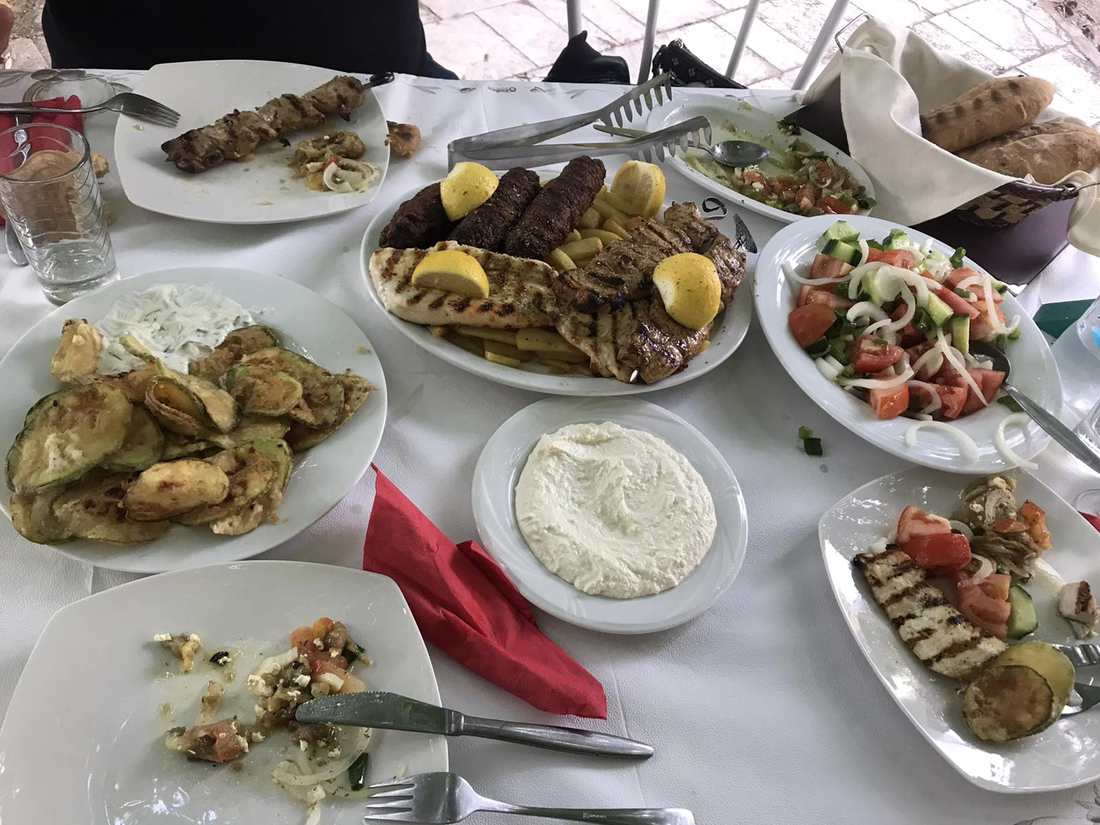
The food of Zakynthos is a rich island cuisine, shaped by Greek roots and long Venetian rule. The fertile plain gives olive oil, wine, fruit and vegetables, while the sea brings fresh fish. Meat dishes such as rabbit stifado and the tomato-and-garlic sauce called sartsa sit beside local cheeses, cured meats and honey. Sweets and nougat show the Italian touch. The crisp white wine Verdea rounds off the table. Tavernas across the island serve these dishes with warmth. Taste the flavours of the Ionian at the island table with My Greece Tours.
The island table joins the produce of the land to the traditions of Greece and Venice. Olive oil, cheese, meat, fish, honey and wine come together in dishes found nowhere else in quite the same form. The flavours are a real part of the island’s character. The sections below cover the local dishes, the produce, the drinks, where to eat, and the Venetian influence. Set the food in its wider surroundings with our Zakynthos travel guide.
What food is Zakynthos known for?
Zakynthos is known for dishes such as rabbit stifado, the tomato-and-garlic sauce sartsa served over meat, local cheeses like ladotyri, cured pork, wild greens, honey and almond sweets, all rooted in the produce of the island.
The island’s best-known dishes draw on its farms and hills. Rabbit and rooster stifado, slow-cooked with onions in a rich sauce, is a classic of the countryside. Sartsa, a thick sauce of tomato, garlic and cheese, is poured over fried or roast meat in a much-loved local way. Wild greens gathered from the hillsides are boiled and dressed with the island’s own olive oil and lemon. Frying, stewing and baking in the wood oven all feature in the home cooking of the villages. These are hearty, rustic dishes, made from what the land gives through the seasons, and they form the heart of a traditional meal on the island.
Cheese and cured meat are island staples. Ladotyri, a hard cheese matured in olive oil, is the most famous, sharp and full of flavour. Local soft cheeses and a fried cheese dish appear on many tables, along with cured pork and sausages seasoned in the island way. Bread from the wood oven, olives and the golden olive oil of the plain round out the spread. Much of what reaches the table on Zakynthos beaches and in the hill villages is grown or raised close by, so the food tastes of the place. A village taverna meal is one of the surest ways to know the island.
Sweets close the meal and show the island’s Italian streak. Mandolato, a chewy nougat of almonds, egg white and honey, is the best-loved of them, sold at stalls and in the town. Pasteli, a firm bar of sesame and honey, gives a simpler treat, sold in small pieces. Frigania, or fitoura, is fried semolina dusted with sugar and cinnamon, a street snack of the festivals and fairs. Thyme honey from the hills sweetens yoghurt and drizzles over fresh cheese. These almond and honey sweets are born of the local groves and hives. They carry a flavour that ties the island table to its Venetian past and to the warm produce of its own land.
Seafood holds its own place beside the meat and greens. Grilled fish, dressed only with oil, lemon and a scatter of oregano, is a fixture of the tavernas near the harbours and the shore. Octopus, hung to dry and then grilled, and squid or cuttlefish fried in a light batter, appear as favourite starters with a glass of ouzo. Fishermen also cook their catch in a tomato and garlic sauce, a plainer cousin of the meat dishes. Small fish such as sardines, fried whole and eaten with the fingers, make a cheap and honest meal by the water.
This bounty from the Ionian, brought in fresh each morning, keeps the coastal tavernas stocked and gives the island cuisine its bright, salt-touched side.
What local produce comes from the island?
The fertile plain and hills of Zakynthos give olive oil, grapes for wine, honey, almonds, citrus, vegetables and wild greens. The sea adds fresh fish and seafood, so most of the island table is grown or caught close by.
The central plain is the garden of the island. Sheltered between the mountains and the sea, it grows olives, vines, citrus, vegetables and fruit in abundance. Olive oil is the foundation of the cooking, pressed from the groves that cover the lowland and the slopes. Vineyards yield the grapes for the local wines, while orchards give oranges, lemons and other fruit. Bees in the hills produce a fragrant honey, used in sweets and drizzled over cheese. Almonds go into the island’s famous nougat and pastries. The richness of the land is the reason the island keeps such a full and varied table through the year.
The sea completes the larder. Fishing boats work out of the harbours around the coast, bringing in fish, octopus, squid and shellfish for the tavernas by the water. Grilled fish dressed simply with oil and lemon, or seafood cooked in tomato, are staples of a meal by the shore. Inland, the herbs of the hillsides, such as oregano, thyme and sage, flavour the meat and the greens. From the fishing quays near Agios Nikolaos to the farms of the plain, the island feeds itself well. This close tie between the land, the sea and the table gives the cuisine its freshness and its strong sense of place.
Olive oil deserves a word of its own, for it underpins the whole cuisine. The groves that cover the plain and climb the lower slopes yield a green, fruity oil pressed each autumn at the village mills. Cooks reach for it in every dish, from fried greens to grilled fish and the dressing on a salad. Ladotyri, the island’s hard cheese, even takes its name from the oil in which it matures. Almonds ripen in the orchards for the nougat and pastries, while citrus and figs fill the fruit bowls of late summer. This steady round of harvests keeps the larder full and the cooking honest, tied to the turning of the island’s own seasons.
What do people drink on Zakynthos?
The island’s signature drink is Verdea, a crisp dry white wine made from local grapes. Other island wines, both red and white, the aniseed spirit ouzo, strong tsipouro and thick Greek coffee are also enjoyed across Zakynthos.
Wine is the pride of the island, and Verdea is its most famous name. This crisp dry white, blended from local grape varieties and aged in the traditional way, was shipped across Europe in the days of Venice and remains a mark of the island. Red and white table wines from island vineyards fill the carafes of the tavernas, poured young and cheap with a meal. The vineyards of the plain and hills supply them, part of a winemaking tradition that runs deep here. A visit to a small family Zakynthos winery is a fine way to taste the range and learn the story of the grape on the island.
Spirits and other drinks round out the table. Ouzo, the aniseed spirit that clouds with water, is sipped with small plates of food in the Greek way. Tsipouro, a stronger grape spirit, warms the cooler evenings. Thick Greek coffee, served in tiny cups, is a ritual of the cafes and the village square, taken slowly with a glass of water. Fresh fruit juices and soft drinks suit the summer heat. Whether a carafe of local wine by the sea or a coffee in a shaded square, the island’s drinks are woven into its easy, sociable way of life, best enjoyed without hurry.
Verdea rewards a closer look, for it stands apart from most Greek whites. The name points to its greenish-gold cast, drawn from a blend of pale local grapes grown on the plain and the hillsides. Growers pick the fruit late and age the wine in the old way, which gives it a dry, full body and a faintly resinous edge. It suits the island’s food, cutting through fried cheese, grilled fish and rich meat sauces alike. Small family cellars still bottle it beside their table reds and whites. Ordering a glass of Verdea with a plate of local dishes ties the drink to the meal, and both to the vineyards that have shaped island life for centuries.
Where can you eat well on the island?
You can eat well in the village tavernas of the hills, the fish tavernas by the harbours, and the restaurants of the capital and resorts. Family-run tavernas serving traditional dishes give the truest taste of Zakynthos.
The village taverna is the heart of island dining. In the hill villages, small family-run places serve home cooking straight from the kitchen: stifado, grilled meat, wild greens, cheese and wine, often at a handful of tables under a vine. These are the spots to find the oldest and truest island dishes, cooked as they have been for generations. The mountain settlements of the interior and the quieter corners of the coast hold many such tavernas. Prices are modest, portions generous, and the welcome warm. Seeking out a village taverna, away from the busy strips, is the surest path to the real food of the island.
By the sea and in the town, the choice widens. Fish tavernas cluster around the harbours, serving the day’s catch grilled simply by the water. The capital and the larger resorts offer everything from traditional Greek restaurants to international menus for the summer crowds. In Zakynthos Town the ouzo bars and old tavernas keep the local flavours alive, while resorts such as Argassi mix island dishes with familiar favourites. Wherever you eat, ordering the local specialities and the house wine gives the best sense of the island. The food is a pleasure in itself, and a window onto the life of the place.
Ordering well matters as much as choosing the place. Starting with a spread of small plates, such as fried cheese, wild greens and a dip, is the local habit and lets a table share widely. Asking the kitchen what came fresh that day often points to the best fish or the dish of the moment. House wine in a carafe costs little and suits the food better than a bottle. Bread, olives and the golden olive oil arrive as a matter of course. Meals here run long and unhurried, taken in the cool of the evening once the summer heat has eased.
Sitting down late, as the islanders do, turns a simple taverna dinner into the highlight of the day.
How did Venice shape the island’s cuisine?
Venice ruled Zakynthos for centuries and left a clear mark on its food. Italian touches show in dishes like sartsa, in pasta and nougat, and in the wine trade that made Verdea famous across Europe.
The long rule of Venice shaped the island in many ways, and the table is one of them. The Italian love of tomato, garlic and rich sauces shows in dishes such as sartsa, poured over meat in a way that recalls the cooking of Italy. Pasta appears in local dishes more than in many other parts of Greece, a legacy of the same tie. The island’s sweets, above all its nougat of almonds and honey, carry an Italian character, sold at roadside stalls and in the town. This blending of Greek and Venetian tastes gives the cuisine a flavour distinct from that of the Aegean islands, a mark of the island’s history in every meal.
The Venetian tie also built the island’s wine trade. Under Venice, the crisp white Verdea was shipped from the island across Europe, and winemaking became a source of pride and wealth. The vineyards of the plain and hills date their fame to that era. Beyond food and wine, the same centuries left the arcaded squares, the churches and the art now kept in the Byzantine Museum. So a meal on the island is part of a wider Venetian inheritance, seen in the streets, the buildings and the culture as much as on the plate. To eat here is to taste a history that reaches back through the centuries.
Certain dishes trace the Venetian tie more plainly than others. Sartsa, the rich tomato and garlic sauce ladled over beef or pork, echoes the meat sauces of the Italian mainland far more than the cooking of the Aegean. Skordostoumbi, fried aubergine simmered in a heavy garlic and tomato sauce, shows the same fondness for bold, saucy flavours. Cinnamon and clove creep into the meat stews, a warm note the Venetians prized in their kitchens. Pasta turns up as a side to stews such as stifado, again pointing across the sea. These dishes, unusual on other Greek islands, mark Zakynthos out and keep the memory of its Venetian centuries alive at the table with every generous, garlic-laden plate.
Garlic runs through the island’s cooking as a signature all its own. Cooks here reach for it more freely than in most of Greece, crushing it into sauces, stews and dips until the flavour turns bold and deep. Skordostoumbi and sartsa both take their character from it, as do the dressings poured over boiled greens. This heavy hand with garlic, paired with the Venetian love of tomato and rich sauce, sets the local table apart from the lighter cooking of the Aegean. The result is a cuisine of strong, warm flavours, built for sharing over a long meal.
Learning to expect that garlic-laden depth is part of coming to know the food of the island and the history behind it.
Frequently Asked Questions
What should you eat on Zakynthos?
On Zakynthos you should seek out the island’s own specialities rather than only the familiar Greek standards. Rabbit or rooster stifado, slow-cooked with onions in a rich sauce, is a classic worth trying, as is sartsa, a thick sauce of tomato, garlic and cheese poured over meat in the local way. Look for ladotyri, the hard island cheese matured in olive oil, and for a fried cheese dish to start. Wild greens dressed with the island’s olive oil and lemon make a healthy side, and fresh fish grilled by the harbour is always a good choice near the sea.
Leave room for the island’s nougat of almonds and honey, a legacy of the Venetian centuries, and finish with local fruit. Wash it all down with a carafe of the house wine or a glass of the crisp white Verdea. Ordering these dishes in a family-run village taverna, away from the busy resort strips, gives the truest and most rewarding taste of the island.
Is Zakynthos good for food lovers?
Zakynthos is a rewarding island for food lovers, thanks to its rich produce and its blend of Greek and Venetian traditions. The fertile central plain gives excellent olive oil, wine, honey, almonds, citrus and vegetables, while the surrounding sea brings fresh fish and seafood, so much of what reaches the table is grown or caught nearby. The cooking ranges from hearty village stews and wild greens to simply grilled fish by the water, with distinctive local touches such as sartsa and the hard cheese ladotyri. The Venetian past adds pasta, rich sauces and almond sweets not found in the same way elsewhere in Greece. Local wines, above all the famous Verdea, complete the picture.
Food lovers will enjoy hunting out family tavernas in the hill villages, visiting a small winery for a tasting, and sampling the nougat and honey of the roadside stalls. For those willing to look beyond the resort menus, the island offers a genuine and memorable taste of Ionian cooking.
What is Verdea wine?
Verdea is the most famous wine of Zakynthos, a crisp dry white that has been made on the island for centuries. It is a blend of local grape varieties, chief among them the pale-skinned grape that gives the wine its name, and it is traditionally aged in a distinctive way that can leave it with a deep golden colour and a dry, slightly resinous character. Under the long rule of Venice, Verdea was shipped from the island across much of Europe, and it became a symbol of the island’s winemaking pride and prosperity. Today it is still produced by island wineries, both in traditional and more modern styles, and it remains a point of local identity.
Visitors can taste it in the tavernas and at small family cellars, often alongside other island wines. Trying a glass of Verdea with a meal of local dishes is a fine way to connect with the island’s rural heritage and its deep ties to the vine, which run back through many generations of island life.
What are the traditional sweets of Zakynthos?
The traditional sweets of Zakynthos lean on almonds and honey, a legacy of the island’s Venetian centuries and its own orchards and hives. Mandolato is the most famous, a chewy nougat of almonds, egg white and honey. Stalls and town shops sell it wrapped in paper and cut into bars. Pasteli offers a simpler treat, a firm slab of sesame seeds bound with honey, sold in small pieces and easy to carry. Frigania, also called fitoura, is fried semolina dusted with sugar and cinnamon, a warm street snack tied to the festivals and village fairs. Beyond these island specialities, the tavernas and bakeries serve the familiar Greek sweets, from syrup-soaked baklava and kataifi to creamy bougatsa.
Thyme honey from the hills sweetens plain yoghurt and drizzles over fresh cheese for a lighter finish. Trying the local nougat and honey rounds off a meal and gives one more taste of the island’s blend of Greek and Italian traditions.