
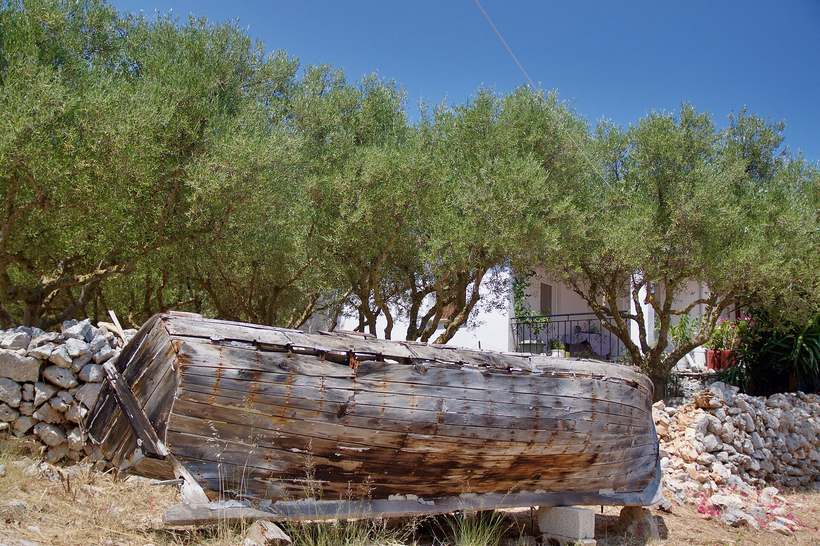
Agios Nikolaos sits on the northeast coast of Zakynthos, in the Volimes area, serving as the main gateway to the sights of the northern coast. This small port should not be confused with the larger town of the same name on Crete. The harbour buzzes with boats heading to the sea caves of the north coast and onward trips to the shipwreck cove on the west side. Visitors who prefer the quieter north will find a pebble and rock beach, watersports, tavernas, and rooms clustered around the little bay. Plan your island adventure with My Greece Tours.
The sections below cover everything you need to know about Agios Nikolaos, from its ferry connection to Kefalonia to the boat trips that depart daily for the sea caves and shipwreck cove. The port lies a short way south of Cape Skinari and its lighthouse, making it an ideal base for exploring the northern tip of the island. Boats, sunbeds, and diving trips cluster around the little bay, while tavernas serve fresh catches to hungry travellers. For a broader look at the island, consult our Zakynthos travel guide before you set off.
What is Agios Nikolaos in Zakynthos?
Agios Nikolaos is a small port on the northeast coast of the Ionian island of Zakynthos, located in the Volimes area. It should not be confused with the larger town of the same name on Crete.
Travellers arriving at Agios Nikolaos often head straight out on boats bound for the sea caves of the north coast. These excursions glide along limestone cliffs where the water glows an electric shade of blue inside hollowed arches and grottoes. Passengers can usually swim inside the Blue Caves on trips that last roughly two hours. The little harbour fills up each morning with excursion operators calling out departure times, and skippers motor out in groups along the rugged shoreline. Tickets cost in the region of fifteen to twenty euros per person for a standard tour.
Bring a towel and a waterproof phone case, as the spray inside the caves can soak anyone sitting near the bow of the boat. Morning departures tend to be calmer, so early risers catch the best light reflections on the water surface.
From Agios Nikolaos, a short drive or coastal walk north leads to Cape Skinari and its whitewashed lighthouse perched on the northernmost tip of Zakynthos. The scenery around the cape is windswept and dramatic, with sheer cliffs dropping into deep channels of turquoise water below. Small boats from the harbour round the cape on their way to the sea caves, giving passengers a deck-level view of the rock formations. On land, a simple taverna near the lighthouse serves grilled fish and cold drinks to walkers who make the trip up the hill. The road from the port to the cape passes through olive groves and low scrub, winding for about ten minutes by car.
Wear sturdy shoes for the uneven path near the cliff edge.
Agios Nikolaos sits on the northeastern coast of Zakynthos, about 30 kilometres from Zakynthos Town near the mountain village district of Volimes. The settlement grew around a small working harbour that now doubles as a base for day-trip boats and a ferry link. A cluster of tavernas, a chapel, and a short beach line the waterfront, backed by the terraced slopes of the north. The name Agios Nikolaos also attaches to a nearby beach, so travellers should confirm whether they mean the port or the shore when arranging transport. The harbour faces east across a channel toward the mainland, which keeps the water calm on most mornings.
This position at the top of the island makes it the natural launch point for the Blue Caves and the shipwreck cove.
Which boat trips depart from Agios Nikolaos?
The harbour is a busy departure point for boats heading to the sea caves of the north coast and onward trips to the shipwreck cove on the west side. Diving trips and watersports cluster around the bay.
The variety of trips available from the harbour is impressive for such a small place. Zakynthos boat tours from Agios Nikolaos focus on the north coast sea caves, stopping at natural rock arches and hidden swimming spots along the way. Larger vessels carry fifty or more passengers, while smaller rigid inflatable boats take intimate groups of eight to twelve people for a faster, splashier ride. Most operators run two departures each morning, with the first boats leaving around nine and the last returning by early afternoon. Skippers point out rock formations nicknamed after animals and saints, and they know exactly where to position the boat for the best photographs inside each grotto.
Sunscreen and hats are absolutely essential on the open deck, where shade is limited throughout the journey.
Trips from the harbour often combine the sea caves with an onward journey to Navagio Beach, the iconic shipwreck cove on the west side of Zakynthos. These combined excursions round the northern tip of the island before cruising south along the towering western cliffs to reach the wreck. The boat drops anchor on the sand and passengers step off for a short swim near the rusted hull. The crossing can be choppy on windy days, so anyone prone to seasickness should take a tablet before boarding. Tickets for the combined tour run about twenty-five to thirty euros per person, and operators accept cash on the quay.
Bring water and a snack, as the full round trip takes three hours or slightly more depending on the swell.
The boats leaving Agios Nikolaos follow the north coast toward the Blue Caves, a run of sea grottoes carved into pale limestone near Cape Skinari. The route passes below sheer cliffs where the water turns bright blue as sunlight reflects off the white rock underwater. Skippers steer their craft into the larger caves, letting passengers see the colour effect up close before continuing toward the shipwreck cove on the west coast. Trips vary in length, with short Blue Caves runs lasting about an hour and full-day tours combining the caves, the wreck, and swim stops. Tickets are sold at kiosks along the harbour, and comparing operators helps match a route to your time and budget.
Morning departures offer the calmest sea and the clearest light inside the caves.
Does a ferry connect Agios Nikolaos to Kefalonia?
A seasonal ferry links Agios Nikolaos across the water to Pessada on the neighbouring island of Kefalonia. This connection offers a straightforward crossing between two Ionian islands for visitors exploring the wider region by sea.
The seasonal ferry from Agios Nikolaos to Pessada on Kefalonia offers one of the most straightforward island-hopping connections in the Ionian. The crossing takes roughly one hour and fifteen minutes, linking the quiet north of Zakynthos with the southern coast of its larger neighbour. Ferries run daily during the peak summer months, with reduced schedules in spring and autumn. A standard car ticket costs in the region of thirty euros each way, and foot passengers pay around ten euros. The ferry dock at Agios Nikolaos is right beside the beach and tavernas, so waiting for departure is easy and pleasant.
On arrival at Pessada, travellers can drive straight to Argostoli or head to the beaches along the Lixouri peninsula. Tickets sell out on busy days in August, so booking ahead in peak weeks is wise.
Pessada itself is a small fishing village at the southern end of Kefalonia, far quieter than the busy port of Poros on the eastern side of the island. The ferry route between Agios Nikolaos and Pessada suits travellers who want to combine the two islands without driving to the main ferry port at Zakynthos Town. Cars queue on the slipway at Agios Nikolaos about thirty minutes before the scheduled sailing, and the crew directs vehicles onto the open deck. The vessel has a covered seating area and a small bar selling coffee and snacks for the short crossing. Dolphins occasionally surface alongside the ferry in the channel between the two islands.
On a calm day the water is flat and the ride is gentle, making the trip enjoyable for all ages.
The ferry from Agios Nikolaos crosses to Pesada on Kefalonia, giving travellers a way to island-hop without returning to the main port at Zakynthos Town. The crossing takes roughly 90 minutes and runs on a seasonal schedule that concentrates in the summer months. Foot passengers and vehicles both use the service, though space for cars is limited and booking ahead is wise in peak season. The Pesada arrival point sits on the quiet southern tip of Kefalonia, some distance from that island’s main towns, so onward transport needs planning. This link suits travellers combining the two Ionian islands on a single trip.
The ferry timetable can shift with weather and demand, so checking current departures at the harbour kiosk avoids a wasted journey to the north coast.
What can visitors do at Agios Nikolaos beach?
The port has a pebble and rock beach with sunbeds and watersports. Tavernas and rooms cater to visitors who want to stay in the quieter north of the island, away from the busier southern resorts.
The pebble and rock beach at Agios Nikolaos is compact and practical rather than picture-postcard, yet it has a loyal following among travellers who prefer the quieter north of the island. Compared with the famous sandy stretches on the eastern and southern coasts, this little bay feels relaxed and unhurried, with sunbeds lining the shore and tavernas just steps away. The water is clear and deep close to the rocks, making it popular with snorkellers who paddle out to explore the underwater walls. Among Zakynthos beaches, Agios Nikolaos stands out for its convenience, since the ferry dock, boat trips, and places to eat are all within a two-minute walk of the shoreline.
The beach faces east, so the sun disappears behind the hills in the late afternoon.
Watersports operators set up on the beach each morning, offering banana boat rides, ringos, and paddleboards for hire directly from the shore. The sheltered bay keeps conditions calm enough for beginners, and the water stays warm from June through to October. Families appreciate the compact layout of the port, since children can play on the pebbles under the shade of rented umbrellas. Diving centres based at Agios Nikolaos run trips to reefs and underwater caves along the northern coast, catering to certified divers and first-timers alike. A trial dive in shallow water costs around sixty euros and includes full equipment plus a short briefing.
The tavernas above the beach grill fresh fish and serve cold beer on terraces overlooking the bay. Tables fill up by early evening, so arriving just before sunset guarantees a spot with the best views.
The beach at Agios Nikolaos is a short strip of coarse sand and pebbles with a rocky entry into deep, clear water. A handful of sunbeds line the shore in summer, and the tavernas behind the beach serve grilled fish and local dishes through the day. The water suits snorkelling, as the rocky seabed near the harbour shelters fish among the stones. Swimmers should wear water shoes for the pebbly entry and the rocks below the surface. The nearby Madrakia inlet, reached along the coast, offers a smaller and quieter patch of sand for those seeking seclusion.
The exposed northern position means the sea can pick up a chop when the wind rises, so calm mornings give the best swimming. Shade is limited, so an umbrella and sunscreen help on the open shore.
Where is Cape Skinari relative to Agios Nikolaos in Zakynthos?
Cape Skinari and its lighthouse lie a short way north of Agios Nikolaos. The port serves as the main gateway to the sights of the northern coast of Zakynthos, making it a practical and convenient base.
The northern coast of Zakynthos rewards travellers who take the time to explore beyond the immediate harbour. Cape Skinari and its lighthouse lie a short way north of Agios Nikolaos, marking the passage between the east and west coasts. On the opposite side of the island, Porto Vromi serves as another departure point for boats heading to the shipwreck cove, offering an alternative for visitors staying on the western side. The drive between the two ports cuts across the mountainous interior of the island through the village of Volimes, where local shops sell honey, cheese, and olive oil. The road is narrow and winding, taking about forty minutes by car.
Agios Nikolaos remains the primary base for the north coast caves, while Porto Vromi is closer to the shipwreck itself.
Staying in Agios Nikolaos itself rather than in the busier southern resorts gives visitors a noticeably different experience of Zakynthos. The pace of life in the Volimes area is slower, and the restaurants and cafes cater to overnight guests rather than day-trippers passing through. Rooms and small studios line the road above the harbour, with balconies looking out over the bay towards Kefalonia on a clear day. The absence of large hotels keeps the atmosphere intimate, and prices for accommodation tend to be lower than in Laganas or Tsilivi. A car is essential for anyone based here, since buses to Zakynthos Town run infrequently and the best sights of the northern coast are spread out along rural roads.
Filling up at the petrol station in Volimes is advisable, as fuel stops are scarce along the northern coast.
Cape Skinari lies a short drive north of Agios Nikolaos at the very tip of Zakynthos, where two restored windmills mark the end of the road. The cape overlooks the channel toward Kefalonia and sits close to the finest of the Blue Caves. A steep path and a small lift lead down to a tiny swimming platform below the windmills, giving access to some of the clearest water on the island. Boats from the cape and from Agios Nikolaos both reach the caves, so travellers can choose their launch point. The drive between the two spots takes about ten minutes along a coastal road with wide sea views.
Pairing Agios Nikolaos with Cape Skinari fills a morning with swimming, a boat trip, and the dramatic scenery of the northern headland.
Frequently Asked Questions
How do I get to Agios Nikolaos port in Zakynthos?
Agios Nikolaos sits in the Volimes area on the northeast coast of Zakynthos, about thirty kilometres from Zakynthos Town and the airport. The drive takes roughly forty-five minutes along the main coastal road that winds through the villages of the northern interior. There is no direct public bus to the harbour itself, so hiring a car or booking a taxi is the most practical option. Taxis from the airport charge around forty-five to fifty euros each way, and the journey passes through olive groves and pine forest. Car rental desks operate at the airport and in Zakynthos Town, and driving in the north is straightforward outside the peak months of July and August.
Visitors coming from Kefalonia can take the seasonal ferry from Pessada, which docks right beside the beach at Agios Nikolaos. The port is well signposted from the main road through Volimes, and parking is available near the harbour.
Is Agios Nikolaos in Zakynthos worth visiting?
Agios Nikolaos is absolutely worth visiting for anyone drawn to the quieter, more authentic side of Zakynthos. The little harbour town has a relaxed pace that contrasts sharply with the busy resorts on the southern coast, and its pebble beach, waterfront tavernas, and cluster of rooms create a welcoming base for exploring the north. Boat trips to the sea caves depart directly from the port, so guests can walk from their accommodation to the quay in two minutes. The seasonal ferry to Kefalonia adds a further dimension, turning Agios Nikolaos into a practical springboard for island-hopping.
Families appreciate the calm bay and the compact layout, and snorkellers enjoy the clear water near the rocks at the edge of the beach. The town is also just a short drive from Cape Skinari and its lighthouse at the northern tip of the island. Visitors looking for nightlife will not find it here, and that is exactly the appeal.
What is the best time of year to visit Agios Nikolaos?
The best months to visit Agios Nikolaos are from late May through to early October, when the weather is warm and the boat operators and tavernas are open for the season. July and August bring the highest temperatures and the busiest days at the harbour, with excursion boats filling up by mid-morning on a regular basis. June and September are ideal for visitors who prefer quieter conditions, as the sea is still warm enough for swimming and the roads are noticeably less crowded. The seasonal ferry to Kefalonia typically runs from May to October, though exact dates vary each year depending on demand.
Springtime in April and early May offers green hillsides and wildflowers along the roads through Volimes, though the water is chilly and most tourist facilities remain closed. October can bring occasional storms, and by November the port settles into its quiet winter rhythm with just the year-round residents remaining in the village.
Can you combine Agios Nikolaos with a shipwreck boat trip?
Agios Nikolaos works well as the launch point for a full day on the water that takes in both the Blue Caves and the shipwreck cove. Full-day boats leaving the harbour follow the north coast to the caves near Cape Skinari, then round the island’s tip and run down the west coast to the wreck. The route usually includes two or three swim stops in clear water and lasts about five to six hours. Shorter trips focus on the Blue Caves alone and return within an hour or two, which suits travellers short on time. Tickets are sold at the harbour kiosks, and prices reflect the length and the number of stops.
Booking a morning departure gives the calmest sea for the exposed west coast leg. Passengers should pack water, sunscreen, and a hat, as shade on the open boats is limited. A towel and swimwear complete the kit for the swim stops along the way.