
Shopping in Spetses blends island practicality with the resort character of a fashionable Saronic destination. This car-free island keeps its shops within a compact, walkable core, so knowing what and where to buy saves time on a short stay. This guide from Spetses specialists My Greece Tours maps the boutiques, food shops, and craft stores across the island’s lanes.
Retail on Spetses reflects its identity as an upmarket weekend and summer escape rather than a mass-market resort. The Dapia and the main lanes behind it hold most of the shops, mixing fashion boutiques, jewellers. Galleries with grocers, bakeries, and sweet shops selling the island’s celebrated almond confection. Add souvenir stores and delis of Greek products, and Spetses covers both everyday needs and considered gifts within streets.
Where do you go shopping in Spetses?
Spetses concentrates its shopping around the Dapia, the main quay, and the lanes behind it toward Kounoupitsa and the Old Harbour, where boutiques, jewellers, food shops, and souvenir stores cluster within a compact, walkable core.
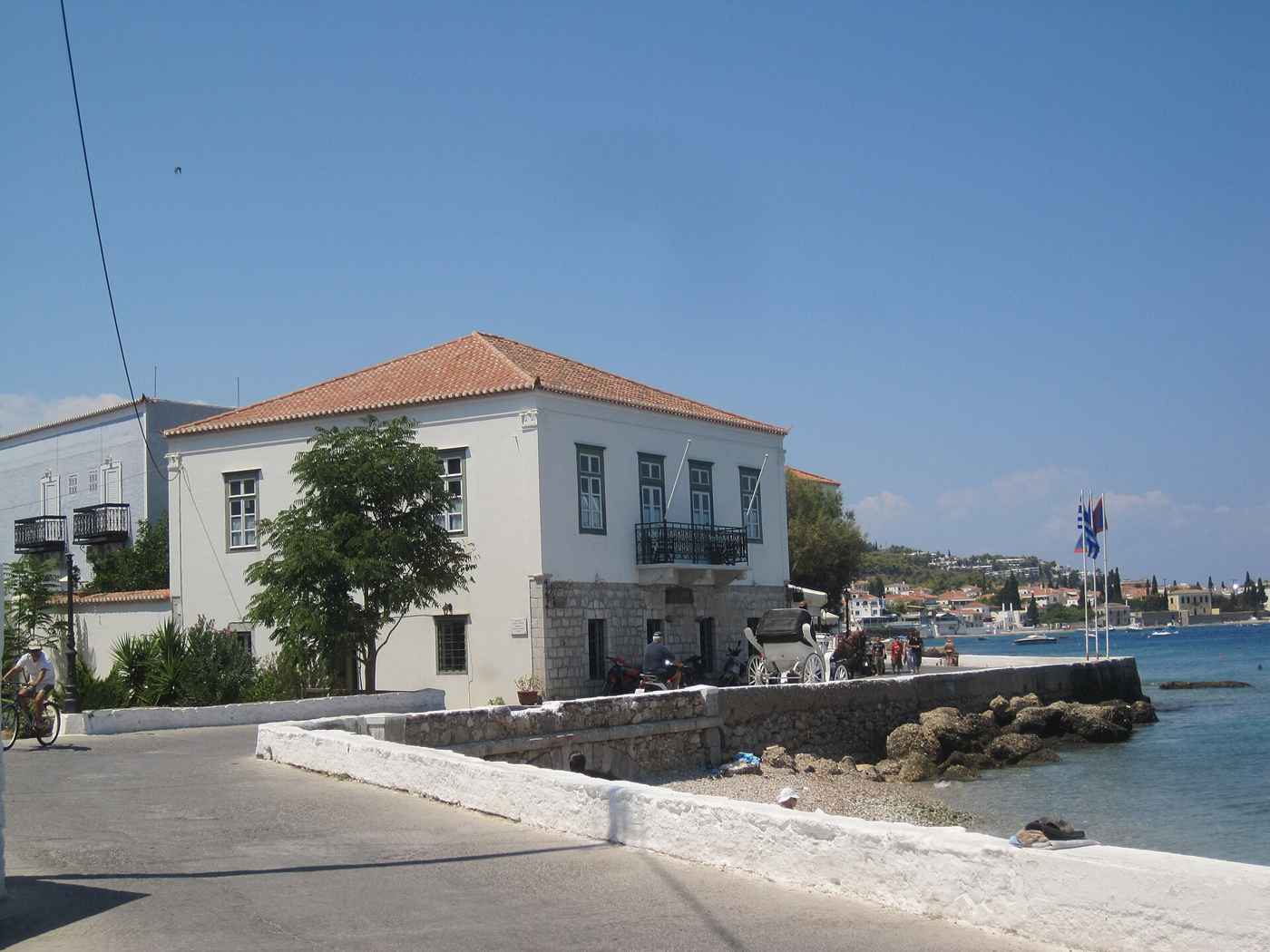
Spetses arranges its shops around a small, clearly defined core, which makes browsing simple even on a short visit. The Dapia, the island’s main quay where boats dock and the horse carriages wait, forms the natural starting point, its edges lined with shops behind the cafe terraces. From here the retail spreads inland along the paved lanes that climb toward the town, and westward toward the Kounoupitsa district. Because private cars are restricted, these streets belong to pedestrians, so wandering between shops is unhurried and pleasant. The compact scale means you can cover most of the island’s shopping in a single afternoon on foot.
Reviewing Spetses Town and the Dapia helps you picture how the shopping streets connect before you arrive on the island.
The lanes rising behind the Dapia hold the densest concentration of shops, and exploring them on foot is the essence of shopping here. Narrow, paved, and shaded, these streets thread past whitewashed houses and captains’ mansions, with boutiques, jewellers, and gift stores occupying the ground floors. There is no single high street or mall; instead the retail is scattered, so browsing rewards a little patience and a willingness to turn down side alleys. Many shops are small and independently run, giving the streets a personal, un-corporate character. The mix changes as you move inland, shifting from tourist-facing souvenir and fashion shops near the quay toward the grocers and bakeries that serve residents.
This gentle gradient from visitor to everyday retail is part of what makes wandering the Spetses lanes genuinely enjoyable.
The Old Harbour, or Baltiza, sits about fifteen to twenty minutes on foot east of the Dapia and adds a further, more relaxed shopping zone to the island. Its character is more about ateliers, small galleries, and evening browsing than the concentrated retail of the town, since dining and boatyards dominate the quay. Here you may find an artist’s studio, a workshop selling nautical crafts, or a boutique catching the evening strollers before dinner. The mood is unhurried, and shopping often becomes something you fold into an evening walk rather than a dedicated errand. Because the harbour comes alive after dark, its shops keep later hours than those in town.
Combining a browse here with dinner among the tavernas is a natural way to spend a Spetses evening beside the water.
Understanding this three-part geography of Dapia, town lanes, and Old Harbour lets you plan shopping efficiently around the rest of your day. Most visitors handle daily supplies and quick souvenir buys near the quay, reserve the inland lanes for boutiques, jewellery. Considered gifts, and treat the Old Harbour as an evening add-on. Because everything sits within a walkable radius, you rarely need to make a special trip; shopping slots naturally between the beach, a coffee, and dinner. The absence of traffic keeps the whole experience calm, with no car parks or busy roads to negotiate. Knowing where each type of shop clusters prevents aimless wandering in the heat.
Plan a loose route through the districts, and the island’s small scale turns shopping into a pleasant thread running through the day rather than a chore.
What boutiques and fashion shops does Spetses have?
Spetses supports a cluster of fashion boutiques and resort-wear shops in the town lanes, selling swimwear, linen, sandals, sunglasses, and holiday clothing that suit the island’s upmarket, weekend-escape character and its warm, sea-facing summer climate.
Fashion is a genuine part of shopping in Spetses, reflecting the island’s status as a stylish escape for Athenians and international visitors alike. The boutiques cluster in the lanes behind the Dapia, where small independent shops present resort collections geared to a warm-weather, seaside lifestyle. Expect linen shirts and dresses, flowing kaftans and cover-ups, swimwear, and the breezy separates that suit long, hot island days. The look leans elegant and relaxed rather than flashy, in keeping with the understated wealth the island attracts. Because Spetses draws a weekend and yacht crowd, boutiques carry designer or premium labels alongside more affordable holiday pieces. Browsing these shops gives a clear sense of the island’s fashionable side.
Picking up a resort outfit here is an easy way to dress for its evenings and beach clubs.
The range of holiday clothing and accessories on Spetses covers most needs a traveller forgets to pack or wants to upgrade on arrival. Sandals and espadrilles, straw hats, sunglasses, beach bags, and light scarves fill the accessory shops, all practical for the climate and useful as gifts. Leather goods, particularly handmade sandals, are a Greek strength and appear in stores, offering quality that lasts well beyond the trip. Some boutiques specialise in a single category, such as swimwear or jewellery-style accessories, while others mix clothing with homeware and gifts. Sizing and stock naturally focus on summer, so the choice is richest in the peak months.
For anyone who arrives underprepared for the heat or a smart dinner, the island’s shops fill the gaps without a trip back to the mainland.
The clientele shapes the character and the pricing of Spetses fashion retail, so it helps to set expectations before you browse. As an upmarket destination favoured by yacht owners and second-home visitors, the island supports boutiques whose prices sit above what you might pay in a mass-market resort. That said, the range is broad: alongside premium pieces you find reasonably priced holiday basics and accessories aimed at day-trippers and families. The shops near the Dapia tend toward accessible souvenir-style fashion, while the more considered boutiques sit deeper in the lanes. Treating the fashion scene as a place to find a special resort piece rather than a full wardrobe suits the island’s scale.
With a little browsing you can match your budget, from an inexpensive beach cover-up to a designer summer dress.
Fashion shopping on Spetses pairs naturally with the island’s most elegant surroundings, which sharpens the sense of occasion. The grand terraces of the Poseidonion Grand Hotel anchor the Dapia’s smart end, and dressing for a drink or dinner there is part of the appeal of buying resort wear on the island. The boutiques cater precisely to this rhythm of beach by day and polished evenings by night. A linen outfit or a pair of good sandals earns its place across a stay. Because the shops sit within a short walk of most accommodation, trying on and returning for a piece is effortless.
Think of Spetses fashion as curated holiday dressing rather than serious retail therapy, and it complements the island’s understated glamour perfectly.
What is amygdalota, the almond sweet Spetses is known for?
Amygdalota are soft almond sweets, often shaped like small pears or macaroons, made from ground almonds, sugar, and rosewater, then dusted with icing sugar. They are the confection most associated with Spetses and a classic edible souvenir.
Amygdalota are the sweet most closely tied to Spetses, and seeking them out is a small ritual of any visit. At their heart they are an almond confection, built from finely ground almonds bound with sugar and often perfumed with a little rosewater or orange-flower water. The texture is soft and moist, closer to a marzipan-like macaroon than a crisp biscuit, with an intense almond flavour that defines them. Many are shaped by hand into small pears, complete with a clove pressed in as a stalk, a form long associated with the Greek islands. A dusting of icing sugar finishes them.
They keep well, which is one reason the island’s bakeries and sweet shops have made them a signature product to sell to visitors.
The tradition of amygdalota reaches across the Greek islands, but Spetses is among the places most identified with them, so the association is well earned rather than invented for tourists. Almonds have long been a staple of Greek confectionery, and sweets built around them appear at weddings, christenings, and celebrations as symbols of hospitality and good fortune. On Spetses the almond sweet has become a recognised local speciality that sweet shops prepare and box for sale year-round. The recipe varies a little between makers in its exact aromatics and shape, but the almond-and-sugar core stays constant.
Trying a freshly made piece with a coffee is the best introduction, letting you taste the difference between a good island version and the mass-produced kind. This is a genuine regional treat rather than a generic souvenir.
Buying amygdalota to take home is straightforward, since the sweet shops and bakeries package them specifically as gifts. They are typically sold loose by weight or ready-boxed. You can pick up a small bag to eat during your stay or a presentation box to carry back for friends and family. Because they contain no perishable dairy, they travel and keep far better than most fresh pastries, surviving a flight home without trouble. This durability makes them one of the most practical edible souvenirs the island offers. When choosing, favour shops where the sweets look freshly made rather than long-shelved, as the almond flavour is best when recent.
A box of amygdalota alongside a jar of honey or a bottle of olive oil makes a considered, characteristically Greek gift set from the island.
Amygdalota sit within a wider culture of almond and syrup sweets that you will meet across the island’s tables and shop counters. Alongside them, patisseries and tavernas serve loukoumia, the soft powdered jelly sweets, and the classic syrup pastries of the Greek kitchen such as baklava and galaktoboureko. The almond sweet, however, is the one to prioritise as the island’s own, the edible emblem most travellers associate with Spetses. It also appears at the end of meals, since a small dish of something sweet is the customary Greek gesture of welcome. You can read how this fits the island’s food culture in the guide to Spetses restaurants.
Treat amygdalota as both a daily treat during your stay and the natural gift to bring home from the island.

Where can you buy local Greek products and delicacies in Spetses?
Spetses delis and food shops stock Greek products such as extra-virgin olive oil, thyme and pine honey, olives, herbs, cheeses, and regional wines, sold in gift-friendly bottles and jars that travel well as souvenirs of the island.
Food shopping is one of the most rewarding threads of shopping in Spetses, since Greek products make excellent, authentic souvenirs. Delicatessens and grocers in the town lanes carry the staples of the Greek larder: extra-virgin olive oil, jars of thyme. Pine, or blossom honey, cured olives. A range of dried herbs such as oregano, mountain tea, and rosemary. These are the flavours behind the meals you eat on the island, so buying them lets you recreate a taste of Greece at home. Because they are packaged in bottles, tins, and jars, they present well as gifts and survive the journey back.
Prices are reasonable compared with clothing or jewellery, and the quality of Greek olive oil and honey in particular is high. A small selection of these staples makes a genuine, useful souvenir.
Beyond the pantry staples, Spetses food shops and delis stock regional specialities that broaden the choice of edible gifts. Greek cheeses such as feta, graviera, and kefalotyri are common, though the softer ones need care in transit and are better eaten on the island. Preserved goods travel more easily: spoon sweets, or glyka tou koutaliou, of whole fruits in syrup, jars of sun-dried tomatoes or capers, and vacuum-packed olives all keep well. You may also find local or Greek-made products such as mastic from Chios, herbal teas, and traditional pastes and spreads. These items let you assemble a varied hamper of Greek flavours rather than a single souvenir.
Asking the shopkeeper what is regional or house-made often turns up the most interesting and authentic products on the shelves.
Wine and spirits round out the food-shopping options, and Greece’s improving reputation for both makes them worthwhile buys. Shops and delis stock Greek bottled wines, particularly crisp whites and roses that suit the island’s seafood, alongside the anise spirit ouzo and the stronger grape-based tsipouro. A bottle of a good Greek wine or a well-made ouzo is an easy gift that carries a clear sense of place. Some outlets carry regional labels you rarely see abroad, so it is worth asking for a Greek recommendation rather than reaching for a familiar name. Because glass bottles are heavy and fragile, plan how you will carry them home, especially if you are travelling by hydrofoil and then flying.
A single considered bottle often makes a better souvenir than several rushed purchases.
Assembling a food and drink souvenir set is one of the most satisfying ways to shop on Spetses, and it suits every budget. A jar of island or Greek honey, a bottle of olive oil. A box of amygdalota. A good wine together capture the flavours of a Greek summer in a way that clothing or trinkets cannot. Because these shops sit among the town lanes near the everyday grocers, you can gather the pieces gradually as you pass rather than in one trip. Keep weight and fragility in mind, favouring robust, well-sealed items if you have a flight ahead. Buying food also supports the island’s shops directly and connects your trip to the meals you enjoyed.
For most travellers, an edible hamper is the most memorable and practical thing to carry home from Spetses.
What jewellery and art can you buy in Spetses?
Spetses jewellers and galleries sell handmade silver and gold pieces, worry beads, and Greek-inspired designs, while small art shops offer paintings, prints, and photographs of the island’s harbours, mansions, and coastline suited to collectors and gift-buyers.
Jewellery is a notable strength of shopping in Spetses, reflecting both Greece’s craft tradition and the island’s affluent visitors. Several jewellers in the town lanes present handmade pieces in silver and gold, ranging from delicate everyday designs to more substantial statement work. Motifs often draw on Greek heritage: the meander or Greek key pattern, ancient coin reproductions, the evil-eye mati in blue and gold, and shapes inspired by the sea. Semi-precious and worked stones appear alongside precious metals, giving a spread of price points from affordable keepsakes to serious purchases. Because pieces are made by hand or by small Greek workshops, they carry a character that mass-produced jewellery lacks.
A well-chosen piece becomes a lasting reminder of the island, and jewellery’s small size makes it one of the easiest souvenirs to carry home.
The worry bead, or komboloi, deserves particular mention, as it is a distinctively Greek object that shops across Spetses sell in forms. Strings of amber, coral, bone, or coloured stone beads, once a genuine everyday habit among Greek men, now make a characterful souvenir and a tactile gift. Prices range widely, from inexpensive tourist strings to fine antique and collector pieces with prized amber beads. Handling a few in a shop reveals the difference in weight, sound, and feel between the cheap and the quality versions. A komboloi packs flat, costs little, and carries an unmistakably Greek identity, which makes it a reliable choice for gifts.
Buying one from a specialist who can explain the beads adds meaning to the purchase and turns a small object into a small piece of Greek cultural tradition.
Art shopping on Spetses suits travellers who want something one-of-a-kind, since the island’s beauty has long drawn painters and photographers. Small galleries and studios sell original paintings, limited prints, and photographs capturing the harbours, the neoclassical captains’ mansions, the horse carriages, and the surrounding sea. Watercolours and prints of the Dapia and the Old Harbour are especially common and make evocative, packable souvenirs. Some works are by resident or Greek artists, so buying supports the local creative scene directly. Prices span from affordable prints to substantial original canvases, giving choice to both casual buyers and collectors. Because art is personal, browsing studios before choosing is worthwhile.
A framed print or an original piece brings the island’s light and colour into your home far more vividly than a standard souvenir ever could.
Combining jewellery and art with the island’s cultural sights makes for a rewarding day that mixes shopping with sightseeing. The museums keep small shops that sell books, prints, and reproductions tied to the island’s history, so a visit to the Spetses Museum can double as a chance to buy a meaningful, place-specific gift. Jewellery inspired by Greek antiquity and art depicting the island’s maritime past both connect naturally to what you learn at these sites. Because the museums, galleries, and jewellers all sit within the walkable town, folding a browse into a cultural morning is easy. This pairing suits travellers who prefer souvenirs with a story behind them.
Buying a piece that echoes something you have just seen or read about deepens the memory and makes the object more than a simple keepsake.
What ceramics, souvenirs and gifts are sold in Spetses?
Spetses souvenir shops sell handmade ceramics, painted tiles, worry beads, leather sandals, textiles, and nautical-themed keepsakes that reflect the island’s seafaring history, giving visitors a range of gifts beyond the standard fridge magnets and postcards.
Ceramics are among the most attractive souvenirs on Spetses, and shops carry handmade Greek pottery worth seeking out. You find decorative plates and bowls, painted tiles, small vases. Coffee cups, many glazed in the blues and whites associated with the Aegean or decorated with island and nautical motifs. Handmade pieces from Greek workshops carry more character than factory-made imports, so it is worth asking which items are locally or artisan-produced. Ceramics do need careful packing for the journey, but a well-wrapped plate or a set of small cups travels safely and makes a lasting, useful gift. Prices range from inexpensive tourist pieces to substantial artisan work.
A hand-painted ceramic brings a piece of Greek craft and colour into daily use at home, which makes it a more meaningful keepsake than a disposable trinket.
The souvenir shops nearer the Dapia cover the full range of gifts, from inexpensive mementoes to genuine craft, so there is something for every budget and taste. Leather sandals, made in the Greek tradition, are a standout buy that combines usefulness with quality and lasts well beyond the holiday. Textiles such as woven throws, cushion covers, and light scarves add colour and pack easily. Nautical-themed items nod to the island’s seafaring past: model boats, rope and shell crafts, and decorative pieces echoing the harbours and the caiques. Alongside these sit the familiar postcards, magnets, and keyrings for quick, cheap gifts. Choosing the handmade and the practical over the mass-produced generally yields a souvenir you keep rather than discard.
The variety means you can match both your budget and the recipient with a little browsing.
The island’s history gives its souvenirs a distinctive theme, since Spetses is defined by the sea and its role in the Greek War of Independence. Nautical motifs run through much of the local craft, from the boats and anchors on ceramics to the maritime scenes in prints and the rope-and-shell work in gift shops. The heroine Laskarina Bouboulina, the island’s celebrated naval commander, features in books, prints, and small mementoes tied to her legend. Reproductions of the cannons and ships that recall the island’s defiant past appear as decorative pieces. Choosing a souvenir with this maritime character connects your purchase to what makes Spetses distinct rather than to generic Greek imagery.
It turns a keepsake into a small story about the island, which is exactly what a good souvenir should do for a traveller.
Fitting souvenir shopping into your stay is easy, and pacing it across the trip works better than a single rushed spree. Because the gift and craft shops cluster near the Dapia and along the town lanes you already walk, you can note pieces early and return to buy them once you have compared the options. Leaving fragile ceramics until near the end of the stay reduces the risk of breakage as you move around the island. A cultural morning, such as a visit to the Bouboulina Museum, pairs naturally with picking up a history-themed gift nearby. Setting a rough budget and favouring quality craft over quantity leaves you with souvenirs you value.
Approached this way, gift shopping becomes a pleasant part of exploring the island rather than a last-minute obligation before departure.
Where do you buy everyday supplies at the mini-markets and bakeries?
Spetses covers daily needs through mini-markets, grocers, and bakeries concentrated in the town and near the Dapia, which sell fresh bread, savoury pies, fruit, drinks, and basic provisions for self-catering and beach picnics.
Everyday shopping is a practical necessity on Spetses, and the island is well served by mini-markets and grocers for daily supplies. Concentrated in the town and around the Dapia, these shops stock the basics a traveller needs: bottled water, soft drinks, snacks, fruit and vegetables, dairy, tinned goods, and toiletries. For anyone self-catering in an apartment or villa, they cover the weekly shop without a trip to the mainland, though the range is naturally smaller than a large supermarket. Prices on items run a little higher than on the mainland, a normal feature of island retail where goods arrive by boat. Stocking up early in a stay, particularly before a weekend when shops get busy, is sensible.
Knowing where the nearest mini-market sits relative to your accommodation makes daily life on the island effortless.
Bakeries, or fournoi, are a daily pleasure as much as a practical stop, and they are woven through the town’s streets. Opening early, they fill the morning air with the smell of fresh bread and pastry and provide the ideal cheap, portable breakfast. Beyond loaves, a Greek bakery is a one-stop source for savoury pies: tiropita filled with cheese, spanakopita with spinach, and often versions with minced meat or vegetables. These, together with fruit and drinks from a nearby grocer, make the perfect beach picnic to carry to a cove for the day. Sweet pastries and biscuits share the counter for an afternoon treat.
A morning stroll to the bakery quickly becomes a habit that connects you to local routine and starts each day with something fresh and inexpensive.
Self-catering visitors benefit most from understanding the everyday shopping scene before they arrive, since it shapes how they plan meals. A central base near the Dapia keeps a mini-market, a bakery, and a greengrocer within a short walk, so daily provisioning is simple and needs no transport. Those staying further out toward the beaches should stock up in town, as shops thin quickly away from the centre. Buying fresh bread, fruit, and pies each morning, and heavier staples less often, suits the island’s small-shop rhythm well. Cash is useful for smaller grocers, though cards are widely accepted. Combining a bakery run with a grocery stop on the way to the beach is the efficient island routine.
A little planning turns everyday shopping into an easy, even enjoyable, part of the day.
The everyday shops also matter to travellers who are not self-catering, since they cover the small needs that arise on any trip. Sun cream, water for a hike, snacks between meals, a bottle of wine for the balcony, or a forgotten toiletry are all easily found near the Dapia. Because Spetses is compact, you are never far from a shop that sells the essentials, which removes the low-level stress of running out of something. Opening hours are longer in summer, so late top-ups are usually possible, though it is wise not to rely on shops staying open very late.
Keeping a mental note of the nearest grocer to your base is the single most useful piece of practical shopping knowledge on the island. It keeps the whole stay running smoothly with minimal effort.
How do shop opening hours work in summer versus shoulder season?
Spetses shops keep long, split summer hours in July and August, often opening in the morning and reopening late afternoon into the evening, while in the shoulder season many reduce hours or close, concentrating trade around weekends.
Opening hours on Spetses follow the Greek seasonal rhythm, and understanding it helps you time your shopping. In the high summer of July and August, shops keep long hours geared to the visitor crowd. Typically opening in the morning. Many reopening in the late afternoon and staying busy into the evening once the day’s heat fades. The traditional midday and early-afternoon lull, when shops close for hours, is common but not universal in peak season, as tourist-facing stores often trade straight through. Evening is prime shopping time, when the lanes fill with strollers before and after dinner. Planning purchases for the morning or the cooler evening, rather than the hottest part of the day.
Aligns you with when the most shops are reliably open and the streets are at their liveliest.
The shoulder season, roughly late spring and early autumn, changes the pattern noticeably, so travellers visiting then should adjust their expectations. As the crowds thin, many tourist-oriented boutiques and souvenir shops reduce their hours or open mainly at weekends, when Athenians visit and demand returns. Everyday shops such as mini-markets, bakeries, and grocers stay open year-round to serve residents, so daily supplies are never a problem. Fashion and gift shopping, however, becomes more limited and less predictable outside the peak months. The trade-off is a calmer, more local atmosphere and often a more relaxed browsing experience where it is available.
Reading about the best time to visit Spetses clarifies how the seasons shape not only the weather and crowds but the shops, restaurants, and general island rhythm too.
Weekends carry particular weight in the Spetses shopping calendar, since the island’s proximity to Athens makes it a favourite short break. From Friday through Sunday, especially in the extended season, the island fills and shops respond with fuller hours and busier lanes. Midweek, and particularly out of high summer, the pace slows and shops keep shorter or irregular hours. If your visit is short and shopping matters to you, arriving over a weekend or in peak season gives the widest choice. For a quieter trip, midweek in the shoulder months offers calm but fewer open boutiques. Building this weekly rhythm into your plans avoids the disappointment of finding shutters down.
The morning and early evening on any summer day are the safest windows for finding the shops you want open.
Special dates on the island’s calendar also lift shopping activity, most notably around the early-September Armata festival. During the Armata festival, when Spetses commemorates its naval victory with a re-enactment, the burning of a mock flagship, and fireworks, the island swells with visitors and the shops trade at full tilt into the night. Greek public holidays and summer weekends produce similar, if smaller, peaks. These busy periods offer the widest choice and the liveliest streets, but also the biggest crowds, so patience helps. If you dislike bustle, shopping in the mornings of these festival days, before the evening crowds arrive, is the calmer option.
Timing your buying around these known peaks lets you either enjoy the festive energy or sidestep it, according to how you prefer to spend your time on the island.
How do you carry purchases on a car-free island like Spetses?
You carry purchases on foot, by horse-drawn carriage, water taxi, bicycle, or scooter, since Spetses restricts private cars. The compact shopping core sits minutes from most accommodation, so small buys need no transport at all.
Carrying your shopping is a genuinely practical question on a car-free island, and Spetses makes it easier than first-time visitors expect. Private cars are heavily restricted, so there is no driving up to a shop and loading a boot. Instead the streets belong to pedestrians. Bicycles, scooters, and the island’s horse-drawn carriages. For the small, frequent purchases most travellers make, this is no obstacle at all, since the shops cluster within a short, flat walk of central accommodation. A bag of bakery pies, a box of amygdalota, or a piece of jewellery is easily carried by hand. The lack of traffic actually makes walking home with shopping pleasant and safe.
Understanding the island’s car-free character before you arrive removes any worry about how you will manage your purchases around the town.
For anything heavier or bulkier, the island’s horse-drawn carriages offer a charming and practical solution that is part of the Spetses experience. Waiting at the Dapia, these carriages carry passengers and their bags to accommodation across the town for a set fare. Which is ideal after a larger grocery shop or when returning laden from the lanes. The ride itself is a pleasure, particularly on a warm evening, and turns a practical errand into a small event. Bicycles, easily rented in town, help those who like to gather supplies and pedal home along the flatter streets, though they suit lighter loads. For a big self-catering shop, a carriage is the most comfortable option.
Knowing this service exists lets you buy freely without worrying about hauling everything back on foot in the heat.
Reaching accommodation further from the centre, or moving fragile and heavy buys such as wine and ceramics, calls for a little more planning on a car-free island. Water taxis run from the Dapia and the Old Harbour and can carry you and your shopping directly along the coast to a beachside base, avoiding the walk entirely. Scooters, rented in town, give independent travellers the freedom to carry moderate loads to farther accommodation, while seasonal buses link the town to the popular western beaches. For breakables, packing them carefully and keeping them with you rather than loose in a bag matters.
Reading getting around Spetses clarifies how the carriages, water taxis, bicycles, scooters, and buses connect the shopping streets to every corner of the island for both people and their purchases.
The practical lesson is that where you stay determines how simple carrying your shopping will be, so it pays to plan the two together. A central base near the Dapia keeps every shop within an easy walk and makes carrying purchases effortless, which is why it suits first-time visitors and short stays so well. A beachside or western base rewards you with seclusion but asks for a carriage, water taxi, or scooter when you return with a full load. Planning heavier and fragile buys for near the end of the stay, when you no longer need to move them, is a sensible habit. Because the island is small, no purchase is ever truly hard to get home.
Match your buying to your base and your transport, and the car-free streets become part of the pleasure rather than a problem.
Frequently Asked Questions
What is Spetses known for buying as a souvenir?
Spetses is best known for amygdalota, soft almond sweets often shaped like small pears with a clove for a stalk. Made from ground almonds, sugar. Rosewater and dusted with icing sugar. Because they contain no perishable dairy, they keep and travel well, which makes them the island’s classic edible souvenir, sold loose or ready-boxed by the sweet shops and bakeries. Beyond amygdalota, popular buys include Greek food products such as extra-virgin olive oil, thyme or pine honey, olives, and herbs, along with regional wines and ouzo. Handmade leather sandals, ceramics in Aegean blues and whites, worry beads, and silver or gold jewellery with Greek motifs are all favoured non-edible souvenirs.
Nautical-themed crafts and art prints of the harbours and mansions reflect the island’s seafaring past. Most visitors combine an edible gift, such as a box of amygdalota with honey and olive oil. One lasting piece like jewellery or a ceramic to remember the island by.
Where is the main shopping area in Spetses?
The main shopping area in Spetses centres on the Dapia. The island’s principal quay where the boats dock and the horse carriages wait. The network of paved lanes that climb inland behind it toward the town and the Kounoupitsa district. The shops near the quay lean toward souvenirs, fashion, and daily essentials, while the lanes deeper in hold boutiques, jewellers, galleries, and the grocers and bakeries that serve residents. The Old Harbour, or Baltiza, about fifteen to twenty minutes on foot to the east, adds a quieter. More evening-oriented cluster of ateliers, galleries. Craft shops that suits an after-dinner browse.
All these zones sit within an easy, traffic-free walk of one another and of most central accommodation. You can cover the island’s shopping on foot in an afternoon. There is no shopping mall or single high street; the retail is scattered through the lanes, which is part of the pleasure of exploring it.
Are shops in Spetses expensive?
Shop prices in Spetses span a wide range, reflecting the island’s identity as an upmarket weekend and summer escape rather than a budget resort. Fashion boutiques and jewellers, which cater partly to a yacht and second-home crowd, can carry premium and designer pieces priced above what you might pay in a mass-market destination. However, plenty of affordable options sit alongside them: holiday basics, accessories, souvenirs, and edible gifts such as amygdalota, honey, and olive oil are all reasonably priced. Everyday shopping in the mini-markets and grocers costs a little more than on the mainland. A normal feature of island retail where goods arrive by boat. It is not dramatically so.
The key is to match your buying to your budget: the island offers both an inexpensive beach cover-up and a serious designer dress. Both a cheap keyring and a fine piece of handmade jewellery. Browsing shops before deciding, and favouring quality craft over quantity, generally gives the best value across a stay.
What are amygdalota and are they worth buying?
Amygdalota are traditional Greek almond sweets and one of the products Spetses is most identified with, so they are well worth buying. They are made from finely ground almonds bound with sugar and often perfumed with rosewater or orange-flower water, giving a soft, moist, marzipan-like texture and an intense almond flavour. Many are hand-shaped into small pears, complete with a clove pressed in as a stalk, and finished with a dusting of icing sugar. Because they rely on almonds rather than butter or dairy, they keep for a long time and survive a flight home well, making them one of the most practical edible souvenirs the island offers.
The sweet shops and bakeries sell them loose by weight or ready-boxed as gifts, so you can eat some during your stay and carry a box back for friends. For the best flavour, choose a shop where the sweets look freshly made rather than long-shelved. A box of amygdalota with a jar of honey makes a characteristic Greek gift.
Can you buy fresh food and groceries on Spetses?
Yes, Spetses is well supplied for fresh food and groceries, which makes self-catering straightforward. Mini-markets and grocers concentrated in the town and around the Dapia stock the essentials: bottled water, drinks, snacks. Fruit and vegetables, dairy, tinned goods. Toiletries, covering a weekly shop even if the range is smaller than a large mainland supermarket. Bakeries, or fournoi, open early and sell fresh bread, savoury pies such as tiropita and spanakopita, and sweet pastries, which together with fruit make an ideal beach picnic. Greengrocers and delis add fresh produce, cheeses, olives, and regional specialities.
Prices on items run a little higher than on the mainland because goods arrive by boat, but the choice is adequate for a comfortable stay. A central base keeps a mini-market, a bakery, and a grocer within a short walk, so daily provisioning needs no transport. Those staying further out toward the beaches should stock up in town, as shops thin quickly away from the centre.
What are the shop opening hours in Spetses?
Shop opening hours in Spetses follow the Greek seasonal rhythm. In the high summer of July and August, shops keep long hours geared to visitors, typically opening in the morning. With many reopening in the late afternoon and trading into the evening once the heat fades. The traditional midday closure is common but not universal, as tourist-facing shops often stay open straight through. Evening is prime shopping time, when the lanes fill with strollers before and after dinner. In the shoulder season of late spring and early autumn, boutiques and souvenir shops cut their hours or open mainly at weekends. When Athenians visit, though everyday shops such as mini-markets and bakeries stay open year-round for residents.
Weekends and the early-September Armata festival bring the fullest hours and the busiest streets. For the widest choice, shop over a weekend or in peak season. Aim for the morning or the cooler evening rather than the hottest part of the day. When the most shops are reliably open.
How do you carry shopping on a car-free island like Spetses?
Spetses heavily restricts private cars, so you carry your shopping on foot, by horse-drawn carriage, water taxi, bicycle, or scooter rather than by car. For the small, frequent purchases most travellers make, walking is no obstacle at all, since the shops cluster within a short. Flat, traffic-free walk of central accommodation. Carrying a bag of pies or a box of amygdalota by hand is easy. For heavier or bulkier loads, the island’s horse-drawn carriages wait at the Dapia to carry passengers and their bags home for a set fare. A charming and practical option after a big grocery shop. Reaching accommodation further from the centre, or moving fragile buys such as wine and ceramics.
Is best done by water taxi from the Dapia or Old Harbour, or by rented scooter, with seasonal buses linking the town to the western beaches. Where you stay largely determines how simple carrying purchases will be. Plan heavier and breakable buys for near the end of the stay when you no longer need to move them around.