
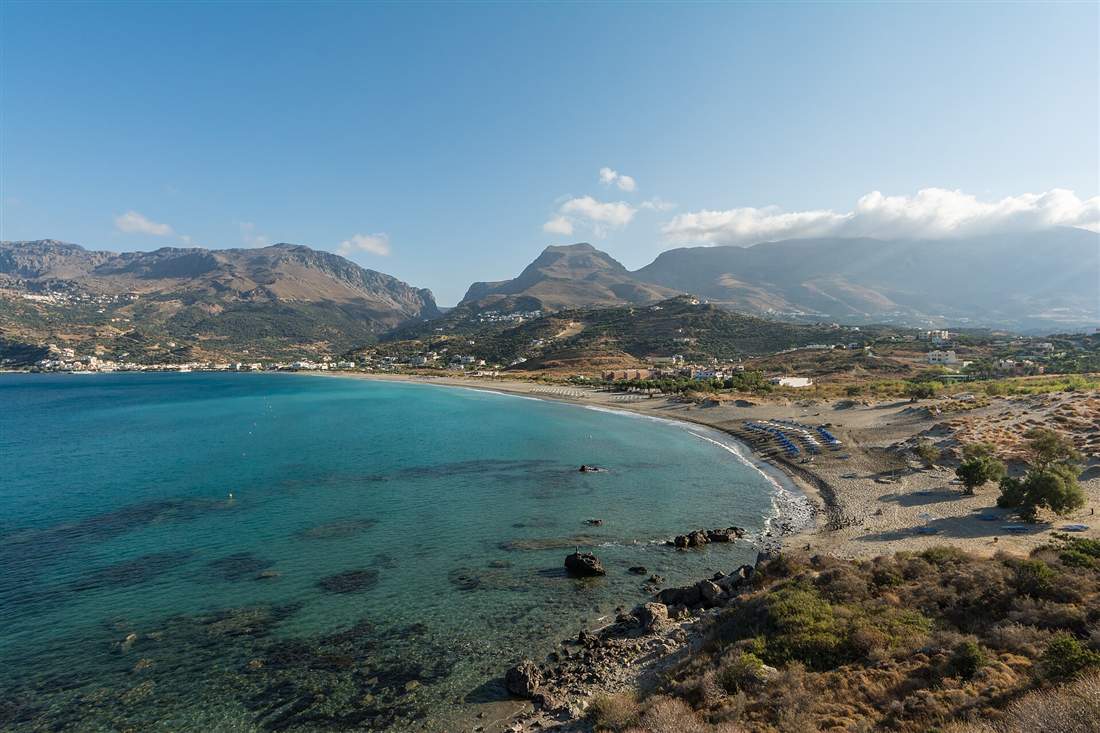
Rethymno scuba diving is diving off central Crete from centres on the town coast and at Plakias on the south shore, over walls, reefs and the caverns the south coast is known for, with PADI and SSI programmes for beginners, children and certified divers alike. Plan the whole trip with Greece Tours.
This guide covers Rethymno scuba diving in full: what a session includes, the Discover Scuba programme for beginners and Bubblemaker for children, guided two-dive days for certified divers, the dive sites from the town coast to Ammoudi, Damnoni and Plakias, the caverns and what you see underwater, the courses, the season, what it costs, and how to book.
What Is Rethymno Scuba Diving and What Does a Session Include?
Rethymno scuba diving covers guided dives and courses run from dive centres on Crete’s north-central coast, pairing shore and boat entries with full equipment, a safety briefing, and an instructor who leads every diver from entry to exit.
Rethymno scuba diving ends with the surface interval and the logbook entry. Rethymno scuba diving is booked ahead for a fixed, agreed price per person. A standard outing opens with equipment fitting and a site briefing covering the entry point, hand signals, depth limit, and the dive plan. Divers walk through gear checks on the beach or boat deck before submerging, confirming mask fit. The guide sets the pace underwater and tracks depth and time so the group surfaces together with air held in reserve throughout the dive.
Rethymno scuba diving is booked ahead for a fixed, agreed price per person. Rethymno scuba diving ends with the surface interval and the logbook entry. Equipment supplied covers the wetsuit, buoyancy vest, regulator, mask, fins, and weight belt, so a diver arrives with a swimsuit and towel and leaves fully kitted. Tanks are filled and racked at the centre before loading onto the boat or the shore entry point. A dive computer tracks depth and remaining air, and the guide checks the whole group’s supply.
Rethymno scuba diving is booked ahead for a fixed, agreed price per person. A single dive runs close to forty-five minutes underwater, with a surface interval for a drink and a rest between the two dives of a standard day. Boats leave from the harbour or a beach launch depending on the site chosen, and shore dives start straight from the sand near town. Every outing ends with a logbook stamp recording the site, depth, and duration.
Do You Need a Certification to Try Rethymno Scuba Diving?
No certification is required to start: the Discover Scuba program takes first-time divers through a theory briefing, shallow-water skills practice, and a guided dive to five or six metres, with an instructor beside them the entire time.
The instructor on Rethymno scuba diving holds contact with beginners throughout. For beginners, Rethymno scuba diving starts with a briefing and shallow-water skills. The Discover Scuba session opens on land with a short talk on how the regulator delivers air and the signals used underwater. Skills practice follows in water shallow enough to stand in: clearing a flooded mask, recovering a regulator, breathing calmly through the mouthpiece. Once these skills feel comfortable, the group moves to open water, with the instructor within touching distance.
For beginners, Rethymno scuba diving starts with a briefing and shallow-water skills. The instructor on Rethymno scuba diving holds contact with beginners throughout. Children between eight and ten join the Bubblemaker program instead, a shallow-water session capped at two metres that introduces the mask, fins, and regulator as a supervised pool-style activity rather than an open-water dive. An instructor stays within arm’s reach throughout, and the child never leaves standing depth, keeping the whole session inside a young diver’s comfort and lung capacity for the day.
For beginners, Rethymno scuba diving starts with a briefing and shallow-water skills. A medical questionnaire is completed before any first dive, flagging conditions such as asthma, ear problems, or heart issues that need a doctor’s clearance beforehand. Divers holding a certification card from a prior course skip the beginner steps and book straight onto a guided dive matched to their level, and a refresher suits anyone who has not dived in a year or more.
Where Are the Rethymno Dive Sites?
Rethymno dive sites spread along the town coast and further south to Ammoudi and Plakias, with Damnoni and Souda bay near Plakias, Bali and Panormo to the east, and Georgioupoli to the west, reached by shore entry or a short boat run.
Rethymno scuba diving passes walls, swim-throughs and seagrass meadows. The choice of Rethymno scuba diving comes down to the centre, the site and the certification. The town coast offers the closest option, with a shore entry a short walk from a cluster of dive centre bases and enough depth close in for beginner sessions and short certified dives without a boat. Ammoudi adds a rockier shoreline with swim-throughs close to the surface, useful for a second dive on a two-dive day without a long transfer.
The choice of Rethymno scuba diving comes down to the centre, the site and the certification. Rethymno scuba diving passes walls, swim-throughs and seagrass meadows. Plakias, across the mountains on the south coast, is the base for the most varied diving on this stretch, with Damnoni beach nearby and Souda bay offering sheltered water for training dives and caverns cut into the rock. Bali and Panormo, east of Rethymno town, add coves and small bays; Georgioupoli closes out the western end of the region’s dive map.
The choice of Rethymno scuba diving comes down to the centre, the site and the certification. Shore entries dominate the sites closest to Rethymno town, letting a diver walk in from the sand with minimal boat time, while the south coast around Plakias mixes shore access with short boat runs to reach walls and caverns further offshore. A centre picks between these by sea state, matching a sheltered shore dive to rougher days and a boat trip to calmer ones.
What Do Certified Divers Dive at Rethymno?
Certified divers on Rethymno scuba diving trips book guided two-dive days that reach the caverns and swim-throughs of the south coast and walls dropping past thirty metres, entering by boat, with refresher dives and nitrox offered at select centres.
For certified divers, Rethymno scuba diving opens the caverns of the south coast. A private Rethymno scuba diving session pairs one instructor with one guest. A two-dive day starts with a morning briefing that sets the plan for both dives, the first set as the deeper of the two while the group is freshest. Boat entries at Plakias reach caverns where sunlight cuts through gaps in the rock, and swim-throughs narrow enough to need single-file passage but wide enough to stay comfortable with buoyancy control.
A private Rethymno scuba diving session pairs one instructor with one guest. For certified divers, Rethymno scuba diving opens the caverns of the south coast. Walls off the south coast drop past thirty metres, giving advanced-certified divers a route down the rock face, with the option to level off at a planned depth and follow it along rather than descending further. A guide leads the route, timing the dive against remaining air and decompression limits so the whole group surfaces with a safety stop completed.
A private Rethymno scuba diving session pairs one instructor with one guest. A diver returning after a break of a year or more books a refresher dive first, running through core skills again in shallow water before rejoining the standard program. Nitrox, where a centre offers it, extends bottom time on the deeper sites by lowering nitrogen loading against standard air, and a diver needs the enriched-air card before a tank is filled with it.
What Do You See Underwater at Rethymno?
Rethymno scuba diving shows off Posidonia seagrass meadows, moray eels, octopus, grouper, damselfish, salema, scorpionfish, and nudibranchs, with caverns lit by shafts of sunlight and visibility running twenty-five to thirty metres on a clear day.
The medical questionnaire is completed before Rethymno scuba diving begins. The morning slot for Rethymno scuba diving fills first in high season. Posidonia meadows carpet the sandy stretches between rock outcrops, a native seagrass that oxygenates the water and shelters juvenile fish; divers are asked not to kick through it, since the meadow grows back slowly once disturbed. Moray eels tuck into crevices along the rock, showing just a head and open jaw, while octopus change colour against the seabed and go unnoticed until they move.
The medical questionnaire is completed before Rethymno scuba diving begins. Grouper hold near ledges and cave mouths, sizeable fish that hold their ground rather than bolt at a diver’s approach, while damselfish and salema move in loose schools over the reef. Scorpionfish sit motionless on rock and sand, camouflaged well enough that a guide points them out, and nudibranchs add a flash of colour in the calmer parts of a site.
The morning slot for Rethymno scuba diving fills first in high season. Caverns along the south coast let sunlight stream through cracks overhead, lighting the water in shafts that shift as the sun moves and giving a different feel from the open reef outside. Visibility on a clear day runs twenty-five to thirty metres, letting a diver see the full shape of a wall or cavern mouth from a distance, not just a fragment up close.
What Courses Run From Rethymno?
Courses on offer run from Bubblemaker and Discover Scuba through Scuba Diver, Open Water Diver, Advanced Open Water, and Rescue, with specialty courses beyond that, following the standard PADI and SSI structure at a five-star PADI resort standard on this coast.
Rethymno scuba diving includes the transfer from the hotel where the centre offers it. Families take Rethymno scuba diving for the guided shallow dives on the south coast. Bubblemaker and Discover Scuba sit at the entry point, a single session each with no certification required. Scuba Diver, shorter than the full Open Water course, packs core skills and open-water dives into two to three days and grants a limited card capped at twelve metres. Open Water Diver extends the same skills across three to four days and results in a worldwide card.
Rethymno scuba diving includes the transfer from the hotel where the centre offers it. Advanced Open Water follows for certified divers building depth and navigation skills, structured around five dives including a deep dive and a navigation dive over two days. Rescue Diver, a step up again, trains a diver to recognise and respond to problems in the water, both their own and another diver’s, across two to three days combining classroom work and open-water exercises.
Families take Rethymno scuba diving for the guided shallow dives on the south coast. Specialty courses beyond Rescue cover night diving, wreck diving, deep diving, and enriched-air nitrox, each adding a narrow skill set onto an existing certification over a day or two. A five-star PADI resort designation on this coast signals a centre running the complete course path in-house, from first-timer sessions through instructor-level training, rather than referring divers elsewhere further along the coast.
When Is the Rethymno Diving Season and What Are the Conditions?
The Rethymno diving season runs from April into late October or November, with water temperature near seventeen to eighteen degrees Celsius in spring rising to twenty-five or twenty-six degrees by late summer, and centres shift to the sheltered south coast at Plakias on days the north coast meets the meltemi wind.
The drive over the mountains to Plakias sets up a day of Rethymno scuba diving. Rethymno scuba diving runs from centres on the town coast and at Plakias. Spring diving opens the season with cooler water and a quieter coast, suiting divers comfortable in a thicker wetsuit and looking to avoid the busiest weeks of summer. Water temperature climbs steadily through the season, reaching its warmest in the final weeks of summer, when a shorty wetsuit or thin full suit covers most divers rather than the heavier neoprene needed earlier in spring.
The drive over the mountains to Plakias sets up a day of Rethymno scuba diving. The meltemi, a north wind that picks up through summer, pushes swell and chop onto the exposed north coast around Rethymno town on its stronger days, and centres respond by moving the day’s diving across the mountains to Plakias, where the south-facing coastline sits sheltered from the same wind. This shift keeps the calendar running through the windiest stretches of the season.
Rethymno scuba diving runs from centres on the town coast and at Plakias. Morning slots stay the calmest window most days, before any afternoon breeze builds over open water, and centres book the first boat or shore session of the day for anyone wanting the flattest conditions. Wetsuit thickness moves with the season: five millimetres through spring, thinning toward three millimetres by August and September as the sea holds its warmth into early autumn.
What Does Rethymno Scuba Diving Cost and What Is Included?
Pricing for Rethymno scuba diving is set per person at the time of booking and covers the instructor or guide, full equipment, the safety briefing, and the guided dive itself, with extras such as underwater photos, an added dive, or hotel pickup offered separately where a centre provides them.
Every Rethymno scuba diving session starts at the centre with theory and kit. The price of Rethymno scuba diving covers the instructor, the equipment and the dives. A quoted price for a single guided dive or a Discover Scuba session bundles the essentials together: tank, weights, wetsuit, buoyancy vest, regulator, mask, and fins, plus the instructor or guide leading the dive from entry to exit. Nothing beyond a swimsuit and towel needs to be brought separately, and the briefing and logbook entry sit inside the same booking price.
Every Rethymno scuba diving session starts at the centre with theory and kit. Course pricing, covering multi-day programs such as Open Water Diver or Advanced Open Water, is quoted as a package for the full course rather than per dive, bundling classroom materials, confined-water sessions, and all open-water dives required for certification into one figure confirmed when the booking is made and stated in advance, so a diver knows the total before the first session starts.
The price of Rethymno scuba diving covers the instructor, the equipment and the dives. Extras sit outside the base price and are chosen individually: an underwater photo package from the dive, an added third dive on a day originally booked for two, rental of a personal dive computer, or hotel pickup and drop-off where a centre runs that service. Confirming which extras matter at booking keeps the final invoice matched to what was agreed.
What Do You Bring and How Do You Prepare?
Bring swimwear, a towel, sun protection, and water; skip alcohol before diving, stay hydrated, skip a heavy meal beforehand, complete the medical form in advance, and avoid flying for eighteen to twenty-four hours after the last dive of a trip.
Rethymno scuba diving carries a PADI and SSI course path from Open Water upward. Rethymno scuba diving runs as a half-day session or a guided two-dive day. Sun protection matters as much on the boat or beach before a dive as it does in the water afterward, since a diver spends real time on deck or sand between the briefing and the entry. Reef-safe sunscreen protects skin without adding chemicals to the water around a shore-entry site, and a hat handles the wait between gear fitting and getting in.
Rethymno scuba diving carries a PADI and SSI course path from Open Water upward. Alcohol before a dive is ruled out entirely, since it affects judgment, raises the risk of decompression sickness, and dulls the reactions a diver needs underwater; the same caution applies to a heavy meal, which sits better an hour or two ahead. A light snack closer to dive time keeps energy steady without the discomfort of diving on a full stomach.
Rethymno scuba diving runs as a half-day session or a guided two-dive day. The medical questionnaire, completed ahead of the first dive, flags any condition that needs a doctor’s sign-off before diving is confirmed, and handling it early avoids delay. After the final dive of a trip, flying is avoided for eighteen to twenty-four hours to let dissolved nitrogen clear from the body safely, a window worth planning around when booking a flight home from Crete.
Where Does Rethymno Scuba Diving Fit in a Crete Trip?
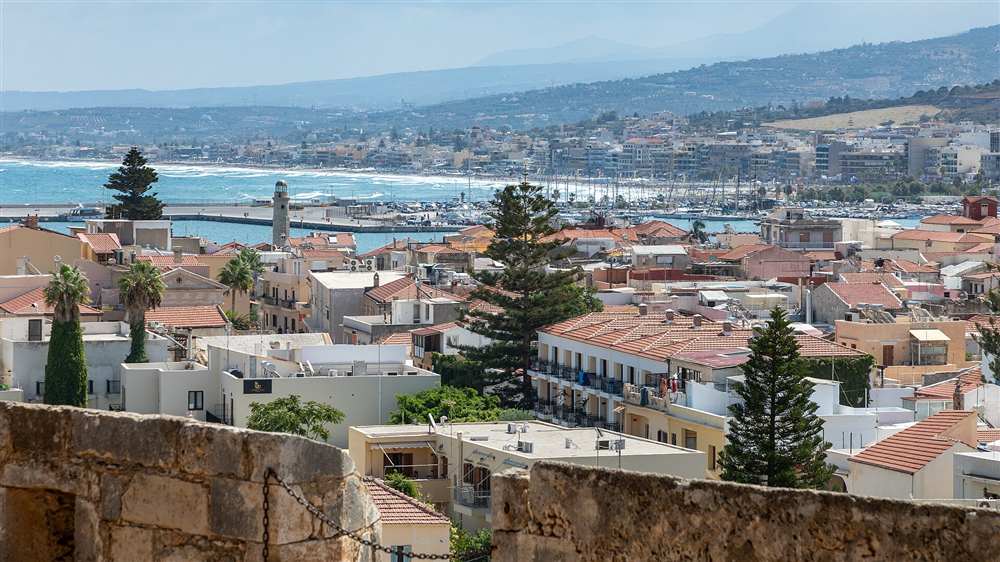
Rethymno sits midway along the north coast between Chania and Heraklion, with the Venetian old town and the Fortezza fortress above the harbour, and the diving fits a half-day slot that leaves the rest of the day free for the town or a drive to Plakias.
The set price on Rethymno scuba diving covers the equipment, the guide and the boat. The dive sites for Rethymno scuba diving reach Ammoudi, Damnoni and Souda bay. The old town of Rethymno sits a short walk from the harbour where dive boats launch, so a diver can finish a morning session and be back among the narrow lanes, Venetian buildings, and waterfront cafes within the hour. The Fortezza fortress overlooks the harbour from its hilltop position, a walkable stop before or after a dive that fills a free hour easily.
The set price on Rethymno scuba diving covers the equipment, the guide and the boat. The drive south over the mountains to Plakias takes under an hour, threading through hill villages before dropping to the south coast, and centres running dives from that side bundle the transfer into the booking as standard, at no extra arrangement. This makes the south-coast sites accessible as a day trip from Rethymno town rather than a change of base.
The dive sites for Rethymno scuba diving reach Ammoudi, Damnoni and Souda bay. Positioned between Chania to the west and Heraklion to the east, Rethymno works as a natural stop for a diver moving along the north coast, close enough to either city for a day visit while keeping its own dive centres, old town, and beach access as reasons to stay. A half-day booking leaves the afternoon open for the town or the fortress.
How Do You Book Rethymno Scuba Diving?
Book Rethymno scuba diving ahead of the date wanted, since the morning slot fills first in high season, confirm certification level and any medical condition at the time of booking, and check the group size, instructor ratio, and pickup point before the day arrives.
Planning Rethymno scuba diving ahead beats the scramble for a summer date. Booking Rethymno scuba diving ahead secures the date and the instructor. Booking ahead matters most in the busiest weeks of summer, when the calmest morning slot on the north coast or the boat to Plakias fills before walk-up bookings are considered. A booking made a day or two in advance secures the preferred time and gives a centre the chance to match group size to instructor availability for the whole session.
Planning Rethymno scuba diving ahead beats the scramble for a summer date. Certification level is confirmed at booking so the centre can plan the right site and depth in advance, and any medical condition flagged on the questionnaire is best raised at this stage, giving time to sort a doctor’s note before the date arrives. A first-time diver booking Discover Scuba gains from flagging swimming ability concerns early, before the day itself.
Booking Rethymno scuba diving ahead secures the date and the instructor. Group size and instructor ratio affect how much attention a diver receives, and asking about this at booking sets clear expectations for a nervous first-timer. Pickup point, where a centre offers hotel transfer, is confirmed at booking, along with meeting time. Divers coming from Crete‘s other coastal towns, including those who have tried Chania scuba diving, find the same pattern here.
Frequently Asked Questions
How much is Rethymno scuba diving?
Rethymno scuba diving is priced per person for the whole session, agreed at booking. The price covers the instructor or guide, the full equipment, the briefing and the guided dives; boat entry, photos and hotel transfers are included by the centres that offer them.
Do you need a certification for Rethymno scuba diving?
No. The Discover Scuba programme takes complete beginners with no certification: a briefing and theory session, shallow-water skills with the instructor, then a guided dive to about five or six metres with the instructor alongside.
Where are the Rethymno dive sites?
The Rethymno dive sites run along the town coast and across the mountains to the south shore at Plakias, Ammoudi, Damnoni and Souda bay, with walls, caverns and swim-throughs reached by a short shore entry or boat run.