
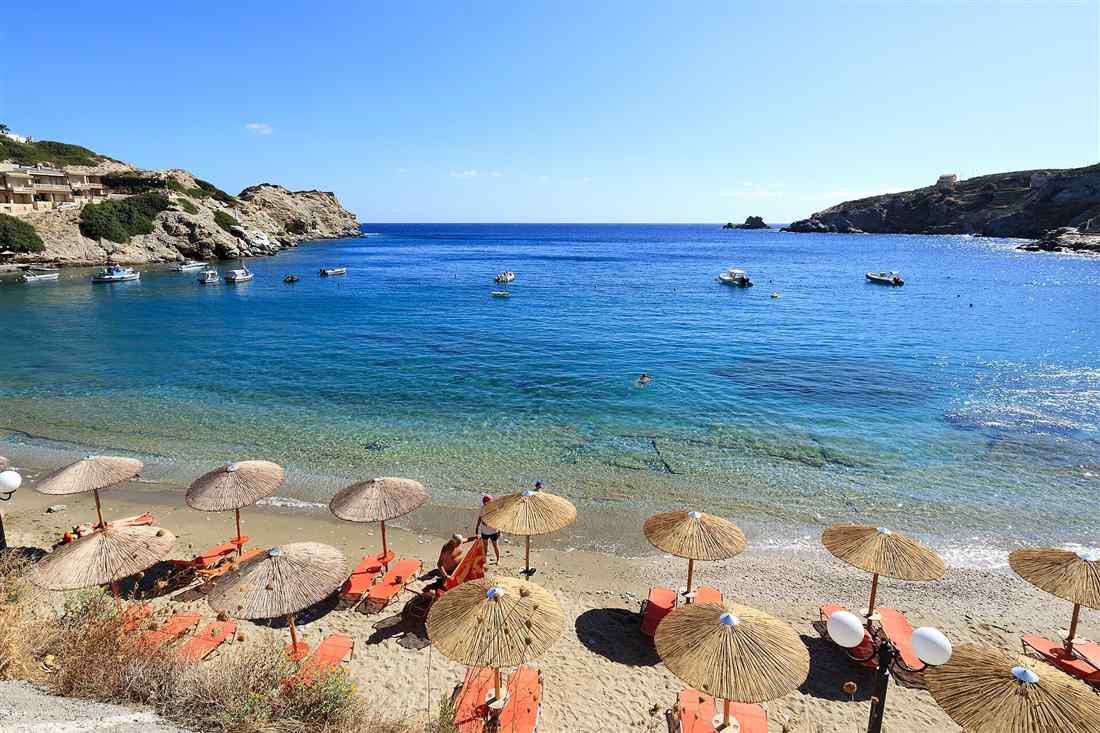
Heraklion scuba diving is diving off the north coast of central Crete, with PADI and SSI dive centres at Agia Pelagia and along the Amoudara shore running Discover Scuba sessions for beginners and guided two-dive days for certified divers, twenty minutes from the airport. Plan the whole trip with Greece Tours.
This guide covers Heraklion scuba diving in full: what a session includes, the Discover Scuba programme for beginners with no certification, guided dives for certified divers, the dive sites from Mononaftis and Ligaria to the reefs off Dia island, what you see underwater, the courses, the season and conditions, what it costs, and how to book.
What Is Heraklion Scuba Diving and What Does a Session Include?
Heraklion scuba diving is a guided underwater outing run from dive centers on the coast near Heraklion, pairing a boat or shore entry with a full equipment set, a safety briefing, and a supervised dive to a reef, wall, or cavern. Sessions run as half-day blocks and welcome first-time divers and certified divers on the same schedule, with staff splitting groups by experience level.
Heraklion scuba diving ends with the surface interval and the logbook entry. Heraklion scuba diving is booked ahead for a fixed, agreed price per person. A standard day starts at the dive center with registration, a gear fitting for wetsuit, buoyancy vest, regulator, mask and fins, and a briefing that covers hand signals, the entry method, and the dive plan for the site. Groups then travel by boat or on foot to the chosen bay along the coast north of Heraklion, where an instructor leads the descent and stays within arm’s reach of new divers throughout.
Heraklion scuba diving is booked ahead for a fixed, agreed price per person. Heraklion scuba diving ends with the surface interval and the logbook entry. Underwater time on a single dive runs between thirty and forty-five minutes, depending on air consumption and depth, followed by a surface interval before a second dive or the return trip. Every diver receives a logbook stamp noting depth, duration, and site name, which counts toward certification requirements for those working through a course.
Heraklion scuba diving is booked ahead for a fixed, agreed price per person. Equipment supplied on every booking includes mask, fins, wetsuit, buoyancy control device, regulator set, and a weight belt calibrated during the pre-dive check. Centers keep group sizes small, pairing one instructor with a limited number of divers so that pacing and air checks stay unhurried.
Do You Need a Certification, or Can Beginners Try Heraklion Scuba Diving?
No certification is required for beginners: Heraklion scuba diving offers a Discover Scuba program that takes first-timers through a short theory briefing, shallow-water skills practice, and a guided dive to five or six meters with an instructor alongside for the entire dive. A signed medical questionnaire and a minimum age of ten are the only entry requirements.
The instructor on Heraklion scuba diving holds contact with beginners throughout. For beginners, Heraklion scuba diving starts with a briefing and shallow-water skills. The Discover Scuba format opens with a land briefing covering equipment function, breathing underwater, equalizing ear pressure, and the hand signals used to communicate during the dive. Divers then move into shallow water, normally waist to chest deep, to practice clearing a flooded mask, recovering a regulator, and controlling buoyancy before the group heads to open water.
For beginners, Heraklion scuba diving starts with a briefing and shallow-water skills. The instructor on Heraklion scuba diving holds contact with beginners throughout. The guided portion descends to a maximum depth of five to six meters along a shallow reef or sandy patch chosen for visibility and marine life. An instructor holds a direct line of contact with each new diver, adjusting buoyancy, pointing out fish and invertebrates, and monitoring air supply throughout the dive so the experience stays calm and controlled from entry to exit.
For beginners, Heraklion scuba diving starts with a briefing and shallow-water skills. The medical questionnaire screens for conditions affecting the ears, lungs, heart, and circulation, and any flagged answer routes the diver to a physician’s clearance before the booking is confirmed. Children from age ten dive in a dedicated junior format with a tighter depth limit and a lower instructor-to-diver ratio, letting families book a single session together.
Where Are the Heraklion Dive Sites?
Heraklion dive sites cluster along the north Crete coastline west of the city, centered on Agia Pelagia bay, Mononaftis beach, Ligaria, and Amoudara, with boat trips reaching reefs, walls, caverns, and the waters off Dia island offshore. Each site is chosen for a specific depth range, current level, and visibility, matching the mix of beginners and certified divers on a given day.
Heraklion scuba diving passes rocky reefs, walls and seagrass meadows. The choice of Heraklion scuba diving comes down to the centre, the site and the certification. Agia Pelagia bay offers a sheltered shore entry with a gently sloping sandy bottom that transitions into rock and Posidonia meadow, making it a standard choice for Discover Scuba dives and open-water training. Mononaftis beach and Ligaria sit close by and share a similar profile of shallow entry points leading to reef structure, letting instructors pick the calmest option on a given morning.
Heraklion scuba diving passes rocky reefs, walls and seagrass meadows. Amoudara and the stretch of coast running toward it hold rockier terrain with swim-throughs and small caverns cut into the shoreline, drawing certified divers looking for structure beyond open reef. Boats based near Heraklion reach these points within a short run, keeping travel time low even when a group dives two different sites in one day.
The choice of Heraklion scuba diving comes down to the centre, the site and the certification. Dia island, an uninhabited island offshore from Heraklion, adds a deeper, more exposed set of walls and drop-offs reached only by boat, with clearer water than the sheltered bays closer to shore. Divers comparing regions sometimes weigh Heraklion against Chania scuba diving further west, where the coastline offers a different mix of gorge-cut bays and open reef.
What Do Certified Divers Dive at Heraklion?
Certified divers at Heraklion book two-dive guided days that reach deeper walls, cavern systems, and boat-entry sites beyond the depth range open to Discover Scuba, with nitrox available at centers that stock it and refresher dives offered to divers returning after a break. Dive plans adjust to certification level and logged experience.
For certified divers, Heraklion scuba diving opens the deeper walls and caverns. A private Heraklion scuba diving session pairs one instructor with one guest. A two-dive day pairs a deeper morning dive, commonly in the eighteen to thirty meter range depending on certification level, with a shallower second dive after a surface interval long enough to clear residual nitrogen. Boats reach wall sections and cavern entrances that shore-based sessions cannot access, giving certified divers terrain with more vertical relief and swim-through passages.
For certified divers, Heraklion scuba diving opens the deeper walls and caverns. Nitrox fills, where a center stocks them, extend bottom time on repetitive dives by reducing nitrogen loading, and divers holding an enriched-air certification can request them at booking. Guides brief the plan on the boat, covering depth, expected current, entry and exit method, and a turnaround air pressure before the group descends together.
A private Heraklion scuba diving session pairs one instructor with one guest. Refresher dives suit certified divers who have not been in the water for an extended period; the session pairs a pool or confined-water skills review with a supervised open-water dive before the diver rejoins a full boat trip. This step rebuilds mask clearing, buoyancy control, and air management confidence without repeating a full certification course.
What Do You See Underwater at Heraklion?
Heraklion scuba diving shows divers Posidonia seagrass meadows, moray eels, octopus, groupers, damselfish, salema shoals, scorpionfish, and nudibranchs across reef and wall sites, with visibility running twenty-five to thirty meters on clear days and amphorae fragments visible on certain historically significant spots. The mix of habitat types keeps each dive visually distinct.
The medical questionnaire is completed before Heraklion scuba diving begins. The morning slot for Heraklion scuba diving fills first in high season. Posidonia meadows carpet the sandy stretches between reef outcrops and function as a nursery for juvenile fish, and divers moving slowly through them spot damselfish, salema, and small wrasse darting between the blades. Rocky reef sections nearby hold groupers holding position in crevices and octopus tucked into narrow gaps, changing color and texture as a diver approaches.
The medical questionnaire is completed before Heraklion scuba diving begins. Moray eels rest in cracks along the wall sites, showing only their head and open jaw as they breathe, while scorpionfish sit motionless on the seabed, camouflaged against sand and rubble to the point that a guide’s pointer is the surest way to spot one. Nudibranchs, small and brightly patterned, cling to rock faces and sponges at close range, rewarding divers who slow down near the wall.
The morning slot for Heraklion scuba diving fills first in high season. Water clarity along this stretch of the north Crete coast reaches twenty-five to thirty meters on calm days, letting divers see the full profile of a wall or cavern entrance from a distance. Certain sites carry scattered amphorae fragments on the seabed, remnants of ancient shipping routes past Crete, and dive guides point these out without disturbing the site.
What Courses Run From Heraklion?
Heraklion dive centers run the full recreational course path, from Discover Scuba and Scuba Diver through Open Water Diver, Advanced Open Water, Rescue Diver, and specialty courses, following PADI or SSI standards depending on the center, with each level building certified depth range and skill set. Course length scales from a single day to a working week.
Heraklion scuba diving includes the transfer from the hotel where the centre offers it. Families take Heraklion scuba diving for the guided shallow dives at Agia Pelagia. Discover Scuba runs in a single day and carries no certification, while Scuba Diver, a partial certification under both PADI and SSI systems, takes about two days combining theory, confined-water skills, and two open-water dives to a limited depth. Open Water Diver, the entry-level full certification, extends the format to three to four days with theory sessions, pool or confined-water practice, and four open-water dives.
Heraklion scuba diving includes the transfer from the hotel where the centre offers it. Advanced Open Water builds on that base over two days with five adventure dives, commonly including a deep dive and a navigation dive, and extends the certified depth limit. Rescue Diver adds another two to three days of scenario-based training covering self-rescue, diver-assist techniques, and simulated emergency response, forming a prerequisite completed before working toward a professional rating.
Families take Heraklion scuba diving for the guided shallow dives at Agia Pelagia. Specialty courses layer onto any certification level and cover single topics such as night diving, wreck orientation, navigation, or nitrox use, each running one to two days. Centers schedule course days around the daily fun-dive boat, letting a diver combine structured training with a guided dive to a Heraklion site on the same trip.
When Is the Heraklion Diving Season and What Are the Conditions?
The Heraklion diving season runs from April through late October and into November, with water temperature climbing from seventeen to eighteen degrees Celsius in spring to twenty-five or twenty-six degrees in late summer, and the meltemi wind pushing boats toward sheltered bays on its strongest days. Morning slots hold the calmest conditions across the season.
The offshore ground around Dia island extends Heraklion scuba diving by boat. Heraklion scuba diving runs from centres on the north coast of central Crete. Spring divers wear a five to seven millimeter wetsuit against the cooler water, while divers booking in July and August dive comfortably in a three millimeter suit or a shorty as the sea warms into the mid-twenties. Centers stock a range of suit thicknesses and sizes, fitting each diver at check-in rather than requiring gear to be brought from home.
The offshore ground around Dia island extends Heraklion scuba diving by boat. The meltemi, a north wind that strengthens across the Aegean in summer, raises surface chop and reduces visibility on exposed sites during its peak days, and dive centers respond by shifting the day’s plan to sheltered bays such as Agia Pelagia rather than canceling outright. Boats based near Heraklion reach these protected spots within a short run, keeping the season’s dive count high even on windy stretches.
Heraklion scuba diving runs from centres on the north coast of central Crete. Morning departures, commonly the first boat of the day, catch the sea at its calmest before afternoon wind builds, and centers prioritize course dives and Discover Scuba sessions in this window. Afternoon slots stay available for certified fun dives on days when conditions hold, giving repeat divers a second outing without waiting for the next morning.
What Does Heraklion Scuba Diving Cost and What Is Included?
Heraklion scuba diving pricing is agreed per person at the time of booking and covers an instructor or dive guide, full rental equipment, the pre-dive briefing, and the guided dive itself, with extras such as underwater photos, additional dives, or hotel pickup offered separately by centers that provide them. Course pricing is quoted per level rather than per dive.
Every Heraklion scuba diving session starts at the centre with theory and kit. The price of Heraklion scuba diving covers the instructor, the equipment and the dive. The base rate for a Discover Scuba session or a single guided fun dive bundles instructor time, mask, fins, wetsuit, buoyancy vest, regulator, weight belt, and tank fill into one figure confirmed before the day begins, so a diver arrives knowing the full scope of what is covered.
Every Heraklion scuba diving session starts at the centre with theory and kit. Course pricing for Open Water Diver, Advanced Open Water, and Rescue Diver is set per certification and includes the manual, theory sessions, confined-water time, and the open-water dives, though certification card processing fees from PADI or SSI sometimes sit outside the quoted course rate and are confirmed at enrollment.
The price of Heraklion scuba diving covers the instructor, the equipment and the dive. Optional extras vary by center and commonly include an underwater photo package, a second boat dive added to a single-dive booking, nitrox fills, and hotel or port pickup for guests staying outside the immediate area. Confirming which extras a center includes before paying a deposit keeps the final invoice free of surprises.
What Do You Bring and How Do You Prepare for a Dive?
Divers preparing for Heraklion scuba diving bring swimwear, a towel, sun protection, and drinking water, avoid alcohol before the dive, skip a heavy meal beforehand, stay hydrated through the morning, and complete a medical questionnaire at check-in; flying is off the schedule for eighteen to twenty-four hours afterward. Everything else comes from the dive center.
Heraklion scuba diving carries a PADI and SSI course path from Open Water upward. Heraklion scuba diving runs as a half-day session or a full two-dive day. Swimwear goes on under the wetsuit, and a towel and change of clothes make the transition from wet gear to the rest of the day comfortable once the boat returns. Reef-safe sunscreen applied before arrival protects skin during the boat ride and surface intervals without leaving residue on shared equipment, and a hat and light cover-up help between dives while gear dries.
Heraklion scuba diving carries a PADI and SSI course path from Open Water upward. Hydration matters more on a dive day than an ordinary beach day, since breathing compressed air dries the airway, so drinking water through the morning and skipping alcohol the night before keeps a diver alert and reduces fatigue underwater. A light breakfast, rather than a heavy meal close to departure, sits better through the boat ride and the dive itself.
Heraklion scuba diving runs as a half-day session or a full two-dive day. The medical questionnaire completed at check-in flags conditions affecting the ears, sinuses, heart, or lungs, and any diver on regular medication mentions it to staff before the briefing begins. The eighteen to twenty-four hour no-fly window after a dive gives the body time to off-gas absorbed nitrogen, worth planning around for guests flying out the same day.
Where Does Heraklion Scuba Diving Fit Into a Crete Trip?
Heraklion scuba diving sits within an hour of Knossos, close to the airport and the port, and pairs naturally with the beaches at Agia Pelagia, a boat trip toward Dia island, or a half-day slot that leaves the rest of a Crete day open for sightseeing. Its central location makes it easy to combine with other stops.
The set price on Heraklion scuba diving covers the equipment, the guide and the boat. The dive sites for Heraklion scuba diving reach Mononaftis, Ligaria and Amoudara. The dive center’s proximity to Heraklion’s airport and port means arriving or departing guests can slot a half-day dive into a layover or a first and last day on the island without reshuffling a full itinerary. A morning dive followed by an afternoon visit to Knossos, the Minoan palace site a short drive from the city, pairs an active morning with a cultural afternoon in one day.
The set price on Heraklion scuba diving covers the equipment, the guide and the boat. Agia Pelagia’s beach sits directly beside one of the main dive entry points, so a family group can split a morning between divers heading underwater and non-divers relaxing on sand within sight of the boat’s return. The bay’s calm water and cafes along the shore make it a comfortable base for a full day rather than a quick stop.
The dive sites for Heraklion scuba diving reach Mononaftis, Ligaria and Amoudara. Divers building a longer Crete itinerary commonly place the dive early in the trip, using the half-day format to leave afternoons free for the old town’s harbor or a drive along the north coast, then adding a second dive day later in the week once other sights are covered.
How Do You Book Heraklion Scuba Diving?
Booking Heraklion scuba diving means confirming a date ahead of arrival, since the morning slot fills first through the high season, and stating the certification level, any medical condition, and the group size at booking so the center sets the right instructor ratio. Confirmation normally arrives within a day.
Planning Heraklion scuba diving ahead beats the scramble for a summer date. Booking Heraklion scuba diving ahead secures the date and the instructor. Advance booking matters most in the peak summer months, when centers run multiple boat departures a day and the earliest slot, prized for calm water, fills days ahead. Booking a week or more out secures the preferred date and time; last-minute requests still work outside peak weeks.
Planning Heraklion scuba diving ahead beats the scramble for a summer date. Stating certification level at booking, whether that means no experience at all, a Scuba Diver card, or a full Open Water certification and above, lets the center assign the right guide and plan the correct depth and site before the group arrives. Any medical condition flagged on the questionnaire is worth mentioning at this stage rather than at check-in, since certain conditions need a physician’s clearance arranged in advance.
Booking Heraklion scuba diving ahead secures the date and the instructor. Group size and instructor ratio shape the pace of the day: a private or small-group booking keeps the ratio tight, while joining a larger scheduled boat trip costs less and still pairs new divers one-to-one or one-to-two with an instructor. Confirming these details before the deposit stage keeps the day running smoothly.
Frequently Asked Questions
How much is Heraklion scuba diving?
Heraklion scuba diving is priced per person for the whole session, agreed at booking. The price covers the instructor or guide, the full equipment, the briefing and the guided dive; extra dives, photos and hotel transfers are included by the centres that offer them.
Do you need a certification for Heraklion scuba diving?
No. The Discover Scuba programme takes complete beginners: a briefing and theory session, shallow-water skills with the instructor, then a guided dive to about five or six metres with the instructor alongside throughout.
Where are the Heraklion dive sites?
The Heraklion dive sites run along the north coast at Agia Pelagia bay, the beach of Mononaftis, Ligaria and the Amoudara shore, with reefs, walls and caverns close inshore and the deeper ground off Dia island reached by boat.